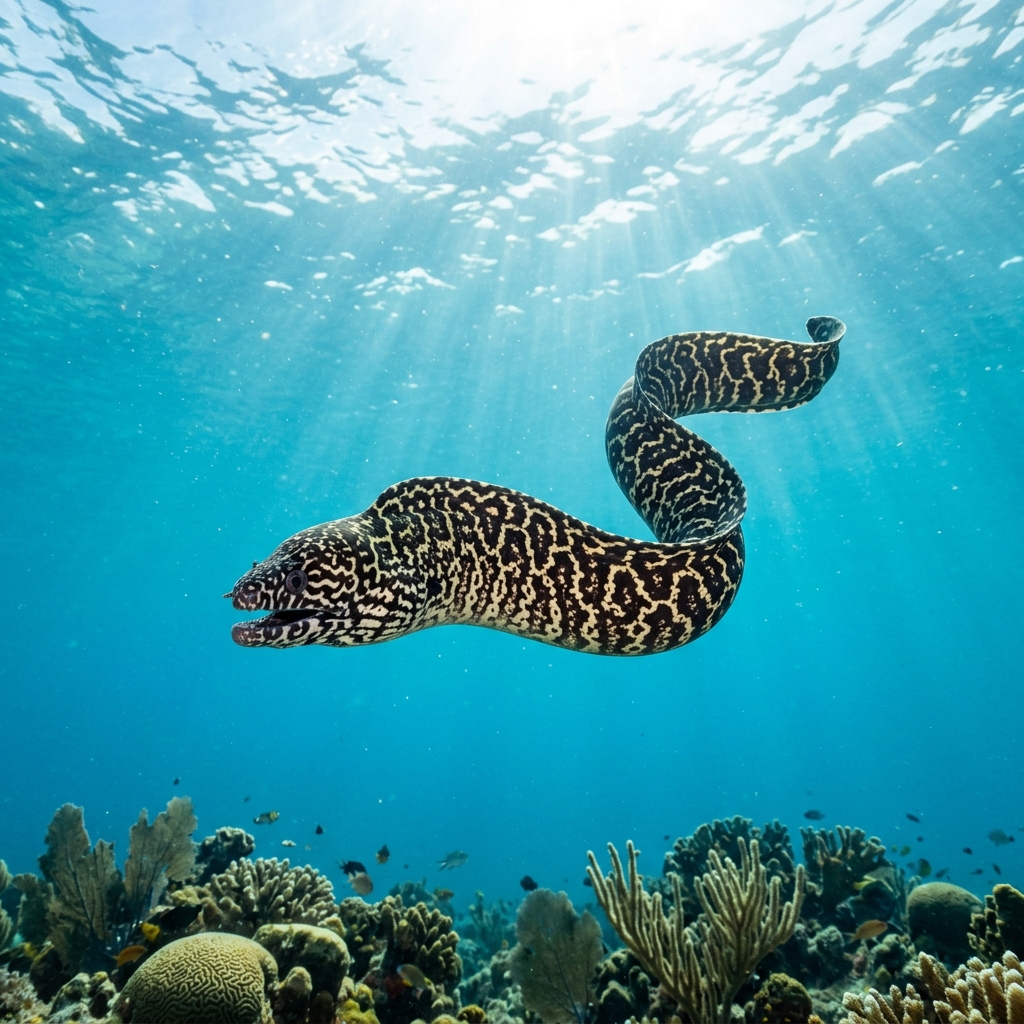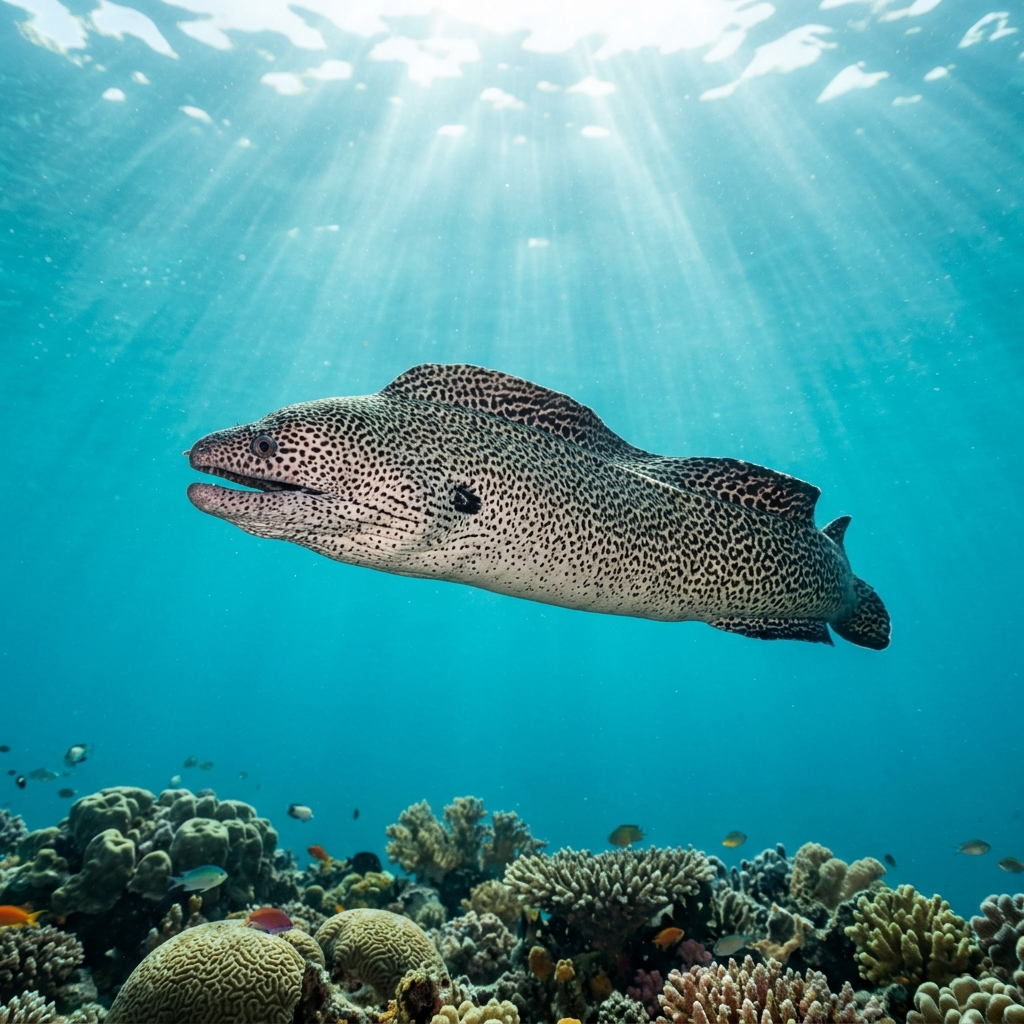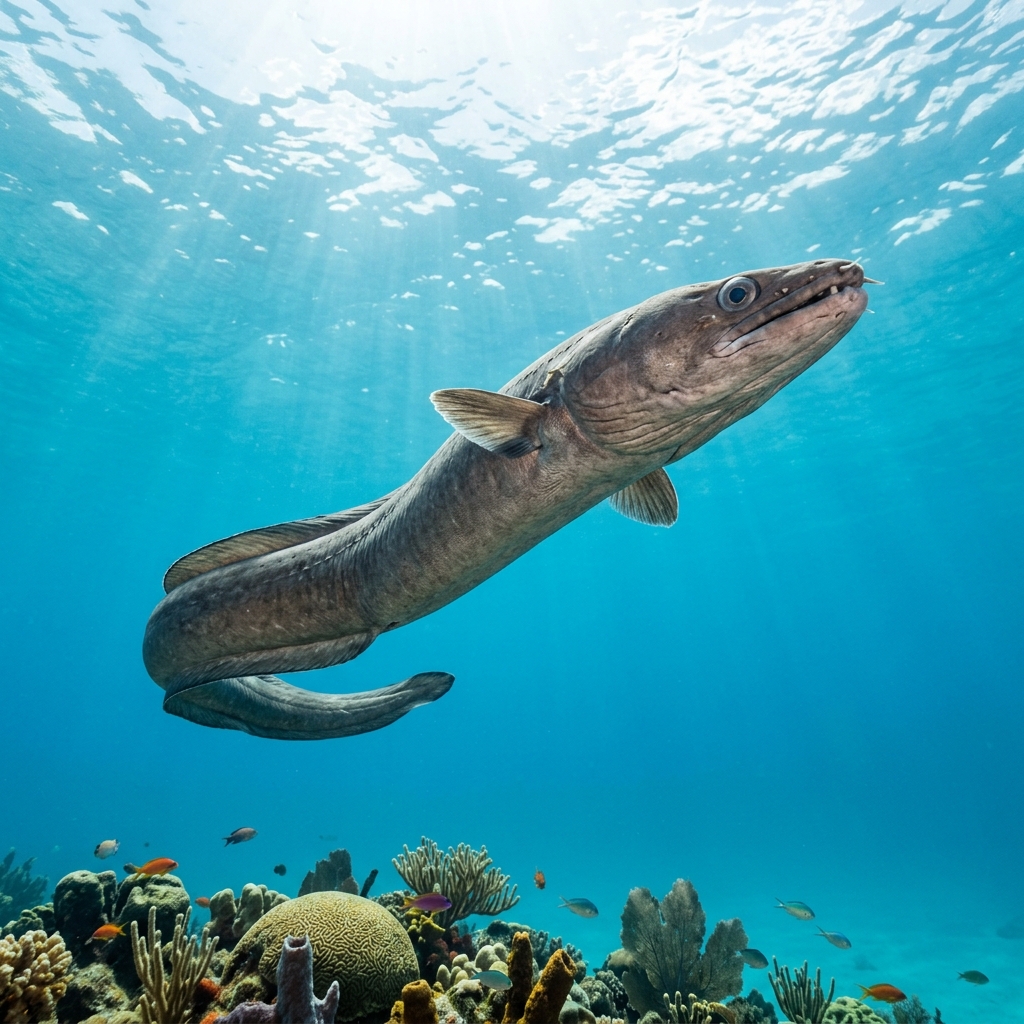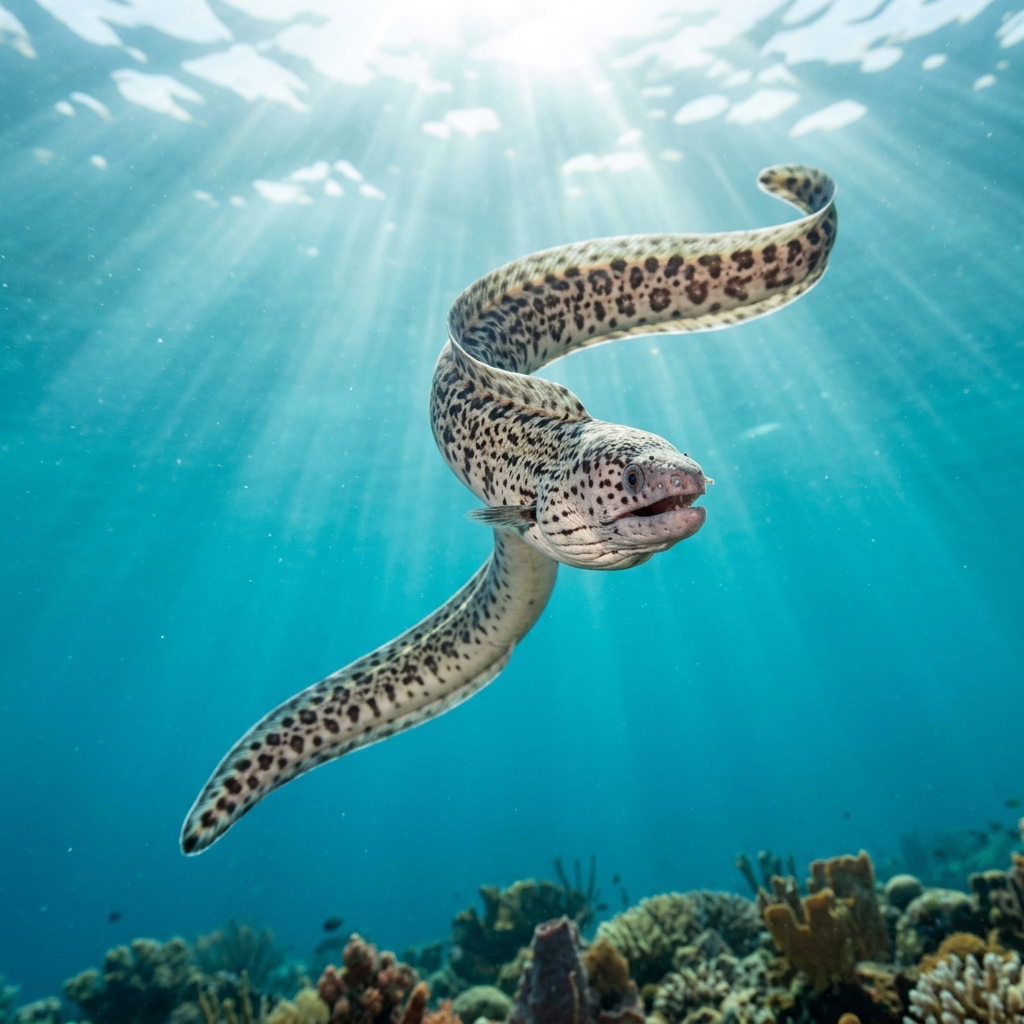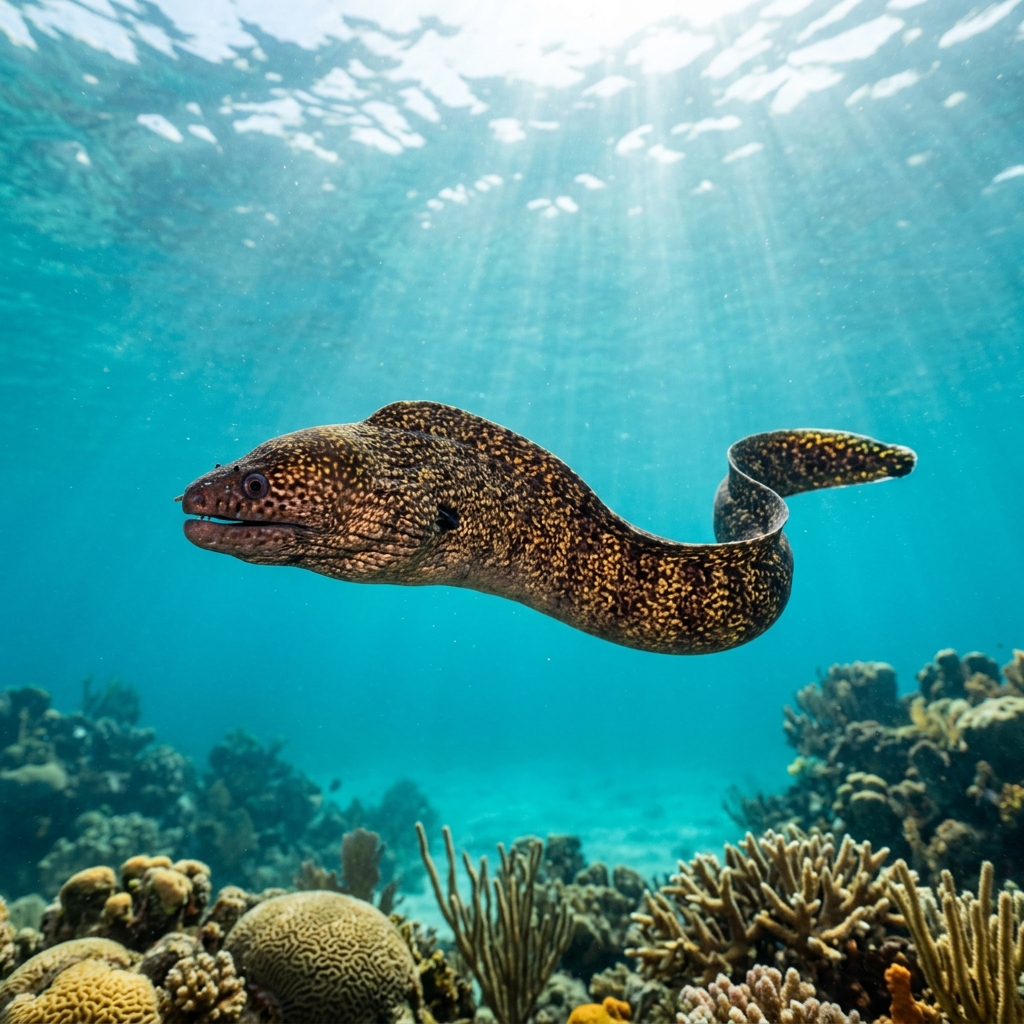
Gymnothorax miliaris
Spot the Goldentail Moray on Caribbean reefs from Bonaire to Cape Verde. Yellow-speckled and tail-tipped, most sightings run February to September.
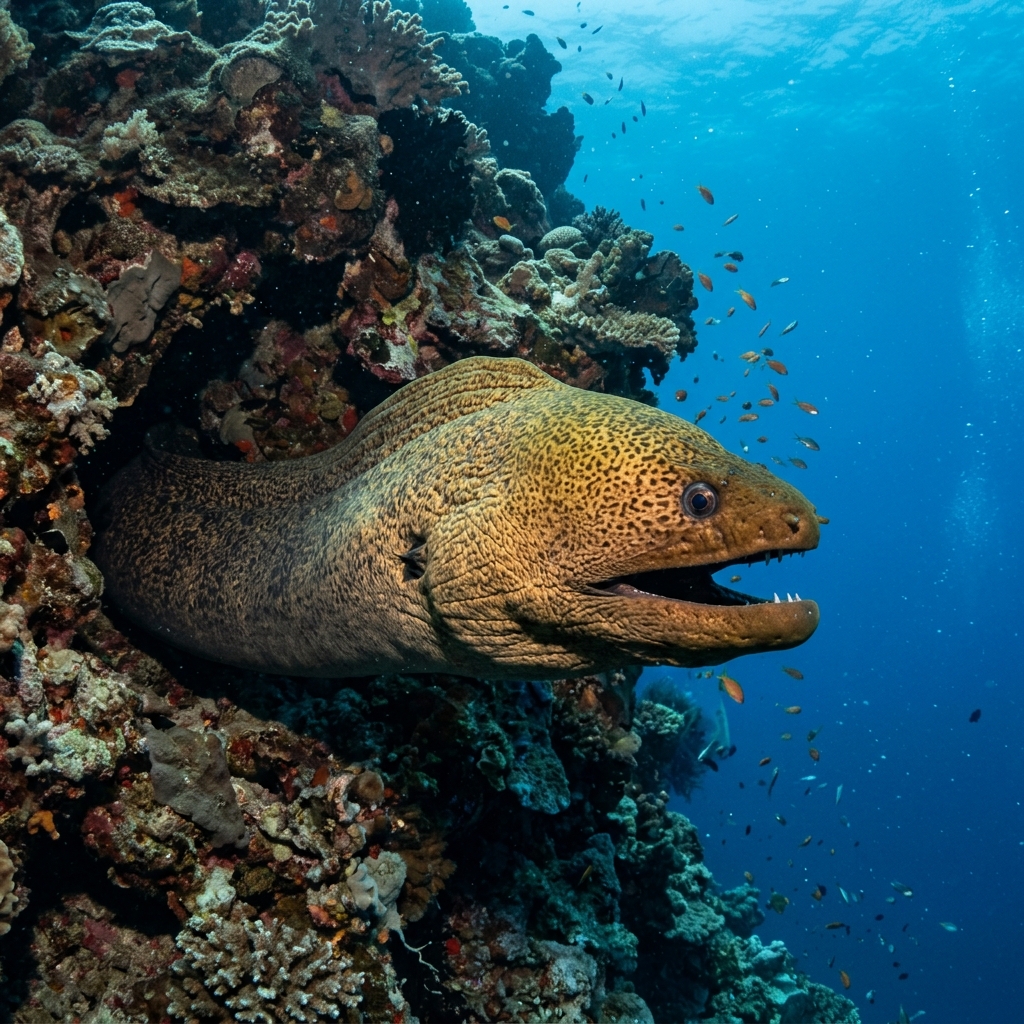
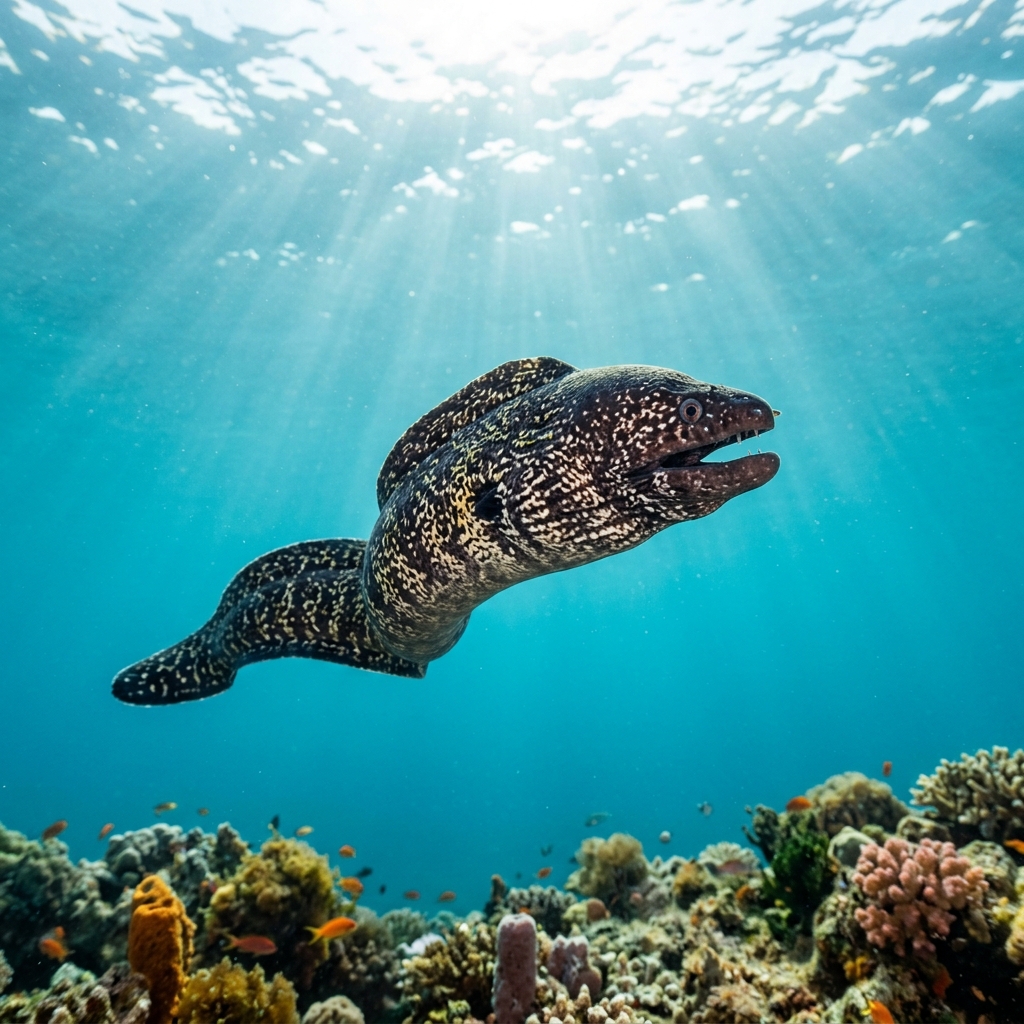
A dark chocolate-brown body peppered densely with small yellow or gold spots gives this moray its name and makes it one of the more colourful eels on Atlantic and Caribbean reefs. The tip of the tail shades to a clean, bright yellow, which is the single best field mark when the eel is tucked into a crevice with only the rear half visible. It is a relatively slender moray compared to heavyweights like the green moray, and at typical observed sizes it rarely looks intimidating. The inside of the mouth is yellow, noticeable when it opens to breathe.
You will almost always find this moray wedged into a reef crevice or tucked under a coral head, with only the head or anterior body exposed as it cycles water through its gills in that slow, rhythmic open-close mouth movement. It is not particularly bold; most individuals retreat further into cover when a diver approaches closely, so a patient, still observation from a metre or two away gets better views than a close hover. Occasional individuals venture out along the reef base at dusk, but mid-water sightings are rare.
Like other morays, the goldentail moray uses a second set of jaws (pharyngeal jaws) located in the throat to pull prey inward, a feeding mechanism unique among vertebrates that allows it to subdue small fish and crustaceans inside tight reef gaps where it cannot use suction feeding.
Northern hemisphere sightings concentrate between February and September, so plan Caribbean and Cape Verde trips within that window for the best odds. Outside that peak the species is less frequently reported, though the warm 26 to 29 °C water it favours is present on these tropical reefs most of the year.
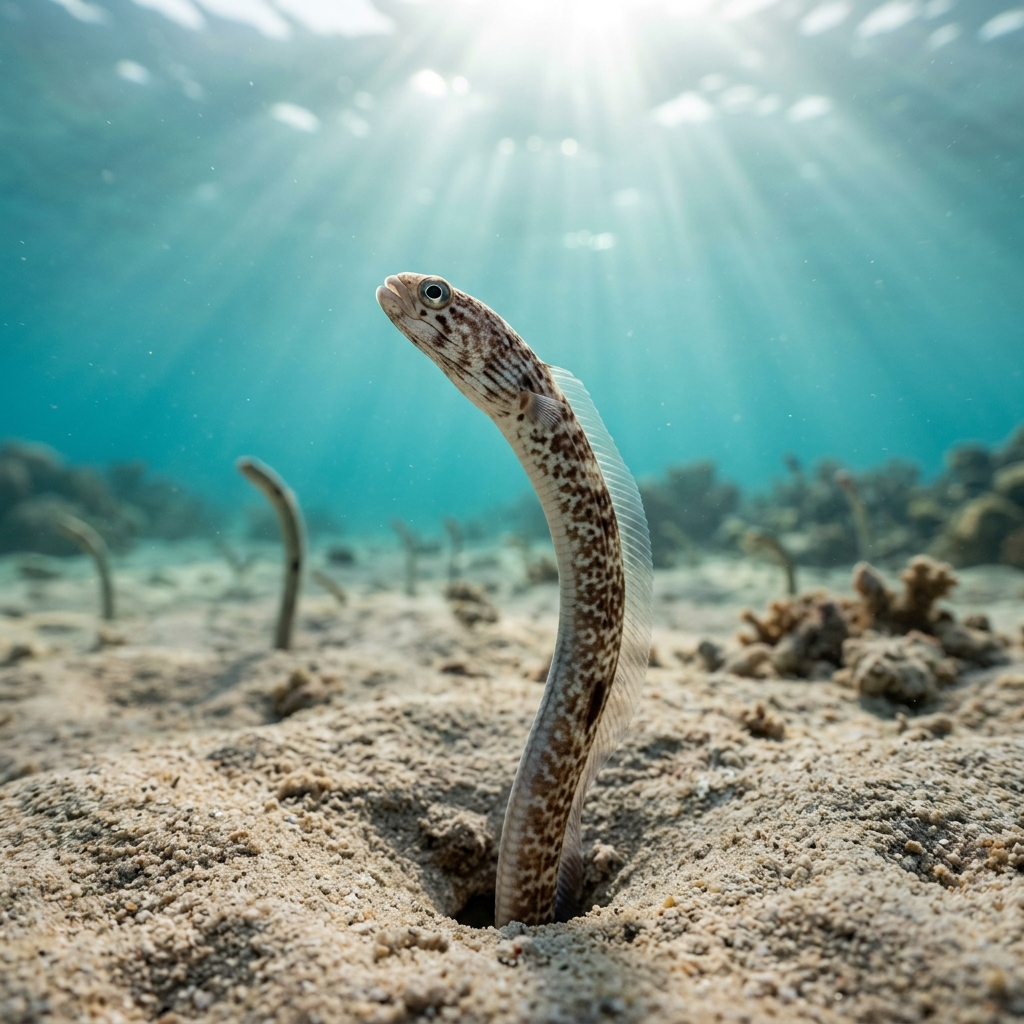
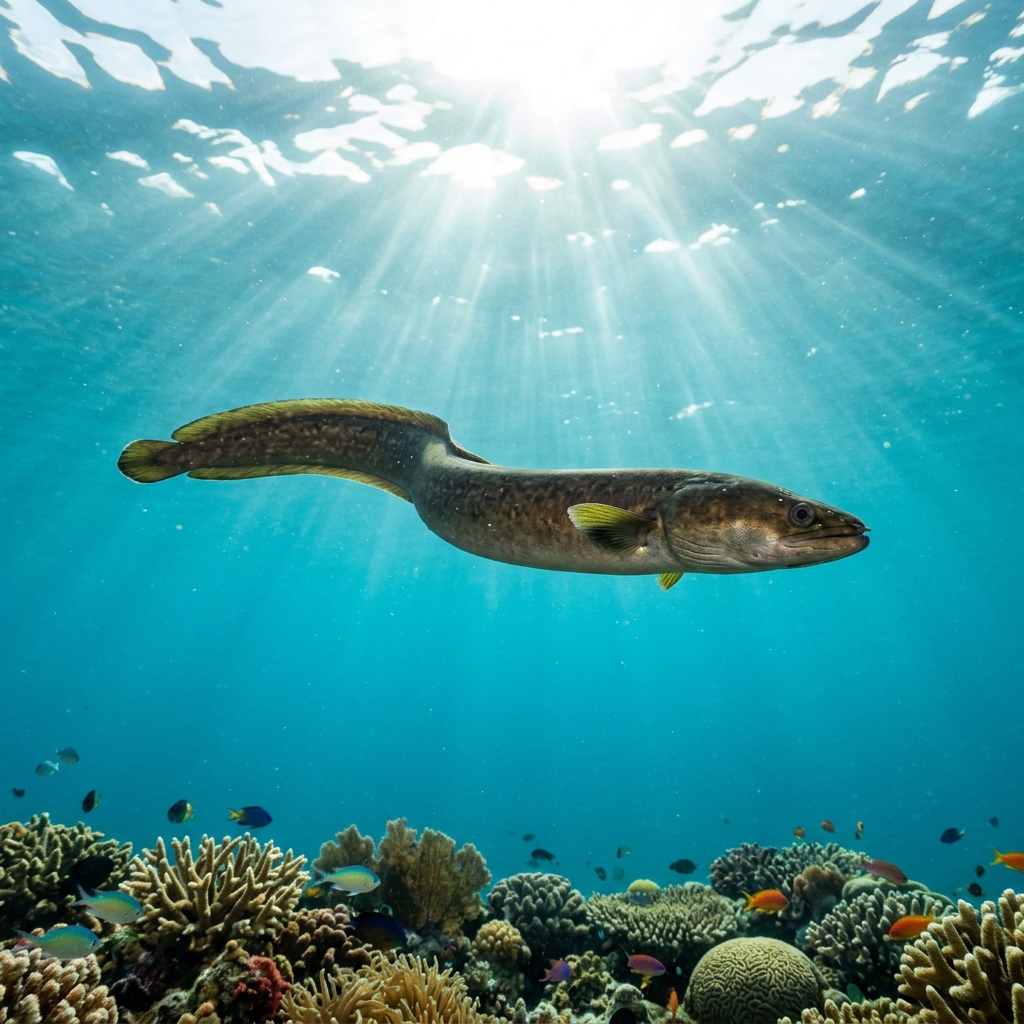
Reef neighbours a diver could mistake it for. Use the identification notes above to tell them apart.
Most commonly logged across the Caribbean, with Bonaire, Mexico's Yucatán Peninsula, and Curaçao among the top sites. Grenada and the US Virgin Islands also hold strong populations, and Cape Verde stands out as the most reliable location in the eastern Atlantic. Honduras's Roatán and Colombia's Caribbean coast round out the core range.
Mapping where Goldentail Moray is logged…
Bonaire and Mexico's Yucatán Peninsula lead for sheer number of sites, followed closely by Curaçao, Grenada, and the US Virgin Islands. Cape Verde is the standout location in the eastern Atlantic. Honduras's Roatán and Colombia's Caribbean coast are also reliable destinations.
Northern hemisphere data shows sightings peak from February through September. If you are diving Bonaire, Curaçao, or the Yucatán, targeting that window gives you the best chance. Cape Verde follows a similar seasonal pattern.
Look for a dark brown eel covered in small yellow spots from head to tail, with the tail itself distinctly bright yellow. The yellow interior of the mouth is visible when it breathes. That yellow tail tip, visible even on a partially hidden eel, is the quickest identification clue.
No. This species is not considered dangerous. Like any moray it may bite defensively if cornered or handled, but it typically retreats when approached. Watching from a short distance and avoiding reaching into crevices is all the caution needed.
At most sites where it is recorded it is logged as uncommon, meaning you might see one on a good dive but should not expect one every time. A handful of well-known sites in Bonaire and the Yucatán report it as common, so those are your best bets for a reliable sighting.
Site and sighting data is aggregated from diver logs, iNaturalist and GBIF. For taxonomy and conservation status:
Garden Eel
2,448 sites