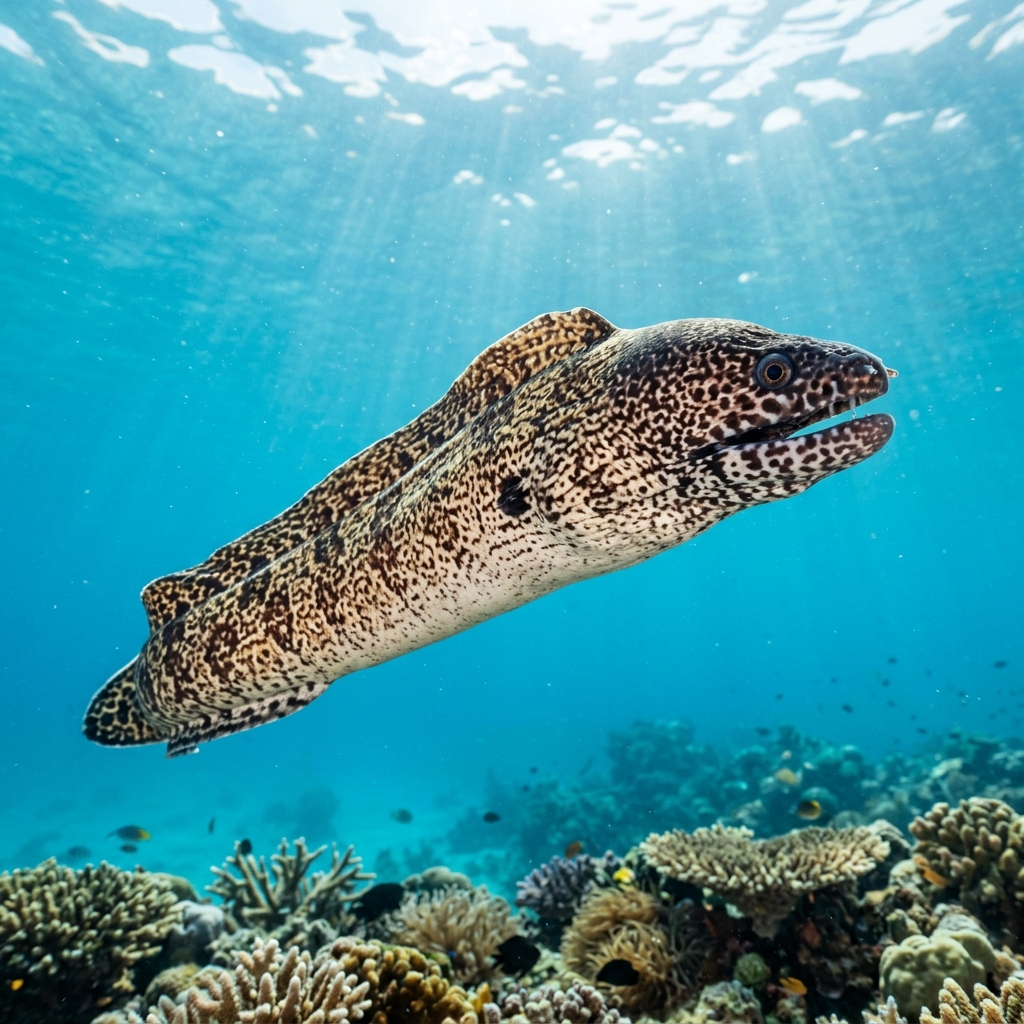
Gymnothorax chilospilus
Rare but recordable in Taiwan and Bali, the lipspot moray hides on tropical reefs at 24-29°C. Here's how to spot and ID it.
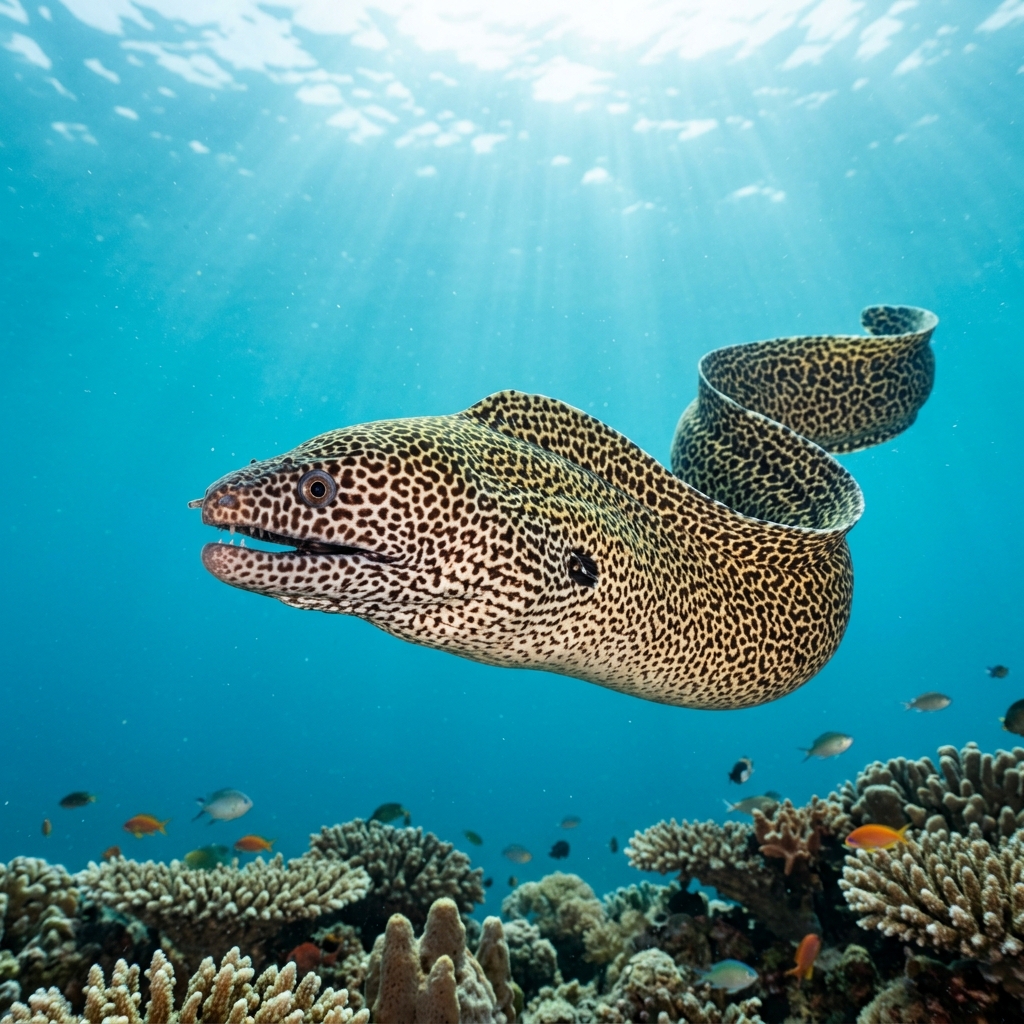
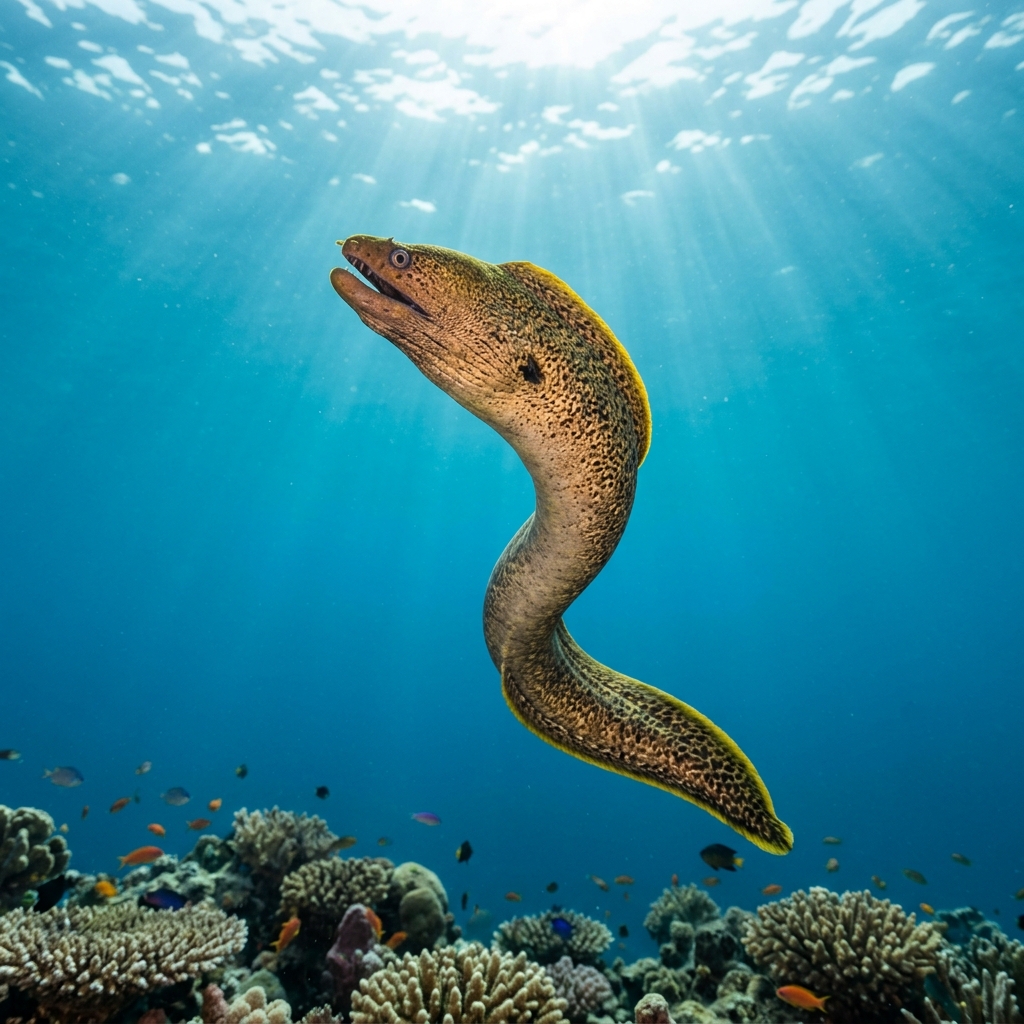
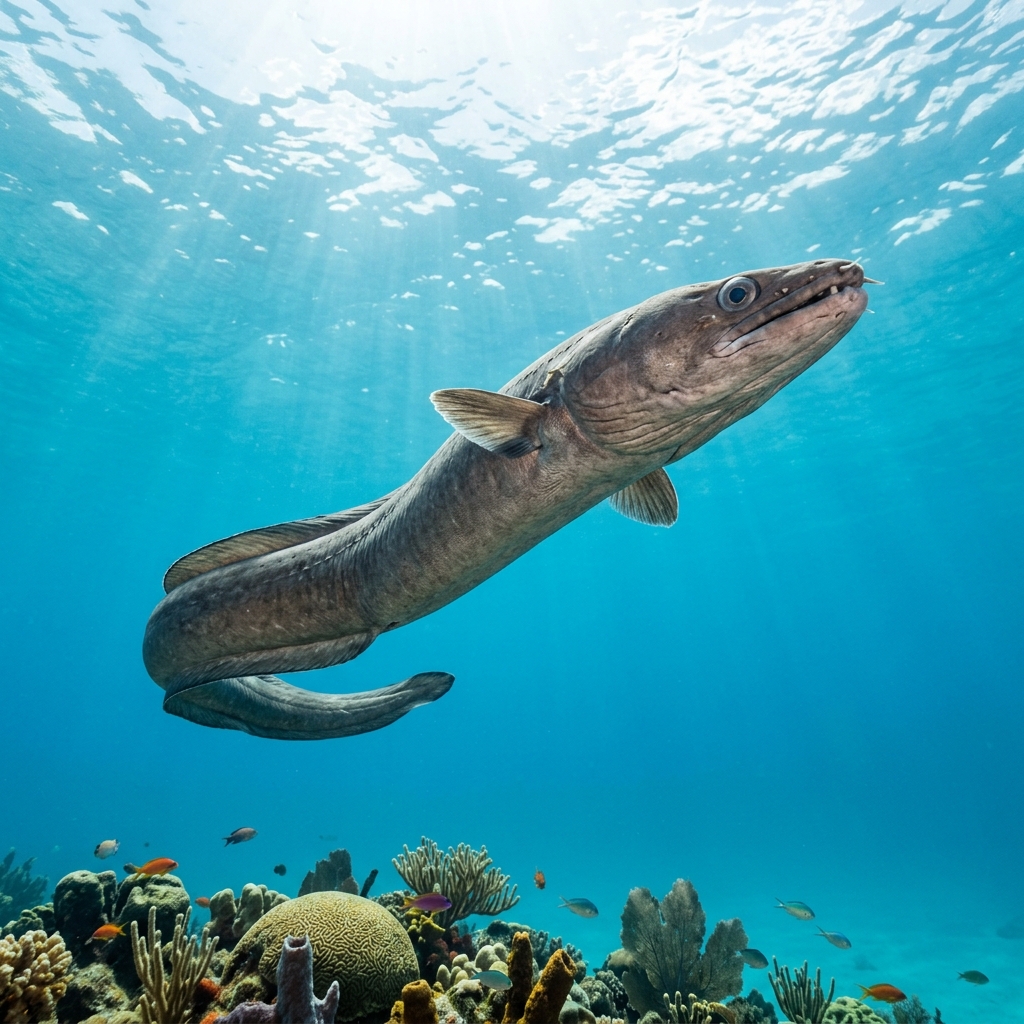
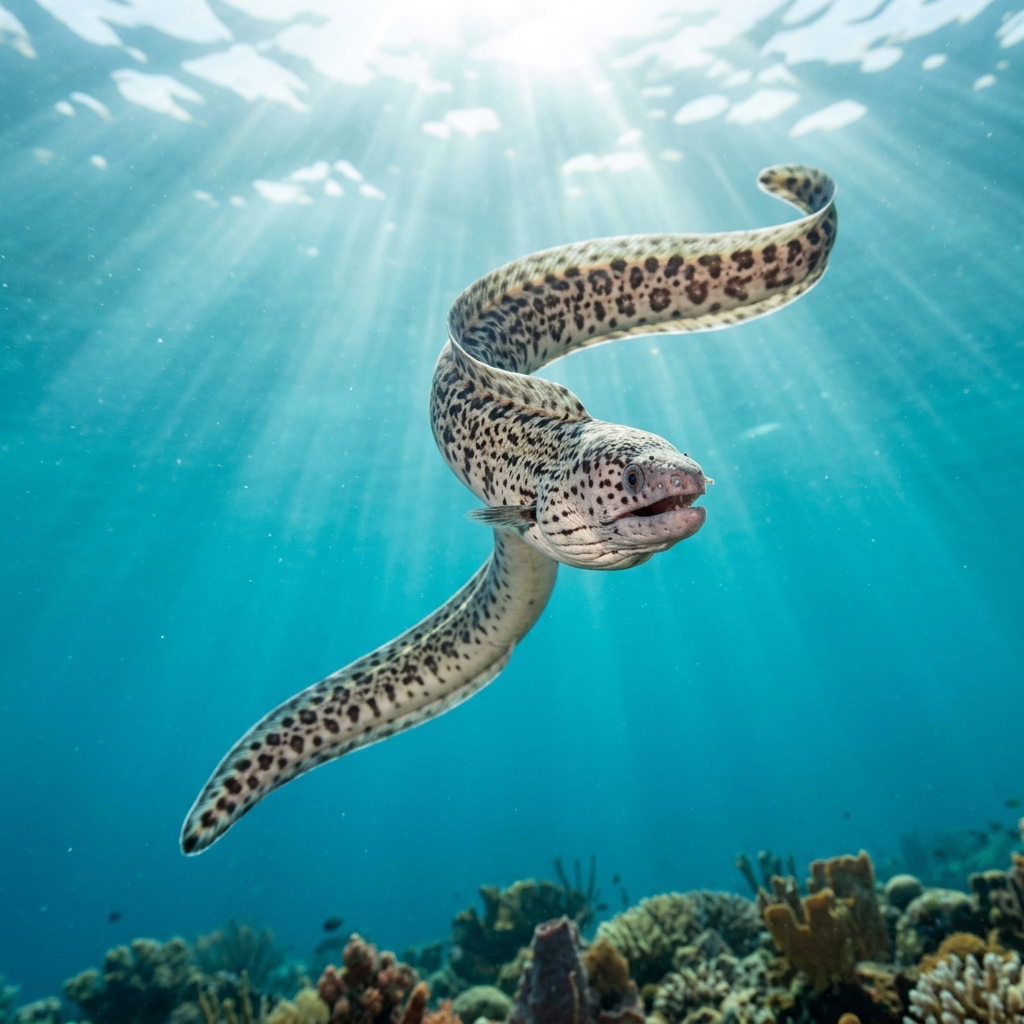
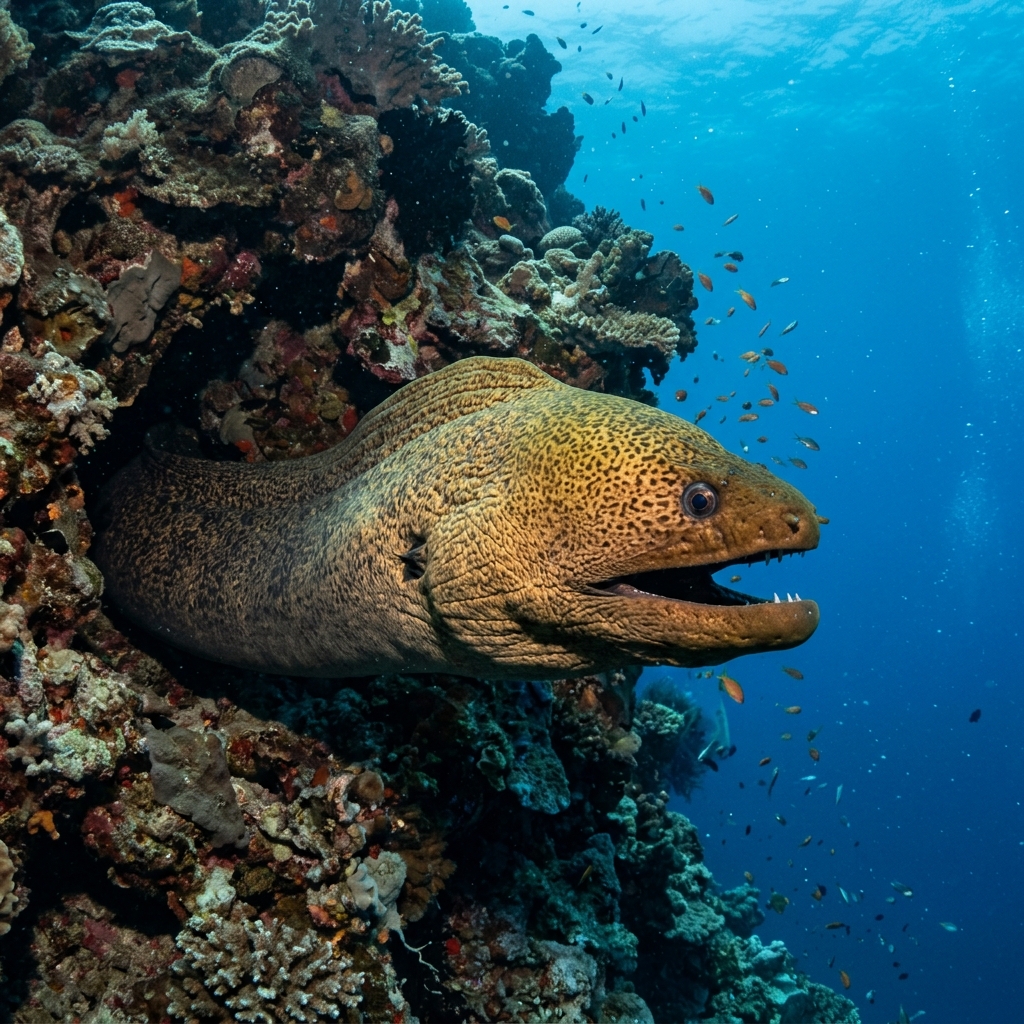
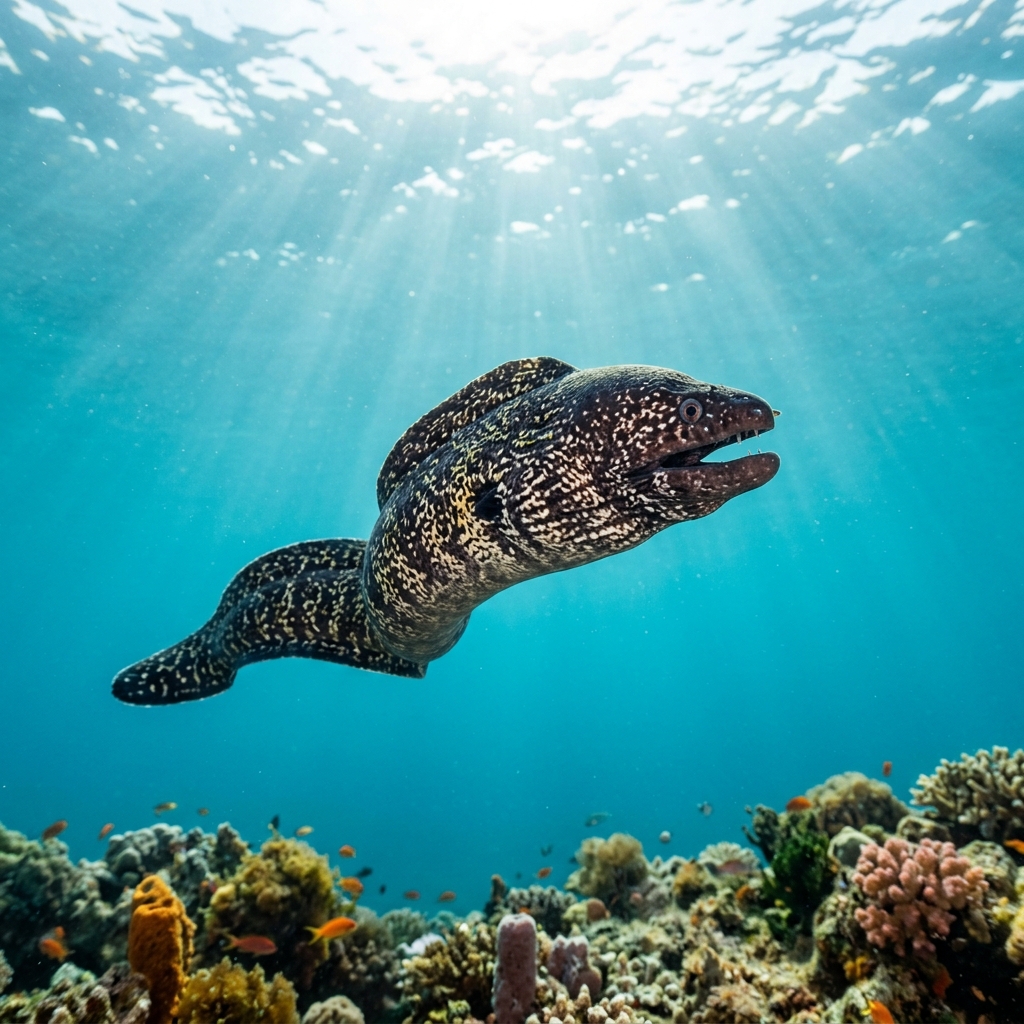
Look for a pale, cream to yellowish-brown body with a distinctive dark blotch at the corner of the mouth, which gives the species its common name. The body is slender even by moray standards, and the head tends to look slightly pointed compared to bulkier relatives. Underwater, that lip-spot is the one feature worth zeroing in on, as overall colouration can vary and blend with reef rubble. No dramatic difference between juveniles and adults is currently documented.
Like most morays, the lipspot moray is typically spotted with its head poking from a crack or overhang, body coiled out of sight and mouth cycling open and shut to push water over its gills. It is not known to be aggressive toward divers and will usually retreat deeper into the reef if approached too closely. Sightings at this point are almost always during daylight dives on coral and rubble slopes.
The conspicuous dark blotch at the corner of the jaw that names this species is thought to mimic a wound or mark that may help it avoid detection; it is one of the more reliable in-water field marks for any moray of its size range in the Indo-Pacific.
No clear seasonal peak has emerged from the available data, so treat this as a year-round target. It is observed in water temperatures of 24 to 29°C, consistent with tropical and warm subtropical reefs throughout the year.
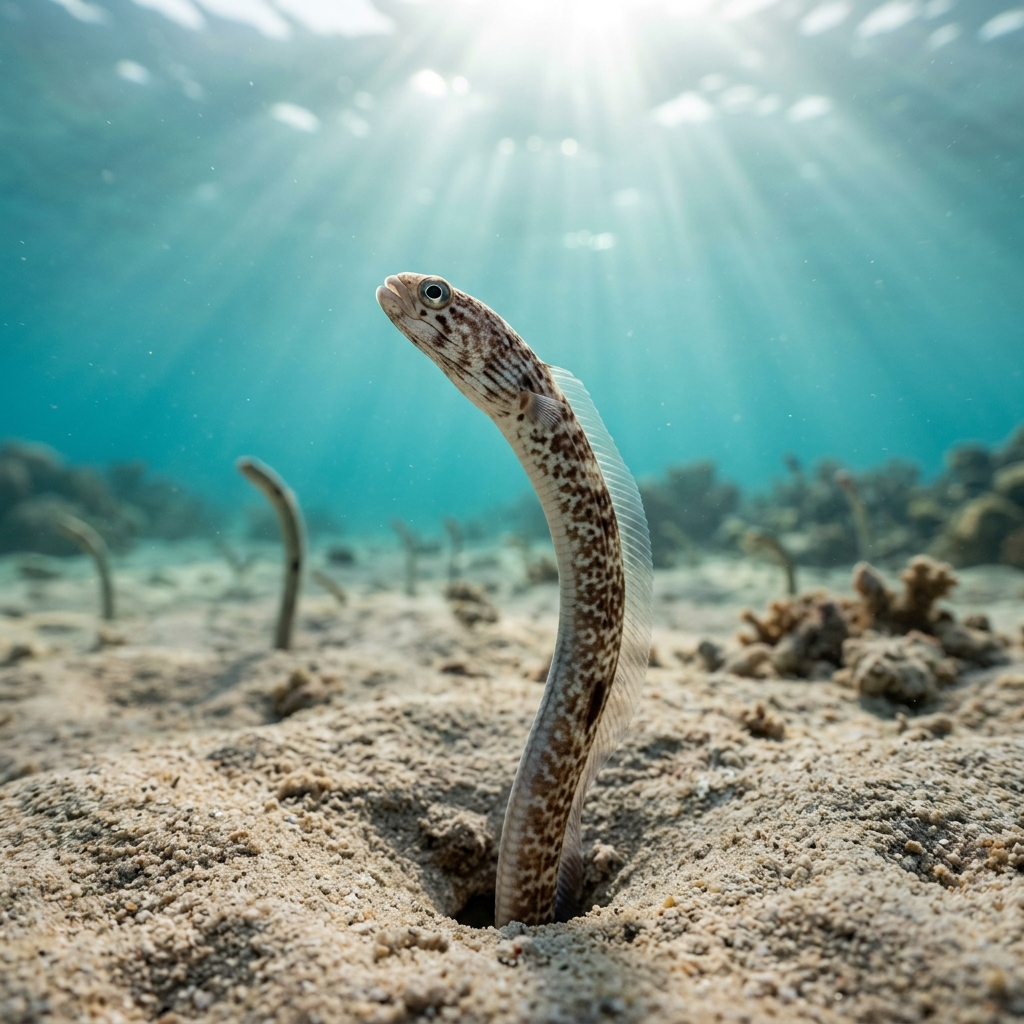
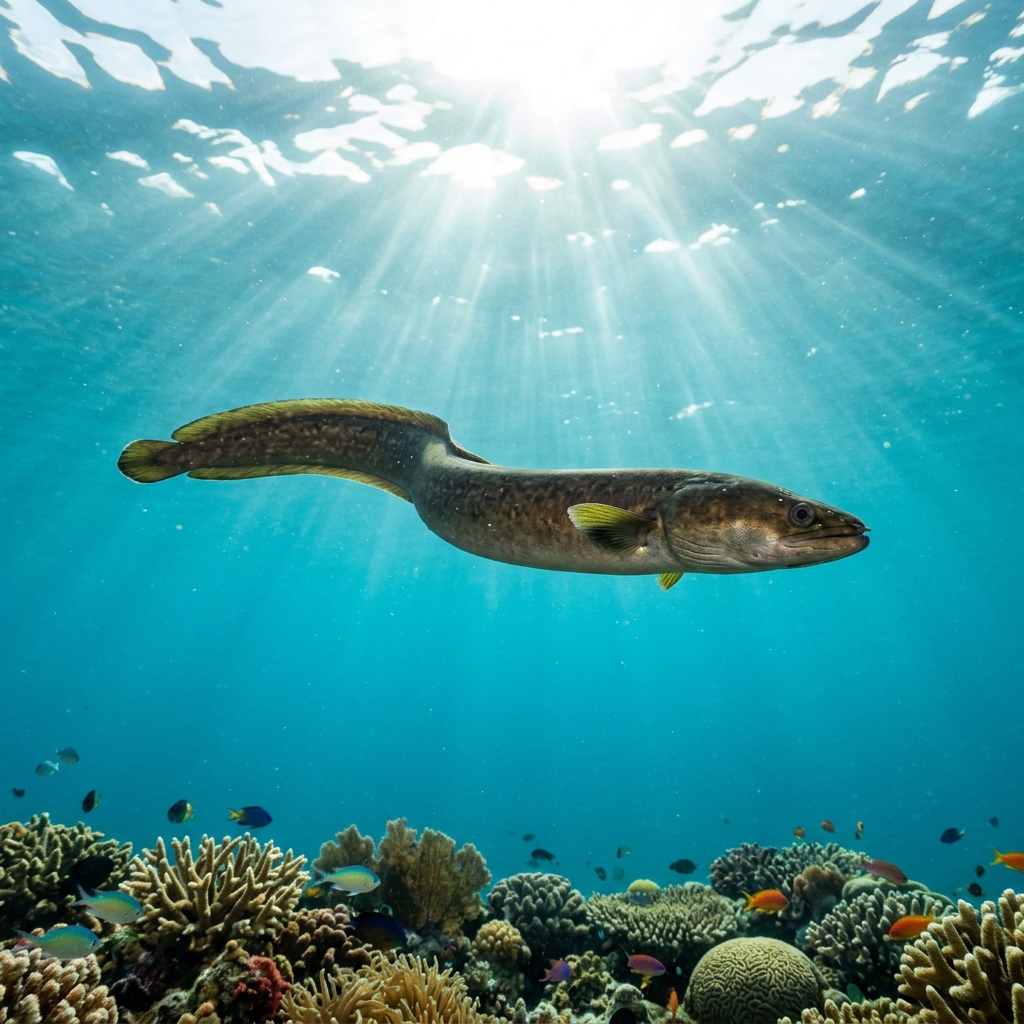
Reef neighbours a diver could mistake it for. Use the identification notes above to tell them apart.
Most logged in Northern Taiwan and in the Bali, Lombok and Java region of Indonesia, with a handful of additional records from the Nusa Tenggara and Banda Sea area. Taiwan accounts for the greatest spread of known sites, making it the most reliable destination if you are specifically targeting this species.
Mapping where Lipspot Moray is logged…
The best-documented sites are in Northern Taiwan and around Bali, Lombok and Java in Indonesia, with a few records further east in the Nusa Tenggara and Banda Sea area. Taiwan has the broader spread of known sites, so it is currently the strongest destination for this species.
There is not enough monthly sighting data to identify a peak season, so year-round diving is as good a bet as any. The species is recorded in water temperatures of 24 to 29°C, typical of tropical reefs in both Taiwan and Bali across all seasons.
Focus on the corner of the mouth: a well-defined dark spot right at the lip is the defining feature. The body is pale cream to yellowish-brown and slender. If you can see that lip-spot clearly, you have your ID; without it, the species is easy to overlook among similar-looking morays.
No. The lipspot moray is not considered dangerous. Like any moray it will bite if handled or cornered, but it does not act aggressively toward divers. Keep a respectful distance and avoid putting hands into reef crevices where any moray might be sheltering.
It is uncommon to rare on the sites where it is recorded. The overwhelming majority of logged sightings list it as rare, so spotting one takes patience, slow reef scanning, and a bit of luck. Letting your eyes linger on crevices in rubble and coral slopes gives you the best chance.
Site and sighting data is aggregated from diver logs, iNaturalist and GBIF. For taxonomy and conservation status:
Garden Eel
2,448 sites