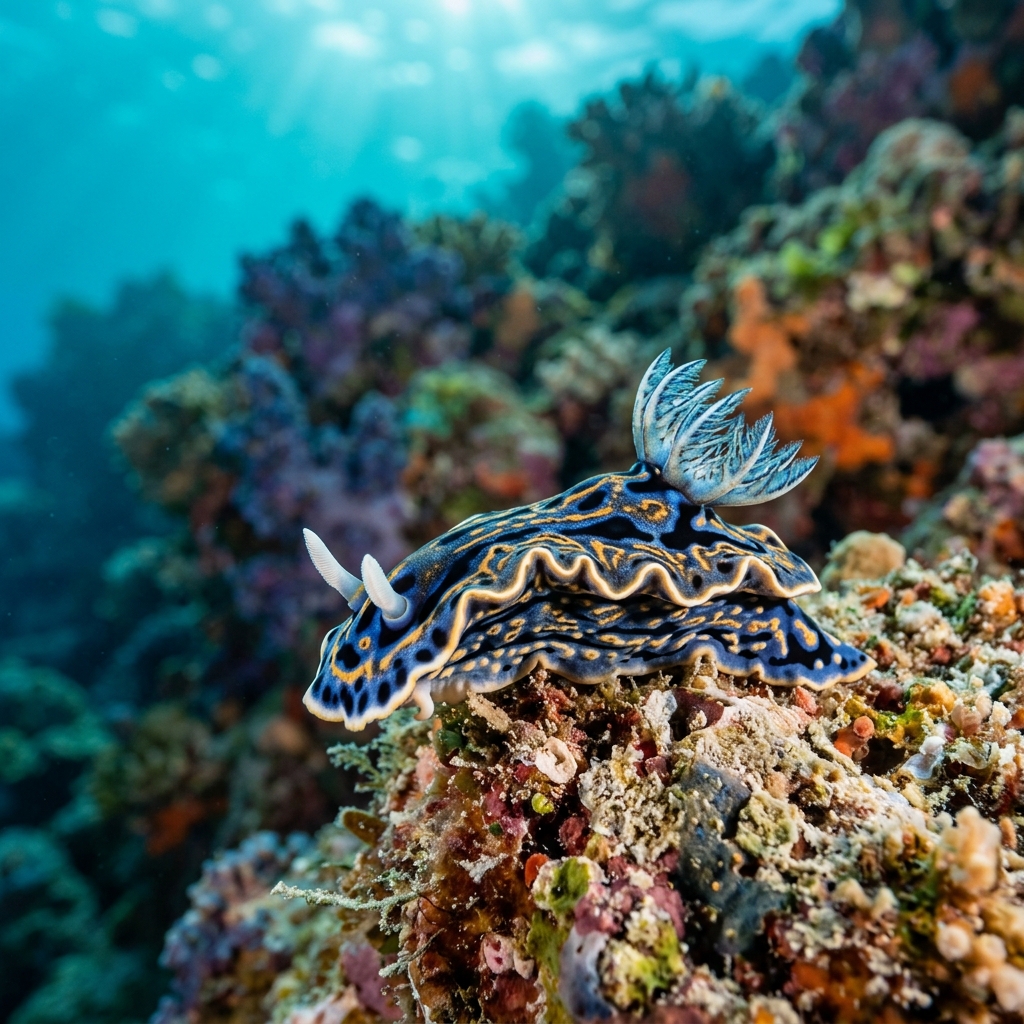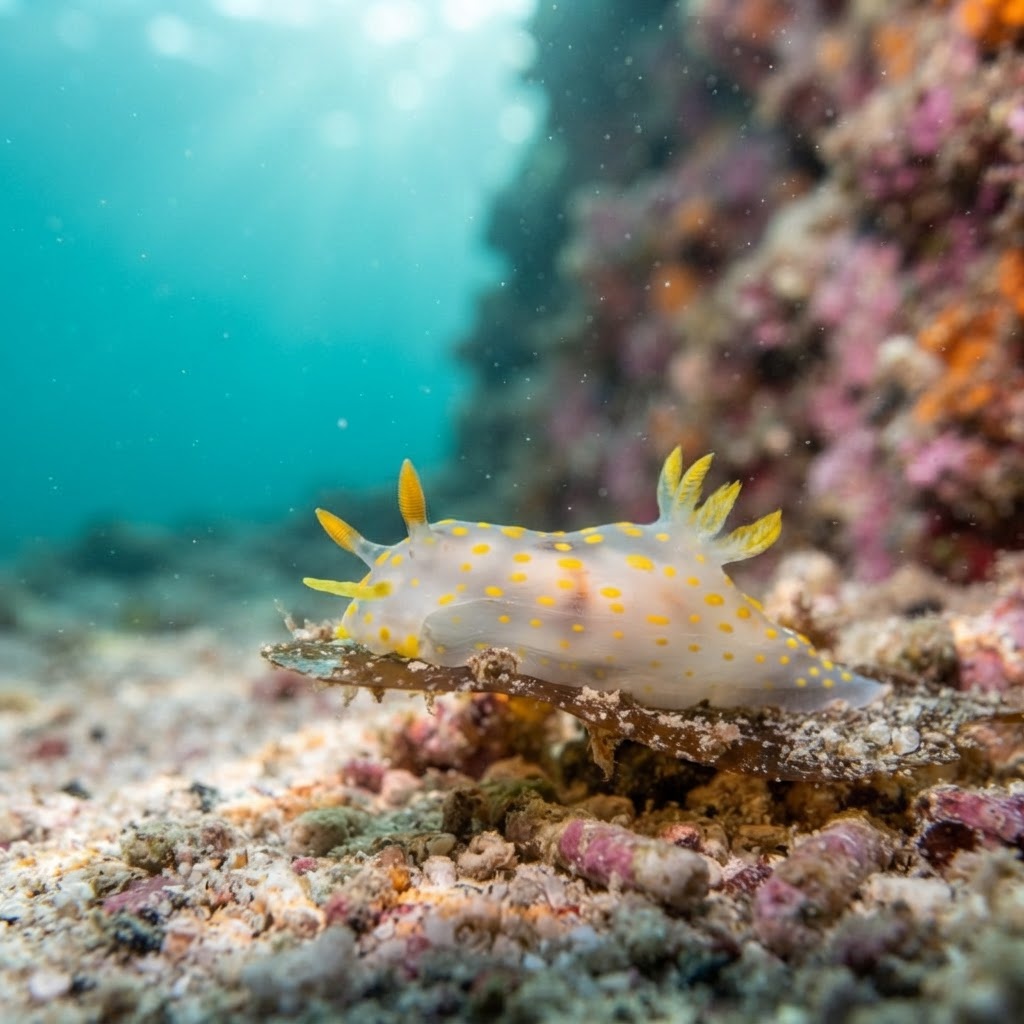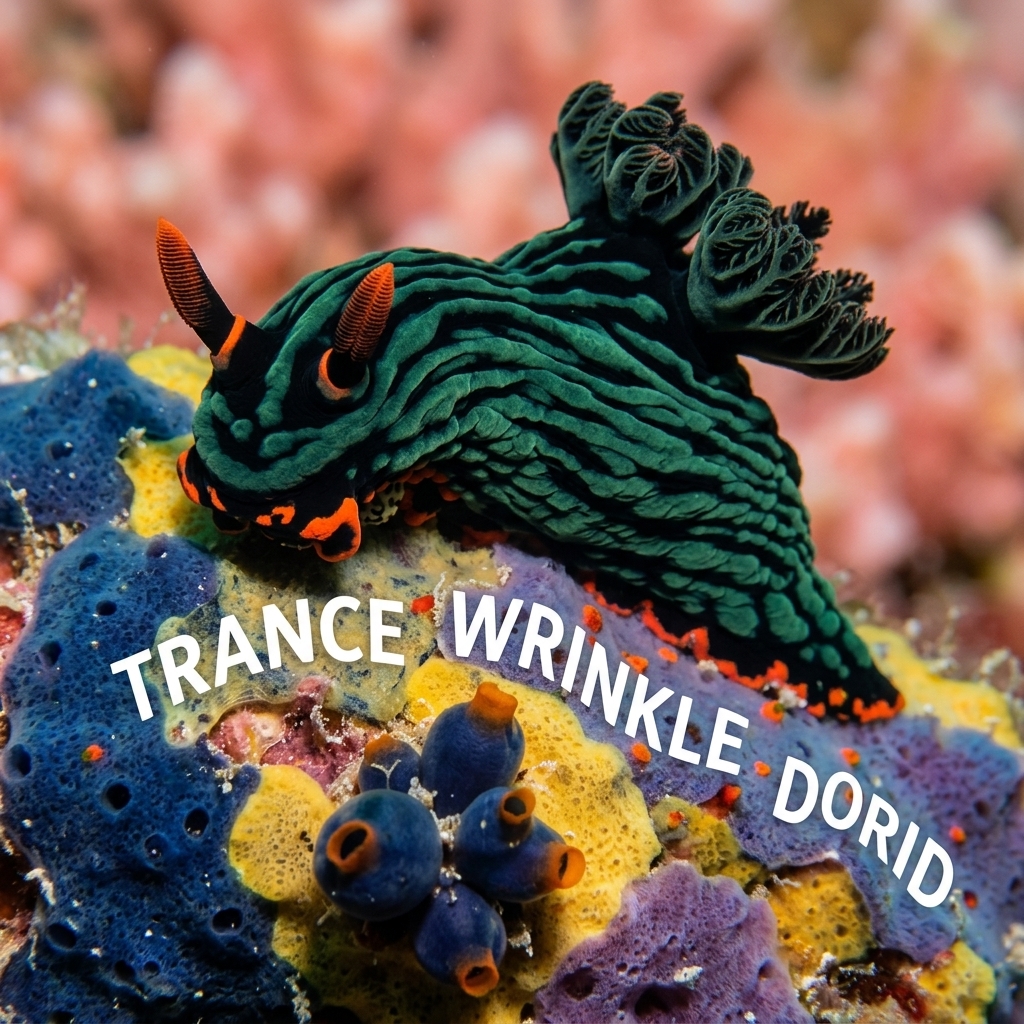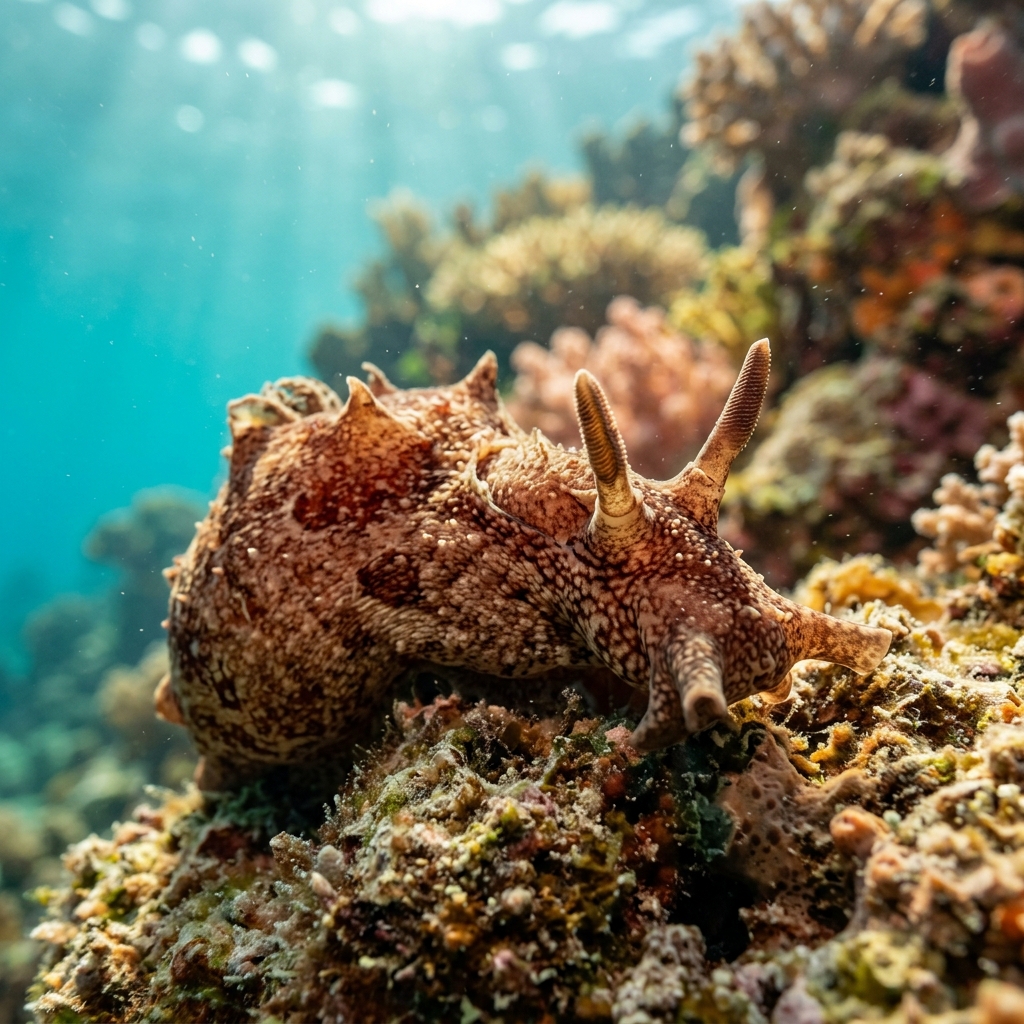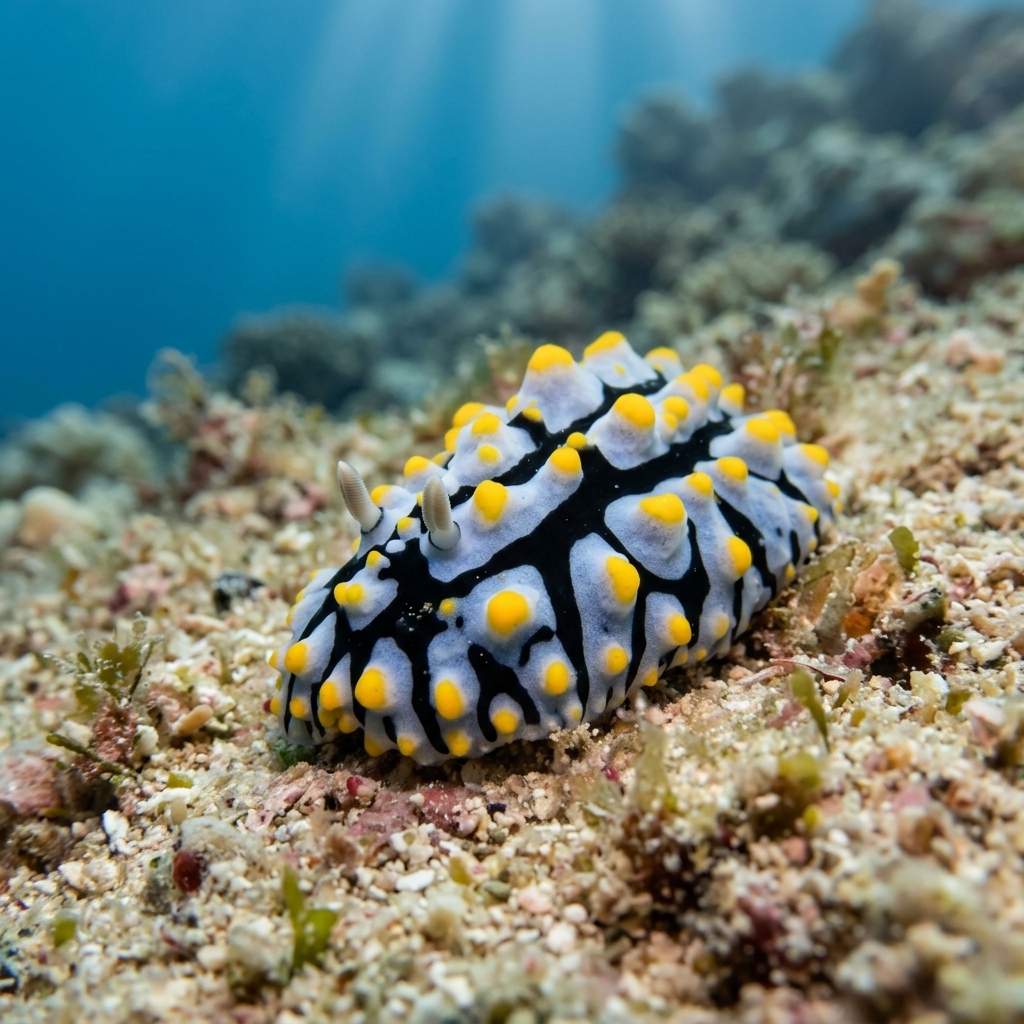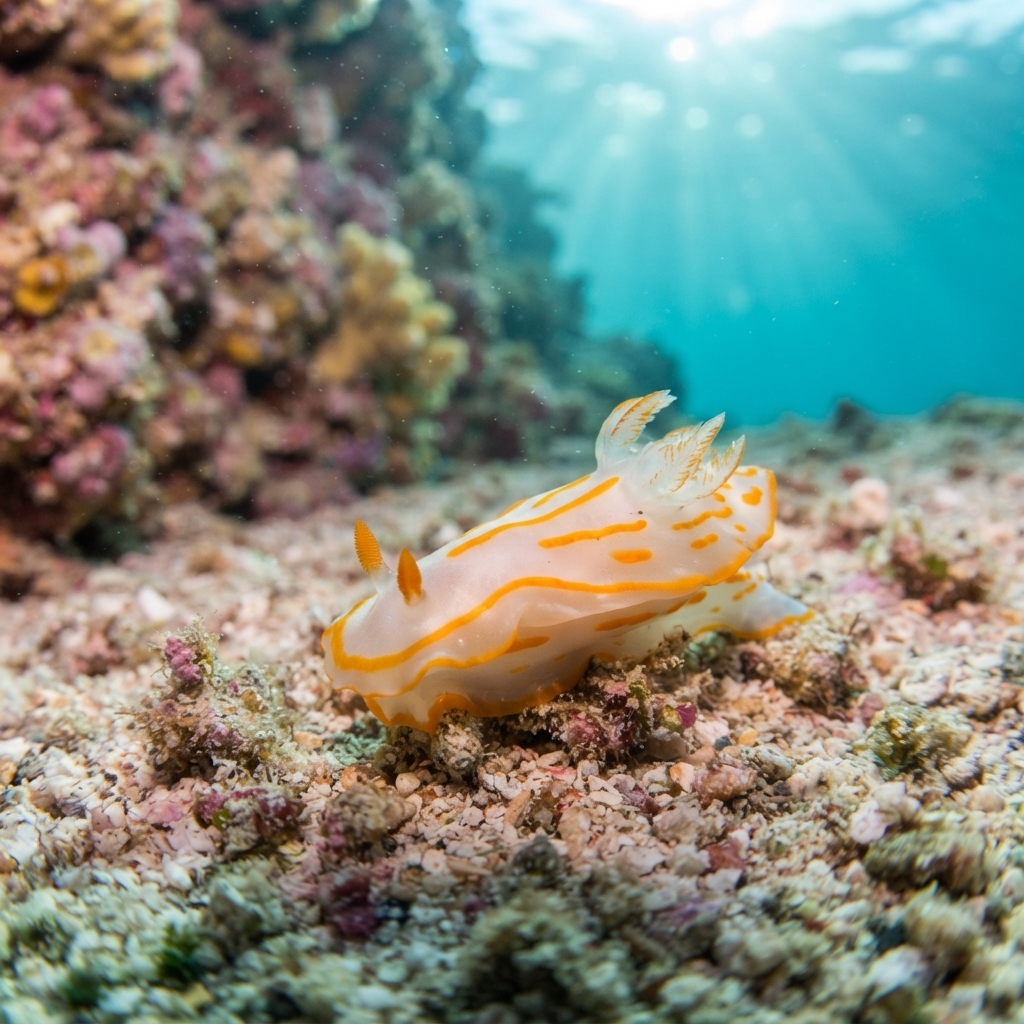
Gymnodoris striata
A small striped nudibranch logged across the Andaman Islands, India, in warm 22-28C reef water year-round.
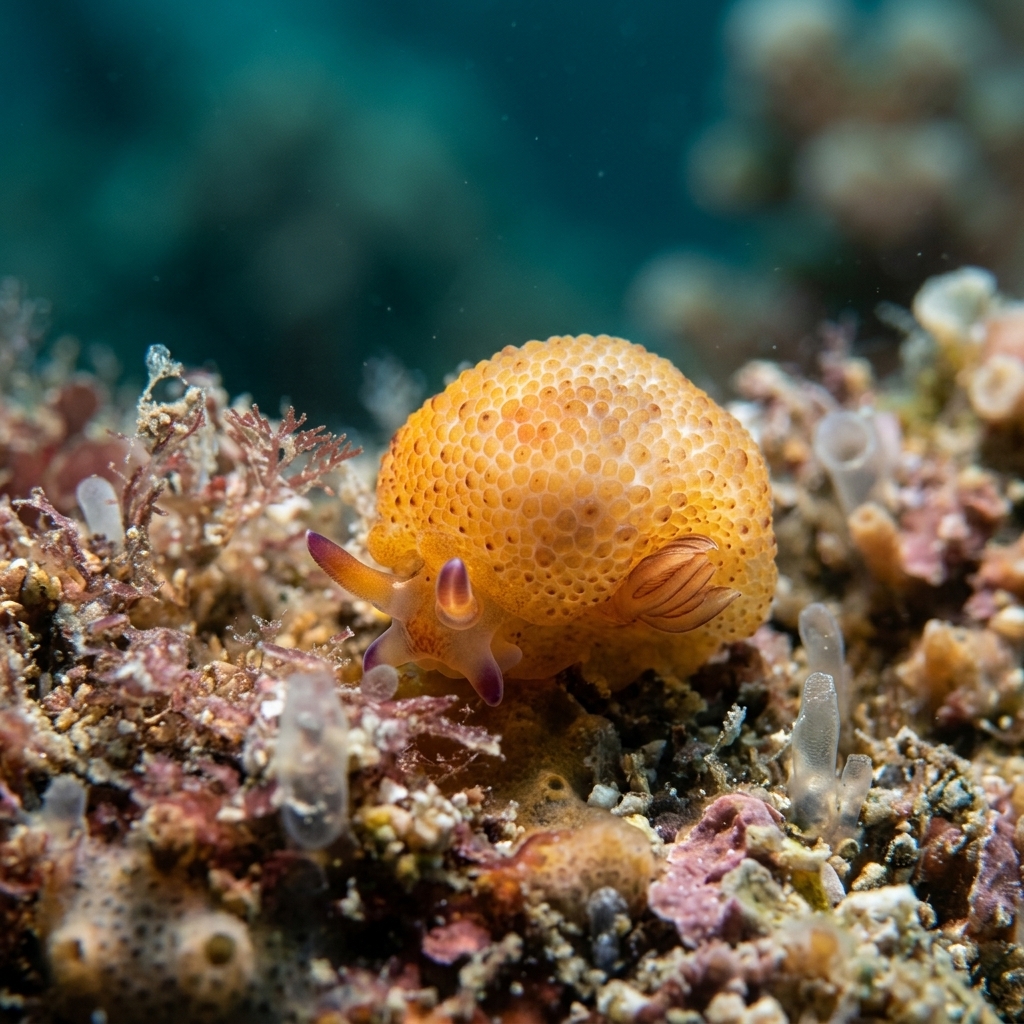
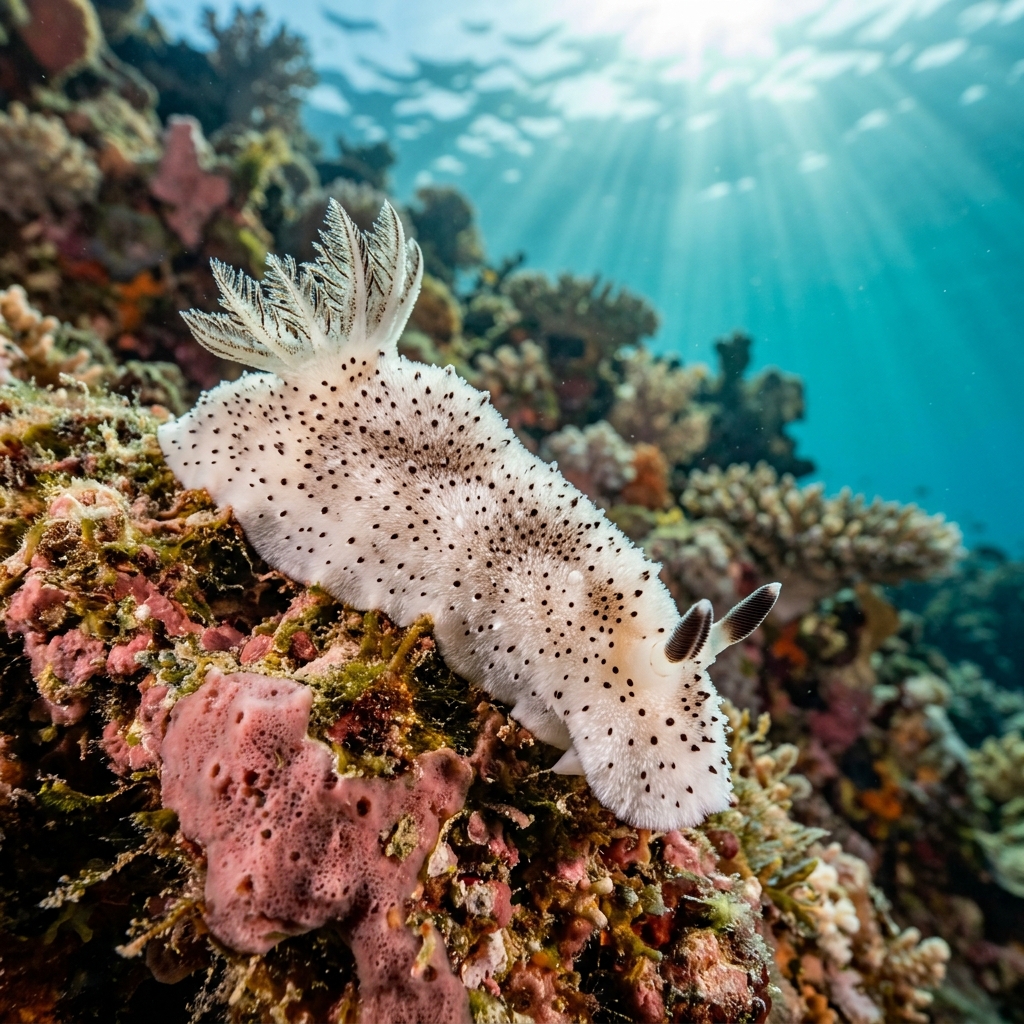
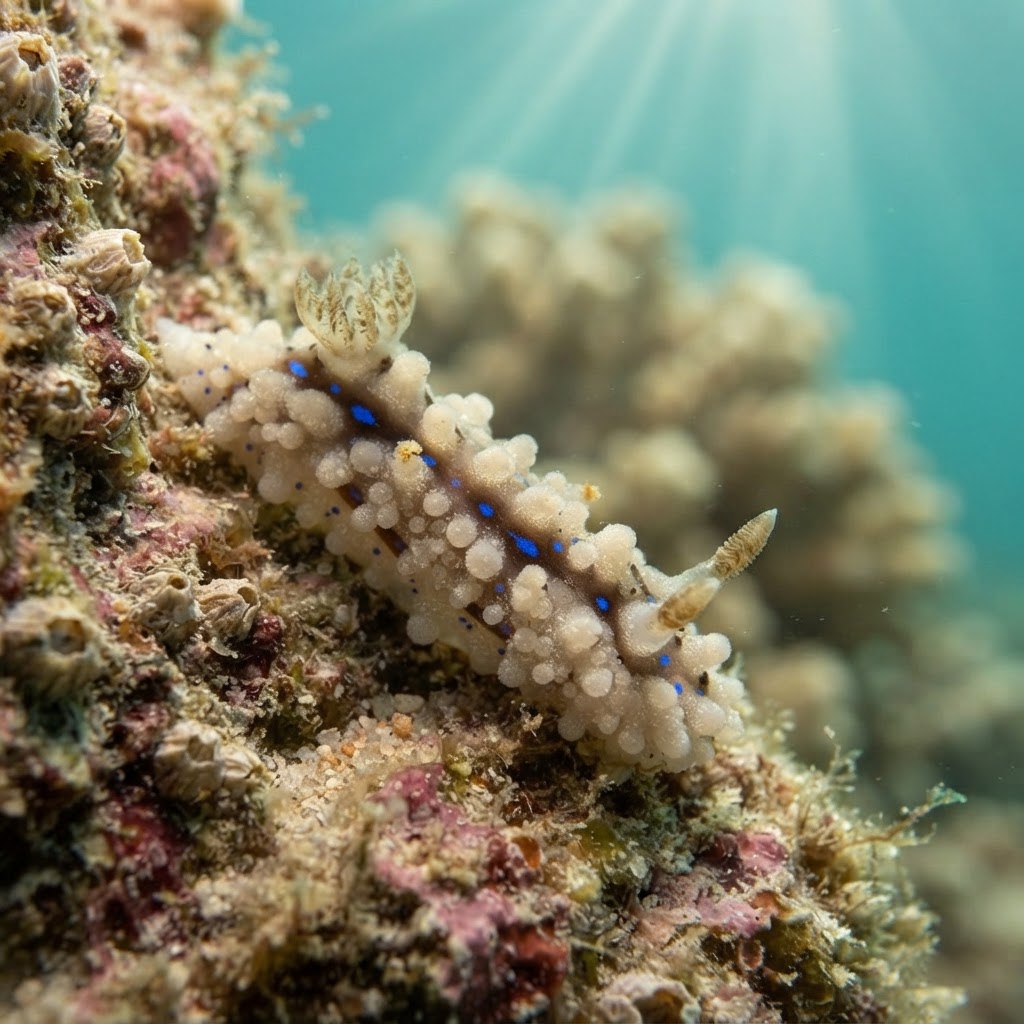
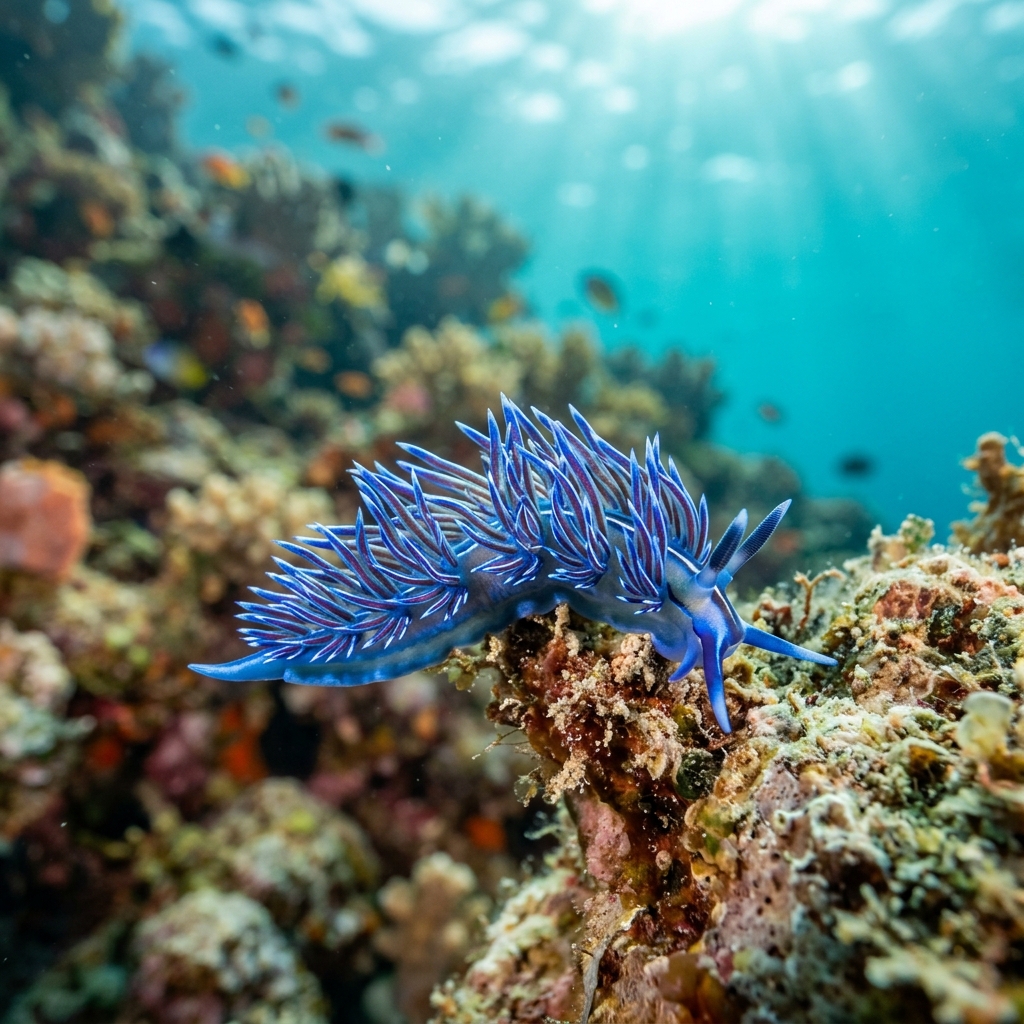
A slim, slug-shaped body only around 4 cm long, marked with fine longitudinal stripes running down its back that give the species its name. Unlike the broader, more flamboyant chromodorids it swims alongside, it has a low-profile, streamlined shape built for hunting other slugs across the substrate rather than sitting out in the open. Colouring stays fairly subdued compared to its showier reef neighbours, which is often the first clue you are looking at this species rather than a lookalike.
Divers log this one as an uncommon find, meaning you will need to actively search rubble, sponge patches and reef crevices rather than expect it out cruising in open water. Like other members of its genus, it is a slow, deliberate crawler, and its stripes make it easy to miss against a busy reef background unless you are looking closely at the substrate. It shows no particular reaction to divers, going about its business regardless of a torch or camera nearby.
Gymnodoris nudibranchs are unusual among sea slugs in that many species are active predators of other nudibranchs, sometimes swallowing prey whole rather than grazing on sponges or algae like most of their relatives.
Sightings sit in the 21.9 to 27.9 C range, comfortable tropical reef water, and there is not enough seasonal data to pin down a peak month, so treat it as a year-round possibility on Andaman reefs.
Reef neighbours a diver could mistake it for. Use the identification notes above to tell them apart.
Every logged sighting of this species in the data comes from the Andaman Islands, India, making that archipelago the reliable place to look for it. There is not yet a documented spread beyond India, so divers planning a search should focus dive trips there rather than expecting it on generic Indo-Pacific reef checklists.
Mapping where Striped Gymnodoris is logged…
All confirmed sightings come from the Andaman Islands, India, which is currently the only documented region for this species. It has not yet been logged in other parts of the Indo-Pacific.
There is no clear seasonal pattern in the data, and it has been recorded in water from 21.9 to 27.9 C, so it is best treated as a year-round possibility rather than tied to a specific month.
Look for a small, slender nudibranch around 4 cm long with fine stripes running along its body, crawling low across rubble or sponge-covered substrate rather than sitting exposed on open reef.
This species stays small, typically around 4 cm in length, so a careful eye and a bit of patience scanning the substrate helps when searching for one.
Many Gymnodoris species are predators of other nudibranchs rather than grazers of sponges or algae, which sets the genus apart from most sea slugs divers commonly encounter.
No, it poses no danger to divers. It is a tiny, slow-moving mollusk best appreciated with a macro lens rather than handled.
Site and sighting data is aggregated from diver logs, iNaturalist and GBIF. For taxonomy and conservation status:
Light-spotted Aegires
3,168 sites