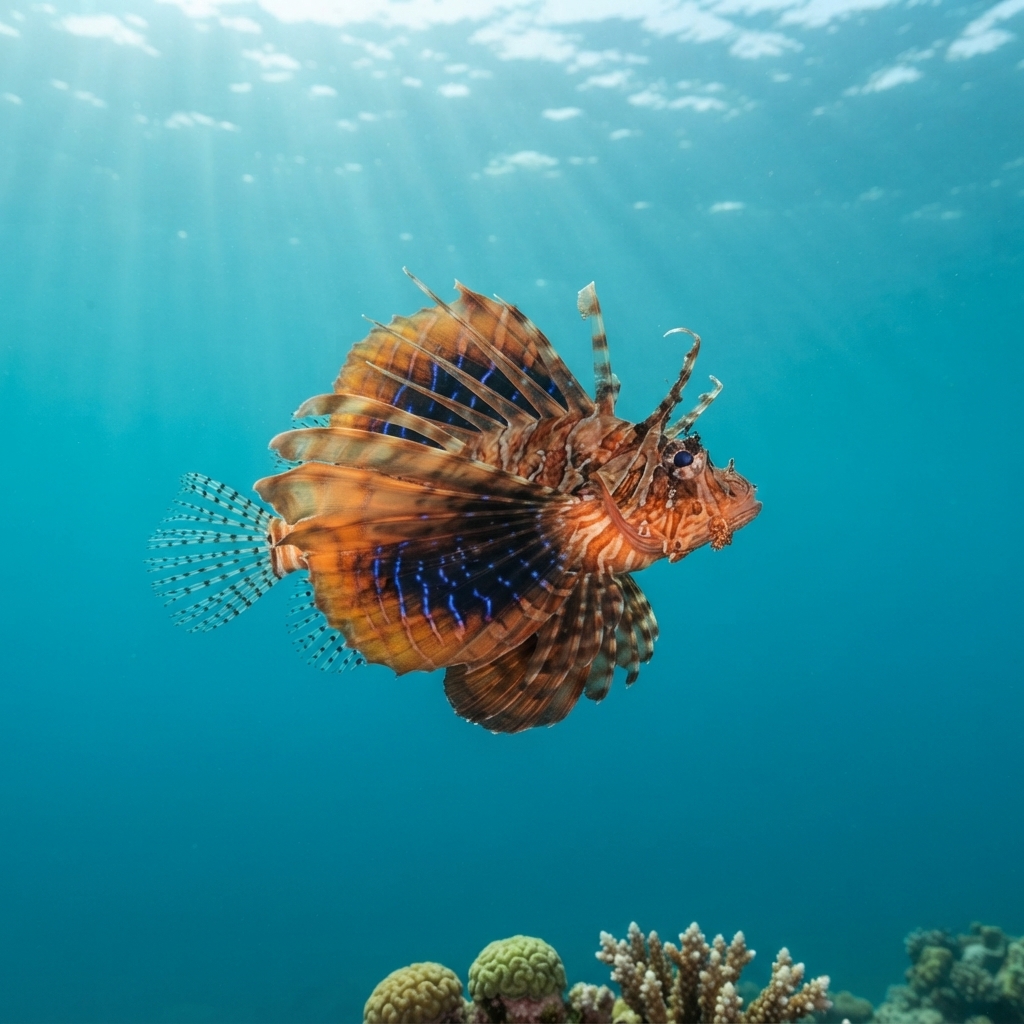
Parapterois heterura
Winged, sand-dwelling lionfish logged around Bali's reefs at 15 to 27C, uncommon but unmistakable once you spot the fanned pectoral fins.
Safety warning
Carries venomous spines along the dorsal fin like other scorpionfish and lionfish, capable of a painful sting if touched or stepped on. It rarely reacts to divers unless cornered or handled, so keep hands and fins clear of sand patches where it may be resting and give it a wide berth if it flares its fins.
If you're stung
Venomous spinesGeneral first-aid guidance, not a substitute for professional medical care. In an emergency, call your local emergency number.
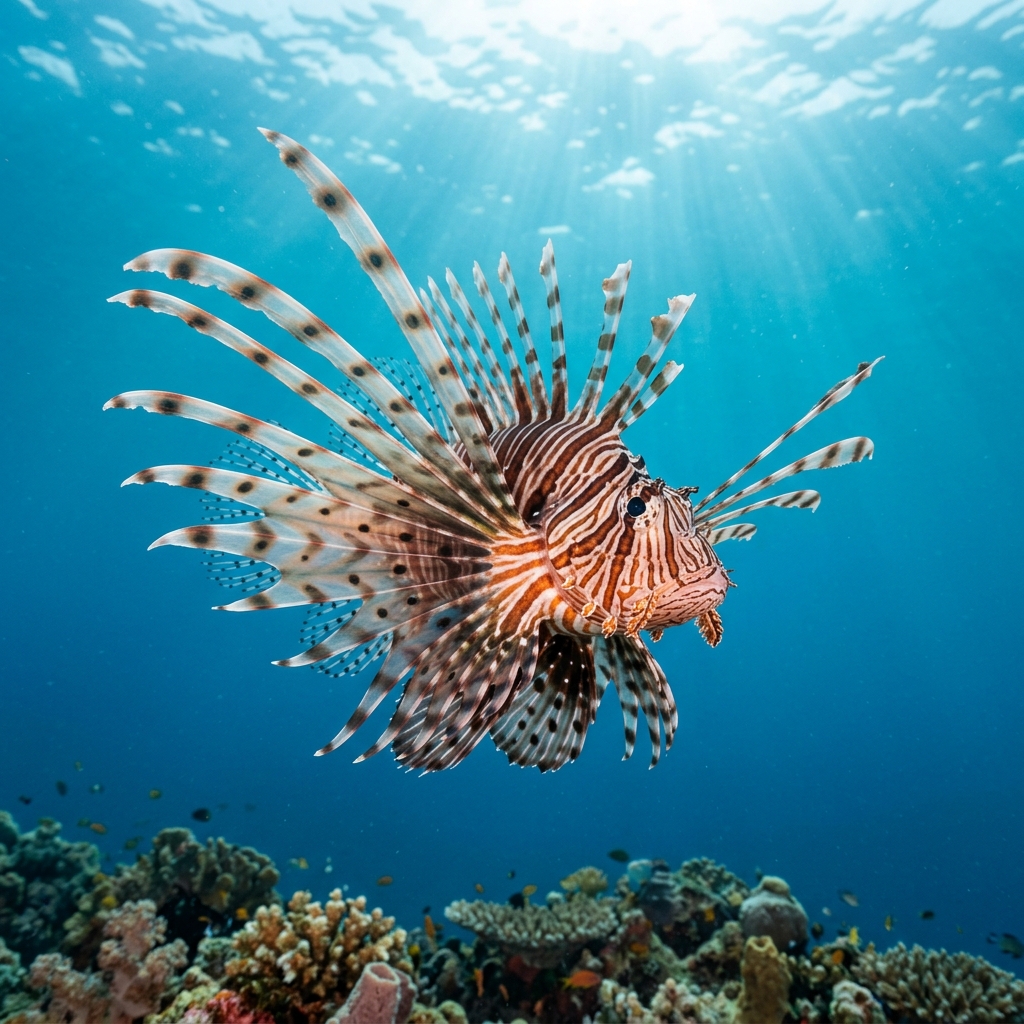
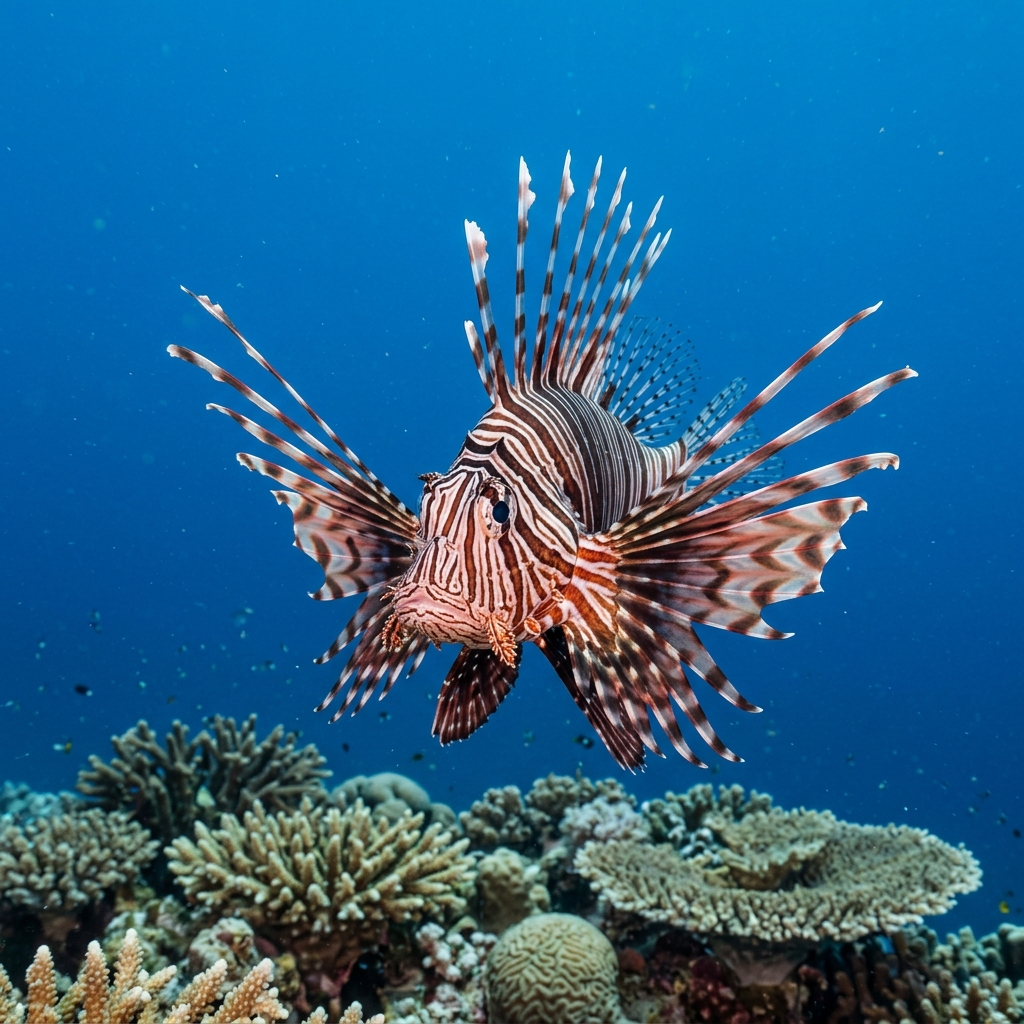
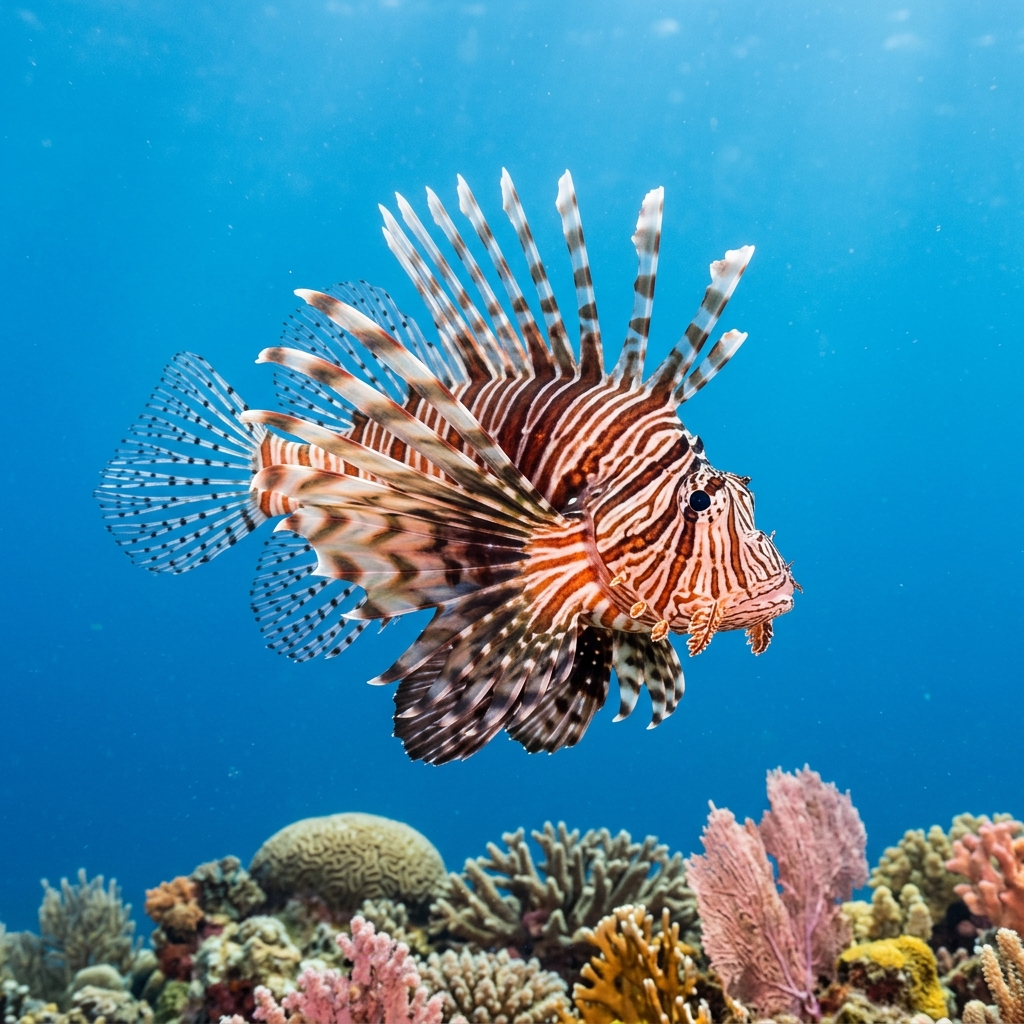
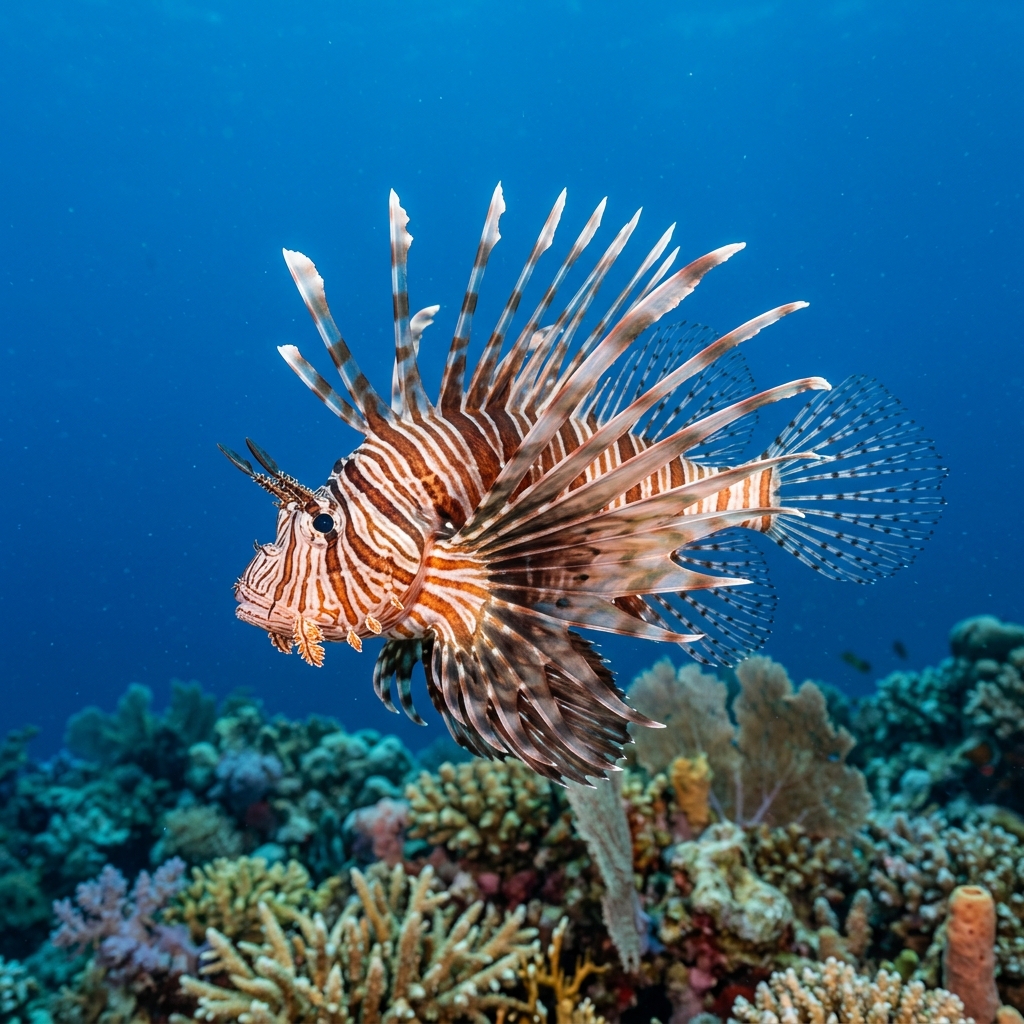
Grows to around 27 cm and rests low on sand or rubble rather than hovering in open water like typical lionfish. The giveaway is a pair of enormous, rounded, fan-like pectoral fins edged in dark bands, held spread wide almost like wings when the fish feels threatened. Body colour runs mottled brown and cream, giving strong camouflage against sand until it flares those fins. The long, ragged tail filament is a second useful cue if the fins are folded.
Spends most of its time sitting motionless on sand or rubble, relying on camouflage rather than movement to avoid attention. When approached too closely it will flare its oversized pectoral fins wide as a warning display before moving off in a slow, gliding hop across the bottom. Most reports describe it as an uncommon find that takes a deliberate, slow-paced sand search rather than a casual reef swim.
Those huge pectoral fins aren't just for show or defence, they're thought to help herd and corner small crustaceans and fish against the substrate before an ambush strike.
Sightings show no detected seasonal pattern, and the observed temperature range of 14.9 to 26.8C spans cooler upwelling periods through warm-water months, so it turns up year-round wherever divers check sand and rubble patches.
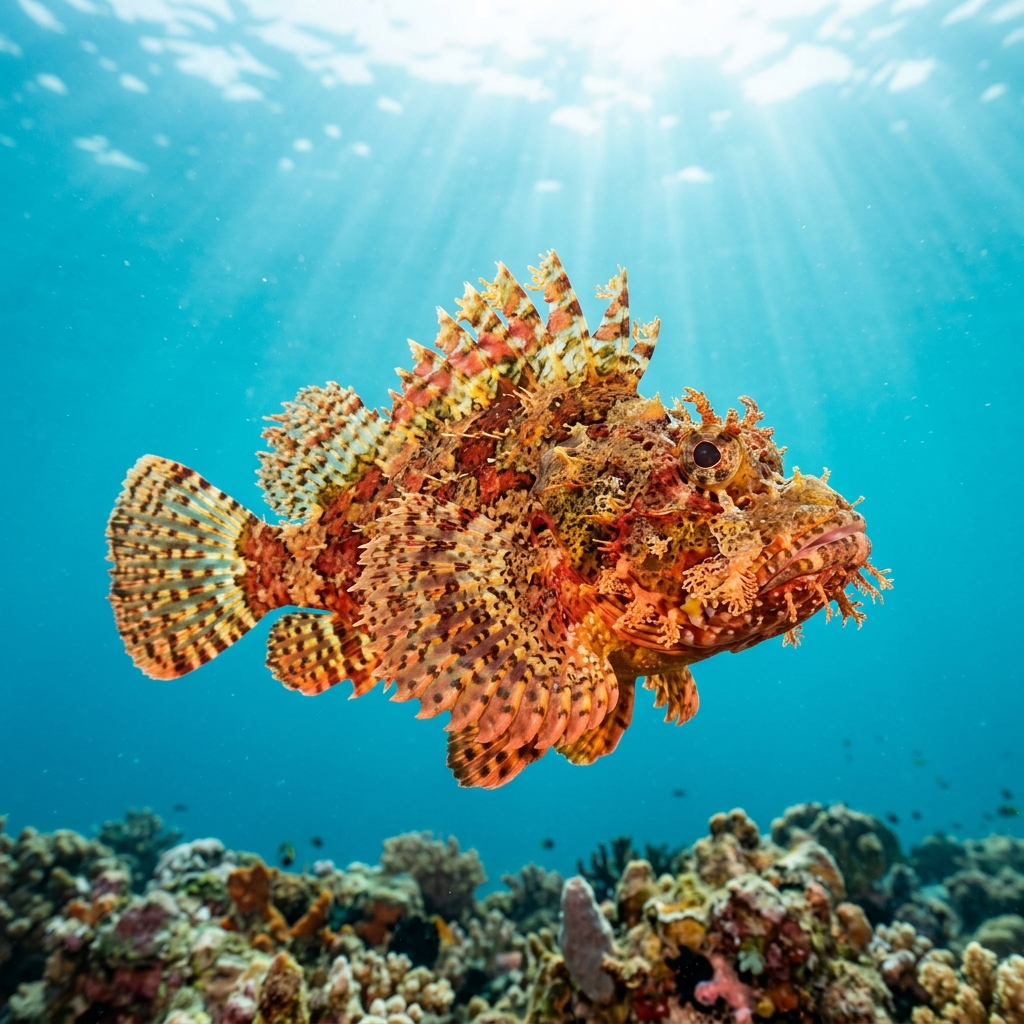
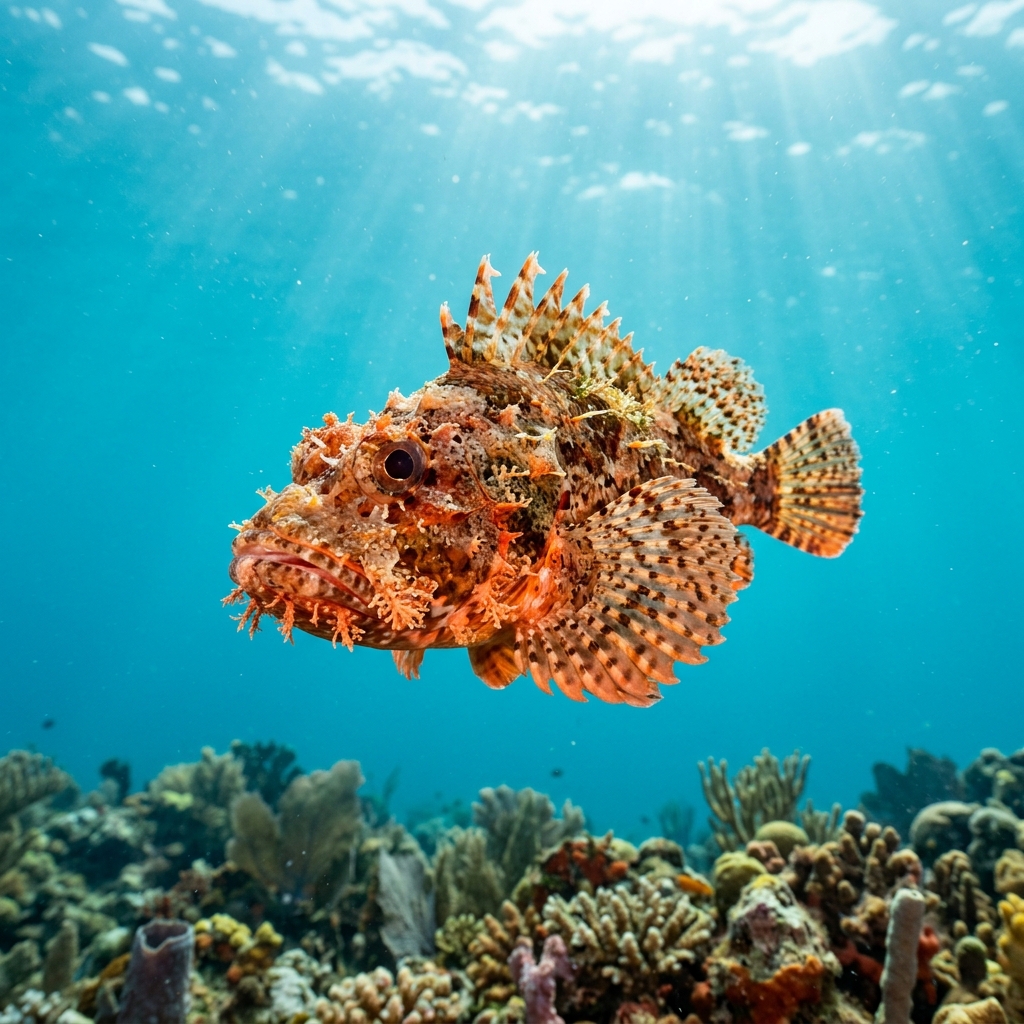
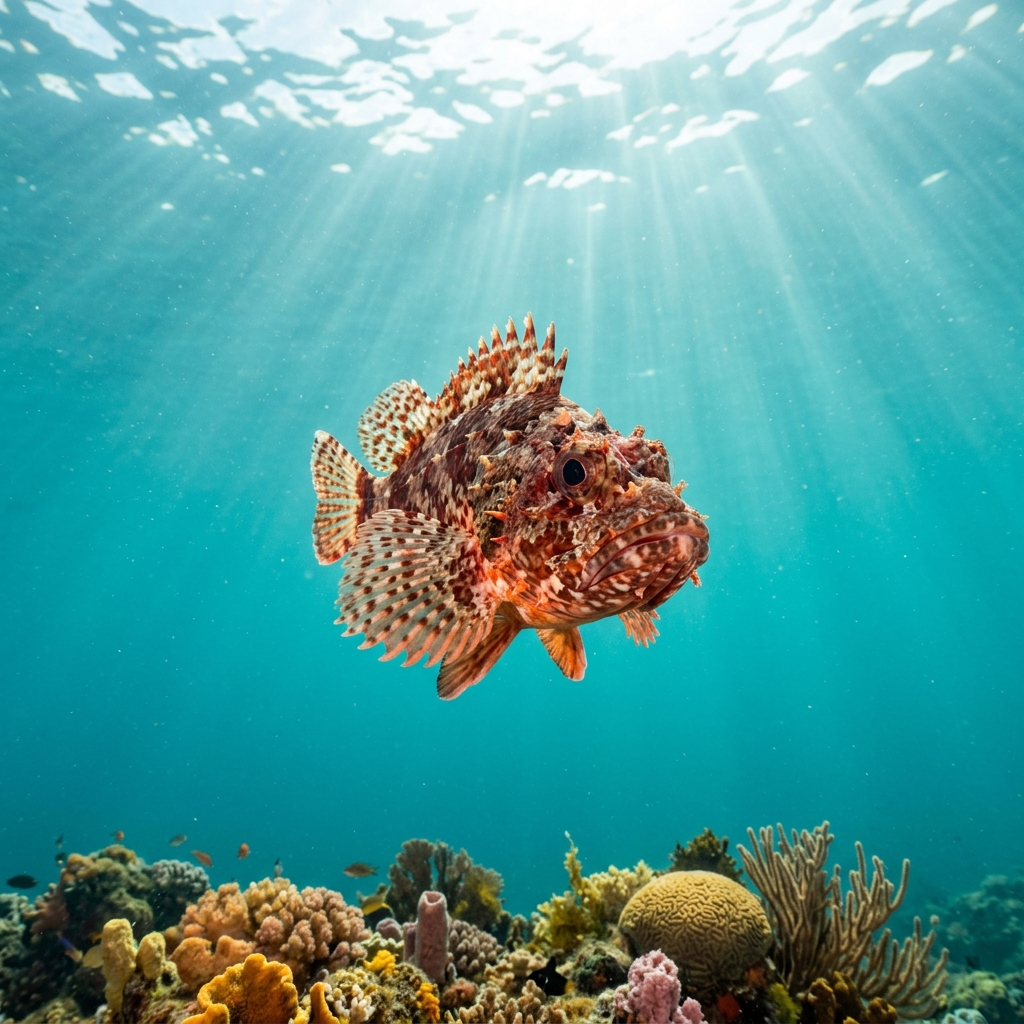
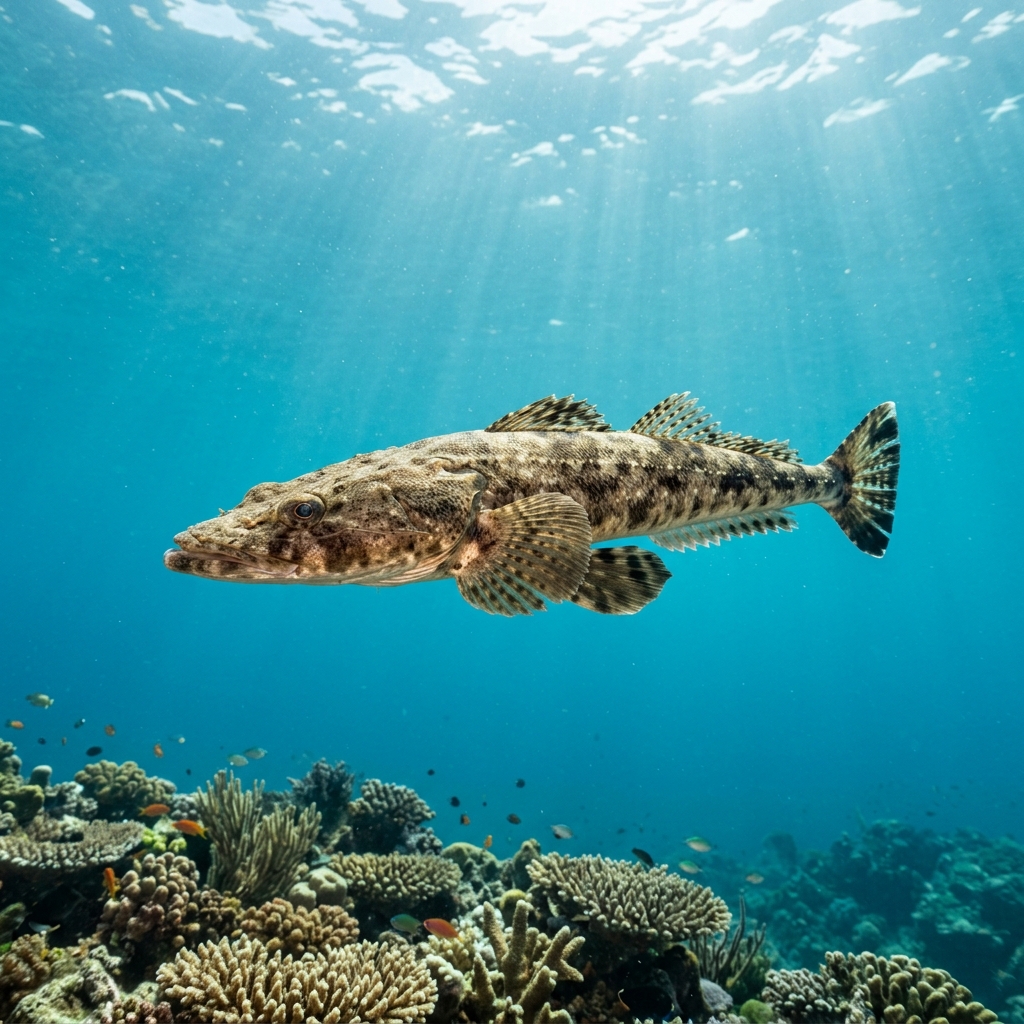
Reef neighbours a diver could mistake it for. Use the identification notes above to tell them apart.
Most reliably logged around Bali, Indonesia, which accounts for the bulk of confirmed sightings, with a smaller but steady presence in Luzon, Philippines. Look on sandy slopes and rubble patches rather than hard coral structure at either destination.
Mapping where Gurnard Lionfish is logged…
Bali, Indonesia holds the strongest run of sightings, with additional records from Luzon in the Philippines. It favours sandy or rubble-strewn bottoms rather than coral walls, so muck and sand-slope dive sites are the best bet.
There's no clear seasonal pattern in the sightings, and it's been recorded across a wide temperature range from 14.9 to 26.8C, so it's a year-round possibility rather than a seasonal target.
Yes, it carries venomous dorsal spines that can deliver a painful sting if touched. It's not aggressive toward divers and mainly relies on camouflage, so the main risk is accidentally brushing or kneeling on one resting in sand.
Look for a mottled brown and cream fish resting flat on sand with oversized, fan-shaped pectoral fins banded in dark markings. It grows to about 27 cm and often stays still until approached, then flares those wing-like fins as a warning.
They reach around 27 cm in length, making them a mid-sized member of the scorpionfish and lionfish family, noticeably smaller than the common lionfish species seen on Indo-Pacific reefs.
Its oversized, wing-like pectoral fins are thought to help it herd small prey against the sea floor before striking, a hunting trick shared with true gurnards despite the two groups being unrelated.
Site and sighting data is aggregated from diver logs, iNaturalist and GBIF. For taxonomy and conservation status:
Madeira Rockfish
2,773 sites