Oxynoe viridis
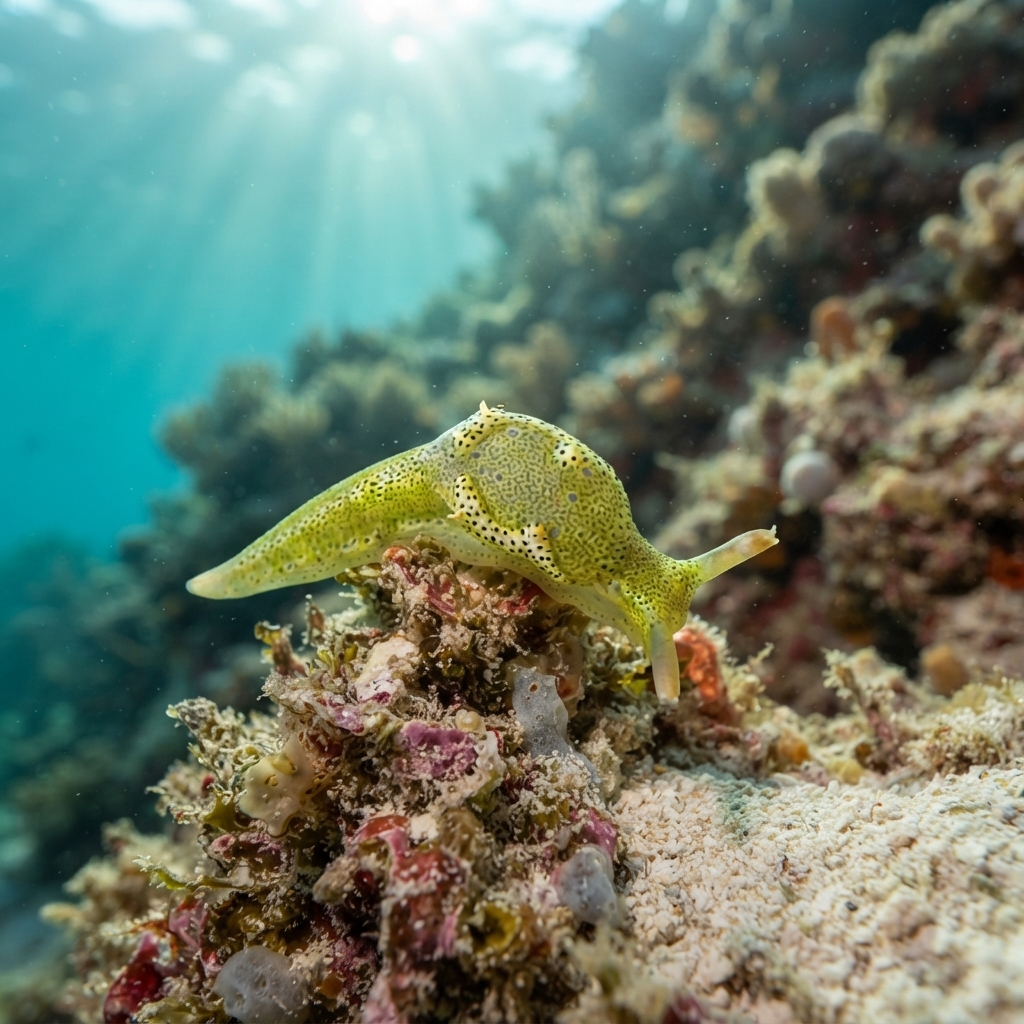
An uncommon find on temperate reefs in Victoria and Western Australia, this bright green sea slug hides among algae year-round.
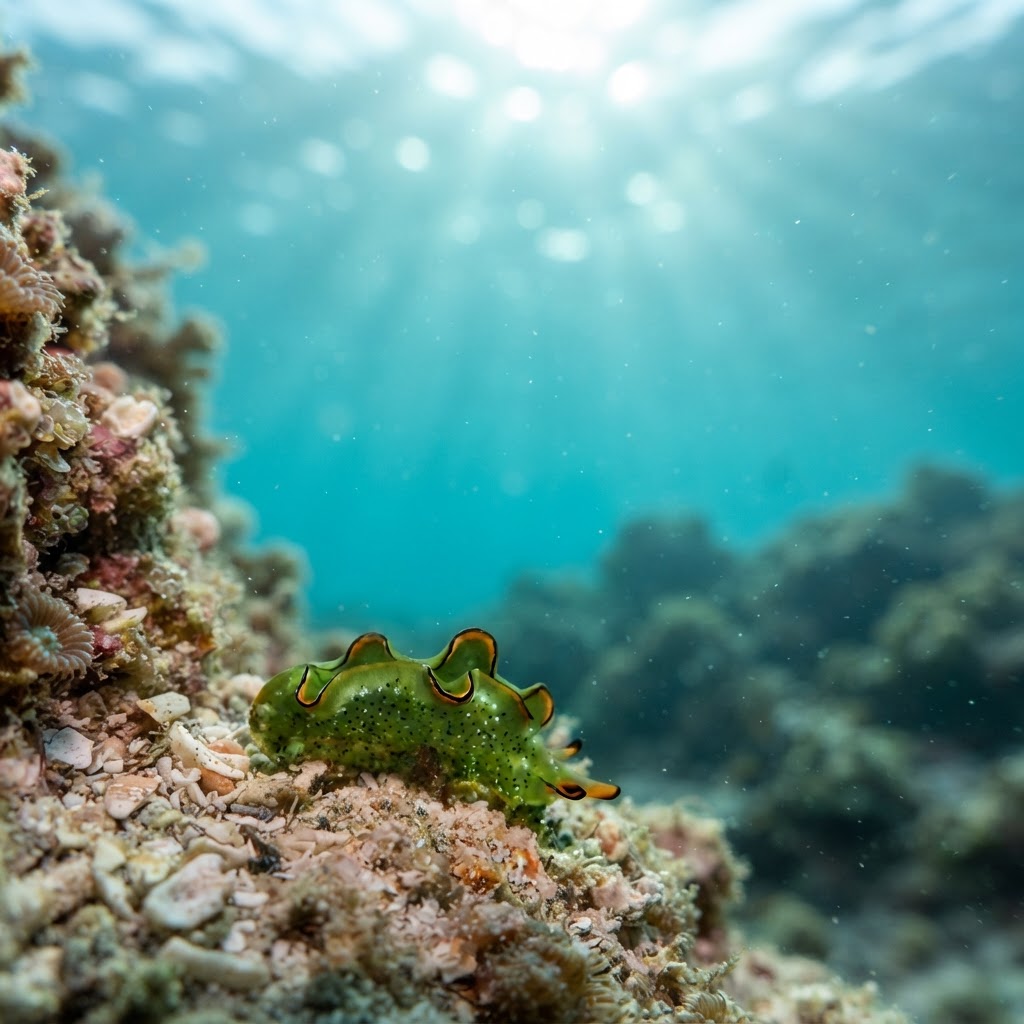
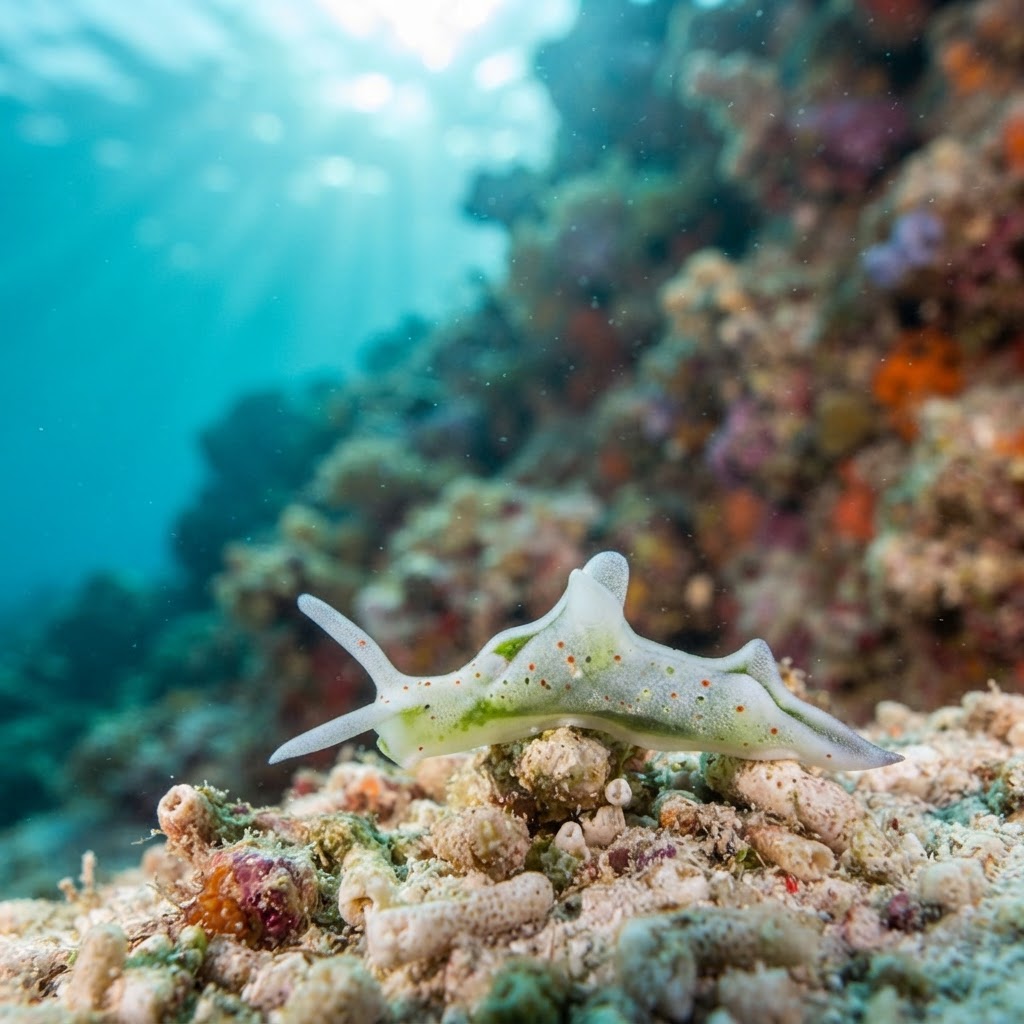
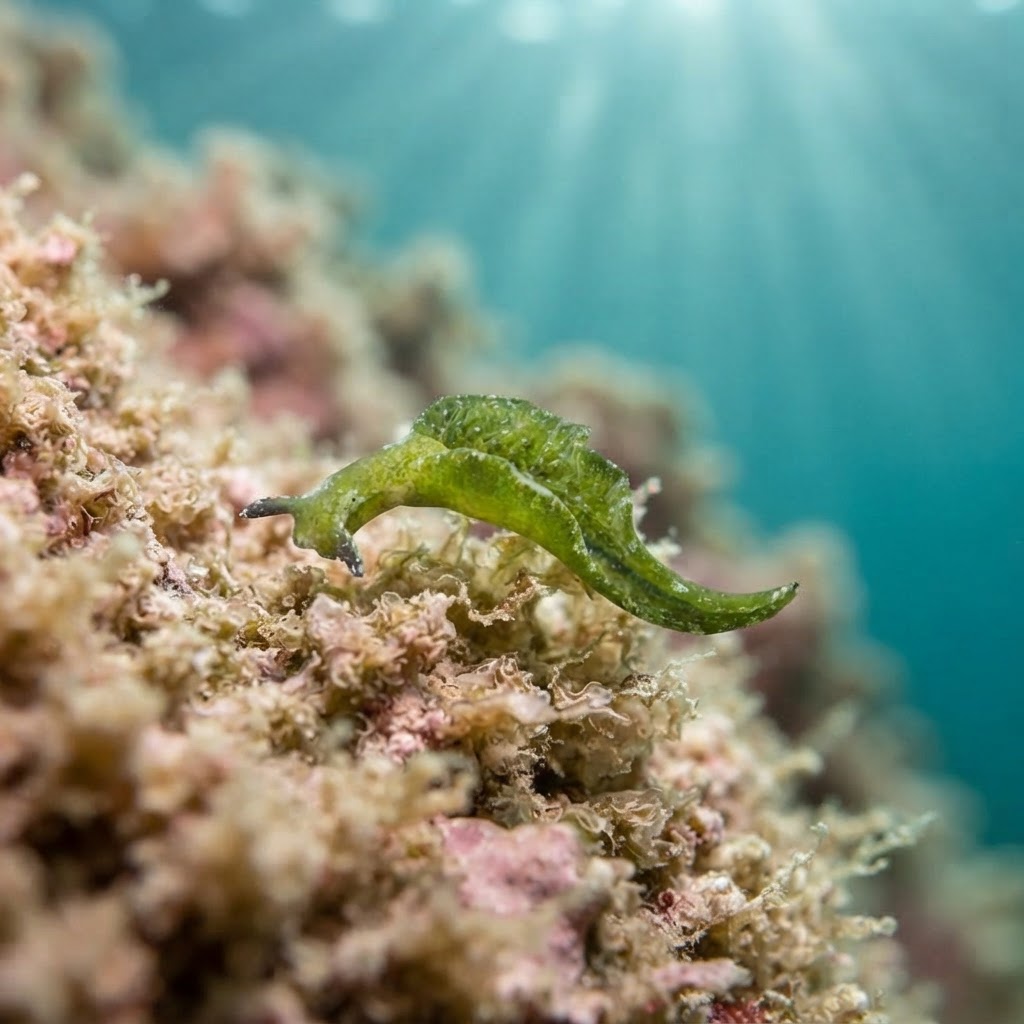
Bright, almost translucent green all over, this small sea slug has a flattened, leaf-shaped body that lets it blend into the algae it lives on. It lacks the frilly external gills of many nudibranchs, instead showing a smoother, more streamlined outline with a slight ridge along the back. Its colour is close to a perfect match for the Caulerpa algae it feeds on, so look for a faint shift in texture rather than a strong silhouette.
Divers usually find this slug parked motionless on strands of Caulerpa algae, grazing slowly and relying on camouflage rather than flight to avoid attention. It moves at a snail's pace, quite literally, and shows little reaction to a diver's torch or presence, making it an easy subject once located. Most sightings come from close, methodical searching through algae patches rather than open swimming water.
This species feeds exclusively on Caulerpa algae and can incorporate the algae's chloroplasts into its own tissue, a trick called kleptoplasty that may help it photosynthesise a little of its own energy.
Sightings are spread across the year with no clear seasonal peak in the data, and the species tolerates a wide temperature range from about 13 to 28 C, which fits a year-round presence on the sites where it is found. Plan around good visibility and calm conditions for spotting it rather than chasing a particular month.
Reef neighbours a diver could mistake it for. Use the identification notes above to tell them apart.
Most reliably logged in Australia, with strong numbers from Victoria and Western Australia, this species also turns up in Kenting in Taiwan, North Island in New Zealand, and Bali in Indonesia. Divers searching algae beds and rubble patches in temperate Australian waters have the best documented track record for finding it.
Mapping where Green Leafsnail is logged…
It is most reliably found in Australia, particularly Victoria and Western Australia, with additional sightings logged in Kenting, Taiwan, North Island of New Zealand, and Bali, Indonesia.
There is no strong seasonal pattern in the sightings, and it is found across a wide temperature range, so it is considered a year-round find on the sites where it occurs.
Look for a small, flattened, bright green sea slug sitting still on strands of Caulerpa algae, its colour and leaf-like shape blending closely with the plant itself.
Exact size data is not confirmed for this species, but like most oxynoid sea slugs it stays small, typically only a couple of centimetres long, making close-up searching essential to spot one.
It feeds only on Caulerpa algae and can retain the algae's chloroplasts in its own body, a process called kleptoplasty that may let it draw some energy from sunlight much like a plant.
No, this species poses no threat to divers. It has no venom or defensive behaviour of concern and simply grazes quietly on algae.
Site and sighting data is aggregated from diver logs, iNaturalist and GBIF. For taxonomy and conservation status:
Elysia Timida
573 sites