Syngnathus acus
Long, twig-like body hiding in Zeeland's eelgrass or Northern Ireland's kelp - here's how to spot a Greater Pipefish and where it's logged most.
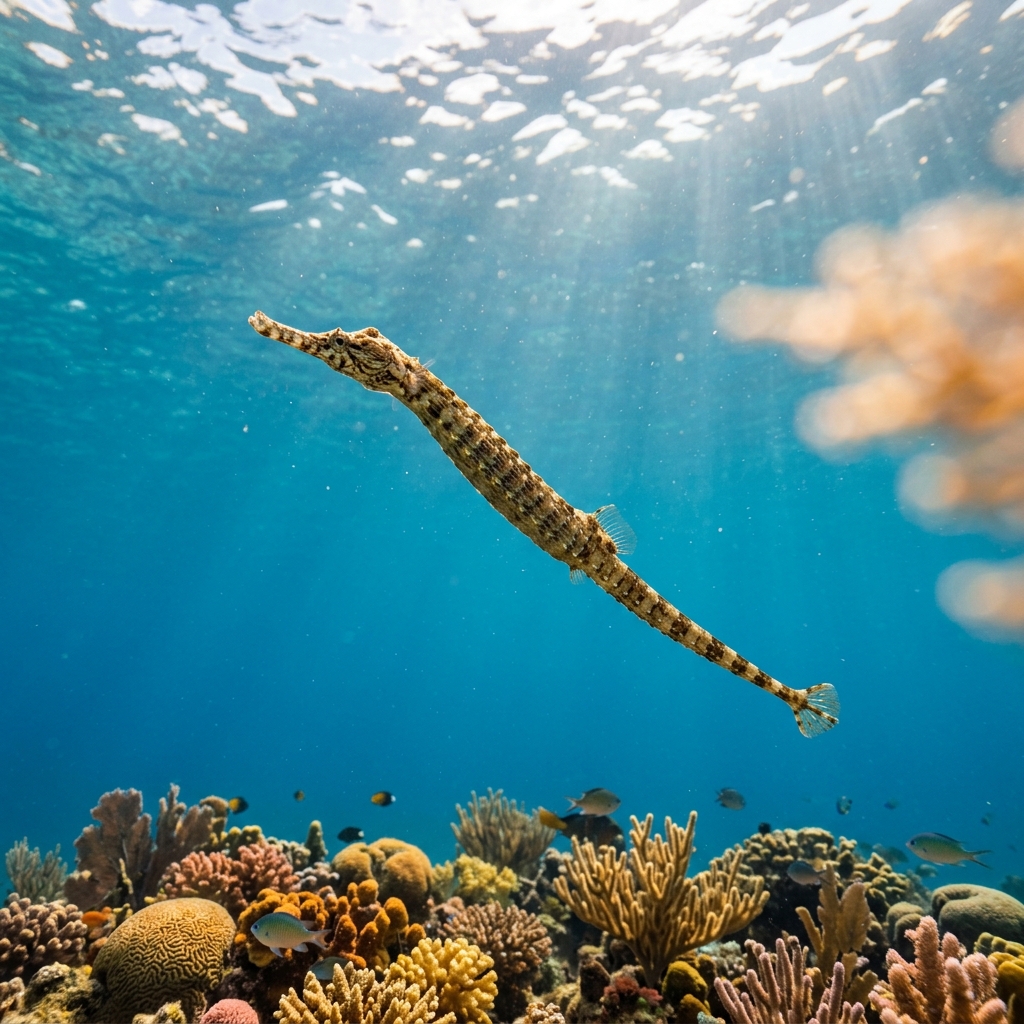
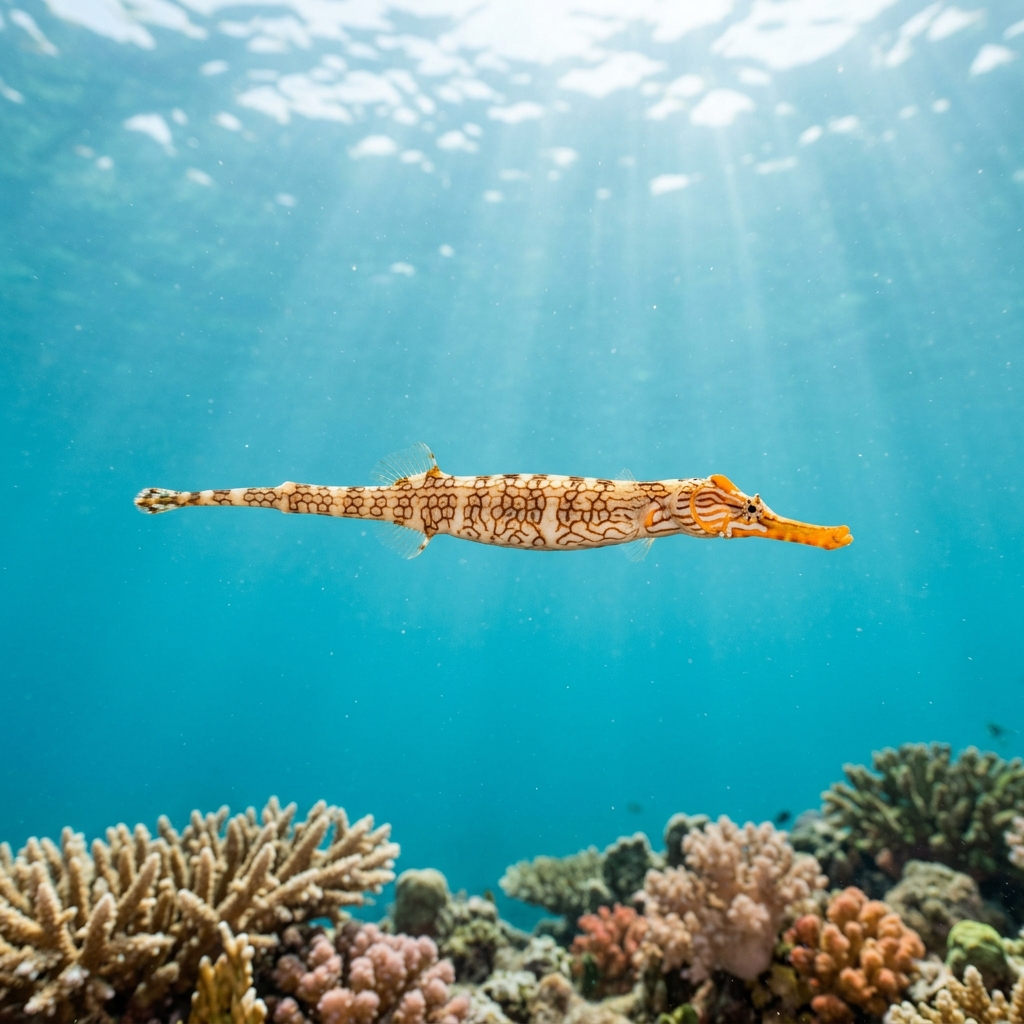
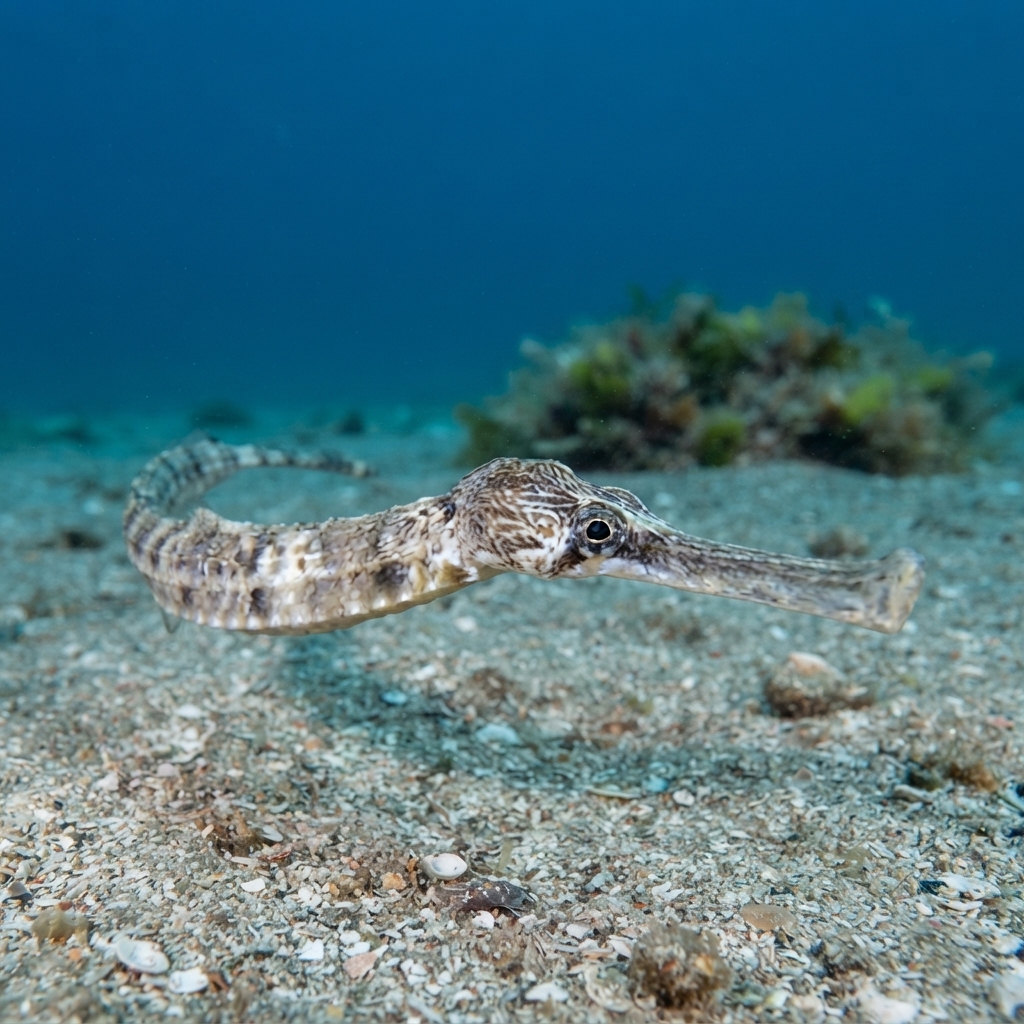
Long, straight, almost stick-like body reaching around 35 cm, easily mistaken for a strand of weed until it moves. Colour runs from olive-brown to grey with faint darker banding that breaks up its outline against sand or seagrass. The snout is elongated and tubular, ending in a small upturned mouth, and the tail lacks any curl or hook, staying straight unlike a seahorse's. Males carry fertilised eggs in a brood pouch on the underside of the tail, giving them a visibly swollen belly section when carrying.
Spends most of its time lying motionless among eelgrass, kelp holdfasts or on sand and gravel, relying on its shape and mottled colour to disappear rather than swim away. Divers usually find it hovering just above the bottom or tucked against weed, drifting slightly with the surge, and it tends to hold still even when approached closely. Feeding happens by sucking small crustaceans into that tubular snout, a quick strike easy to miss unless you're watching closely.
Males, not females, carry the fertilised eggs in a pouch on the underside of the tail until they hatch, a trait shared with their seahorse relatives.
Sighting data shows no strong seasonal pattern, and with a temperature range spanning 10.3 to 22.6 C it tolerates cold Atlantic winters and warmer Mediterranean summers alike, so divers report it year-round.
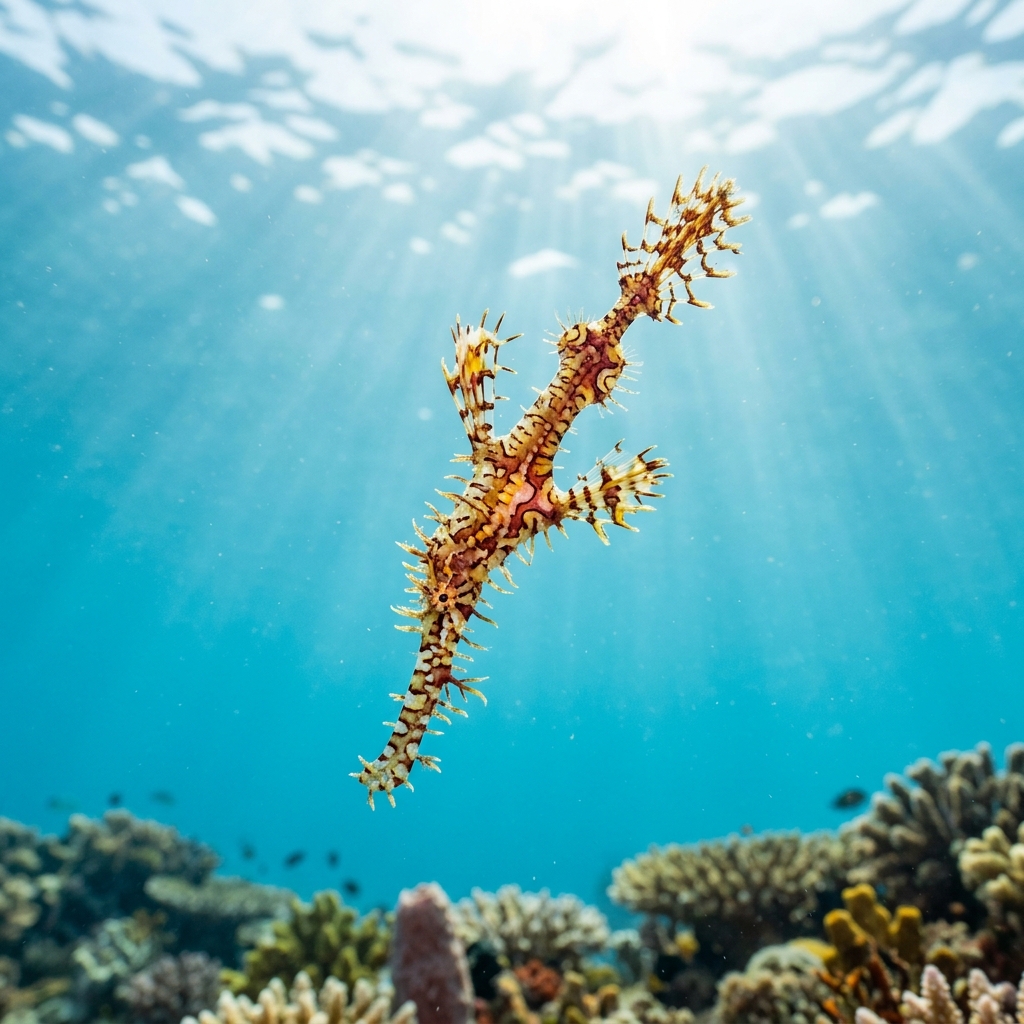
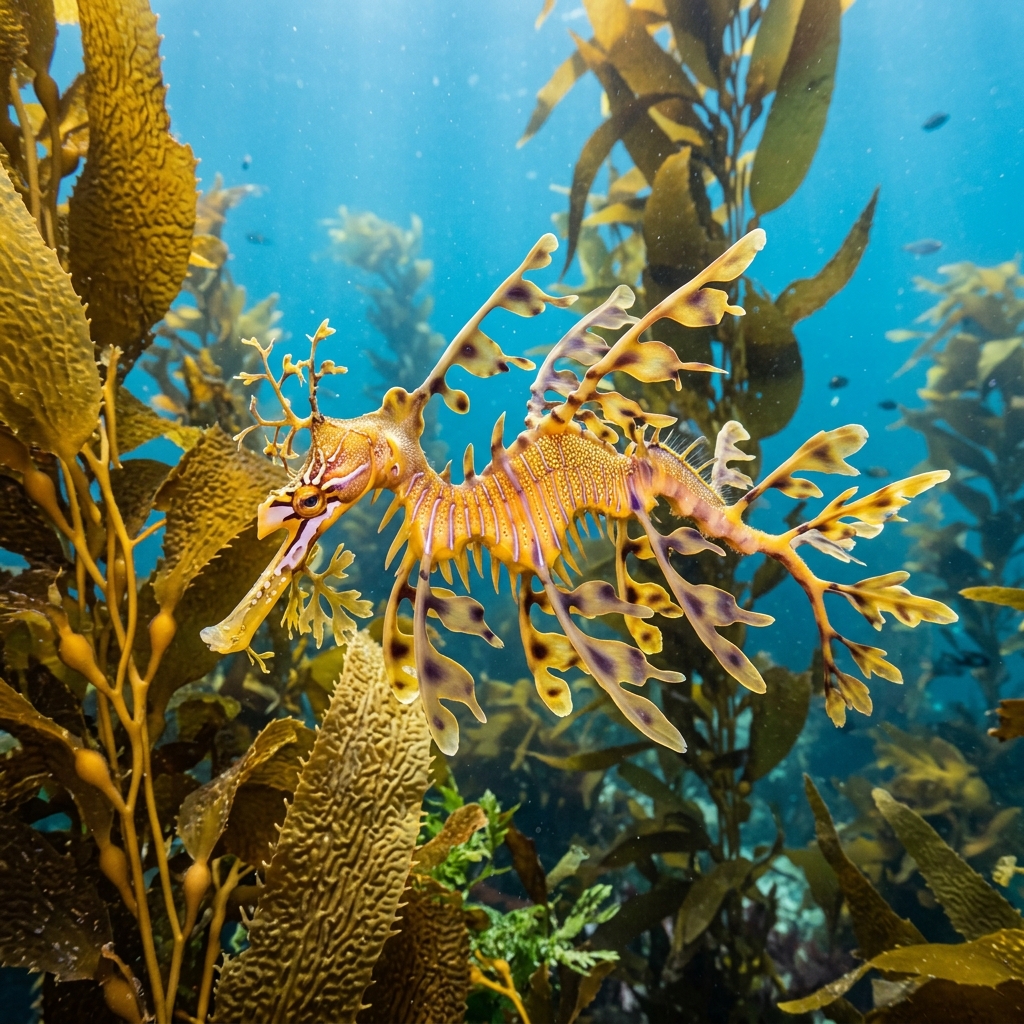
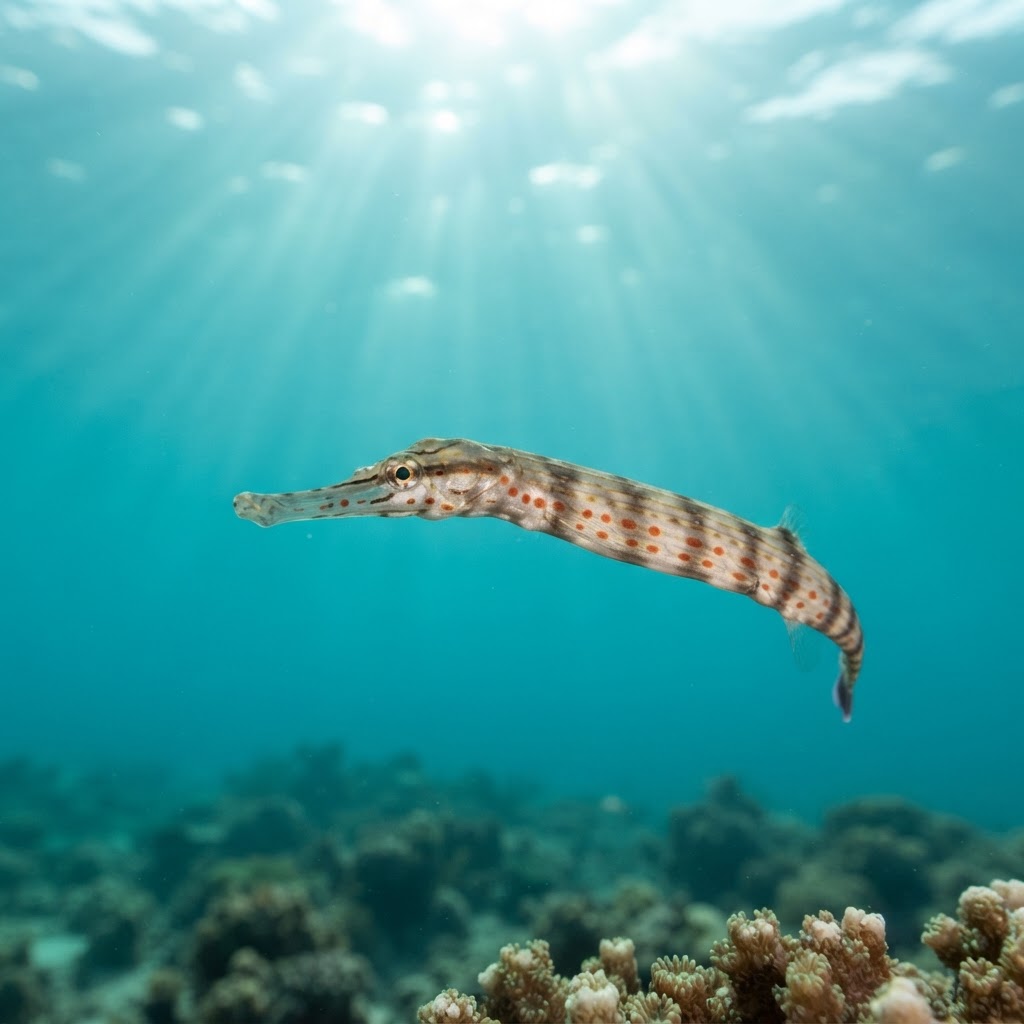
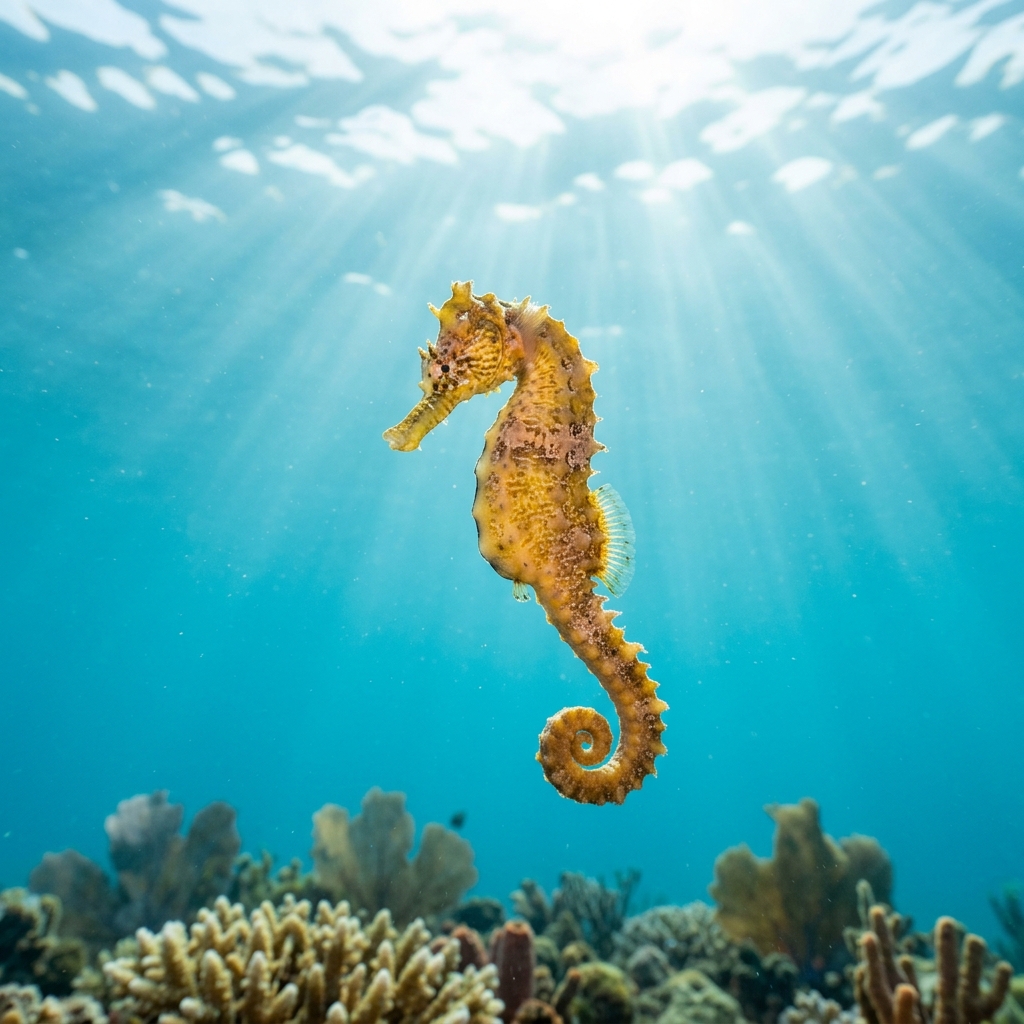
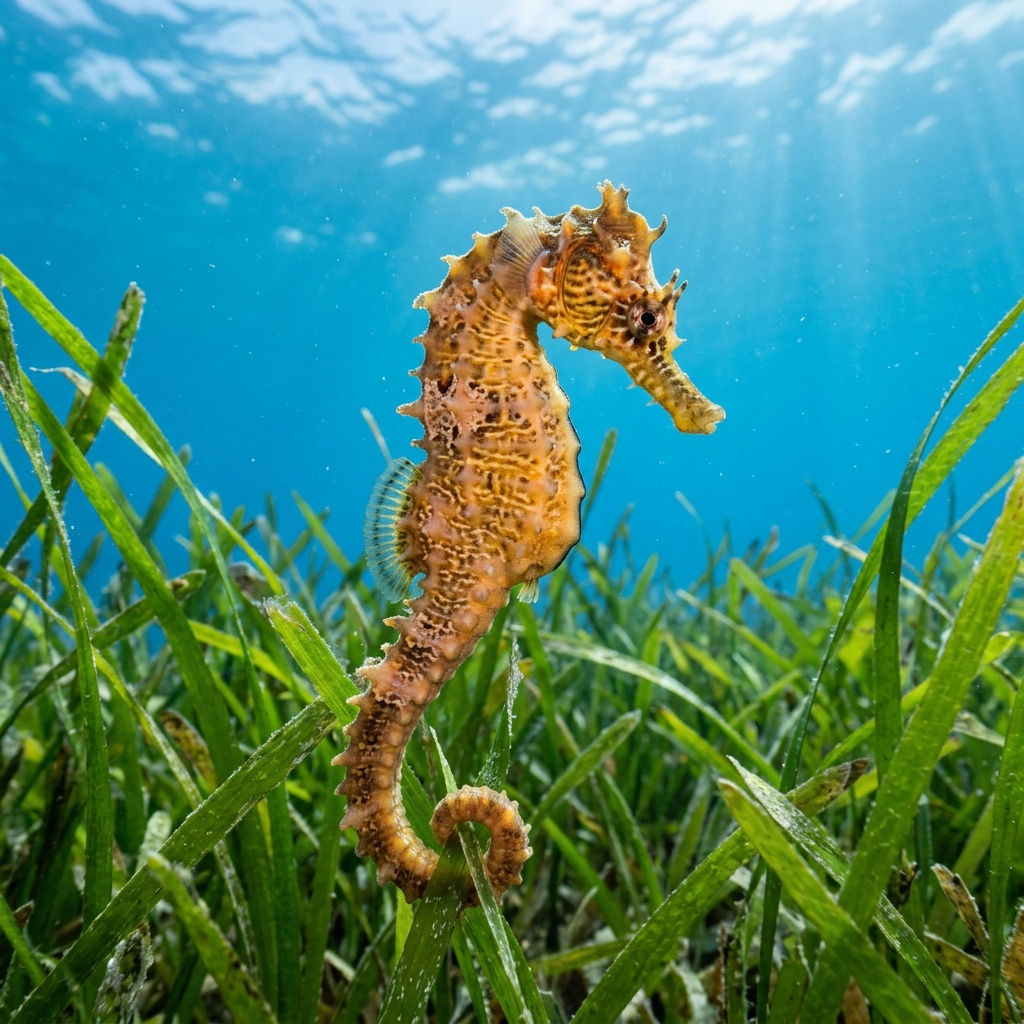
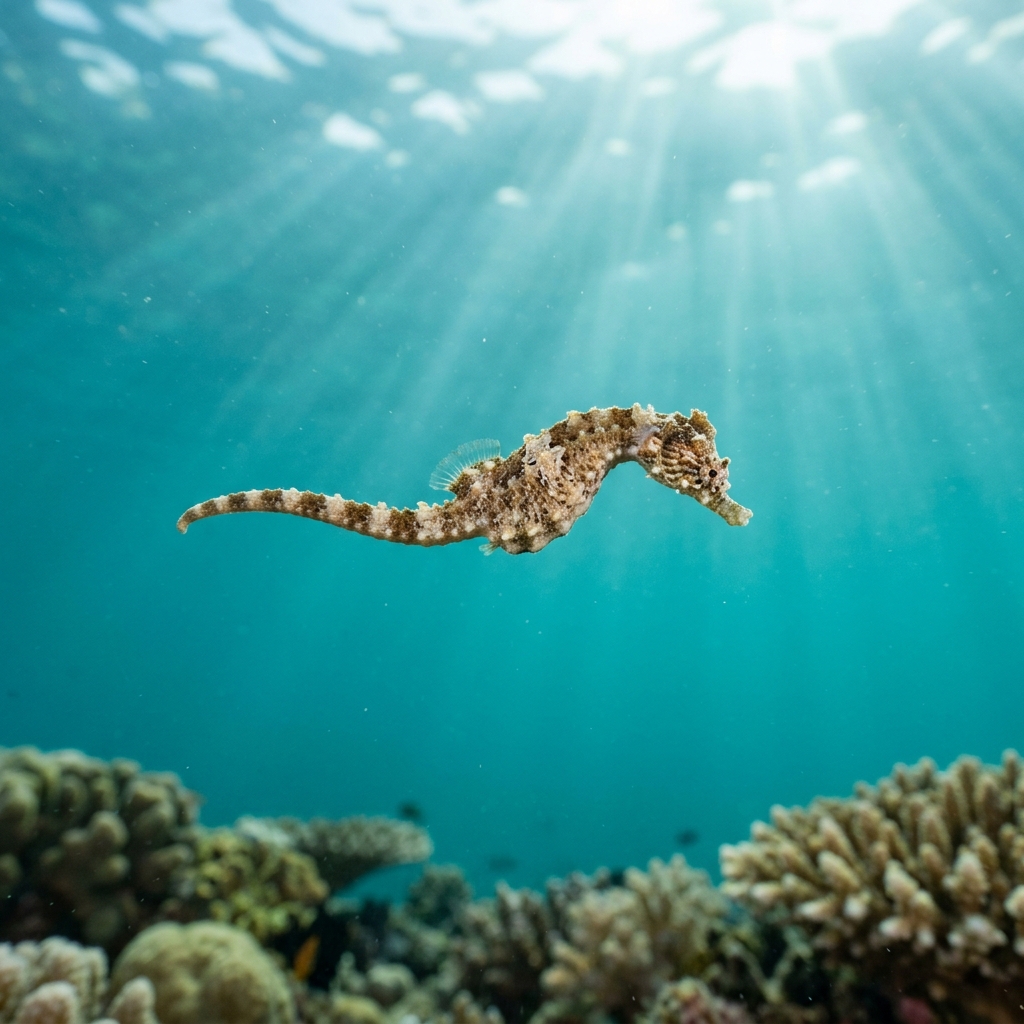
Reef neighbours a diver could mistake it for. Use the identification notes above to tell them apart.
Most reliably logged in the Netherlands, especially around Zeeland, which accounts for the bulk of recorded sightings. Strong secondary populations turn up in the United Kingdom (Northern Ireland and England), Portugal's Lisbon Coast, Spain's Andalusia and Catalonia coasts, and Sweden's Bohuslän archipelago, with occasional records from the Canary Islands and France.
Mapping where Greater Pipefish is logged…
Zeeland in the Netherlands is the strongest area for sightings, with Northern Ireland, England, Portugal's Lisbon Coast, and parts of Spain and Sweden also producing regular records.
There's no clear seasonal pattern in sighting data, and its comfort range of roughly 10 to 23 C means it's present through most of the year rather than tied to a single season.
Look for a long, straight, stick-thin body up to about 35 cm, mottled brown or olive in colour, with a tubular snout and a straight tail rather than a curled one. It usually lies still against seagrass or kelp rather than swimming in the open.
They typically reach around 35 cm in length, though their thin body makes them look longer and easy to overlook against weed or sand.
Males carry the fertilised eggs in a pouch on the underside of the tail until they hatch, taking over the incubation role usually associated with females in most fish.
Site and sighting data is aggregated from diver logs, iNaturalist and GBIF. For taxonomy and conservation status:
Seahorse
1,346 sites