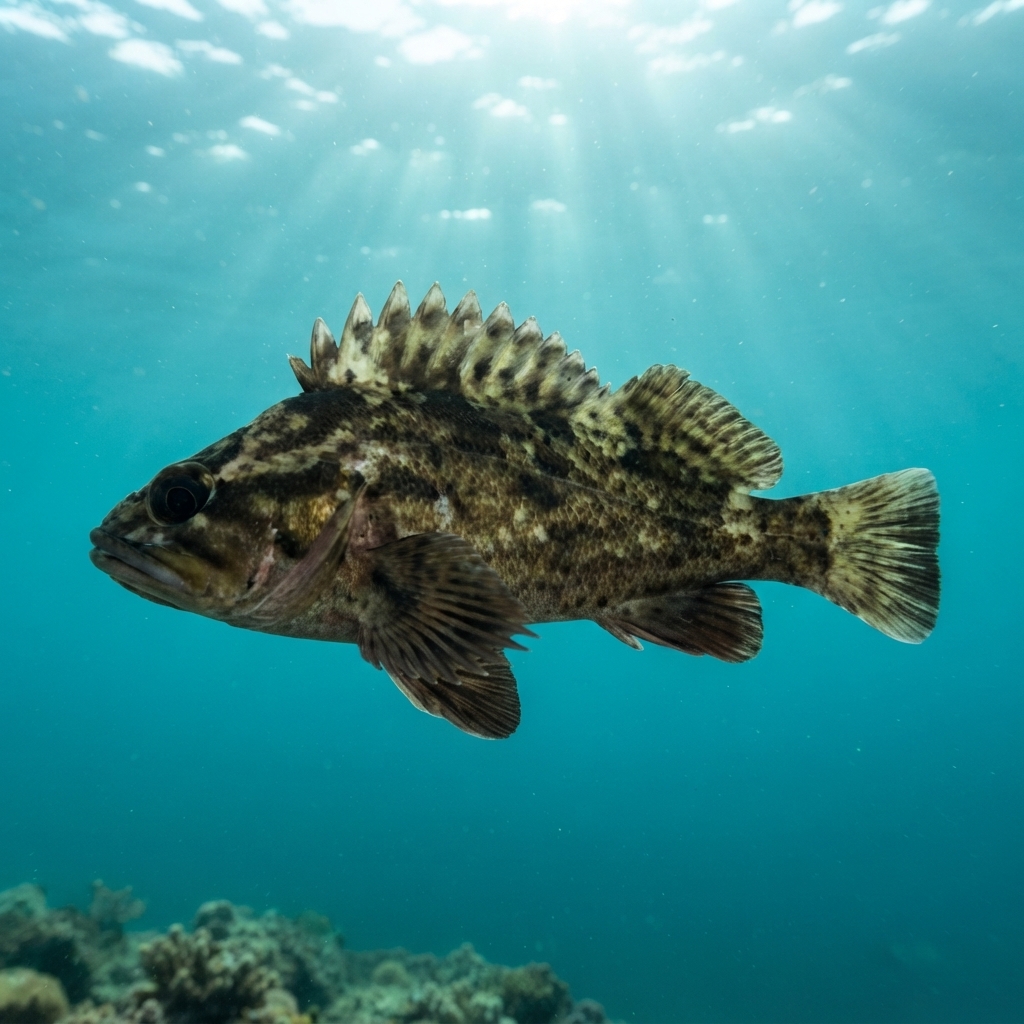
Sebastes rastrelliger
Mottled green and rare on the reef, grass rockfish turn up on California dives in waters as cool as 12 to 18°C, year-round.
Safety warning
Its dorsal, anal and pelvic spines carry venom and can deliver a painful sting if you brush against one while reaching into rocky crevices or steadying yourself on the bottom. Keep hands and fins off the substrate near camouflaged fish, and treat any sting as a medical issue, not just a nuisance, since venomous rockfish stings can cause serious pain and swelling.
If you're stung
Venomous spinesGeneral first-aid guidance, not a substitute for professional medical care. In an emergency, call your local emergency number.
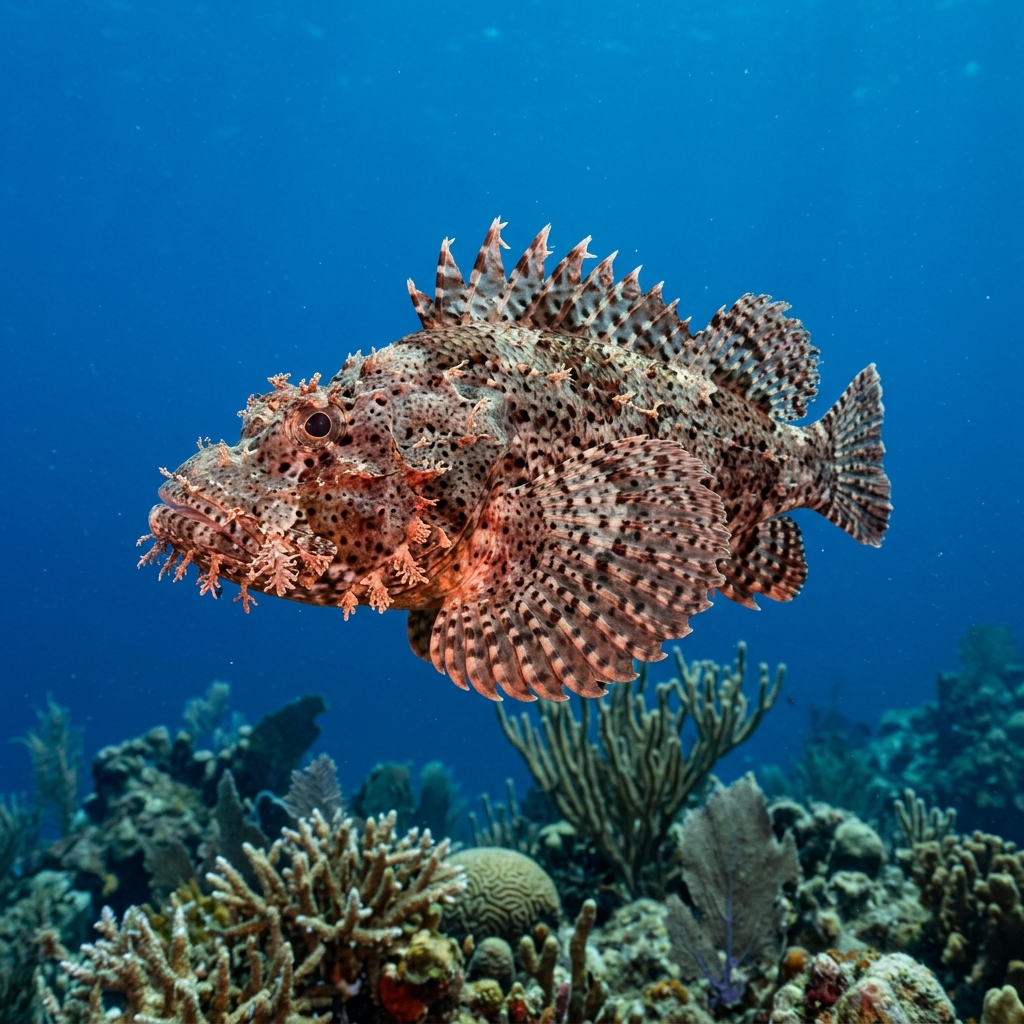
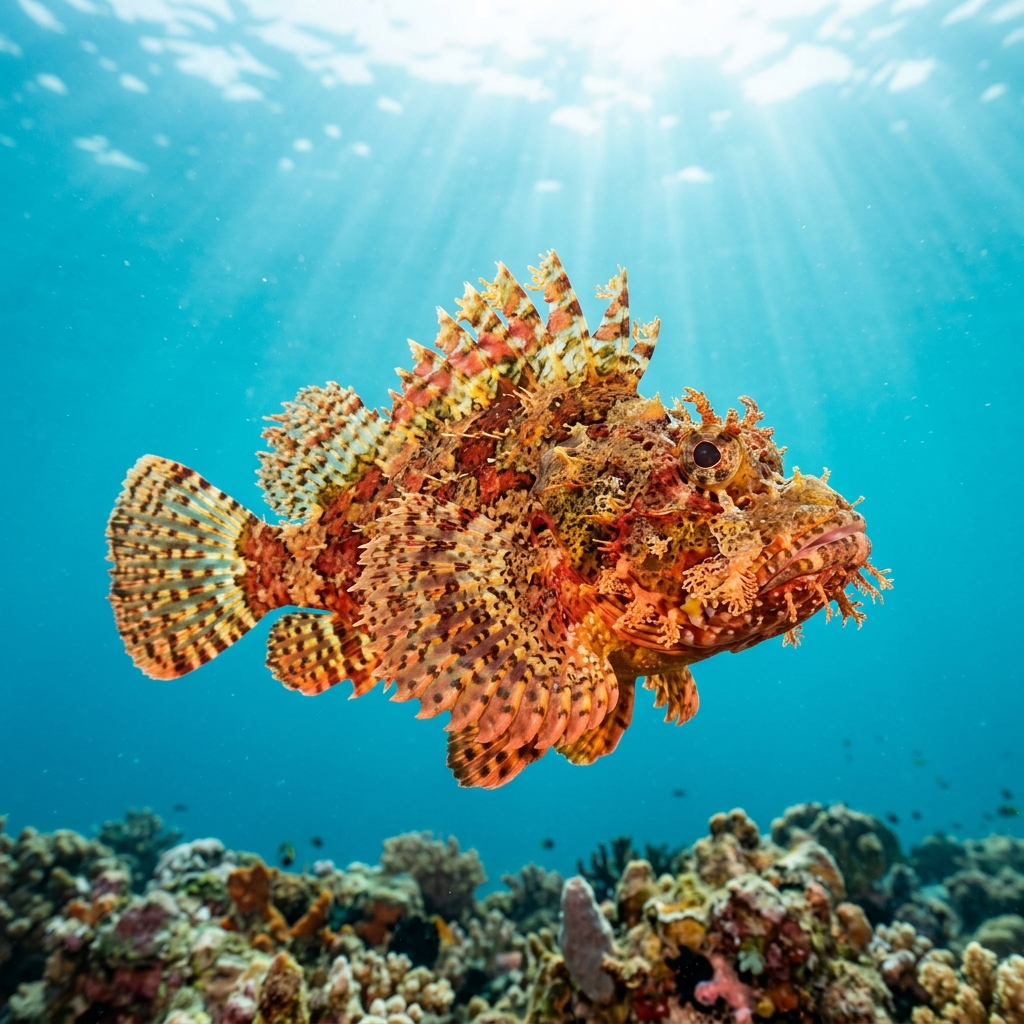
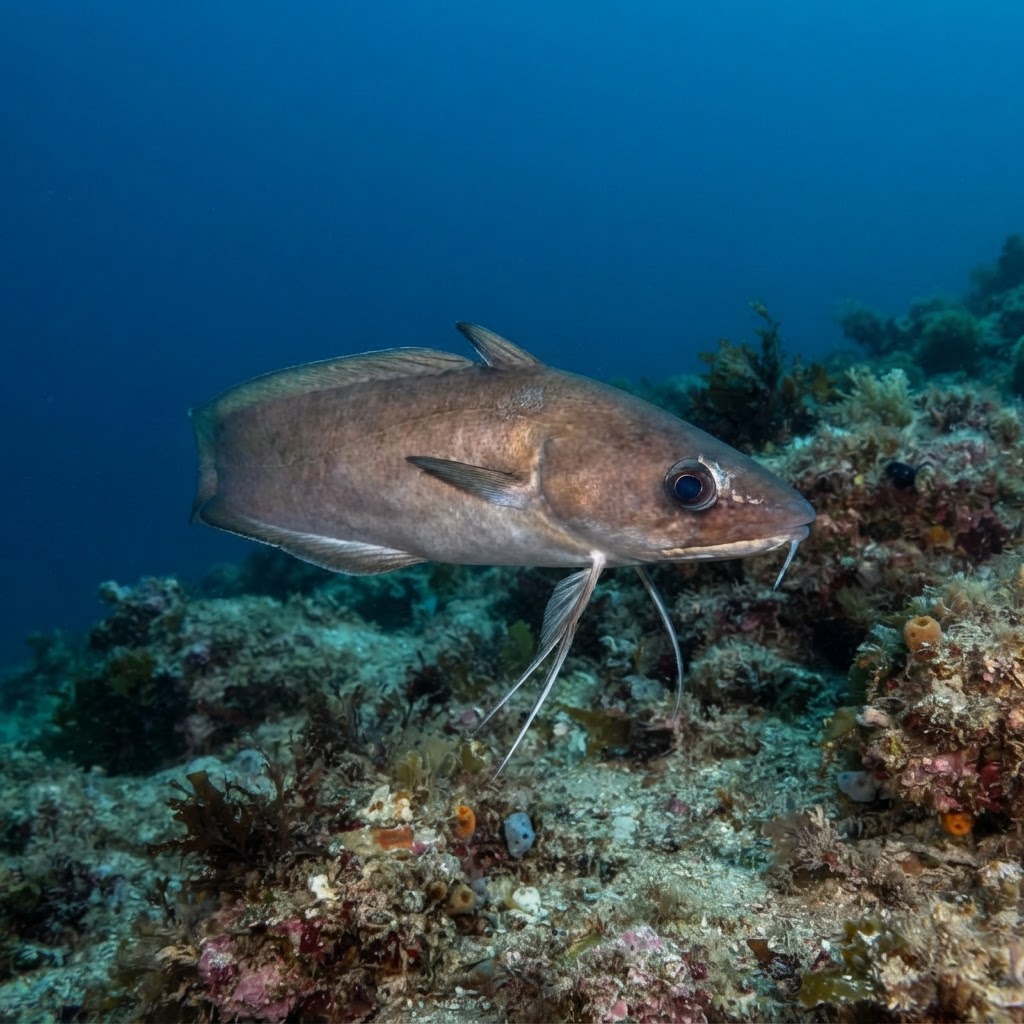
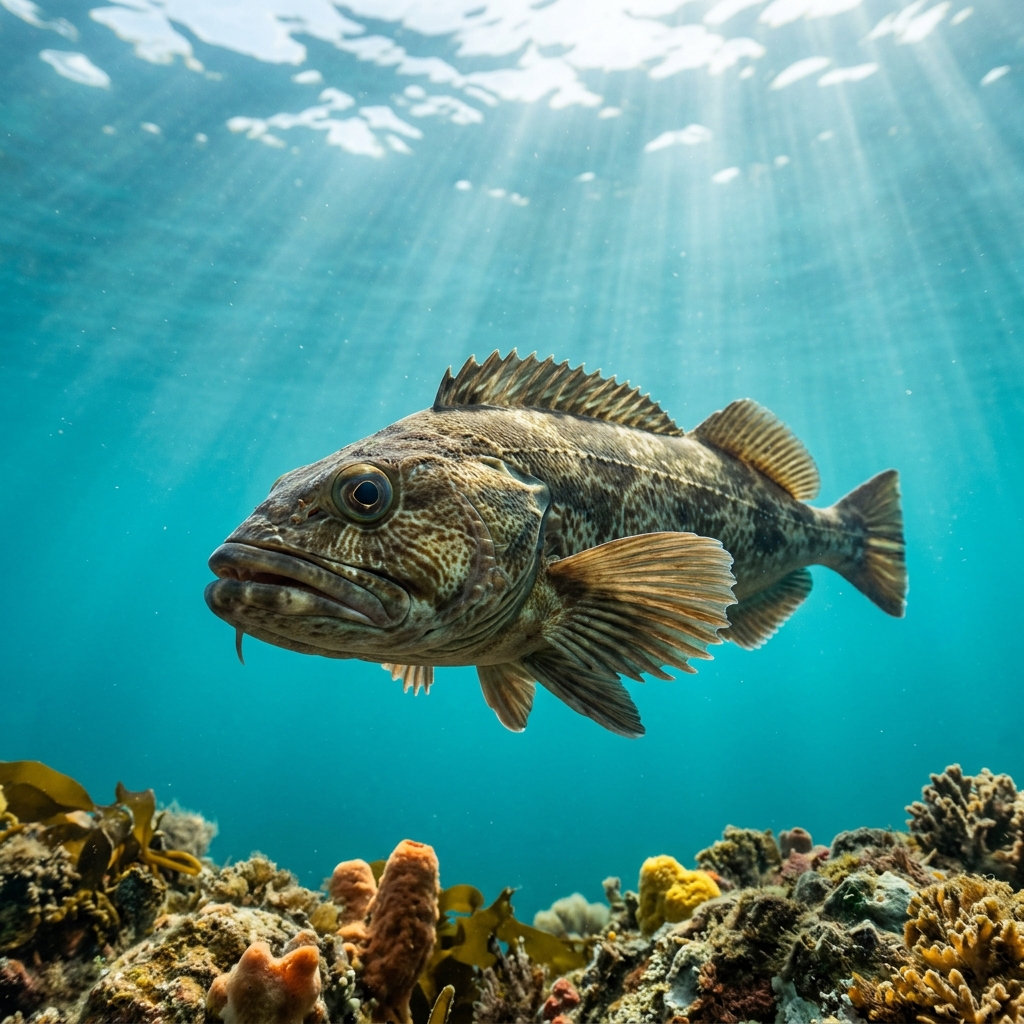
Stocky, heavy-bodied fish to about 39 cm with a mottled olive-green to brown pattern that blends into rock and kelp. Look for the large spiny head typical of rockfish, a broad mouth, and a habit of sitting motionless on or wedged into the substrate rather than swimming in open water. The venomous spines along the dorsal fin are the other giveaway feature worth clocking from a safe distance.
Expect to find it parked motionless against rock or tucked into kelp holdfasts, relying on its mottled colouring to disappear rather than fleeing. It's generally logged as rare at most sites, so most sightings come from divers who slow down and scan ledges and crevices instead of cruising past. When approached calmly it tends to hold its position rather than bolt, which is exactly when divers get a good look, and exactly when to keep hands away.
Like other rockfish, it likely bears live young rather than releasing eggs into the water, a reproductive strategy that sets the genus apart from most reef fish.
Sighting data doesn't show a clear season, and the observed temperature range of 12.2 to 18.2°C spans most of the year on California's rocky reefs, so it's realistically a year-round encounter rather than a seasonal one.
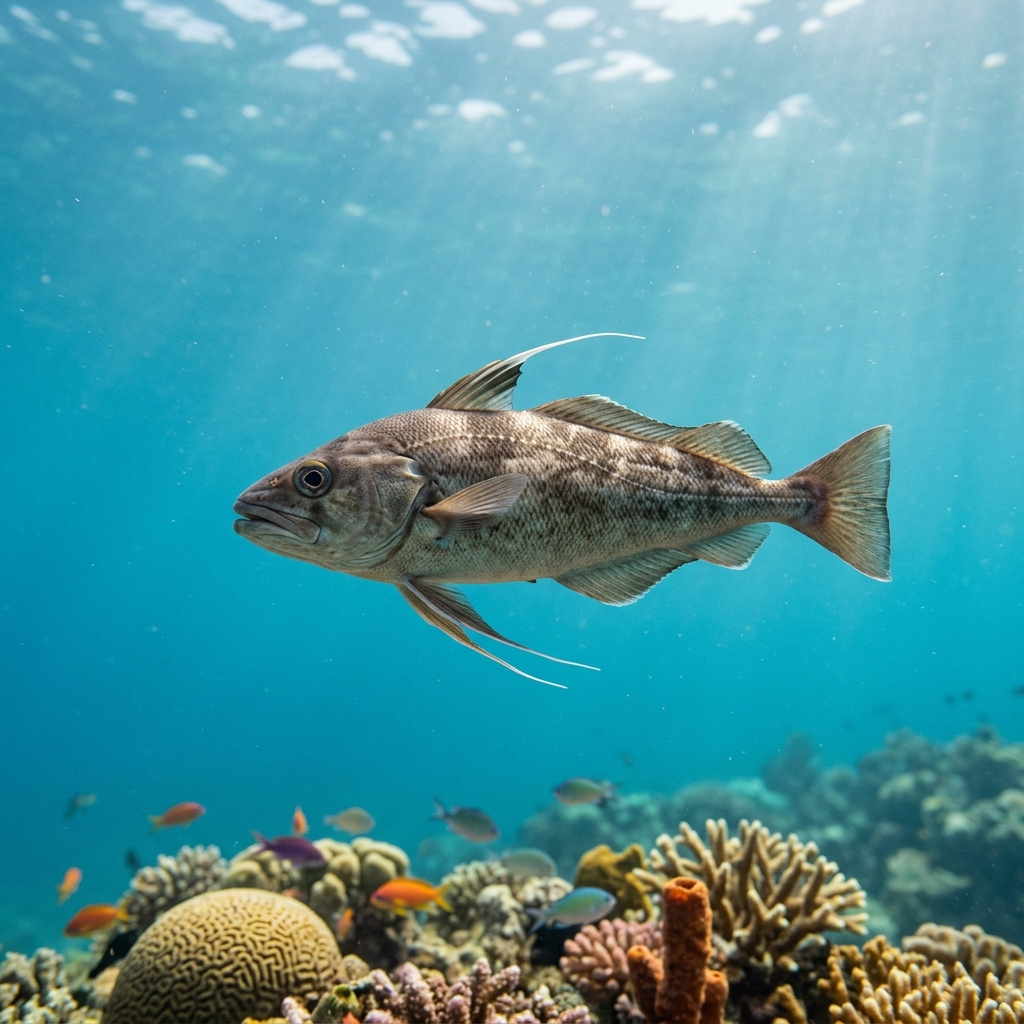
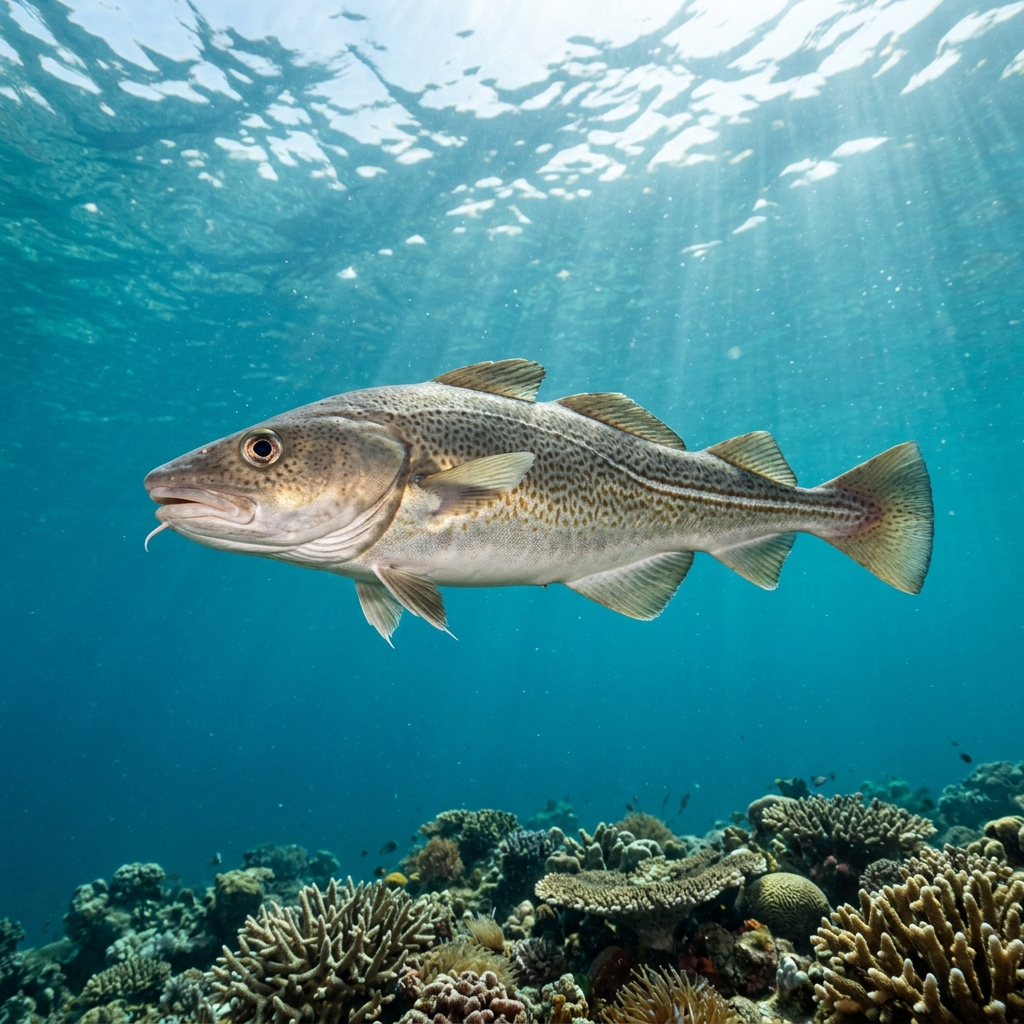
Reef neighbours a diver could mistake it for. Use the identification notes above to tell them apart.
Logged exclusively on dives in California, United States, where it turns up on rocky reef and kelp-forest sites. It's not a species you'll find outside this stretch of the US west coast in the diver-logged data, so California is the destination if you want to tick it.
Mapping where Grass Rockfish is logged…
The only confirmed diver sightings come from California, United States, where it hides among rocky reef and kelp forest habitat. It hasn't turned up in logged dives outside this region.
There's no strong seasonal pattern in the sighting data, and its comfort range of roughly 12 to 18°C covers most of the California diving calendar, so it's a year-round possibility rather than a seasonal target.
Yes. It carries venomous spines on its dorsal, anal and pelvic fins that can cause a painful sting if touched, so avoid putting hands or fins near camouflaged fish on the rocks.
Look for a stocky, spiny-headed fish around 39 cm with mottled olive-green to brown camouflage, sitting still against rock or kelp rather than swimming openly. The heavy body shape and venomous dorsal spines separate it from smoother-bodied reef fish.
They typically reach around 39 cm in length, a solid, heavy-bodied size for a rocky-reef ambush species.
Yes, most sites that log this species report it as a rare sighting, with only one site logging it as uncommon. Spotting one usually takes a slow, careful look into rocky crevices and kelp cover.
Site and sighting data is aggregated from diver logs, iNaturalist and GBIF. For taxonomy and conservation status:
Pollack
282 sites