Pseudobatos prahli
Sandy-bottomed dives in Guanacaste, Costa Rica turn up this flat-bodied ray year-round in warm 25 to 31 C water.
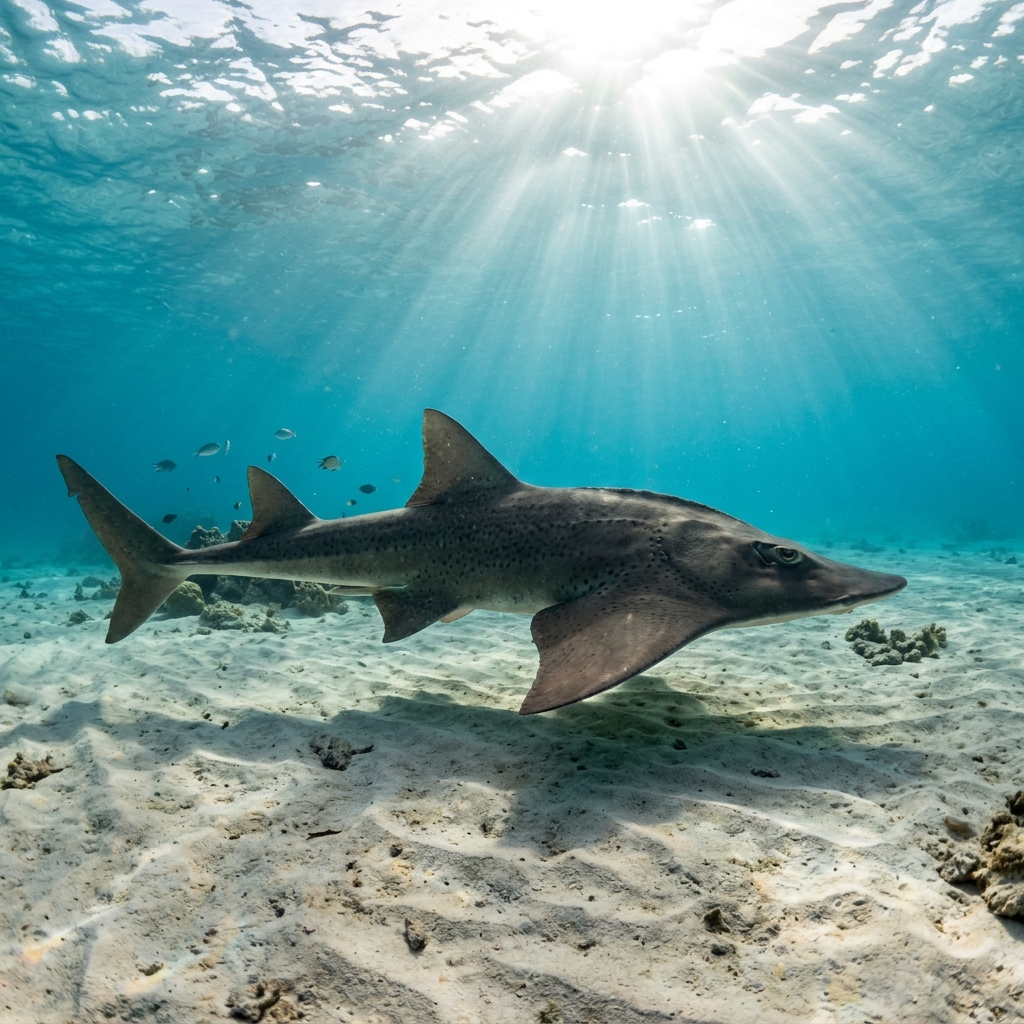
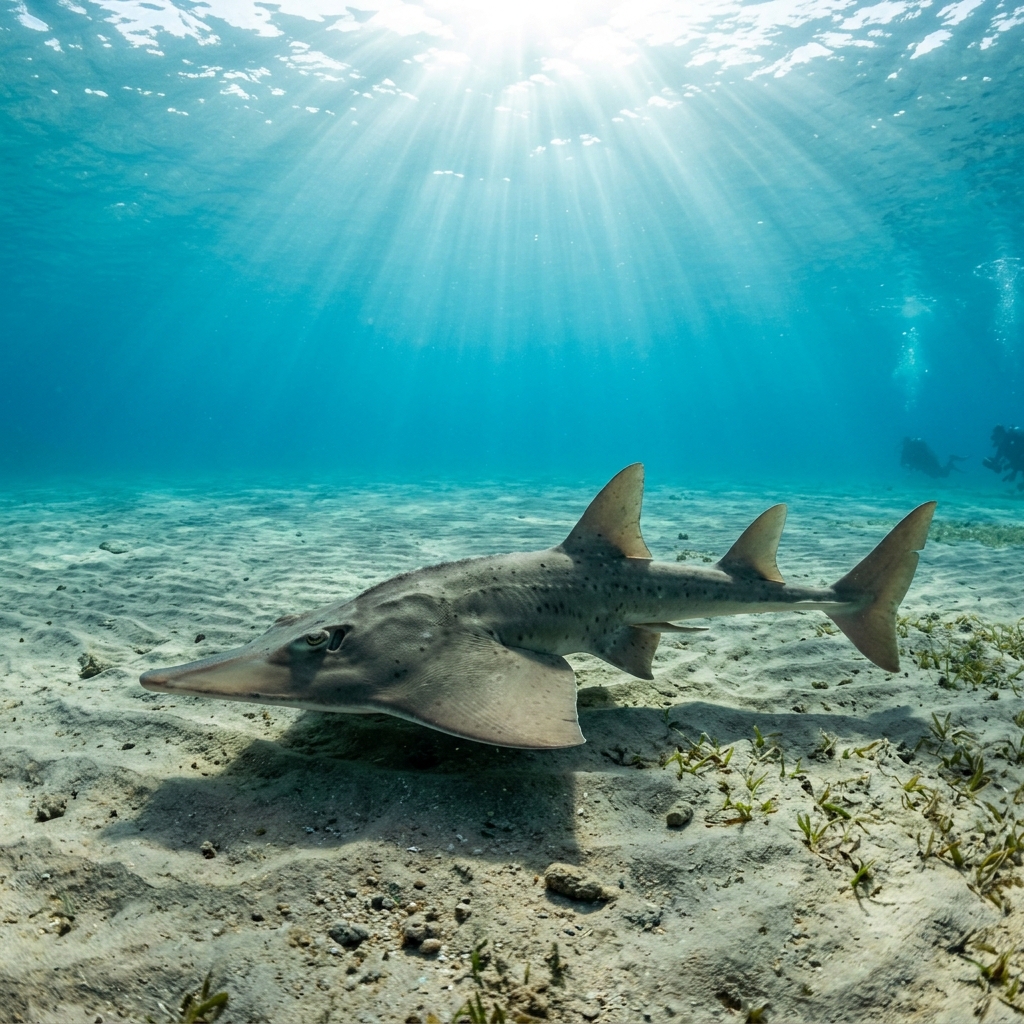
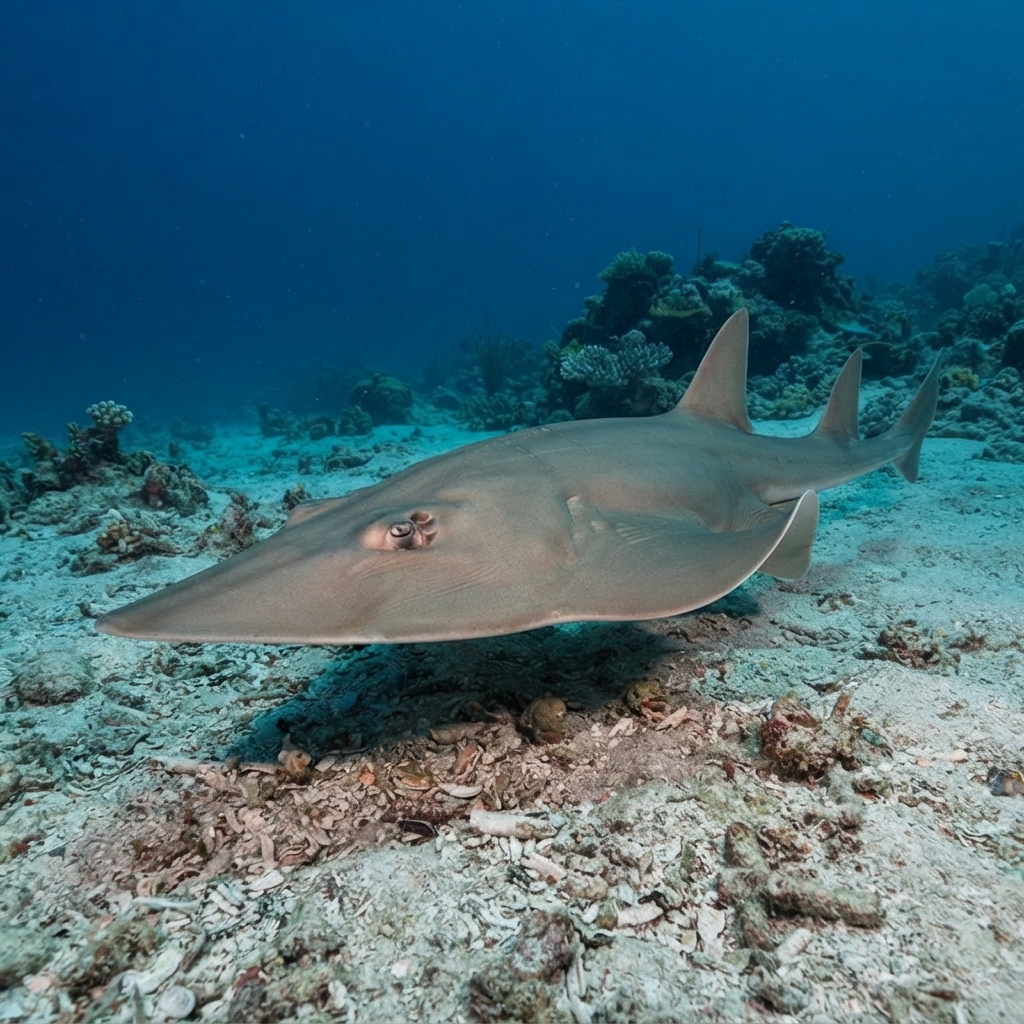
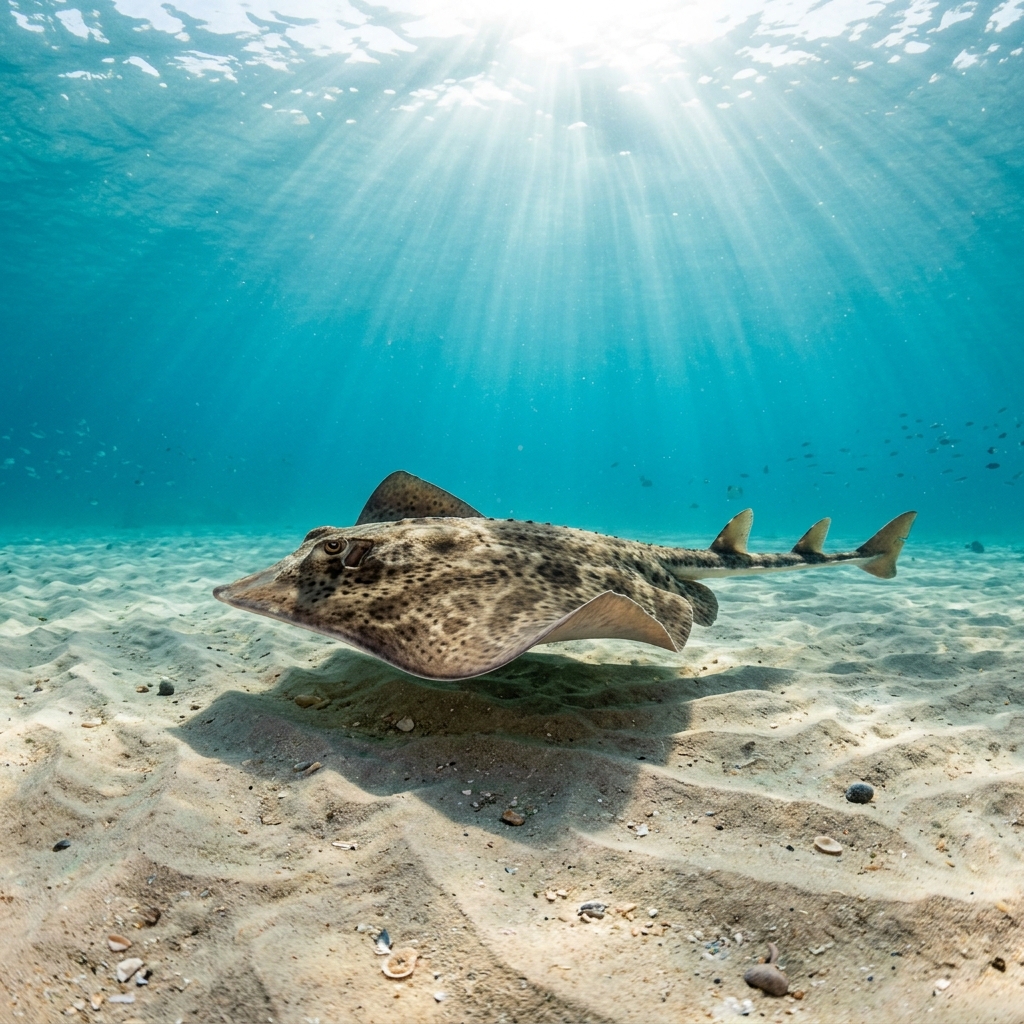
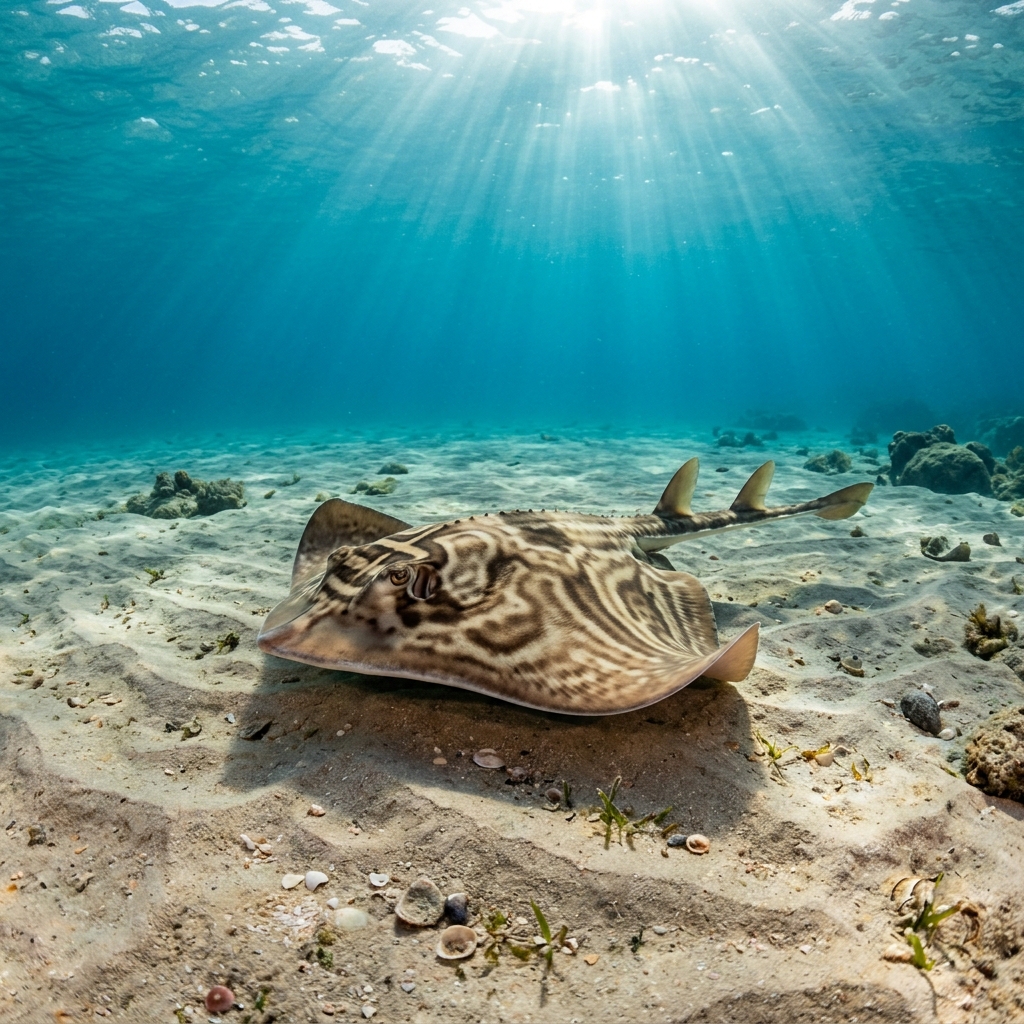
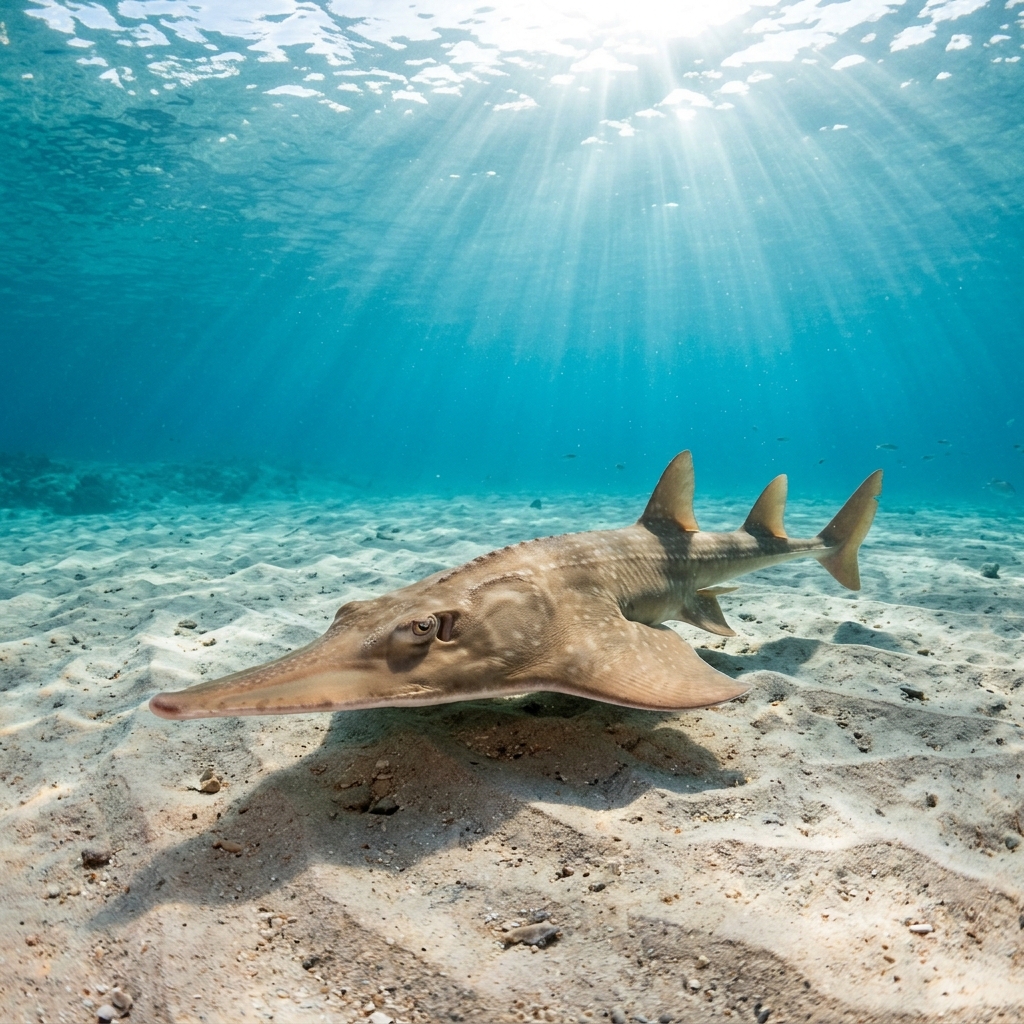
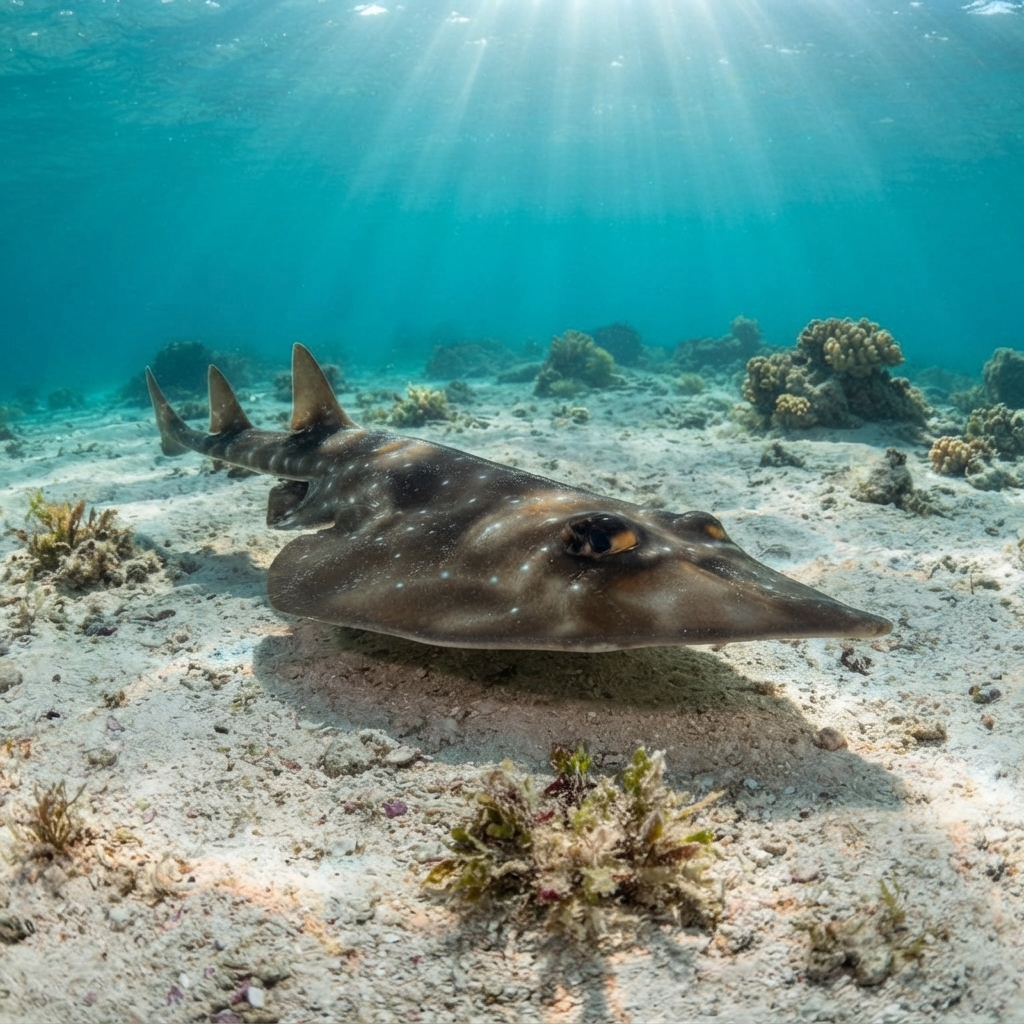
Flattened, guitar-shaped body with a long pointed snout and a shark-like tail set on a ray's disc, growing to around 63cm. Sandy brown to grey mottled colouring lets it blend almost completely into the seafloor it rests on. Look for the pointed rostrum (snout) and the two triangular pectoral fins fused into a smooth disc, rather than the wing-like flap of a true ray.
Divers typically find it lying still on sand or fine sediment, often partly settled into the bottom, rather than swimming in open water. It is logged as uncommon at most sites where it turns up, so sightings tend to be a matter of scanning sandy patches carefully rather than expecting an obvious pass-by. When approached slowly it tends to hold its position, but a sudden move by a diver will send it off in a quick burst across the bottom.
Its flattened, sand-coloured body is a camouflage strategy shared across the guitarfish family, letting it sit motionless on the seabed while it waits for prey to come within range of that long snout.
No clear seasonal pattern shows up in the sightings, and with a comfort range of 25.1 to 31.1 C it likely stays active on these sandy Pacific bottoms all year. Plan around general dive conditions in Guanacaste rather than chasing a specific month.
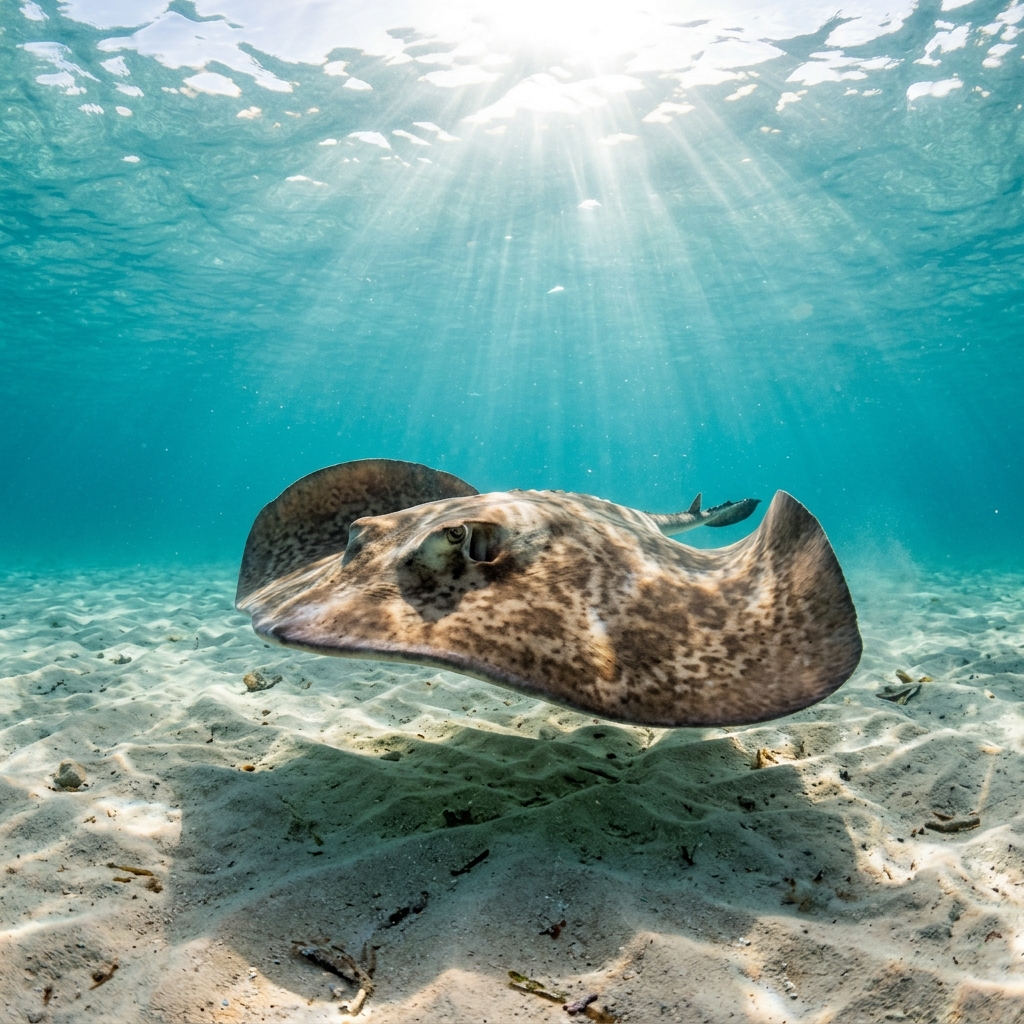
Reef neighbours a diver could mistake it for. Use the identification notes above to tell them apart.
Most reliably logged in Guanacaste, Costa Rica, which accounts for the large majority of recorded sightings, with a smaller but real presence along the Pacific Coast of Ecuador. These are the only two countries with confirmed dive logs for this species, so Guanacaste is the strongest bet for a planned encounter.
Mapping where Gorgona Guitarfish is logged…
Guanacaste in Costa Rica is by far the most consistent spot, with a smaller number of sites also logging it along the Pacific Coast of Ecuador. Outside these two countries there is no reliable record of divers encountering it.
There is no detected seasonal pattern, and its recorded temperature range of 25.1 to 31.1 C suggests it stays on these warm sandy bottoms year-round. Any time you are diving Guanacaste's sandy sites gives a fair chance.
Look for a flat, sandy brown body shaped like a guitar, a pointed snout, and a shark-like tail, usually lying still on sand. It grows to about 63cm, so it is a modest-sized ray rather than a large one.
They reach around 63cm in length, making them a small to mid-sized member of the guitarfish family. That size, combined with their flat shape, helps them stay tucked against the sand and easy to miss.
No, they are not considered dangerous to divers. They tend to stay still on the bottom and move off quickly if disturbed rather than showing any defensive or aggressive behaviour.
Site and sighting data is aggregated from diver logs, iNaturalist and GBIF. For taxonomy and conservation status:
Halavi Guitarfish
412 sites