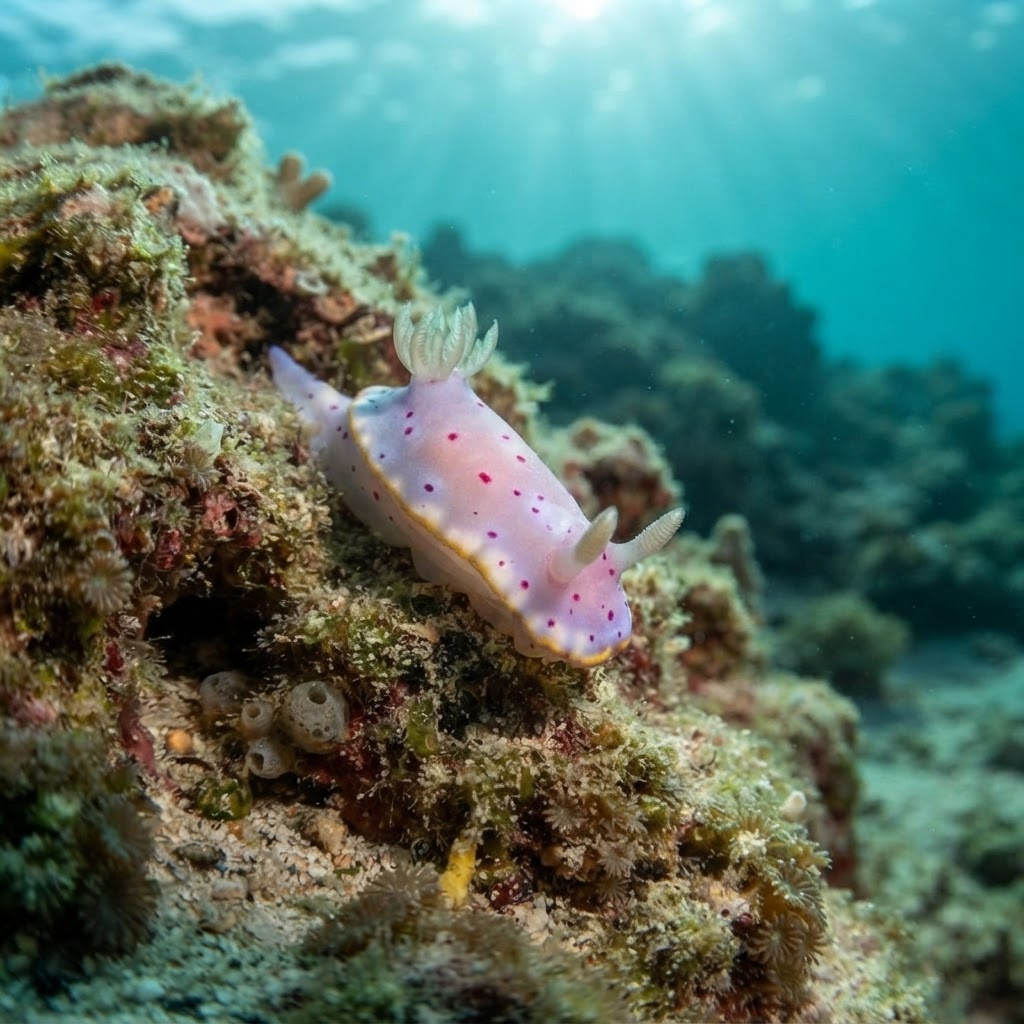
Goniobranchus woodwardae
An uncommon nudibranch found along New South Wales, Australia, in 17.3-23.3C water, logged year-round on temperate reef dives.
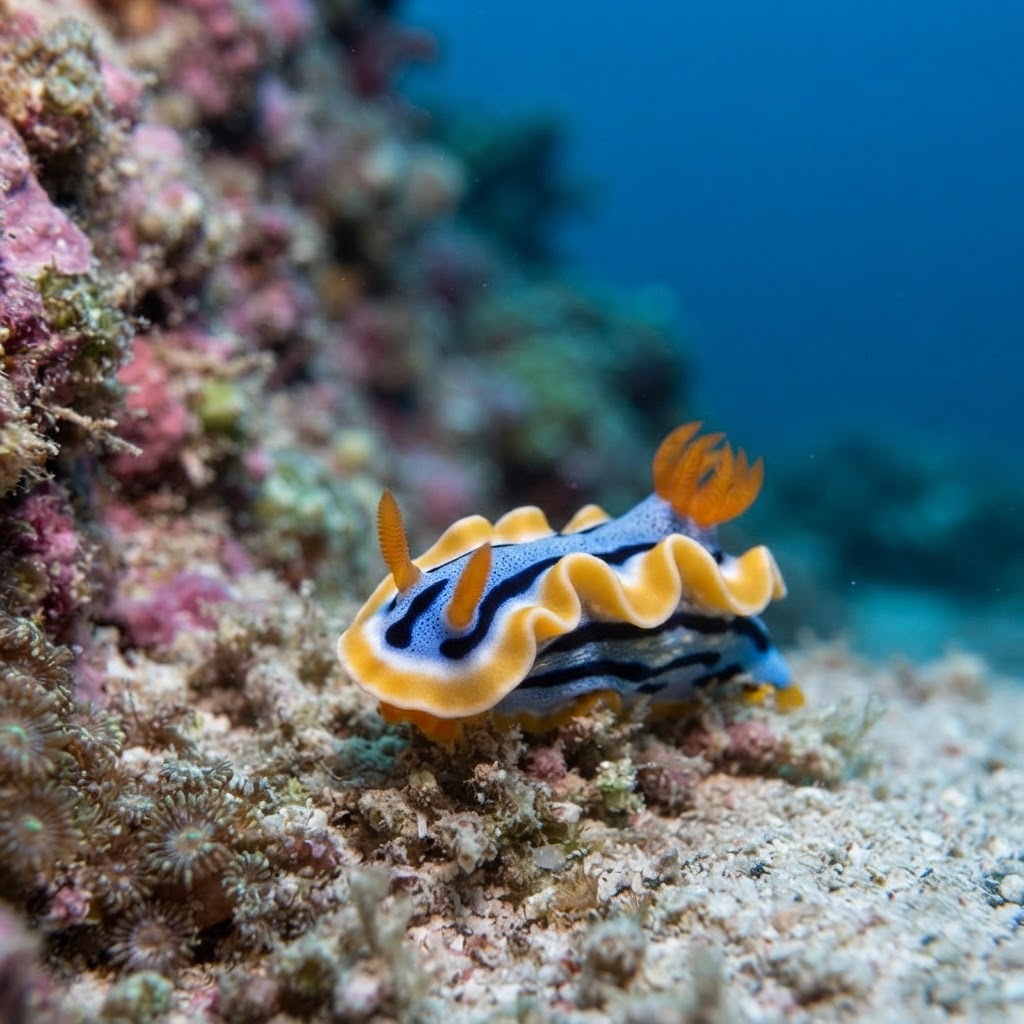
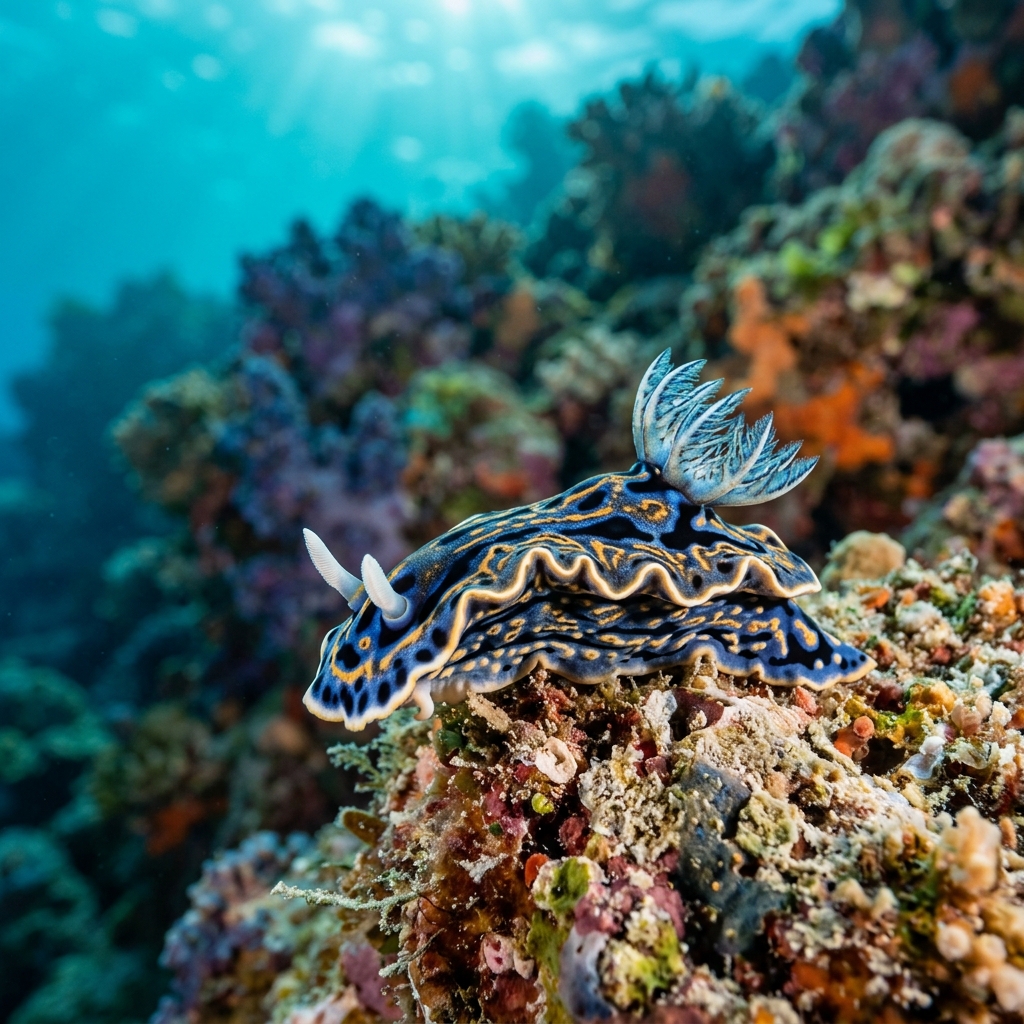
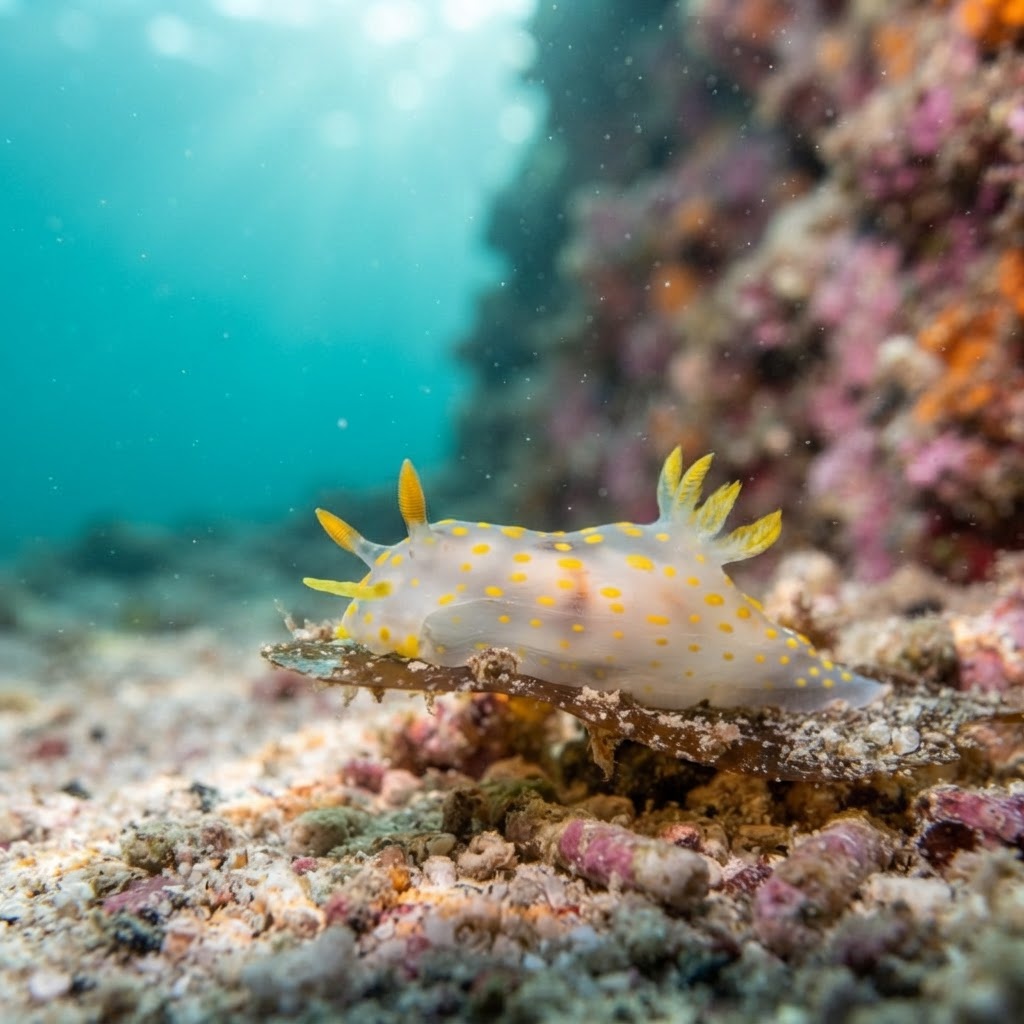
A small nudibranch (sea slug) with a rounded, ruffled mantle edge typical of the Chromodorididae family, seen crawling slowly over rock and rubble rather than swimming. Look for the mantle patterning and margin colour against the body base tone, since this is the main feature divers use to separate it from other Goniobranchus species on the same reef. Exact adult size isn't well documented for this species, so expect to search close to the substrate rather than spot it from a distance.
Divers find it grazing slowly across rock and rubble surfaces, likely feeding on sponges the way most Chromodorididae nudibranchs do. It shows no reaction to divers beyond its usual unhurried pace, making it an easy subject for a macro shot once spotted. Look for it during the day, working the same low-lying reef structure other nudibranchs favour in NSW's temperate waters.
Like other Chromodorididae, it almost certainly stores or repurposes chemical defences from the sponges it grazes on, using them to deter predators rather than relying on speed or camouflage.
Sightings don't show a clear seasonal spike, and the observed temperature range of 17.3 to 23.3C spans NSW's cooler and warmer months alike, so it's logged as a year-round find rather than a seasonal one.
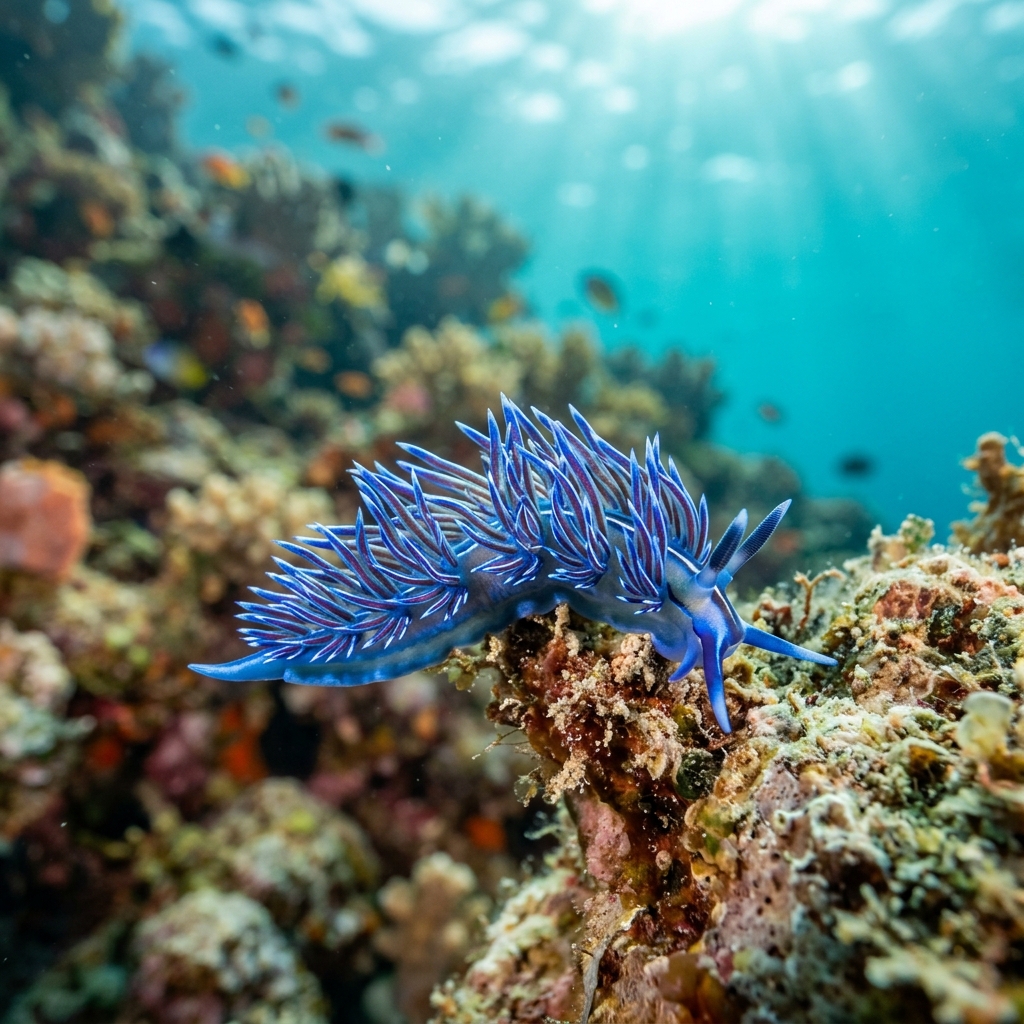
Reef neighbours a diver could mistake it for. Use the identification notes above to tell them apart.
This species is essentially a New South Wales specialty among logged sightings, with all recorded sites clustered along that stretch of the Australian coast. It turns up as an uncommon to rare find at temperate reef and rocky-shore dive sites there rather than on tropical coral reefs.
Mapping where Goniobranchus woodwardae is logged…
Nearly all logged sightings come from New South Wales, Australia, where it's found on temperate reef dive sites rather than tropical coral reefs.
There's no strong seasonal pattern in the sightings, and it's recorded across a wide temperature range from 17.3 to 23.3C, so it can turn up on any dive throughout the year.
Look for a small nudibranch with a ruffled mantle edge and distinct mantle patterning, moving slowly across rock or rubble. It's easy to confuse with other Chromodoris-type nudibranchs, so a close look at the mantle colour and margin helps confirm the ID.
Exact size data isn't well documented for this species, but like most Goniobranchus nudibranchs it's a small, close-focus subject best spotted while scanning the substrate rather than the open water.
No, it poses no danger to divers. Nudibranchs like this one are slow-moving and harmless to approach, though it's best not to touch marine life to avoid disturbing it.
Like its Chromodorididae relatives, it likely feeds on sponges and may incorporate their chemical compounds into its own tissue as a defence against predators.
Site and sighting data is aggregated from diver logs, iNaturalist and GBIF. For taxonomy and conservation status:
Blue Dragon
3,163 sites