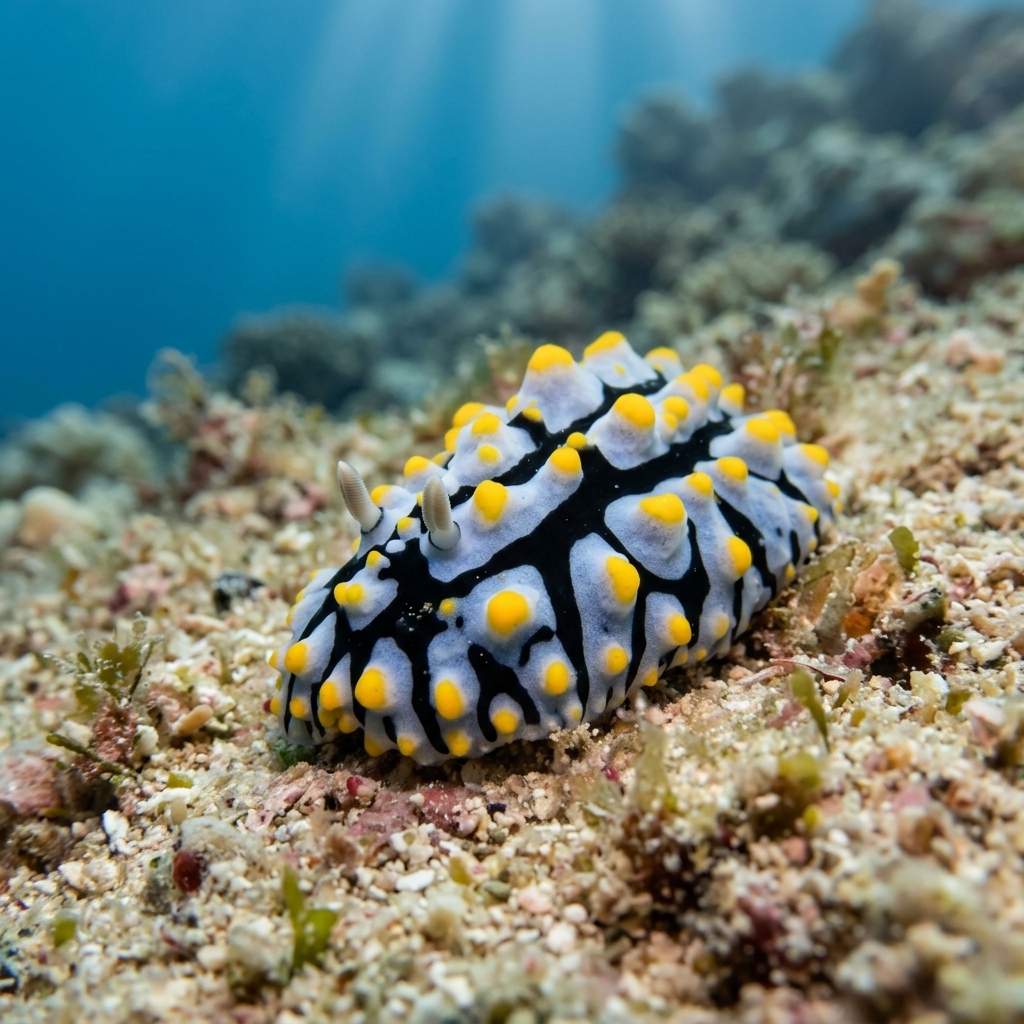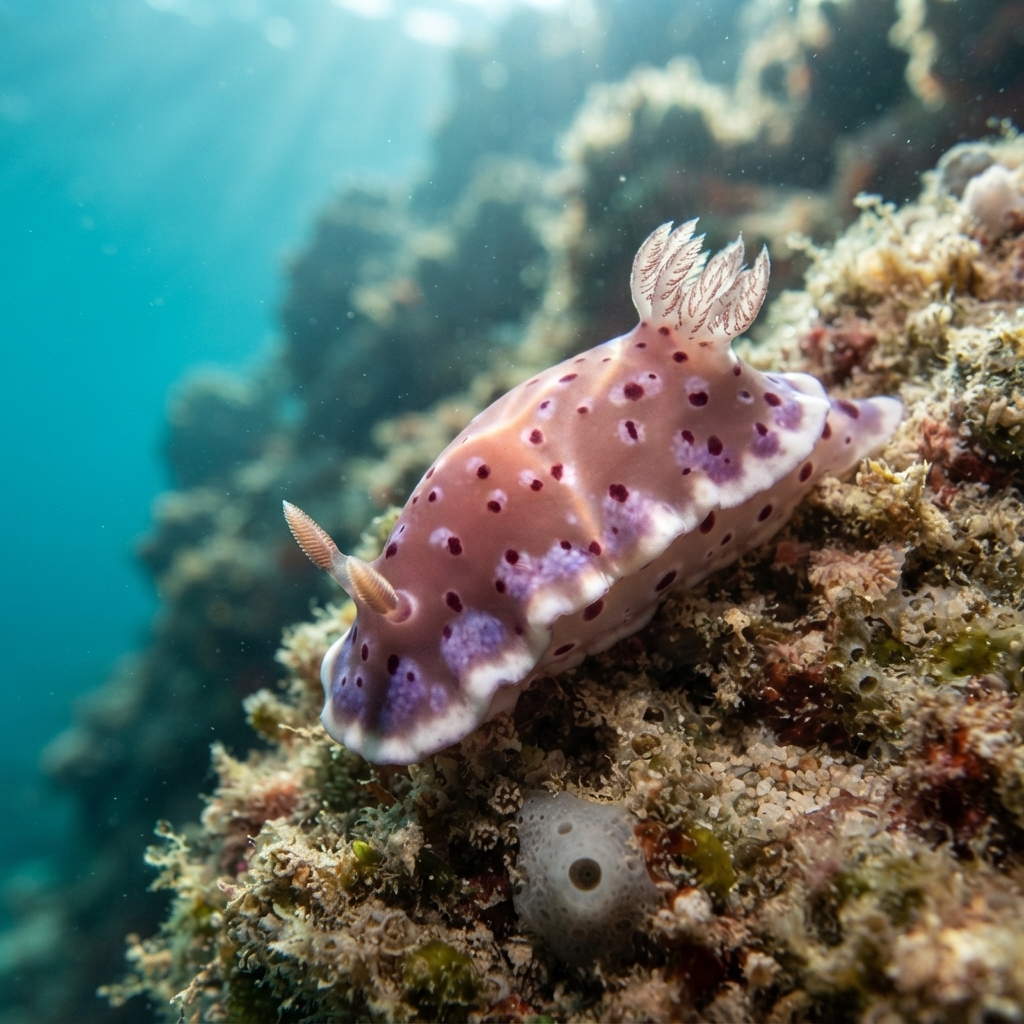
Goniobranchus thompsoni
A small, uncommon nudibranch best known from New South Wales, logged in waters between 16.7 and 22.7C year-round.
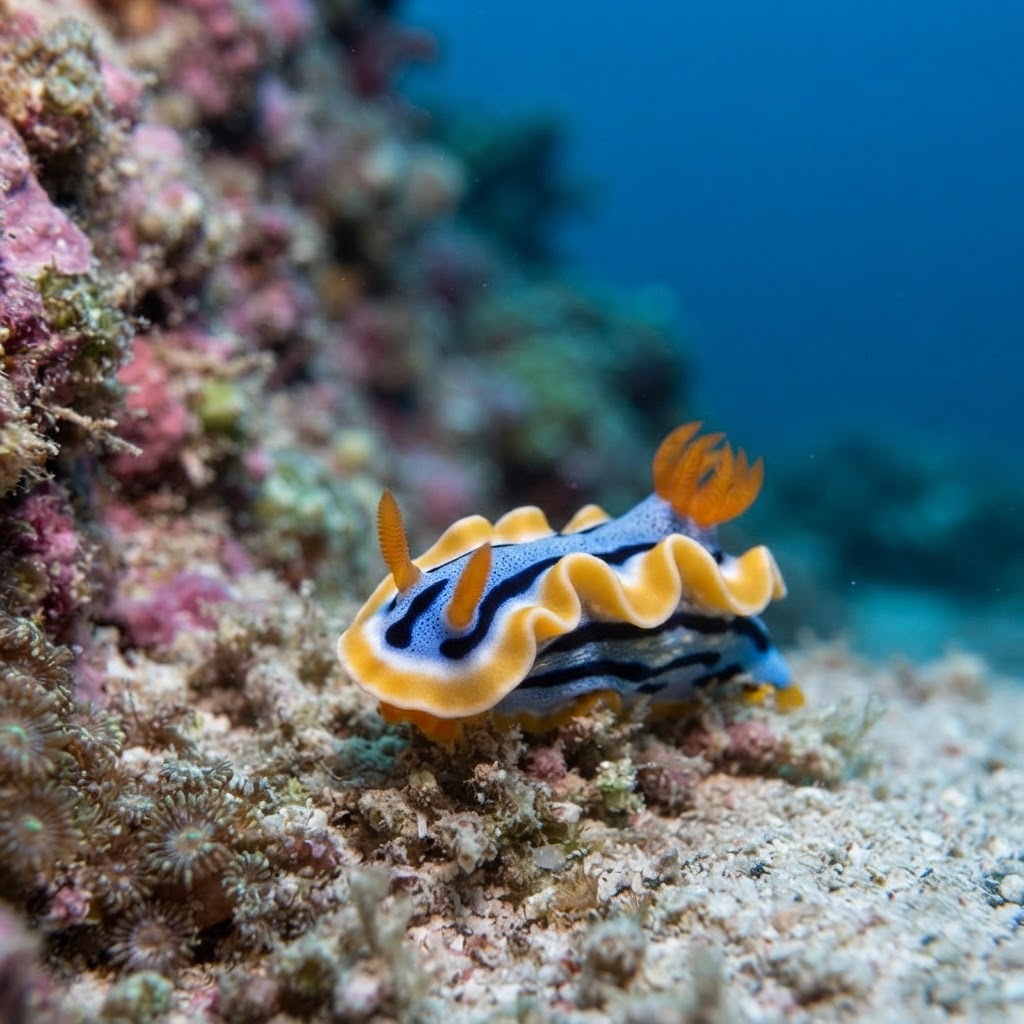
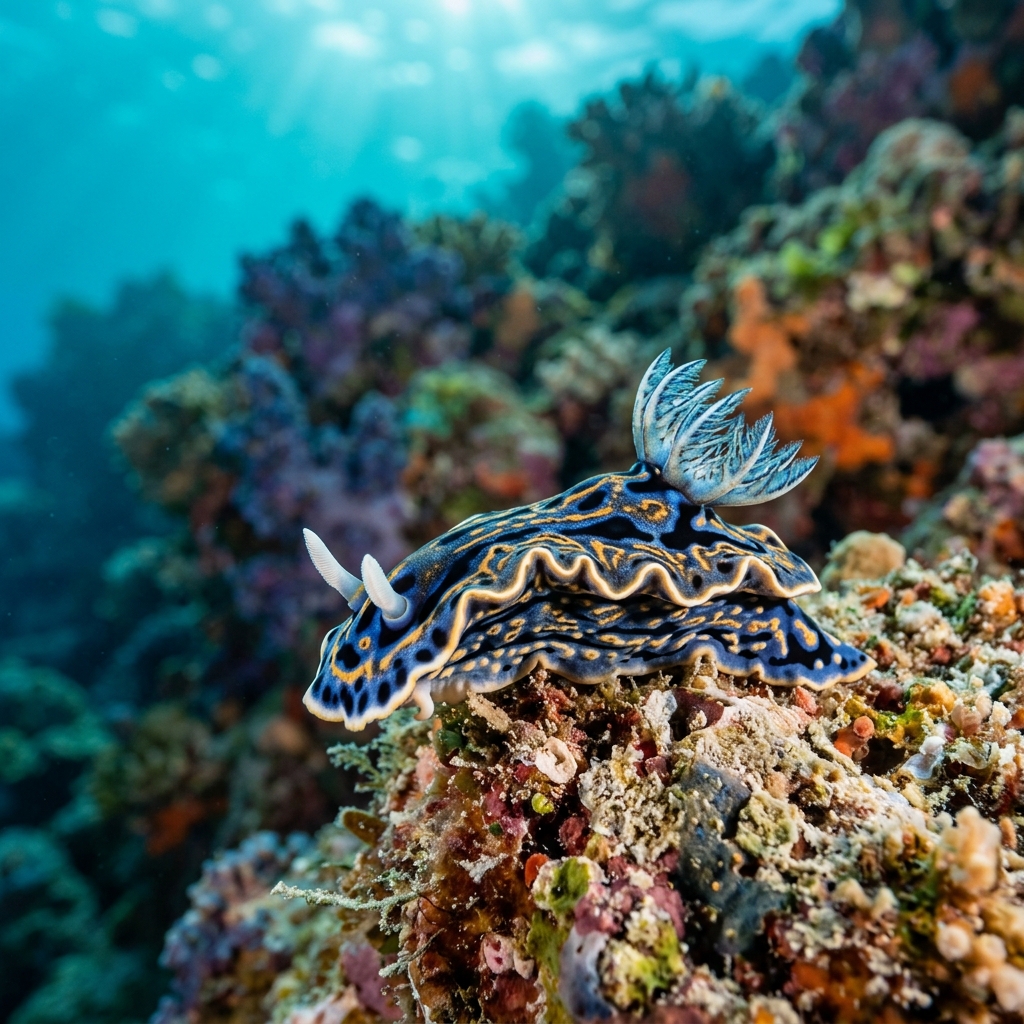
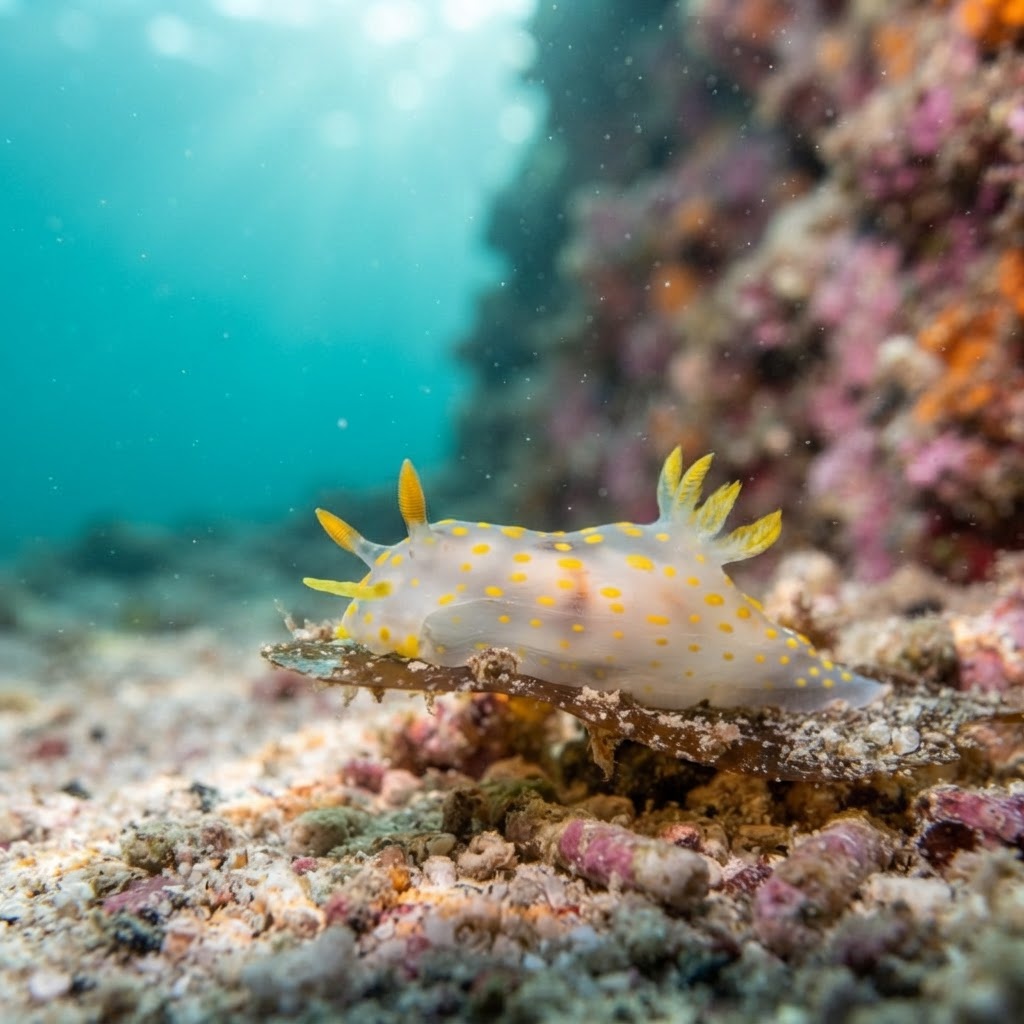
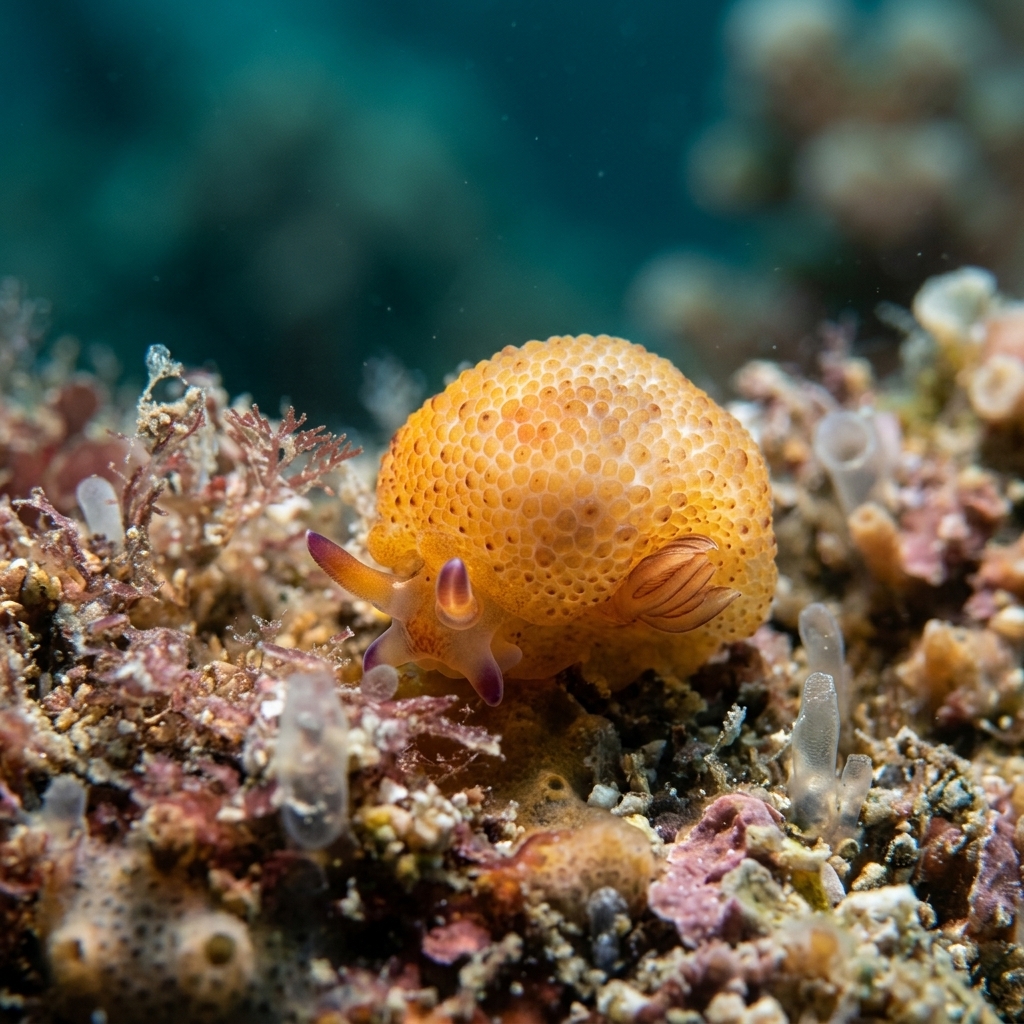
A small, oval-bodied nudibranch with a pale to cream mantle edged in a darker band, typically spotted resting flat on rock or rubble rather than exposed on open reef. Like other Goniobranchus species, the mantle margin is where most of the useful colour contrast sits, so look closely at the rim rather than the centre of the back. Size in the water is modest, closer to a fingernail than a palm, so divers often need a guide's pointer to spot one.
Divers typically find it parked on rocky reef or rubble patches, moving slowly across the substrate as it grazes, and paying little attention to a diver hovering nearby. It is not a species that swims or flees when approached, so a careful, slow approach with a torch or macro lens is usually all that is needed for a good look. Most logs describe it as an uncommon find rather than a guaranteed one, so patient scanning of likely sites pays off.
Like other chromodorid nudibranchs, it likely feeds on sponges and stores or modifies chemical compounds from that diet as a form of chemical defence, which is part of why these slow, unarmoured animals get left alone by most reef predators.
Sighting data shows no strong seasonal pattern, so it is logged across the year rather than in a tight window. It sits in a cool to mild temperature niche of 16.7 to 22.7C, consistent with New South Wales' temperate water conditions holding steady enough for year-round encounters.
Reef neighbours a diver could mistake it for. Use the identification notes above to tell them apart.
This one is very much a New South Wales speciality, with the great majority of logged sightings coming from sites there, and a smaller scatter of records from Victoria. Australia is currently the only country with confirmed sightings, so divers chasing this species should be planning a trip to the temperate reefs of southeastern Australia rather than tropical destinations.
Mapping where Thompson's Goniobranchus is logged…
It is most reliably logged in New South Wales, Australia, with a smaller number of records from Victoria. Outside Australia it has not been documented in current diver observations.
There is no clear seasonal peak in the data, so sightings occur across the year. It has been observed in water between 16.7 and 22.7C, a temperate range typical of New South Wales diving conditions.
Look for a small, oval nudibranch with a pale mantle bordered by a darker margin, usually resting on rock or rubble rather than crawling across open coral. Its size and low-key colouring mean it is easy to miss without a slow, close look at the substrate.
Exact size data is not confirmed, but like most Goniobranchus species it is a small nudibranch, generally a few centimetres long, best appreciated with a macro lens.
No. It has no sting or bite of concern to divers and simply moves slowly across the reef surface when encountered.
Site and sighting data is aggregated from diver logs, iNaturalist and GBIF. For taxonomy and conservation status:
Light-spotted Aegires
3,168 sites