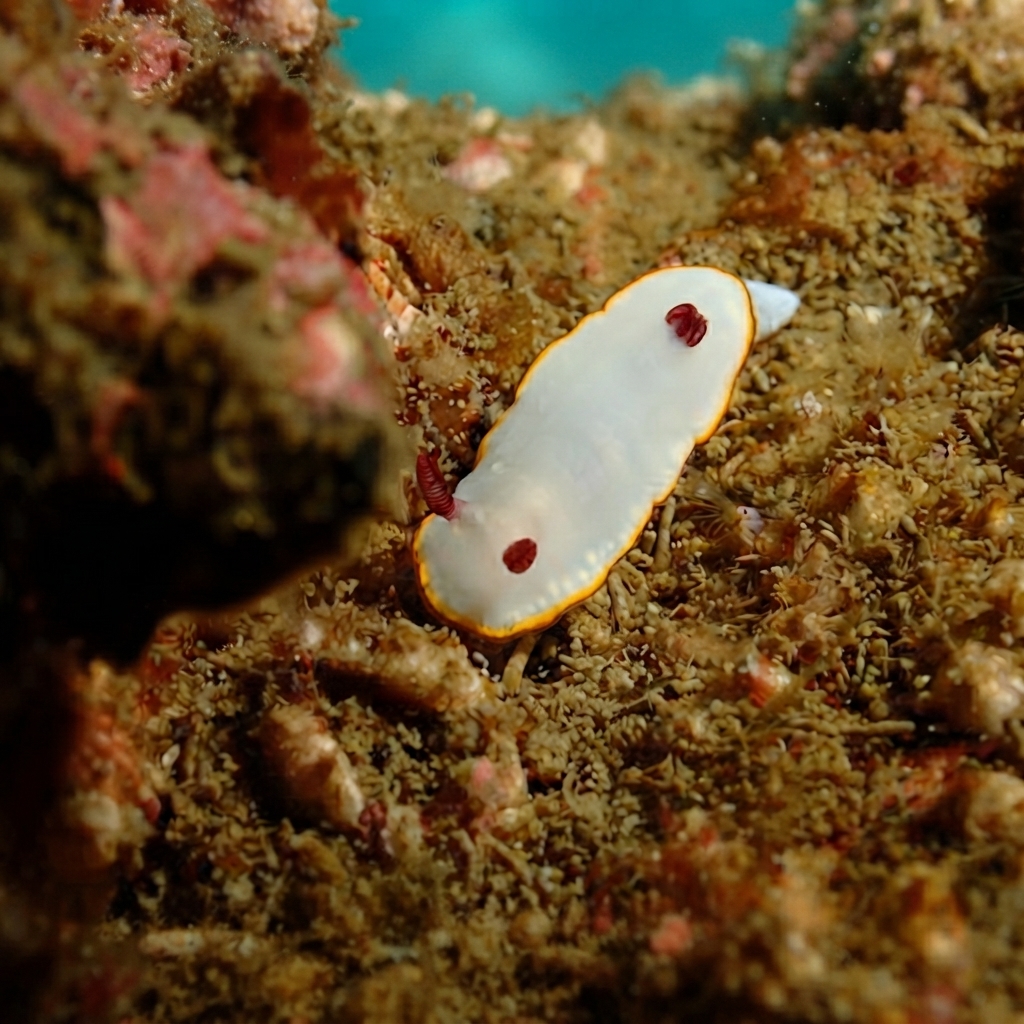
Goniobranchus sinensis
Spot this white-and-orange nudibranch on rocky reefs around Longdong, Taiwan and Sai Kung, Hong Kong, year-round in 22-28C water.
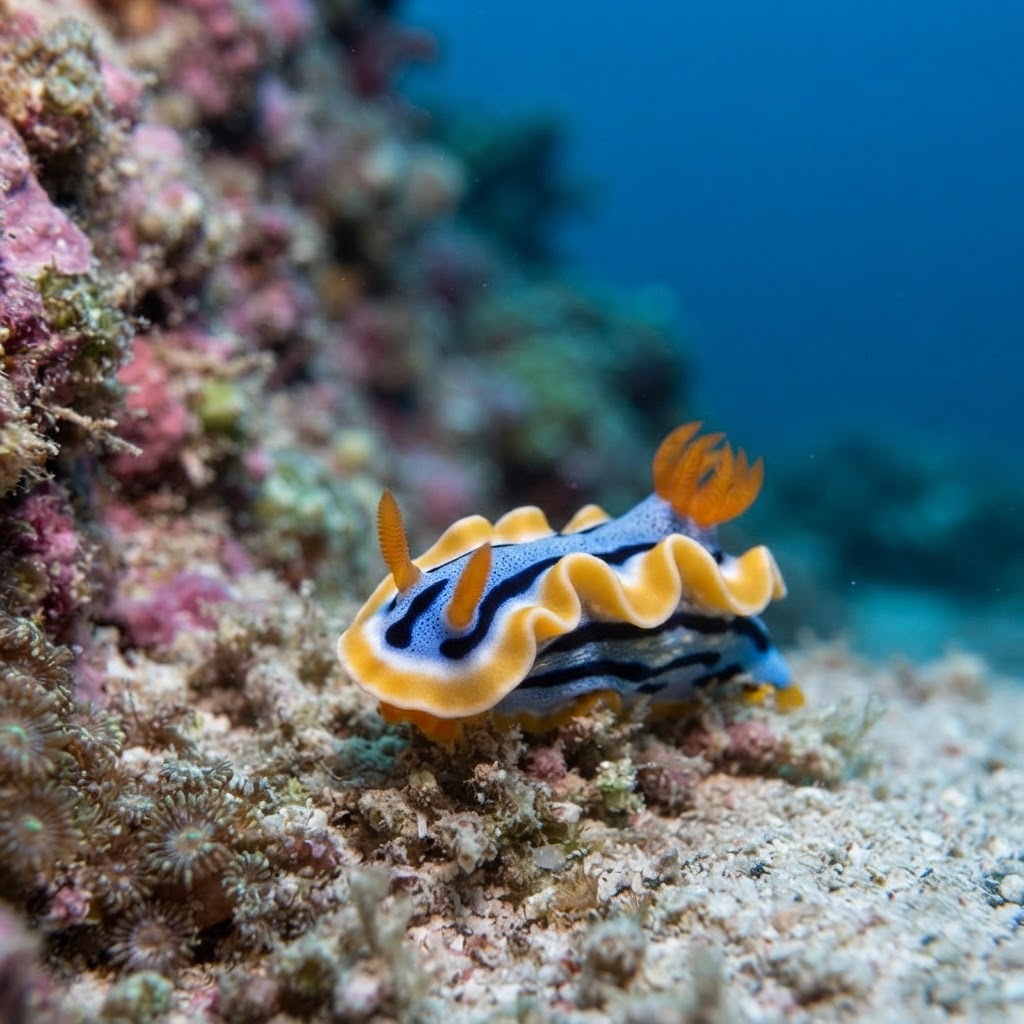
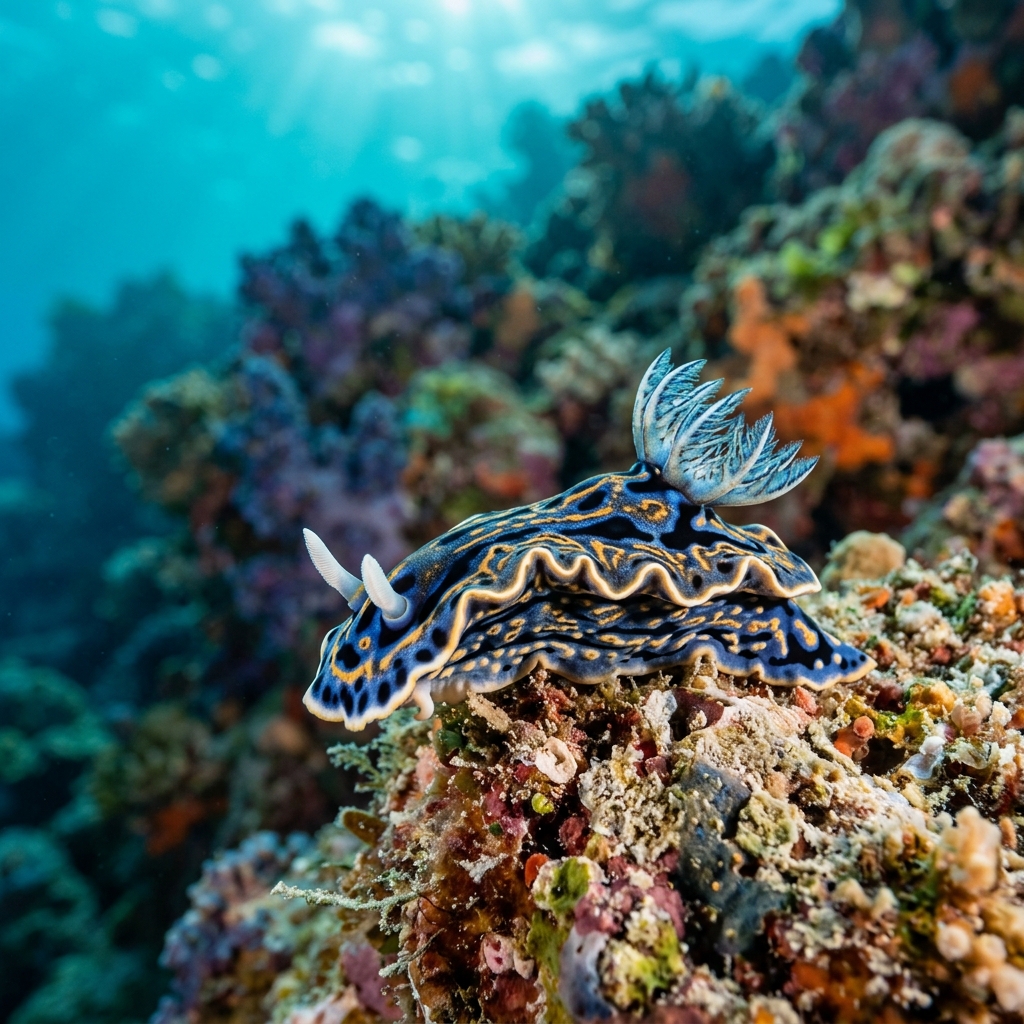
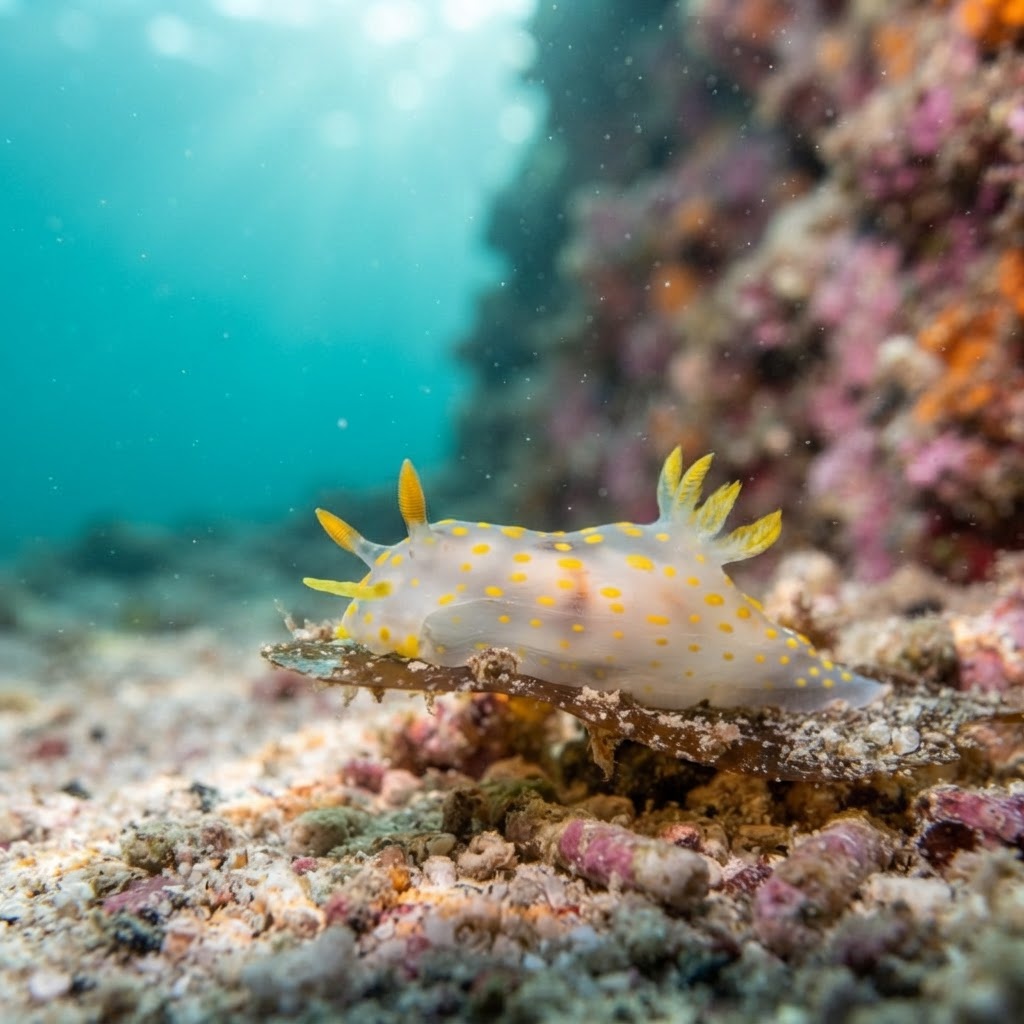
A small, oval-bodied nudibranch with a white to pale mantle edged in a bright orange line, often with scattered orange or dark speckling across the back. The frilly gills and paired rhinophores (sensory horns) sit near the rear and front of the body, both usually tipped in the same orange as the margin. Look for the smooth, slug-like profile moving slowly across rock or rubble, rarely more than a few centimetres long.
Divers find it grazing slowly over rocky reef and rubble, usually solo, doing what nudibranchs do best: creeping along at a pace that makes it an easy subject for macro photography. It shows no reaction to divers beyond retracting its gills slightly if brushed, and is most often spotted on daytime dives when the light picks out its orange trim against darker rock.
Like other chromodorid nudibranchs, it likely feeds on sponges and stores their chemical defences in its own tissue, which is thought to be why these slugs can afford such bright, exposed colouring without much cover.
No clear seasonal pattern shows in the data, and its comfort range of roughly 22 to 28C spans most of the diving calendar in Taiwan and Hong Kong, so it is worth looking for on any visit.
Reef neighbours a diver could mistake it for. Use the identification notes above to tell them apart.
Most reliably logged around Longdong in Taiwan and Sai Kung in Hong Kong, which together account for the bulk of recorded sightings. Also turns up on the Southern Islands of Singapore and along the Guangdong coast of China, though less frequently.
Mapping where Chinese Goniobranchus is logged…
It is most consistently spotted around Longdong in Taiwan and Sai Kung in Hong Kong, with additional sightings in Singapore's Southern Islands and along China's Guangdong coast.
There is no strong seasonal signal in the data, and its 22 to 28C temperature range covers most of the year at its main sites, so it can be found across the diving calendar.
Look for a small white-bodied nudibranch with a bright orange mantle margin and orange-tipped rhinophores and gills, moving slowly over rock or rubble.
Exact size data is not available, but like most Goniobranchus species it stays small, typically only a few centimetres long, making it a macro-photography subject rather than something spotted from a distance.
No. It poses no threat to divers and has no means of stinging or biting; it simply grazes along the reef surface.
Like other chromodorid nudibranchs, it probably feeds on sponges and repurposes their chemical compounds for its own defence, which may explain its bold, exposed colouring.
Site and sighting data is aggregated from diver logs, iNaturalist and GBIF. For taxonomy and conservation status:
Light-spotted Aegires
3,168 sites