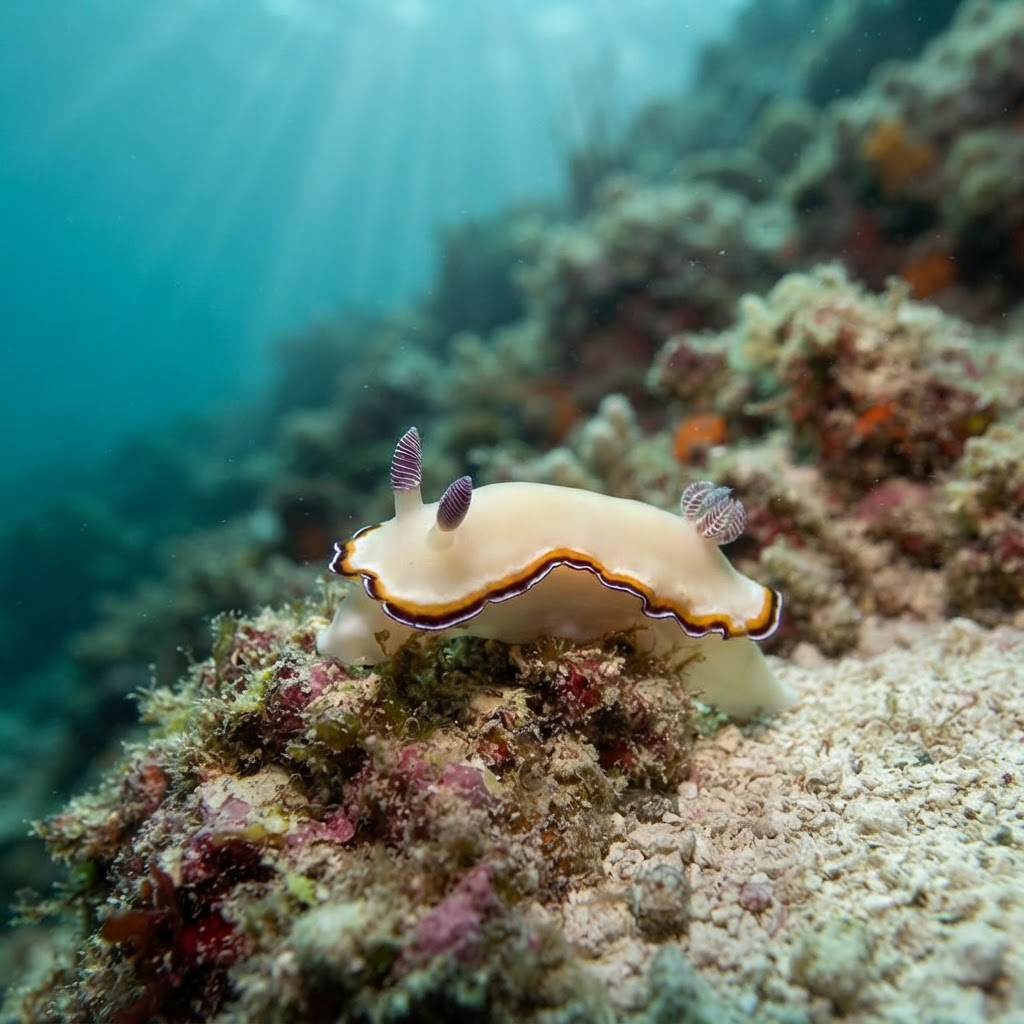
Goniobranchus fabulus
Spot this orange-edged nudibranch on reefs in Nouméa and Bali, 3-15m deep, year-round in warm 25-31C water.
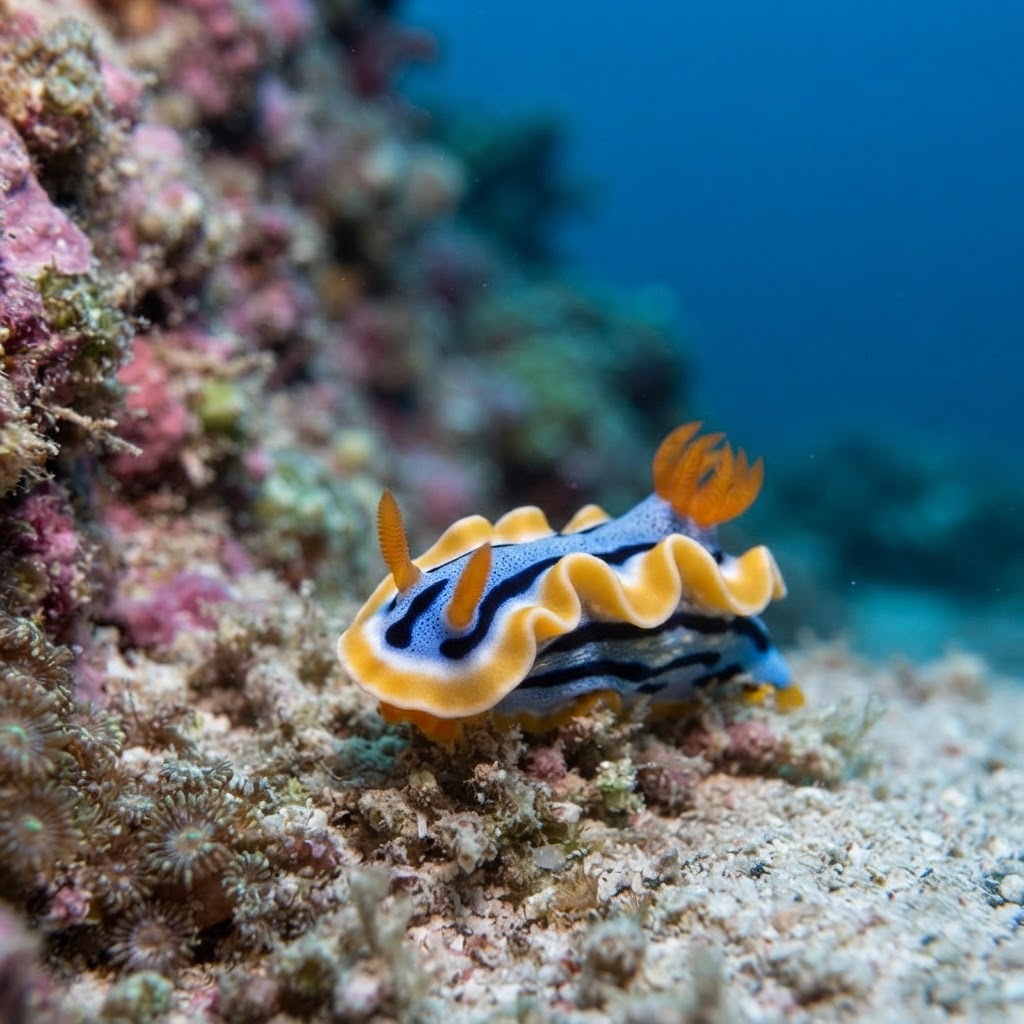
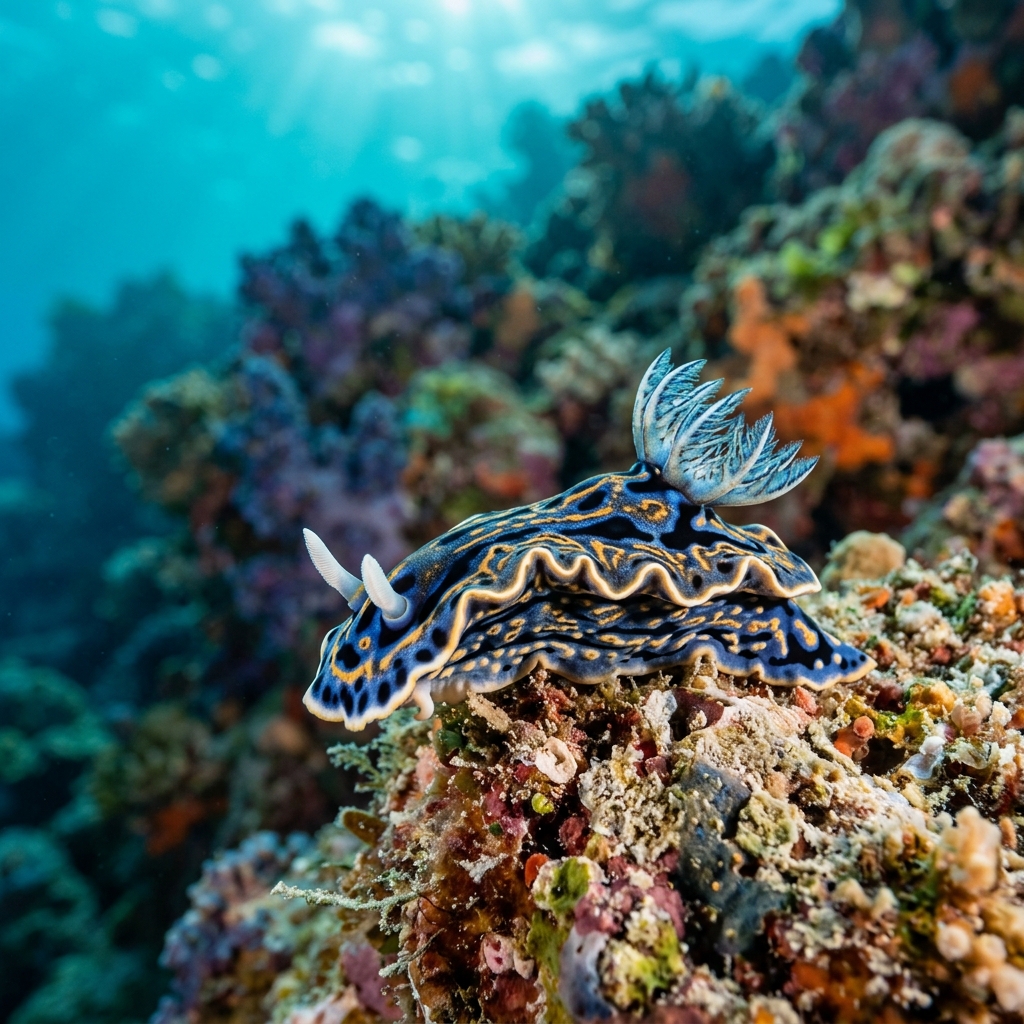
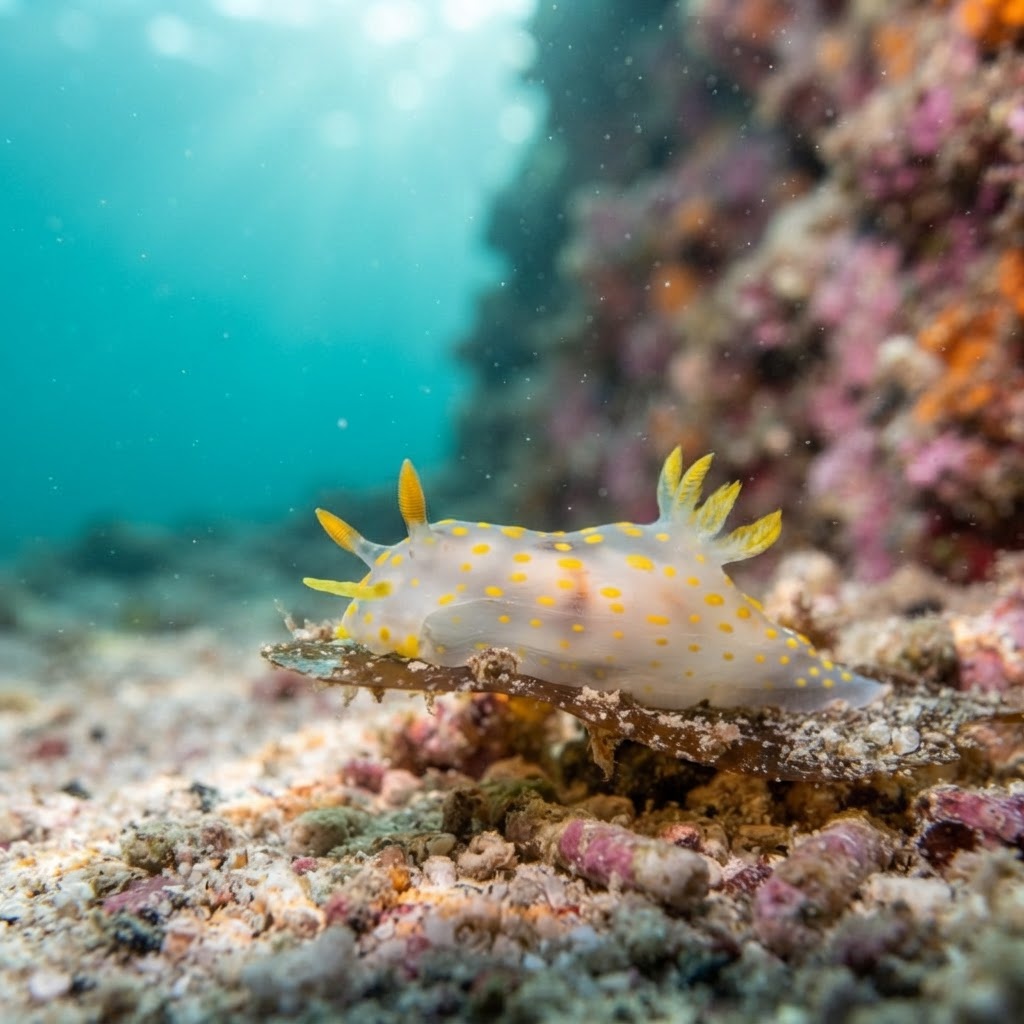
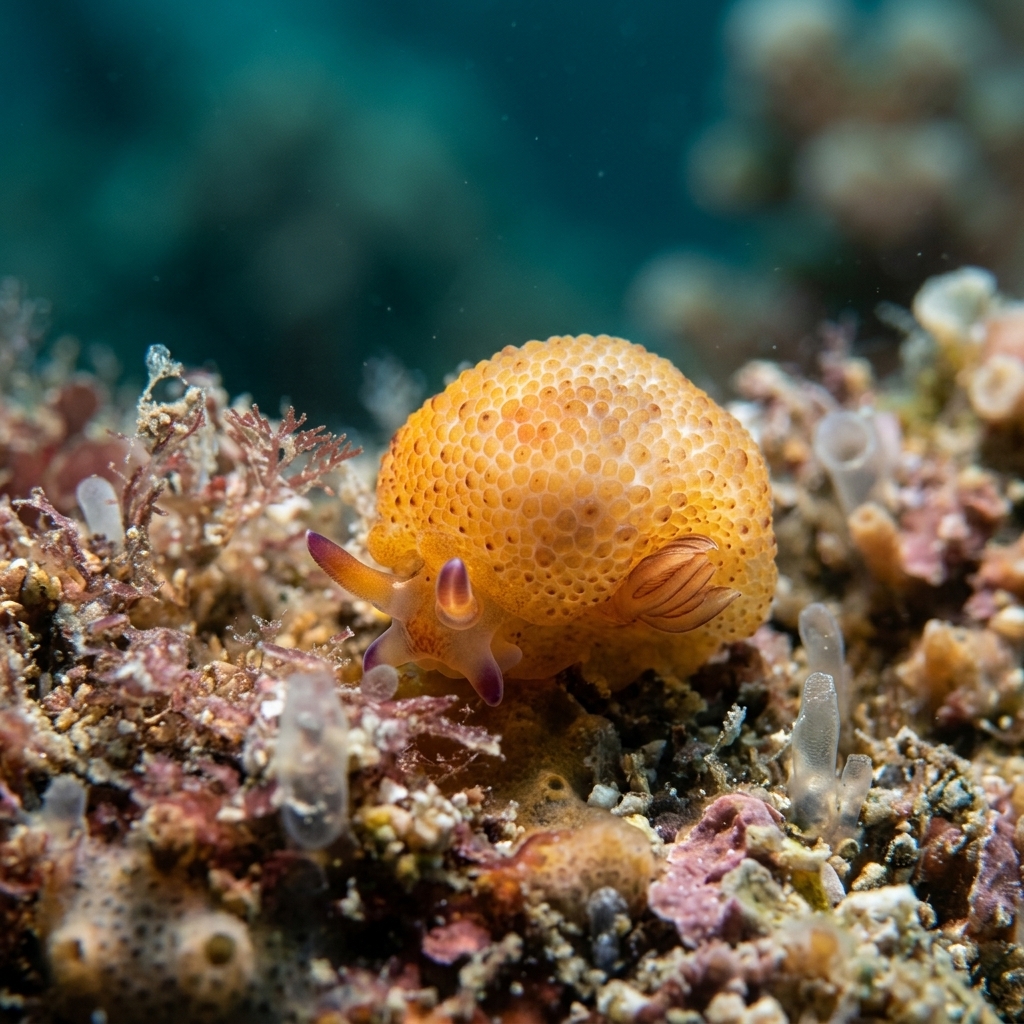
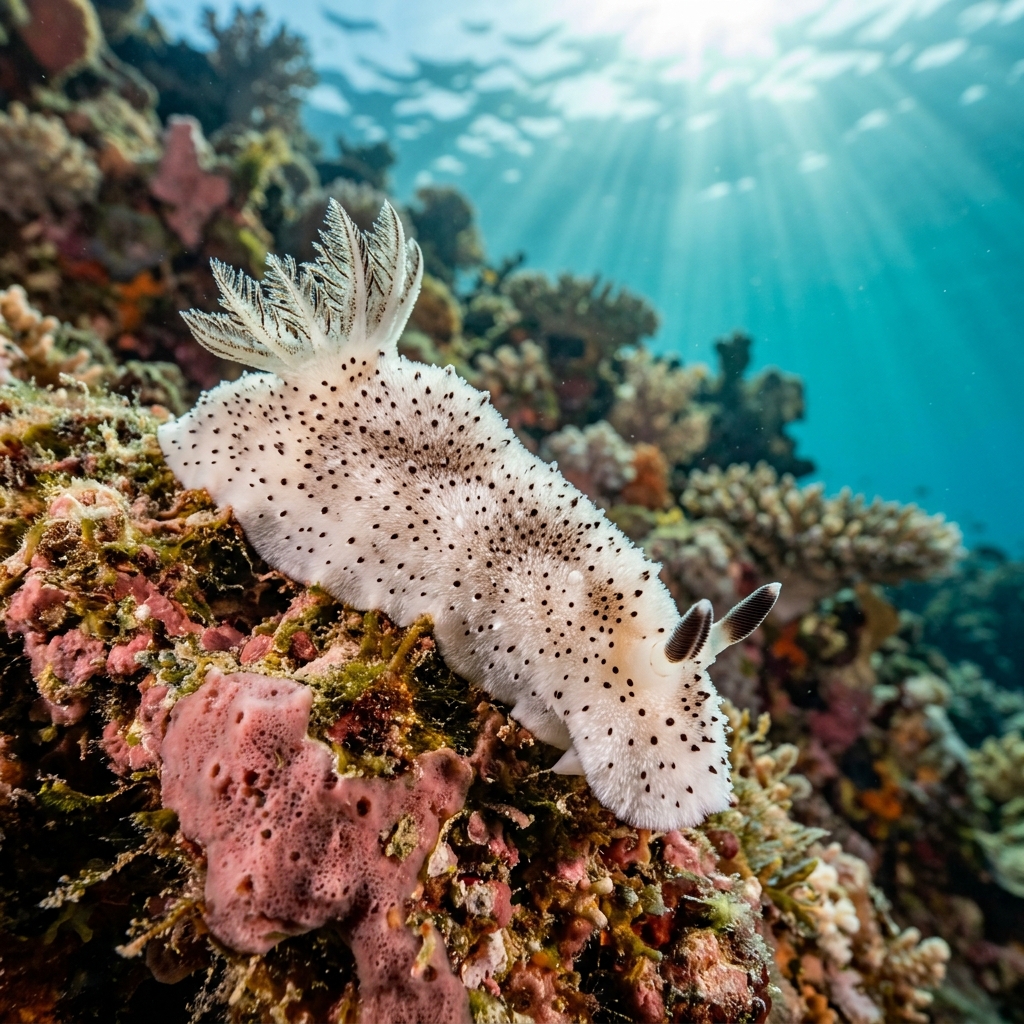
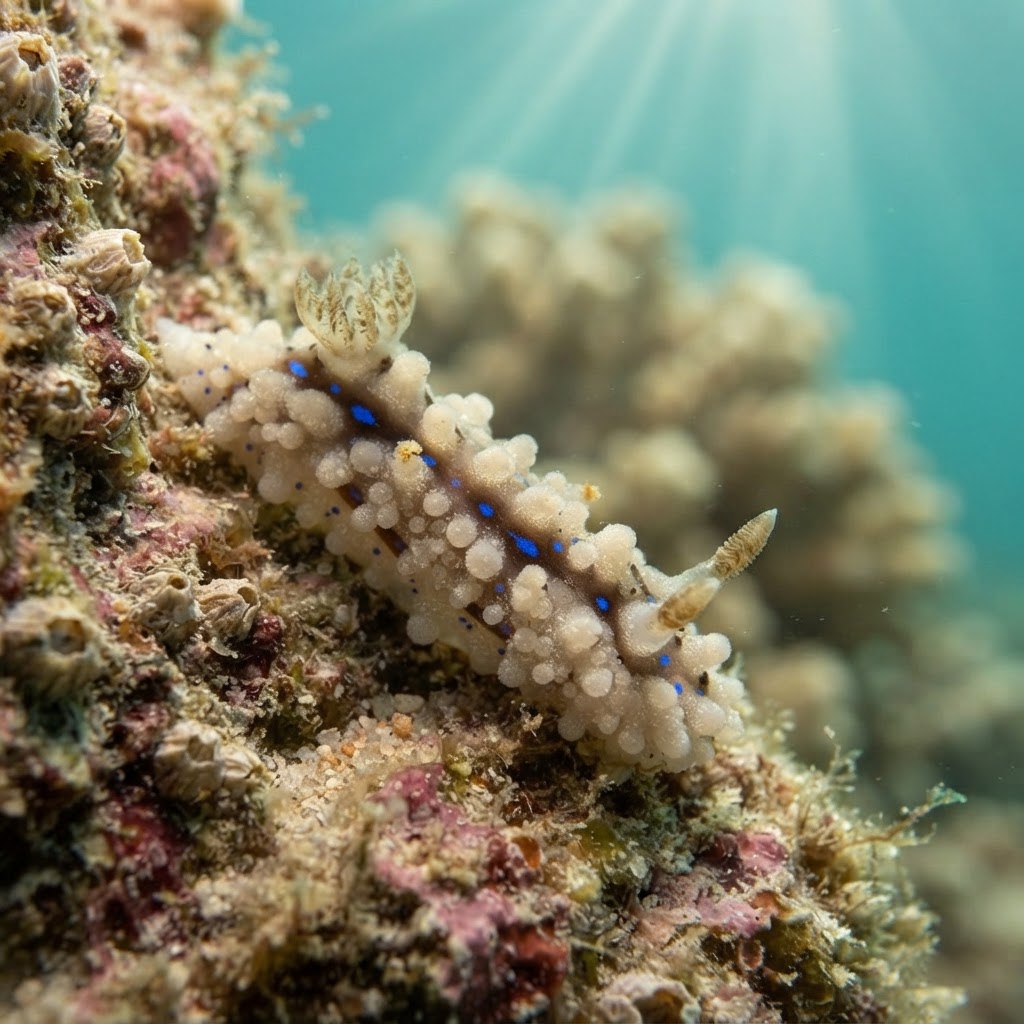
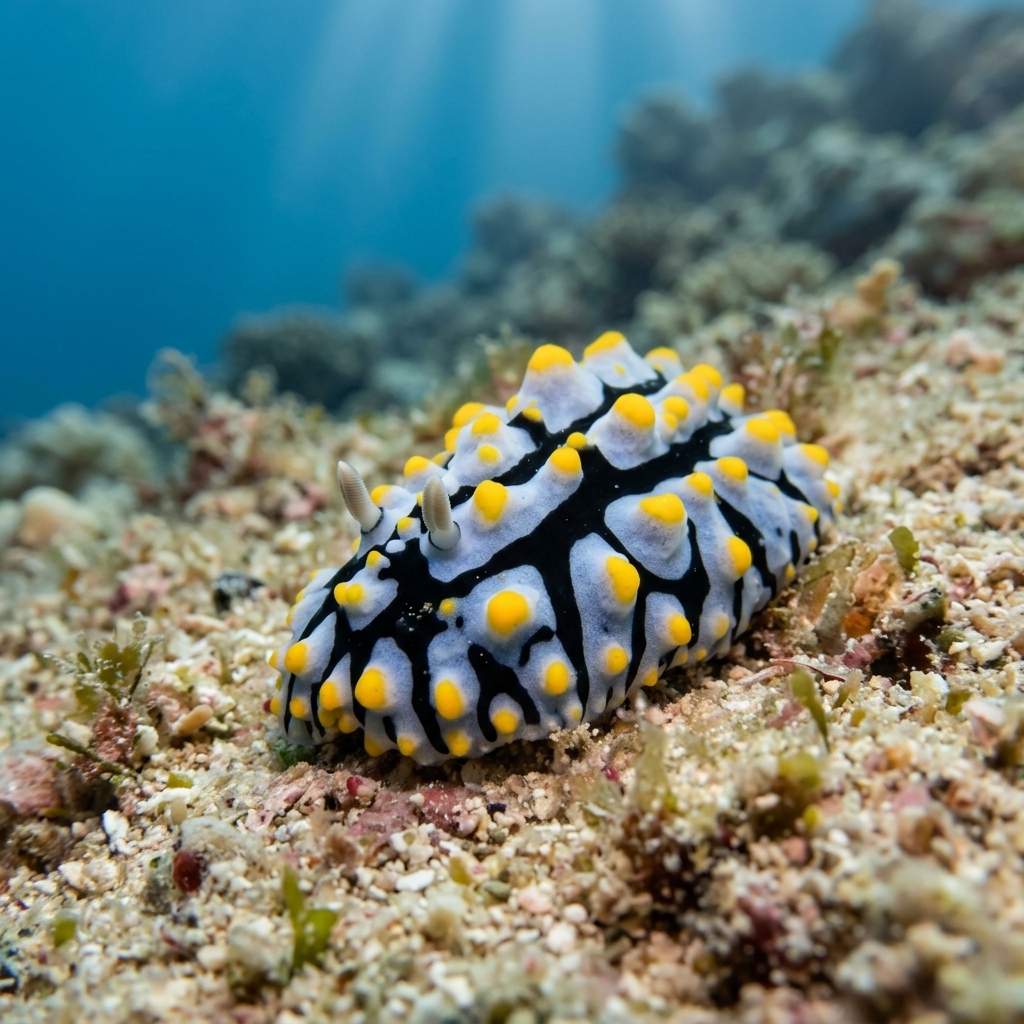
Small, slug-shaped nudibranch with a smooth white to cream body edged in a bright orange-yellow line running the full margin of the mantle. The orange rhinophores (the paired sensory horns on the head) and gill cluster at the rear pick up the same colour, giving it a clean two-tone look against the reef. It sits low and moves slowly across hard surfaces, rarely more than a couple of centimetres long, so divers usually spot the orange rim before anything else.
Divers find it parked on sponges, algae, or hard coral rubble, grazing slowly and paying little attention to torches or bubbles. It is a benthic (bottom-dwelling) species, so look down at the reef structure and rubble zones between 3 and 15 metres rather than up in open water. Most logs describe it as an uncommon find, so a sighting is more a matter of patient scanning than a guaranteed stop on a dive.
Like other chromodorid nudibranchs, its bright colouring likely signals distastefulness to predators, a defence built from compounds absorbed by feeding on sponges rather than any sting or bite.
No clear seasonal pattern shows up in the sighting data, and its comfort range of roughly 25.4 to 31.4C matches warm tropical reefs all year, so it is a fair year-round target in New Caledonia, Bali, and the Philippines.
Reef neighbours a diver could mistake it for. Use the identification notes above to tell them apart.
Most consistently logged around Nouméa in New Caledonia and Bali in Indonesia, with additional sightings across the Philippines in the Visayas and Luzon. It turns up on a scattered handful of sites in each of these regions rather than blanketing entire reef systems, so it rewards divers who search rubble patches and reef walls carefully rather than expecting it everywhere.
Mapping where Goniobranchus Fabulus is logged…
It is most reliably reported around Nouméa in New Caledonia and Bali in Indonesia, with further sightings in the Visayas and Luzon regions of the Philippines. Expect it on scattered individual sites rather than across whole reef systems.
There is no strong seasonal signal in the sighting data, and its warm-water niche of roughly 25 to 31C holds year-round on these reefs, so any month is a reasonable time to look.
Look for a small white to cream nudibranch with a continuous orange-yellow line around the mantle edge and orange rhinophores and gill tuft. It moves slowly over rubble and sponge and stays close to the substrate.
It stays small, typically only a few centimetres long, in line with most Goniobranchus nudibranchs, so divers need to look closely at rubble and sponge patches to spot it.
No, it poses no danger to divers. It has no sting and simply grazes slowly across the reef surface, safe to observe closely without touching it.
Site and sighting data is aggregated from diver logs, iNaturalist and GBIF. For taxonomy and conservation status:
Blue Dragon
3,163 sites