Goniobranchus epicurius
A Victoria, Australia speciality: this nudibranch turns up on cool-water reefs at 13 to 19C, most reliably around Victoria's temperate dive sites.
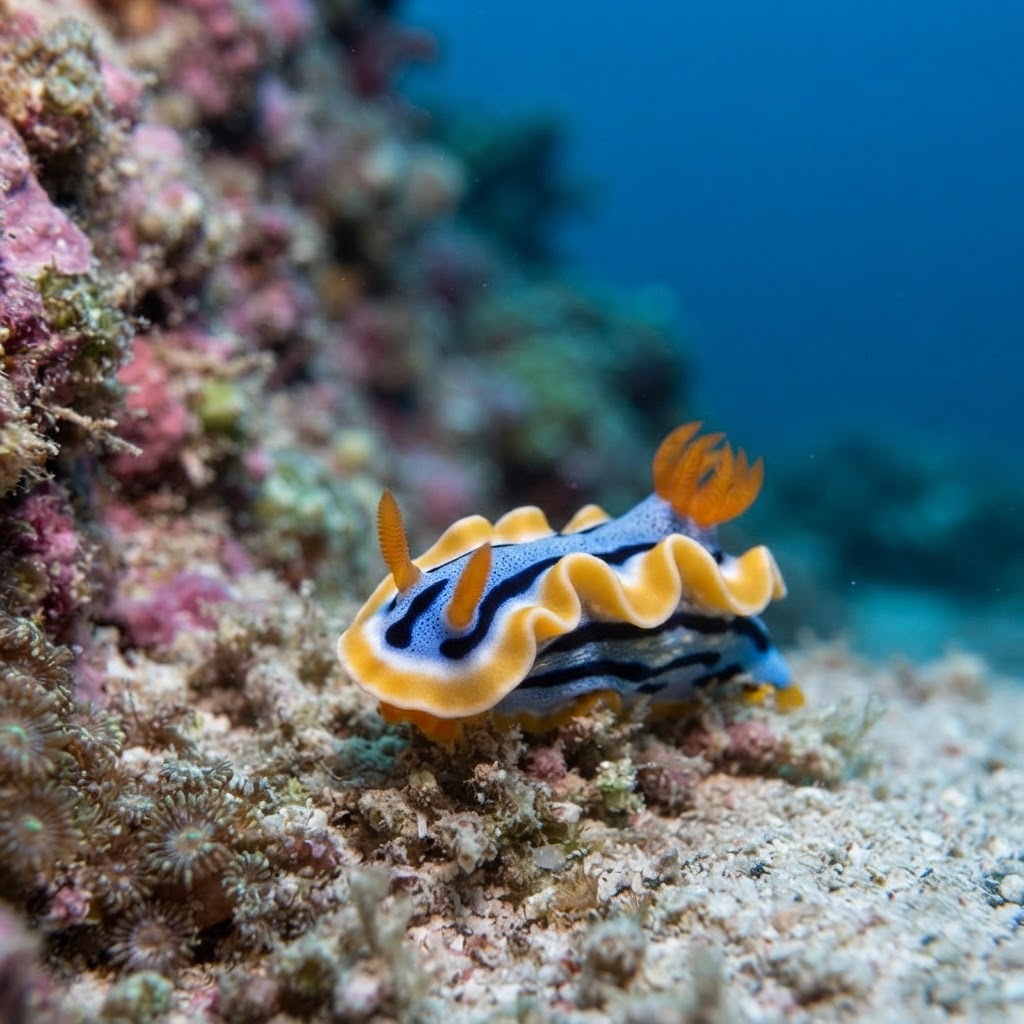
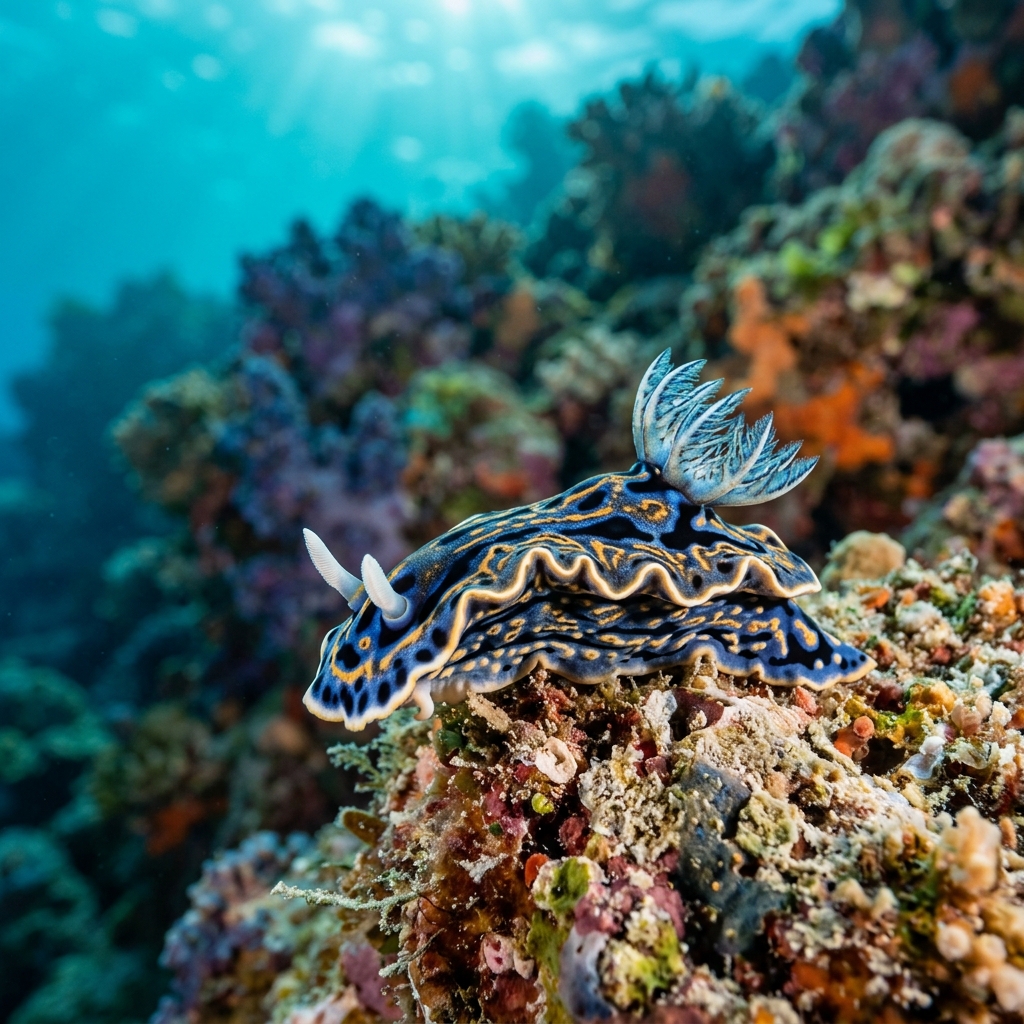
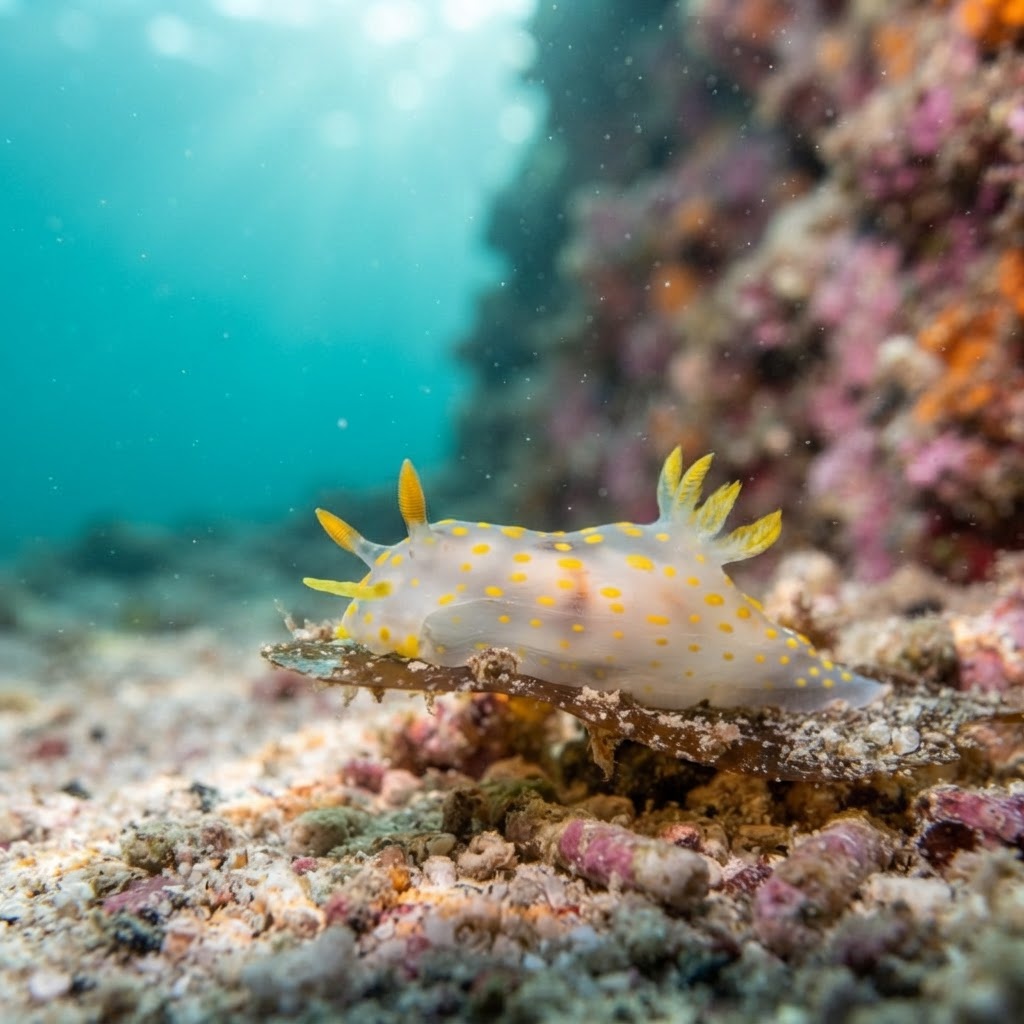
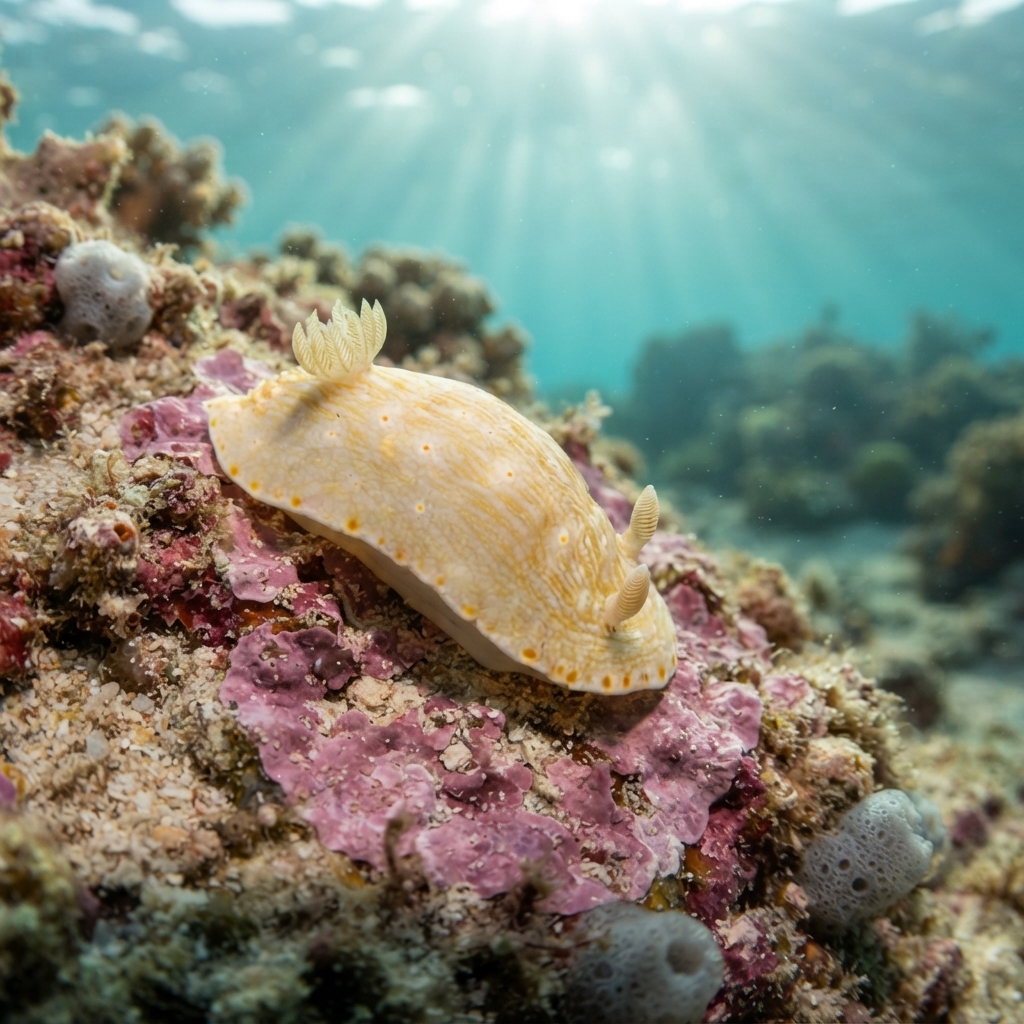
A small, soft-bodied nudibranch with a pale to cream mantle edged in a fine line, scattered with darker speckling across the back. Look for the smooth, oval outline typical of chromodorid nudibranchs, with a short pair of rhinophores (sensory tentacles) at the front and a feathery gill tuft near the tail. It moves slowly across rock and rubble rather than swimming, so once spotted it is easy to get a close, stable look.
Divers usually find it grazing slowly across rock walls, rubble patches and sponge-covered ledges, feeding on the sponges and encrusting organisms that share that substrate. It pays no attention to divers and will not move away quickly, making it a good subject for a patient macro shot. Most sightings come from the same cool, kelp-fringed reef habitat typical of southern Australian temperate diving rather than from open sand or wreck sites.
Like other chromodorid nudibranchs, it likely draws its colouring and any chemical defences from the sponges it feeds on, storing compounds from its diet to deter predators.
No clear seasonal pattern shows up in the sightings, so treat it as a year-round find on Victoria's cool-temperate reefs, where water sits between roughly 13.4 and 19.4C.
Reef neighbours a diver could mistake it for. Use the identification notes above to tell them apart.
This one is essentially a Victoria, Australia speciality, with the overwhelming majority of logged sightings coming from dive sites across that state. A smaller number of records come from South Australia, but Victoria is where divers reliably find it.
Mapping where Epicurius Goniobranchus is logged…
Victoria, Australia is by far the most reliable place, with sightings logged across dive sites there. A few records also come from South Australia.
There is no strong season in the sighting data, so it can be found year-round on Victoria's cool-temperate reefs, where the water typically runs 13.4 to 19.4C.
Look for a small, oval nudibranch with a pale cream mantle, fine speckled markings, short rhinophores and a feathery gill tuft near the tail. It moves slowly over rock and rubble rather than swimming.
Exact size data is not confirmed, but like most Goniobranchus species it stays small, typically a few centimetres long, easy to overlook without a careful eye on the substrate.
No. It poses no threat to divers and can be observed and photographed up close without any risk.
It feeds on sponges and other encrusting organisms on rock and rubble, a diet that likely contributes to its colouring and chemical defences, as seen in related chromodorid nudibranchs.
Site and sighting data is aggregated from diver logs, iNaturalist and GBIF. For taxonomy and conservation status:
Light-spotted Aegires
3,168 sites