Goniobranchus daphne
A small nudibranch logged mostly on Queensland reefs, uncommon but findable year-round in 19 to 25 C water.
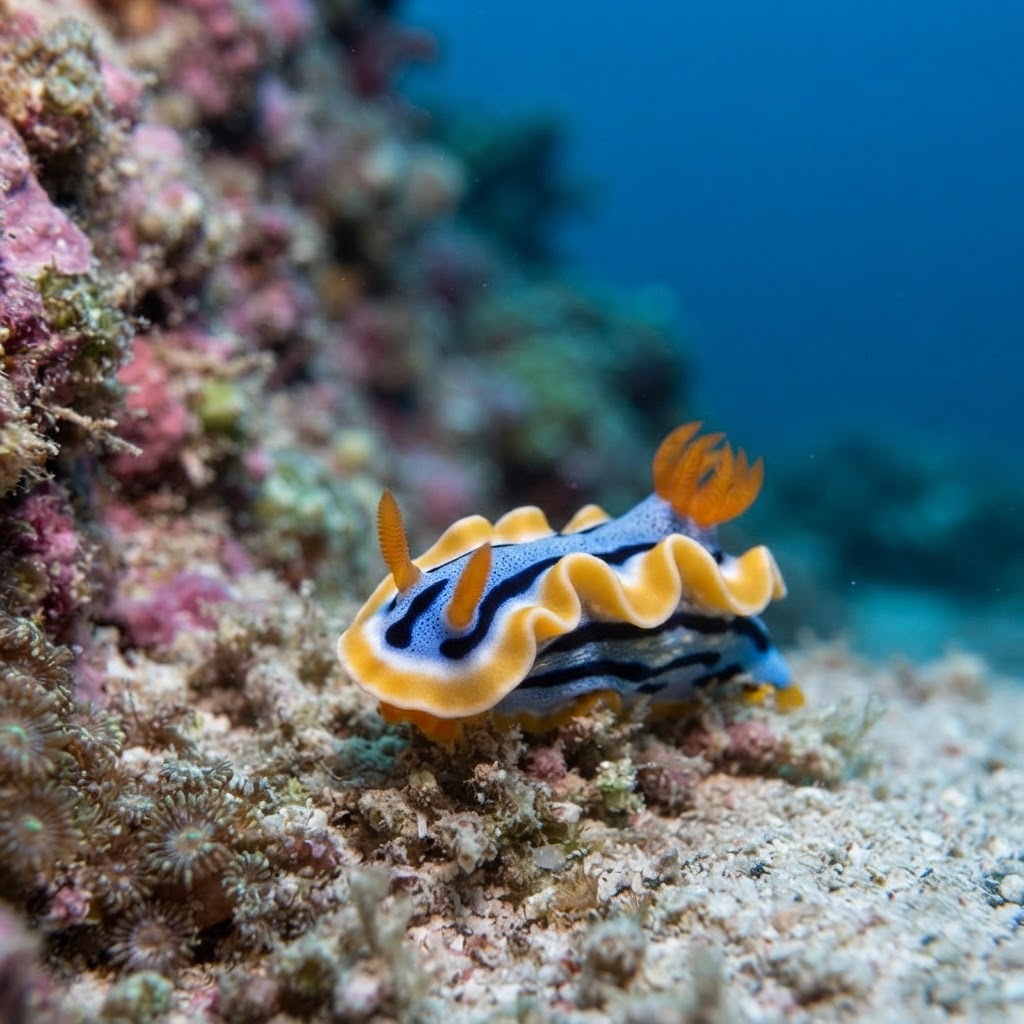
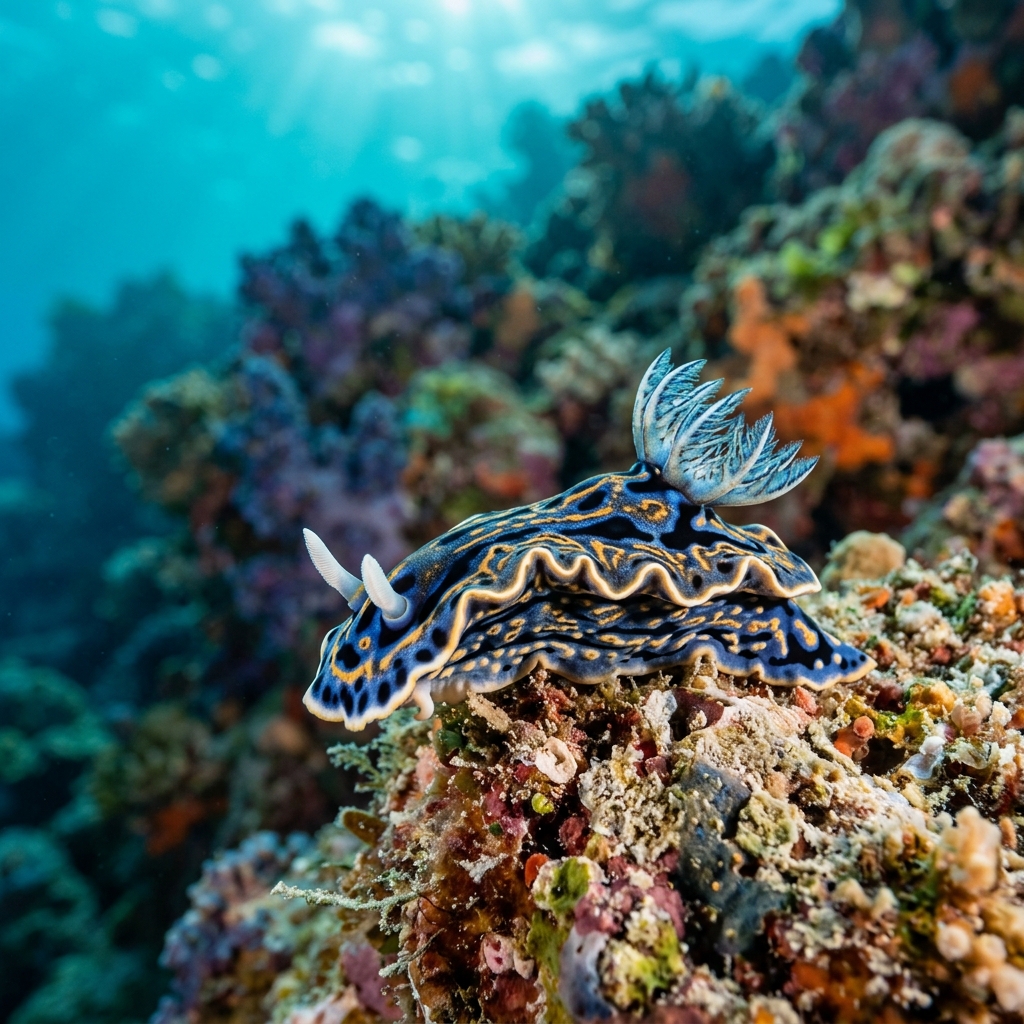
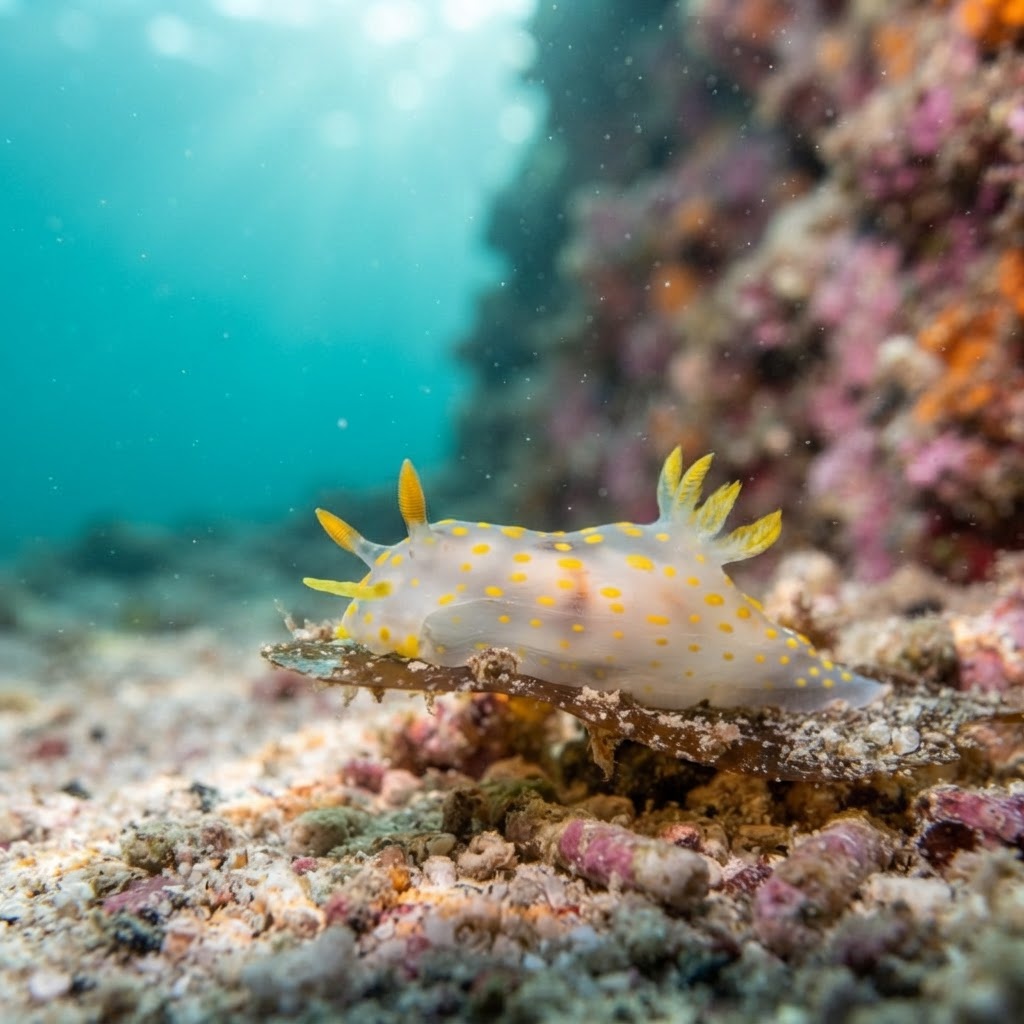
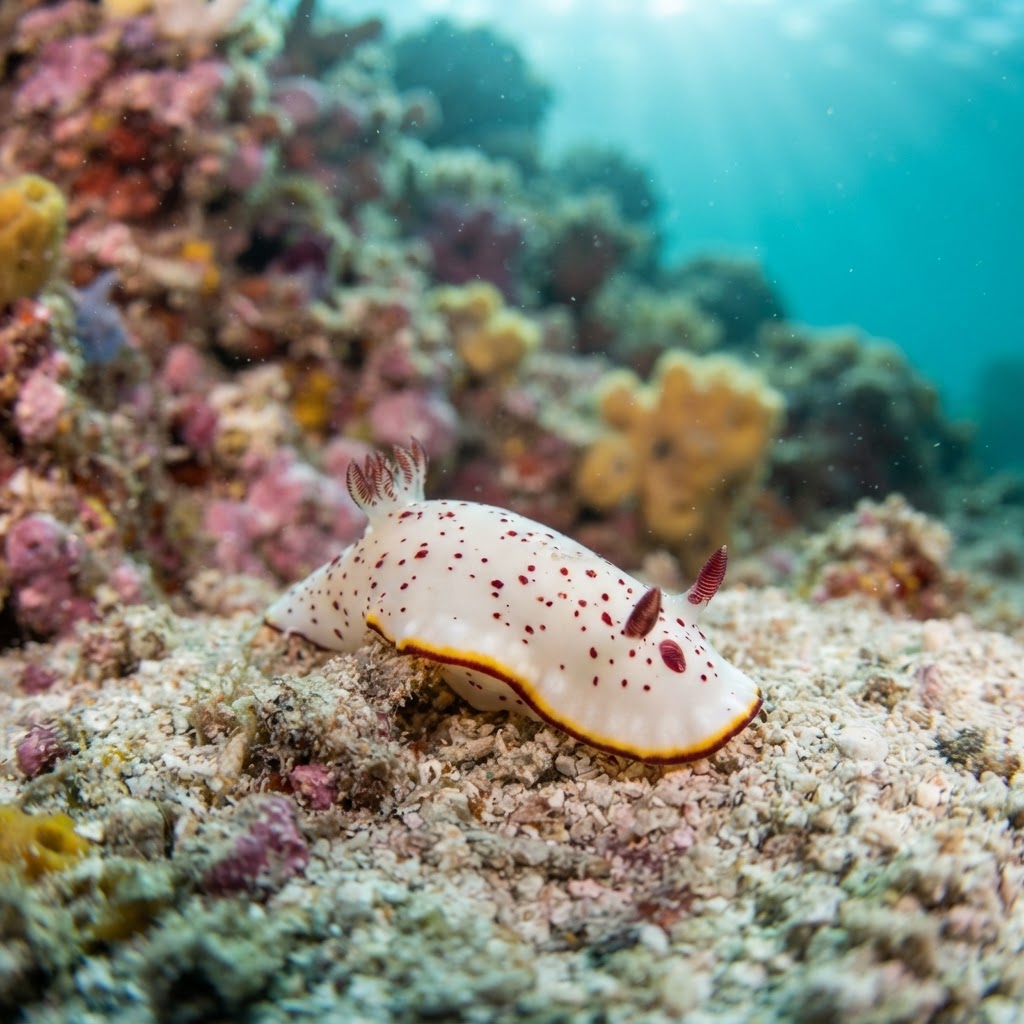
A small, oval-bodied nudibranch that keeps a low profile on the reef floor, spotted more by pattern than by size. Look for the raised, ruffled edge of the mantle (the fleshy covering over the back) framing a body pattern that contrasts against the substrate, with the two rhinophores (sensory horns) held upright at the front end. It moves slowly and stays put long enough for a close look once found.
Divers find this one grazing slowly across rock and reef surfaces, tucked into crevices or moving over encrusting sponges and algae where its food source lives. It shows no reaction to divers beyond continuing its slow crawl, making it an easy subject for macro photography once spotted. Most logs come from daytime dives rather than night dives.
Like other chromodorid nudibranchs, it likely feeds on sponges and stores their chemical defences in its own tissue, which is thought to be part of why these animals can afford such bold, contrasting patterns instead of hiding.
Sightings are spread across the year with no clear seasonal spike in the data, and its recorded temperature range of 19.1 to 25.1 C fits the mild-to-warm conditions found on Queensland and New South Wales reefs for most of the year.
Reef neighbours a diver could mistake it for. Use the identification notes above to tell them apart.
Recorded almost entirely on Australian reefs, with the strongest logs coming from Queensland and a solid secondary showing in New South Wales. It shows up across dozens of sites in these two regions, usually as an uncommon find rather than a guaranteed one.
Mapping where Daphne's Nudibranch is logged…
It is almost exclusively logged on Australian reefs, with Queensland producing the most sightings and New South Wales a close second. Outside Australia it has not been reliably recorded.
There is no strong seasonal pattern in the sightings, so it is considered a year-round find on Queensland and New South Wales reefs where water temperatures sit between about 19 and 25 C.
Look for a small, slow-moving nudibranch with a ruffled mantle edge and a contrasting body pattern, crawling across rock or reef surfaces. It stays still enough for a close look once you find it.
No. It poses no threat to divers and can be observed and photographed at close range without any risk.
Like many nudibranchs in its family, it likely feeds on sponges and repurposes their chemical defences for its own protection, which may explain its bold visible pattern.
Site and sighting data is aggregated from diver logs, iNaturalist and GBIF. For taxonomy and conservation status:
Light-spotted Aegires
3,168 sites