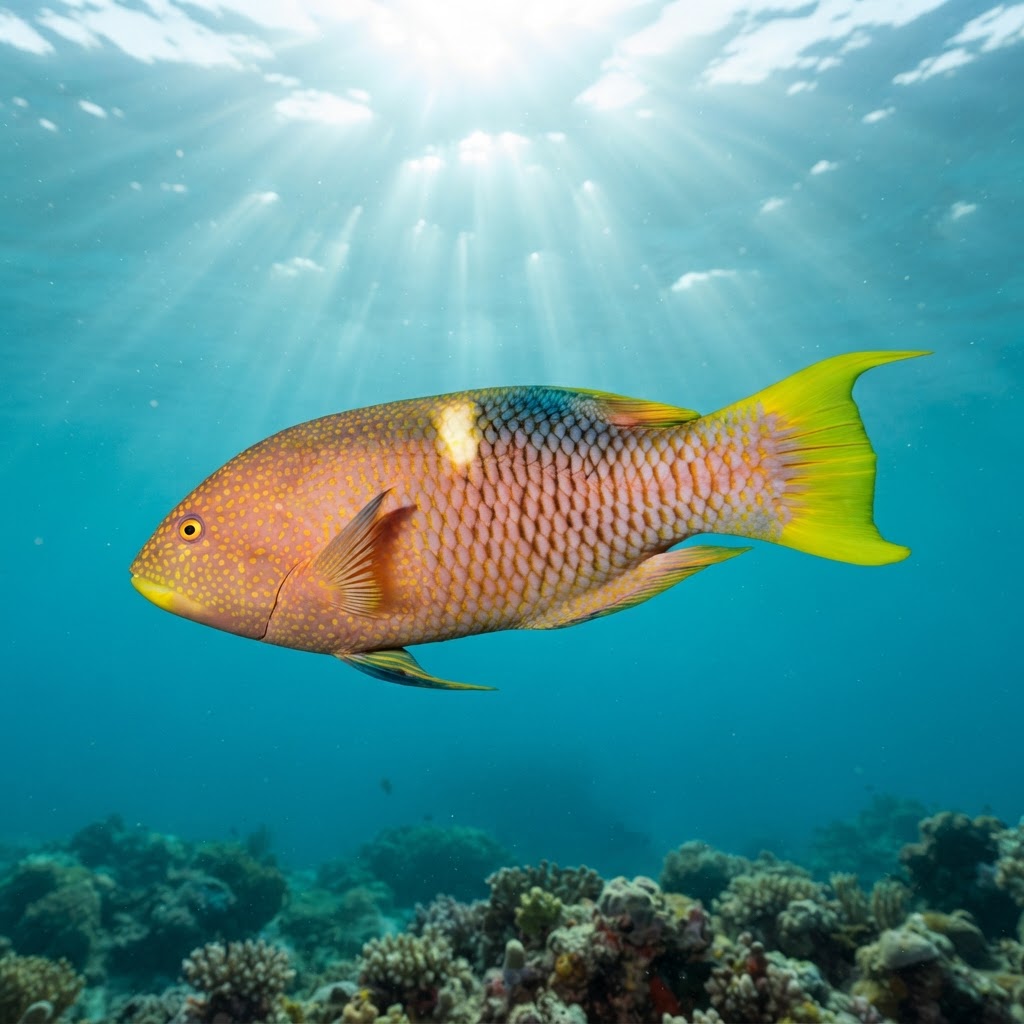
Bodianus perditio
An uncommon wrasse of Nouméa reefs, seen year-round in 21.6-27.8 C water off New Caledonia and Australia.
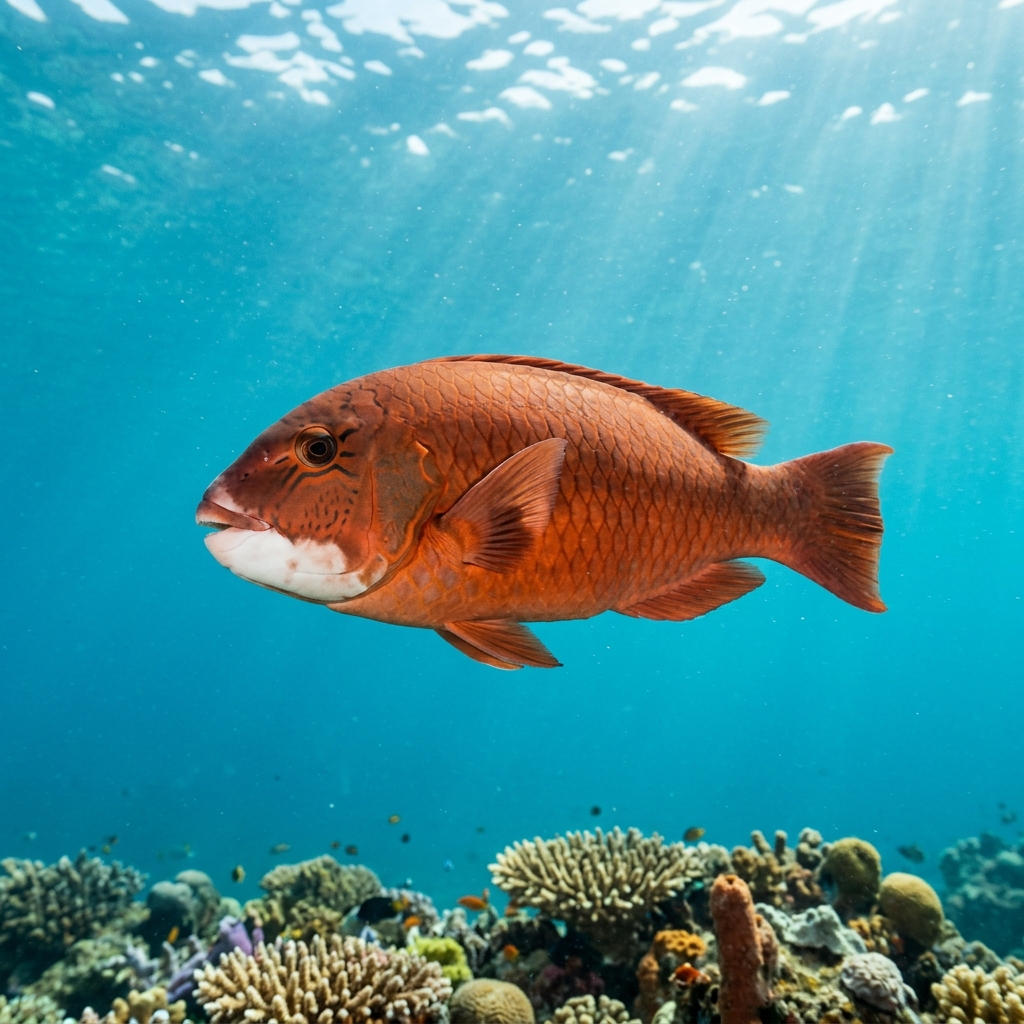
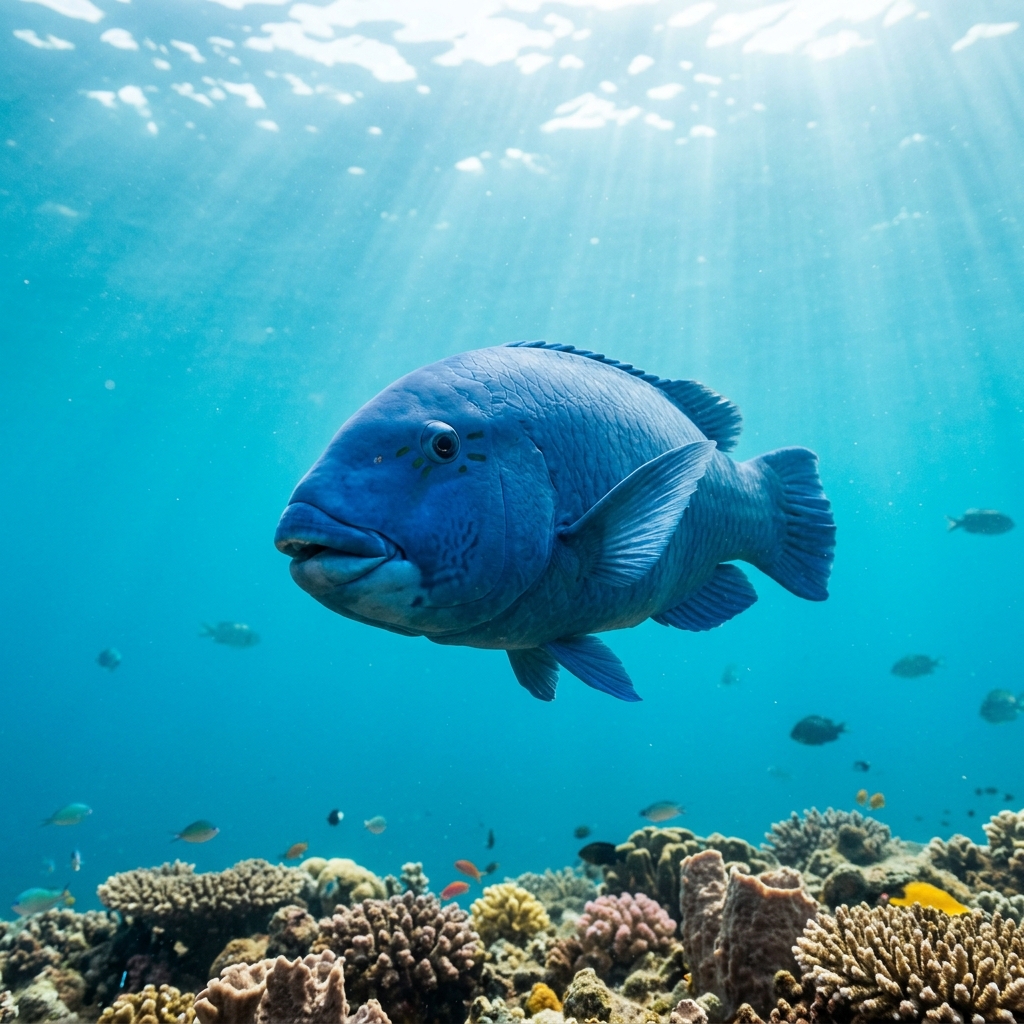
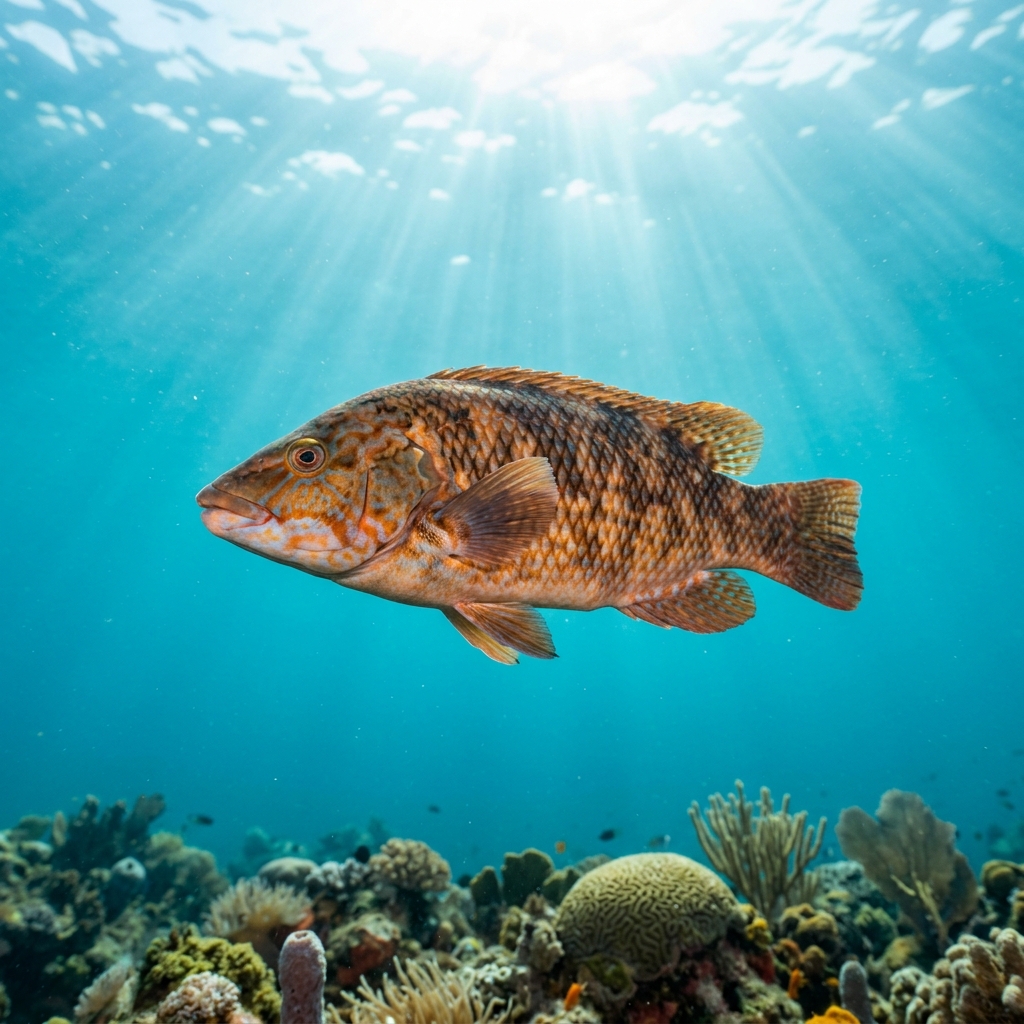
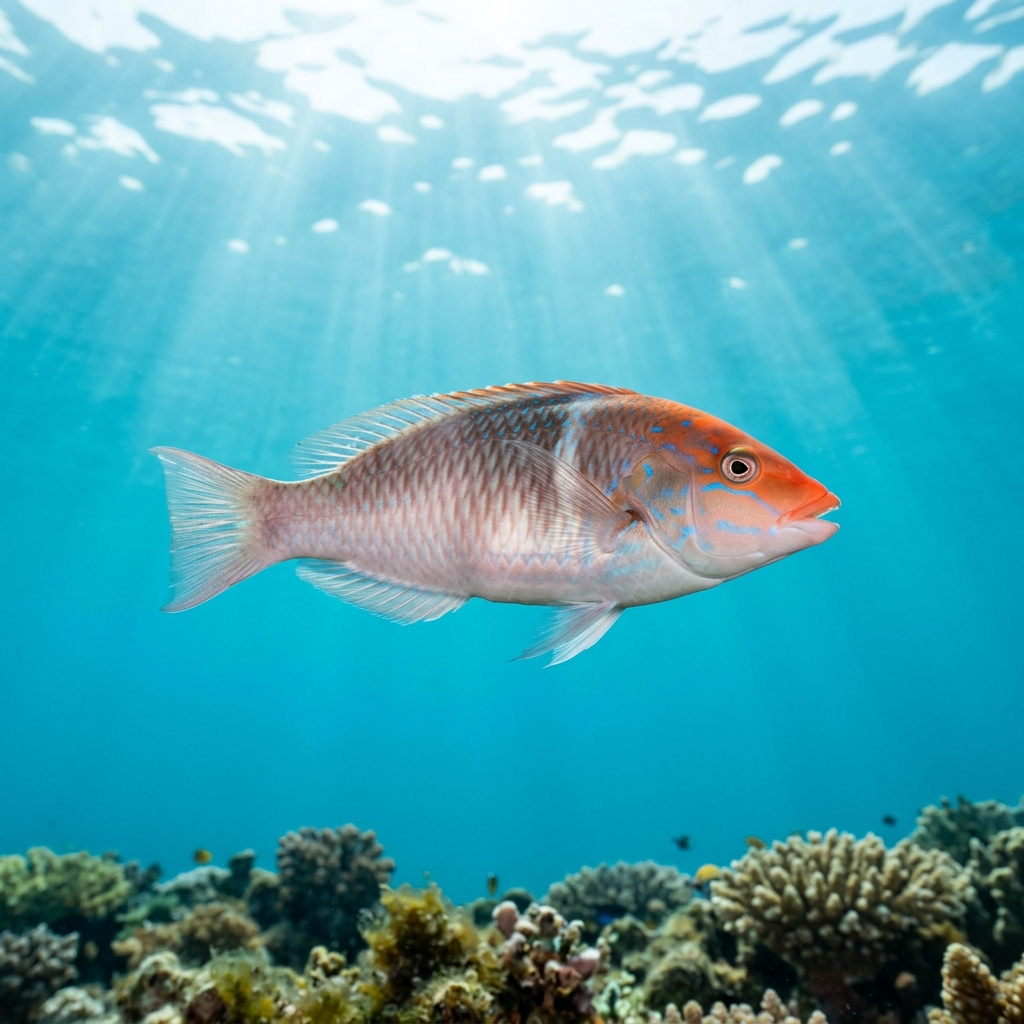
A heavy-bodied wrasse growing to around 56 cm, with a thick tapering head and a reddish to brownish body that lightens toward the belly. The name comes from a pale gold blotch on the rear body near the base of the tail, a mark worth checking for when this fish is cruising past at a distance. It swims with slow, deliberate strokes rather than the darting motion of smaller reef wrasses, and its bulky profile alone separates it from most of the wrasse family it belongs to.
Divers typically find this hogfish working slowly over rubble patches and reef edges, nosing into the substrate as it hunts for small invertebrates. It tends to keep a cautious distance rather than approach divers, and it is logged as uncommon even at the sites where it does show up, so a sighting feels like a bit of a find rather than a given. Most encounters are along the reef base or open sand-rubble zones rather than deep in coral structure.
Like many large wrasses, it is a bottom-hunting predator of hard-shelled prey such as molluscs and crustaceans, using strong jaws to crush shells rather than chasing fast-moving fish.
Sightings are logged year-round with no detected seasonal pattern, which fits a fish comfortable across a broad 21.6 to 27.8 C range. Plan around good visibility rather than a particular month.
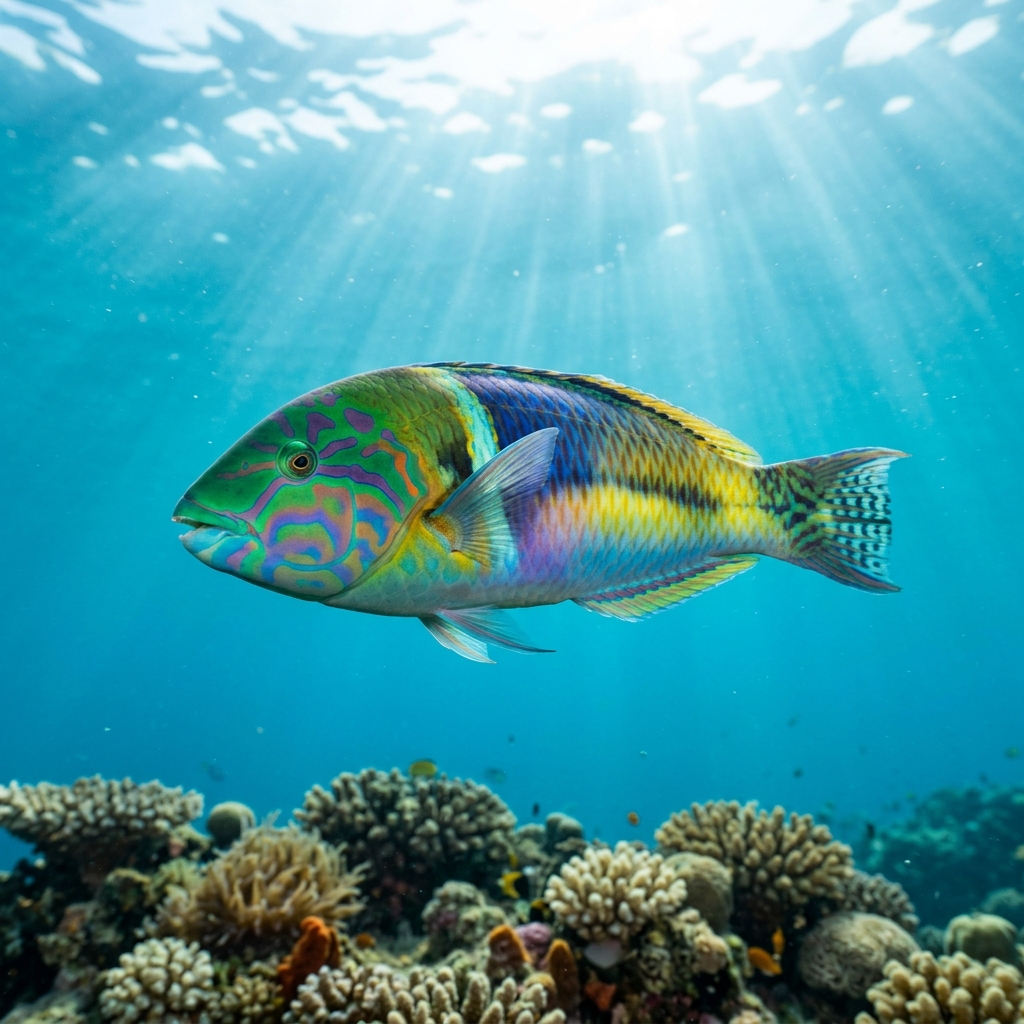
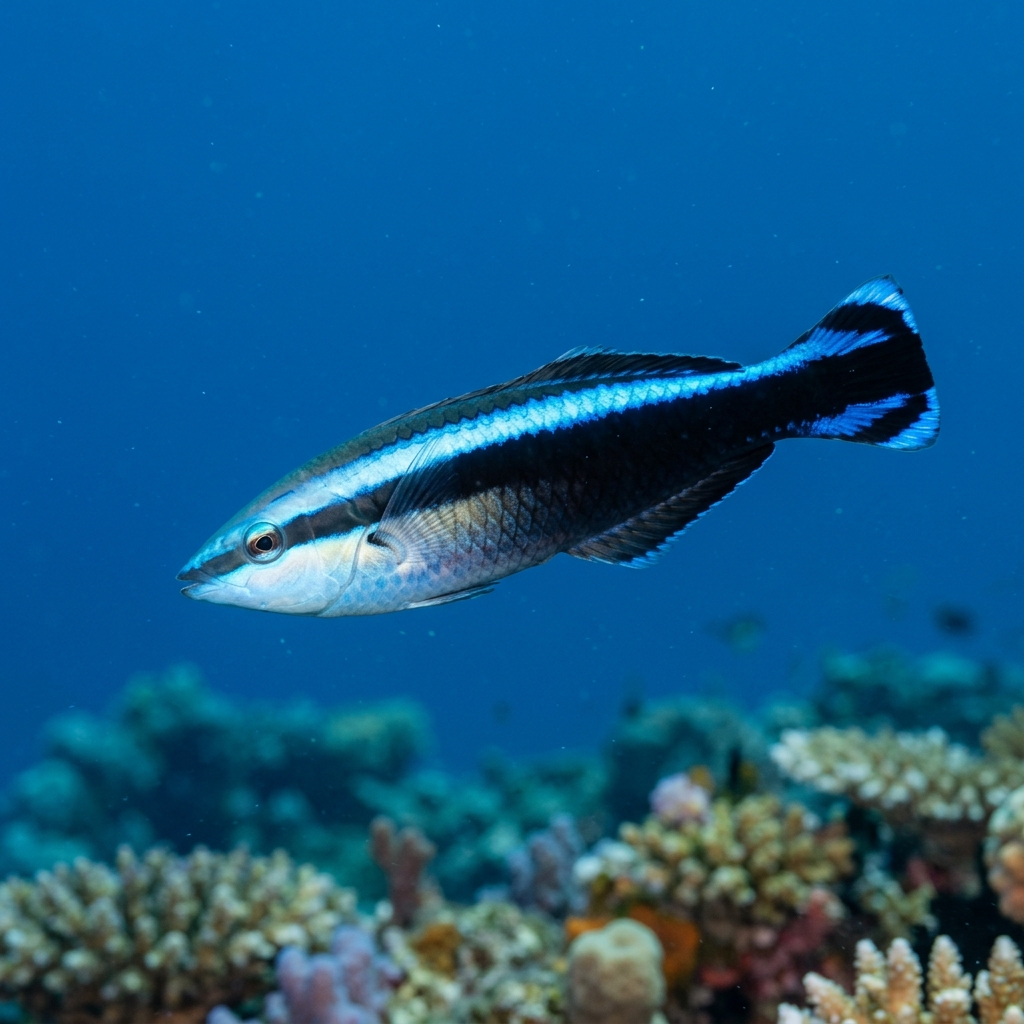
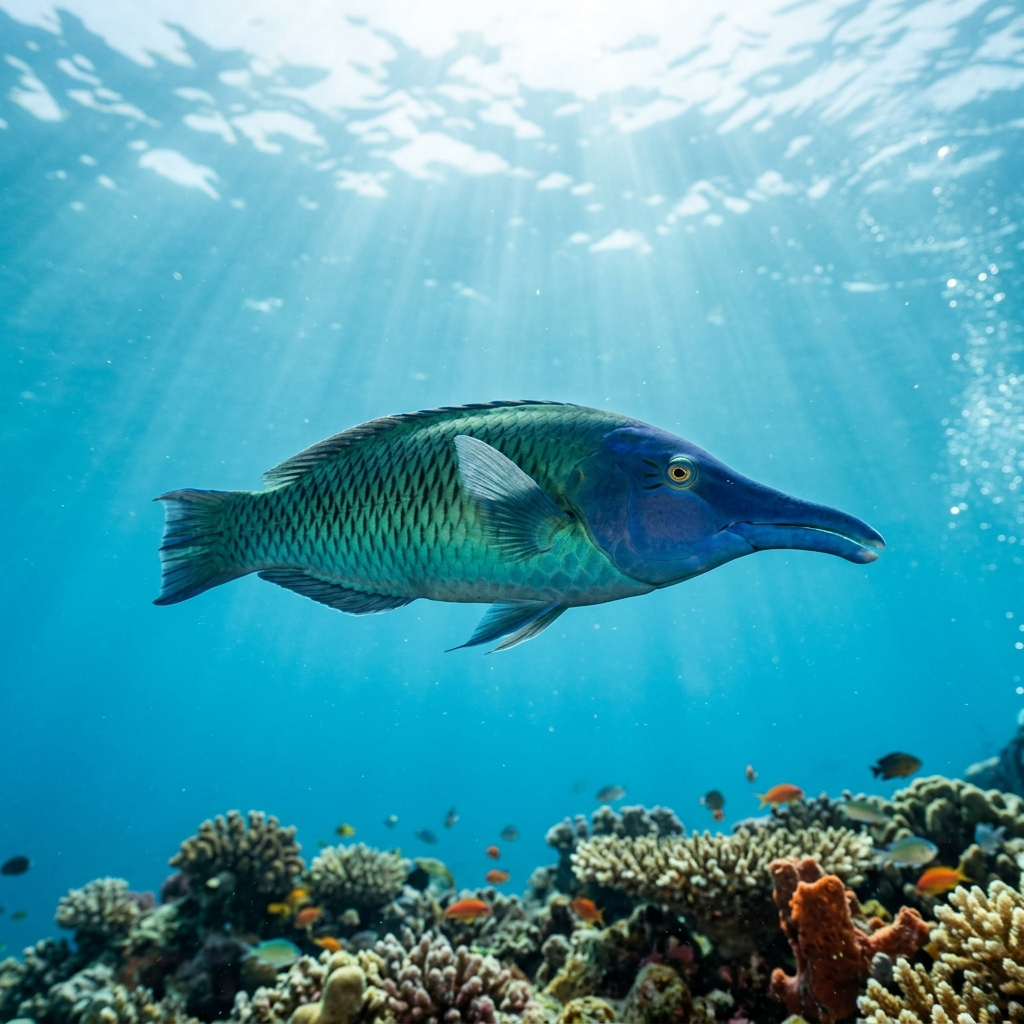
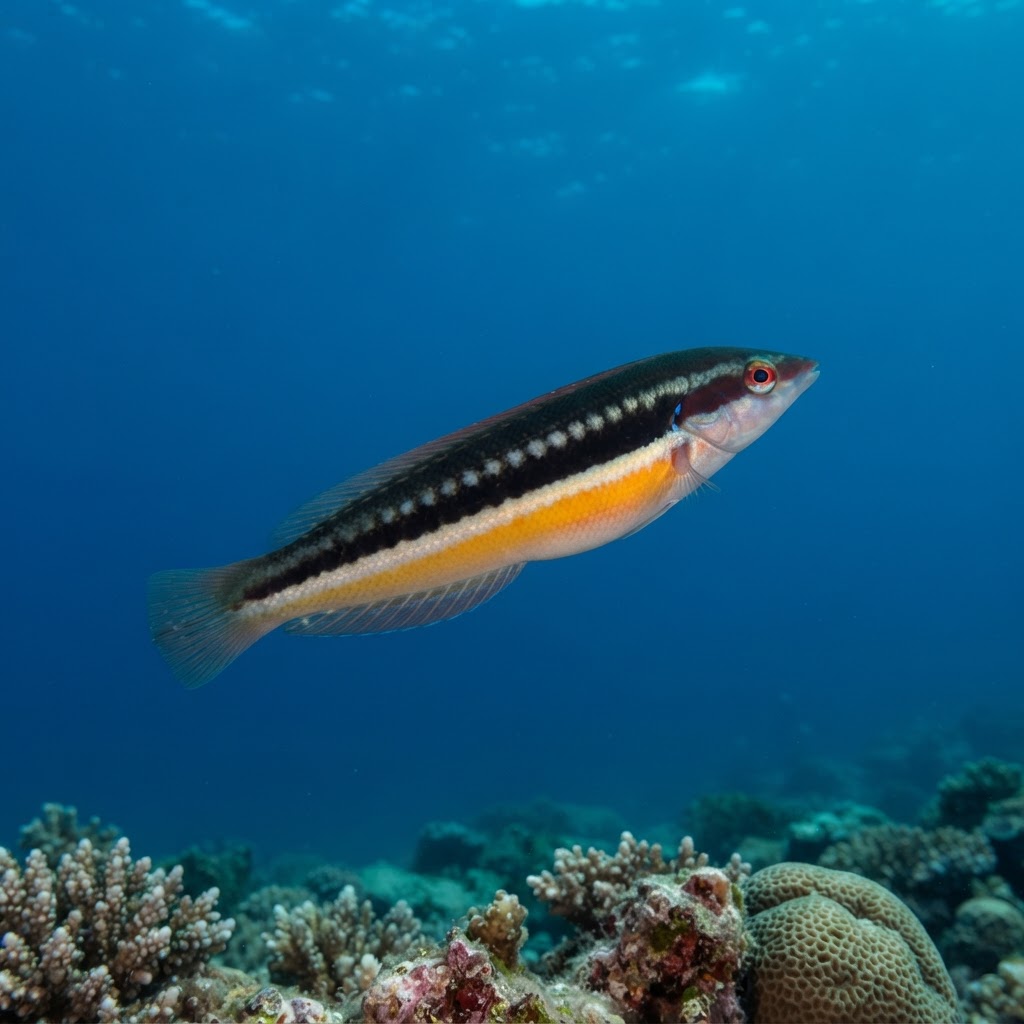
Reef neighbours a diver could mistake it for. Use the identification notes above to tell them apart.
Nouméa in New Caledonia is the strongest area for this fish in the logged data, turning up across several sites there. It has also been recorded on reefs in Queensland and New South Wales, so divers on the eastern Australian coast have a real shot at finding one too.
Mapping where Goldspot Hogfish is logged…
Nouméa in New Caledonia is the most reliable area, with additional sightings logged in Queensland and New South Wales, Australia.
There is no strong season in the data, so sightings happen year-round. It is recorded in water from 21.6 to 27.8 C, a range that holds on these reefs most of the year.
Look for a heavy-bodied wrasse up to 56 cm with a reddish-brown body and a pale gold spot near the base of the tail. It moves slowly along rubble and reef edges rather than darting like smaller wrasses.
They reach around 56 cm in length, making them one of the larger wrasses a diver might come across on an Indo-Pacific reef.
It hunts hard-shelled invertebrates like molluscs and crustaceans along the reef bottom, using strong jaws to crush through shells rather than chasing fast prey.
Site and sighting data is aggregated from diver logs, iNaturalist and GBIF. For taxonomy and conservation status:
Bird Wrasse
3,632 sites