Acanthurus nigricans
Look for the yellow-rimmed tail and dorsal edge on reefs from Bali to the Society Islands, in warm water year-round.
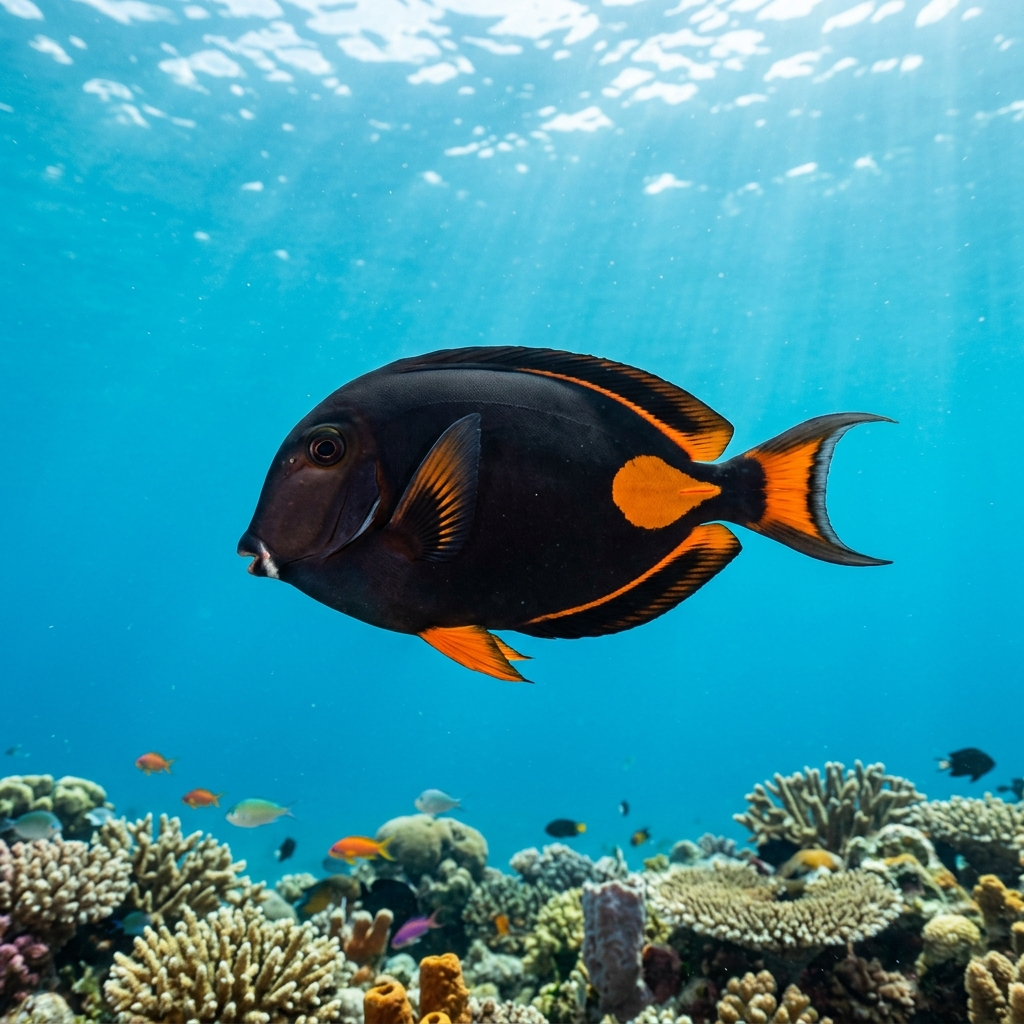
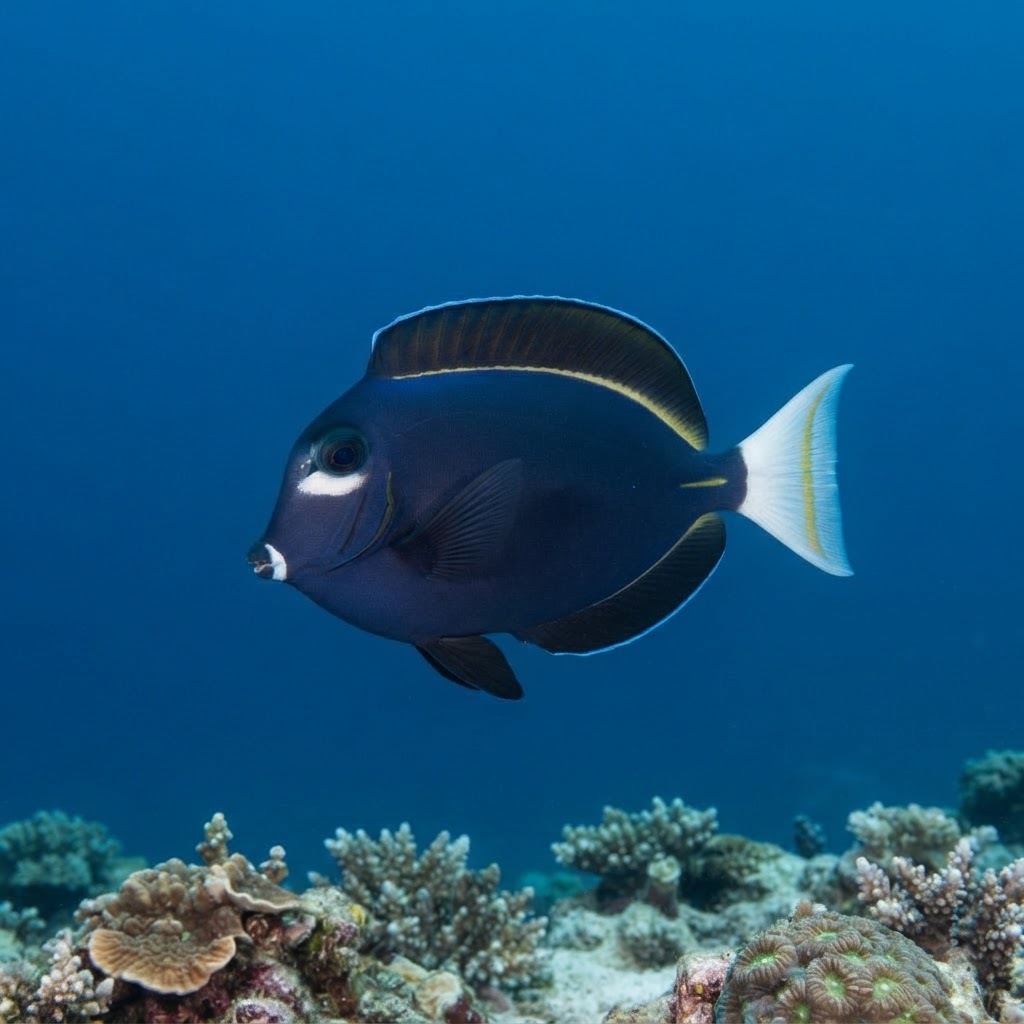
A dark grey to charcoal body about 25 cm long with a fine yellow-orange rim tracing the top edge of the dorsal fin and the base of the tail is the giveaway. Look closer and you'll spot a thin white ring around the base of the tail and blue pencil lines across the face, both easiest to see when it's grazing in open light. The body is the classic oval, flattened surgeonfish shape, with a small mouth built for scraping algae off rock and dead coral.
Expect to see it grazing steadily over reef rock and rubble by day, working algae off the substrate with quick nibbling passes rather than hovering in open water. It's typically logged alone or in loose ones-and-twos rather than schools, and it tends to hold its ground or drift off unhurried rather than bolt when divers approach. Shallow reef flats and upper slopes are where it turns up most, often in the same sunlit patches visit after visit.
Like other surgeonfish it carries a sharp, scalpel-like spine folded down at the base of the tail, which it can flick out for defence, hence the family name.
No clear seasonal pattern shows up in the sightings, and with a comfortable range of roughly 24.5 to 28.8C it's present on tropical reefs year-round, so any month works at these sites.
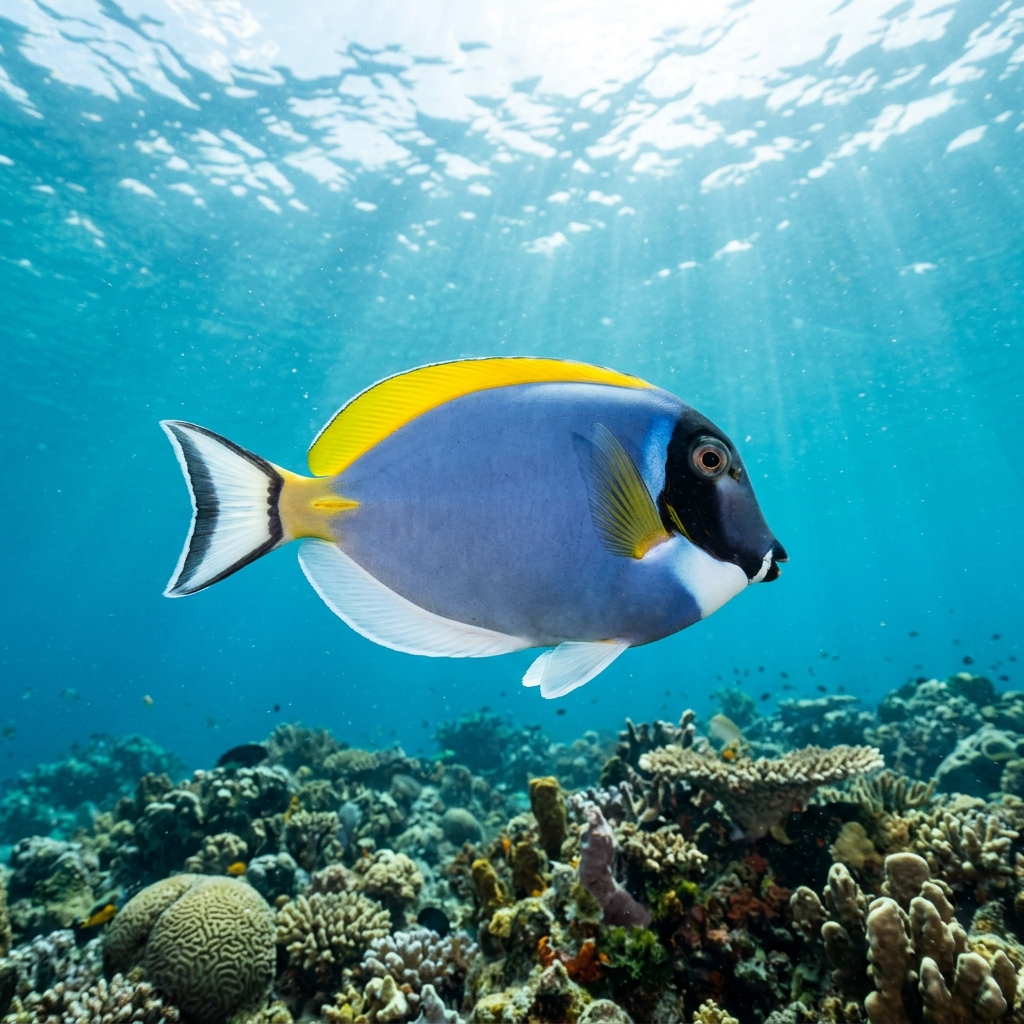
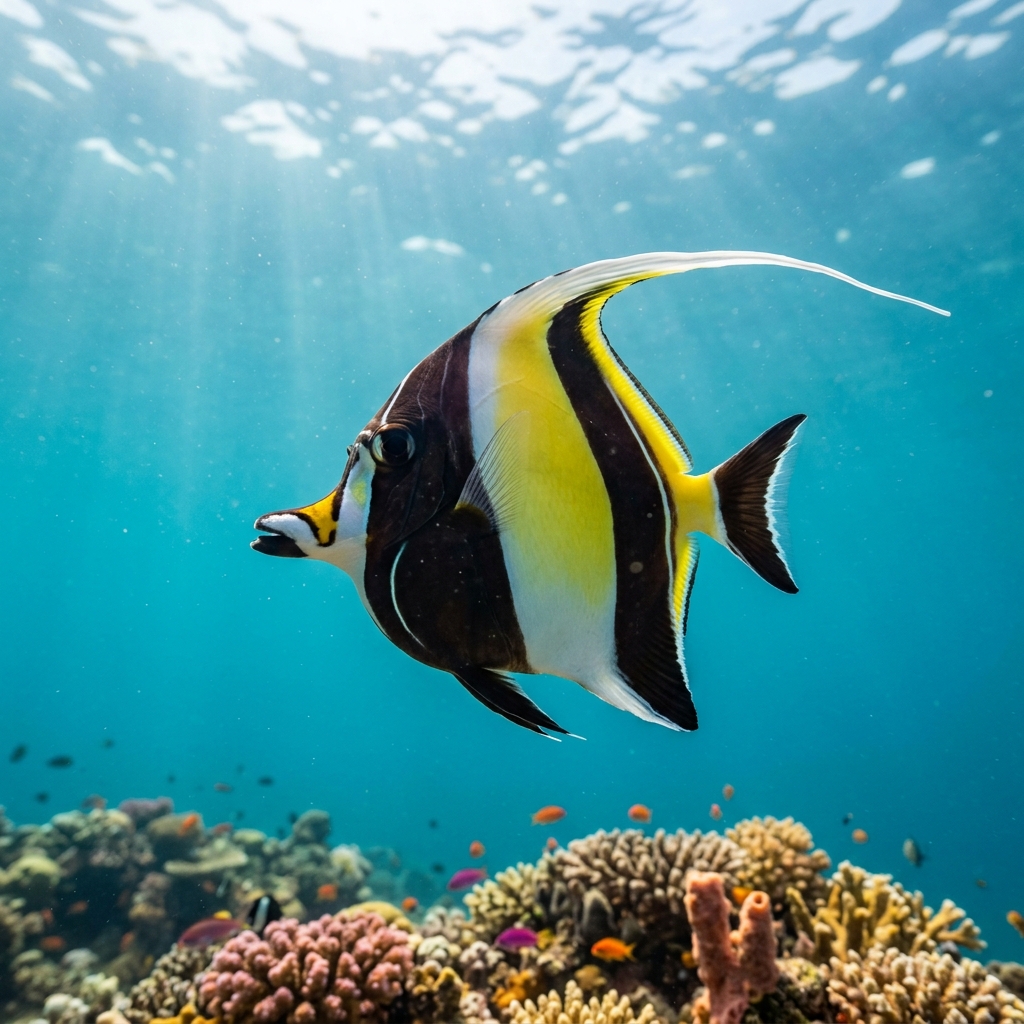
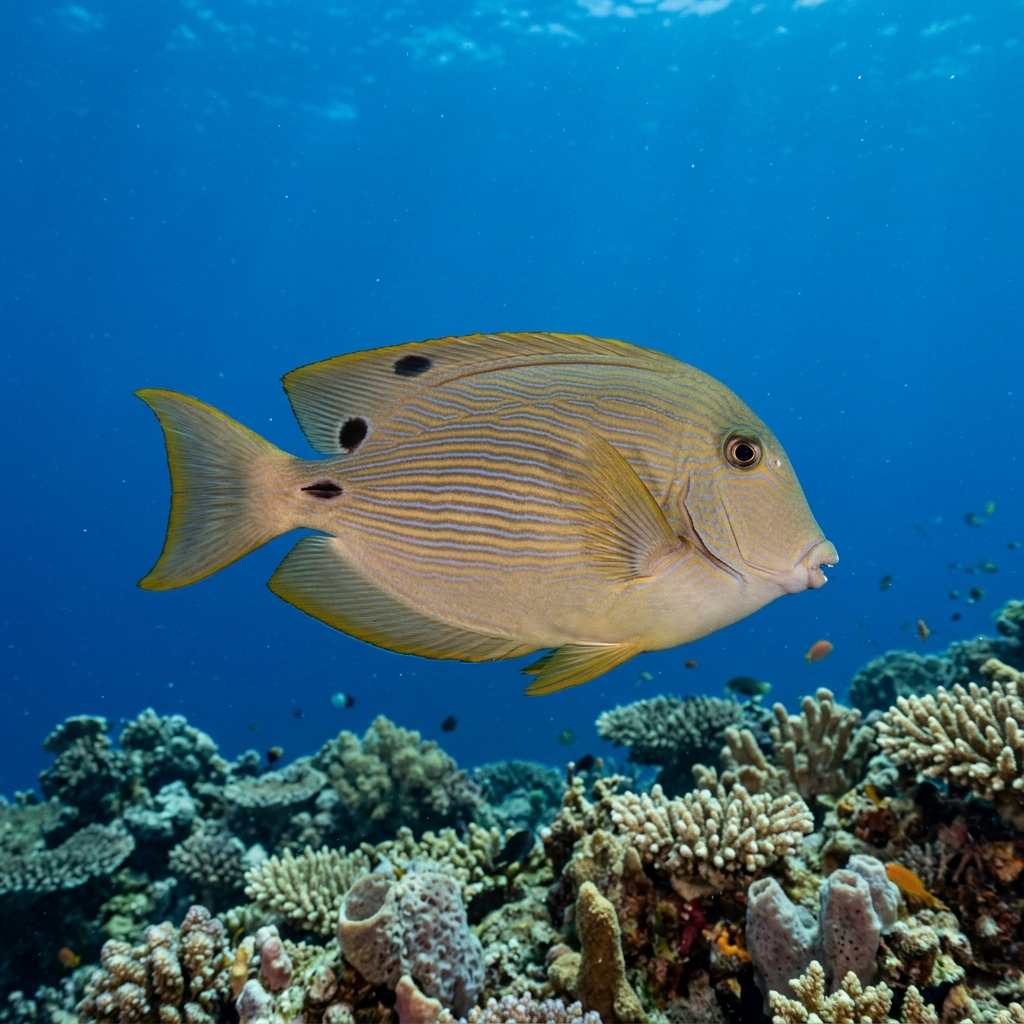
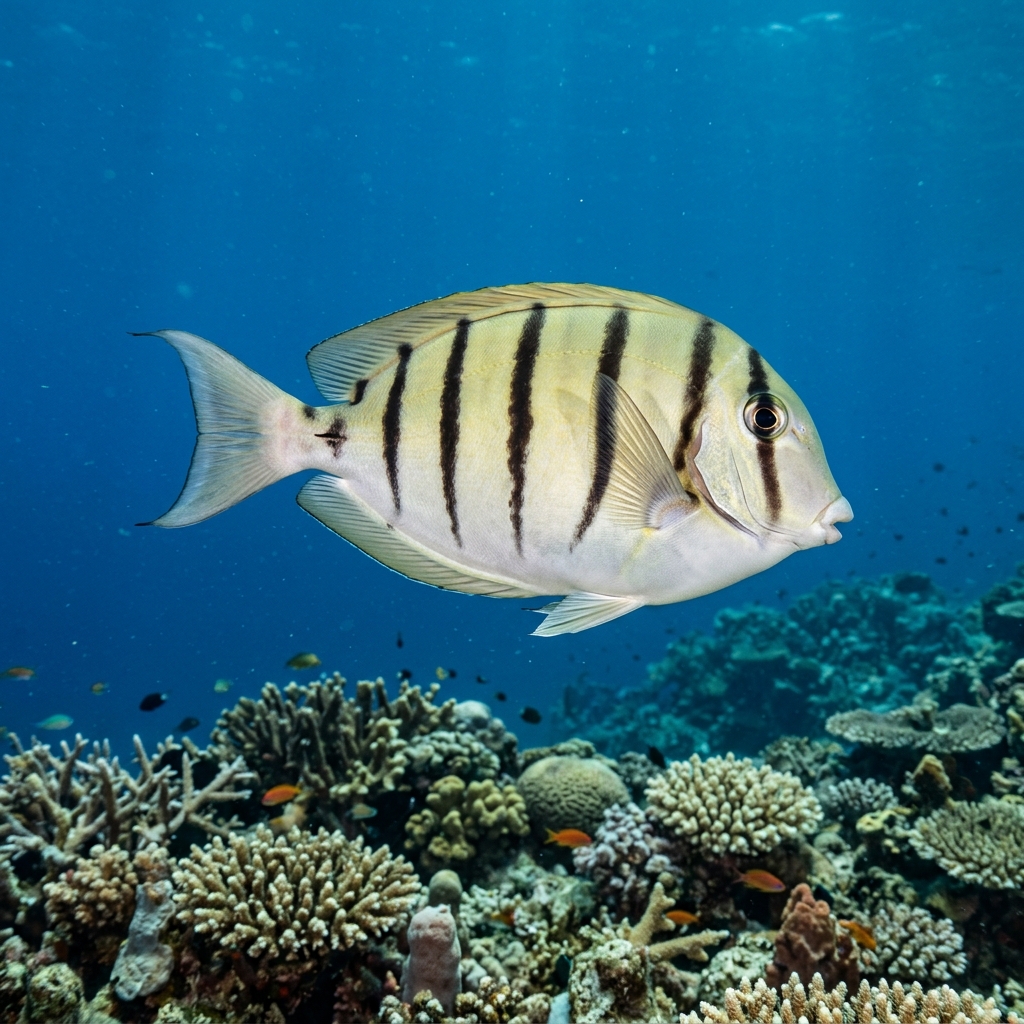
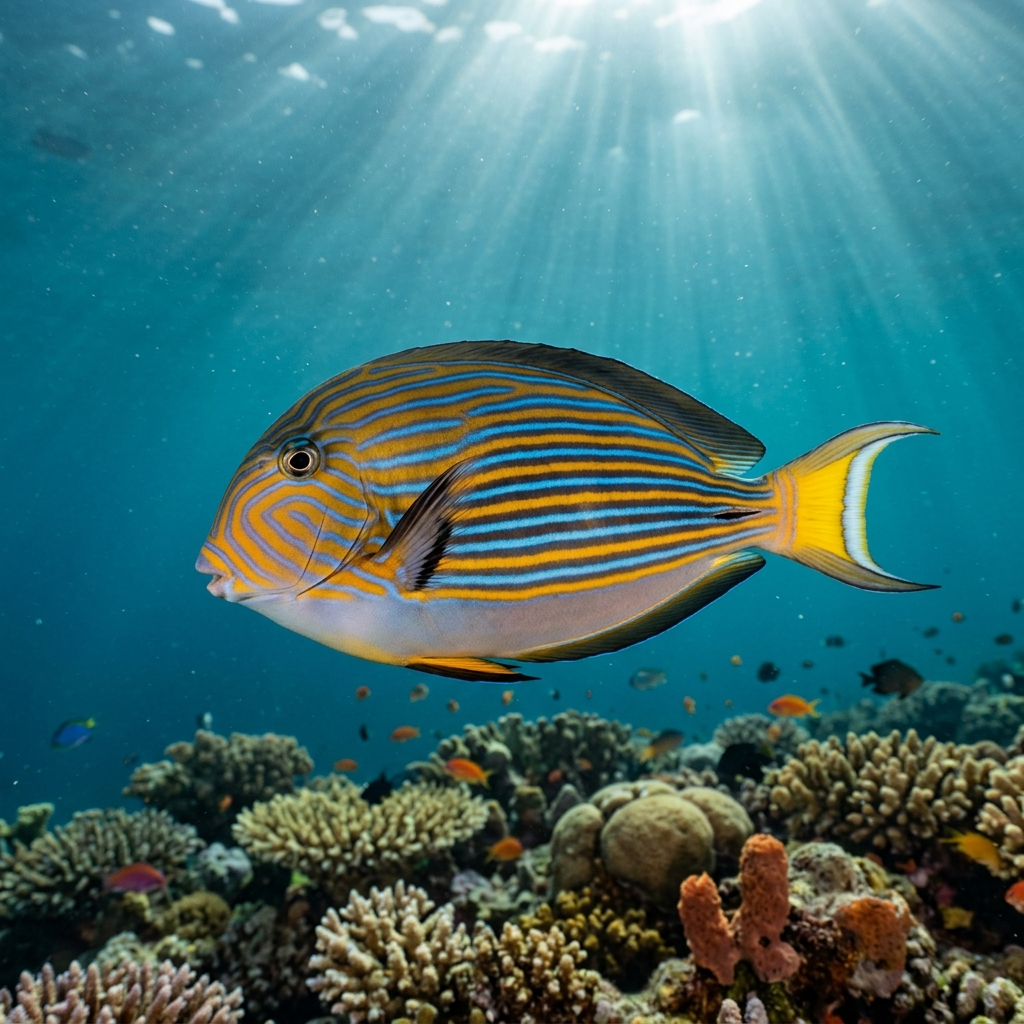
Reef neighbours a diver could mistake it for. Use the identification notes above to tell them apart.
Most reliably logged across Indonesia, especially Bali and Sulawesi, and throughout French Polynesia's Society and Tuamotu Islands. It also turns up consistently in the Philippines' Visayas region, Baja California in Mexico, Costa Rica, Palau and Hawaii, making it a widespread but usually solitary or small-group find on reef flats and slopes.
Mapping where Goldrim Surgeonfish is logged…
Strongest sightings come from Indonesia (Bali and Sulawesi), French Polynesia's Society and Tuamotu Islands, and the Visayas region of the Philippines. It's also a regular find in Baja California, Costa Rica, Palau and Hawaii.
There's no strong seasonal pattern in sightings, and it tolerates a wide warm-water range of about 24.5 to 28.8C, so it's a year-round sighting on the reefs where it lives.
Check for a dark grey body with a thin yellow-orange rim along the dorsal fin and tail base, plus a pale ring right around the tail. It's usually seen grazing alone over reef rock rather than in schools.
They reach around 25 cm in length, a fairly typical size for a reef surgeonfish, and you'll usually see them at or near this full size on the reef.
No, they pose no threat to divers and will simply carry on grazing or move off if approached. Like all surgeonfish they carry a defensive tail spine, but it's only a concern if the fish is handled.
Site and sighting data is aggregated from diver logs, iNaturalist and GBIF. For taxonomy and conservation status:
Striped Surgeonfish
3,289 sites