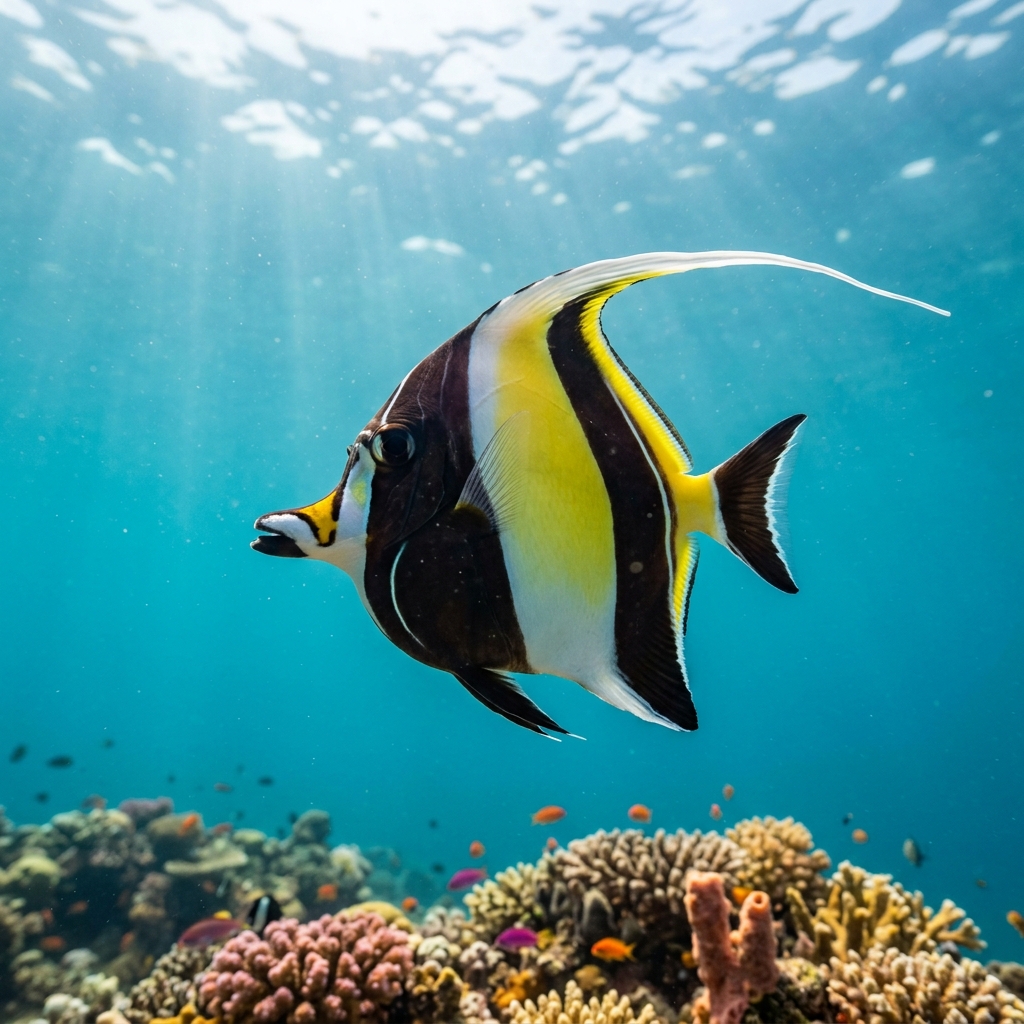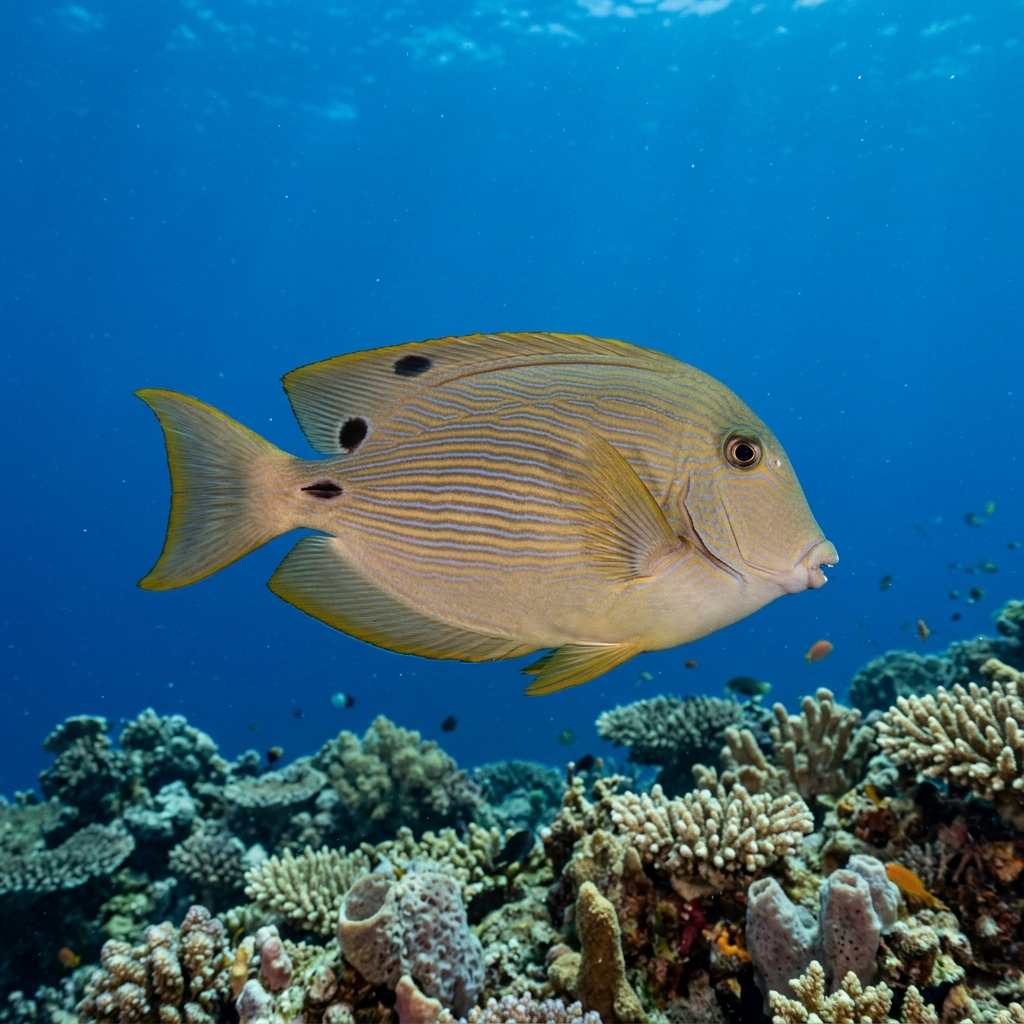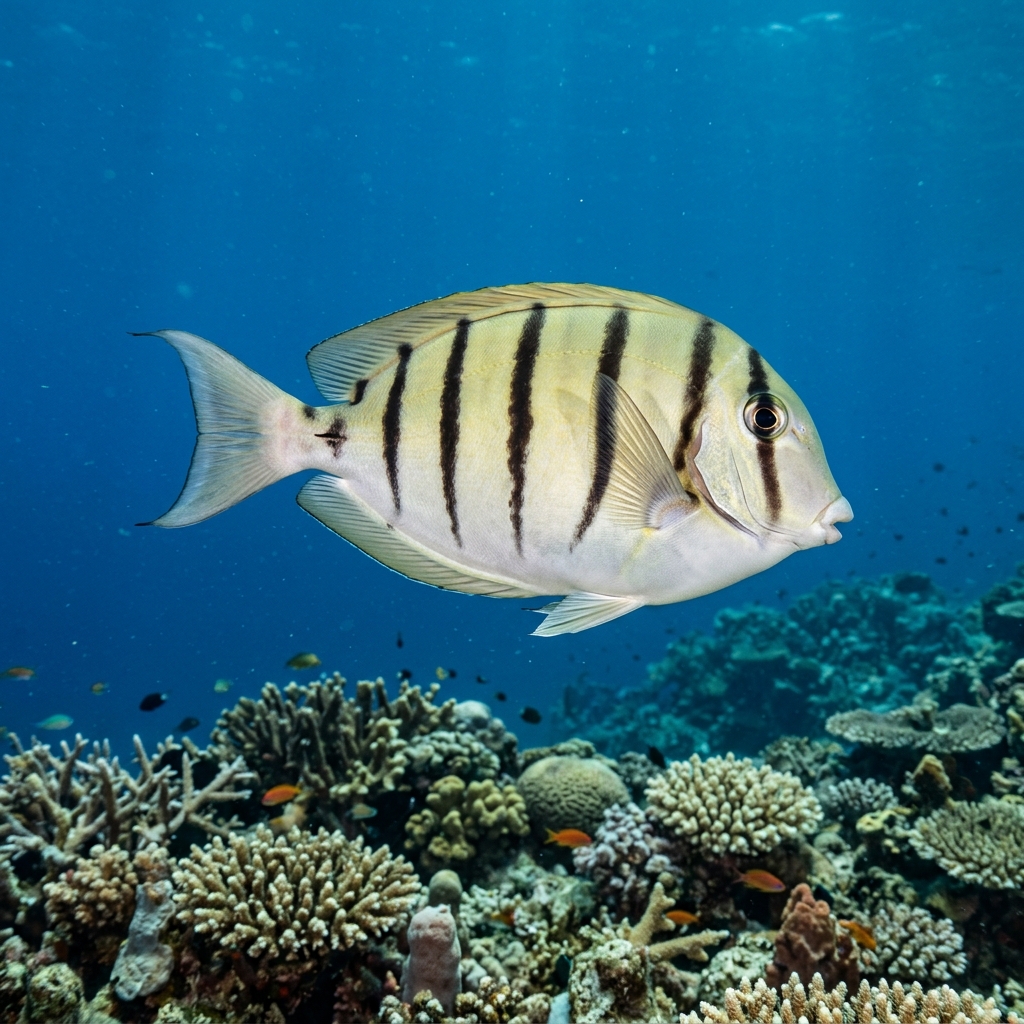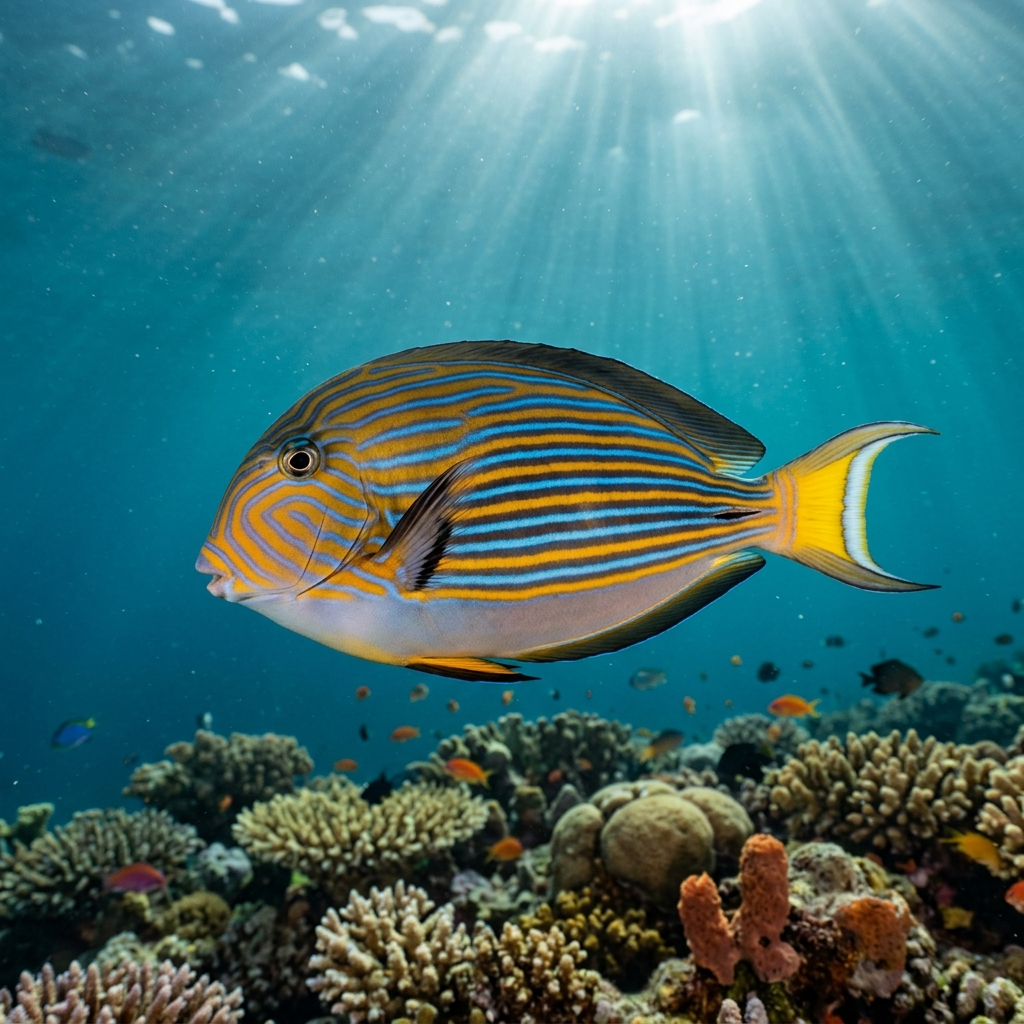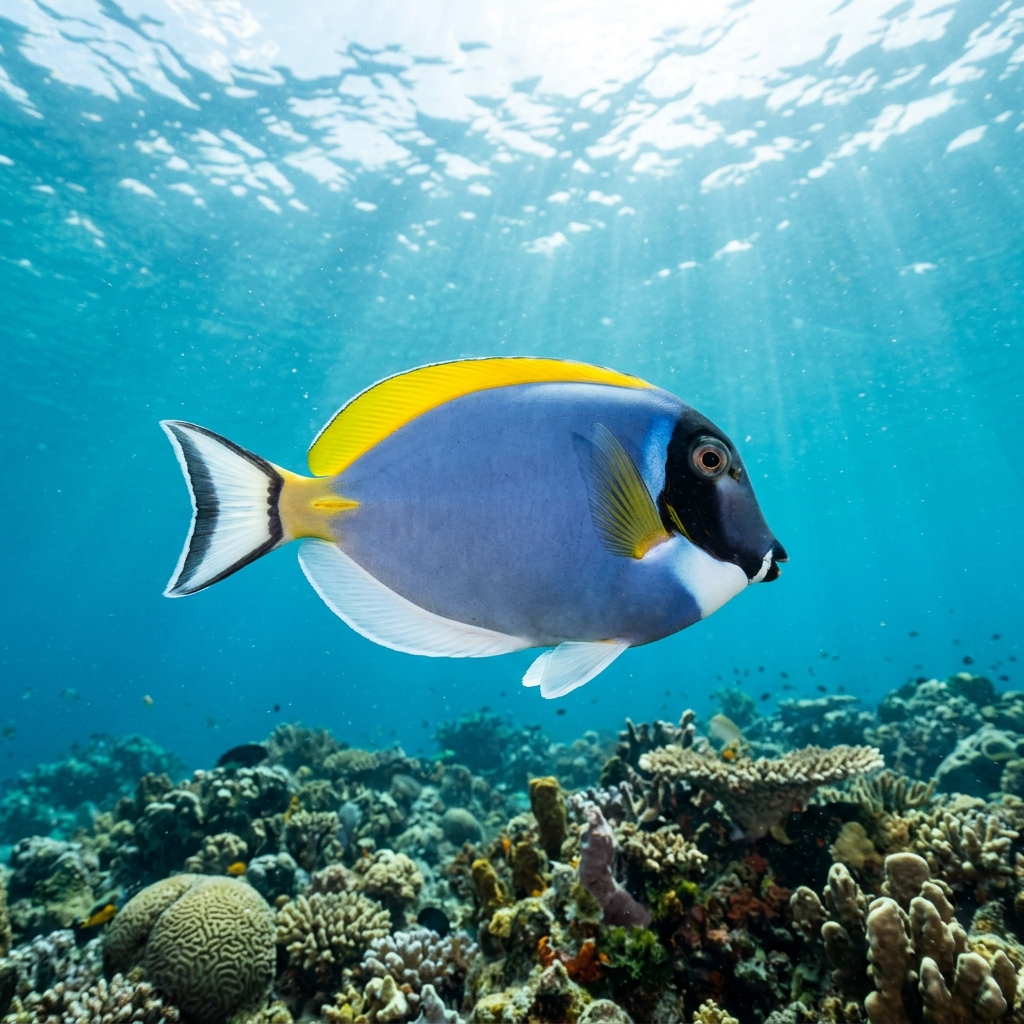
Acanthurus leucosternon
Spot powder-blue surgeonfish in the Maldives and Seychelles. Peak sightings Nov, Mar in northern hemisphere reefs at 25-29 °C.
Few reef fish are this easy to name at a distance: a vivid powder-blue body contrasts sharply with a jet-black face mask, bright white chest (the 'leucosternon'), and a bold yellow dorsal fin. The tail and pectoral fins add further white and blue contrast, making it stand out even against busy coral backgrounds. Body shape is the classic oval surgeonfish disc with a pointed snout and a small but sharp scalpel-like spine at the tail base. Juveniles are paler overall with less defined contrast, but the black mask and yellow dorsal are already visible.
Usually encountered actively grazing algae from hard coral and rocky surfaces, often in loose aggregations that drift across reef flats and surge zones. Schools can be large and loosely structured, making for rewarding wide-angle encounters when conditions are right. They are not especially wary of divers; approach slowly and they will typically continue feeding, though they keep a comfortable metre or two of clearance.
Powder-blue surgeonfish are one of the classic 'cleaner station' visitors on Indo-Pacific reefs, regularly queuing at cleaning stations where wrasse remove parasites from their skin, gills, and even inside the mouth.
In northern hemisphere destinations such as the Maldives and Thailand, sightings concentrate in November through March. In southern hemisphere sites, August to October is the productive window.
Most commonly logged in the Maldives, particularly around the Male and Ari Atolls, which account for by far the strongest concentration of sightings globally. Strong populations also turn up regularly in Phuket and the Phi Phi Islands (Thailand), Praslin and La Digue (Seychelles), and across the Visayas in the Philippines. Sulawesi, Indonesia, Zanzibar, Tanzania, and Sri Lanka round out the reliable destinations.
Mapping where Powder-blue Surgeonfish is logged…
The Maldives is the standout destination, with the Male and Ari Atolls offering the greatest concentration of sightings. Other reliable spots include Phuket and Phi Phi in Thailand, Praslin and La Digue in the Seychelles, the Visayas in the Philippines, Zanzibar, and Sulawesi.
In the Maldives, Thailand, and other northern hemisphere reefs, November through March produces the most consistent sightings. If you are diving southern hemisphere sites, aim for August to October. Water temperatures in the 25-29 °C range align well with peak activity.
Look for the combination of a vivid powder-blue body, jet-black face mask, white chest, and yellow dorsal fin. No other common Indo-Pacific surgeonfish shares that exact four-colour pattern. The sharp caudal spine at the base of the tail is characteristic of the surgeonfish family but rarely visible unless the fish is stressed.
Powder-blue surgeonfish are a medium-sized surgeonfish, typically reaching around 23-25 cm in length as adults, though larger individuals are occasionally encountered. In the water they appear compact and disc-shaped, which helps distinguish them from the longer unicornfish in the same family.
They are dedicated herbivores, spending most of their active hours scraping algae from hard coral and rocky surfaces. This grazing behaviour plays a meaningful role in keeping algae in check on tropical reefs, helping corals hold their ground. They are a common sight at cleaning stations too, where small wrasse remove parasites from their bodies.
Site and sighting data is aggregated from diver logs, iNaturalist and GBIF. For taxonomy and conservation status:
Striped Surgeonfish
3,289 sites