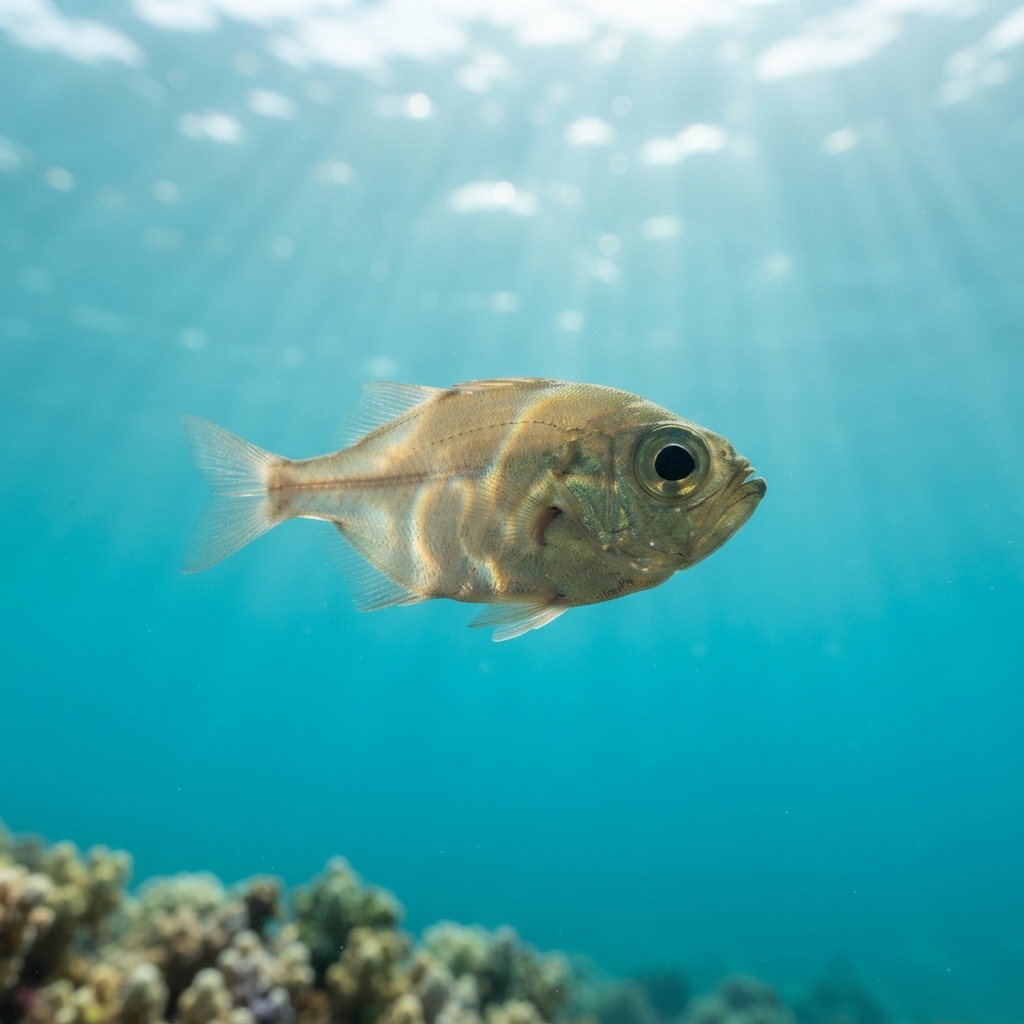
Parapriacanthus ransonneti
Dense gold schools packed under overhangs in the Maldives' Central Atolls and Sumatra, year-round in warm water.
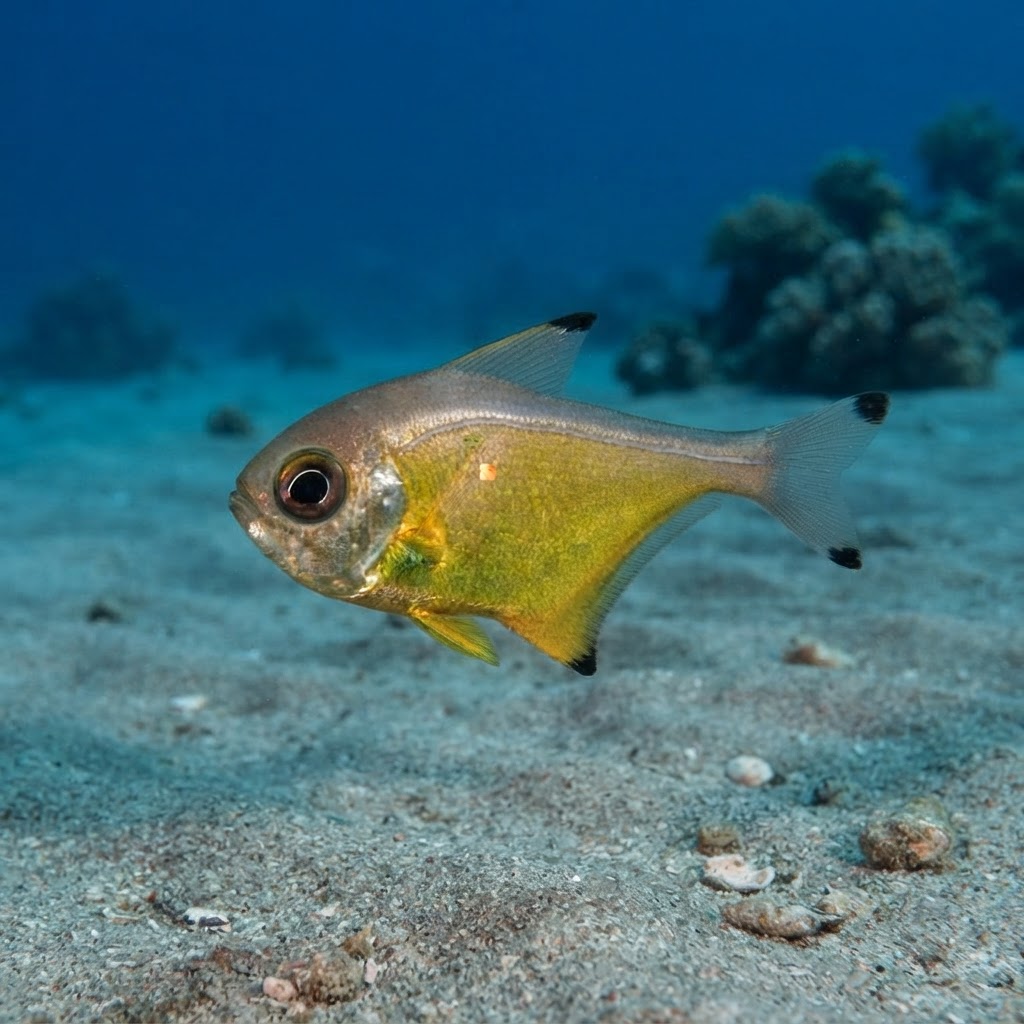
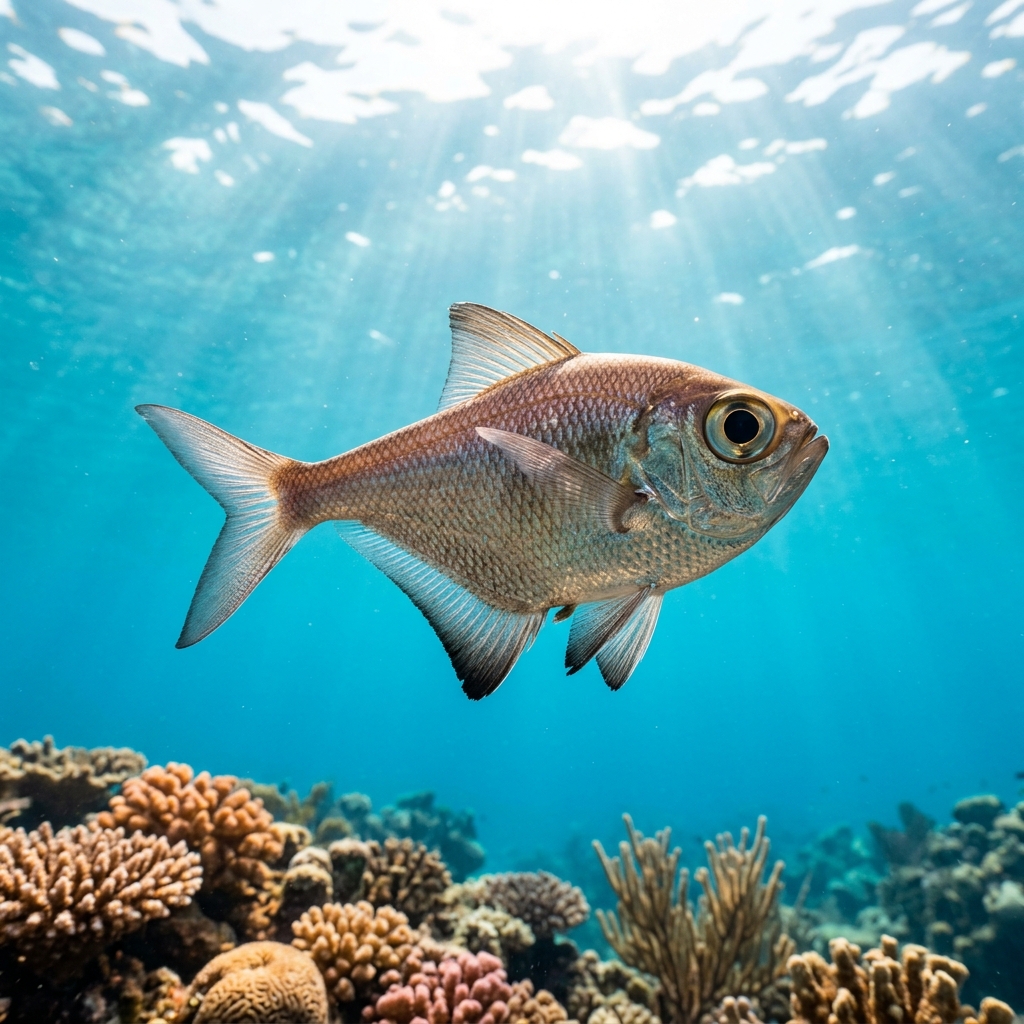
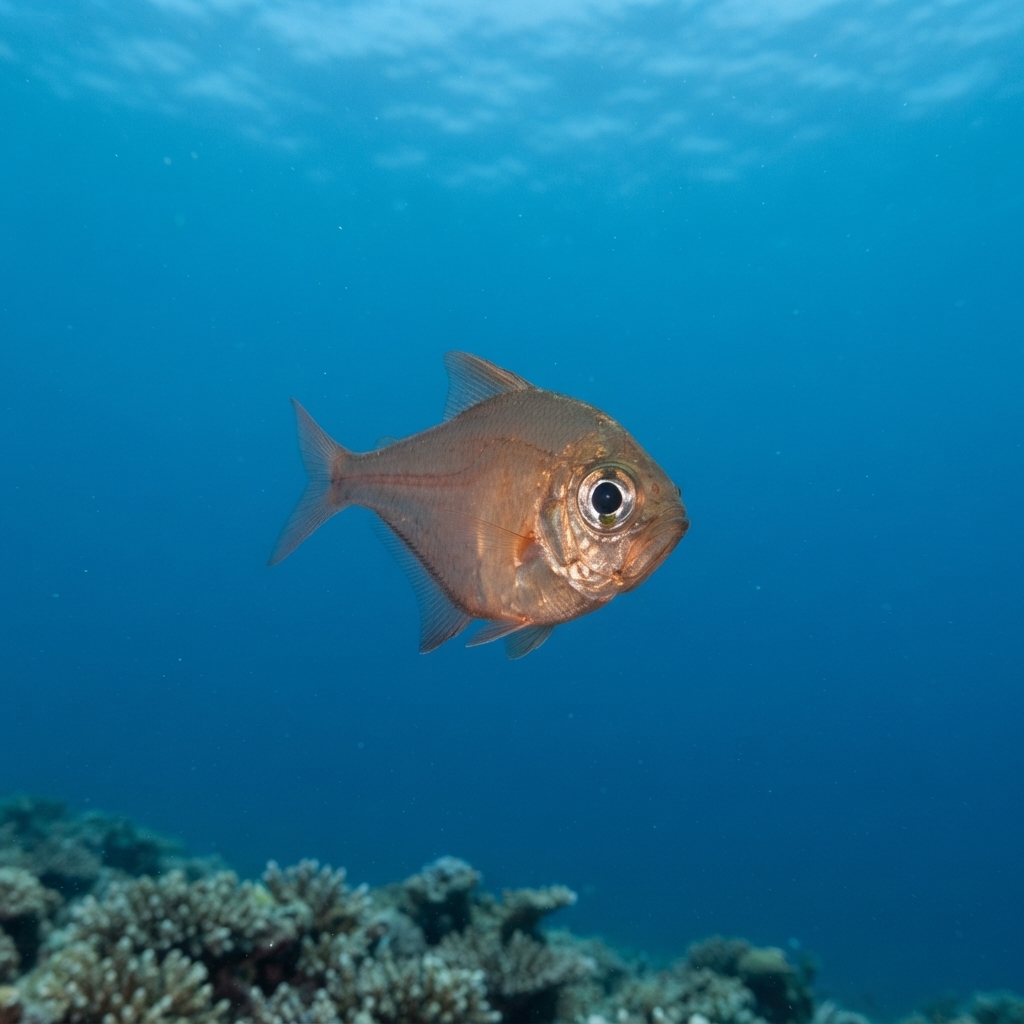
Small, slender fish around 8 cm, with a see-through, honey-gold to orange body that seems to glow under torchlight. Look for a large dark eye, a slightly upturned mouth, and the way hundreds pack into a tight, shifting ball rather than swimming as loose individuals. The compressed, almost transparent body with visible internal organs is the giveaway that separates it from more solid-bodied schooling fish.
Found packed into shaded caves, overhangs, and under jetties by day, forming dense, swirling schools that part and reform around a diver rather than scattering outright. At night the school loosens as individuals fan out over the reef to feed on plankton, making daytime the more reliable time to see the classic tight ball. Divers usually rate it an uncommon sighting rather than a given, so it rewards checking dark nooks on a reef rather than expecting it in open water.
Each fish produces its own weak bioluminescent glow from bacteria carried in its gut lining, a rare trait for a shallow reef fish and part of why the school seems to shimmer under torchlight.
No clear seasonal pattern shows up in the data, and with a comfortable range of roughly 13 to 27 C it turns up on these reefs year-round. Any month works for these regions; just look for overhangs and cave mouths rather than timing your trip around a season.
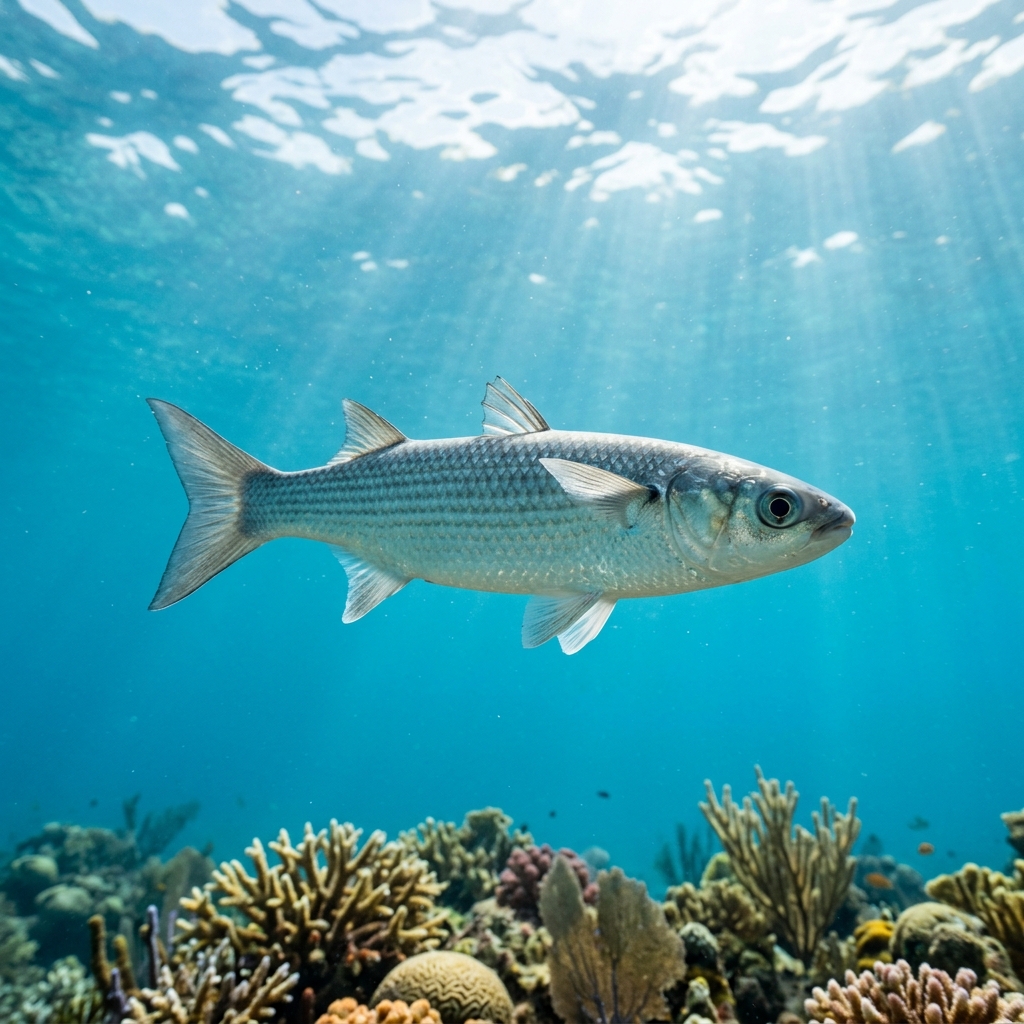
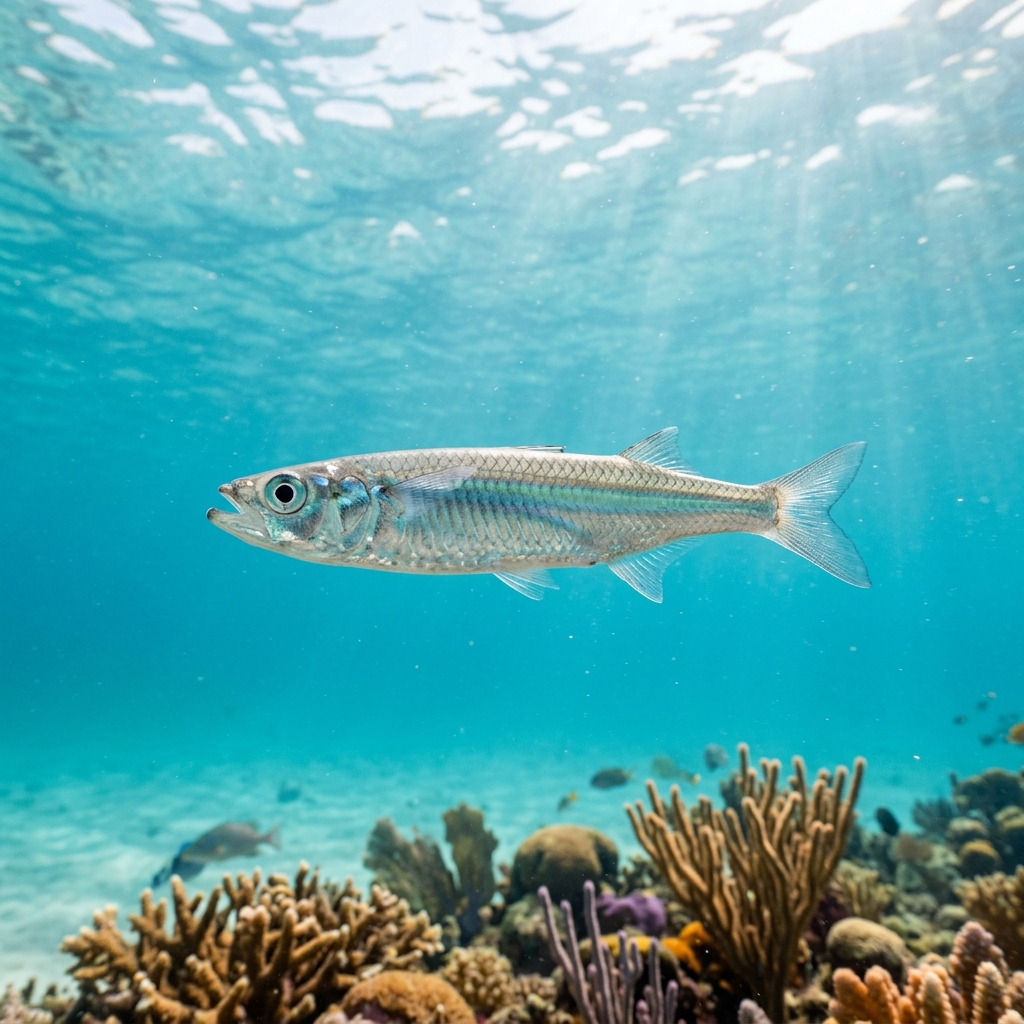
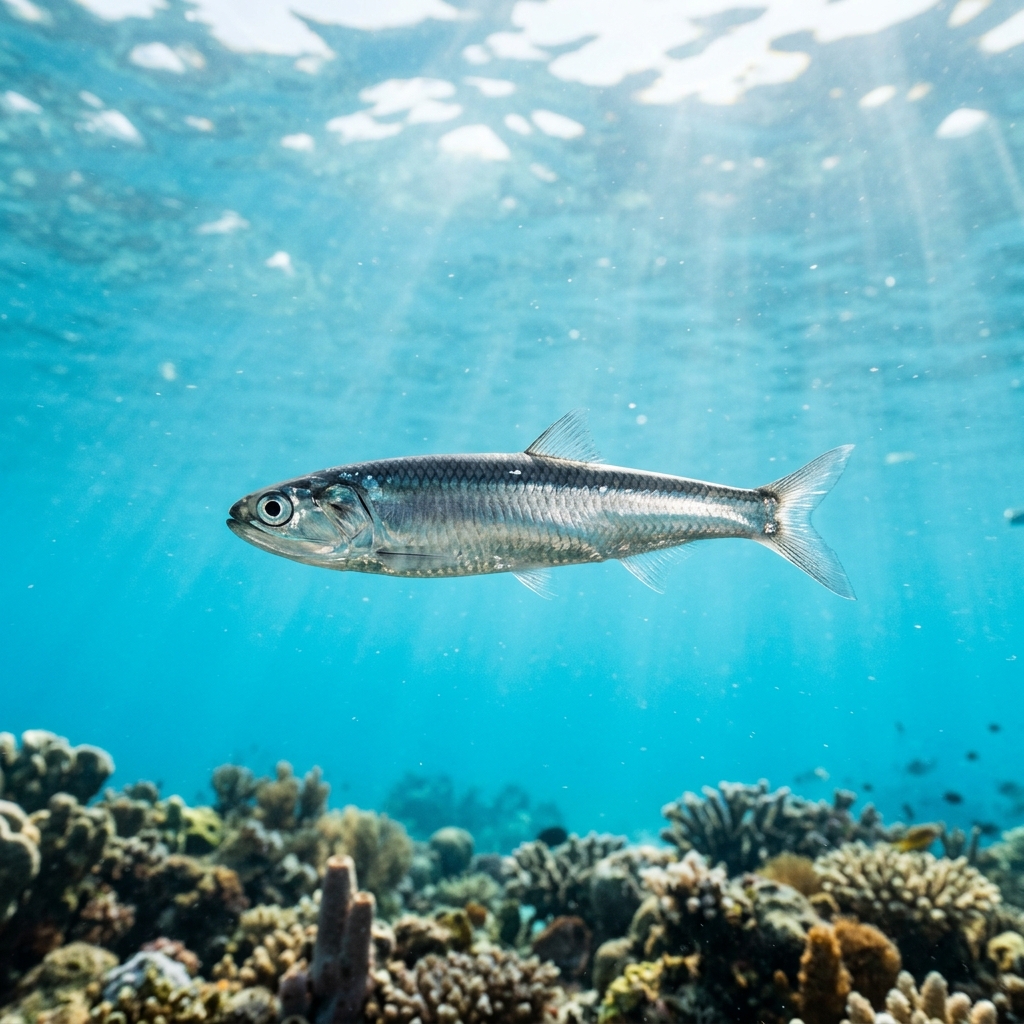
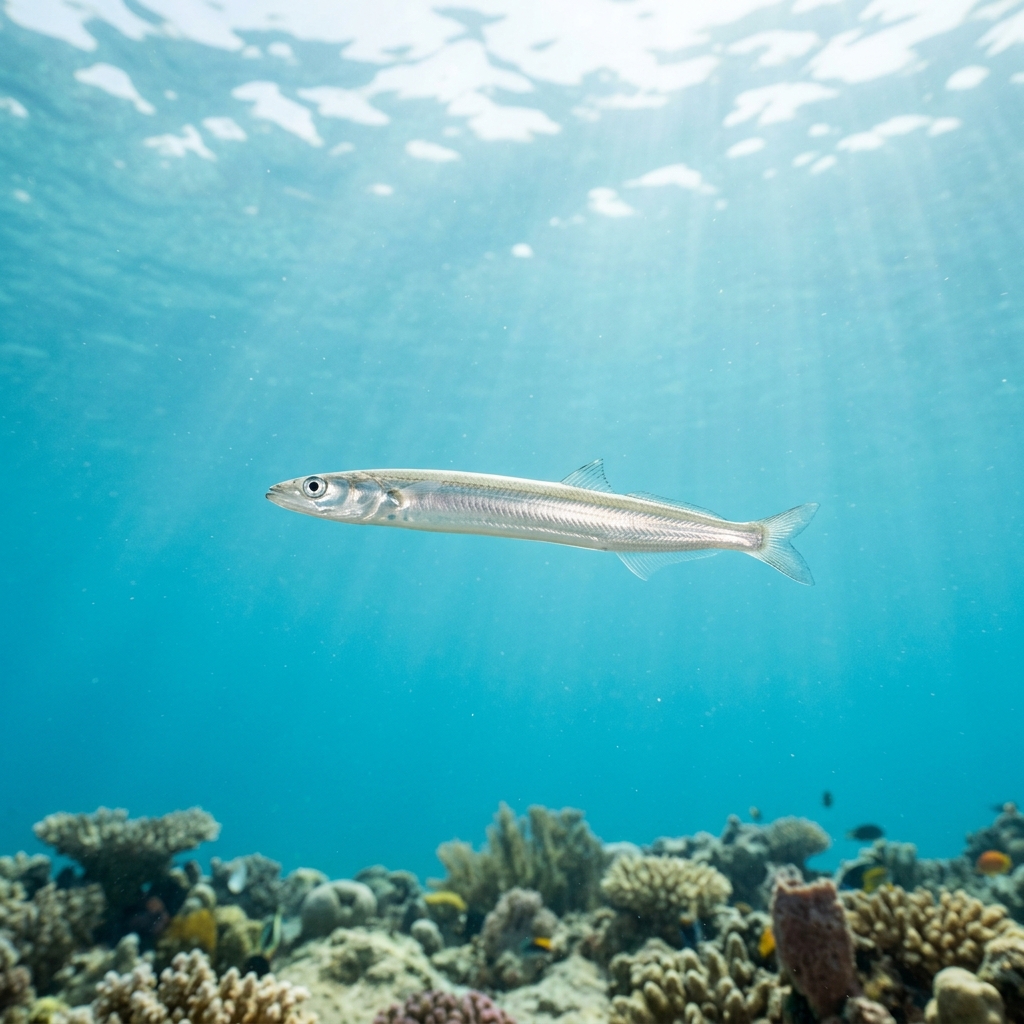
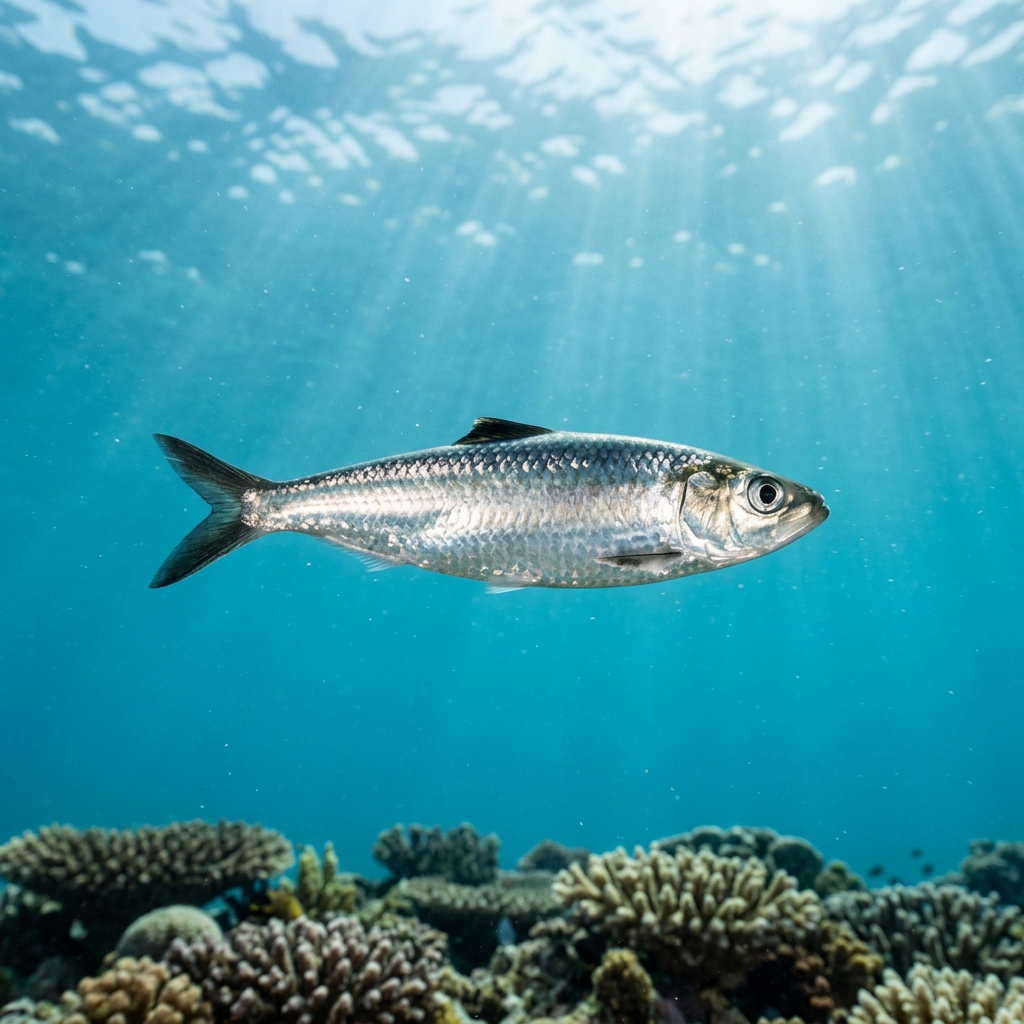
Reef neighbours a diver could mistake it for. Use the identification notes above to tell them apart.
Most reliably found in the Maldives, especially across the Central Atolls, where it shelters in caves and under ledges in dense schools. Also a solid find on Sumatra in Indonesia, with occasional sightings around Dili in Timor-Leste and Raja Ampat.
Mapping where Golden Sweeper is logged…
The Central Atolls of the Maldives are the most consistent spot, with strong numbers also logged on Sumatra in Indonesia. Smaller counts turn up around Dili in Timor-Leste and in Raja Ampat.
There is no strong season in the sightings data, and the species tolerates a wide temperature range, so it is a year-round find on these reefs. Focus on finding sheltered caves and overhangs rather than picking a particular month.
Look for a tight, swirling school of small, translucent gold-orange fish, each around 8 cm, packed into a cave mouth or under a ledge. The see-through body and large dark eye help separate it from bulkier schooling fish nearby.
They stay small, typically around 8 cm long, which is part of why they are only ever seen in large schools rather than as lone fish.
They carry light-producing bacteria in their gut lining, giving each fish a faint bioluminescent glow, an unusual feature for a shallow-water reef species. It contributes to the shimmering look of the school under a dive light.
Site and sighting data is aggregated from diver logs, iNaturalist and GBIF. For taxonomy and conservation status:
Anchovy
2,433 sites