Turrum fulvoguttatum
Silvery jack with gold flecks along its flank, most reliably spotted off Malaysia's east coast and Marsa Alam in warm 23-29C water year-round.
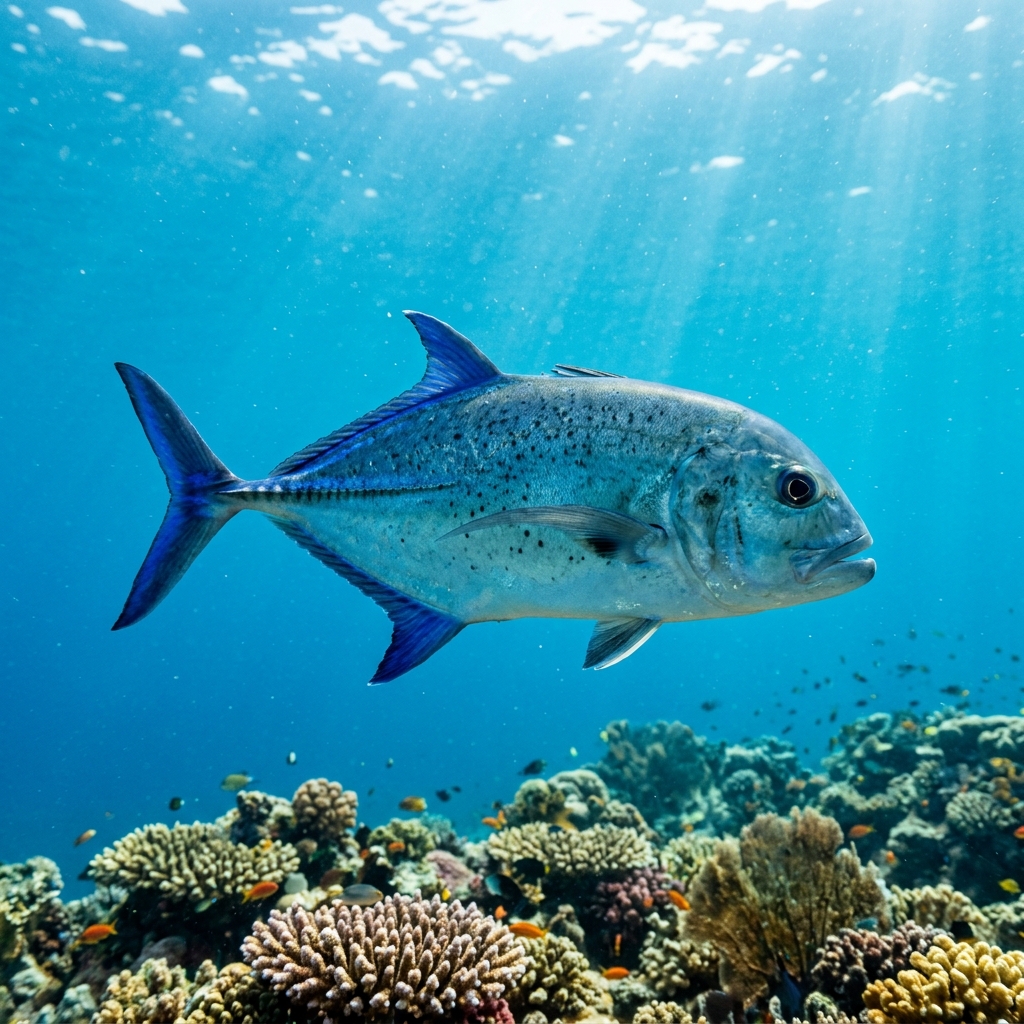
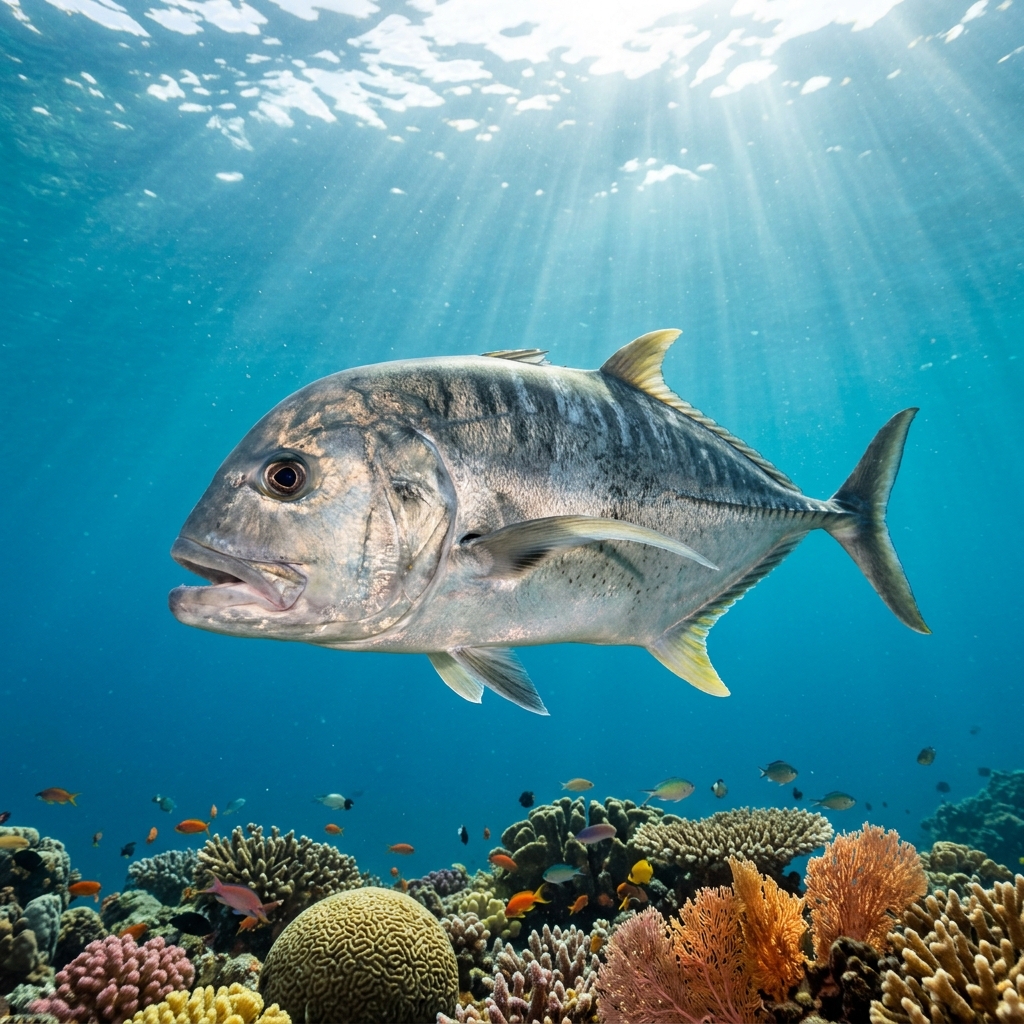
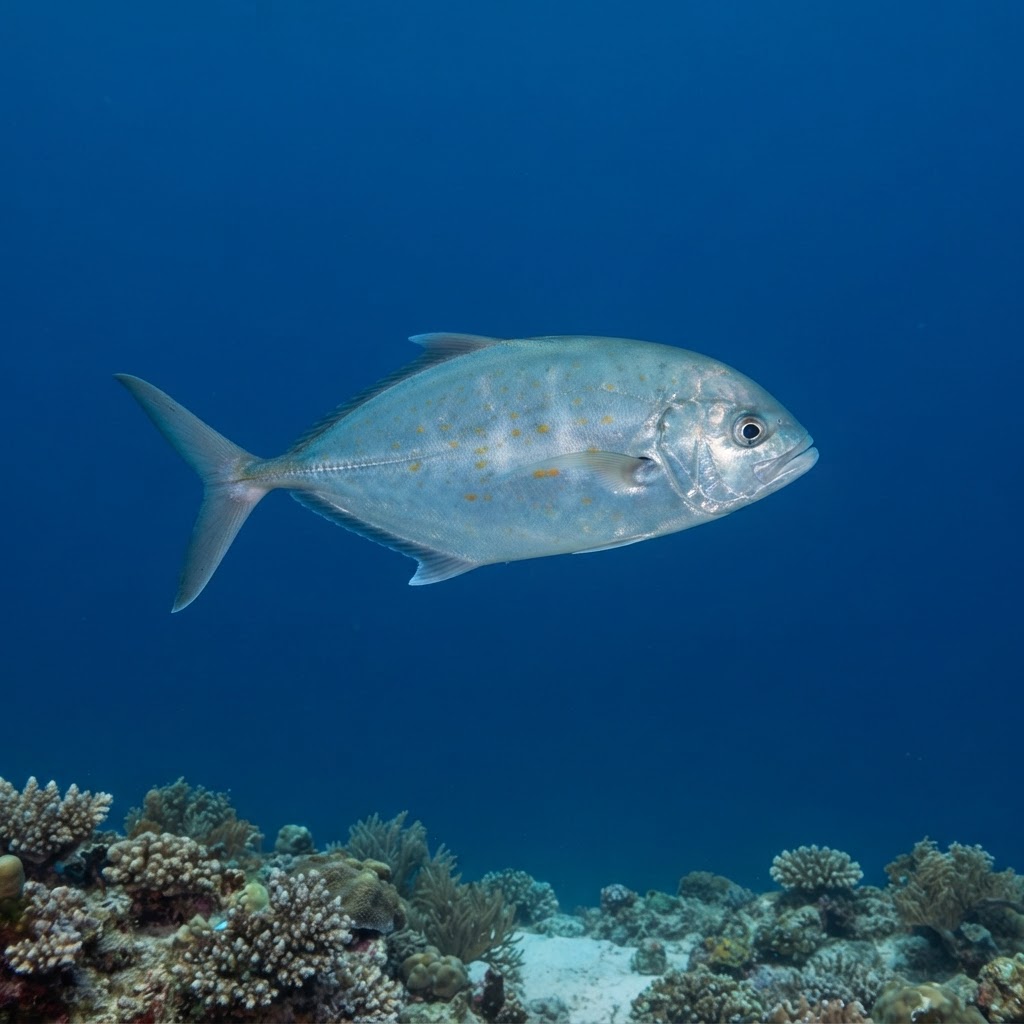
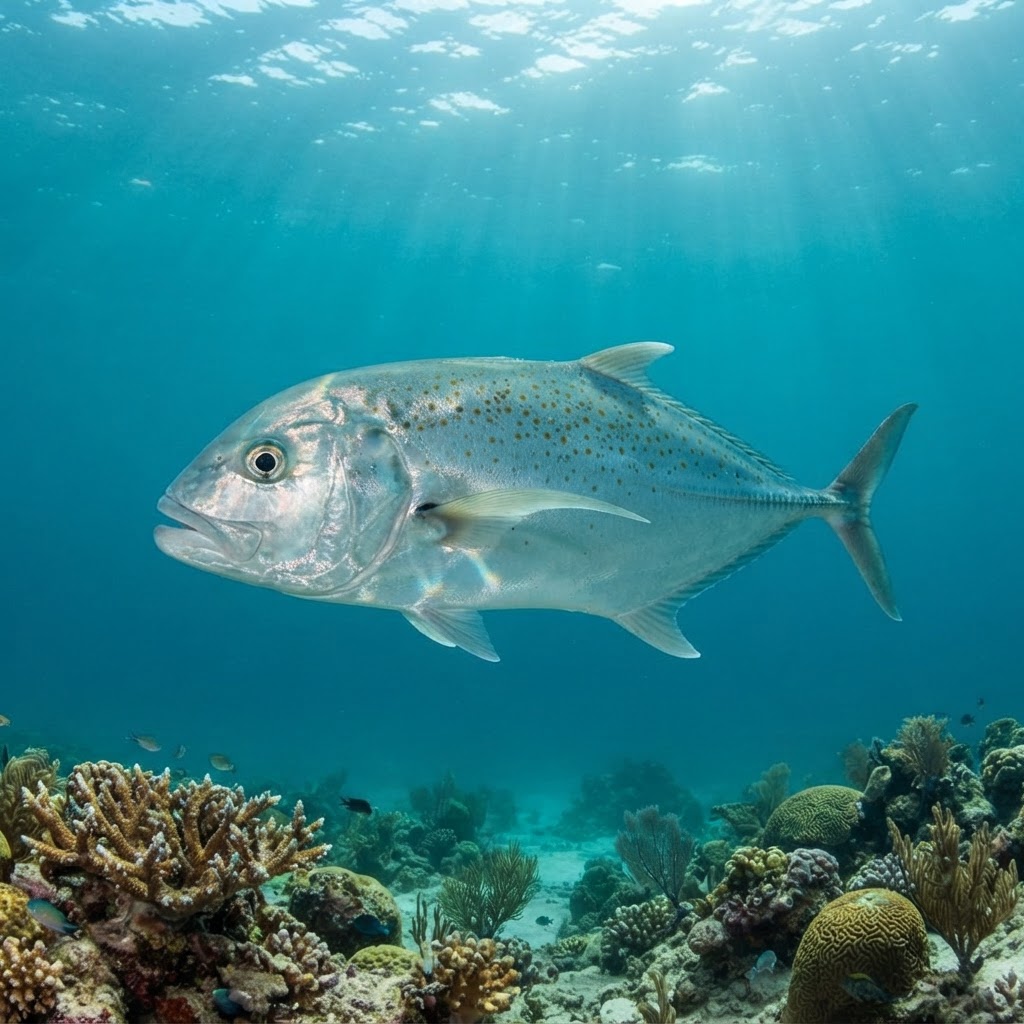
Deep-bodied silver jack that can push past 80cm, with a row of small gold-bronze spots scattered along the upper flank that give it away at a glance. The body is more compressed and rounded than many trevallies, with a steep forehead profile and a dark opercular (gill cover) mark. It usually appears alone or in small loose groups rather than tight schools, cruising mid-water off the reef edge.
Divers usually find it patrolling alone or in twos and threes along drop-offs and reef edges rather than mixed into big jack schools. It tends to hold a cautious distance from divers, cruising steadily past rather than lingering to investigate, and is more often picked up as a mid-water silhouette than a close encounter.
Its gold flank spots are the main giveaway that separates it from the many plain-silver jacks it shares reef edges with, since most look-alike trevallies are marked with blue or dark blotches rather than gold.
No clear seasonal pattern shows up in the sighting data, and its comfortable range of 23.3 to 29.1C spans most tropical reef conditions year-round, so any month at these sites is worth a look.
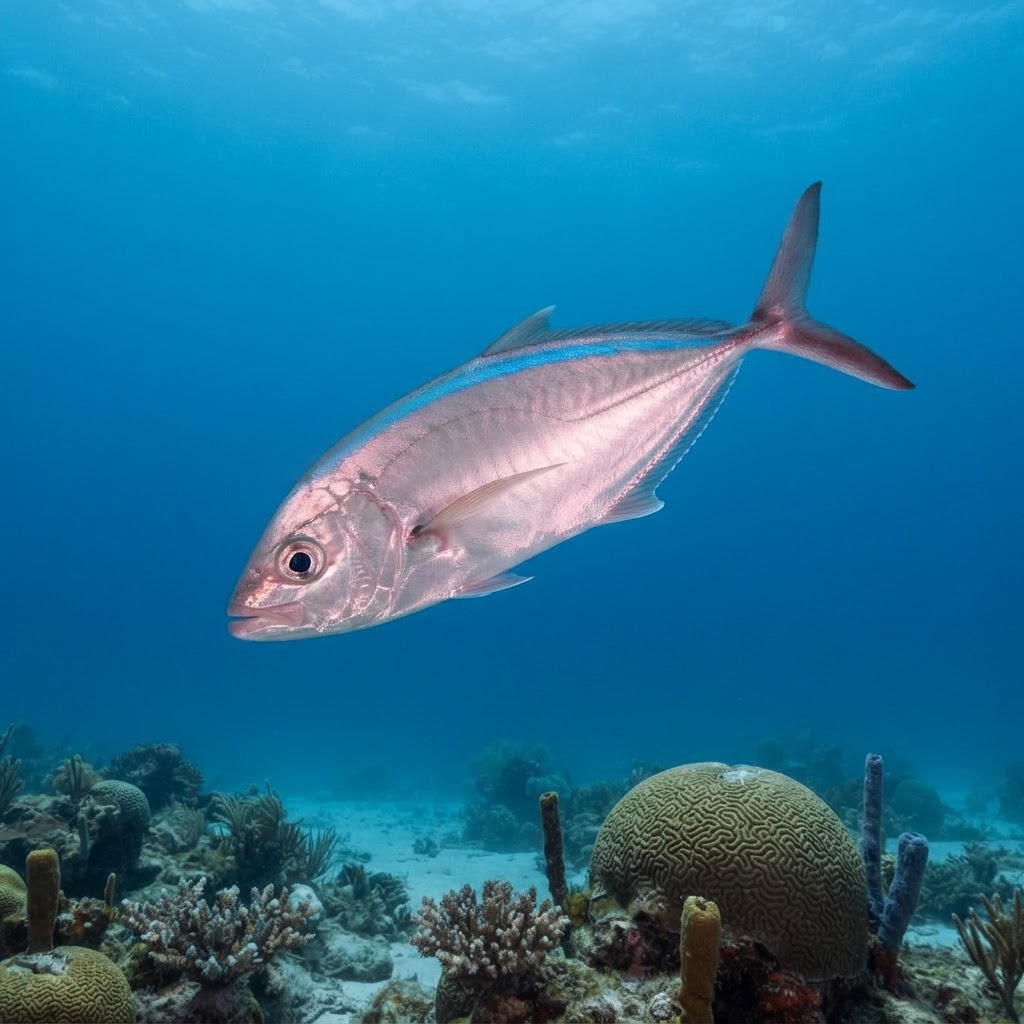
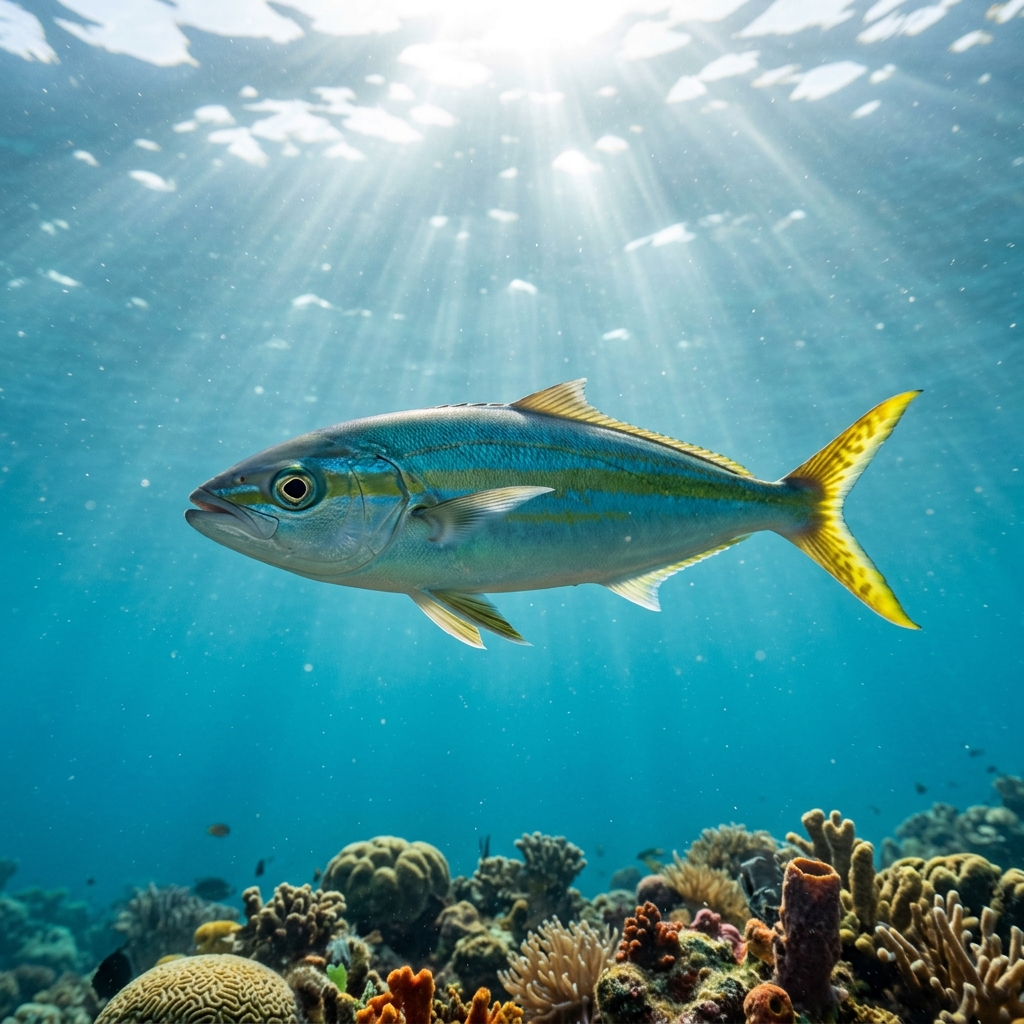
Reef neighbours a diver could mistake it for. Use the identification notes above to tell them apart.
Most reliably logged off Peninsular Malaysia's east coast, with strong numbers also reported from Marsa Alam and the Deep South in Egypt. Queensland and Western Australia both produce sightings too, with smaller pockets around Koh Lanta in Thailand and Watamu in Kenya.
Mapping where Gold-spotted Trevally is logged…
The strongest sightings come from Peninsular Malaysia's east coast and Marsa Alam in Egypt's Deep South. Queensland and Western Australia also produce regular records, with occasional sightings off Koh Lanta in Thailand and Watamu in Kenya.
There is no strong seasonal pattern in the sighting data, and its warm-water niche of roughly 23 to 29C is met on tropical reefs throughout the year, so it turns up in any month at the sites where it is known.
Look for a deep, rounded silver body with a scatter of small gold-bronze spots along the upper flank and a dark mark near the gill cover. It is usually seen alone or in small loose groups rather than large tight schools.
They typically reach around 84cm in length, making them a mid-sized member of the jack family rather than one of the true giants like Giant Trevally.
No, they are not considered dangerous to divers. They tend to keep a cautious distance and cruise past rather than approach.
Site and sighting data is aggregated from diver logs, iNaturalist and GBIF. For taxonomy and conservation status:
Bigeye Trevally
2,591 sites