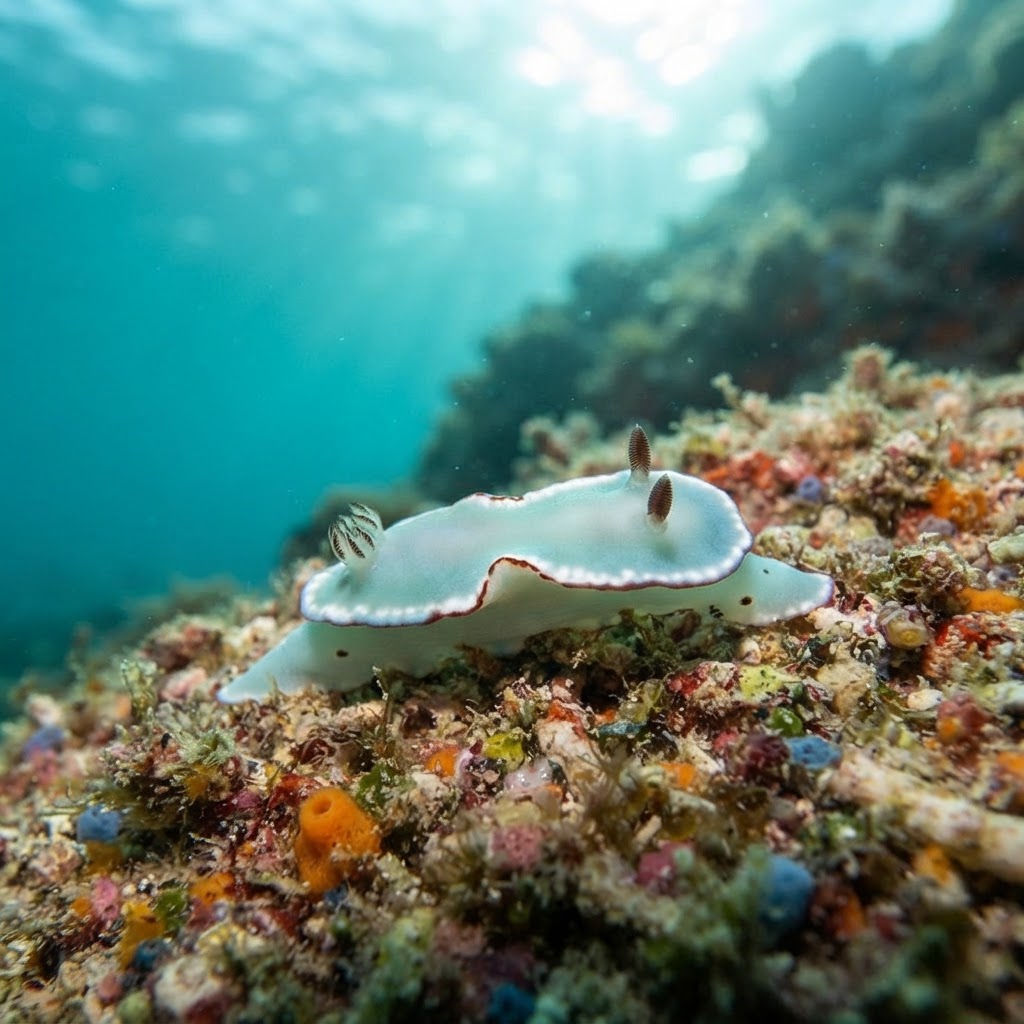
Glossodoris angasi
A New South Wales speciality nudibranch, most reliably logged on temperate reefs in waters between 17.6 and 23.6°C.
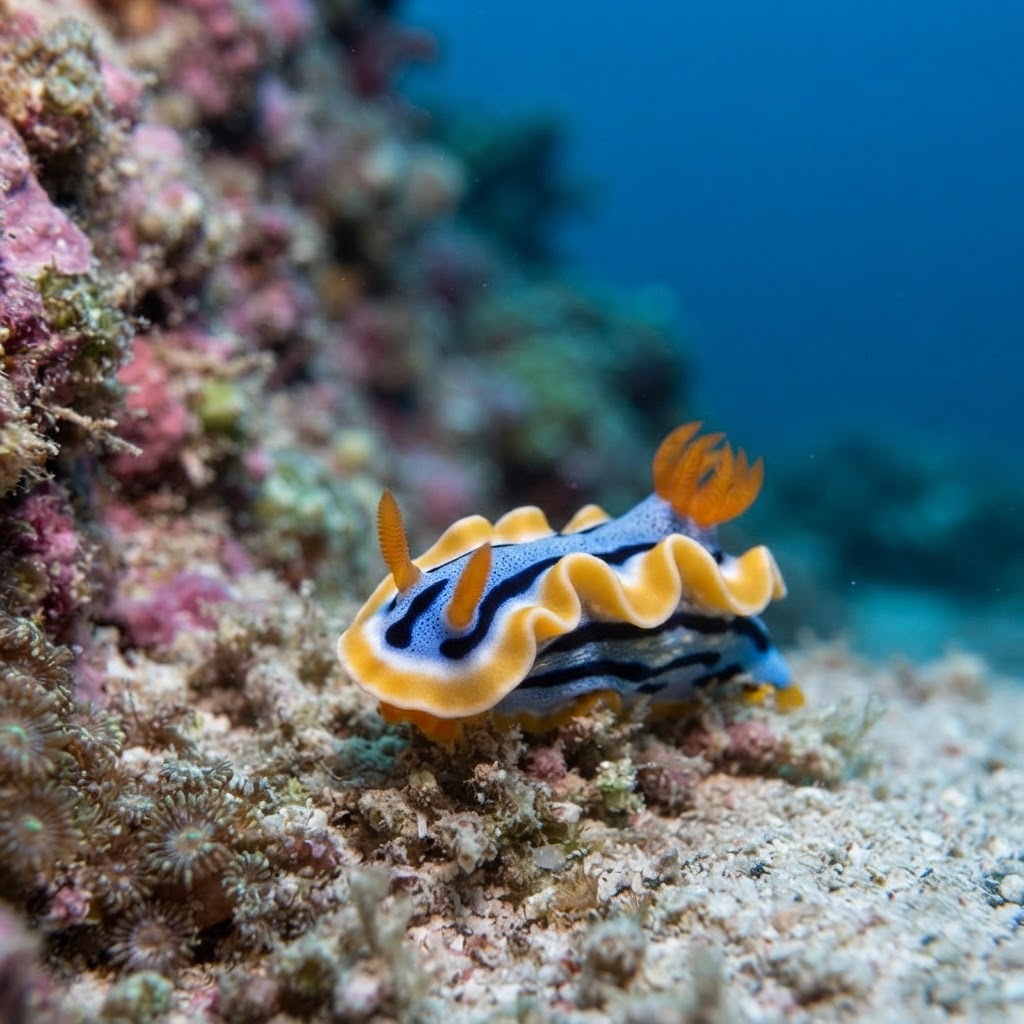
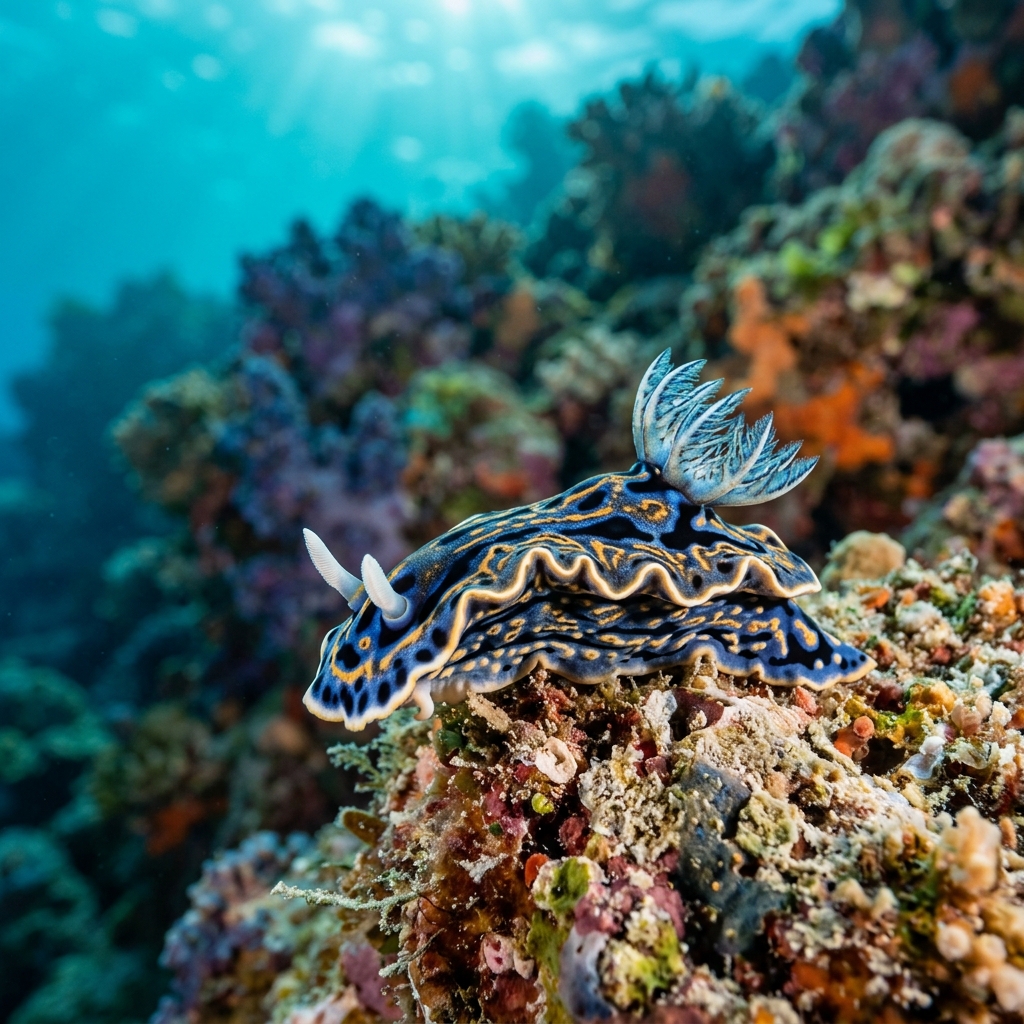
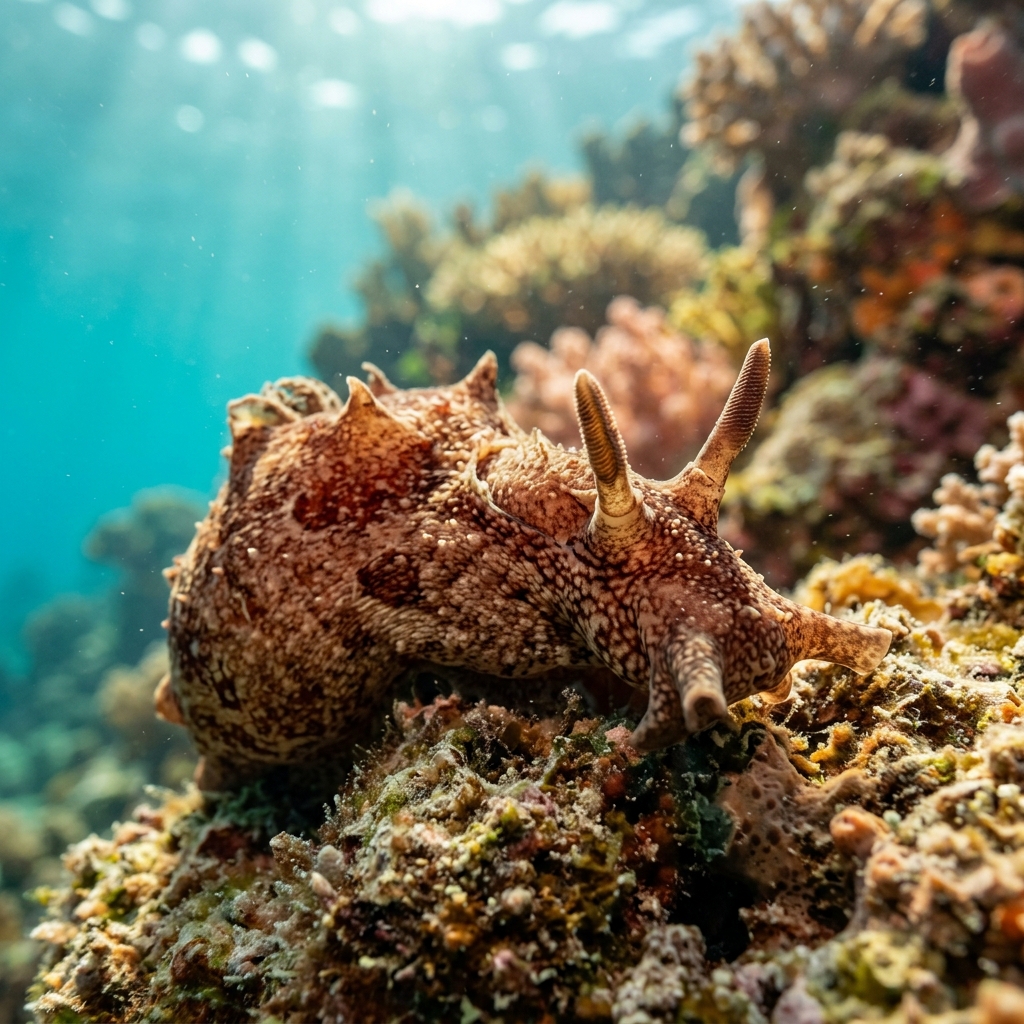
Look for a flattened, elongated sea slug (nudibranch) with a mottled cream, tan and brown mantle and a soft, ruffled edge running along its body. Two rhinophores (sensory stalks) sit forward on the head and a cluster of gills sits toward the rear, both features typical of the chromodorid family. It moves slowly across rock and rubble, so once spotted it is easy to settle in for a close look.
Divers usually find it grazing slowly across rocky reef and rubble patches, tucked in among sponges and other encrusting life it feeds on. It shows no reaction to divers beyond its usual unhurried pace, making it an easy subject for macro photography once located. Most logs describe it as an uncommon to rare find, so a careful, slow scan of the substrate pays off more than a quick swim-by.
Like other chromodorid nudibranchs, it likely feeds on sponges and can sequester chemical compounds from its diet, which may contribute to its own chemical defence against predators.
Sightings show no detected seasonal pattern, so treat this as a year-round find on the reefs where it occurs. Its observed temperature range of 17.6 to 23.6°C spans the typical annual swing on New South Wales temperate reefs, which likely explains the lack of a strong season.
Reef neighbours a diver could mistake it for. Use the identification notes above to tell them apart.
This is very much a New South Wales speciality, with the great majority of logged sightings coming from temperate reef sites there, and a smaller presence recorded in Queensland. Divers chasing it should focus their search on southeastern Australian dive sites rather than the tropical north.
Mapping where Angas's Glossodoris is logged…
It is most reliably found on temperate reef sites in New South Wales, Australia, with a smaller number of sightings logged in Queensland. Outside Australia it has not been logged in the data.
There is no strong seasonal pattern in the sightings, so it can turn up year-round. It has been recorded across a water temperature range of 17.6 to 23.6°C, which covers most of the annual range on New South Wales reefs.
Check for a flattened, soft-bodied slug with a mottled cream, tan and brown mantle, forward rhinophores and a rear gill cluster. It moves slowly over rock and rubble, which makes it easy to photograph once you spot the pattern.
No, it poses no danger to divers. It has no sting or bite of concern and simply grazes slowly across the reef.
Most dive sites that log it describe it as uncommon or rare, with only a couple of sites reporting it as common. Patience and a slow, close look at rubble and sponge-covered surfaces improve your odds.
Site and sighting data is aggregated from diver logs, iNaturalist and GBIF. For taxonomy and conservation status:
Light-spotted Aegires
3,168 sites