Glossodoris acosti
A sea slug most divers log in the Visayas and Luzon, spotted uncommon to rare on warm reefs from 25 to 31 C year-round.
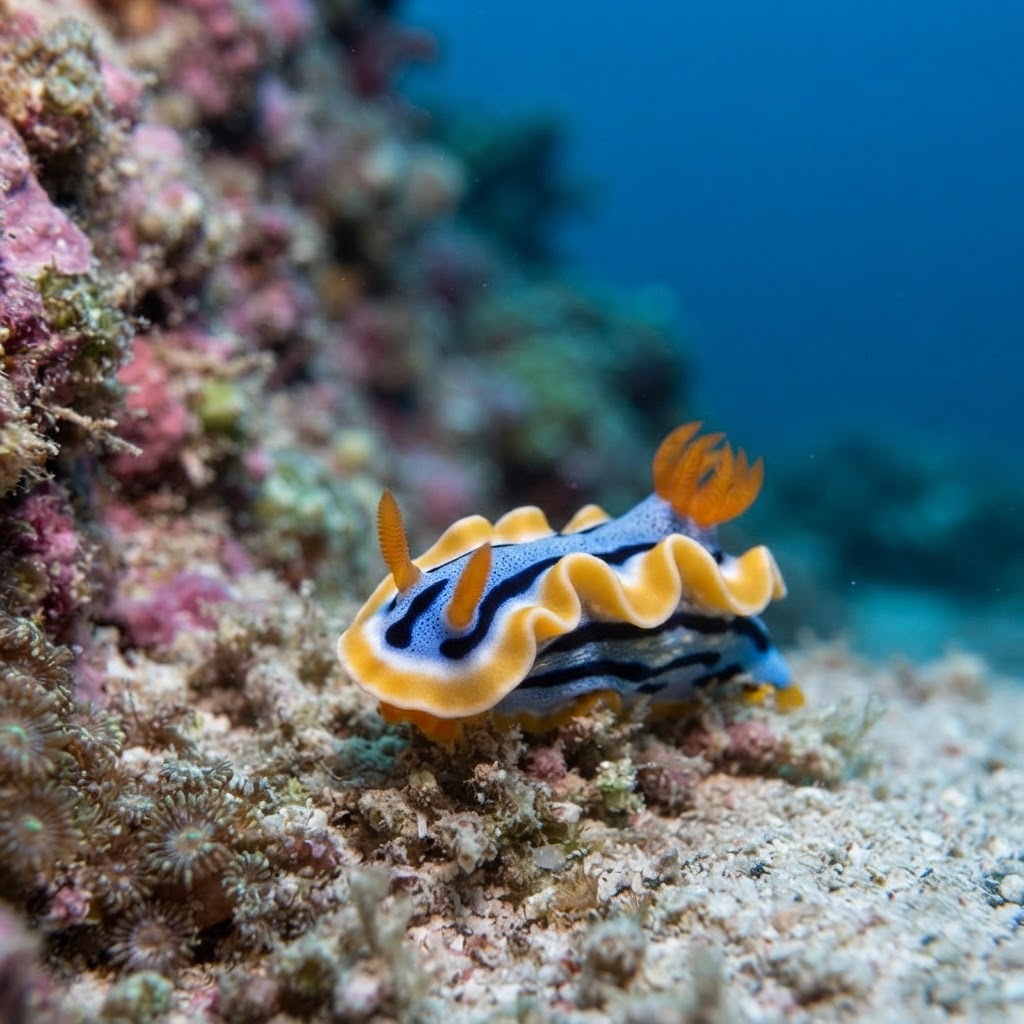
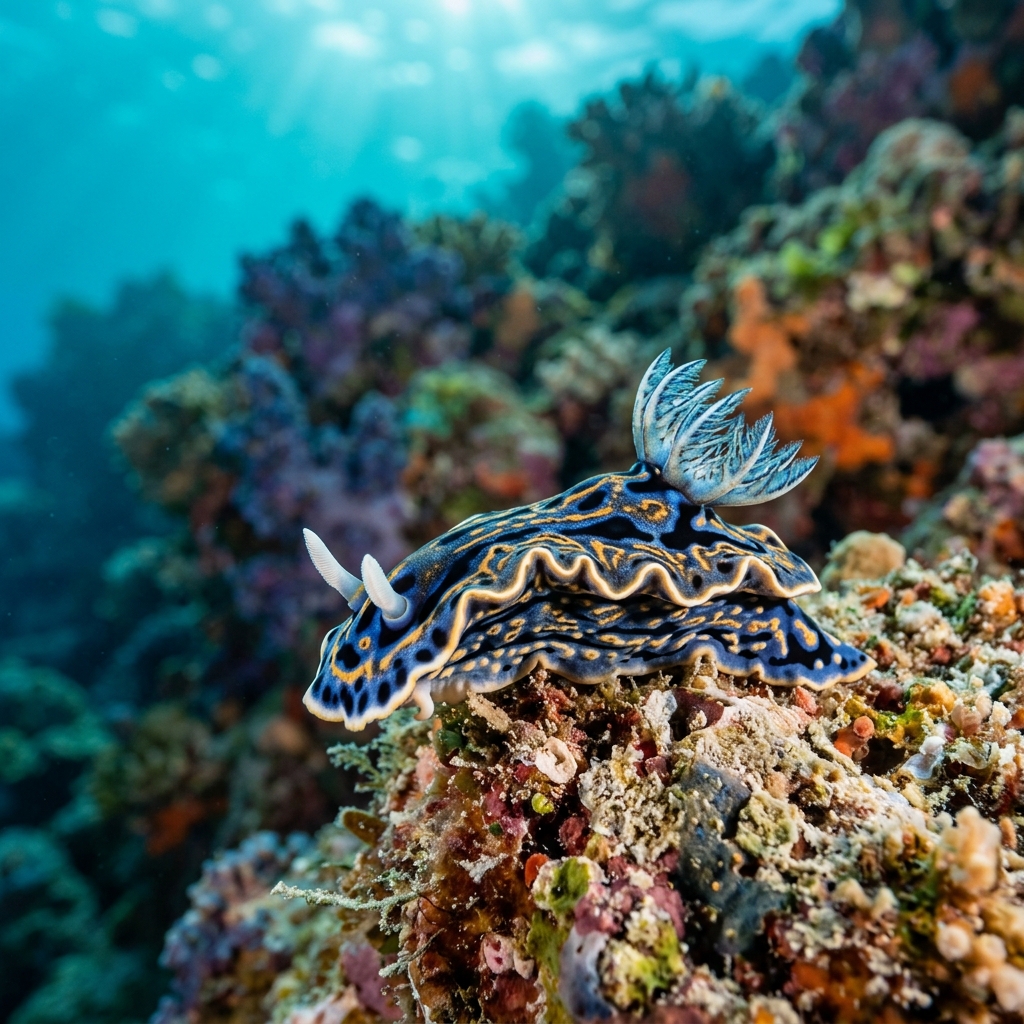
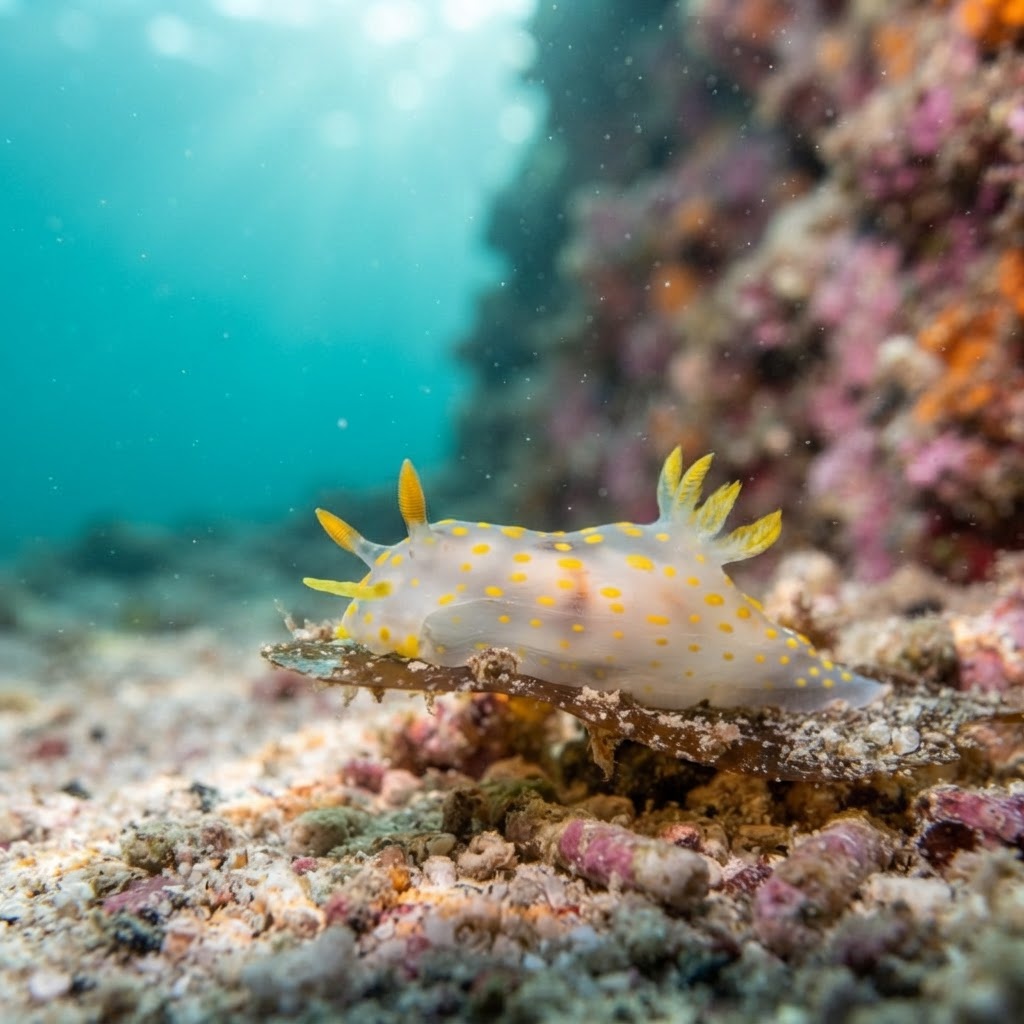
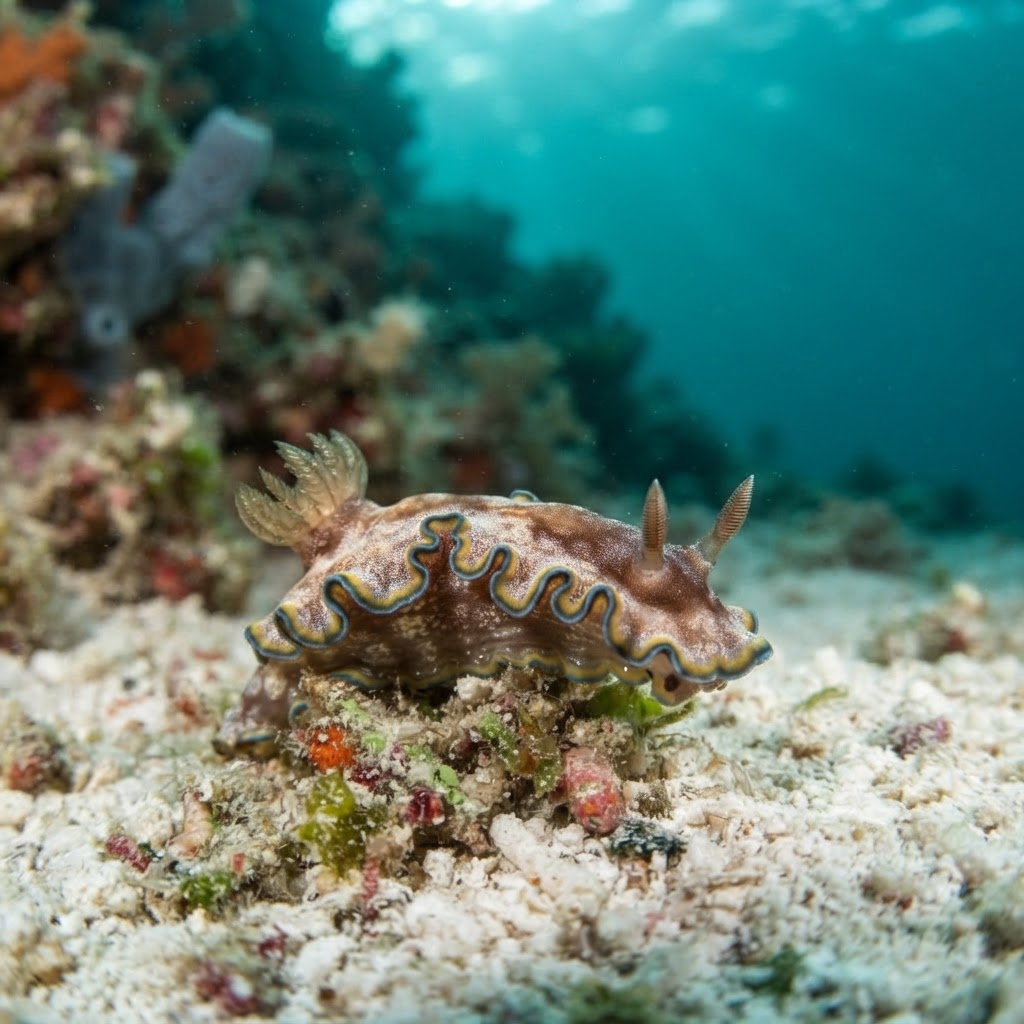
A small, soft-bodied sea slug (nudibranch) that moves slowly across the reef substrate rather than swimming. Look for the smooth, gently frilled mantle edge typical of the Chromodorididae family, held low over a pale to cream body as it grazes. Size in the water is modest, so divers usually spot it by scanning coral rubble and sponge-covered surfaces rather than open water.
Divers typically find it parked on rubble, sponge patches or low reef structure, moving at the unhurried pace typical of nudibranchs as it grazes. It shows no reaction to divers beyond continuing its slow crawl, so a close macro look rarely disturbs it. Most logs come from daytime dives on shallower reef and rubble zones rather than deep drop-offs.
Like other members of Chromodorididae, it almost certainly feeds on sponges and stores chemical compounds from that diet in its tissue as a defence against predators, which is part of why sea slugs in this family can sit out in the open without much cover.
No clear seasonal pattern shows up in the sightings, so treat this as a year-round find. Water temperatures at the sites where it's logged run from 25.4 to 31.4 C, comfortably warm on tropical reefs throughout the year.
Reef neighbours a diver could mistake it for. Use the identification notes above to tell them apart.
Most reliably logged in the Philippines, especially across the Visayas and Luzon regions, where it turns up at far more sites than anywhere else in the data. Smaller but real populations are logged in Indonesia, spread across Nusa Tenggara, Sulawesi and Bali, so it's worth checking muck and rubble patches on Indonesian reefs too.
Mapping where Acost's Glossodoris is logged…
It is most consistently logged in the Philippines, particularly the Visayas and Luzon regions, with additional sightings across Indonesia in Nusa Tenggara, Sulawesi and Bali.
There's no strong seasonal pattern in the data, so it can turn up any month. It's found in water between 25.4 and 31.4 C, typical of tropical reefs year-round.
Look for a small, slow-moving sea slug with a pale, softly frilled mantle crawling across rubble or sponge-covered reef. It lacks dramatic colour contrast, so a close macro look at the mantle pattern helps confirm it against similar Chromodorididae species.
Across the sites where it has been logged, divers most often describe it as uncommon, with a smaller number of sites reporting it as rare. It's not a guaranteed sighting, but it is a realistic find on the right rubble or sponge patch.
No, it poses no danger to divers. Like most nudibranchs it's harmless to approach and photograph, though it's best left undisturbed on the substrate.
Site and sighting data is aggregated from diver logs, iNaturalist and GBIF. For taxonomy and conservation status:
Light-spotted Aegires
3,168 sites