Pagrus pagrus
Pinkish-red sea bream logged across Catalonia, the Canary Islands and the Azores, most often seen as an uncommon reef visitor year-round.
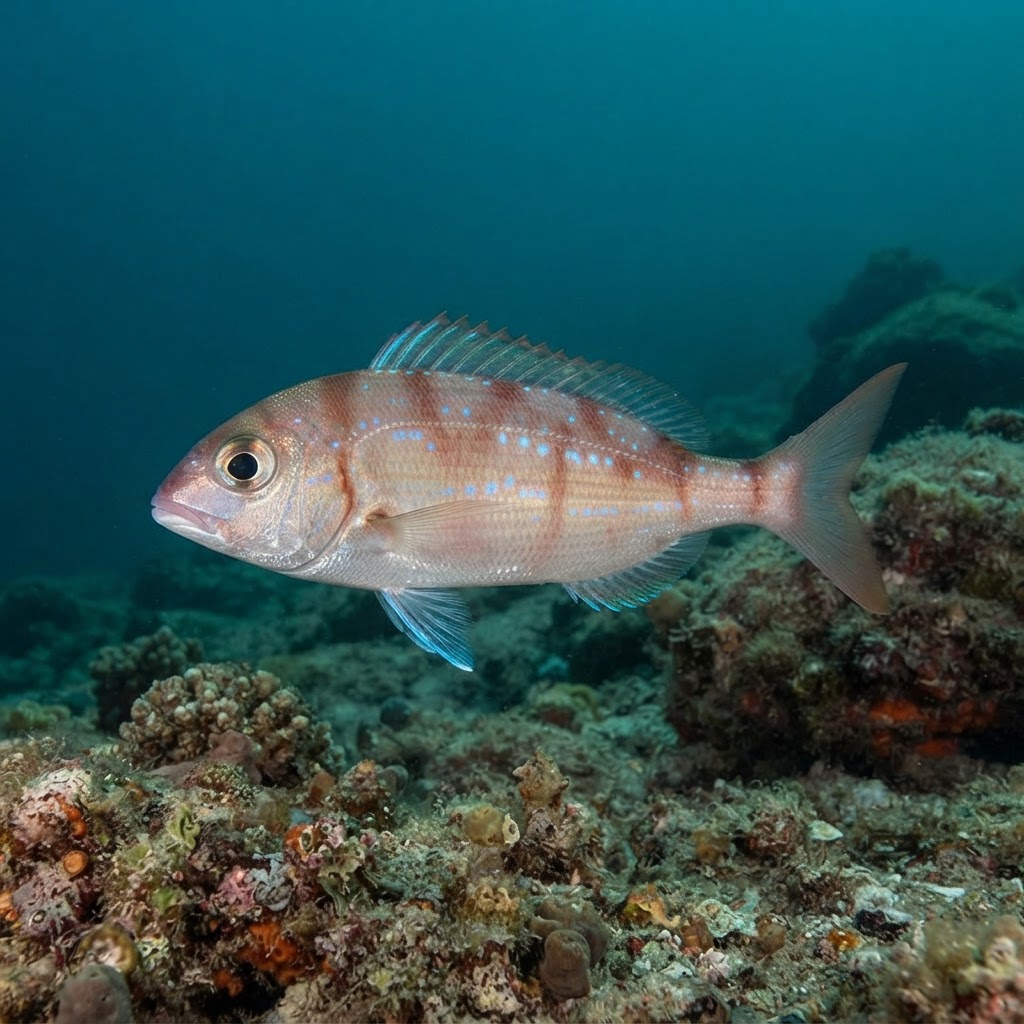
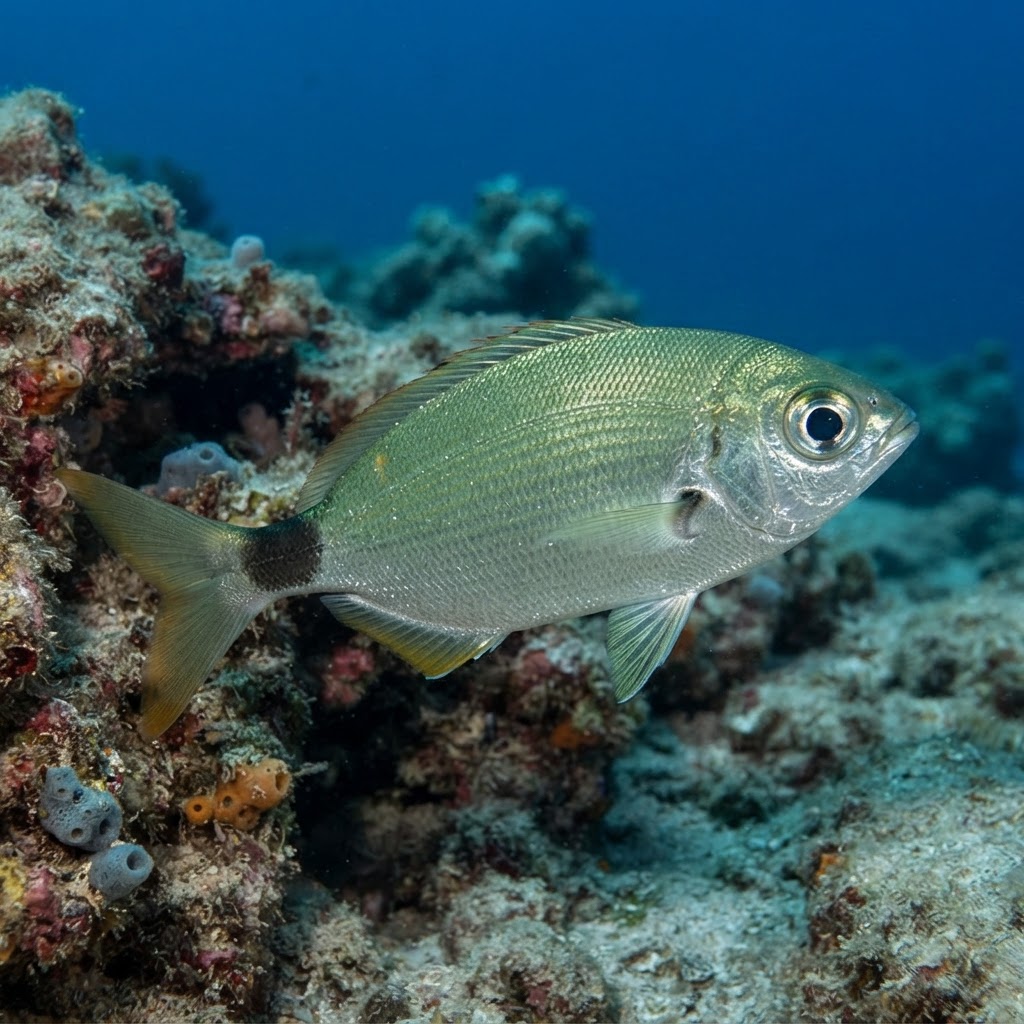
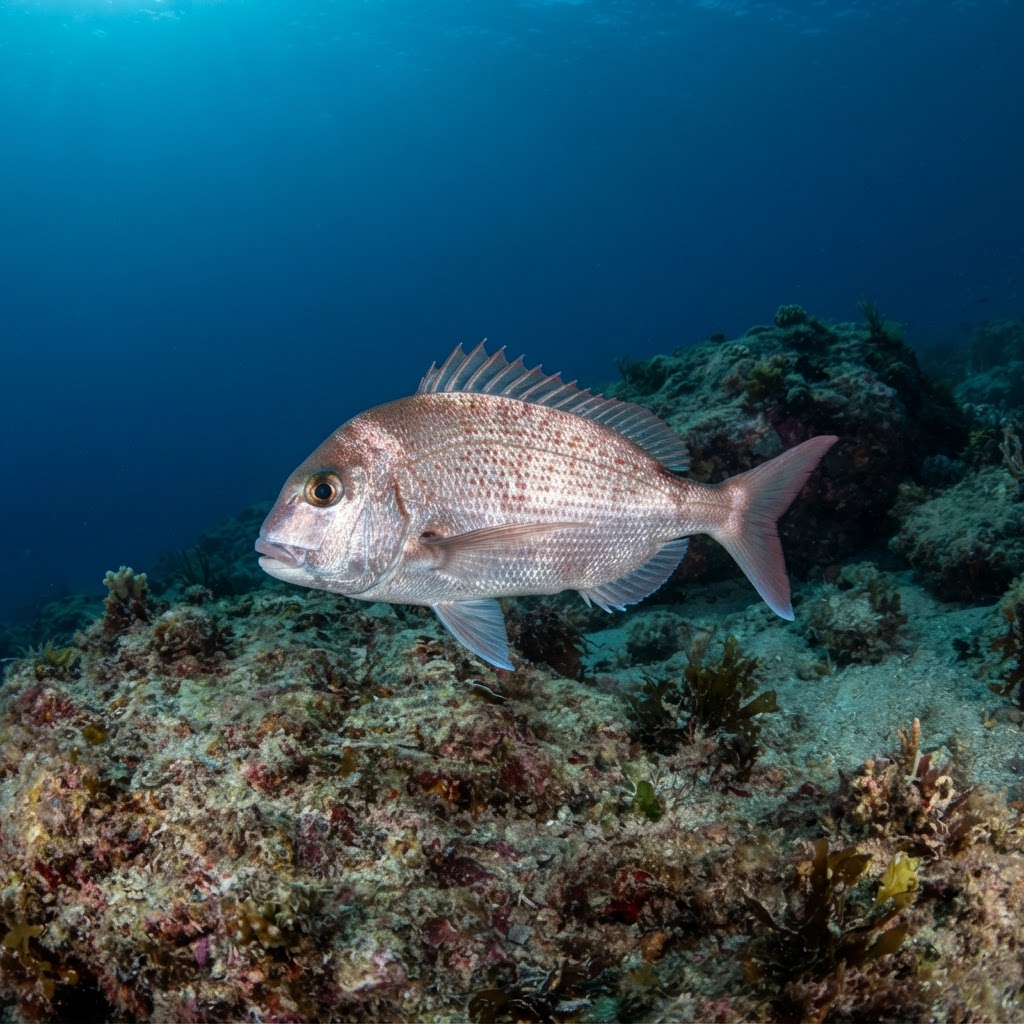
Look for a deep, oval-bodied fish with a pinkish-red to coppery back fading to silver-pink below, often with faint blue flecks scattered along the upper flanks. It has a steep, blunt head profile and a single continuous dorsal fin, growing up to around 63 cm though most divers see smaller individuals. There's no strong sex-based colour difference to watch for underwater, so body shape and that pinkish wash are your best cues against the reef backdrop.
Expect to find it hovering or cruising slowly over sand patches, rubble and rocky reef edges, often alone or in loose small groups rather than tight schools. It's a benthopelagic feeder, so divers regularly see it working the bottom for prey and drifting up off the substrate between passes. It tends to keep a cautious distance from divers rather than approaching, making a slow, low approach your best chance for a close look.
Red porgy are protogynous hermaphrodites, meaning many individuals start life as females and some later transition to males as they grow, a detail worth knowing if you're trying to size up a school by sex.
Sightings show no clear seasonal pattern, and with a wide comfort range of roughly 15.8 to 27.8 C, it turns up on rocky and sandy reefs across all four seasons. Plan around good visibility and conditions at your chosen site rather than a particular month.
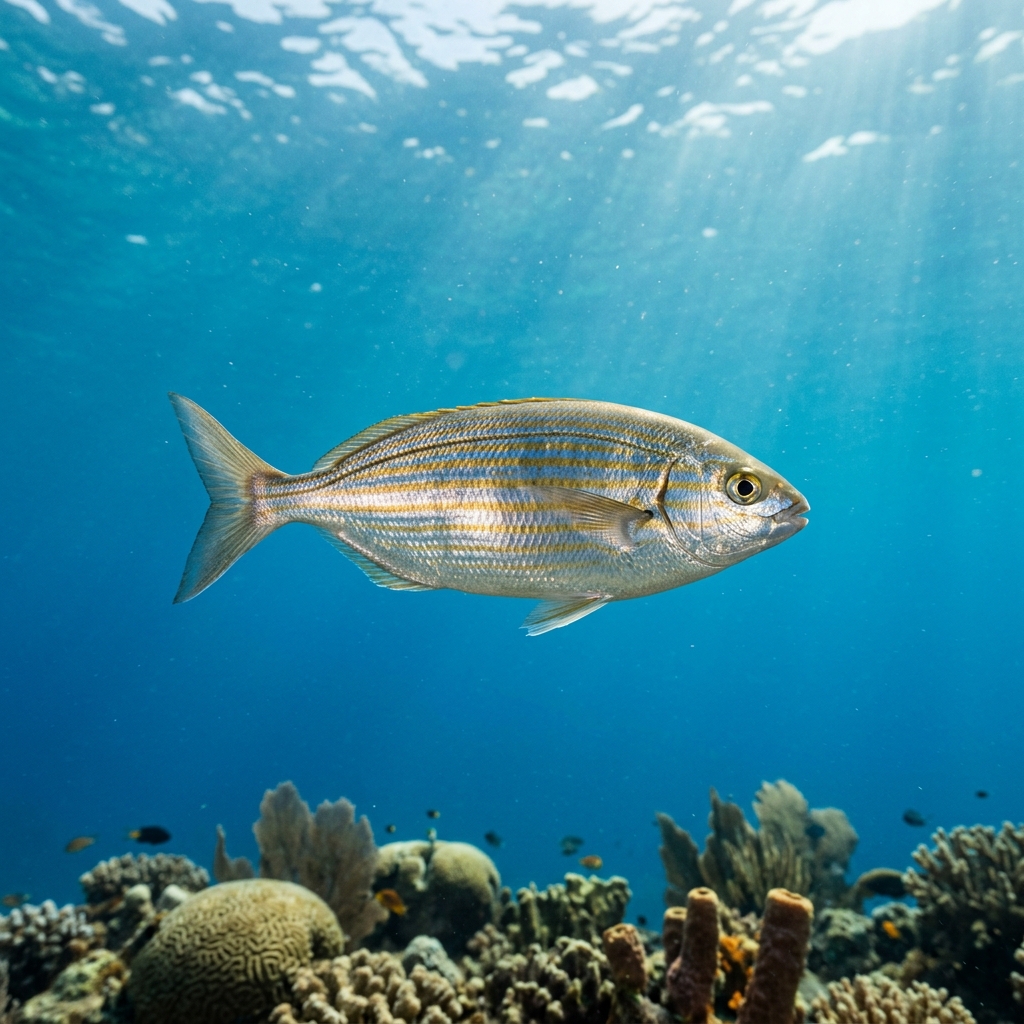
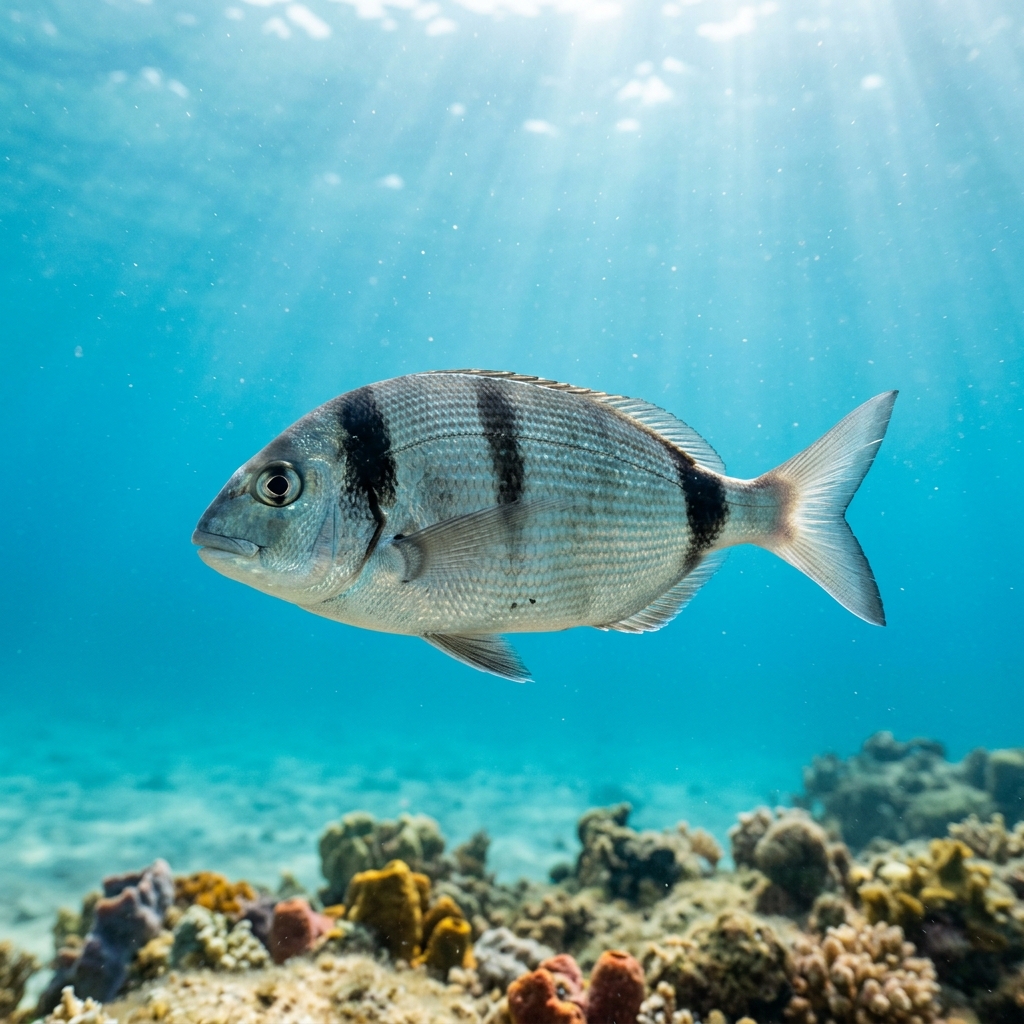
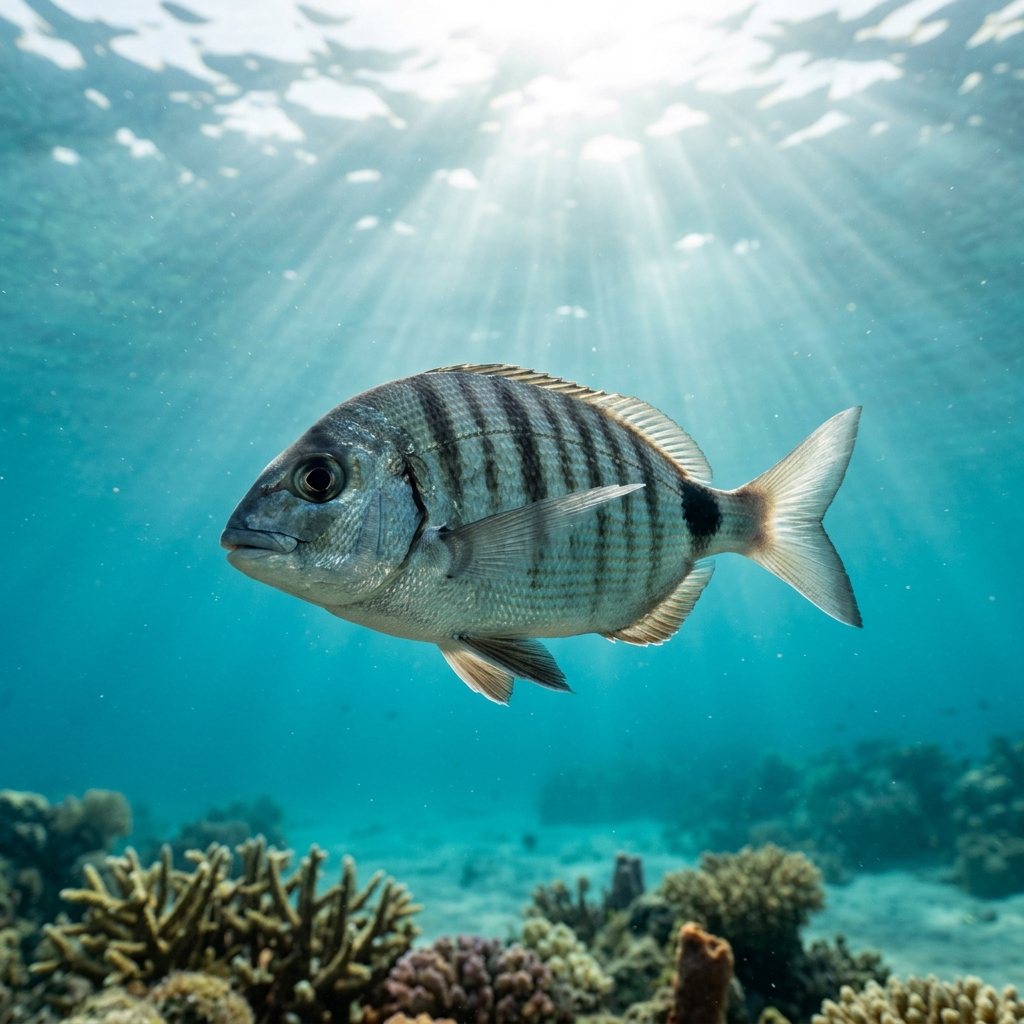
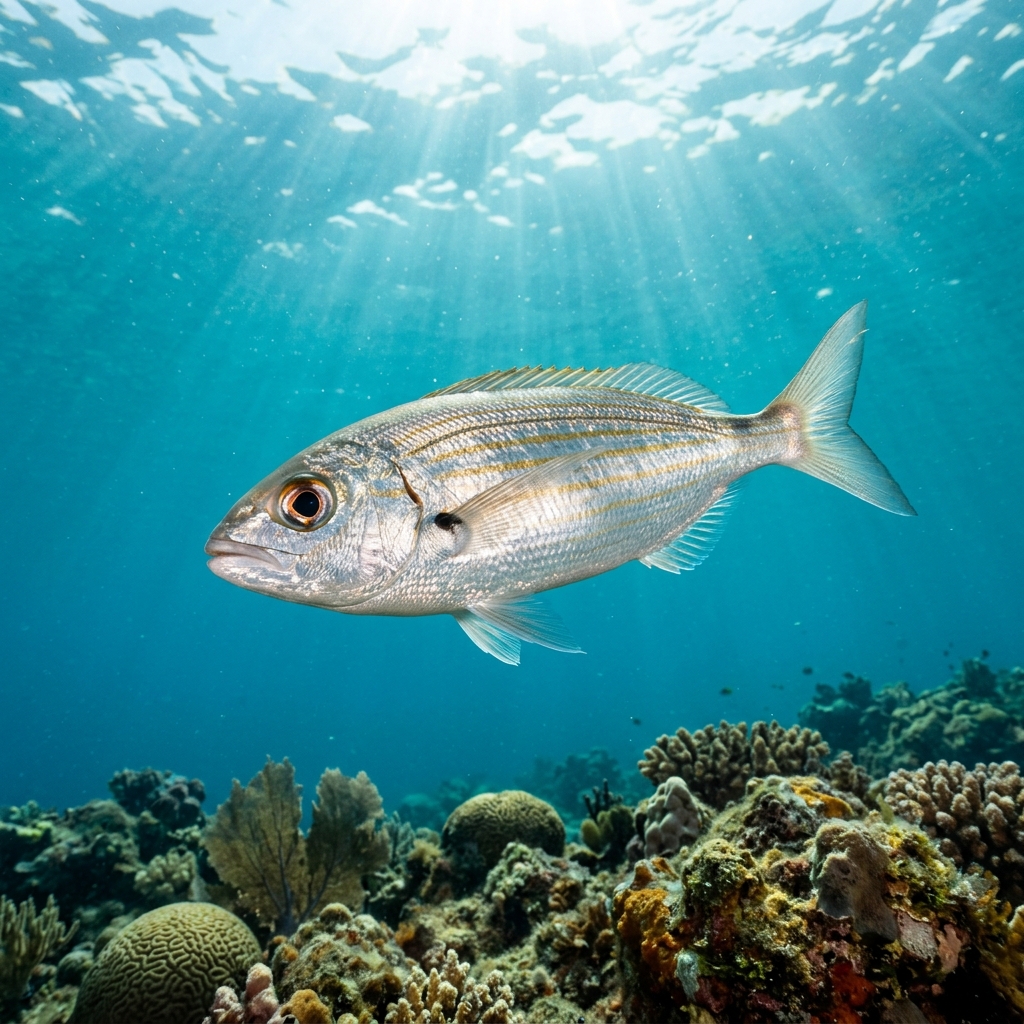
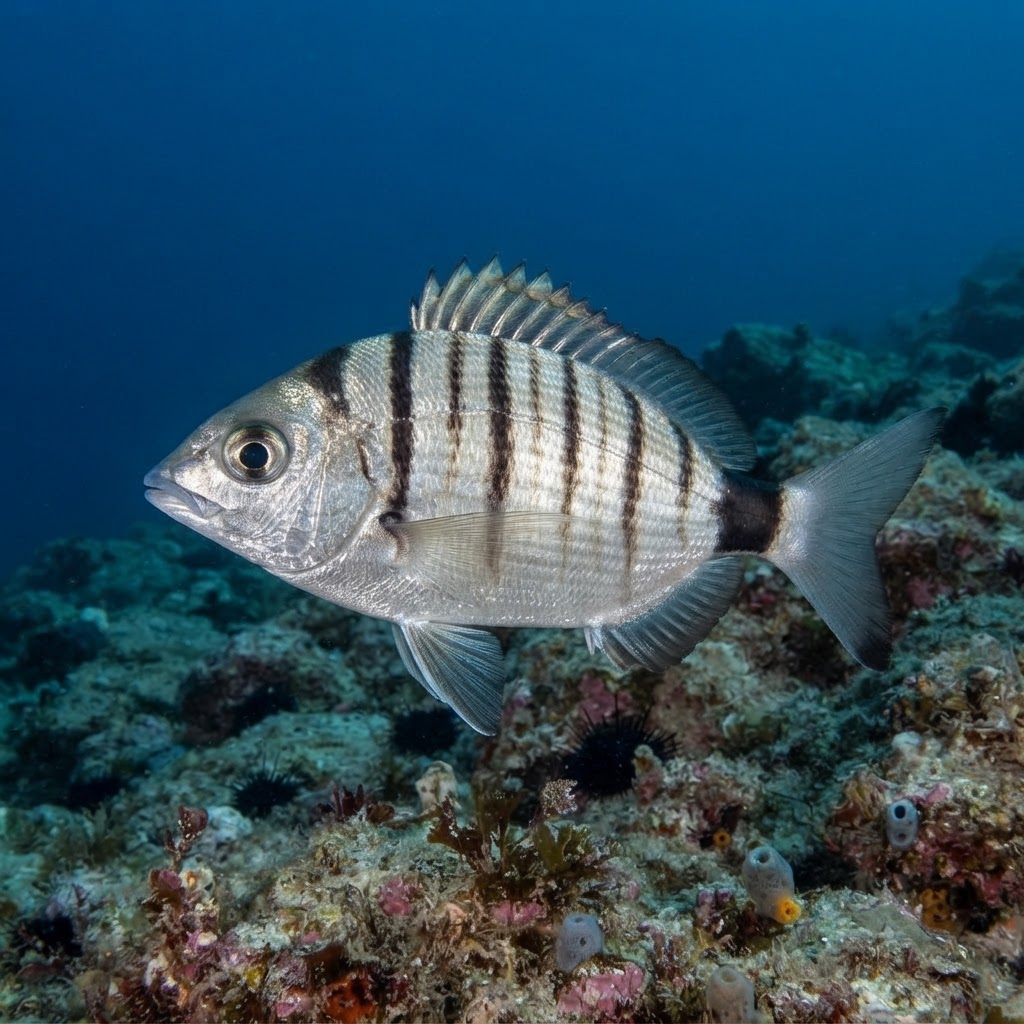
Reef neighbours a diver could mistake it for. Use the identification notes above to tell them apart.
Spain is the stronghold, with Catalonia and Andalusia turning up the most sightings, alongside strong numbers across the Canary Islands, especially Lanzarote, Tenerife and Fuerteventura. Beyond Spain, it's a reliable find in Occitanie in France, around Sao Miguel and Santa Maria in the Azores, and along Turkey's Turquoise Coast.
Mapping where Red Porgy is logged…
Spain is the top spot, particularly Catalonia and Andalusia, with strong numbers also logged across the Canary Islands (Lanzarote, Tenerife, Fuerteventura), Occitanie in France, the Azores and Turkey's Turquoise Coast.
There's no strong seasonal pattern in sightings, and its wide temperature tolerance (roughly 15.8 to 27.8 C) means it's present on reefs year-round rather than tied to a specific season.
Look for an oval-bodied fish with a pinkish-red to coppery back, silvery-pink underside, faint blue speckling on the upper flanks, and a steep blunt head. A single unbroken dorsal fin helps separate it from some similar sea breams.
They can reach around 63 cm, though most individuals divers encounter on a typical dive are noticeably smaller.
No, they pose no danger to divers and tend to keep their distance rather than approach.
Many red porgy are protogynous hermaphrodites, starting life as females and switching to males later in life, a common but often surprising trait among sea breams.
Site and sighting data is aggregated from diver logs, iNaturalist and GBIF. For taxonomy and conservation status:
Saddled Bream
3,846 sites