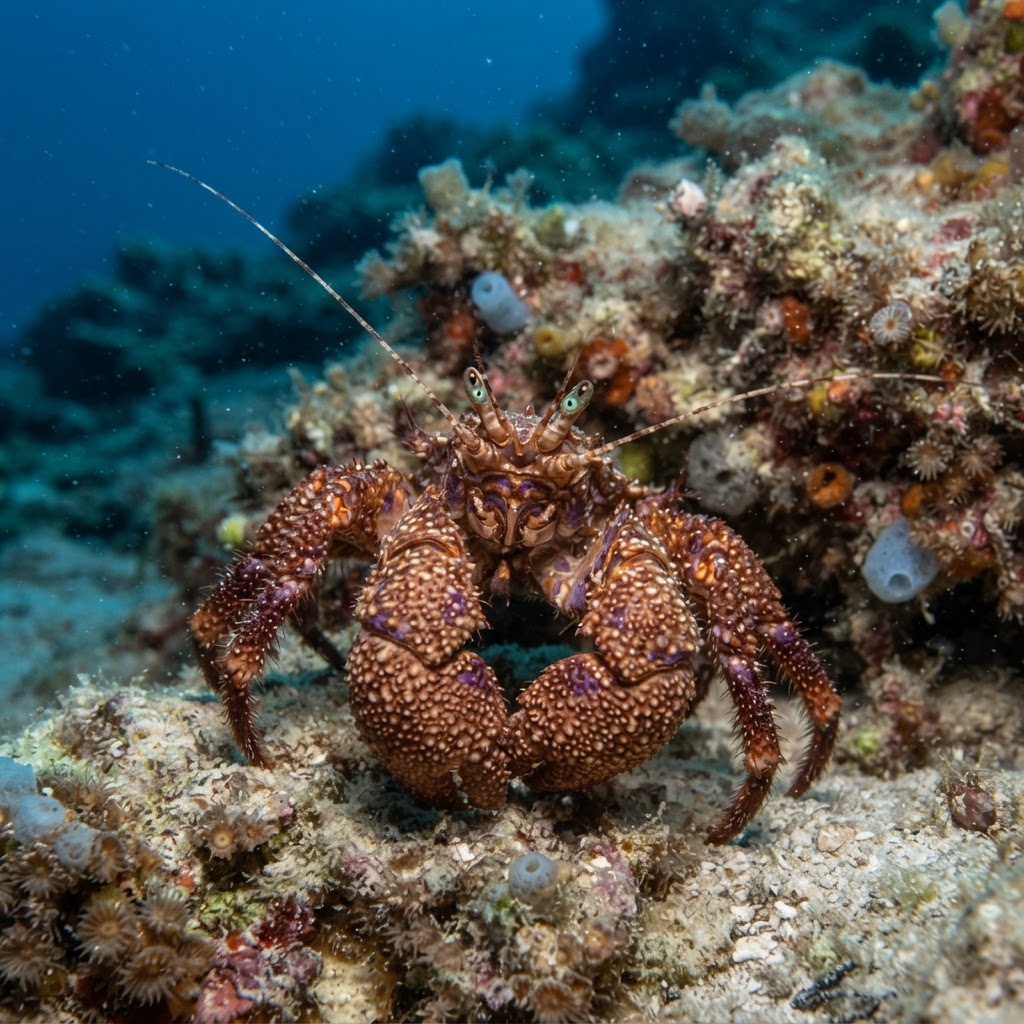
Petrochirus diogenes
Dragging a huge shell across the sand, giant hermit crabs turn up year-round on reefs from Florida to the Bay Islands of Honduras.
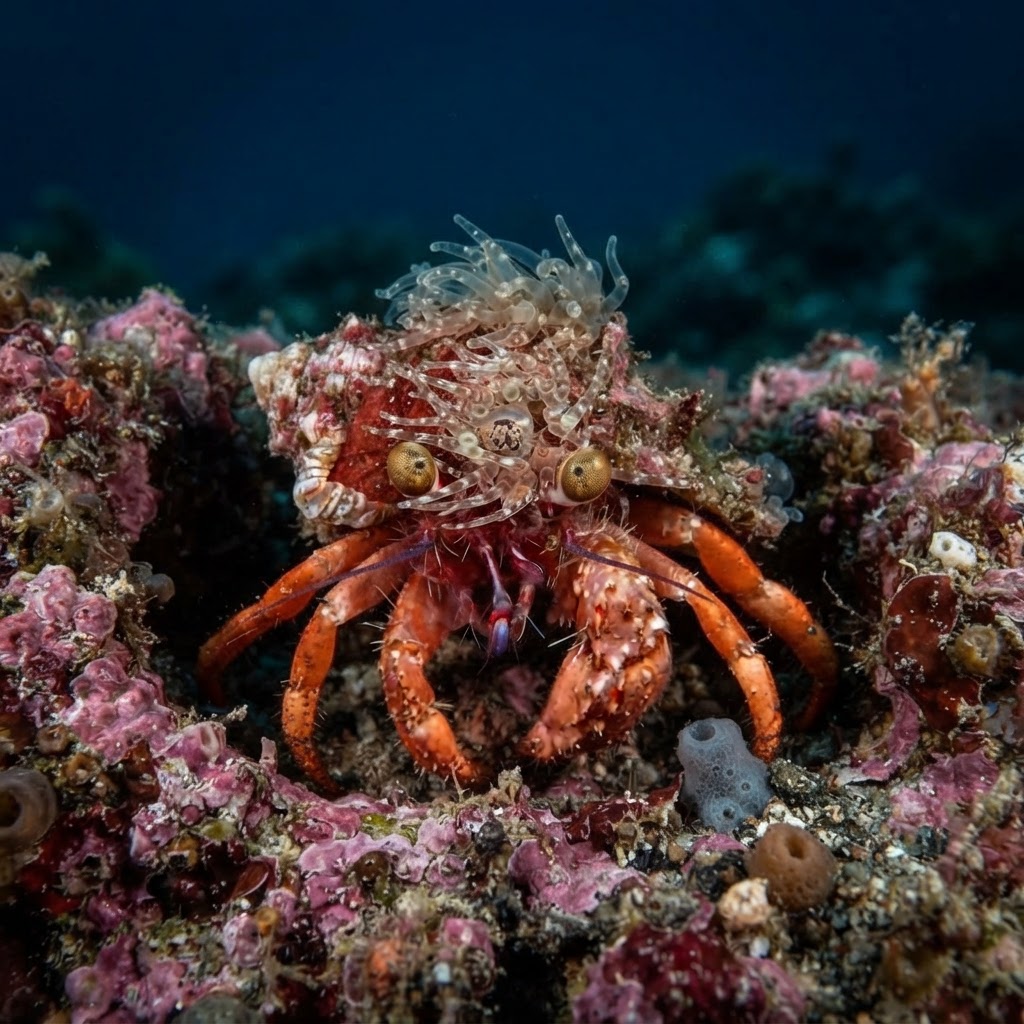
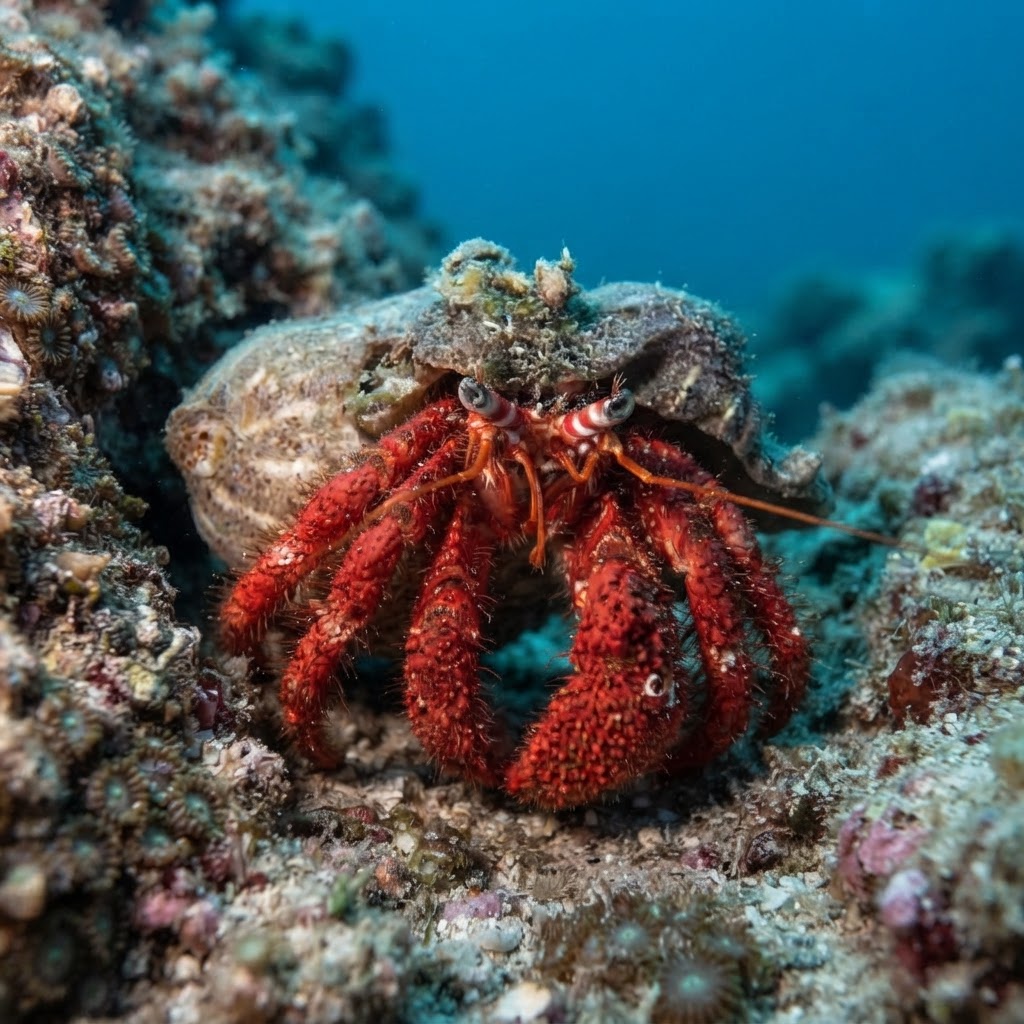
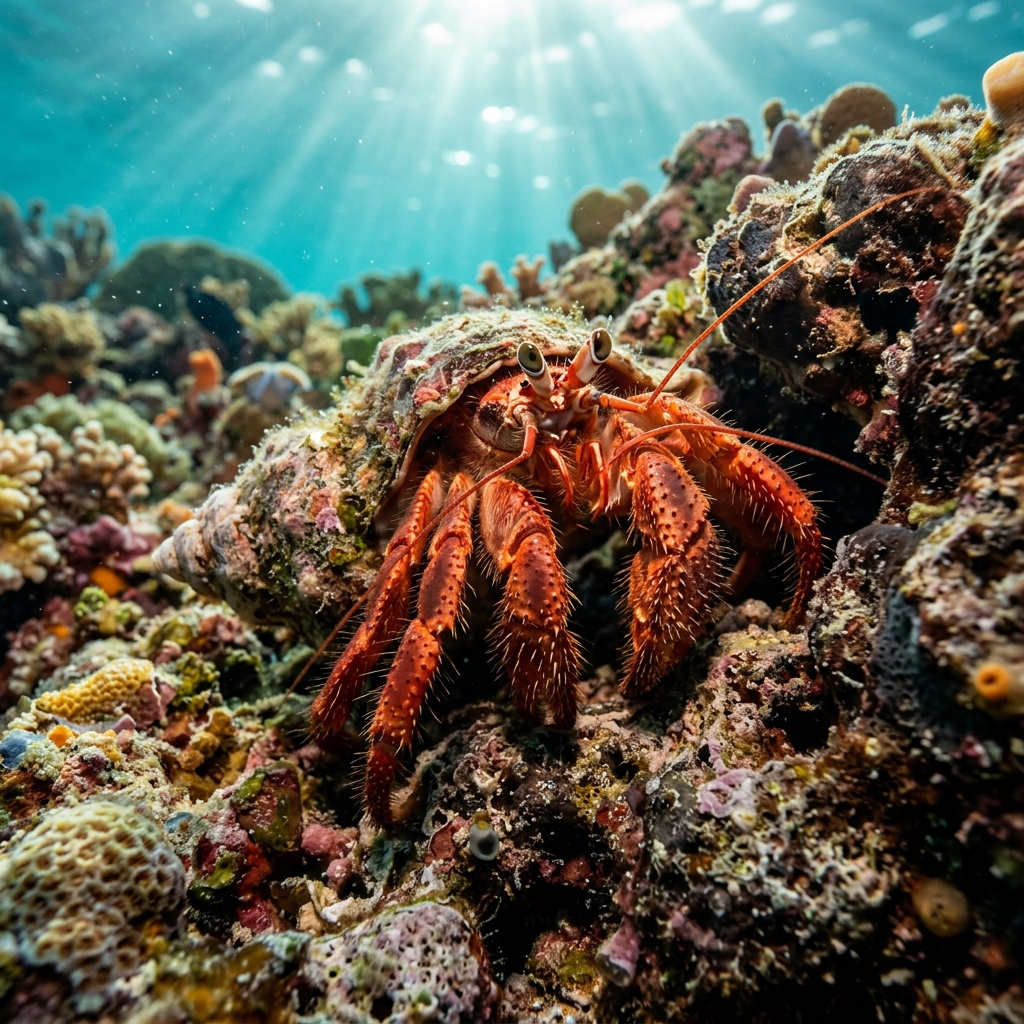
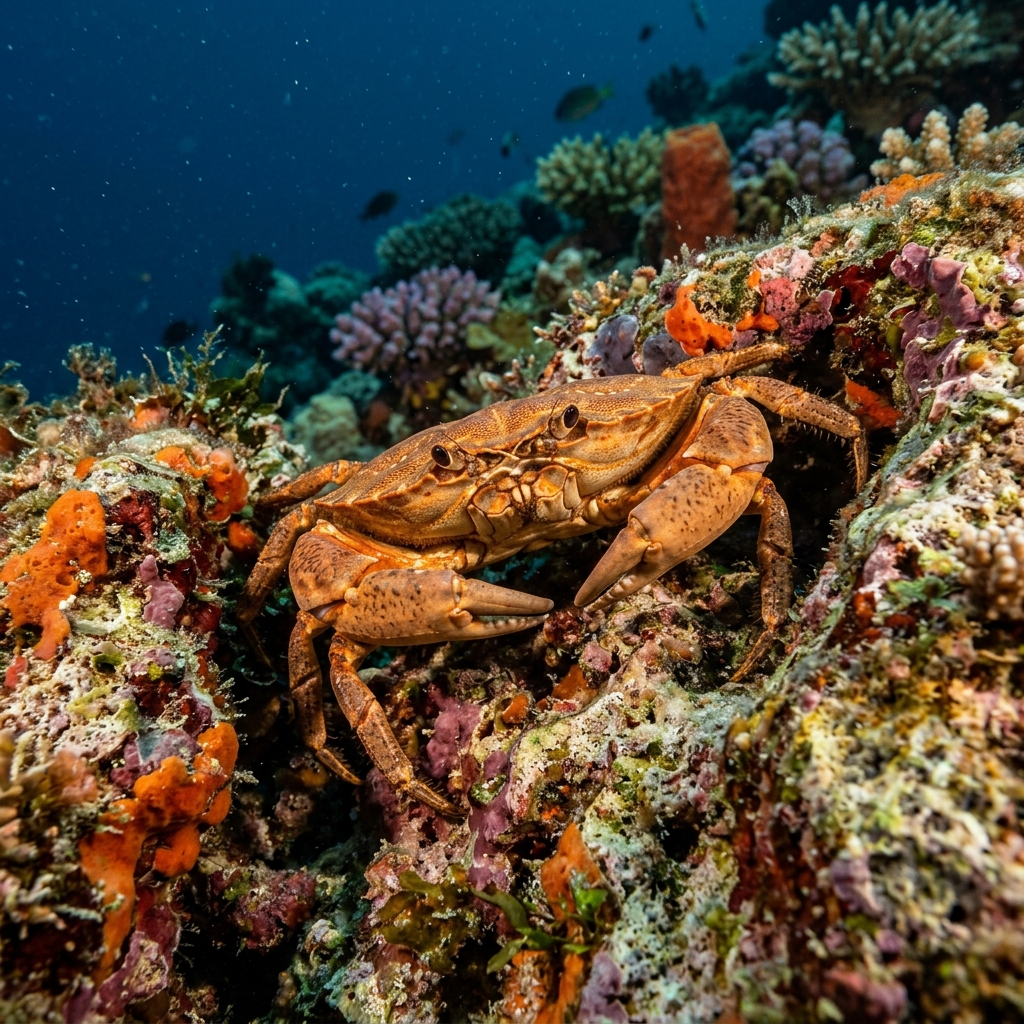
Recognisable by sheer bulk: this is the largest hermit crab most divers will ever see, often hauling a shell the size of a fist or bigger. Look for thick, reddish-brown to orange legs banded with lighter patches, heavy claws of unequal size, and eyestalks with a distinctive checkered or striped pattern. It moves slowly across sand and rubble, usually with only the front claws and eyes visible outside the borrowed shell.
Divers typically find these plodding across open sand or rubble between coral heads, using those oversized claws to pick over the bottom for scraps and small prey. They're unbothered by torchlight and slow enough to approach closely, though a startled individual will pull back fully into its shell rather than flee. Most sightings happen during the day on sandy flats bordering reef structure rather than on the reef itself.
As it grows, it periodically abandons its shell for a larger one scavenged from a dead snail, so the same individual can look like it's wearing a completely different shell year to year.
No clear seasonal pattern shows up in the data, and with a comfortable range of roughly 24 to 30C across its Caribbean and Gulf haunts, it's a year-round find on sandy patches and reef edges.
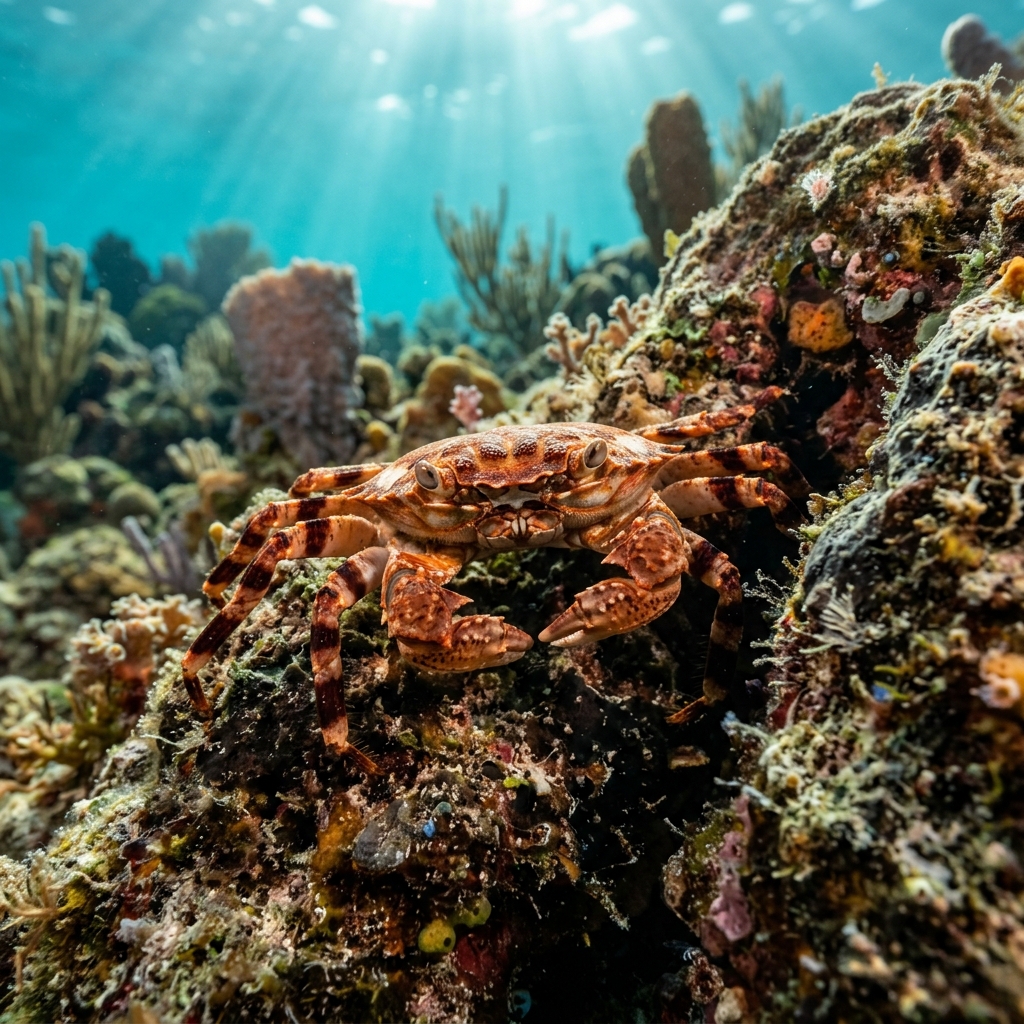
Reef neighbours a diver could mistake it for. Use the identification notes above to tell them apart.
Most reliably logged in Florida in the United States and the Bay Islands of Honduras, with a strong secondary presence in Belize around Lighthouse Reef and Caye Caulker. Divers also find them across the Yucatán Peninsula in Mexico and off Fajardo on Puerto Rico's east coast.
Mapping where Giant Hermit Crab is logged…
Florida in the United States and Honduras's Bay Islands are the most consistent spots, with good numbers also logged in Belize, particularly around Lighthouse Reef and Caye Caulker, and across Mexico's Yucatán Peninsula.
There's no strong season in the sightings data, and warm water year-round across its Caribbean range means divers log it in every month.
Look for a large, heavy shell being dragged across sand with thick reddish-orange legs and mismatched claws poking out. The striped or checkered eyestalks are a good close-up giveaway.
They're the largest hermit crab divers commonly encounter in the Caribbean, with shells that can reach the size of a large fist or more once the crab is mature.
No. They're slow, defensive rather than aggressive, and simply withdraw into their shell if disturbed, posing no real risk to divers.
It doesn't grow its own shell at all. It scavenges empty snail shells and trades up to a bigger one as it grows, so the same crab can look totally different from one year to the next.
Site and sighting data is aggregated from diver logs, iNaturalist and GBIF. For taxonomy and conservation status:
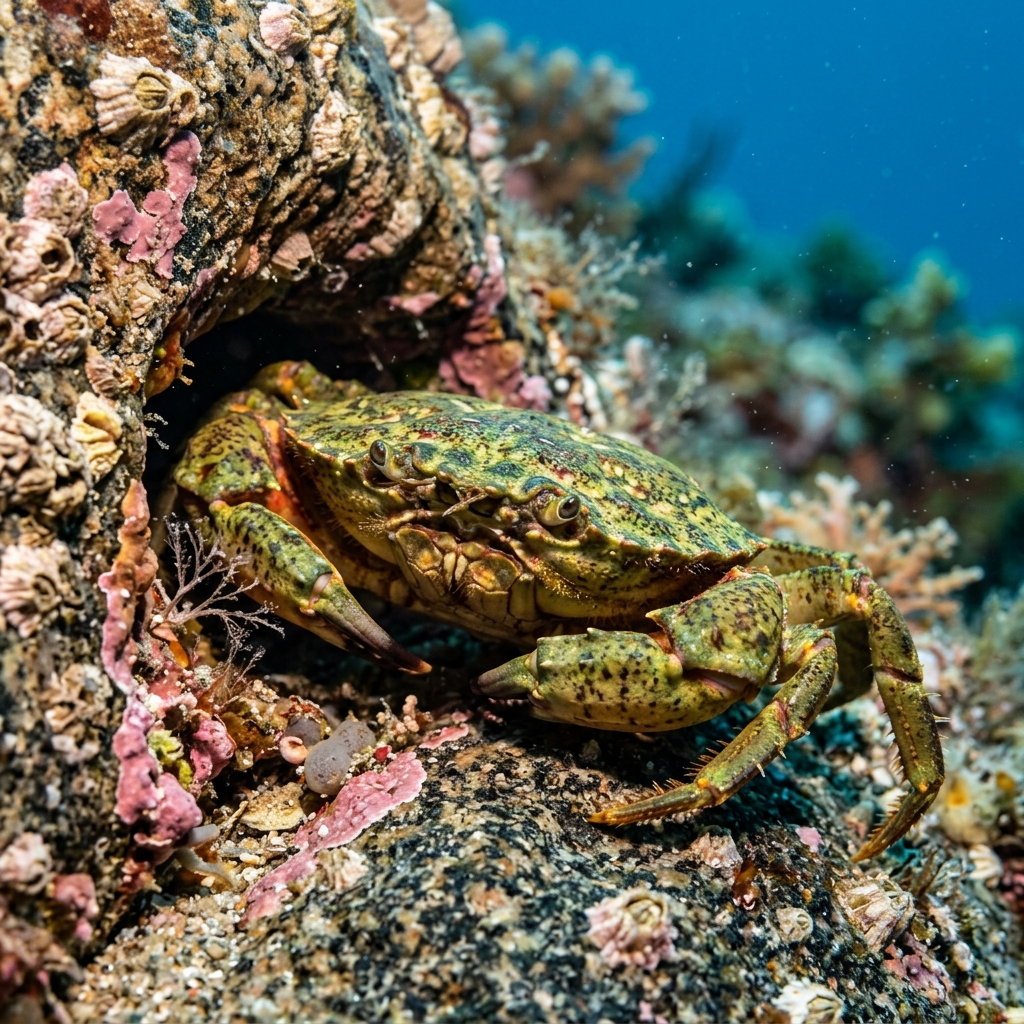
European Green Crab
2,469 sites