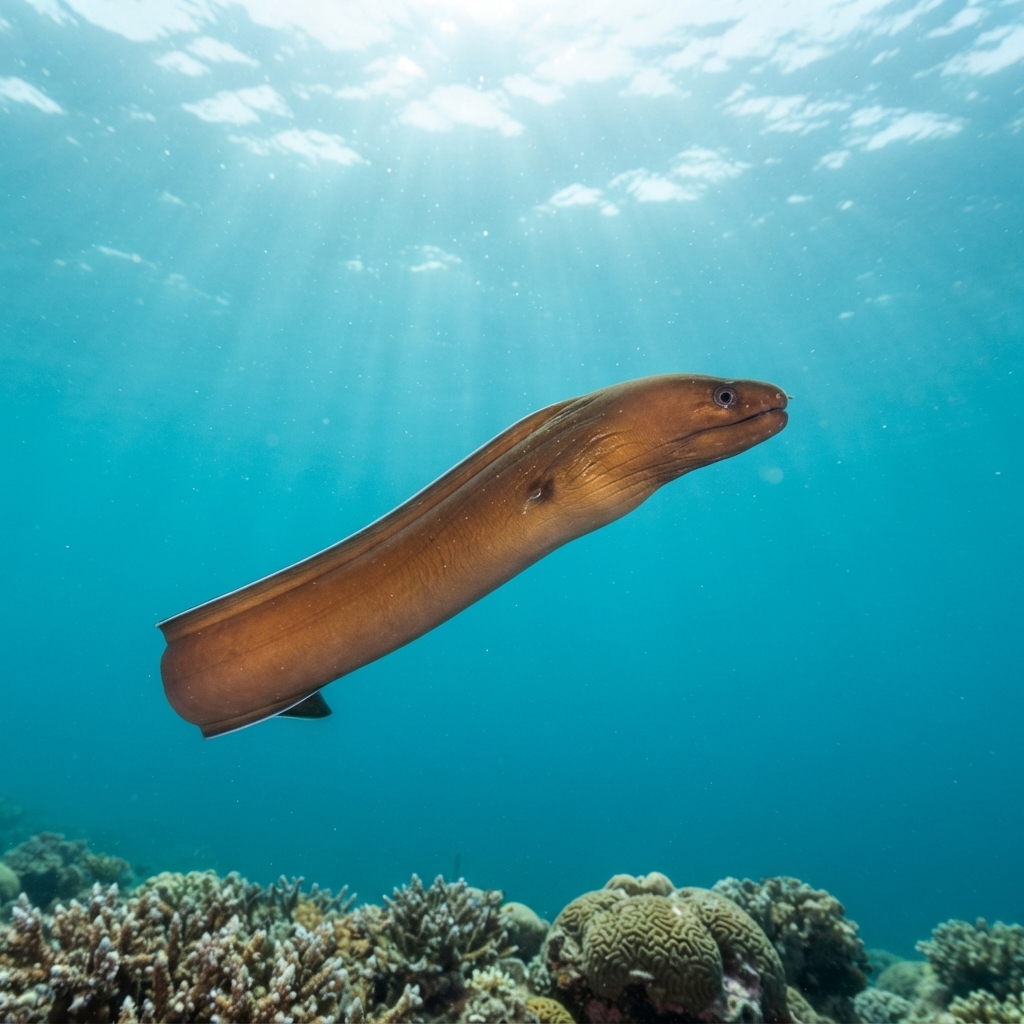
Gymnothorax phasmatodes
A small, pale eel logged in Sulawesi's reefs at 25-29 C, uncommon but worth knowing how to spot.
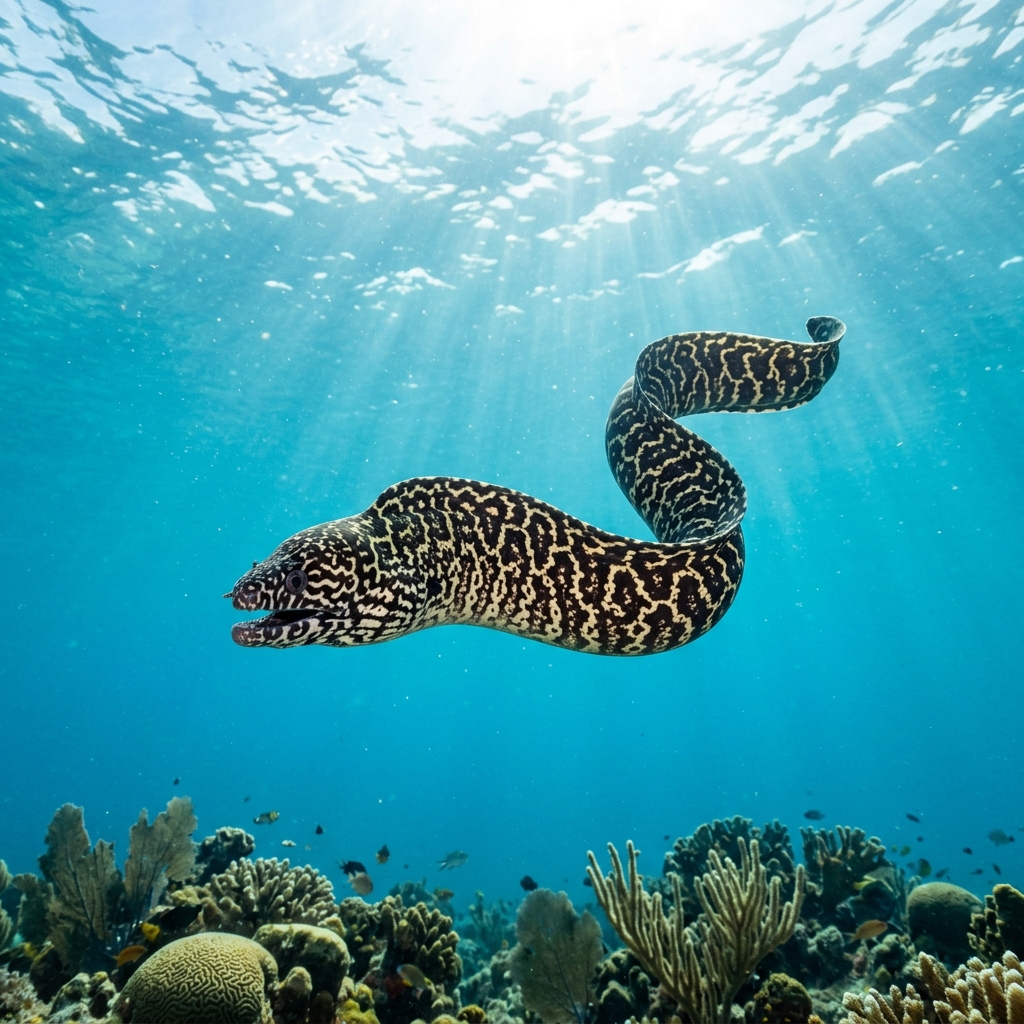
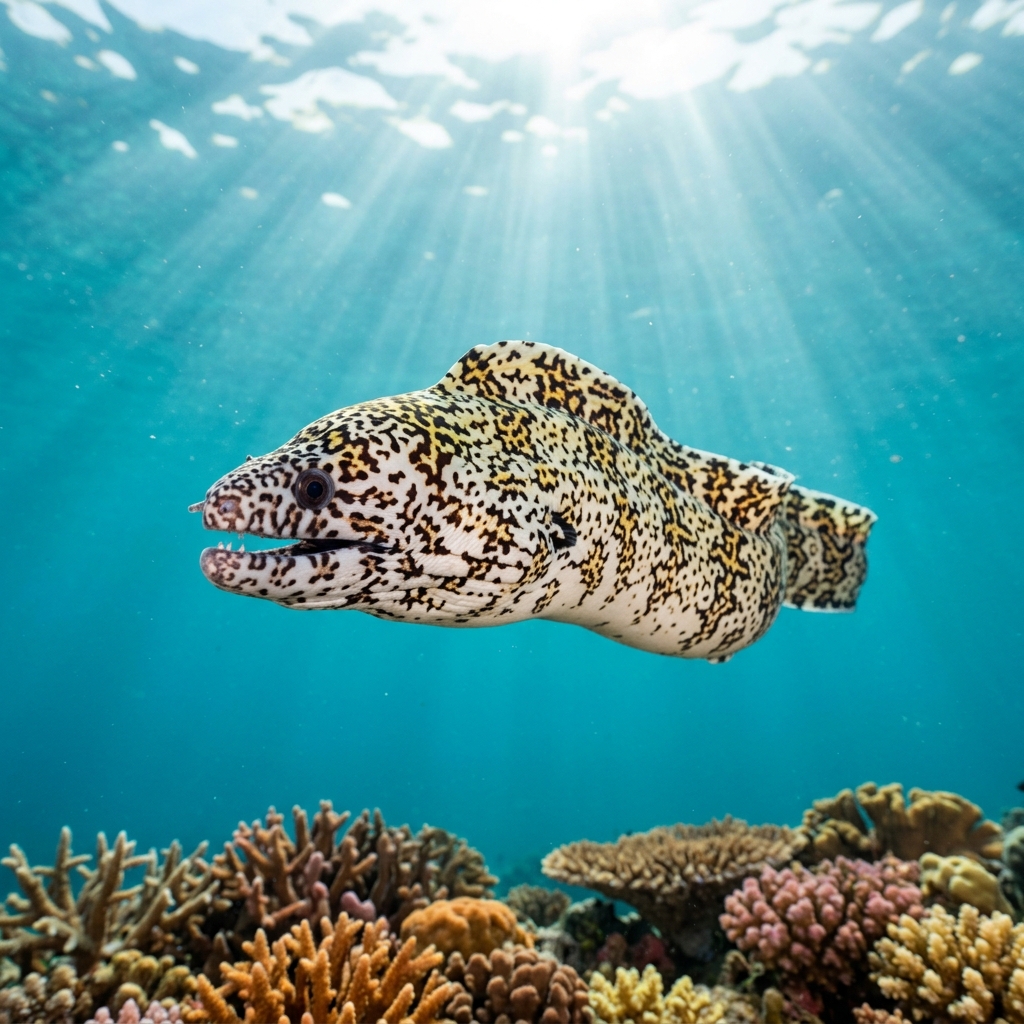
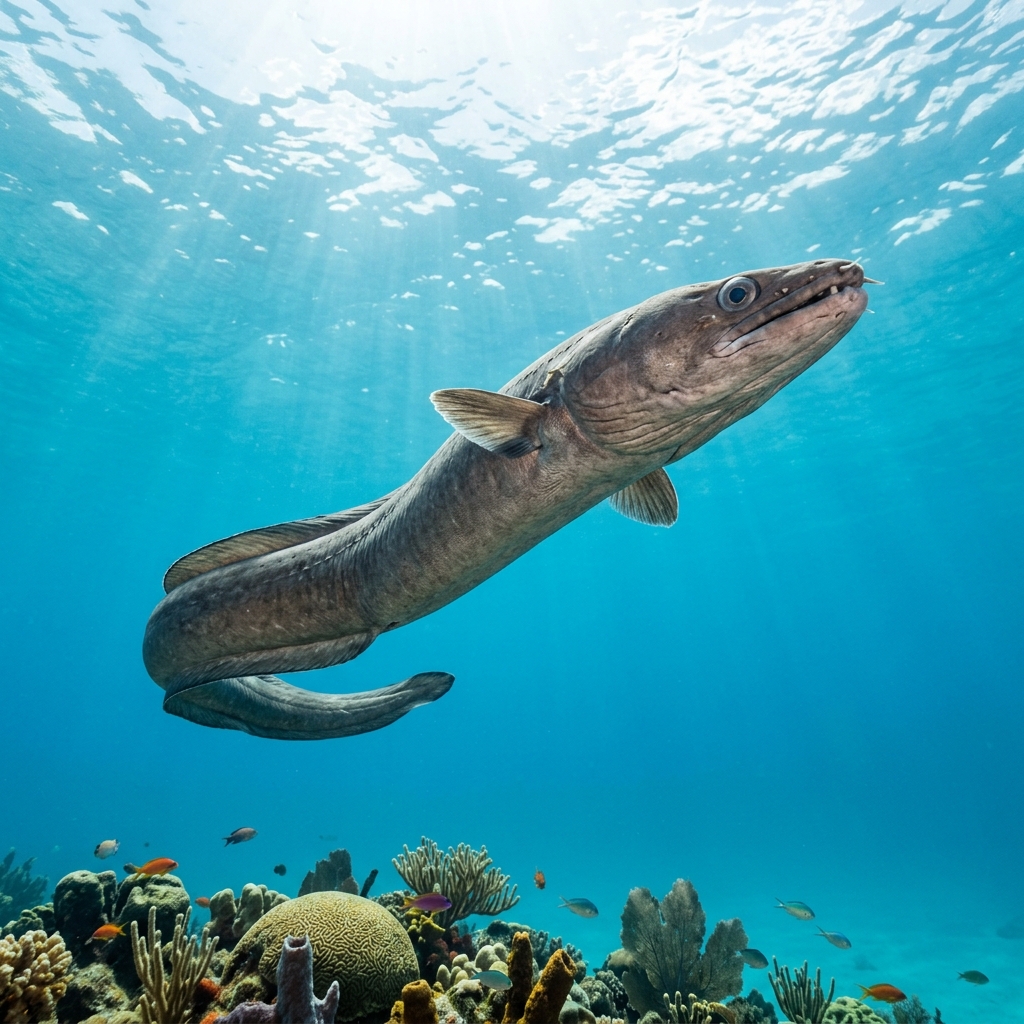
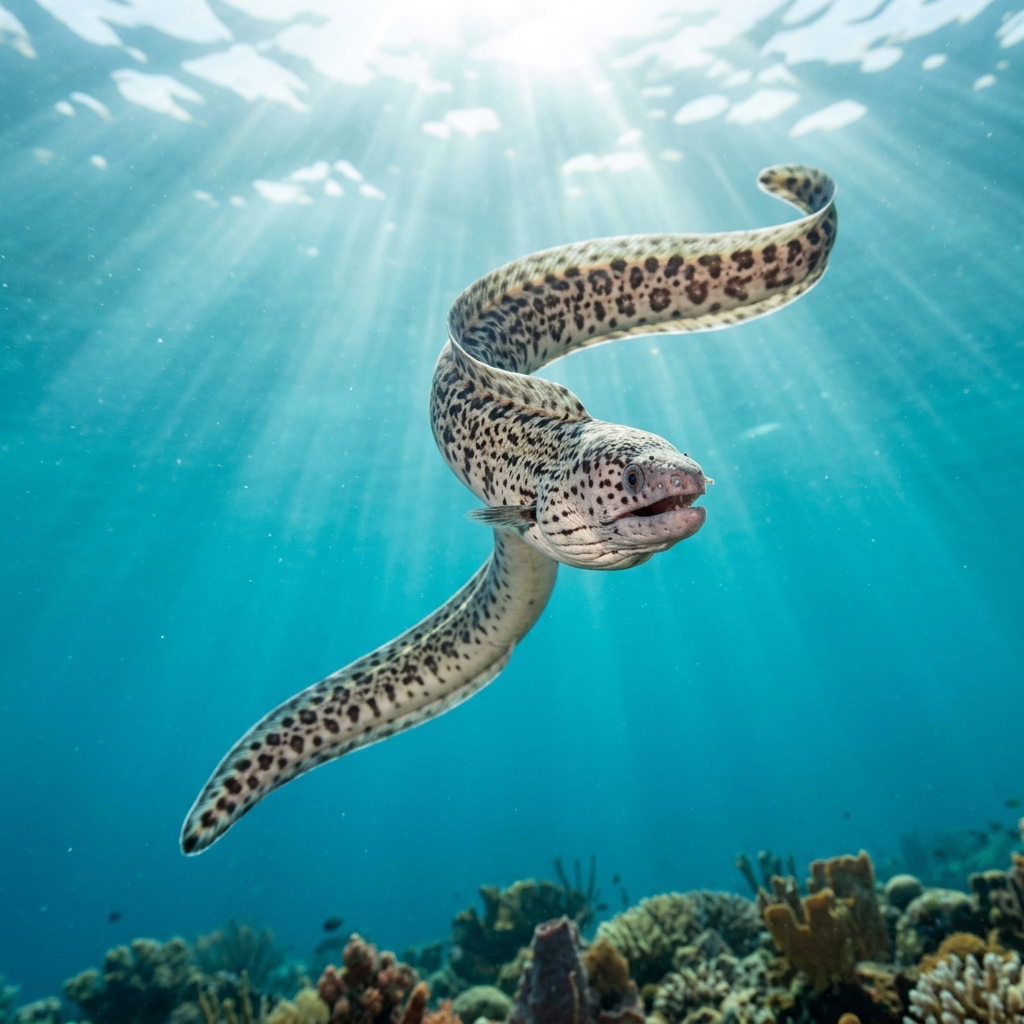
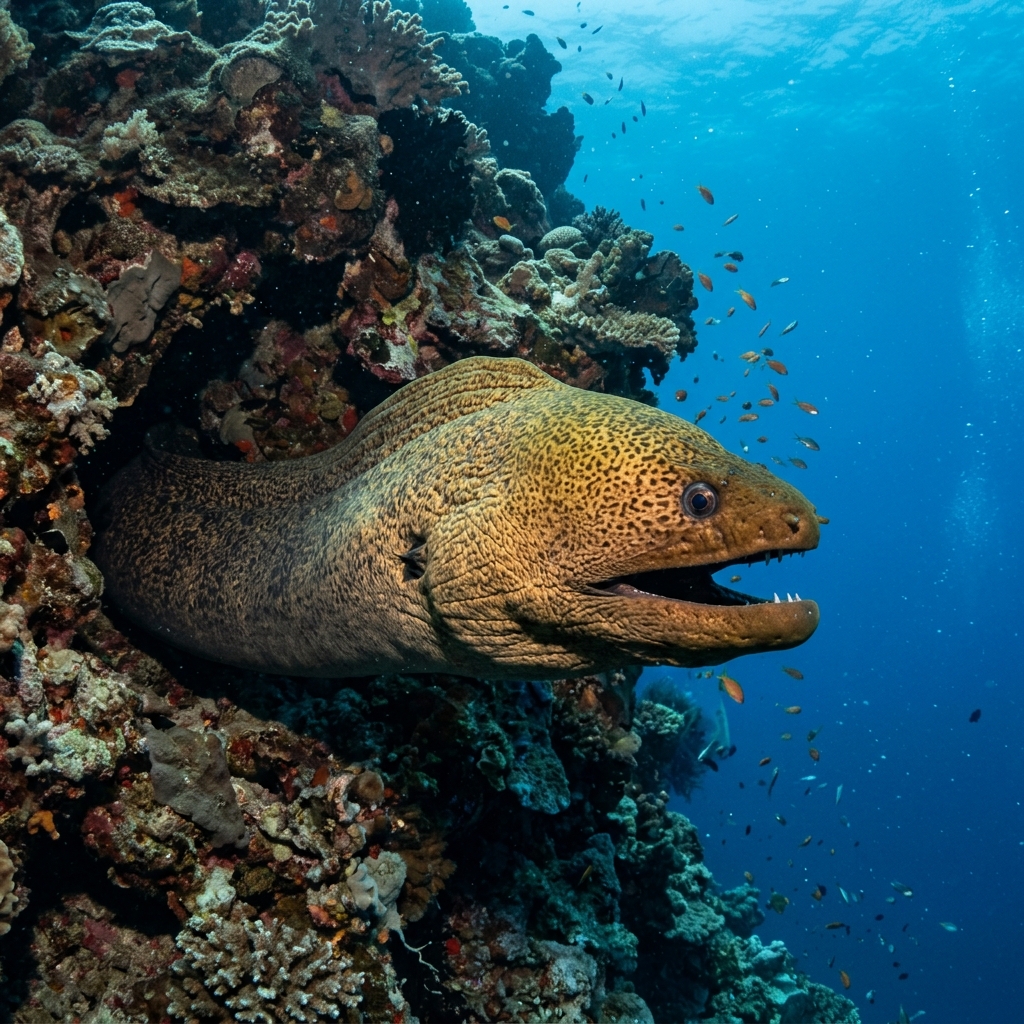
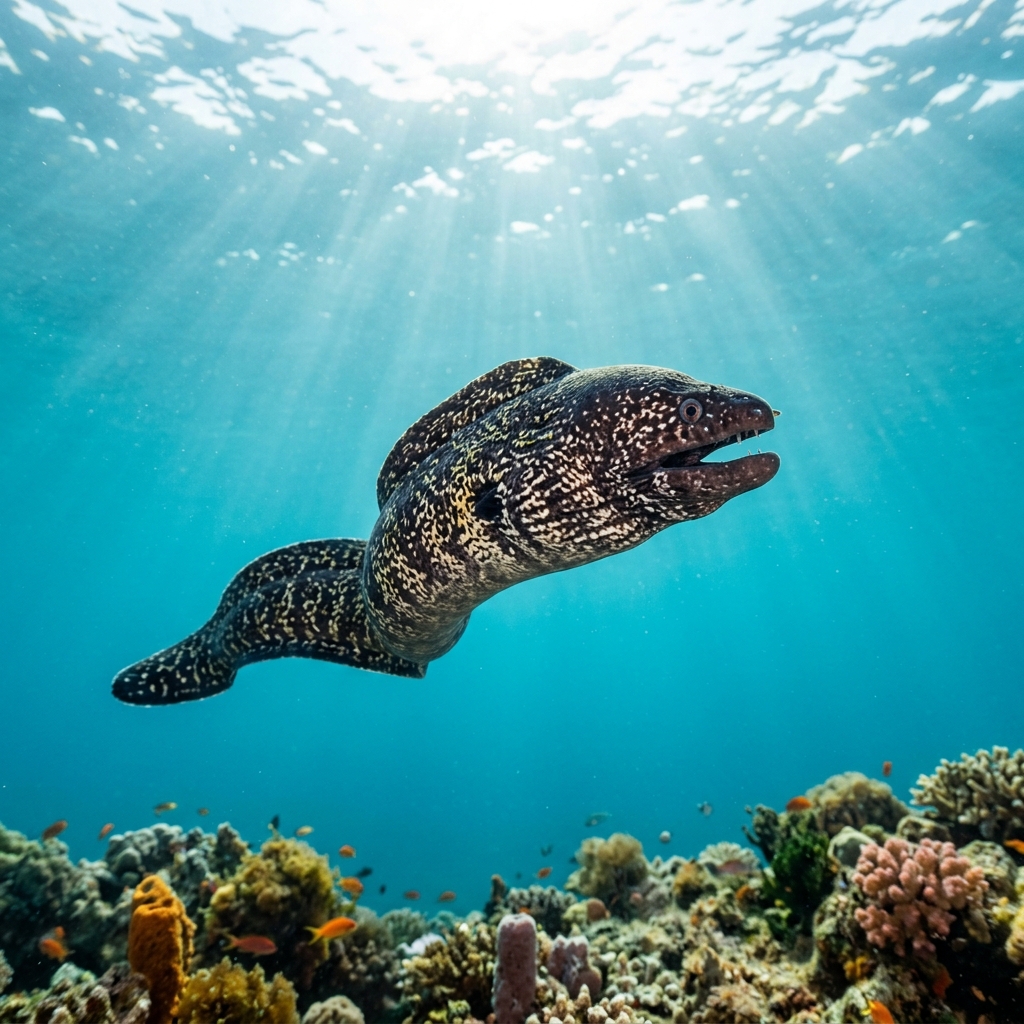
A small moray, topping out around 32 cm, with a slender body and a pale, ghostly grey-white colouring that gives it its name. Look for faint mottling rather than bold bands or spots, and a slim head compared to the bulkier reef morays. Its small size alone helps rule out most other morays sharing the same crevices.
Expect to find it tucked into a reef crevice or rubble crack rather than out swimming in the open, as is typical for small morays. Divers who log it describe it as uncommon, so spotting one usually means a slow, careful look into holes and ledges rather than a chance encounter mid-water.
Its pale, almost translucent look sets it apart from the more strikingly patterned morays divers are used to spotting, which is likely why it goes unnoticed on many dives even where it is present.
There isn't enough monthly sighting data to point to a season, so treat this as a year-round possibility. Water temperatures at the known site sit between 25 and 29.3 C, comfortable tropical conditions that persist through most of the year in Sulawesi.
Reef neighbours a diver could mistake it for. Use the identification notes above to tell them apart.
Currently logged from Sulawesi, Indonesia, making it the one confirmed spot for this species in diver observations. Sulawesi's reefs, known for their crevice-riddled coral and rubble slopes, fit the kind of terrain this small eel hides in.
Mapping where Ghost Moray is logged…
The only confirmed sightings logged so far are from Sulawesi, Indonesia. It likely has a wider range given its small size and secretive habits, but Sulawesi is the current confirmed spot to look.
There's no clear seasonal pattern in the data, so it's best treated as a year-round sighting. Water where it's been found stays in a warm 25 to 29.3 C range, typical of tropical reefs all year.
Look for a small moray, only around 32 cm long, with a pale grey-white body and faint mottling rather than bold markings. Its slim build and ghostly colouring are the main giveaways against similarly sized morays.
They're a small species, typically reaching about 32 cm, which is modest compared to the larger reef morays divers commonly encounter.
No, they are not considered dangerous to divers. Like most small morays, they stay tucked in crevices and pose no threat unless deliberately handled.
Site and sighting data is aggregated from diver logs, iNaturalist and GBIF. For taxonomy and conservation status:
Garden Eel
2,448 sites