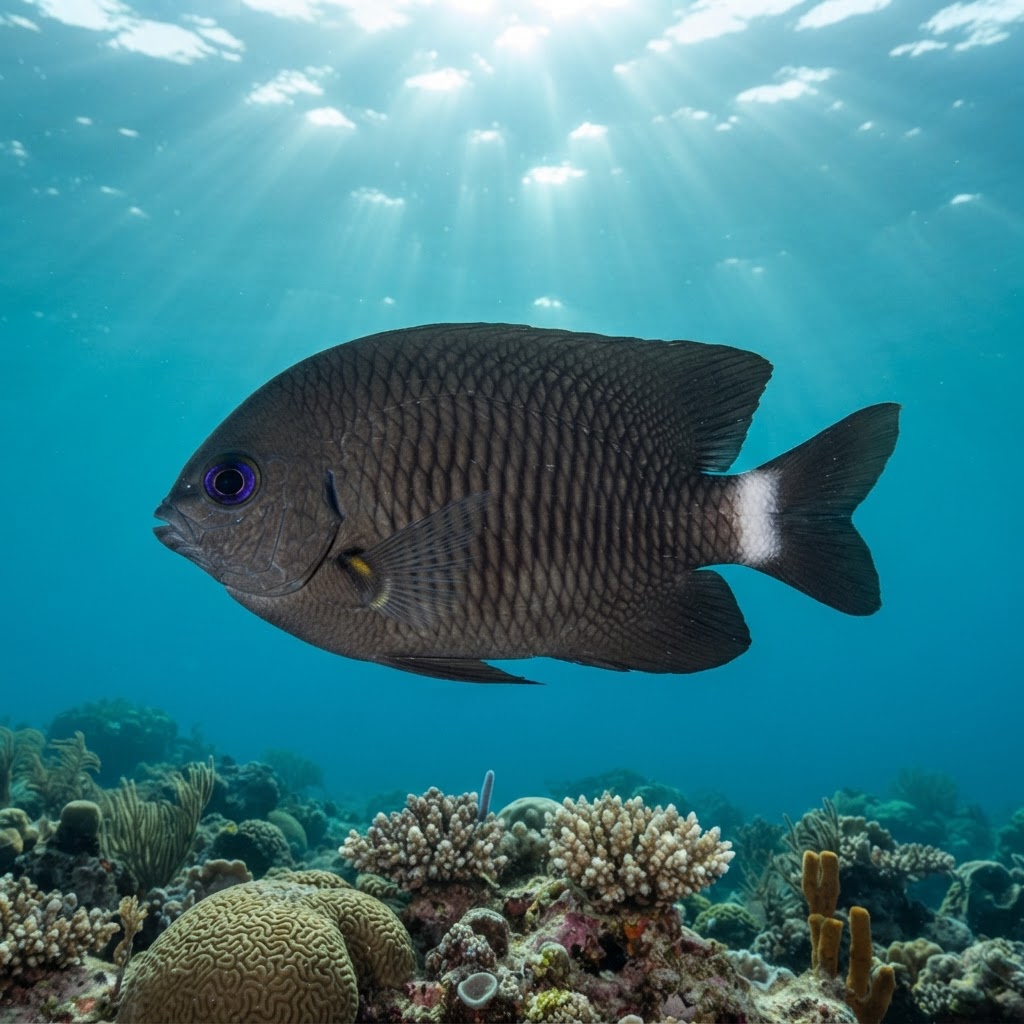
Stegastes beebei
Grey-brown with a bold white tail base, this feisty damsel patrols rocky reefs from the Galápagos to Malpelo and Cocos Island year-round.
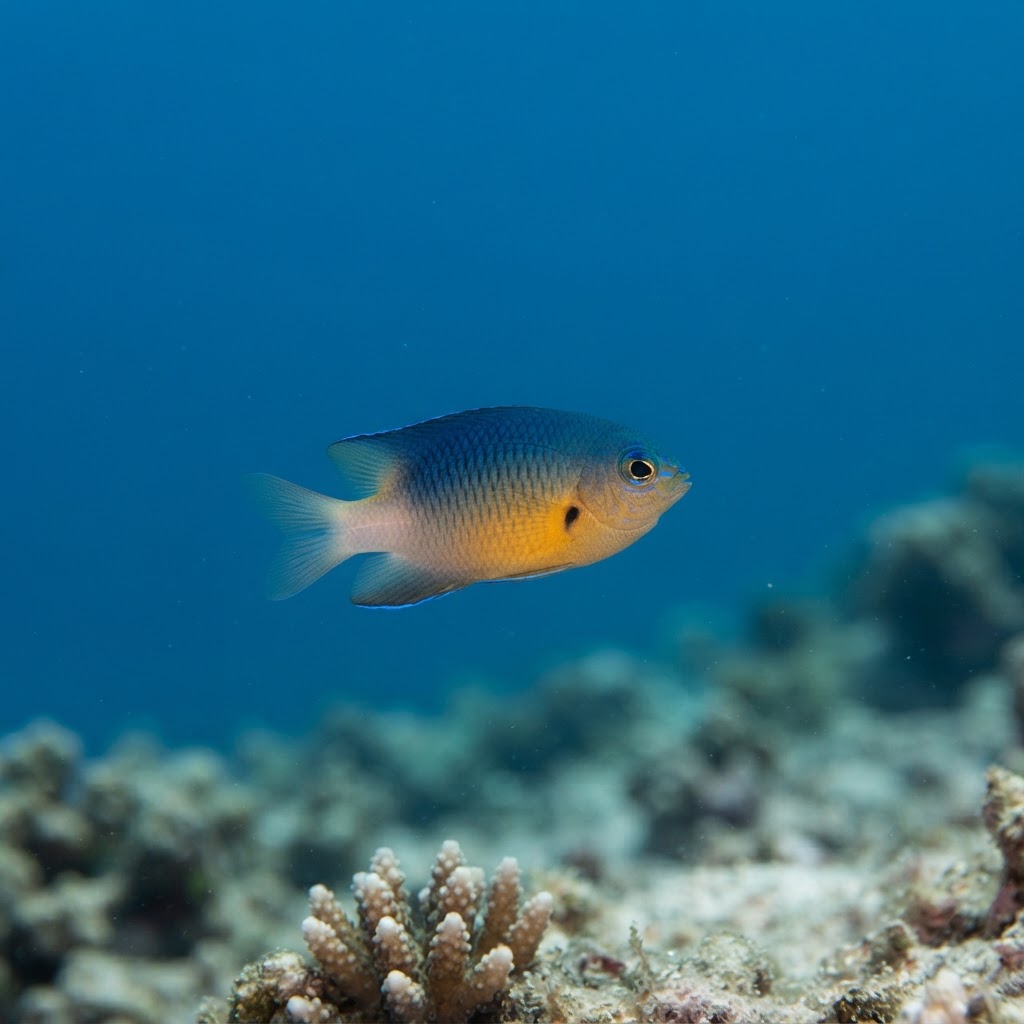
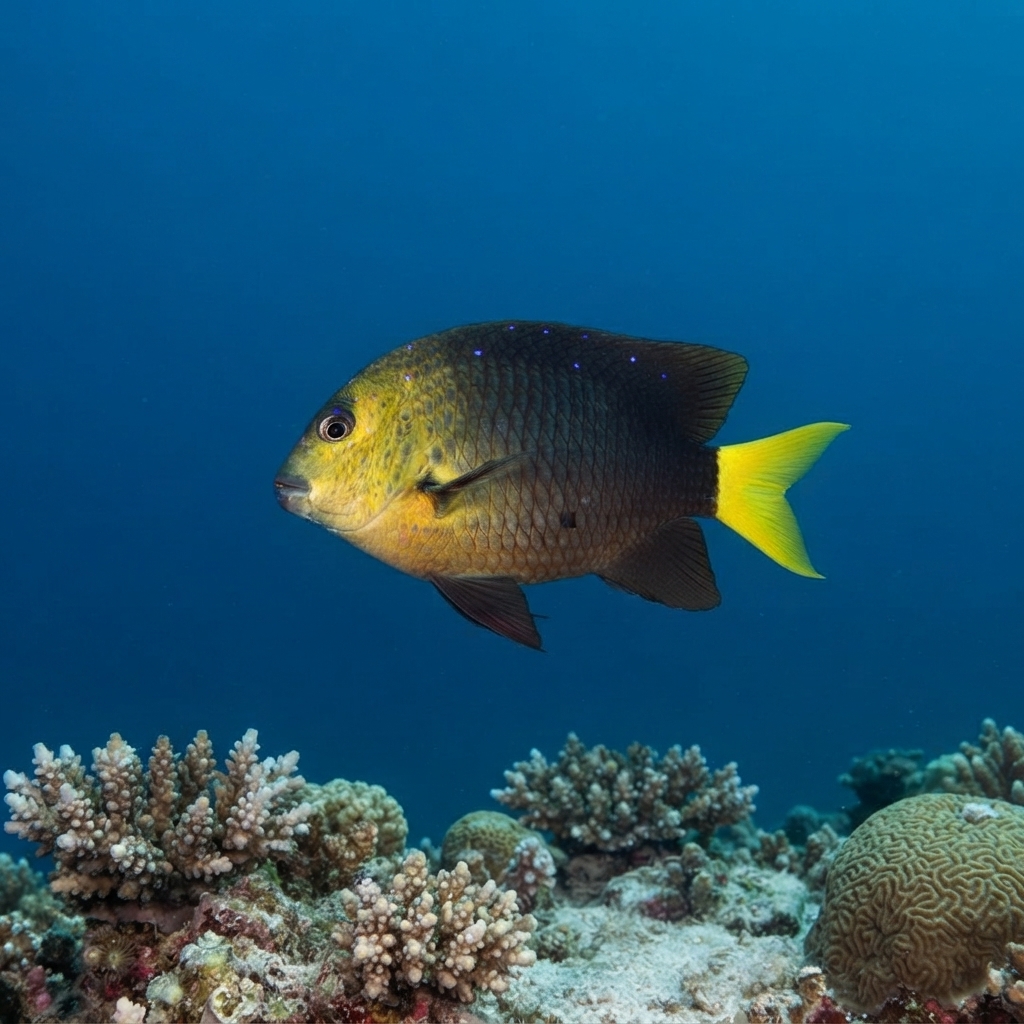
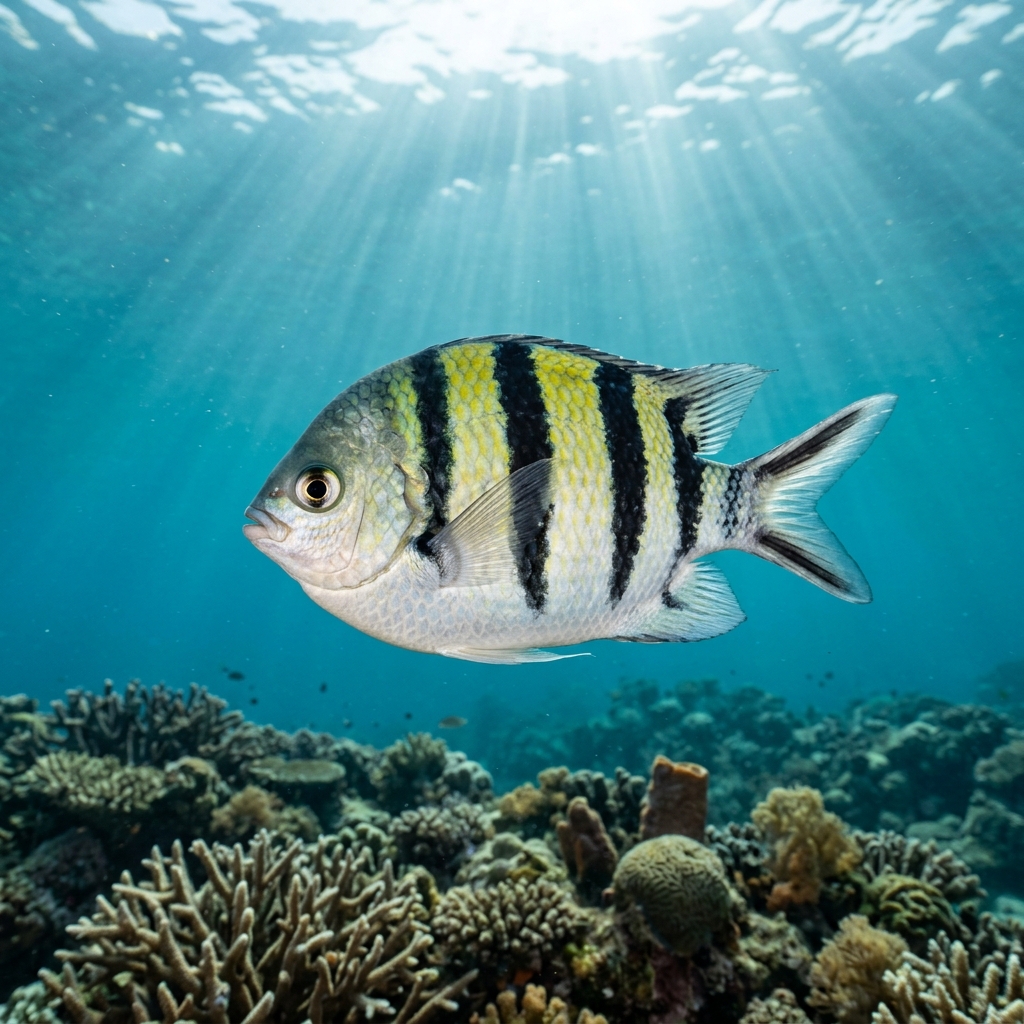
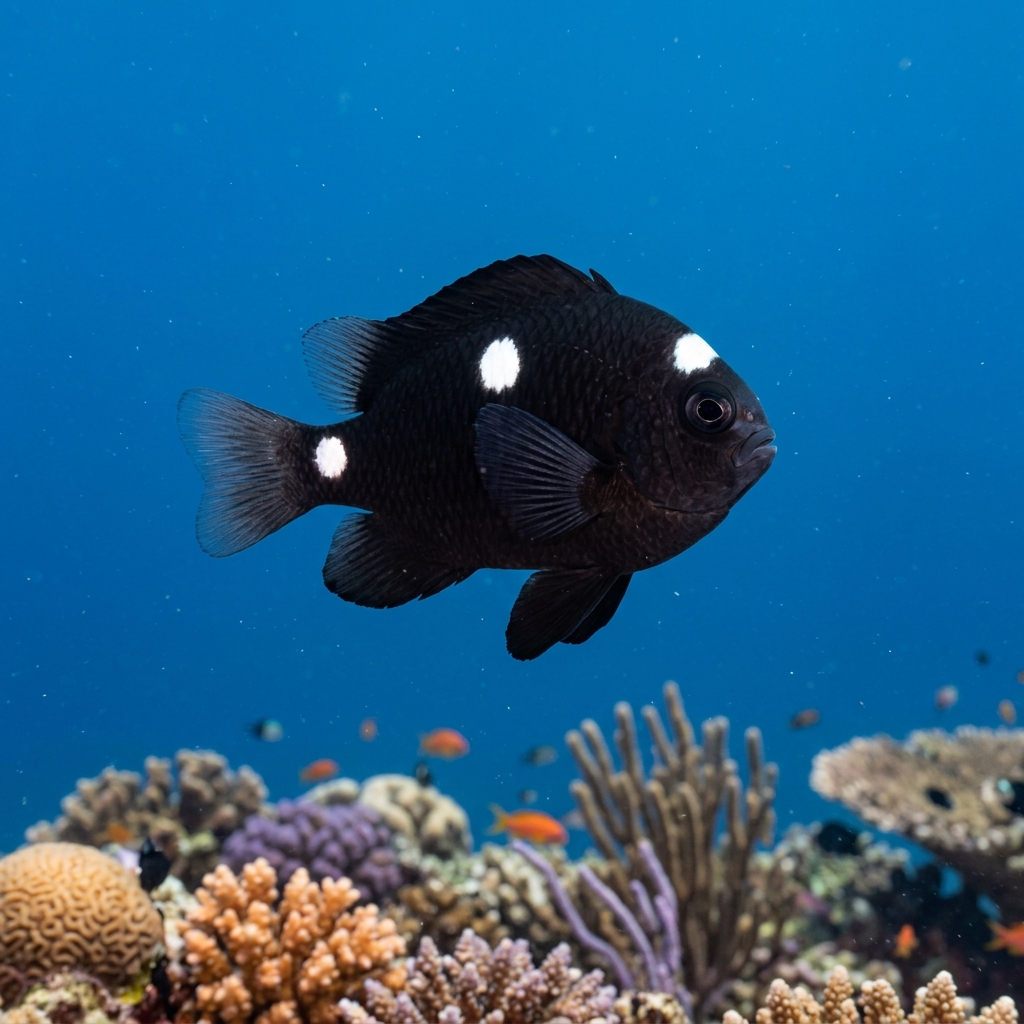
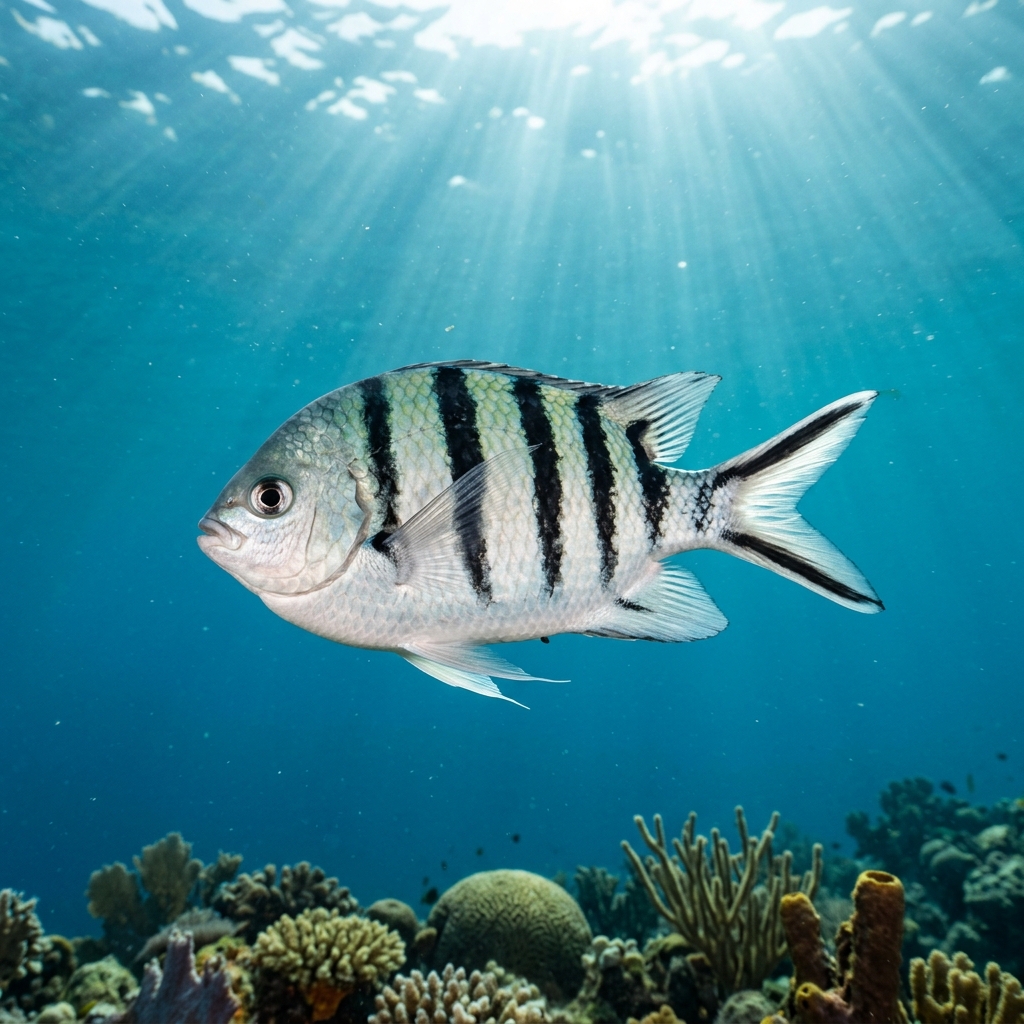
A stocky, oval-bodied damselfish about 10 cm long, coloured dark grey to brown with a distinctive pale white band at the base of the tail that gives the species its name. It has the typical blunt-nosed, deep-bodied damselfish shape and is usually seen hovering close to a patch of rock or rubble it treats as home turf. Look for that white tail-base flash as the quickest way to pick it out from other small reef fish nearby.
Expect to see it hovering territorially over a patch of reef or rock in shallow water, rarely straying far from a favoured bolt-hole. It is bold for its size and will hold ground against divers and other fish alike, often flaring at anything that strays too close to its patch. Most encounters happen in the shallow 1 to 5 m zone, making it one of the first fish you notice on the safety stop or the swim-in.
Like other damselfish, it likely tends a patch of algae on the reef and chases off intruders, from other fish to snorkellers, to protect that food source.
Sightings show no clear seasonal pattern, and with a comfortable range of roughly 23.6 to 28.6 C it is present on these reefs year-round. Plan your trip around the destination's usual dive-season logistics rather than around this fish specifically.
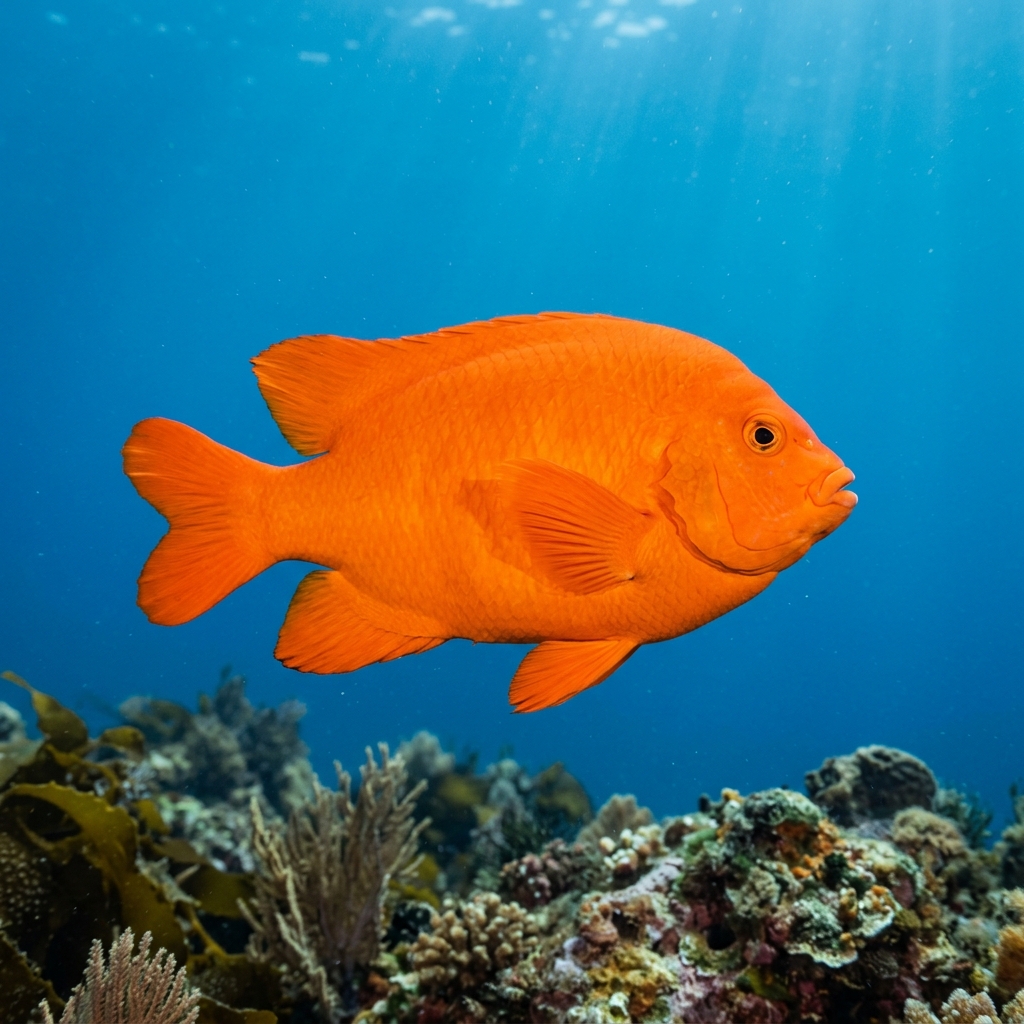
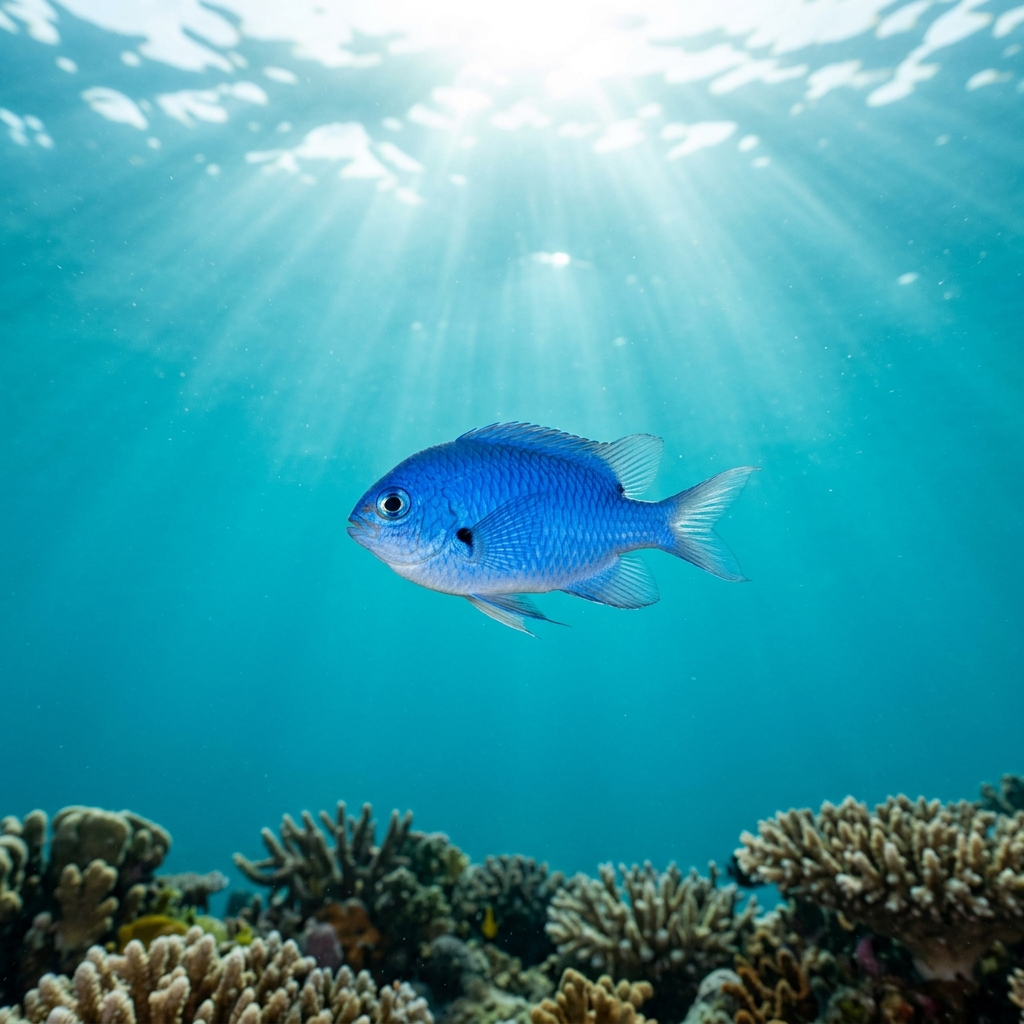
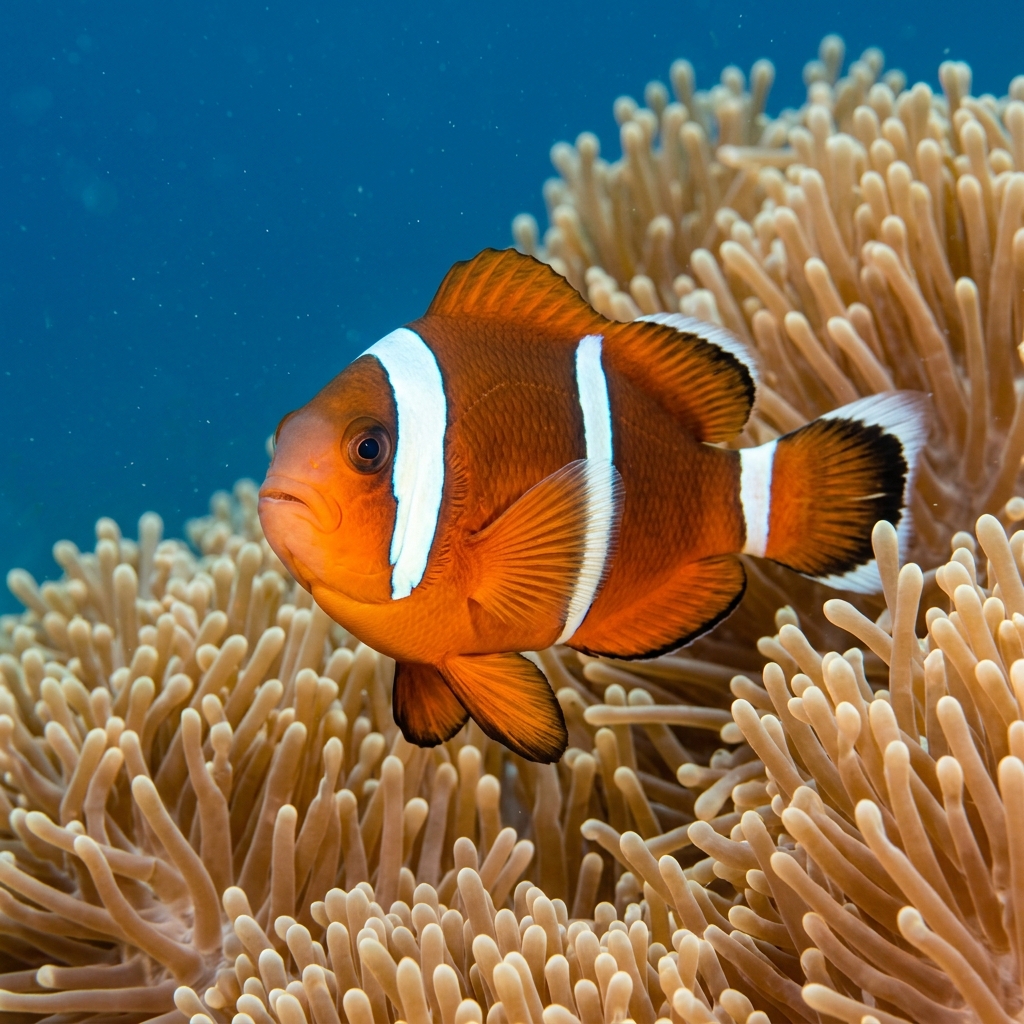
Reef neighbours a diver could mistake it for. Use the identification notes above to tell them apart.
This is a Galápagos speciality first and foremost, most reliably logged around the Galápagos Islands in Ecuador, with strong secondary populations at Malpelo in Colombia and Cocos Island in Costa Rica. All three are remote, current-swept eastern Pacific sites known for big pelagics, but this damselfish is one of the reliable small-reef residents you will pass on nearly every dive there.
Mapping where Galapagos Ringtail Damselfish is logged…
The strongest sightings are in the Galápagos Islands, Ecuador, with good numbers also logged at Malpelo, Colombia, and Cocos Island, Costa Rica. It is one of the more dependable small residents on shallow rocky reefs across these eastern Pacific sites.
There is no strong season in the sighting data, and it tolerates a wide temperature range of about 23.6 to 28.6 C, so it turns up year-round. Time your trip for the destination's general dive conditions rather than this species.
Look for a small, deep-bodied fish around 10 cm long in dark grey-brown with a clear white band at the base of the tail. It typically hovers close to a rocky patch in shallow water rather than swimming out over open reef.
They reach roughly 10 cm in length, making them a small, easy-to-overlook reef fish next to the bigger animals these dive sites are famous for.
No, they pose no danger to divers. They can be territorial and will dart at fish or divers that get too close to their patch, but this is just posturing, not a real threat.
Site and sighting data is aggregated from diver logs, iNaturalist and GBIF. For taxonomy and conservation status:
Dascyllus
3,697 sites