Nembrotha purpureolineata
A Sulawesi and New South Wales favourite: this orange-gilled nudibranch turns up year-round on reefs between 19 and 30C.
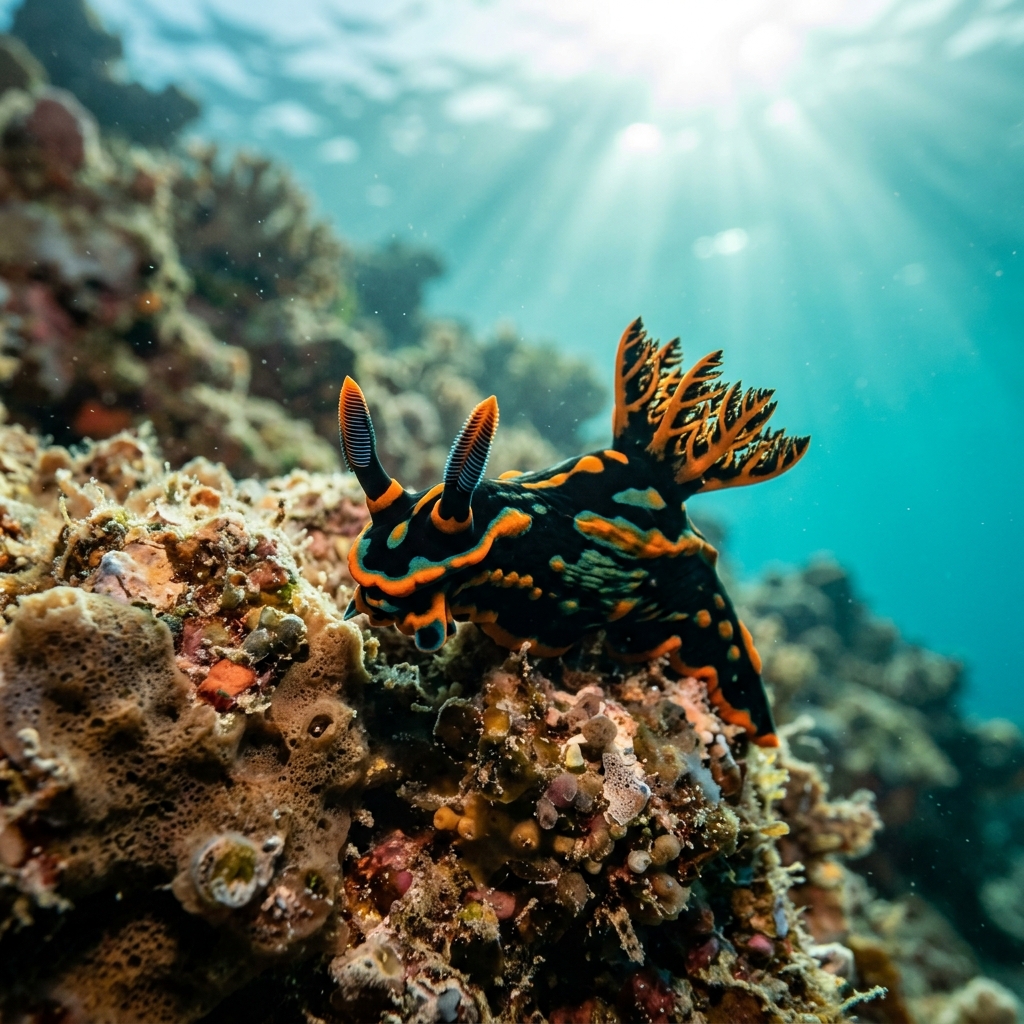
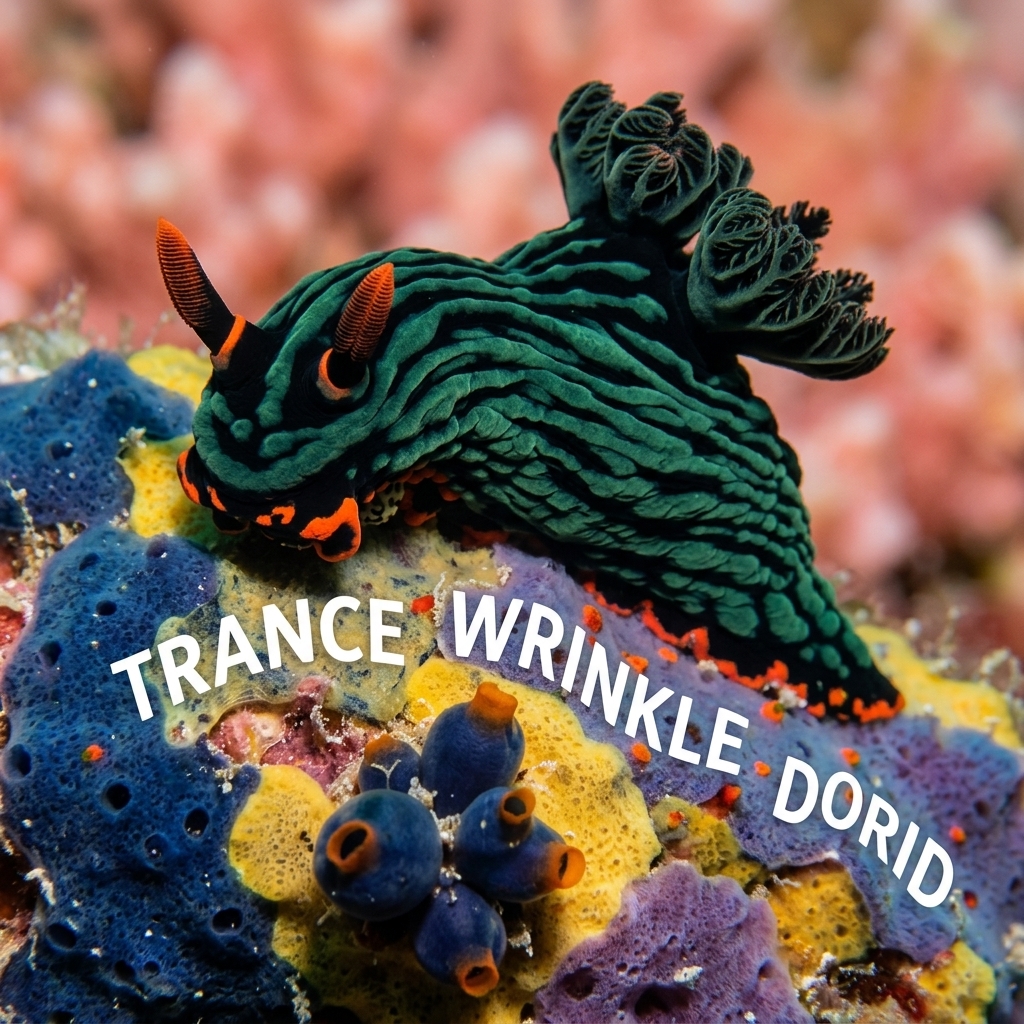
A dark, almost black body carries fine longitudinal lines in purple or violet running down its back, with a cluster of bright orange-red gills tucked near the tail end. It sits low and slow on the substrate, usually a few centimetres long, and the contrast between the sombre body colour and the fiery gill tuft is the fastest way to pick it out from the reef floor.
Divers typically find it grazing slowly across rubble, sponge patches and rocky reef, moving with the unhurried pace typical of dorid nudibranchs. It shows no reaction to divers beyond continuing its slow crawl, making it an easy subject for a steady macro shot once spotted. Most logs describe it as an uncommon to common find rather than a rare one, so patient reef scanning at both tropical and temperate sites pays off.
Like other Nembrotha species, it almost certainly feeds on sea squirts (tunicates), and the bright gill cluster at its rear is a true gill, not a decoy, used for gas exchange while it grazes exposed on open reef.
No clear seasonal pattern shows up in the sighting data, and its comfortable range of roughly 19 to 30C spans both tropical Sulawesi reefs and the cooler temperate sites of New South Wales, so it is worth looking for on any dive, any month.
Reef neighbours a diver could mistake it for. Use the identification notes above to tell them apart.
Most reliably found in Sulawesi, Indonesia and across New South Wales and Western Australia, which together account for the bulk of logged sightings. It also turns up occasionally in Inhambane, Mozambique, though sightings there are far less frequent than in the Indo-Pacific strongholds.
Mapping where Fire-gilled Wrinkle Dorid is logged…
Sulawesi in Indonesia and the coastlines of New South Wales and Western Australia are the strongest areas for sightings. A small number of dives in Inhambane, Mozambique have also logged it.
There is no detected season, it has been logged across the year in waters from about 19 to 30C, so it is a fair target on any dive trip to its known regions.
Look for a dark body marked with fine purple lines and a standout tuft of orange-red gills near the rear. It moves slowly over rubble and sponge-covered reef, making the gill colour the quickest giveaway.
No, it poses no threat to divers. It has no means of harming a diver and simply continues grazing if approached.
It most likely feeds on tunicates (sea squirts), a diet typical of its genus, using its slow crawl across the reef to graze on encrusting colonies.
Site and sighting data is aggregated from diver logs, iNaturalist and GBIF. For taxonomy and conservation status:
Light-spotted Aegires
3,168 sites