Upeneus taeniopterus
Slender, barbel-chinned goatfish logged around Hawaii and the Maldives' Central Atolls in warm 25-29C water year-round.
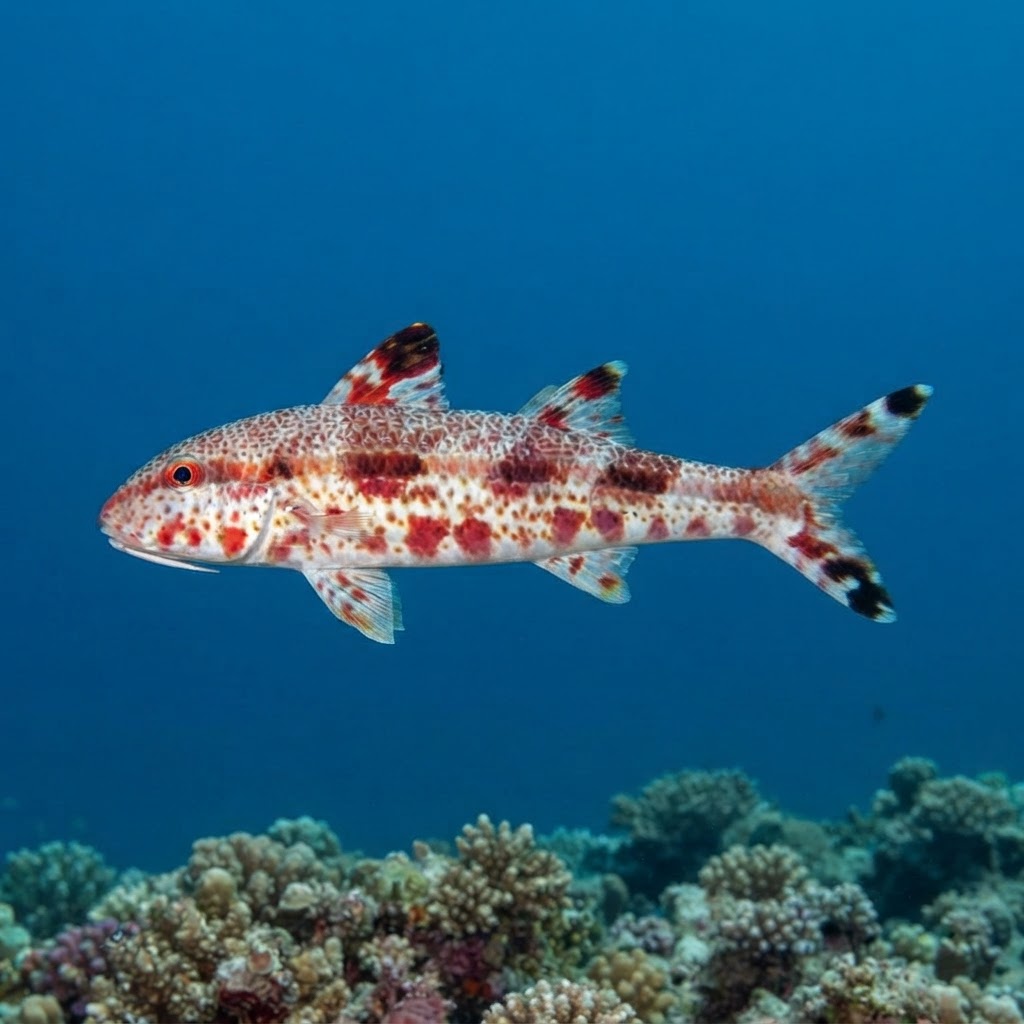
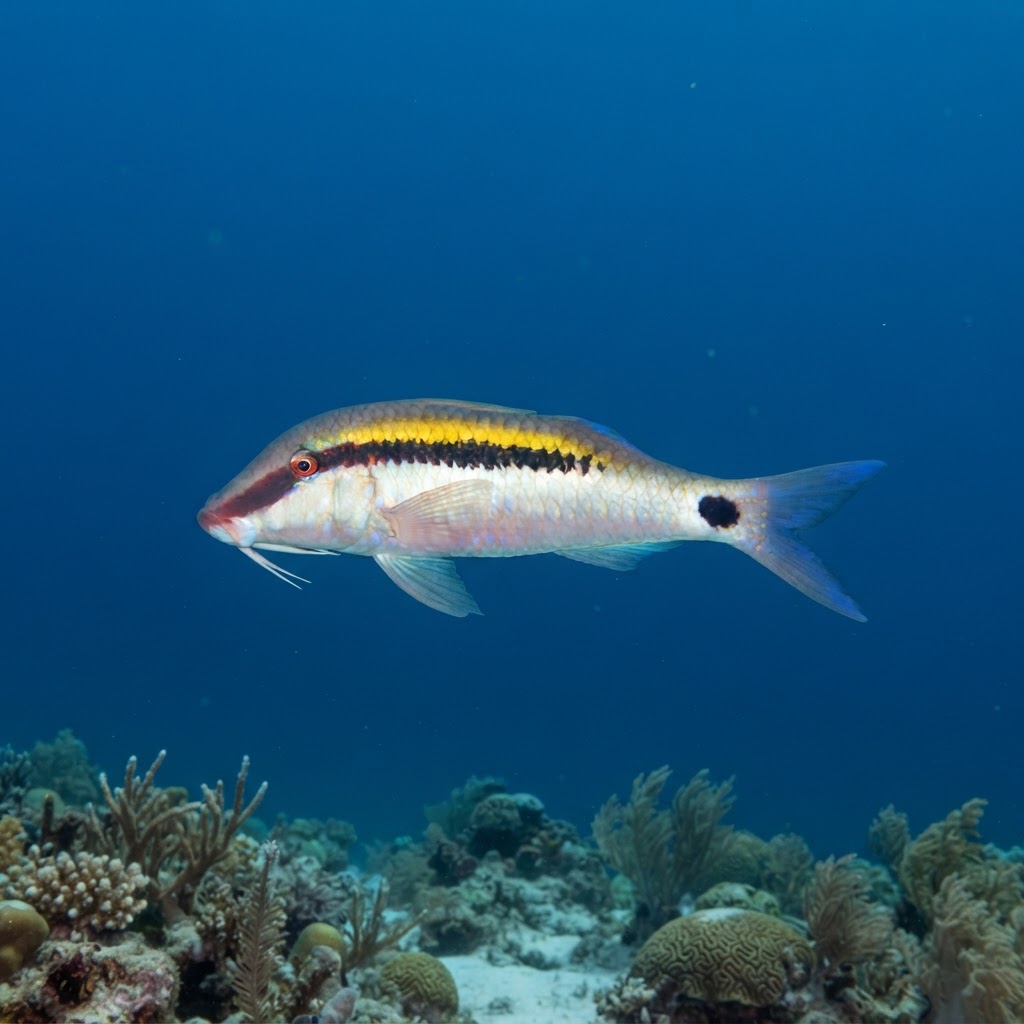
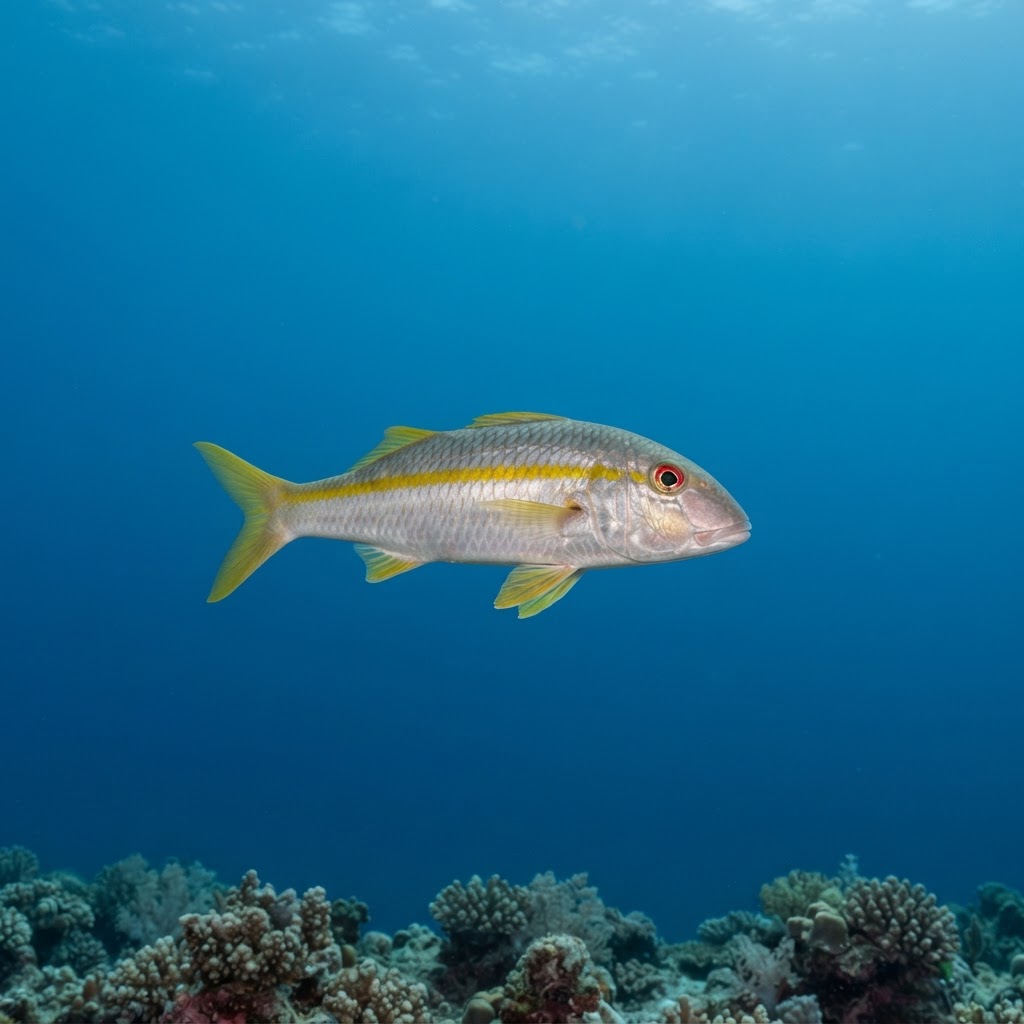
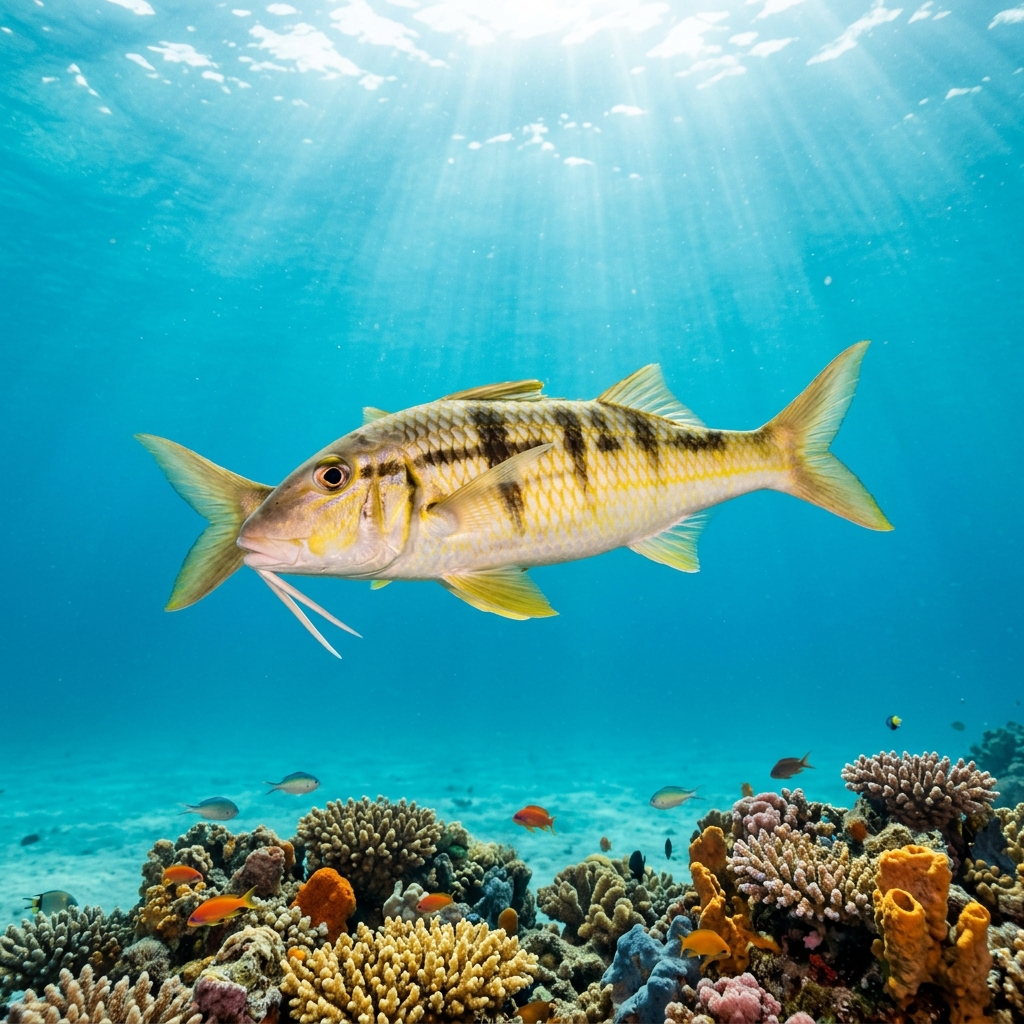
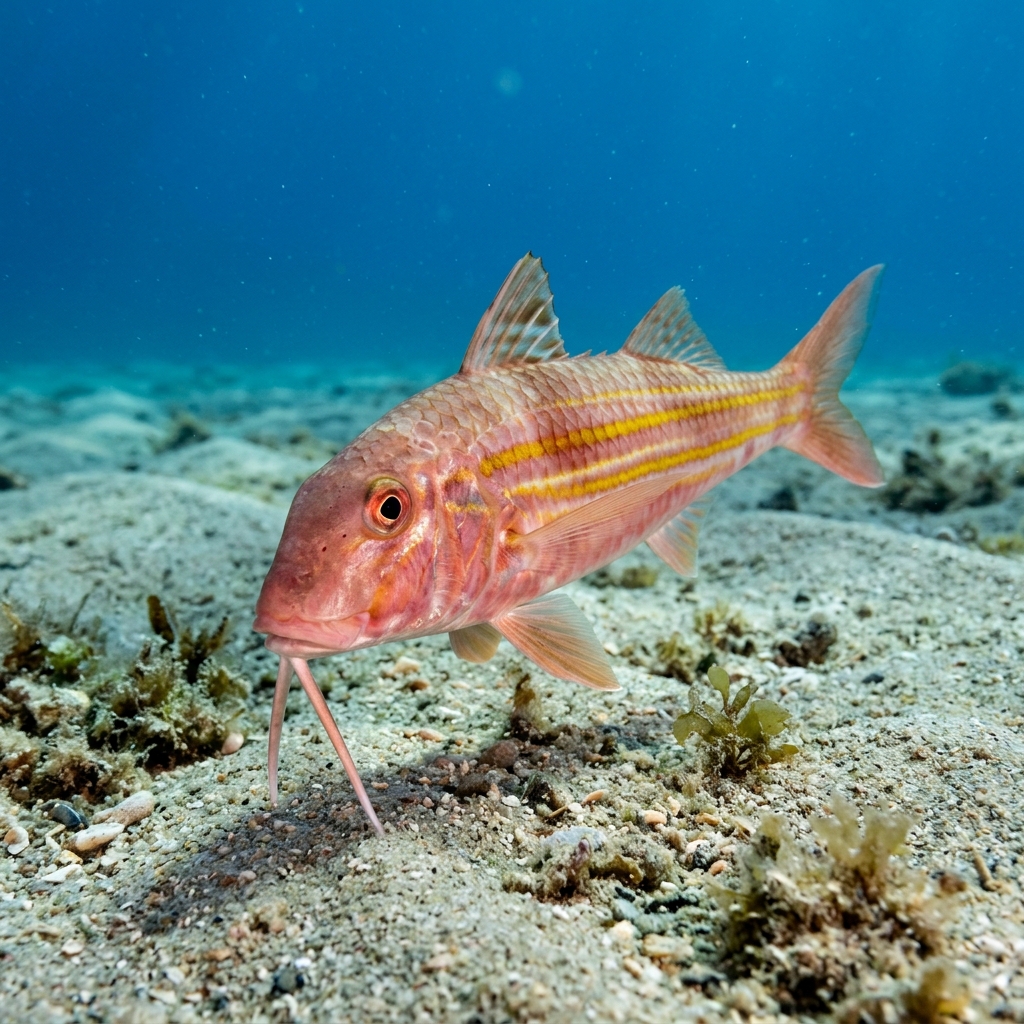
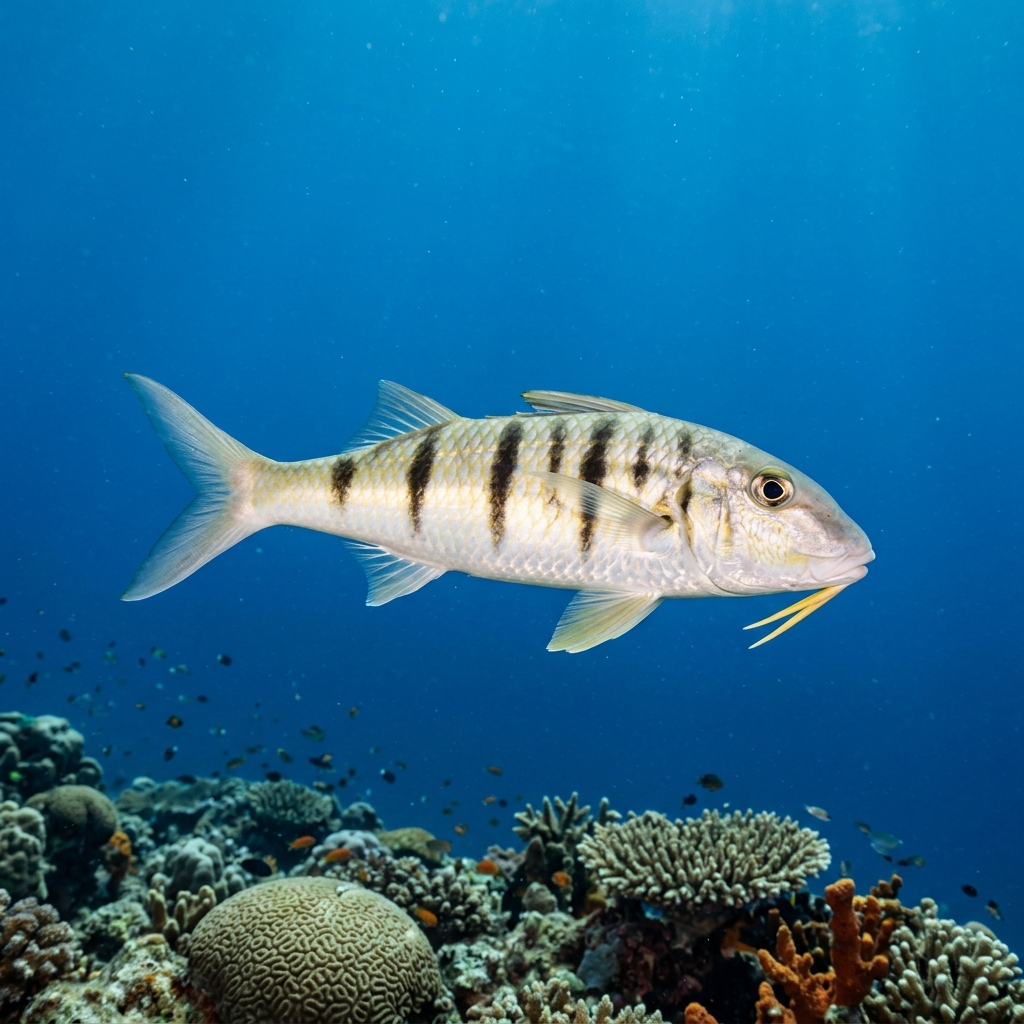
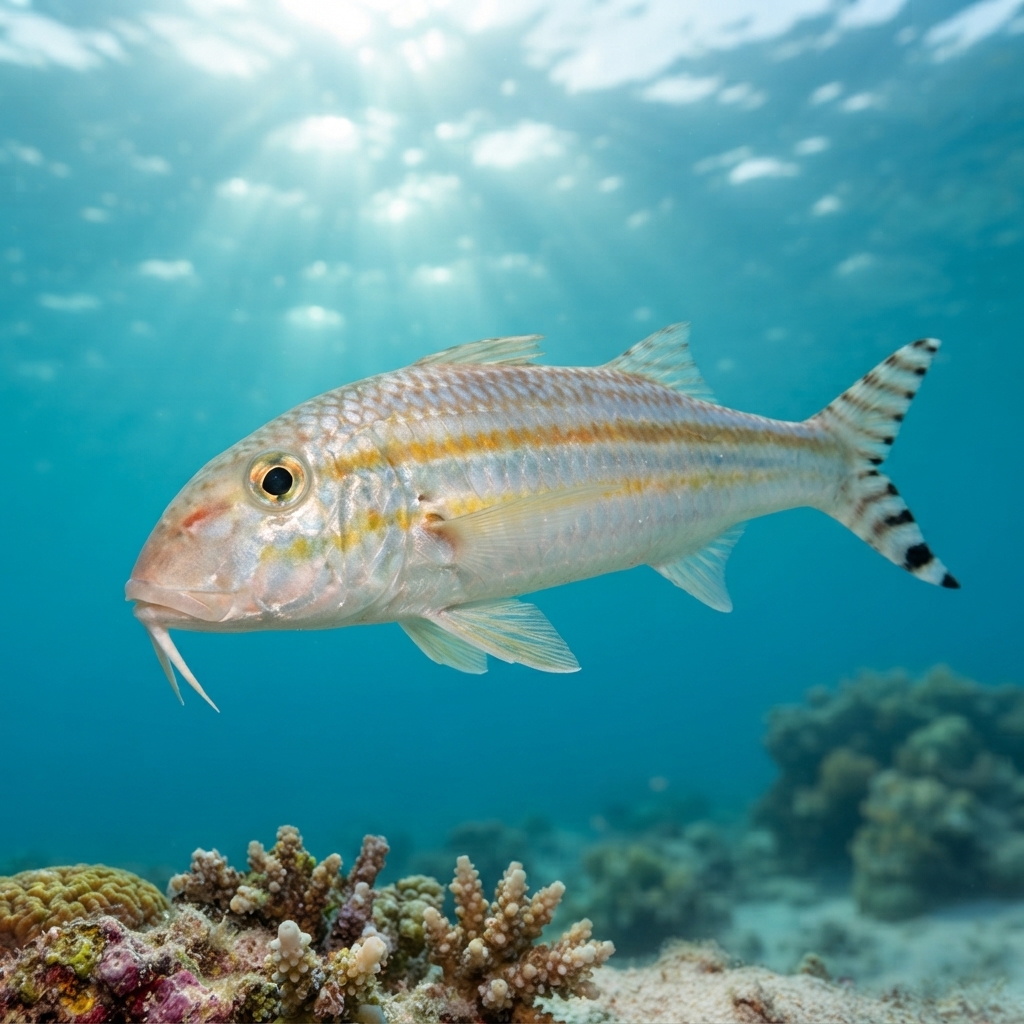
A slim, torpedo-shaped goatfish reaching around 23 cm, pale silver to sandy-grey along the body with faint horizontal striping picking up on the tail and fins, which is where the common name comes from. Look for the paired chin barbels (whisker-like feelers) tucked under the jaw, used to probe sand for food, and a forked tail with visible dark striping when it flares. Body colour can shift subtly with mood and background, a trait shared across the goatfish family, so rely on the fin striping and barbels rather than overall tone.
Watch for it working sand and rubble patches with its chin barbels, sweeping them side to side to flush out small invertebrates hiding just below the surface. It tends to stay low over open sand or the edges of reef flats rather than tucking into coral structure, and generally carries on foraging without much concern for a diver hovering nearby. Sightings are logged as uncommon to rare, so it's more a rewarding spot than a guaranteed one on any given dive.
Those chin barbels are packed with taste and touch receptors, letting it detect buried prey in sand before ever seeing it, a hunting trick shared across the whole goatfish family.
No clear seasonal pattern shows up in the sighting data, and with a comfortable range of roughly 25 to 29C it's a year-round resident of the warm reefs it inhabits rather than a seasonal visitor.
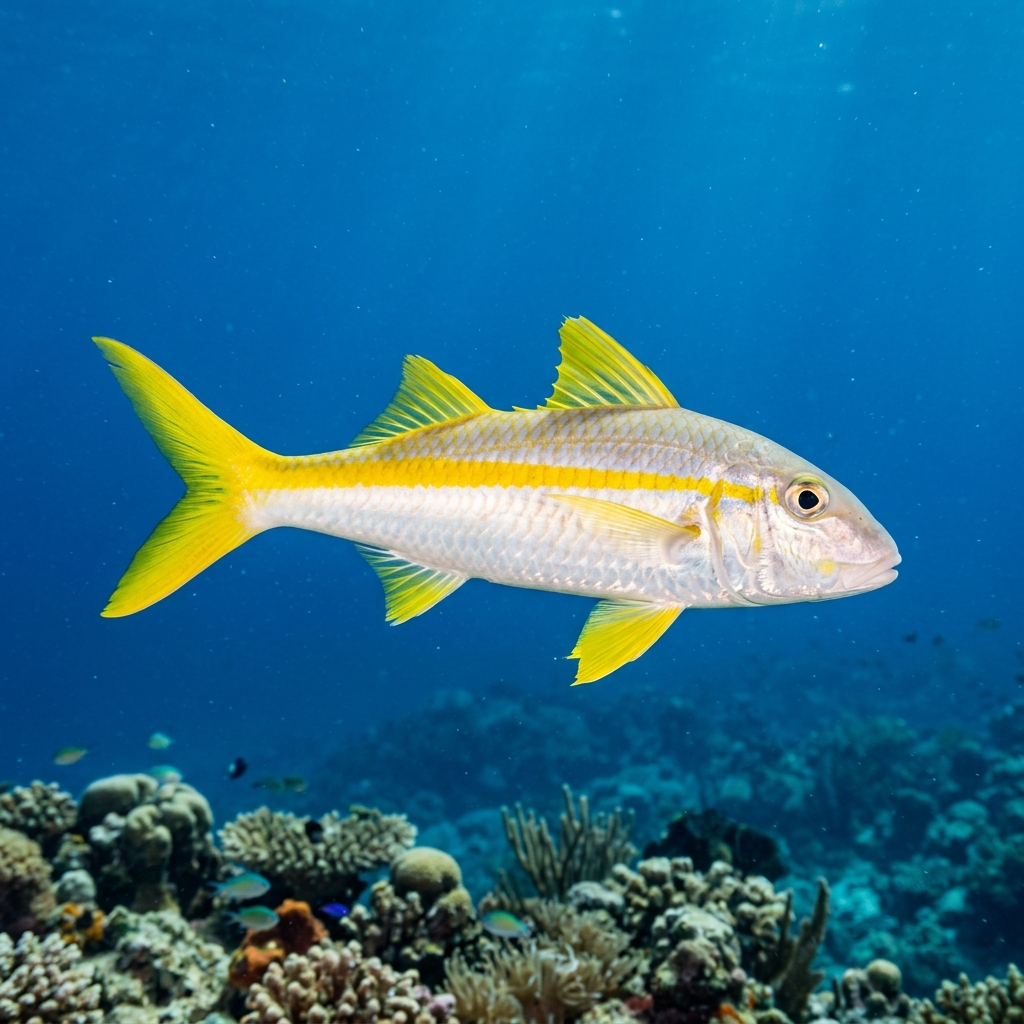
Reef neighbours a diver could mistake it for. Use the identification notes above to tell them apart.
Most reliably logged around Hawaii in the United States, where the bulk of recorded sightings come from, with a further outpost in the Central Atolls of the Maldives. Divers covering sandy patches and reef flats in these regions have the best shot at spotting one, though it stays an uncommon to rare find even where it turns up.
Mapping where Finstripe Goatfish is logged…
Hawaii in the United States is the strongest area for sightings, with an additional record from the Central Atolls of the Maldives. It favours sandy patches and reef flats over hard coral structure.
There's no detected seasonal pattern, so it's considered a year-round sighting on the warm reefs it inhabits, generally in water between 25 and 29C.
Look for a slender silvery-grey body around 23 cm long, a forked tail with faint striping, and a pair of chin barbels used for probing sand. It sits low over open sand rather than hiding in coral.
They typically reach about 23 cm in length, a modest, slim-bodied size typical of the goatfish family.
No, they pose no danger to divers. They're bottom-foraging fish that generally ignore divers entirely while probing sand for food.
Its chin barbels can taste and feel buried prey in the sand, letting it locate small invertebrates it can't see, a feeding trick common to goatfish but still fun to watch up close.
Site and sighting data is aggregated from diver logs, iNaturalist and GBIF. For taxonomy and conservation status:
Yellowfin Goatfish
2,241 sites