Gymnothorax dovii
Common in Galápagos and Malpelo, this bulky Pacific moray sits in reef crevices at 22.8-28.2 C year-round. Here's where and how to spot one.
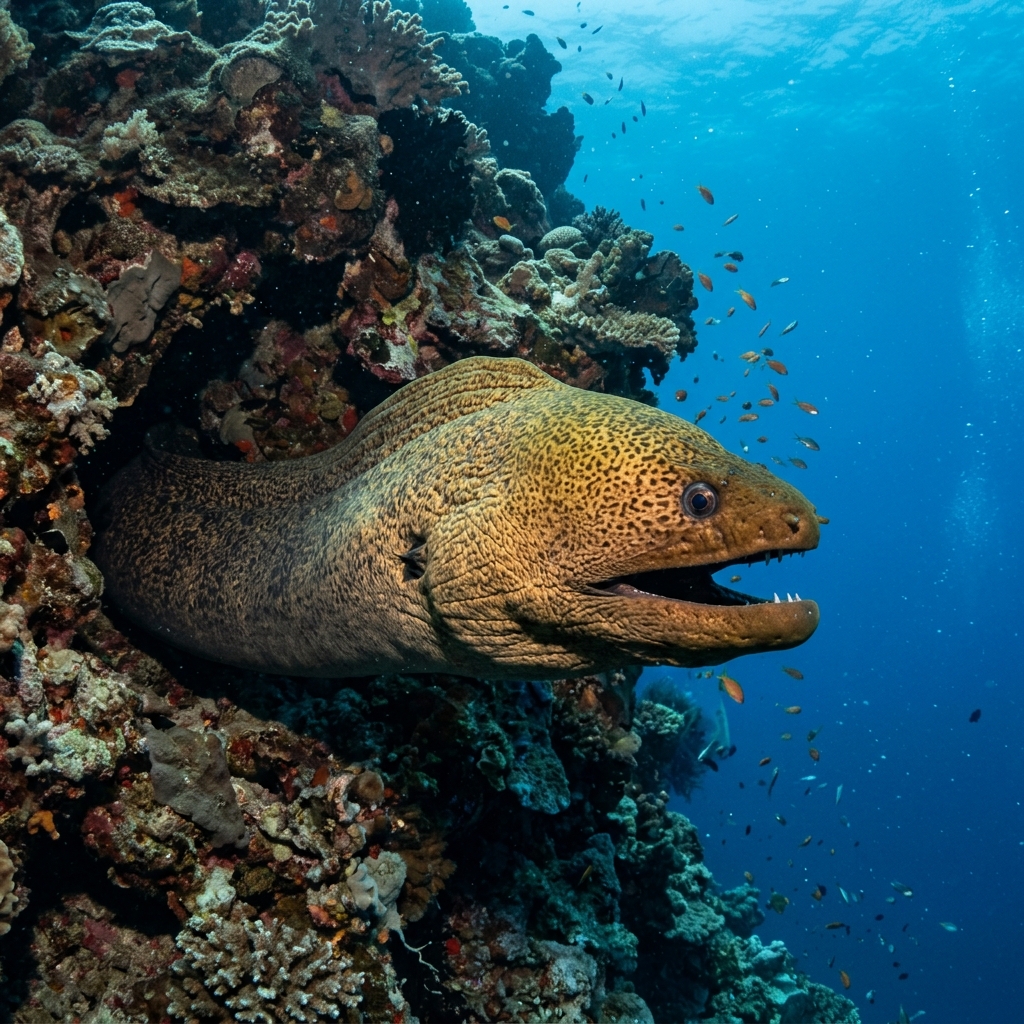
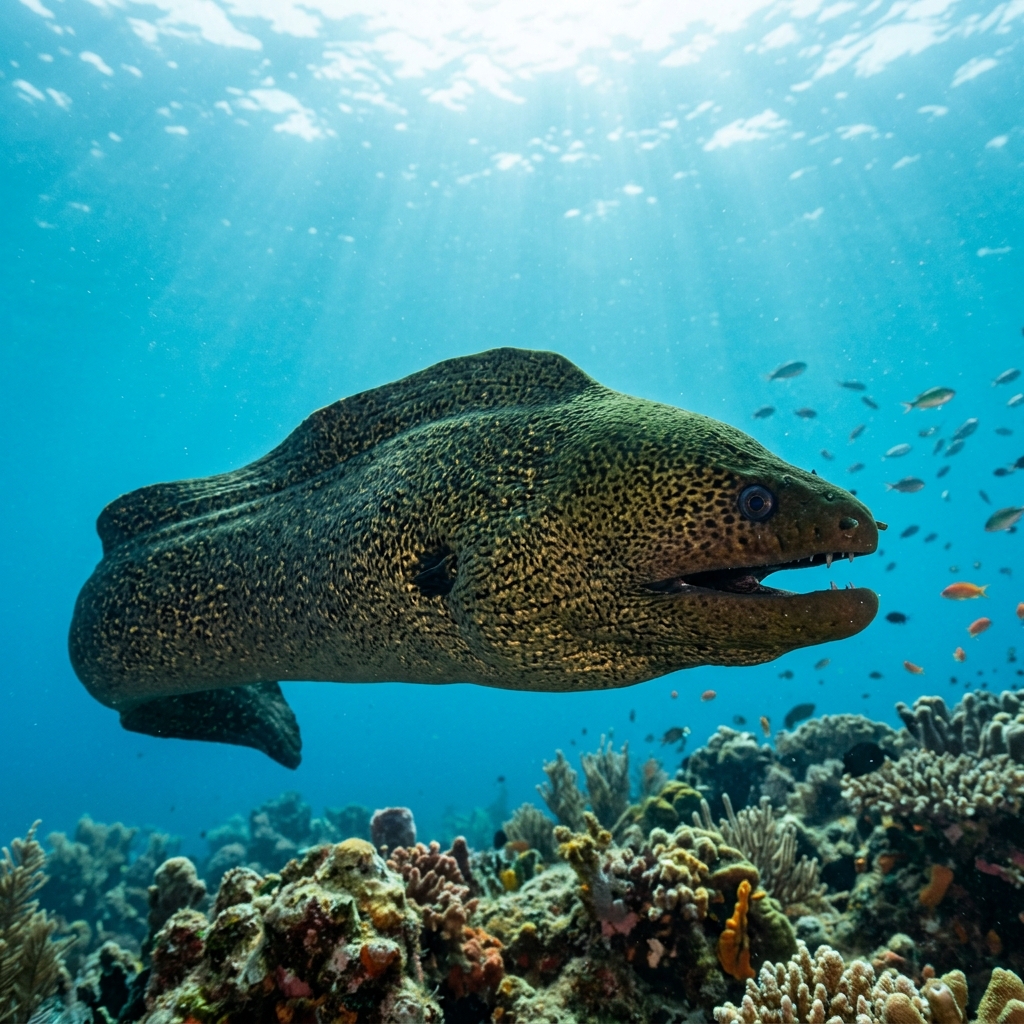
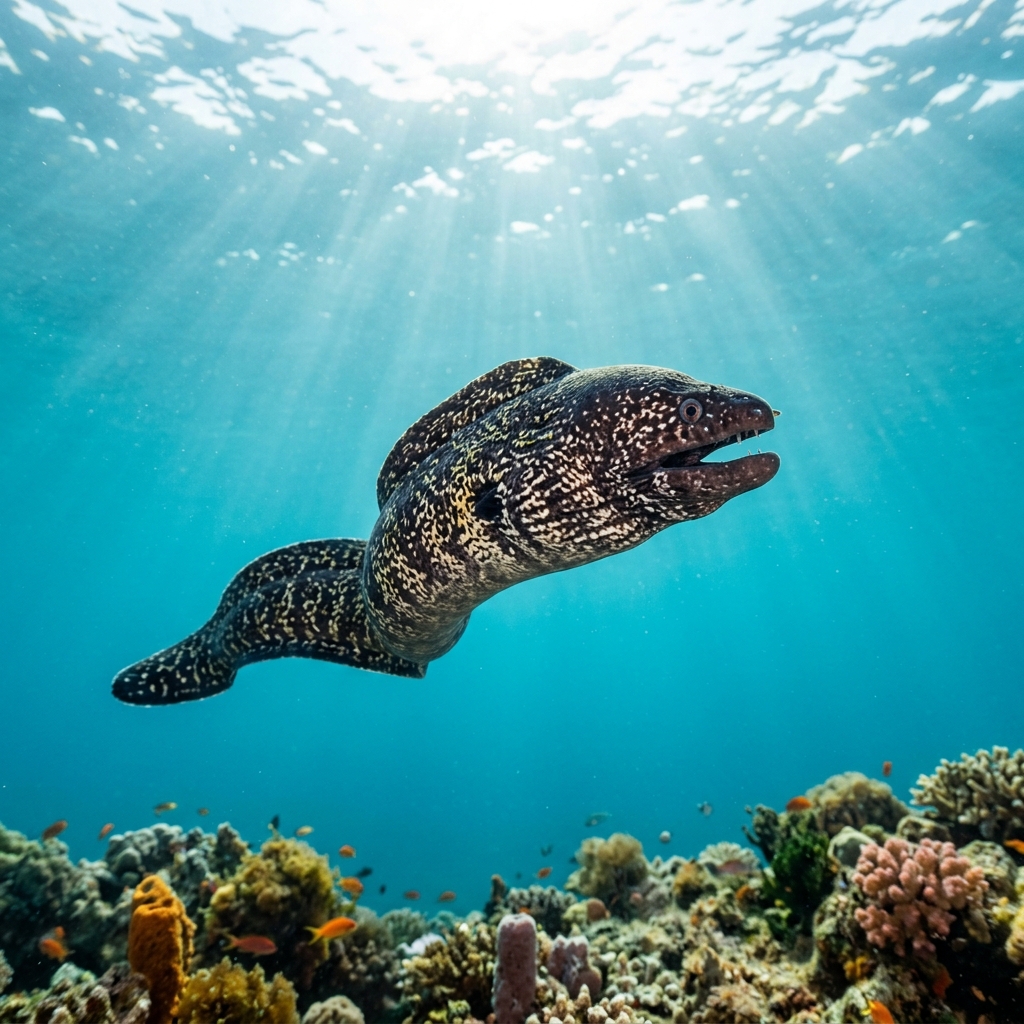
Bulky, thick-bodied moray reaching well over a metre, with a pale grey to olive base colour covered in small dark speckles that give it a finely peppered look rather than bold blotches. The head is heavy-jawed and blunt compared to slimmer reef eels, and it often shows its head and a good length of body out of a crevice rather than staying fully hidden. No strong juvenile or sex-based colour difference has been documented for this species.
Expect to find it tucked into rocky crevices and reef holes by day, often with just the head poking out, moving little while divers pass. It's typically logged as common to very common at the sites it turns up on, so a slow look along boulder fields and reef walls in Galápagos or Malpelo-style terrain is usually enough. Like other morays it relies on scent and a wide-open jaw for hunting rather than active pursuit while divers are around, and generally ignores passing divers unless cornered.
Morays of this genus rely on a second set of jaws deep in the throat, pharyngeal jaws, to drag prey down after the strike, a trick unique among fish.
No clear seasonal pattern shows up in the sightings, and its comfort range of 22.8 to 28.2 C spans most of the year across these Pacific sites, so it's a fair bet on any dive trip to the region.
Reef neighbours a diver could mistake it for. Use the identification notes above to tell them apart.
This is a Tropical Eastern Pacific species, most reliably logged around the Galápagos Islands in Ecuador and Malpelo in Colombia, with a strong presence at Cocos Island in Costa Rica too. Divers also find it along Panama's Pacific coast, Mexico's Revillagigedo Islands, Costa Rica's Central Pacific and Guanacaste coasts, and sites in Peru and Nicaragua.
Mapping where Fine-spotted Moray is logged…
Best known from the Galápagos Islands and Malpelo, with solid numbers also at Cocos Island, Costa Rica, and along Panama's Pacific coast and Mexico's Revillagigedo Islands.
There's no strong season in the data. It sits comfortably in 22.8 to 28.2 C water, which covers most of the year at these Eastern Pacific sites, so it's seen year-round.
Look for a thick, heavy-jawed moray with pale grey to olive skin covered in fine dark speckles rather than large blotches. It commonly shows its head and part of its body out of rocky crevices during the day.
They reach around 118 cm, making them one of the bulkier morays a diver will encounter on Eastern Pacific reefs.
No, they're not considered dangerous to divers. Like all morays they can bite if provoked or hand-fed, so the usual rule applies: watch, don't touch or feed.
It uses a second set of jaws hidden in its throat, called pharyngeal jaws, which shoot forward to grab prey and pull it down, a feeding trick shared by all morays but rare elsewhere in the fish world.
Site and sighting data is aggregated from diver logs, iNaturalist and GBIF. For taxonomy and conservation status:
Garden Eel
2,448 sites