Gymnothorax castaneus
From Baja California to the Galápagos, the Panamic Green Moray is a reef highlight in 22-29 °C Eastern Pacific waters. Find where divers log it most.
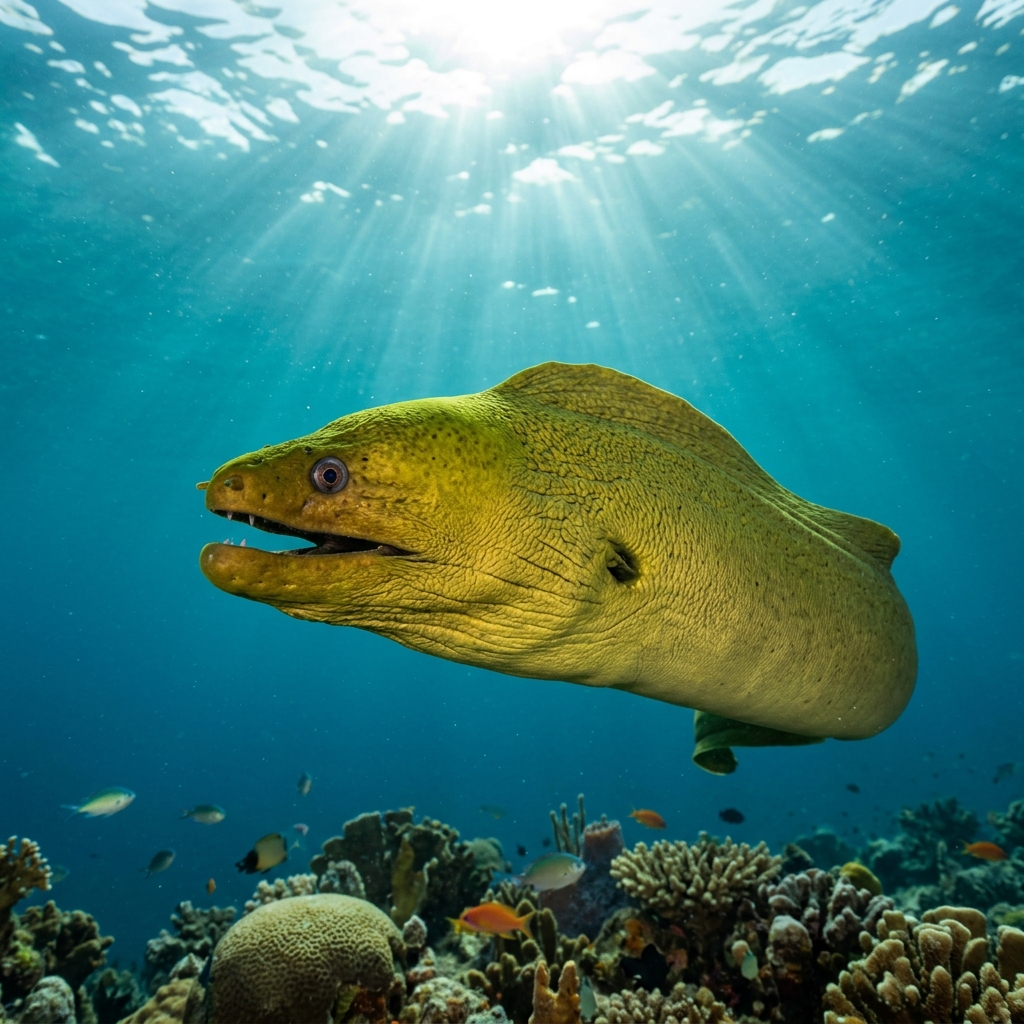
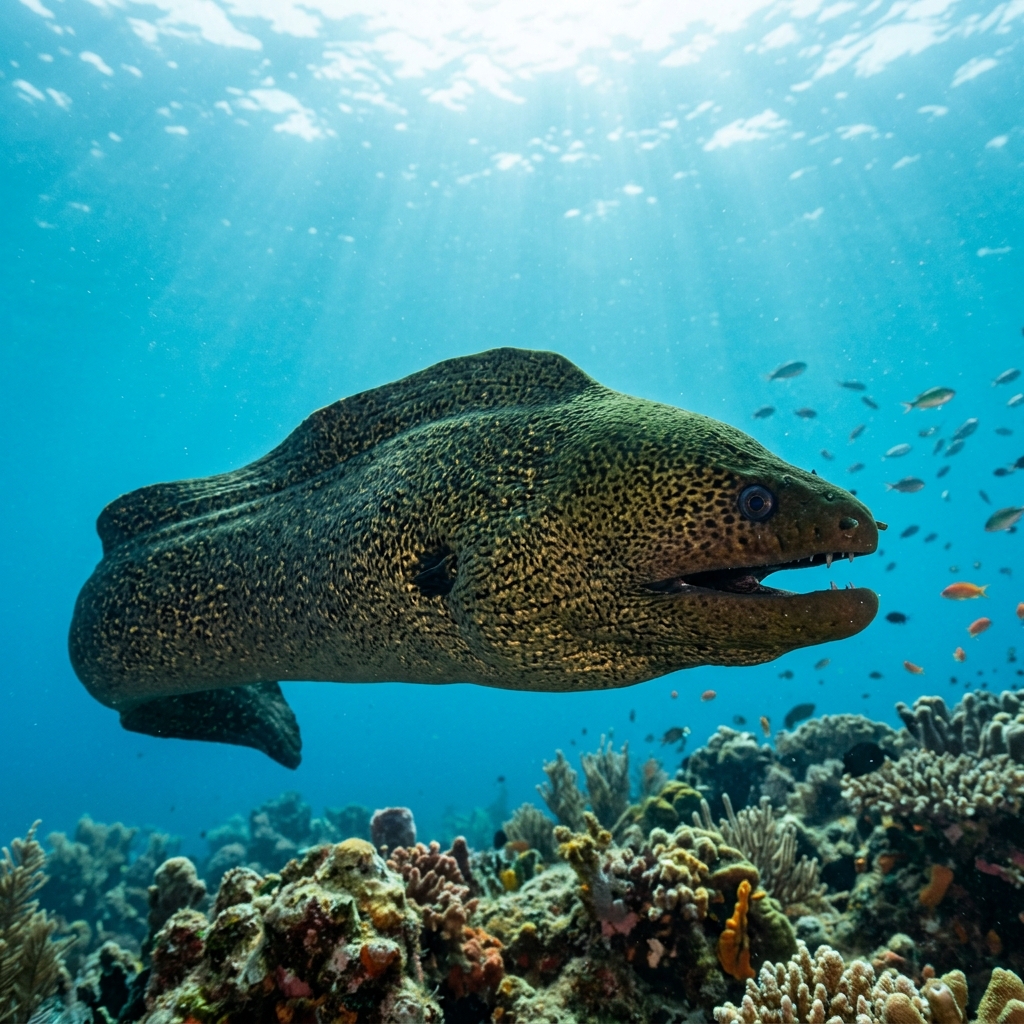
A large, uniformly olive-to-dark-green eel with no bold patterning, a distinctly thick body, and a broad head with a blunt snout. The mucus coating over the pale yellow skin is what creates that characteristic green tint underwater. Unlike spotted or banded morays, there are no obvious markings to distract the eye, just that solid, heavy silhouette wedged into a crack or ledge.
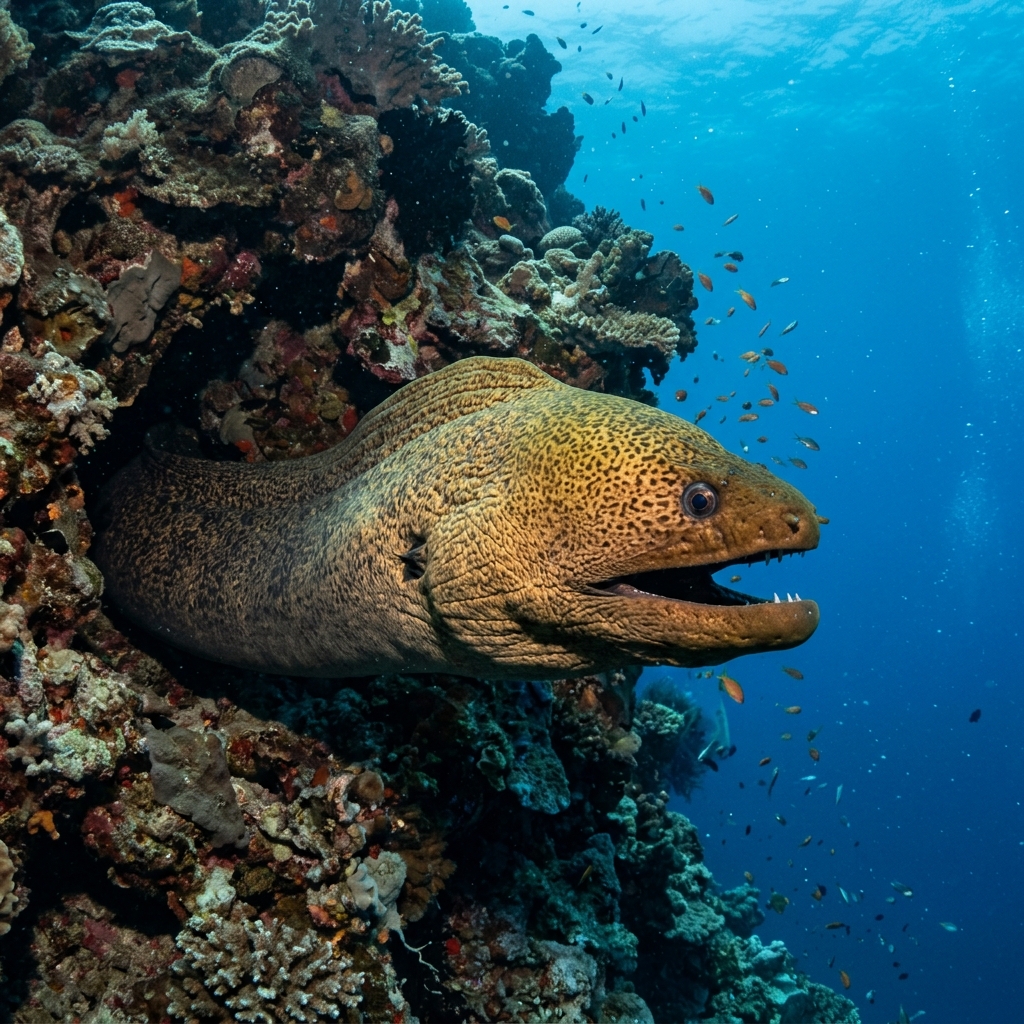
Expect to find it resting inside crevices or lava rock hollows with just the head showing, mouth rhythmically opening and closing, that's gill ventilation, not aggression. When approached calmly it tends to hold its position and observe the diver, occasionally sliding further into cover if pressed. Night dives can turn up individuals actively hunting across the reef, giving a rare look at the full length of the body.
Like all morays it has a second set of jaws, pharyngeal jaws (a set of teeth-bearing jaws inside the throat), that shoot forward to help pull prey deeper once the outer jaws have grabbed it. It's one of the few fish groups to do this.
Northern Hemisphere seasonality data points to October through July as the window when sightings concentrate, suggesting a dip in observations during August and September. Given its comfortable temperature range of roughly 22-29 °C, it is present year-round across much of the Eastern Pacific; the seasonal signal likely reflects diver activity as much as fish behaviour.
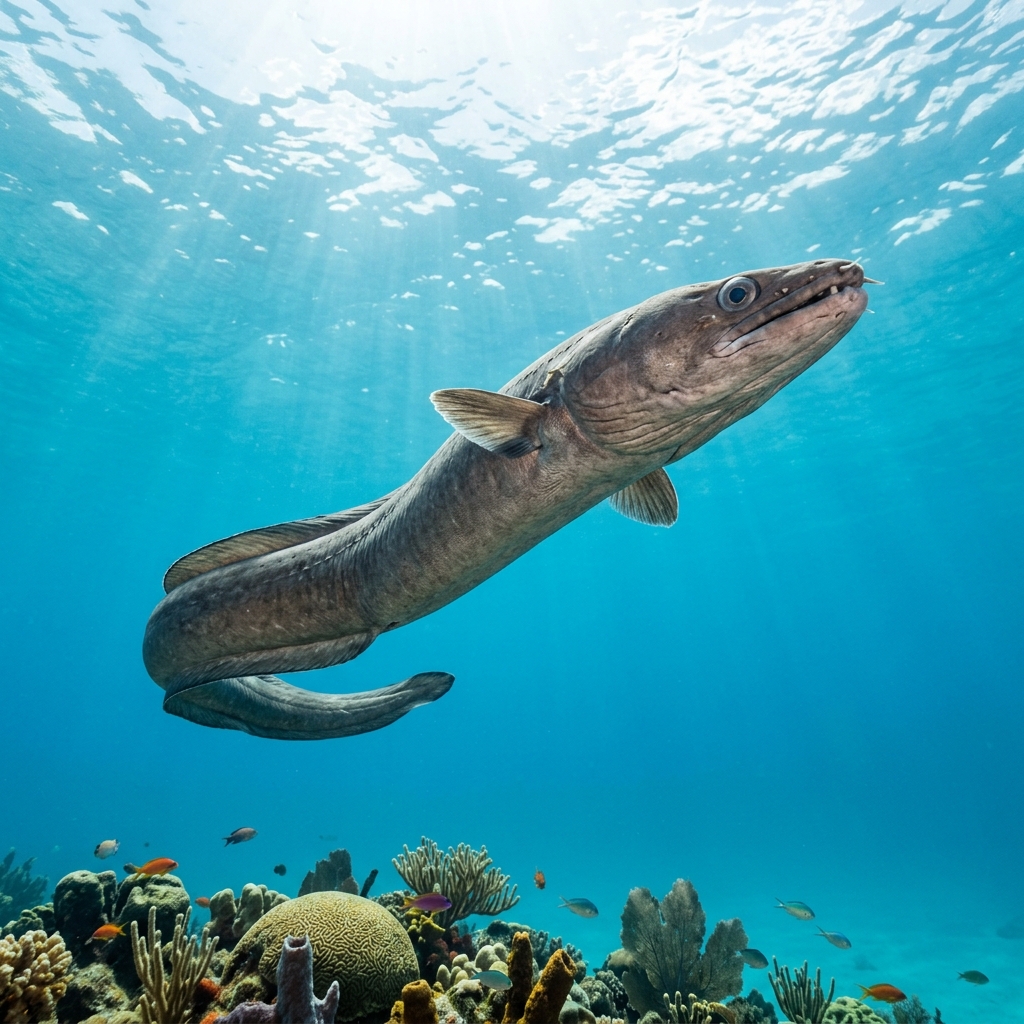
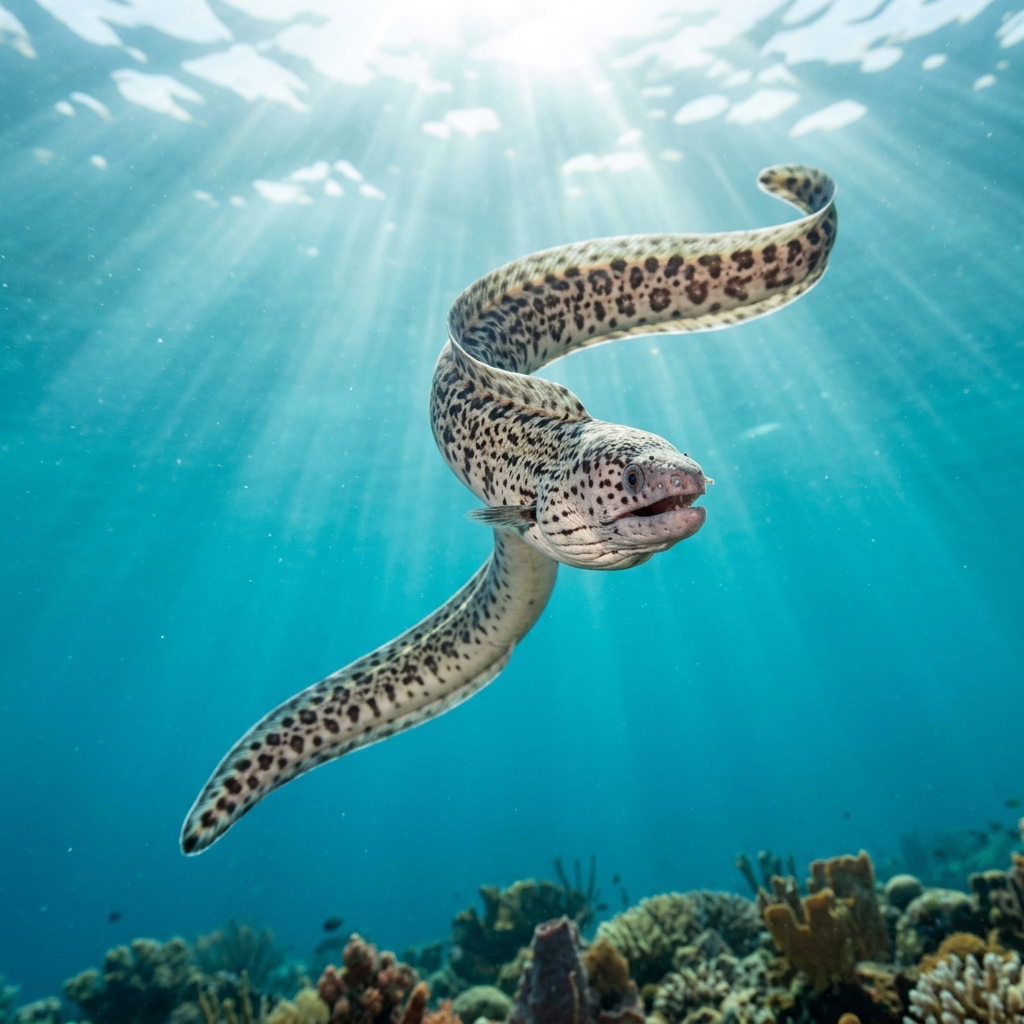
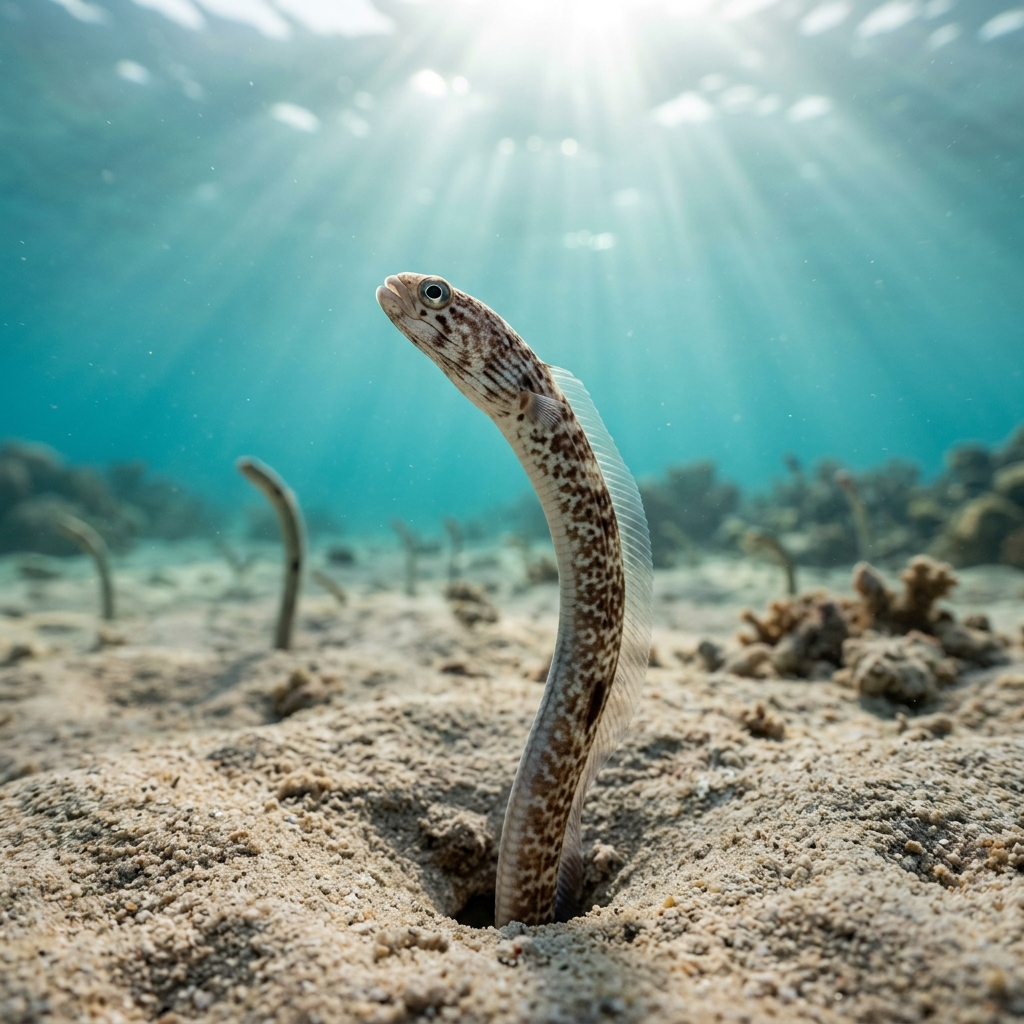
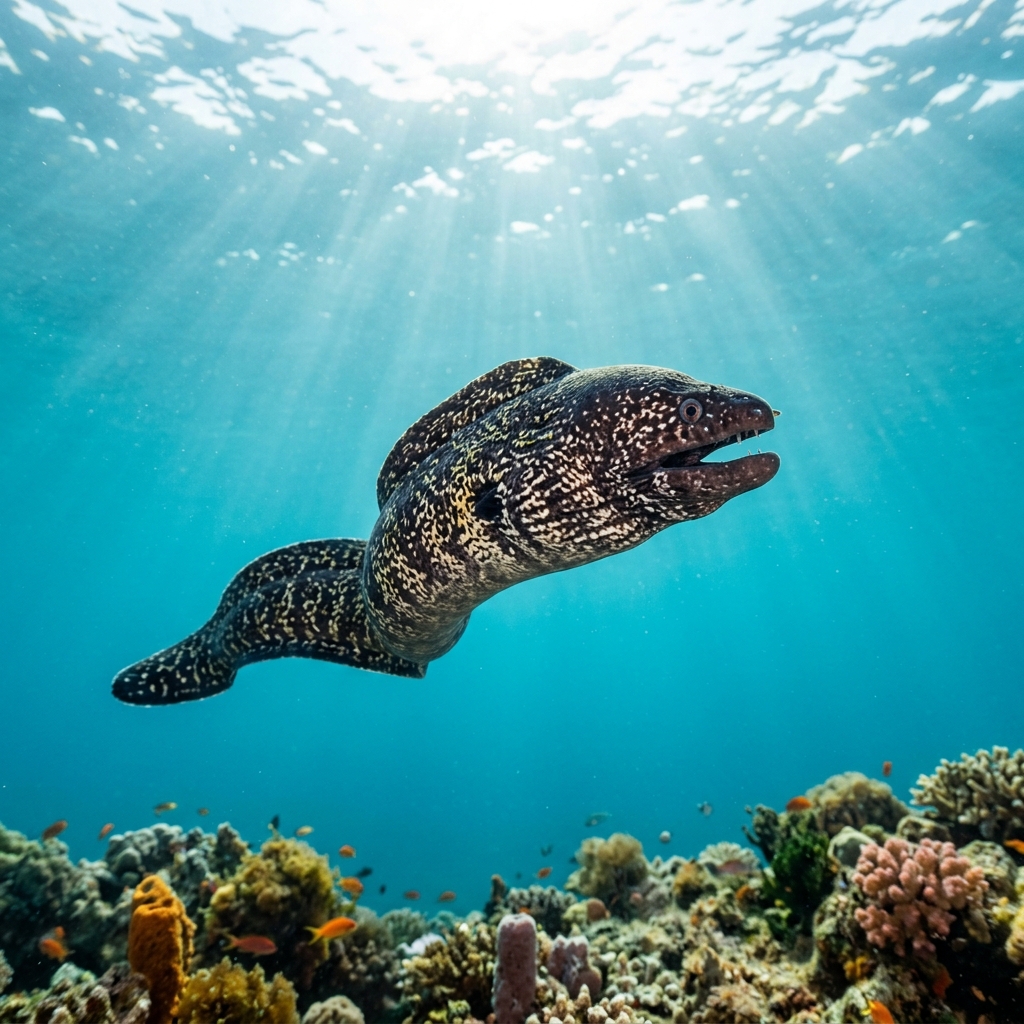
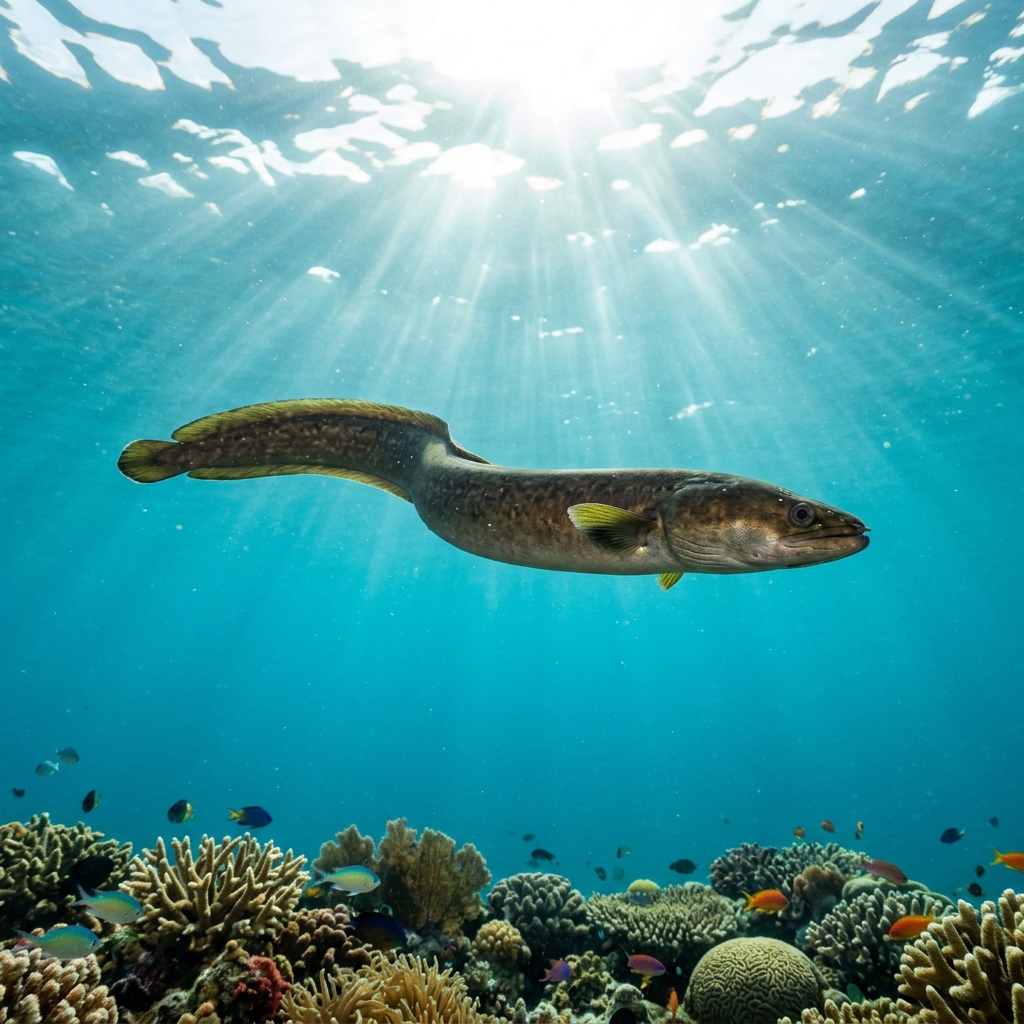
Reef neighbours a diver could mistake it for. Use the identification notes above to tell them apart.
Most commonly logged along the Mexican Pacific coast, with Baja California accounting for the largest share of records, followed by strong sighting tallies around the Gulf of Papagayo in Costa Rica. The Galápagos Islands and Malpelo in Colombia are also reliable spots, and Coiba National Park in Panama rounds out the core range for divers targeting this species.
Mapping where Panamic Green Moray is logged…
The strongest sighting records come from Baja California and the broader Mexican Pacific coast, the Gulf of Papagayo in Costa Rica, the Galápagos Islands in Ecuador, and Malpelo Island in Colombia. Coiba National Park in Panama and Cocos Island in Costa Rica are also solid bets.
Diver sightings concentrate between October and July across Northern Hemisphere sites, with a quieter period in August and September. Because the species tolerates a wide band of water temperatures, it is available year-round at most Eastern Pacific destinations, just more frequently reported outside the late-summer window.
Look for a large, uniformly olive-green eel with no spots, stripes, or contrasting edges, just a consistent dark-green colour from snout to tail. The body is notably thick and muscular, and the broad head with a blunt snout helps separate it from slender species. The absence of any patterning is the key field mark.
They are not considered dangerous under normal conditions. Like any moray, they can bite if grabbed or cornered, so keep a respectful distance and avoid putting hands into crevices. Observed calmly, they are tolerant of divers and generally hold their position rather than retreating or advancing.
Moray eels, including the Panamic Green Moray, have a second set of jaws located in the throat called pharyngeal jaws. After the outer jaws grip prey, these inner jaws shoot forward into the mouth cavity, grip the food independently, and haul it down the throat. It is a feeding mechanism unique among vertebrates to moray eels.
Site and sighting data is aggregated from diver logs, iNaturalist and GBIF. For taxonomy and conservation status:
Garden Eel
2,448 sites