Acanthurus bariene
Grey-brown surgeonfish with a dark eye-ring, logged year-round around Khao Lak, Thailand in warm 24-28C reef water.
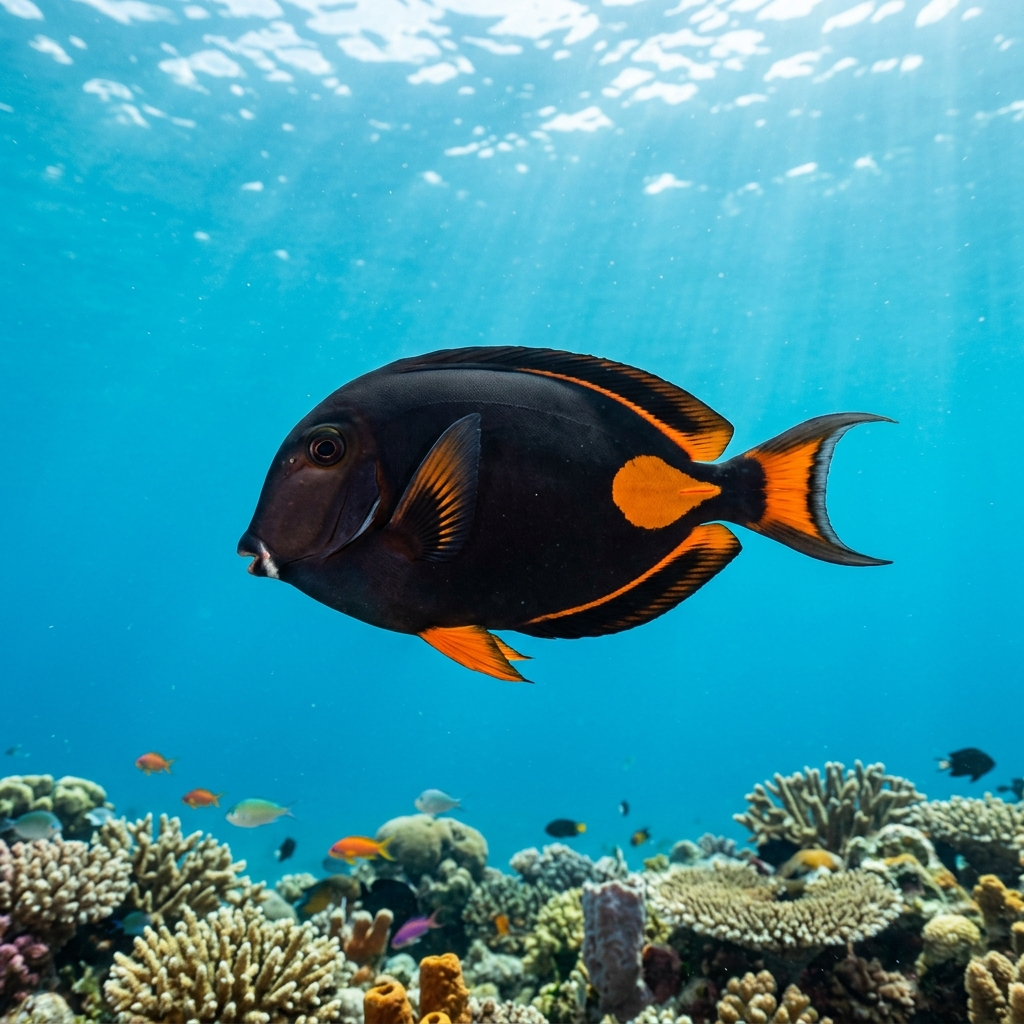
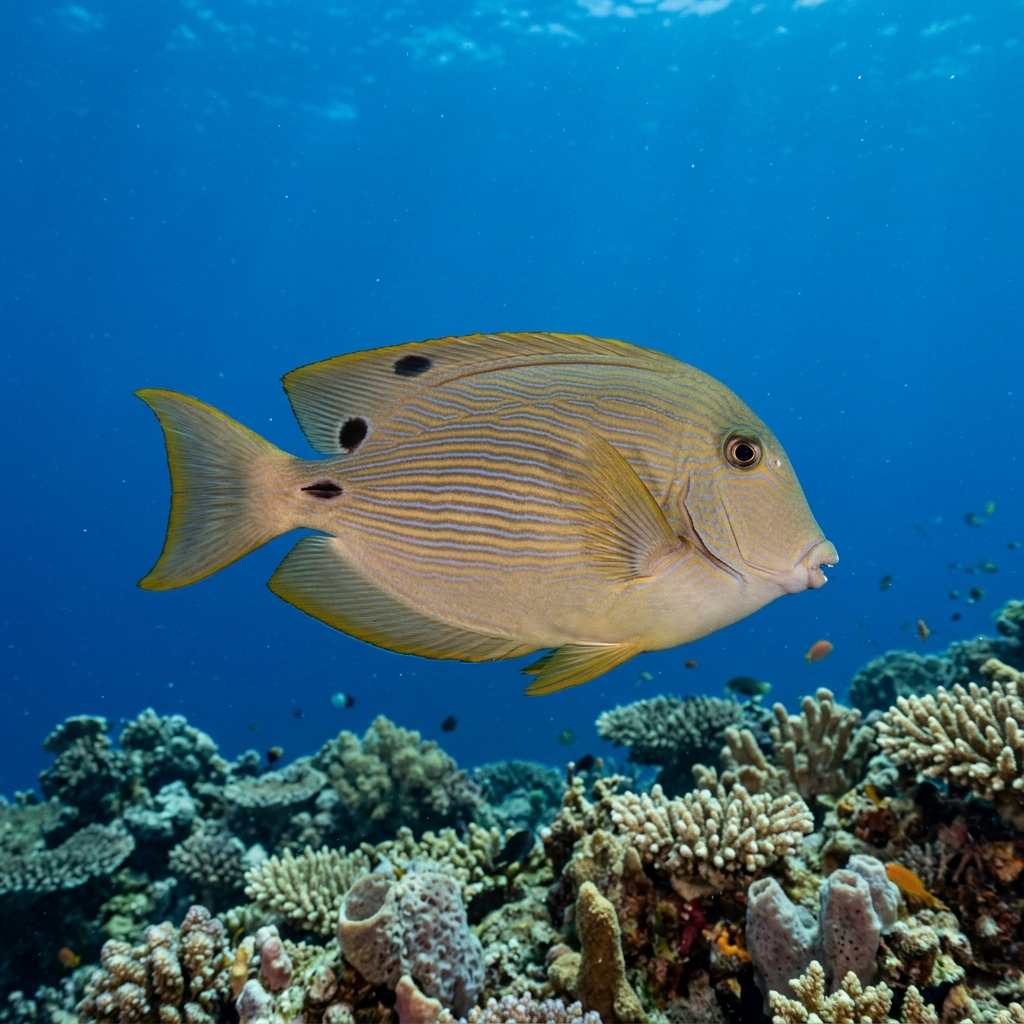
A grey-brown, oval-bodied surgeonfish reaching around 35 cm, best picked out by the dark ring circling the eye that gives it its name. Look for a pale, slightly crescent-shaped tail and the faint orange or yellow tinge sometimes visible near the base of the pectoral fins. Like other surgeonfish it carries a sharp scalpel-like spine at the base of the tail, usually folded flat and only raised when threatened.
Divers typically spot this surgeonfish cruising alone or in loose company over rocky and mixed reef, grazing algae off rock and coral rubble. It tends to keep a cautious distance rather than approach, drifting off if you swim directly at it, and is more often seen mid-water over structure than tucked into crevices.
Like other surgeonfish, it carries a razor-sharp spine at the base of the tail that it can flick out sideways in defence, which is the reason for the family's common nickname.
No clear seasonal pattern shows up in the sighting data, and water temperatures at the sites where it's logged sit in a comfortable 24.5 to 28.4C range, so it's reasonable to expect it on the reef at any time of year.
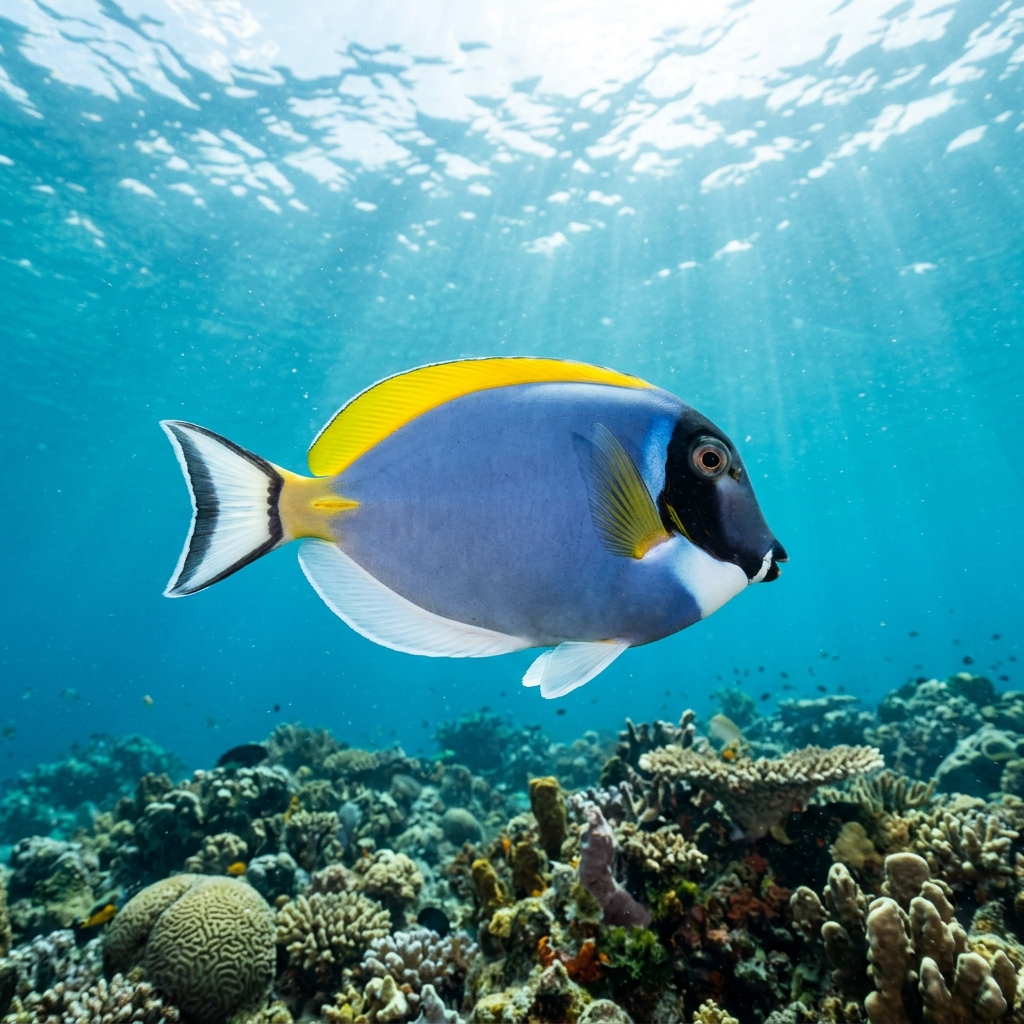
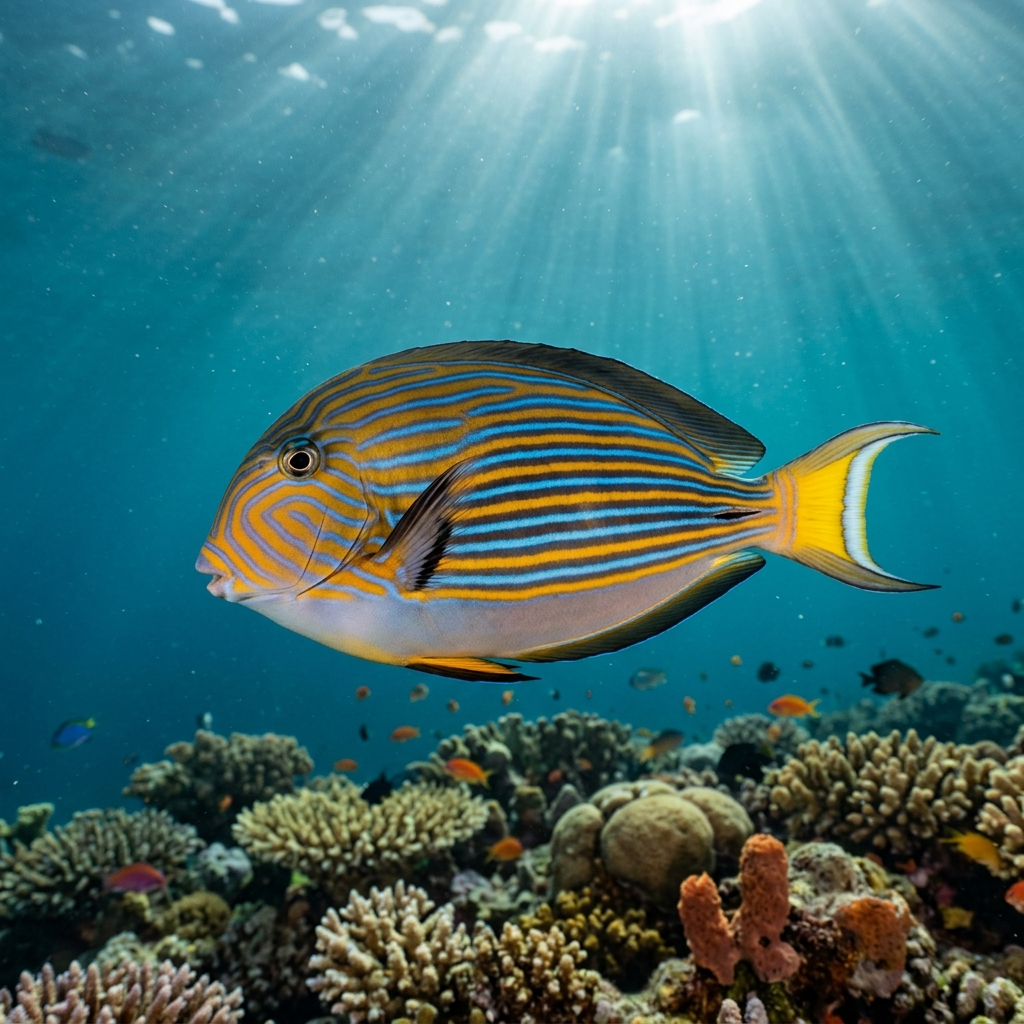
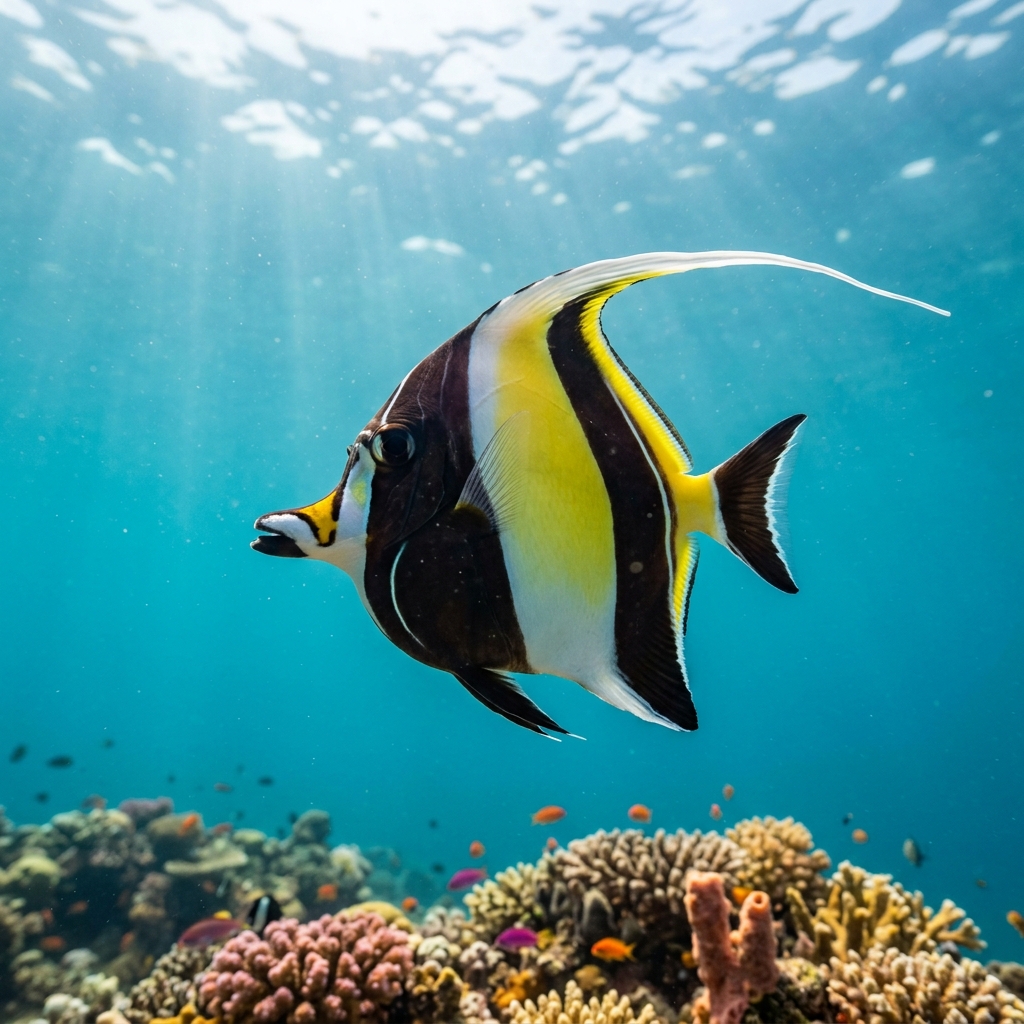
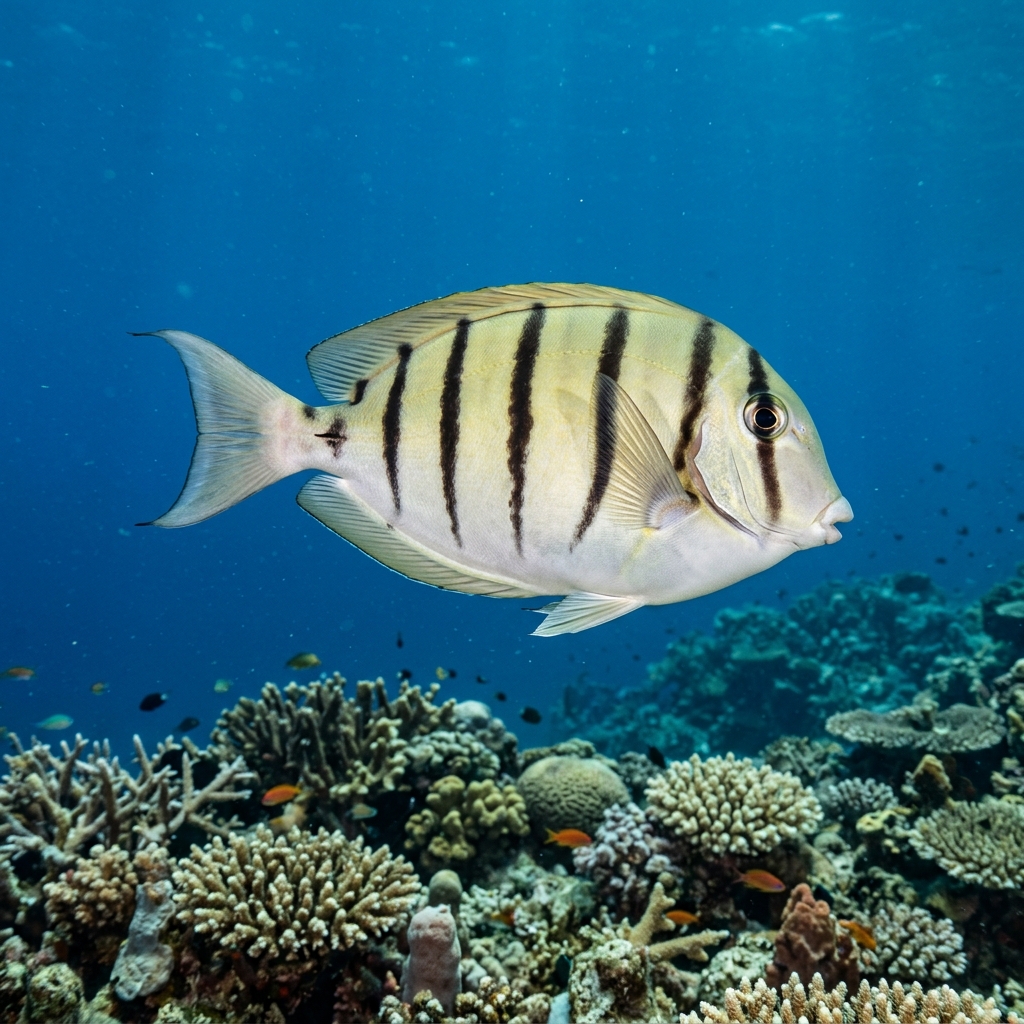
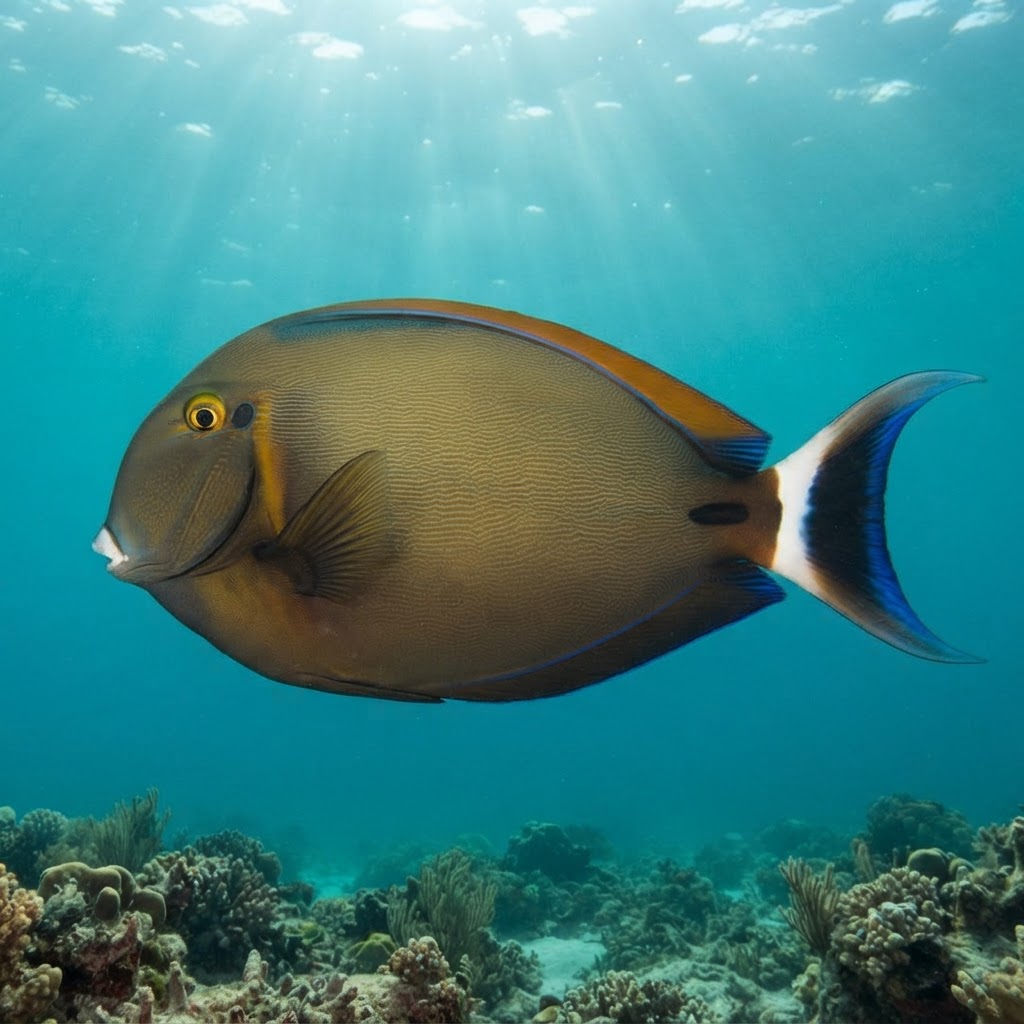
Reef neighbours a diver could mistake it for. Use the identification notes above to tell them apart.
Logged sightings for this species currently come from Khao Lak in Thailand, where it turns up as an uncommon find across a handful of sites. It's not yet documented at scale elsewhere in diver records, so Khao Lak is the most reliable place to look for it right now.
Mapping where Eyespot Surgeonfish is logged…
The most reliable logged sightings come from Khao Lak, Thailand, where it's recorded as an uncommon find across several dive sites. It hasn't yet turned up in strength in diver records from other regions.
There's no strong seasonal signal in the sighting data, and it's found in water from about 24.5 to 28.4C, so it's realistic to look for it on Khao Lak's reefs throughout the year.
Look for a grey-brown, oval-bodied fish around 35 cm with a dark ring circling the eye and a pale, slightly forked tail. The tail-base spine, typical of all surgeonfish, is usually folded flat and hard to see unless the fish is agitated.
They reach around 35 cm in length, a solid mid-size surgeonfish comparable to many reef-associated tangs.
No, they're not considered dangerous. Like all surgeonfish they carry a sharp spine near the tail for defence, so it's best not to grab or corner one, but they pose no threat if left alone.
Site and sighting data is aggregated from diver logs, iNaturalist and GBIF. For taxonomy and conservation status:
Striped Surgeonfish
3,289 sites