Costasiella ocellifera
Millimetre-sized and leaf-shaped, this sea slug hides on algae in Basse-Terre, Guadeloupe waters at 25-31 C year-round.
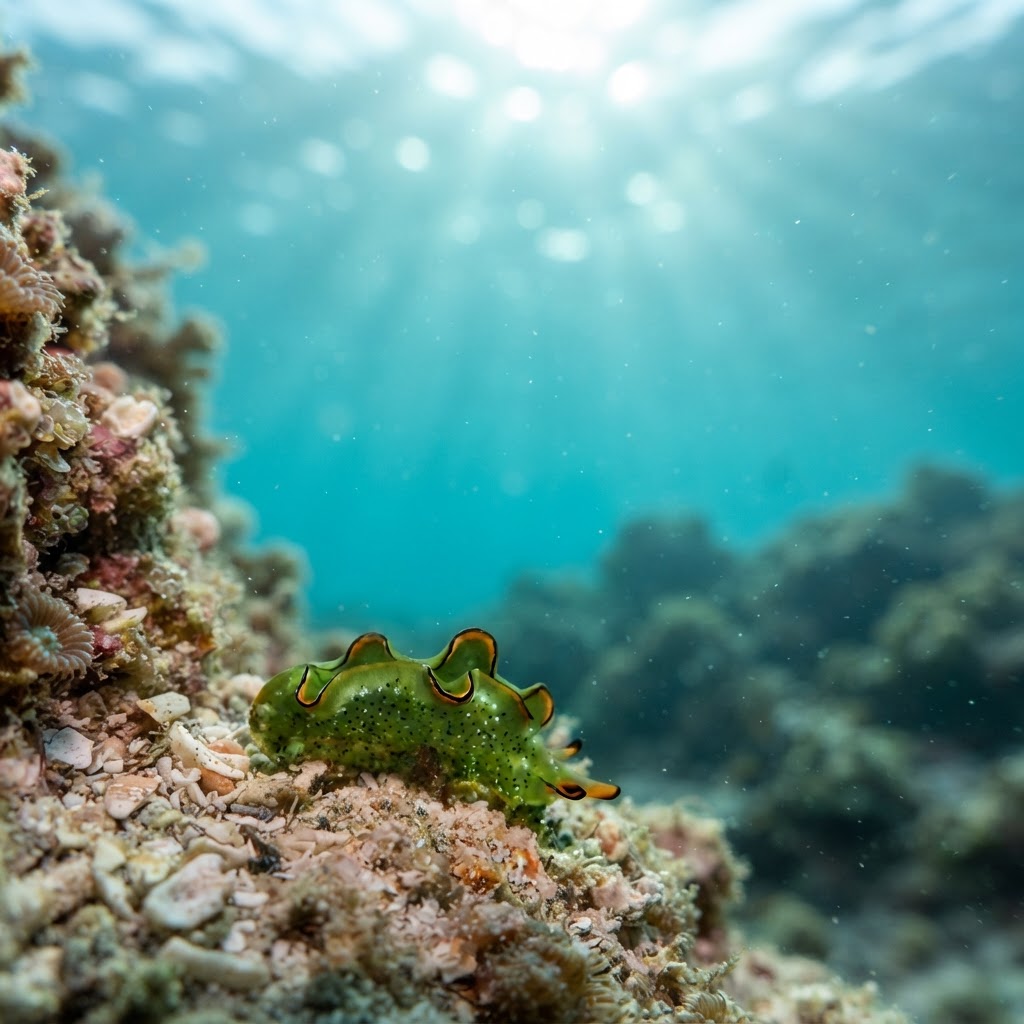
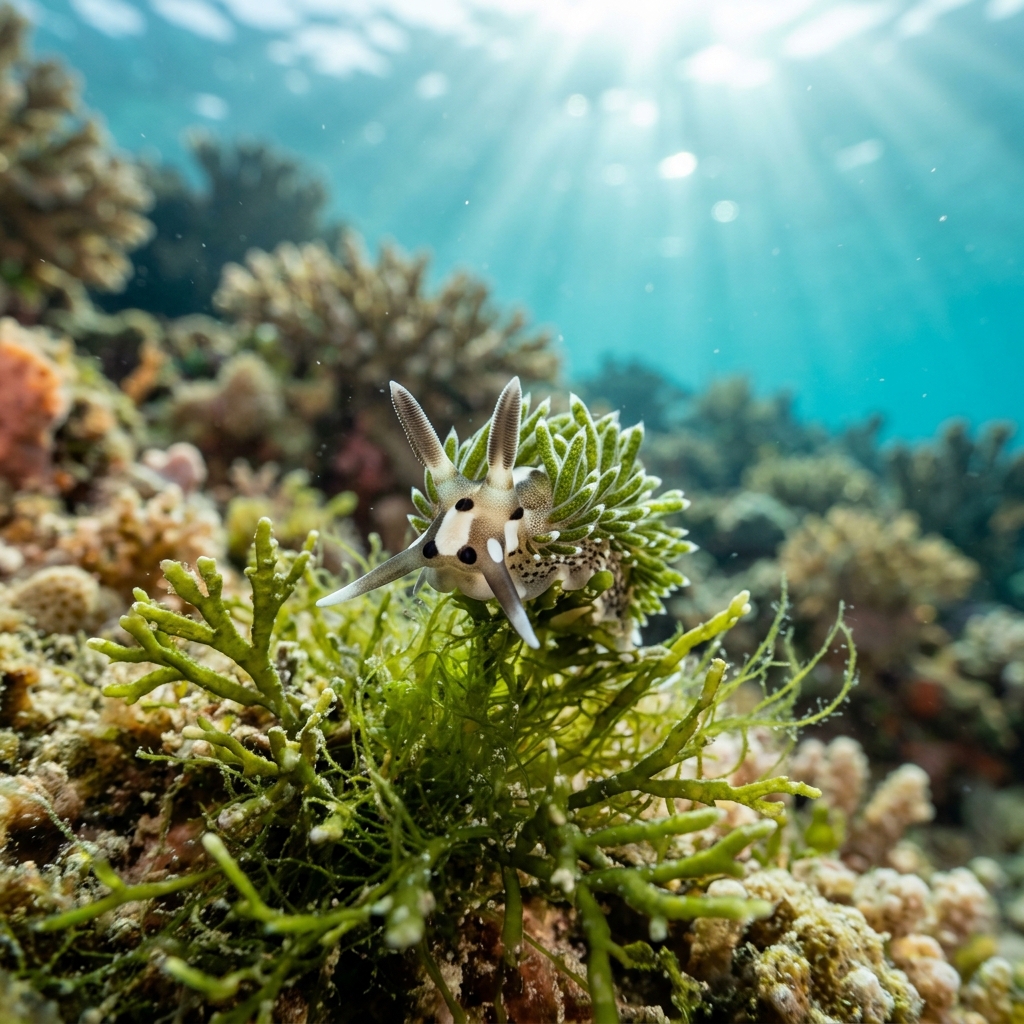
Look for a pale to bright green body barely a few millimetres long, covered in flattened, leaf-shaped projections called cerata that give it a distinctly plant-like silhouette. Each ceras carries a small dark spot near its tip, the
Divers find it grazing slowly over the algae it feeds on, usually tucked into shallow reef structure between 2 and 10 metres where light and algal growth are strongest. It barely reacts to a diver's presence, staying put or inching along at its own pace, which makes it a patient macro subject rather than a chase. Most sightings come from divers specifically scanning algal turf and sponge growth rather than spotting it in open water.
Like other members of its family, it feeds on algae and is thought to retain functioning chloroplasts from its food inside its tissue for a time, a trick called kleptoplasty that may let it draw some extra energy from sunlight.
There is no detected seasonal pattern, and with a comfortable range of roughly 25 to 31 C, warm Caribbean reefs suit it all year round. Divers log it across all the top countries in the data without a clear peak month.
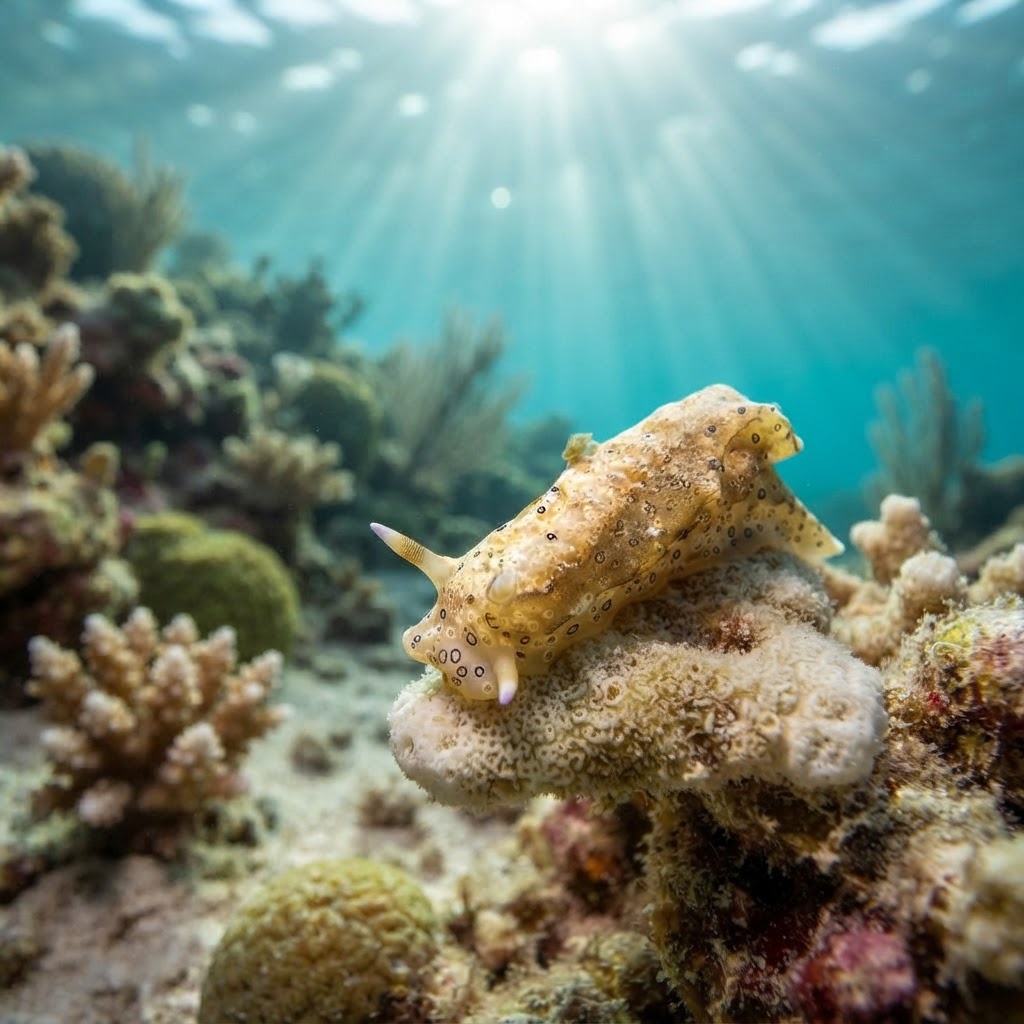
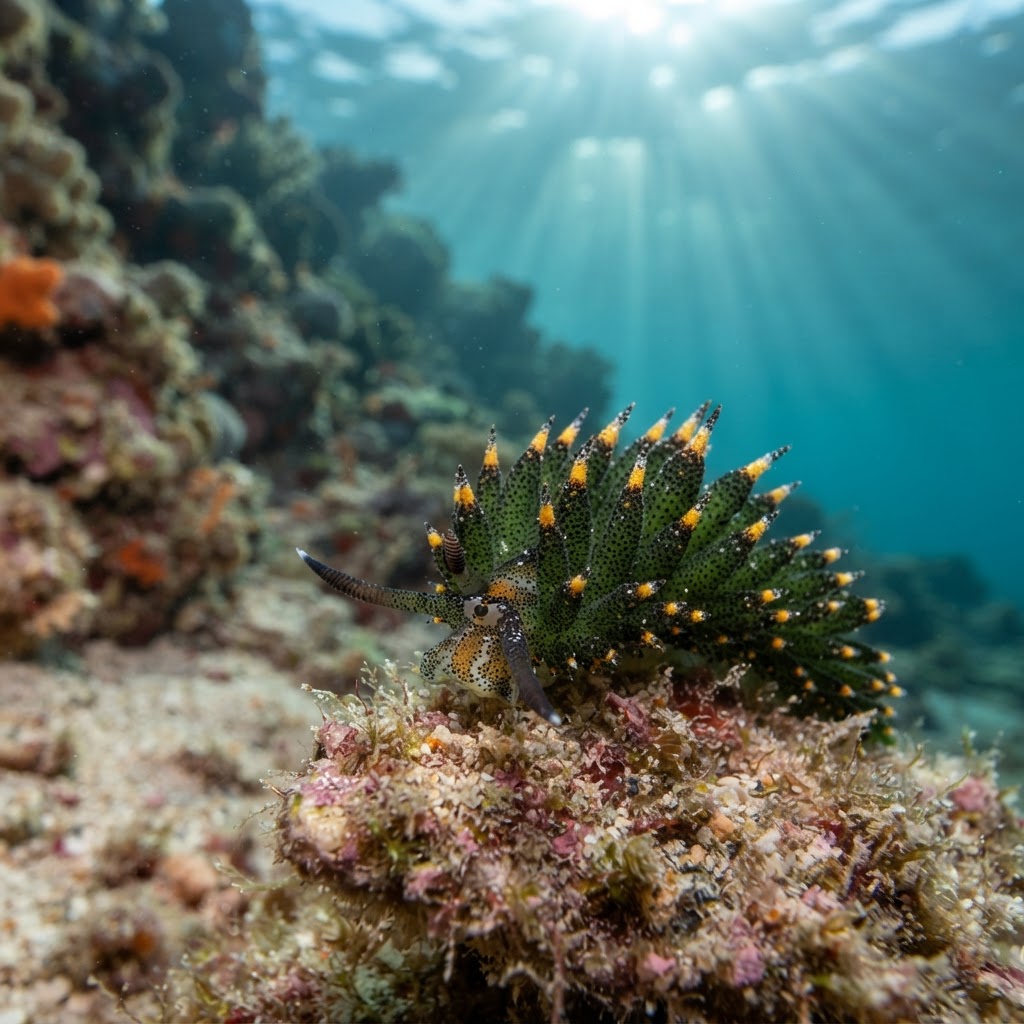
Reef neighbours a diver could mistake it for. Use the identification notes above to tell them apart.
Guadeloupe is by far the strongest base for this species, with sites spread across both Basse-Terre and Grande-Terre logging the most sightings of anywhere in the data. Cayman Brac in the Cayman Islands and Portsmouth in Dominica are the next most reliable spots, with smaller but consistent numbers from the Bay Islands in Honduras and Saint-Pierre in Martinique.
Mapping where Eyespot Costasiella is logged…
Guadeloupe is the most reliable place to find it, with sightings spread across Basse-Terre and Grande-Terre. Cayman Brac in the Cayman Islands, Portsmouth in Dominica, and the Bay Islands in Honduras also produce regular sightings.
There is no clear season in the data. It lives in water between roughly 25 and 31 C, so it is present on Caribbean reefs year-round rather than tied to a particular month.
Check for a tiny green body covered in flattened, leaf-shaped cerata, each tipped with a small dark eyespot. It is often mistaken for a piece of algae until it moves.
It stays extremely small, typically only a few millimetres long, which is why most divers rely on close macro photography to spot and confirm it on the reef.
It is thought to hold onto living chloroplasts from the algae it eats, a process called kleptoplasty, potentially letting it harvest a bit of extra energy from light.
No. It has no venom or defence relevant to divers and is entirely safe to observe up close without any risk.
Site and sighting data is aggregated from diver logs, iNaturalist and GBIF. For taxonomy and conservation status:
Light-spotted Aegires
3,168 sites