Costasiella fridae
A millimetres-long green sea slug logged off Hawaii, warm water 24-30C, worth the hunt for macro divers.
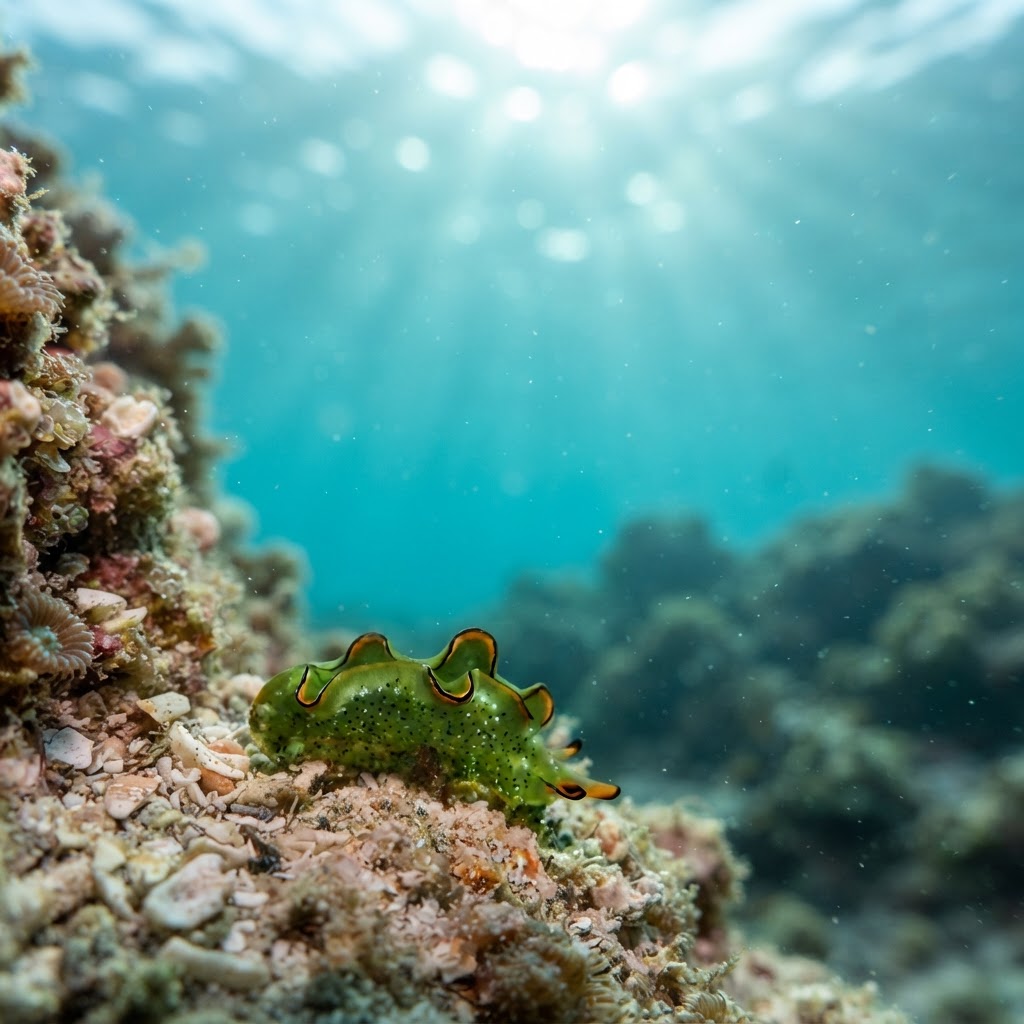
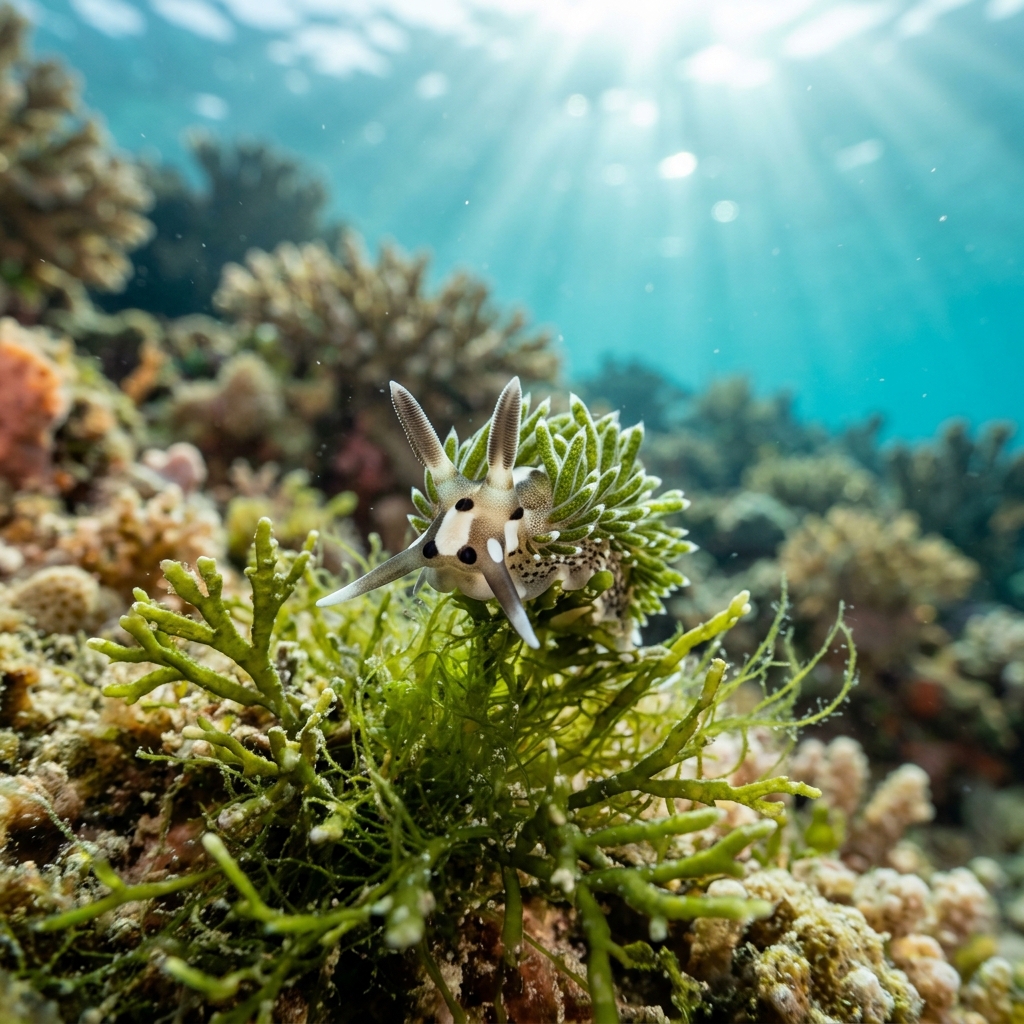
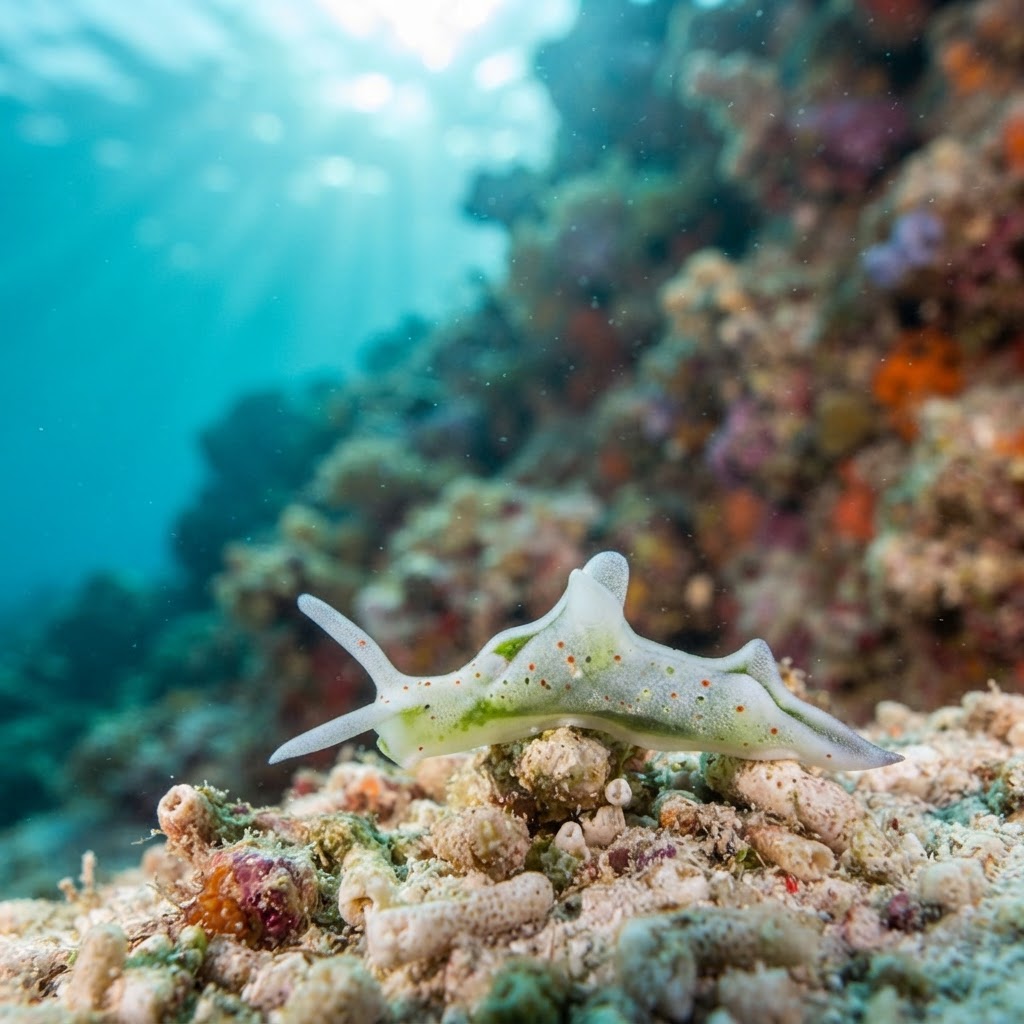
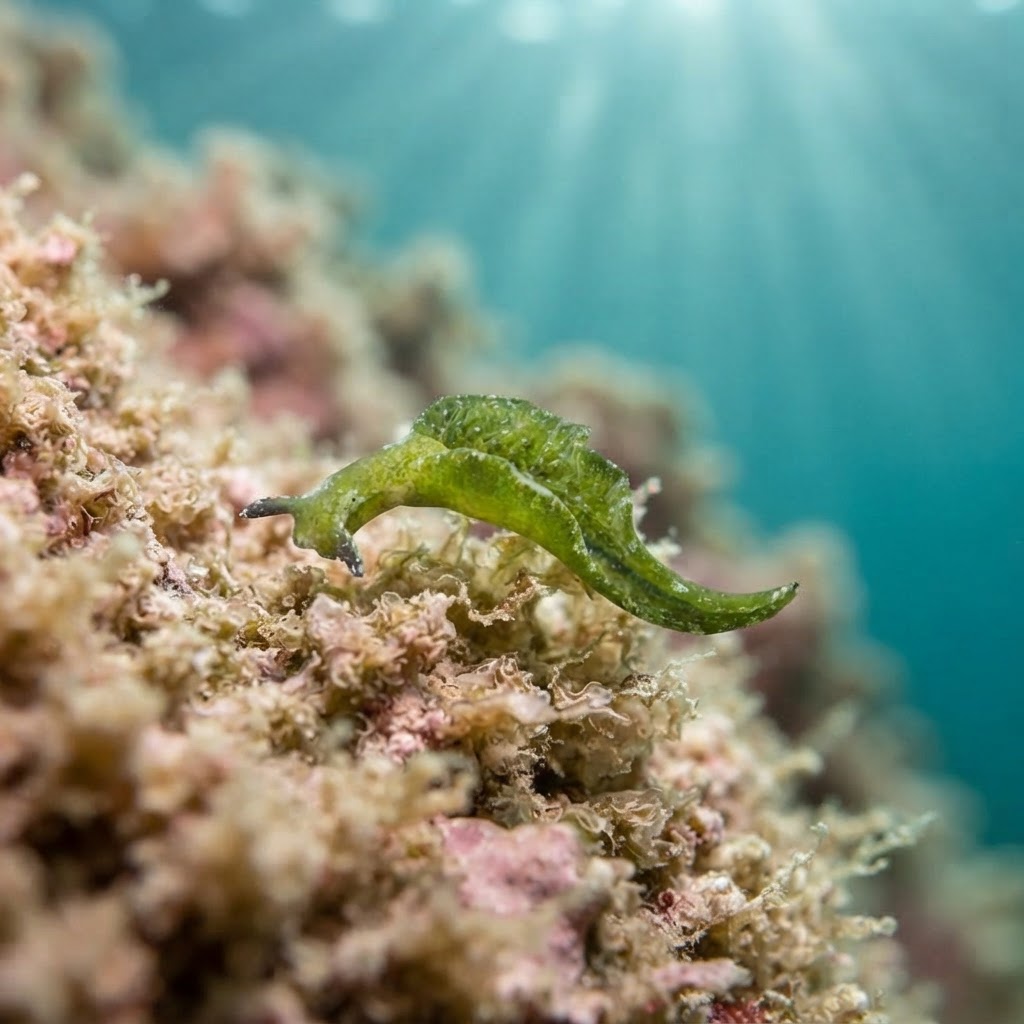
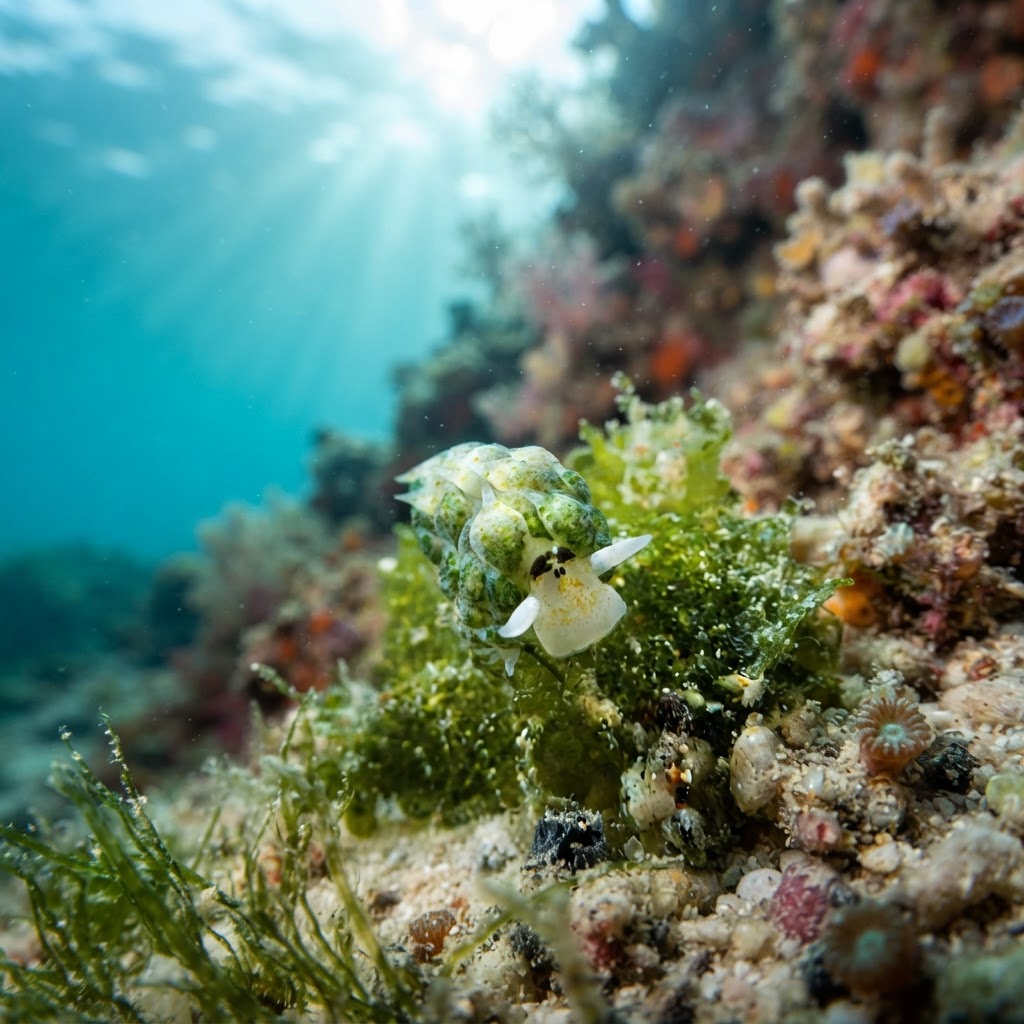
A tiny sea slug, only a few millimetres long, with a translucent green body covered in flattened, leaf-shaped appendages (cerata) that give it a mossy, almost plant-like texture. Look closely at the head for the pair of dark, angled markings above the eyes that give this species its common name, resembling thin painted eyebrows. Its colour draws directly from the algae it feeds on, so it can look almost invisible against a mat of green filaments.
Divers find it grazing slowly over patches of filamentous green algae, which it feeds on by piercing individual algal cells rather than eating whole strands. It barely reacts to a diver's presence, partly because it is so slow-moving and partly because it is easy to miss entirely without a macro lens. Expect to find it sitting still or creeping at a snail's pace across algae-covered rock or rubble in shallower, sheltered spots.
Like other members of its family, this slug is a solar-powered grazer of sorts: it retains functioning chloroplasts from the algae it eats inside its own tissue, a trick called kleptoplasty that lets it draw extra energy from sunlight between meals.
There is not enough logged data to show a clear season, and Hawaii's reef water sits in a fairly stable 24 to 30C range year-round, so there is no strong reason to expect a seasonal window. Plan around calm, clear macro conditions rather than a specific month.
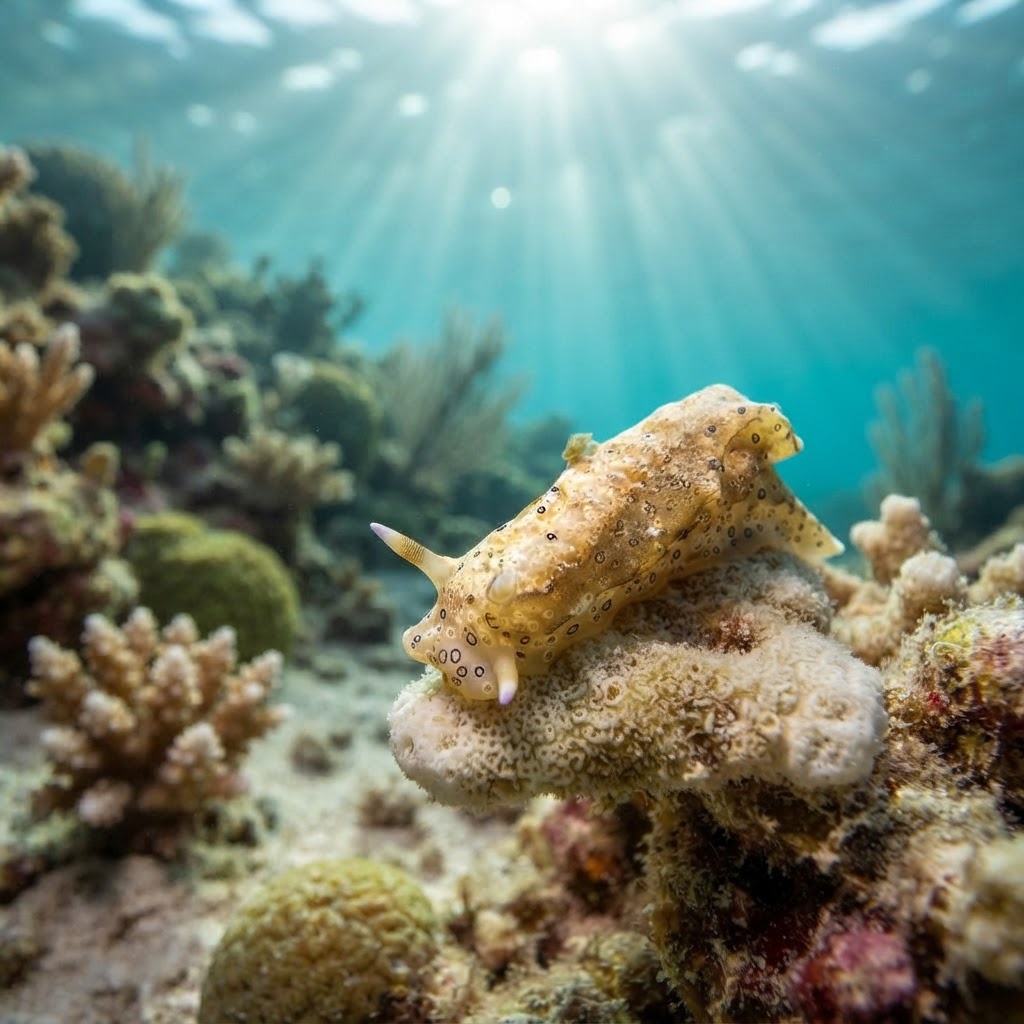
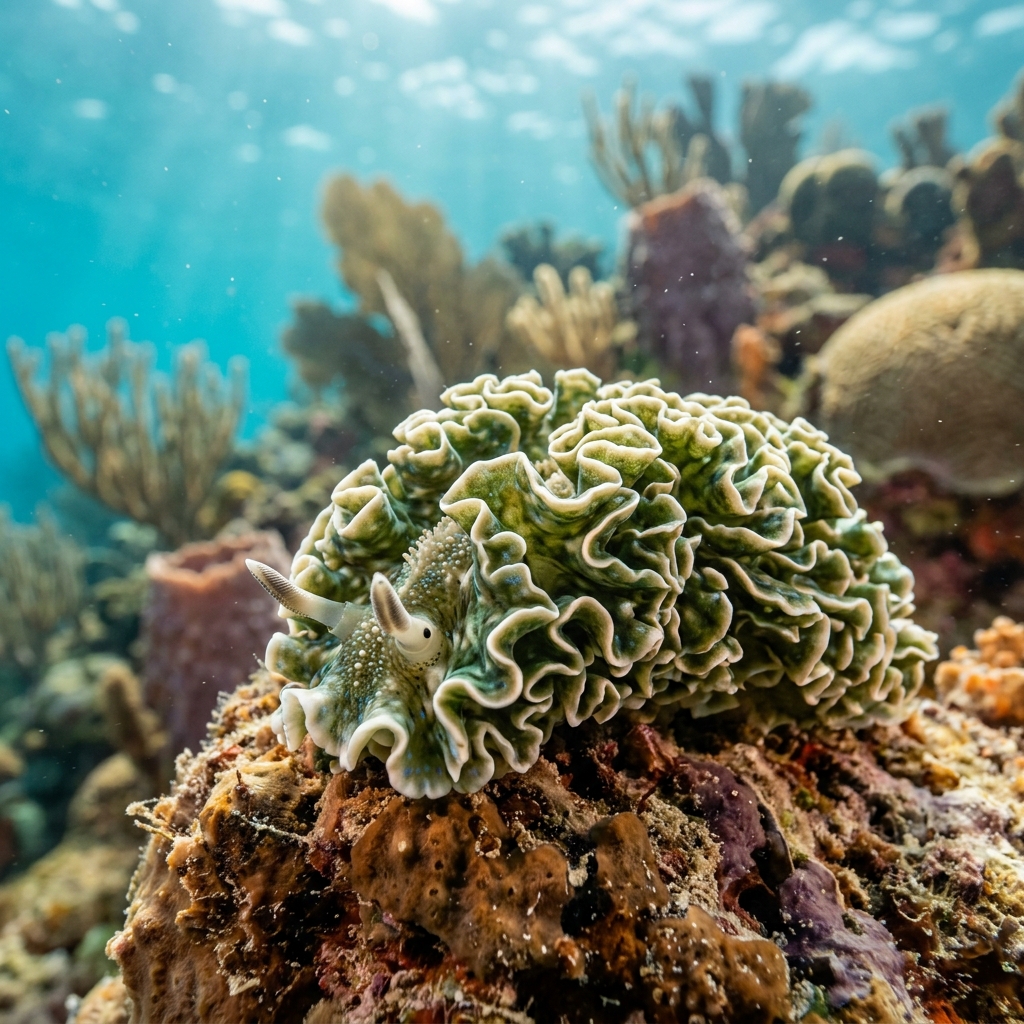
Reef neighbours a diver could mistake it for. Use the identification notes above to tell them apart.
Logged sightings currently trace back to Hawaii, United States, where it has been found on macro-focused dives searching algae mats. This is a narrow, specialist find rather than a species you will stumble across on a typical reef dive.
Mapping where Eyebrow Sap-sucker is logged…
The only confirmed sightings so far come from Hawaii, United States, where divers have found it on algae-covered rock during macro-focused dives. It is considered uncommon even at the one site where it has been logged.
It is a millimetres-scale sea slug, small enough that most divers need a macro lens or a very sharp eye to spot it at all against algae.
Look for a tiny green slug covered in flattened, leaf-like cerata with a pair of dark eyebrow-shaped markings on its head. Its colour blends closely with the algae it grazes, so patience and a slow scan of algae mats helps.
There is no confirmed seasonal pattern yet, and Hawaiian reef water stays warm (24 to 30C) all year, so sightings are not tied to a particular month. Any calm, clear macro dive is a fair shot.
It steals chloroplasts from the algae it eats and keeps them alive inside its own body, letting it harvest a bit of extra energy from sunlight, a trait called kleptoplasty shared with its sap-sucking slug relatives.
No, they pose no risk to divers. They are harmless, slow-moving grazers that will not react to or bother anyone nearby.
Site and sighting data is aggregated from diver logs, iNaturalist and GBIF. For taxonomy and conservation status:
Elysia Timida
573 sites