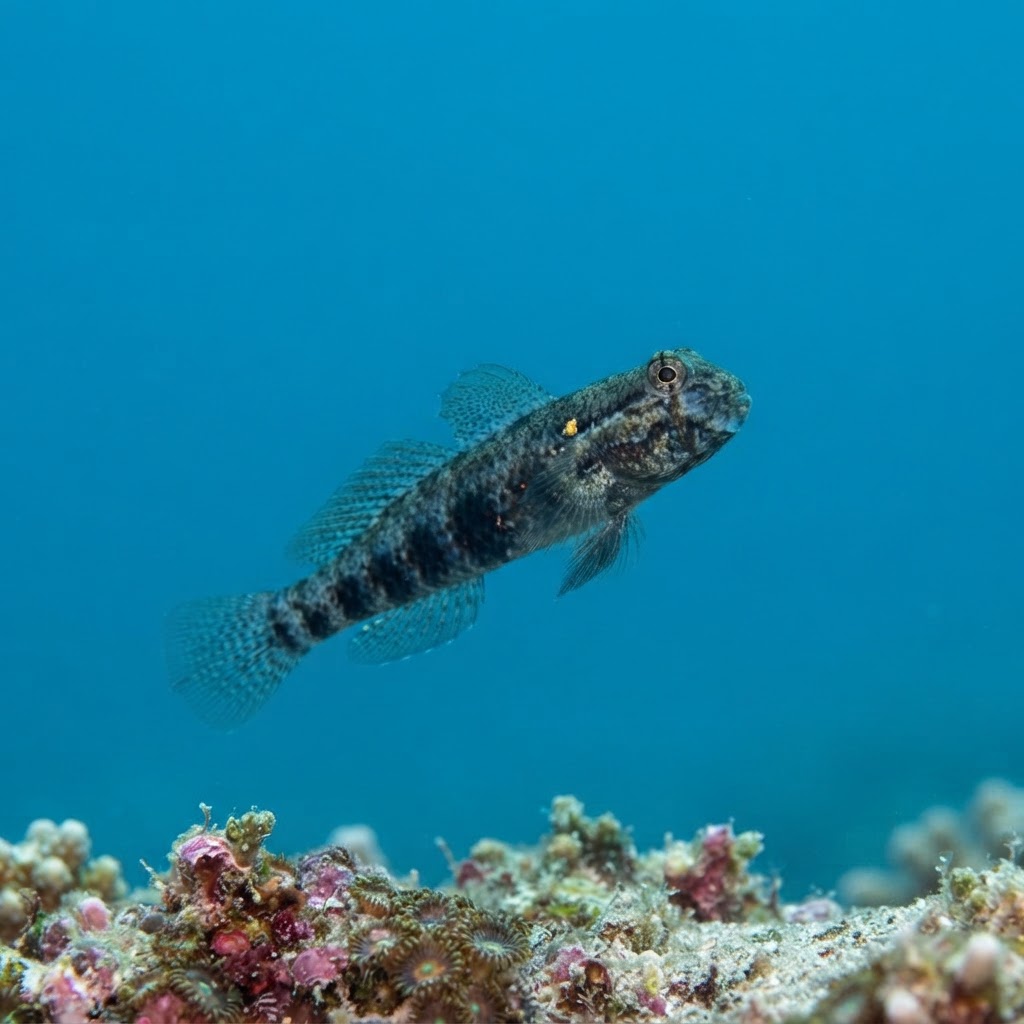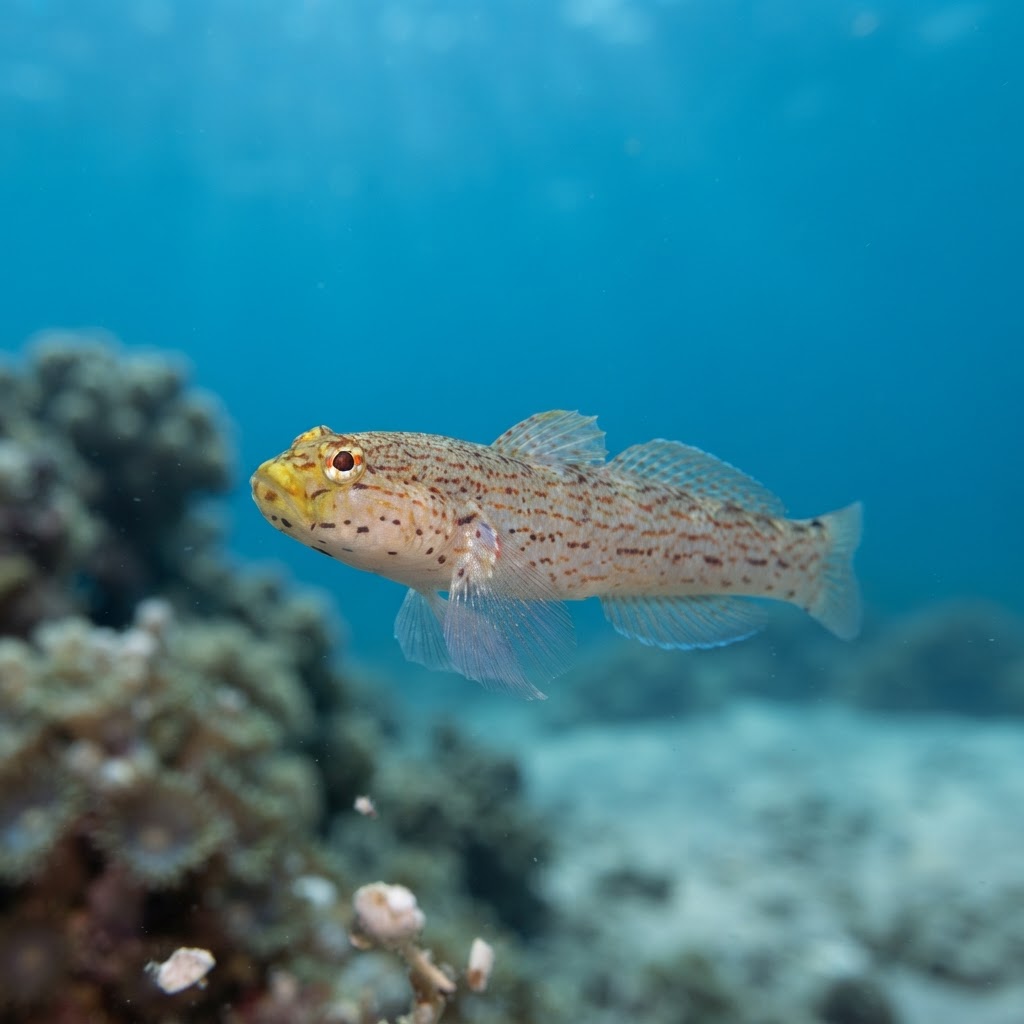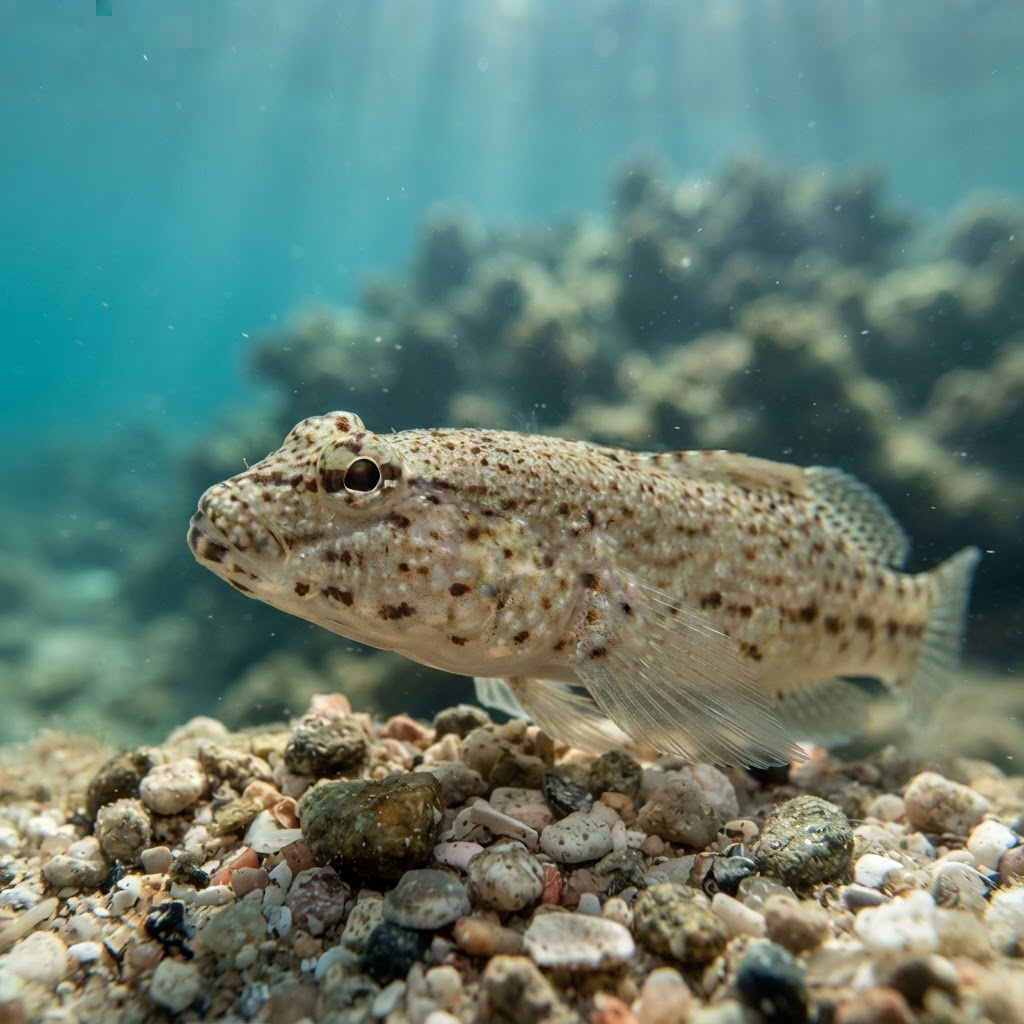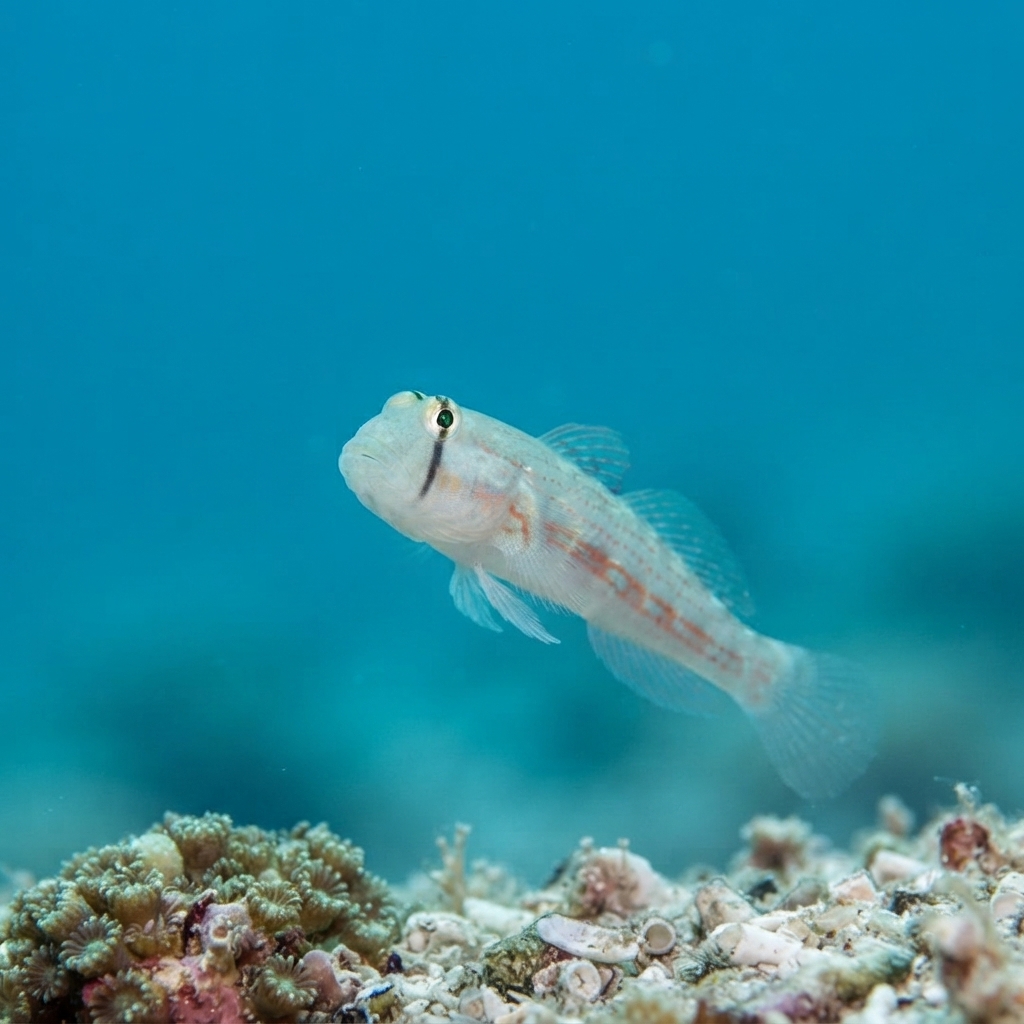
Gnatholepis cauerensis
A 4cm goby that hovers over sand in the Visayas and Viti Levu, easy to miss but worth the close look on any tropical reef dive.
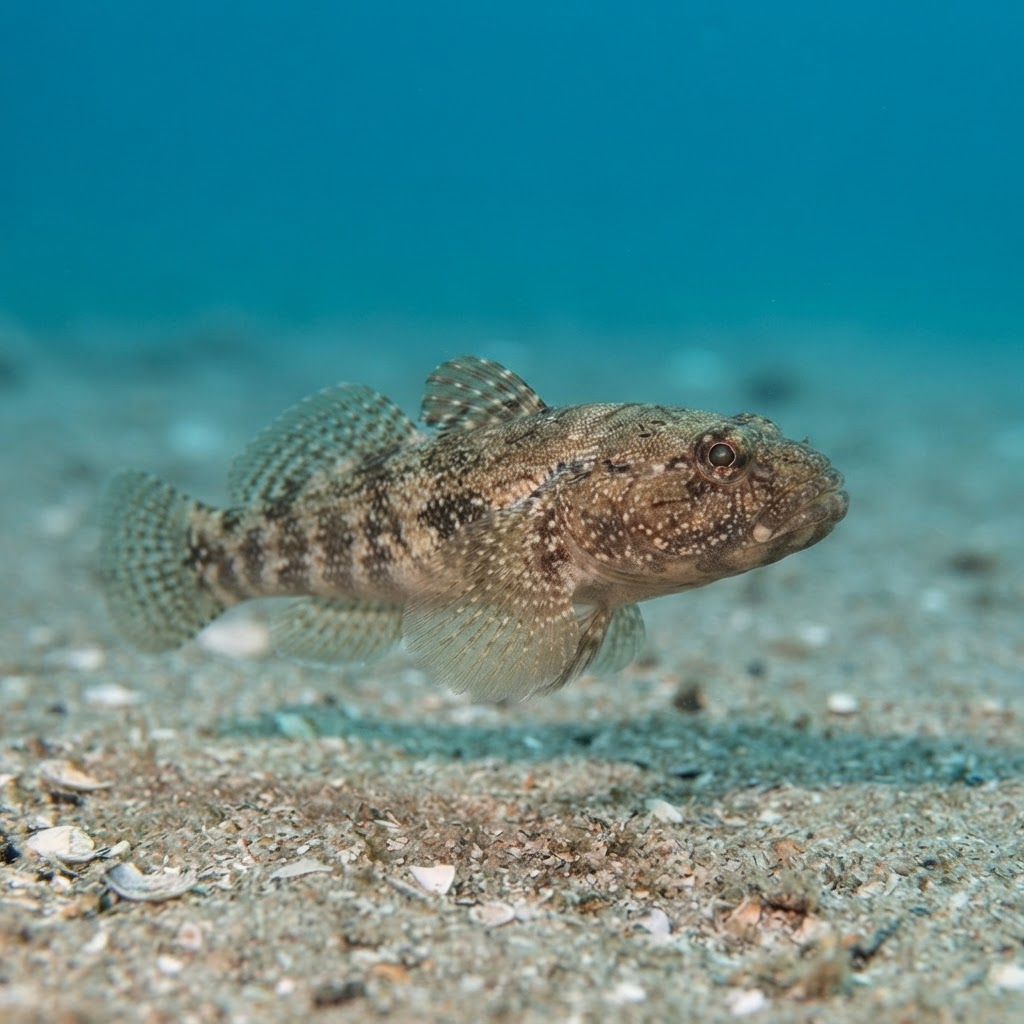
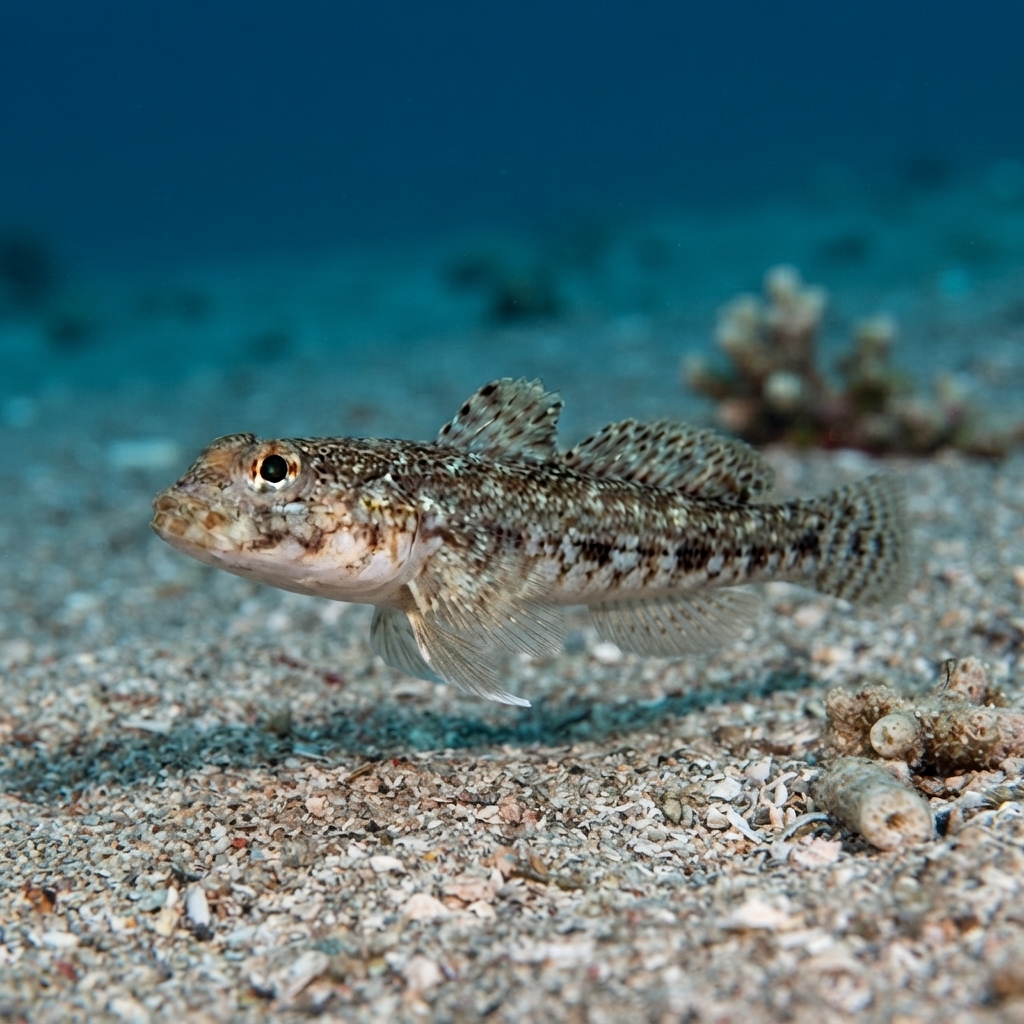
A tiny fish, barely 4 cm long, pale sandy-grey to translucent with faint speckling and a distinct dark bar running vertically through the eye, which is where the name comes from. It perches on or just above sand and rubble rather than swimming freely, propped up on its pelvic fins like most gobies. Look closely at the head: the eye bar is the single clearest ID mark against similarly small, pale reef gobies.
Divers usually find it hovering low over open sand or rubble patches near coral, staying within a body length or two of a bolt hole it can dart into. It's not shy exactly, more easily overlooked given its size and pale colouring, and it tends to hold its ground rather than bolt the moment a diver approaches slowly. Most sightings come from settling in close and scanning sand flats rather than the reef itself.
Like many small sand-gobies, it feeds by picking algae and organic film off the sand surface, making it one of the quiet grazers keeping reef-edge sand patches in check.
No clear seasonal pattern shows up in the sighting data, and its comfort range of roughly 24.7 to 28.9 C covers tropical reefs year-round, so any month works for a look.
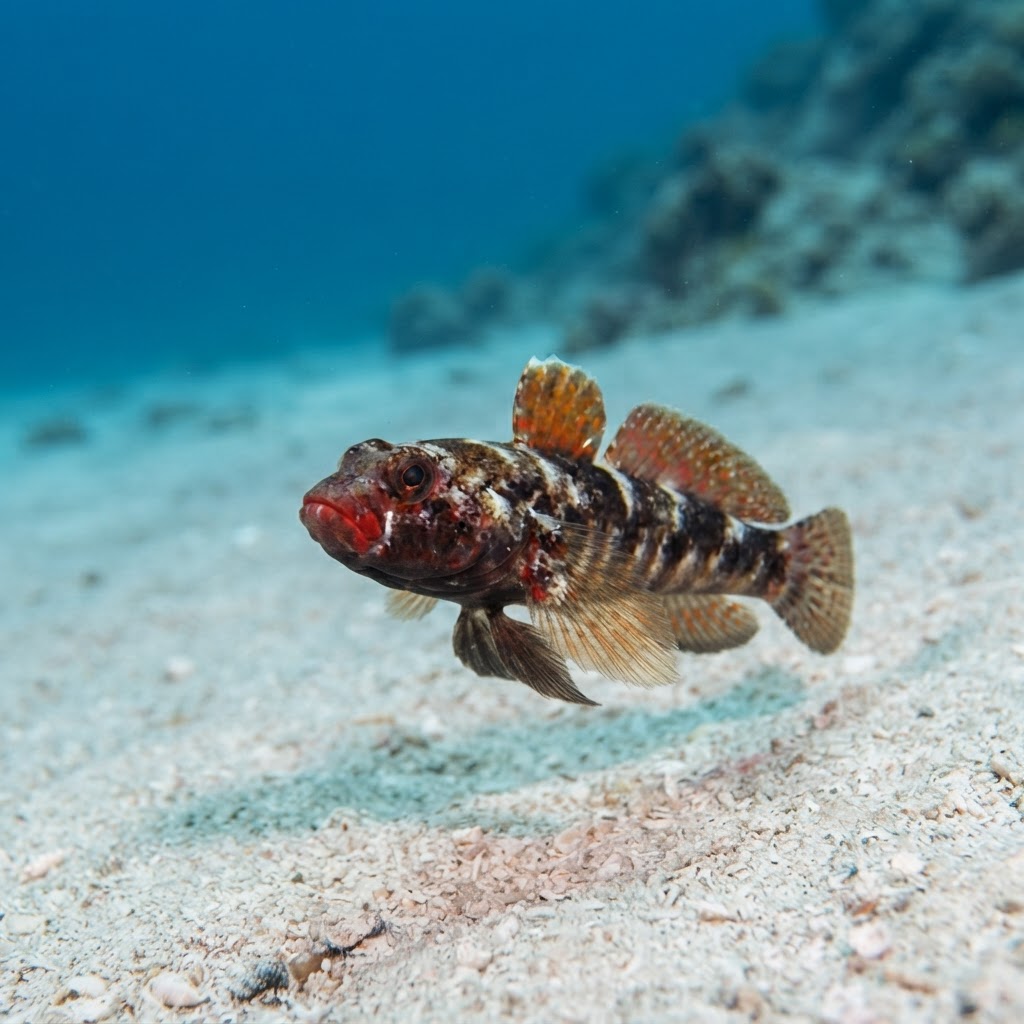
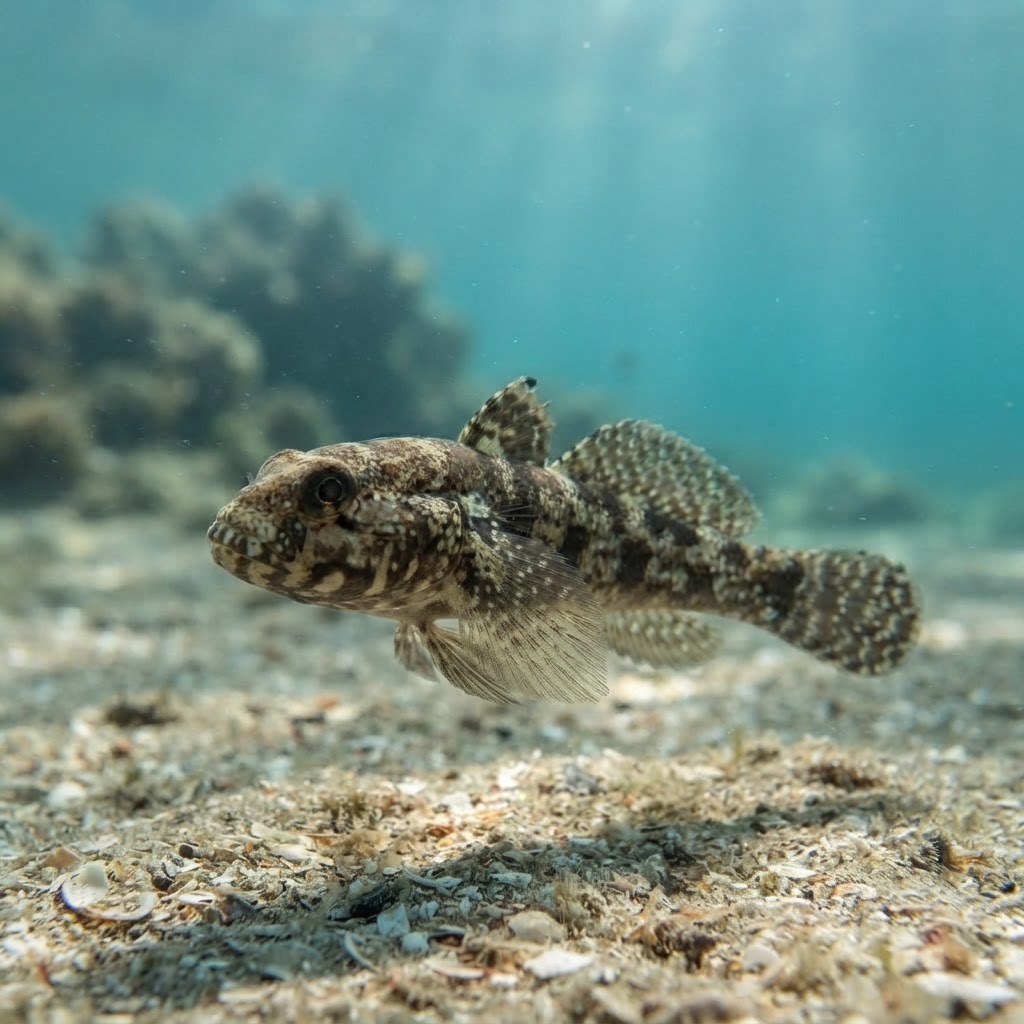
Reef neighbours a diver could mistake it for. Use the identification notes above to tell them apart.
Most reliably logged in the Philippines, especially across the Visayas, with strong numbers also turning up in Fiji around Viti Levu and in Indonesia's Maluku and Sulawesi regions. Smaller but consistent counts come from French Polynesia's Society Islands and Saipan in the Northern Mariana Islands, so it's a fair bet on sandy reef patches across the wider Indo-Pacific.
Mapping where Shoulderspot Goby is logged…
Best odds are in the Philippines, particularly the Visayas, with good numbers also in Fiji's Viti Levu and Indonesia's Maluku and Sulawesi regions. It also turns up in French Polynesia's Society Islands and around Saipan.
There's no strong season in the data, and it sits comfortably in 24.7 to 28.9 C water, so it's a year-round sighting on tropical Indo-Pacific reefs.
Look for a pale, sandy-coloured fish around 4 cm long with a clear dark vertical bar through the eye. It sits propped over sand or rubble rather than swimming in open water, which narrows it down fast.
They stay small, typically around 4 cm as adults, so a slow scan of sand patches is needed to spot one.
No, they pose no risk to divers. They're small, sand-dwelling grazers with no venom or aggressive behaviour.
Site and sighting data is aggregated from diver logs, iNaturalist and GBIF. For taxonomy and conservation status:
Slender Goby
806 sites