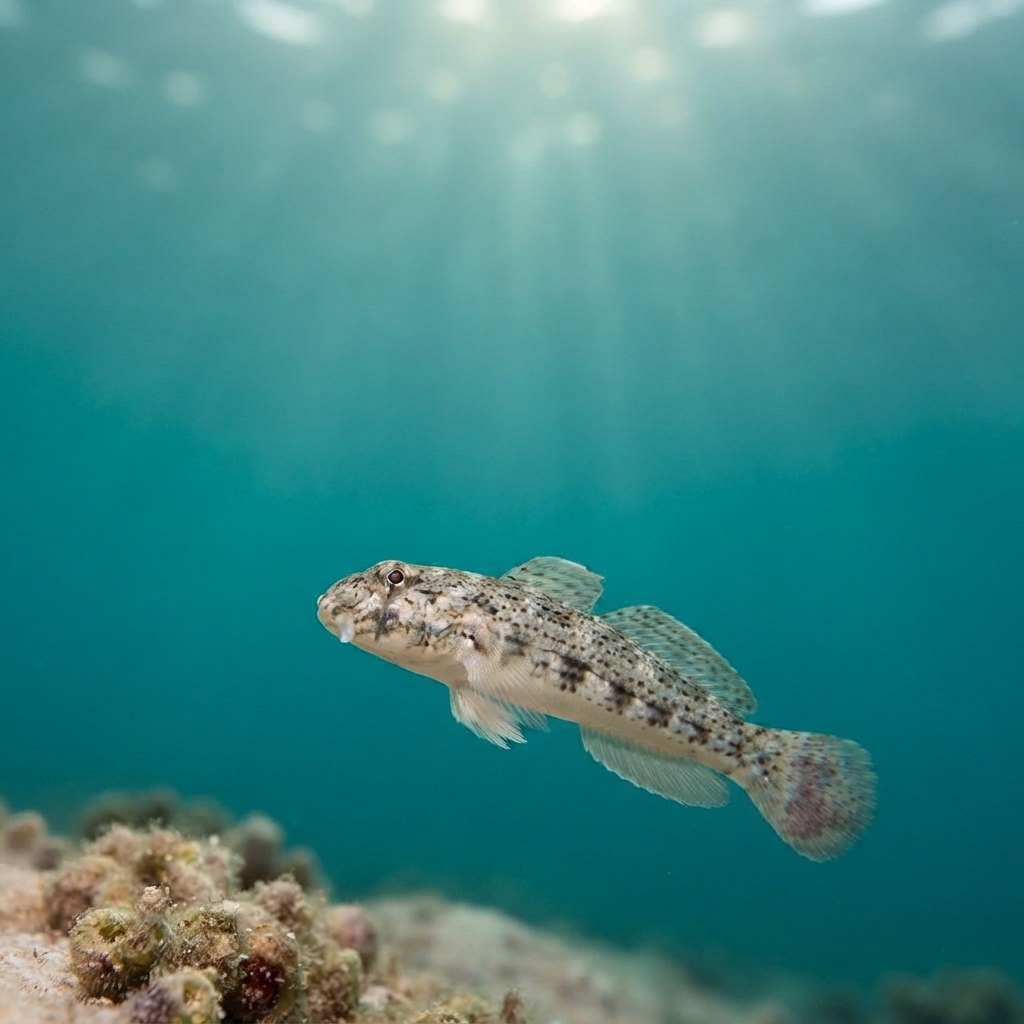
Gnatholepis anjerensis
A pale, sand-loving goby found perching on rubble in Ponta do Ouro and the Maldives, active year-round in warm 24-29C reef water.
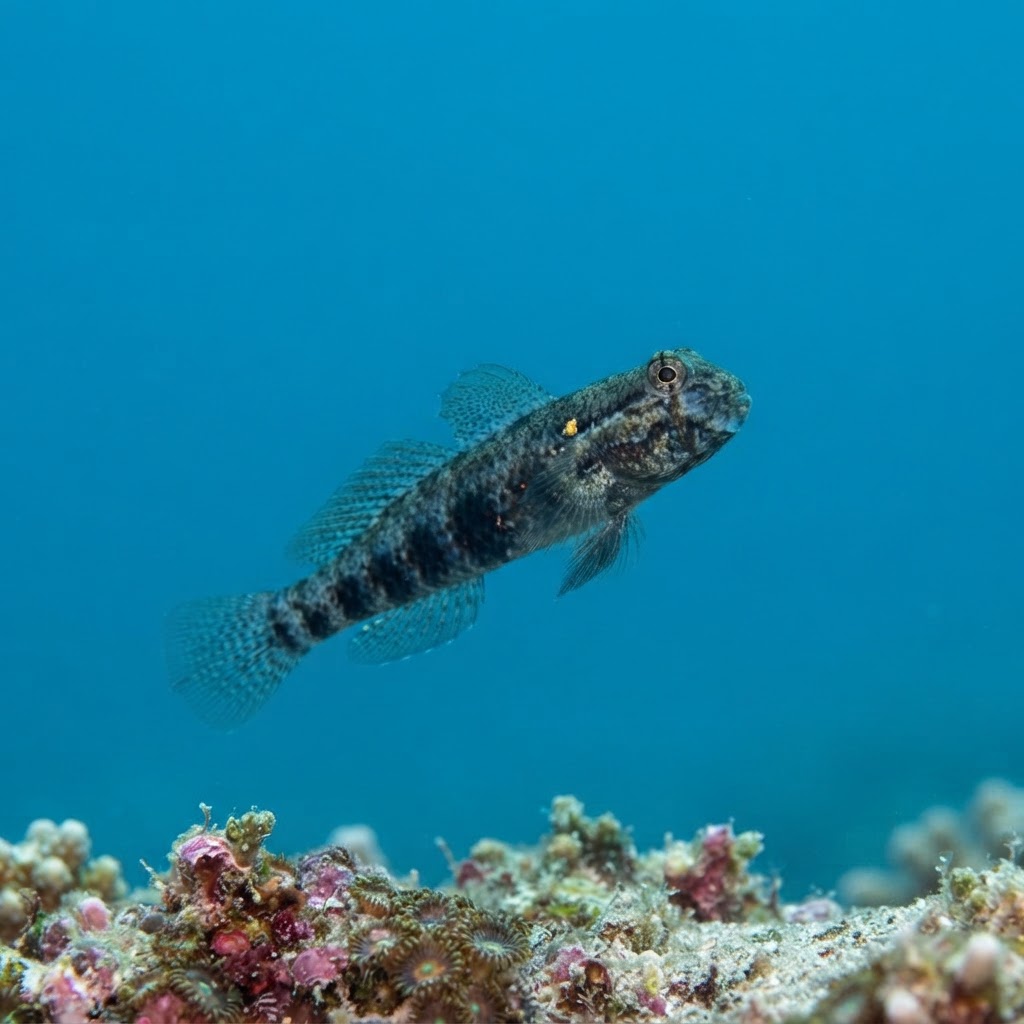
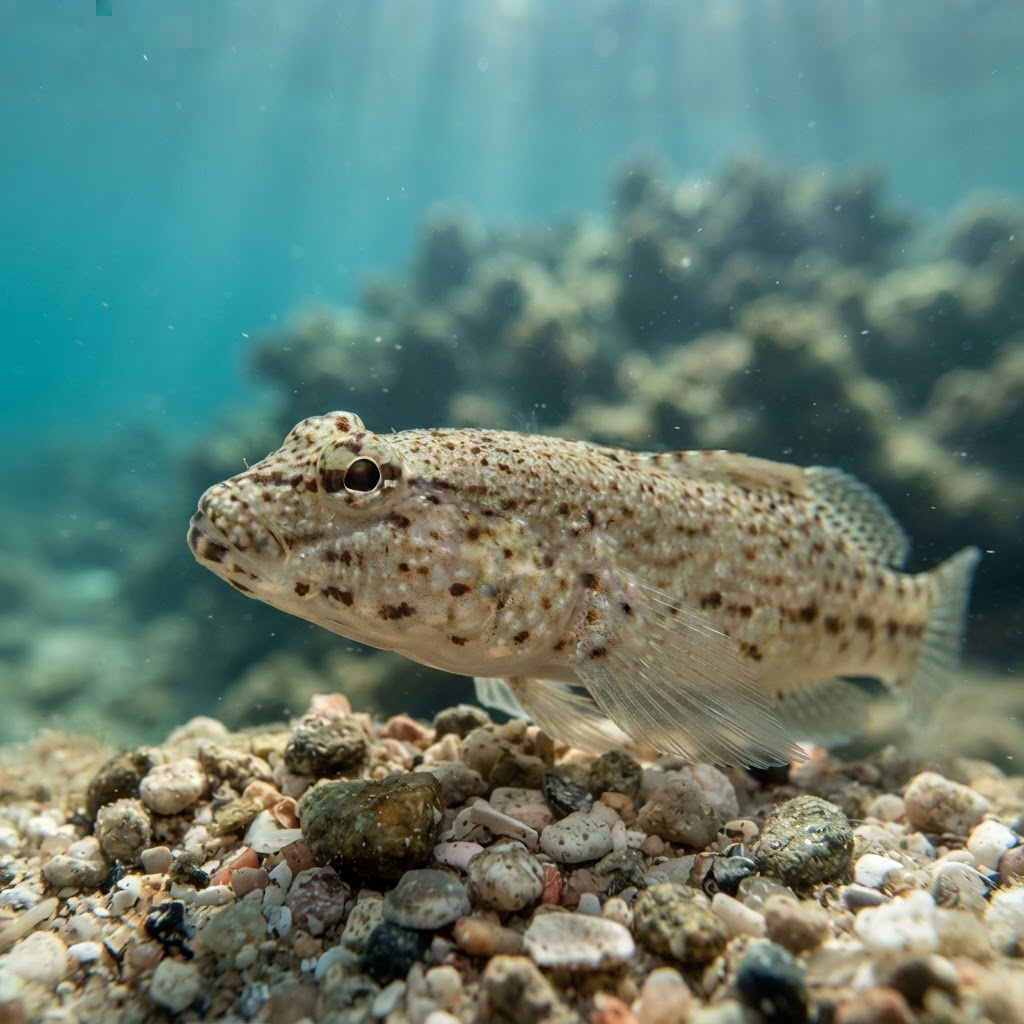
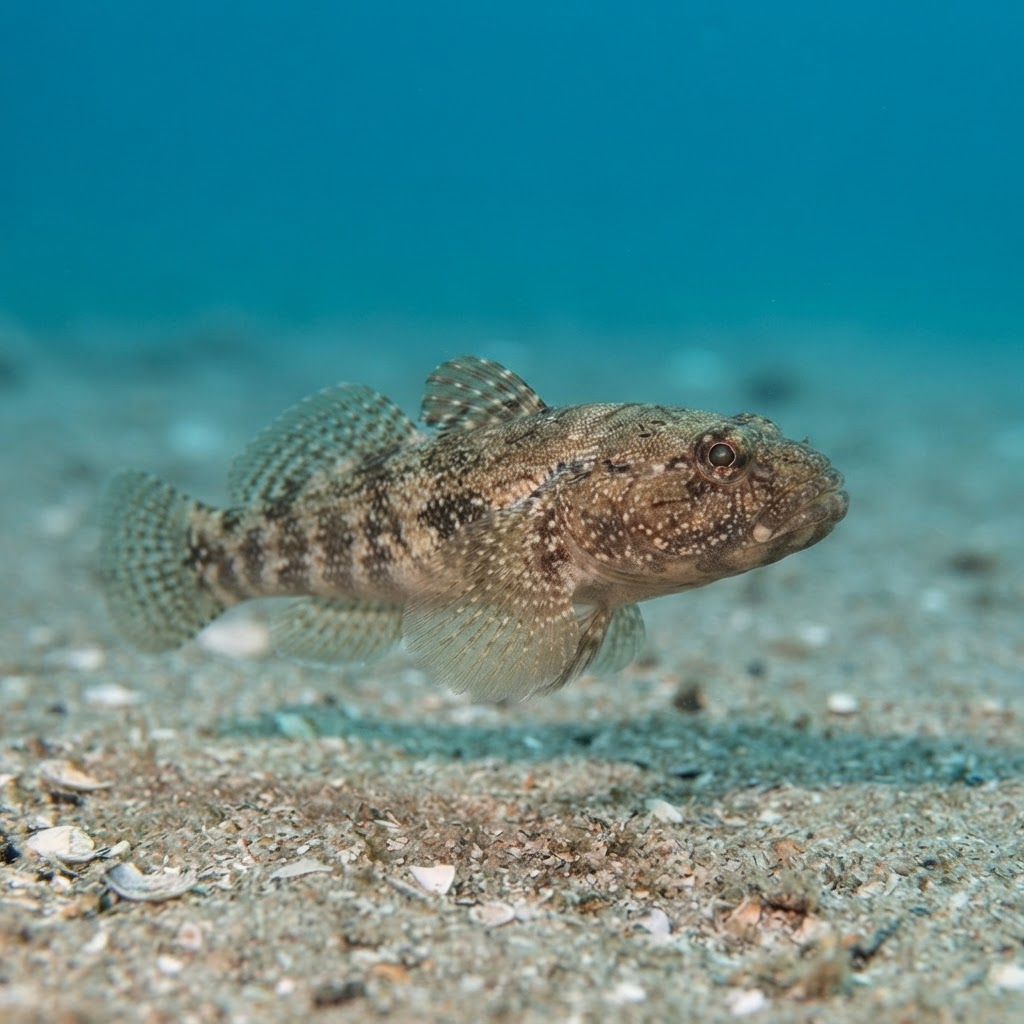
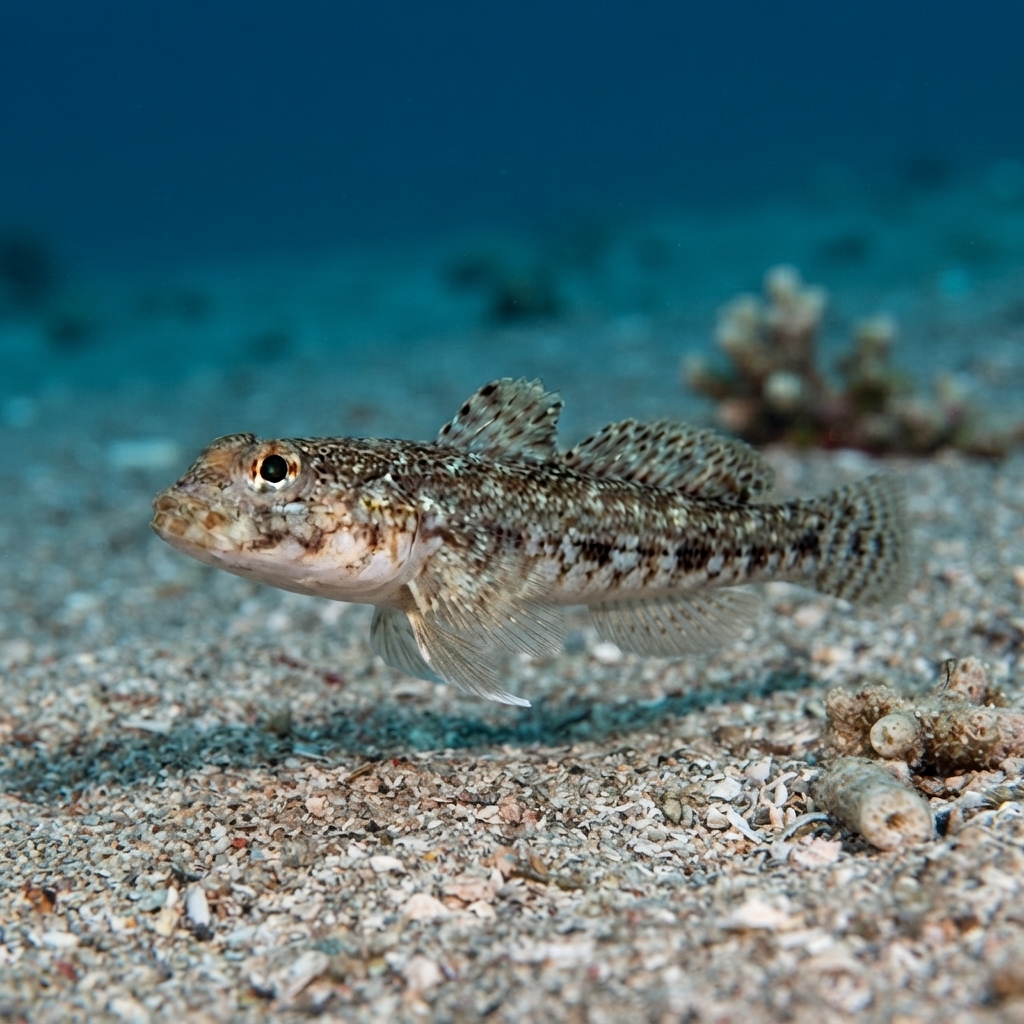
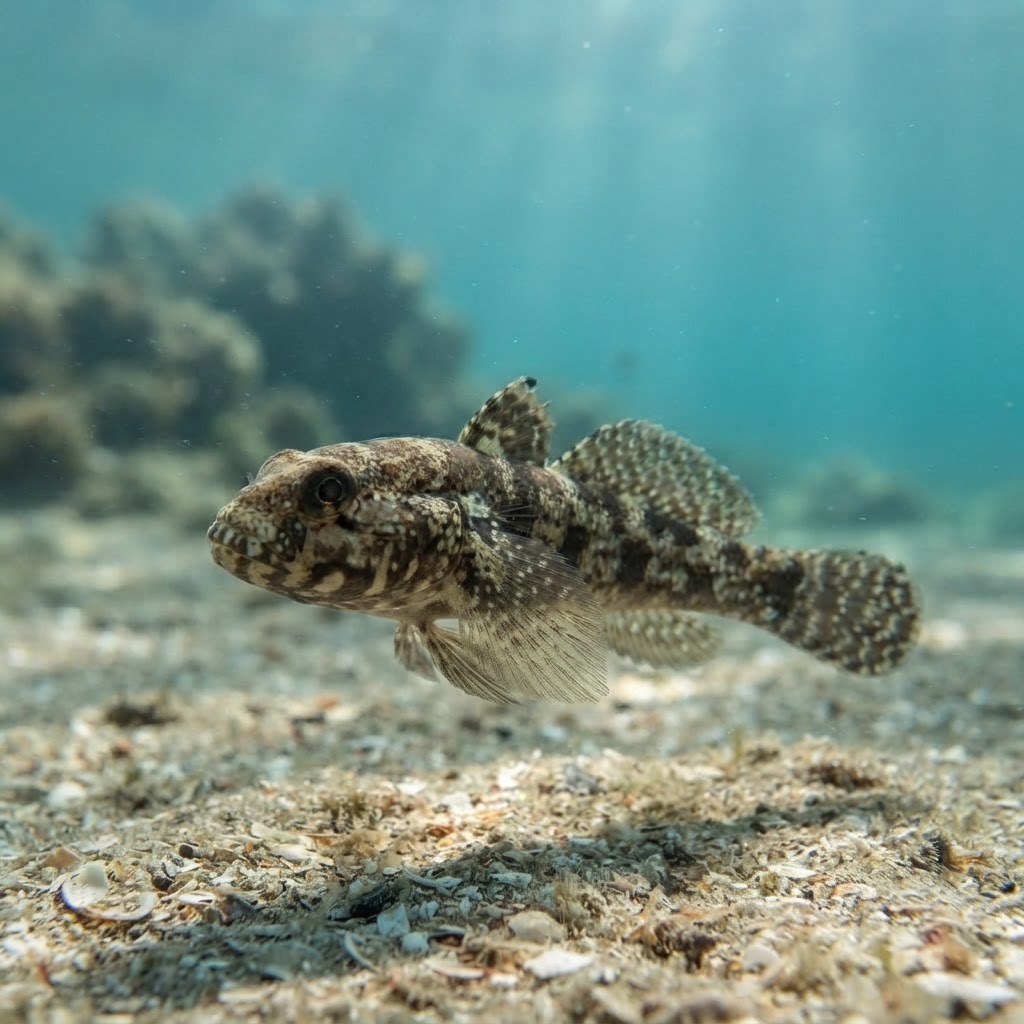
A tiny, pale sand-coloured goby around 6 cm long with a dark vertical bar running through the eye, which gives it its name. It has a slim, torpedo-shaped body with faint speckling along the flanks and sits propped on its pelvic fins rather than swimming freely. Look for it perched motionless on sand or rubble patches close to the reef rather than out in open water.
Spends most of its time hovering just above sand or rubble, propped on its front fins, darting for cover into a burrow or crevice the moment a diver gets too close. It rarely strays far from its patch of sand and is easiest to spot by scanning slowly along the reef base rather than mid-water. Most sightings are logged as uncommon, so it rewards divers who take time to look rather than cruise past.
Like many small sand gobies, it likely shares a burrow with a symbiotic shrimp or uses abandoned burrows on the sand flat, relying on quick reflexes rather than camouflage colour change to avoid predators.
No strong seasonal pattern shows up in sightings, and its comfortable range of 24.3 to 29.0C matches tropical reefs year-round, so it can turn up on any dive regardless of month.
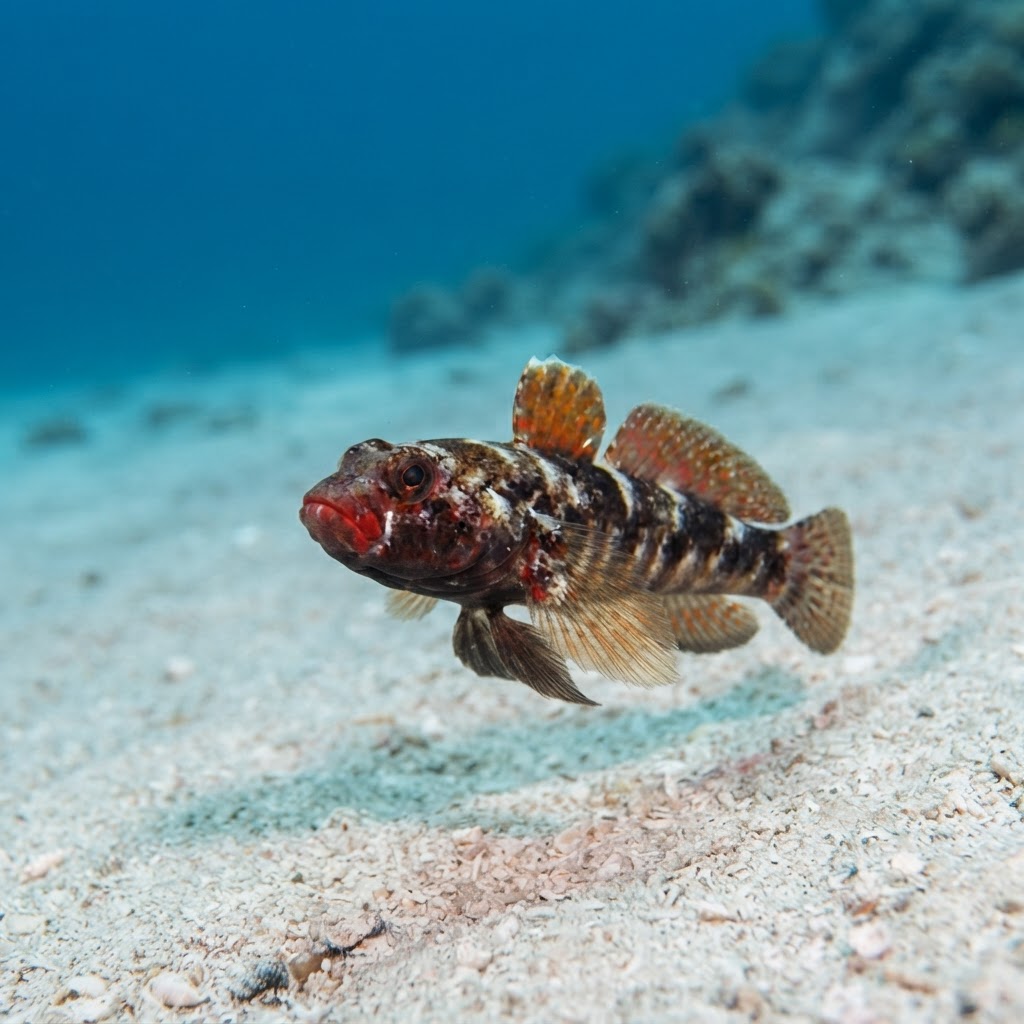
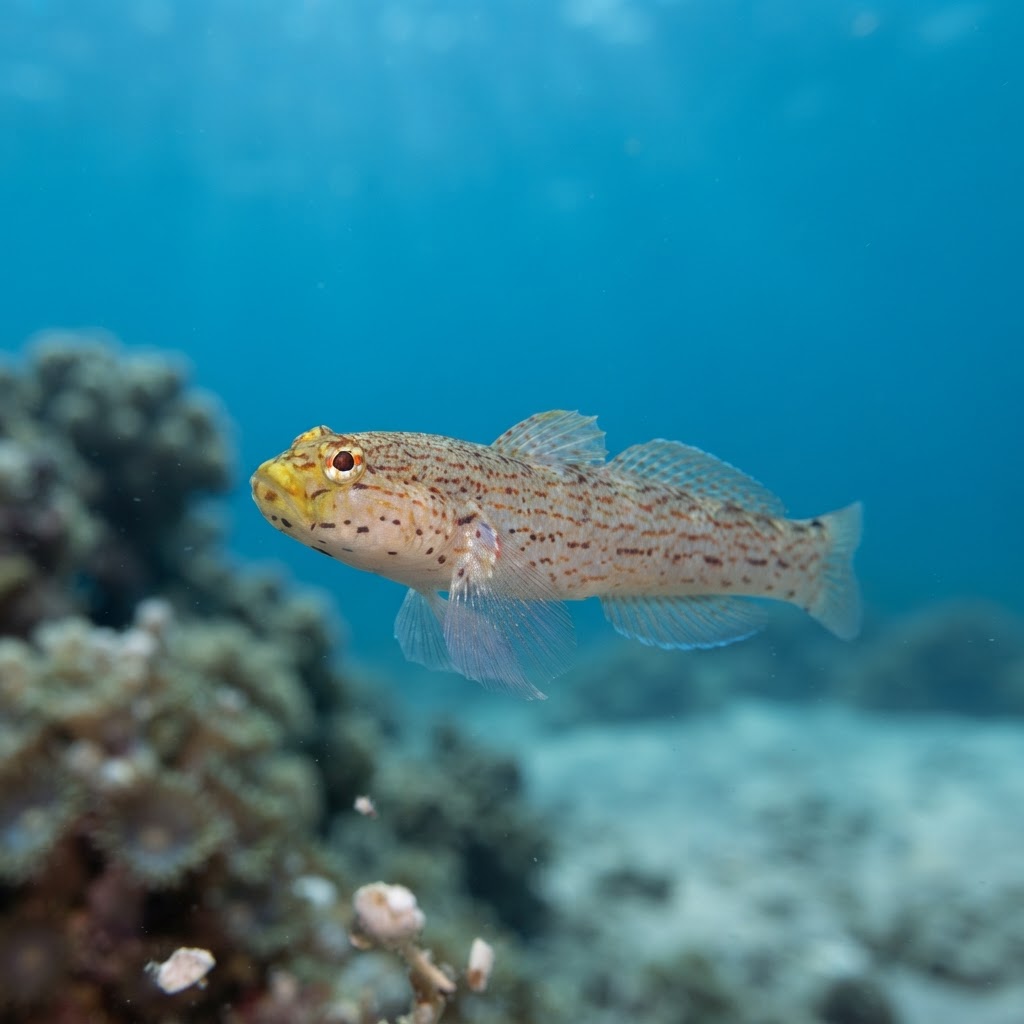
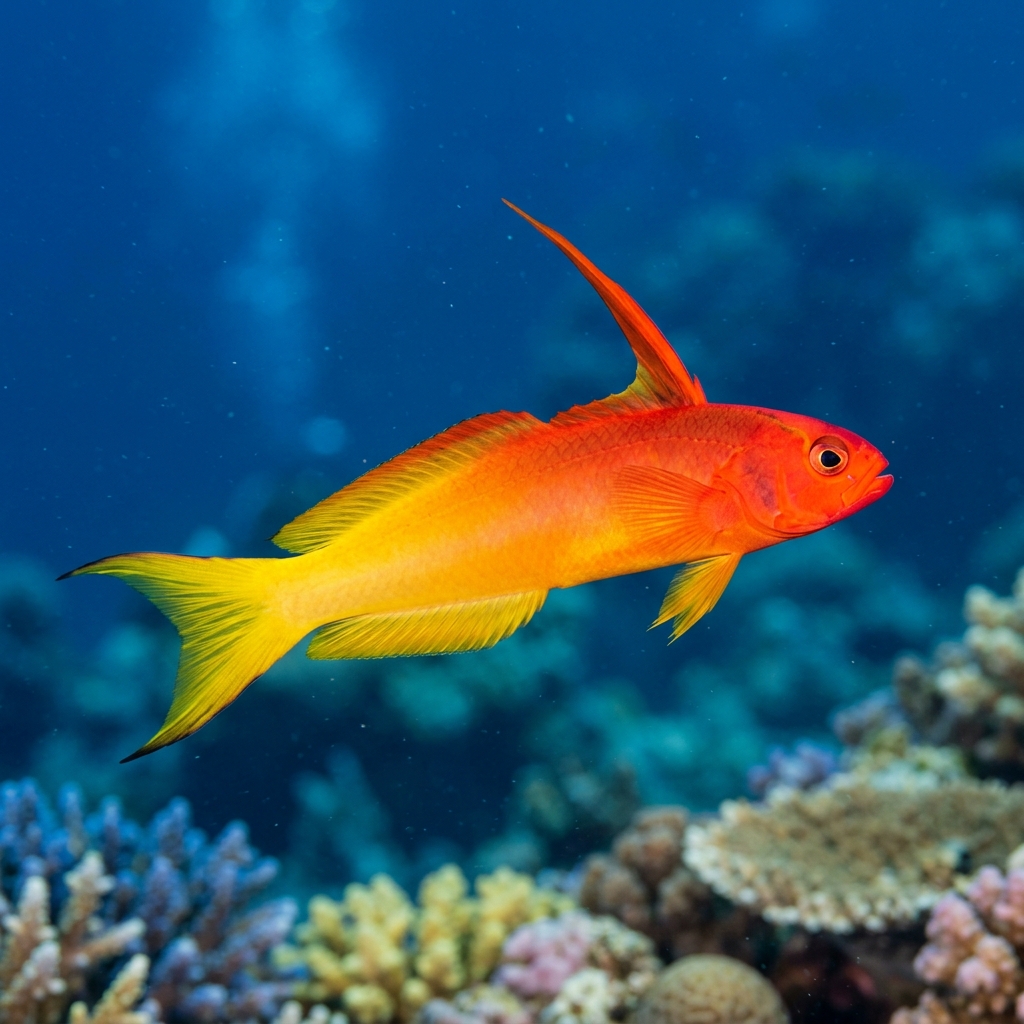
Reef neighbours a diver could mistake it for. Use the identification notes above to tell them apart.
Most reliably logged in Ponta do Ouro in Mozambique and the Central Atolls of the Maldives, with strong numbers also in the Mamanuca Islands of Fiji. Divers also find it around the Society Islands in French Polynesia, Marsa Alam in Egypt, and Flic-en-Flac in Mauritius, usually on sandy patches near reef structure.
Mapping where Shoulderspot Sandgoby is logged…
It's most consistently seen in Ponta do Ouro, Mozambique and the Central Atolls of the Maldives, with good numbers in Fiji's Mamanuca Islands too. Smaller populations turn up in French Polynesia, Egypt, and Mauritius.
There's no clear season in the sightings data, and it lives comfortably in water between 24 and 29C, so it's present on tropical reefs throughout the year.
Look for a small, pale, sand-toned goby about 6 cm long with a distinct dark bar through the eye. It perches on sand or rubble propped on its front fins rather than swimming freely.
They stay small, typically reaching around 6 cm in length, so they're easy to overlook against sand and rubble unless you're looking closely.
No. They pose no threat to divers and simply dart into a burrow or crevice if approached too closely.
Site and sighting data is aggregated from diver logs, iNaturalist and GBIF. For taxonomy and conservation status:
Slender Goby
806 sites