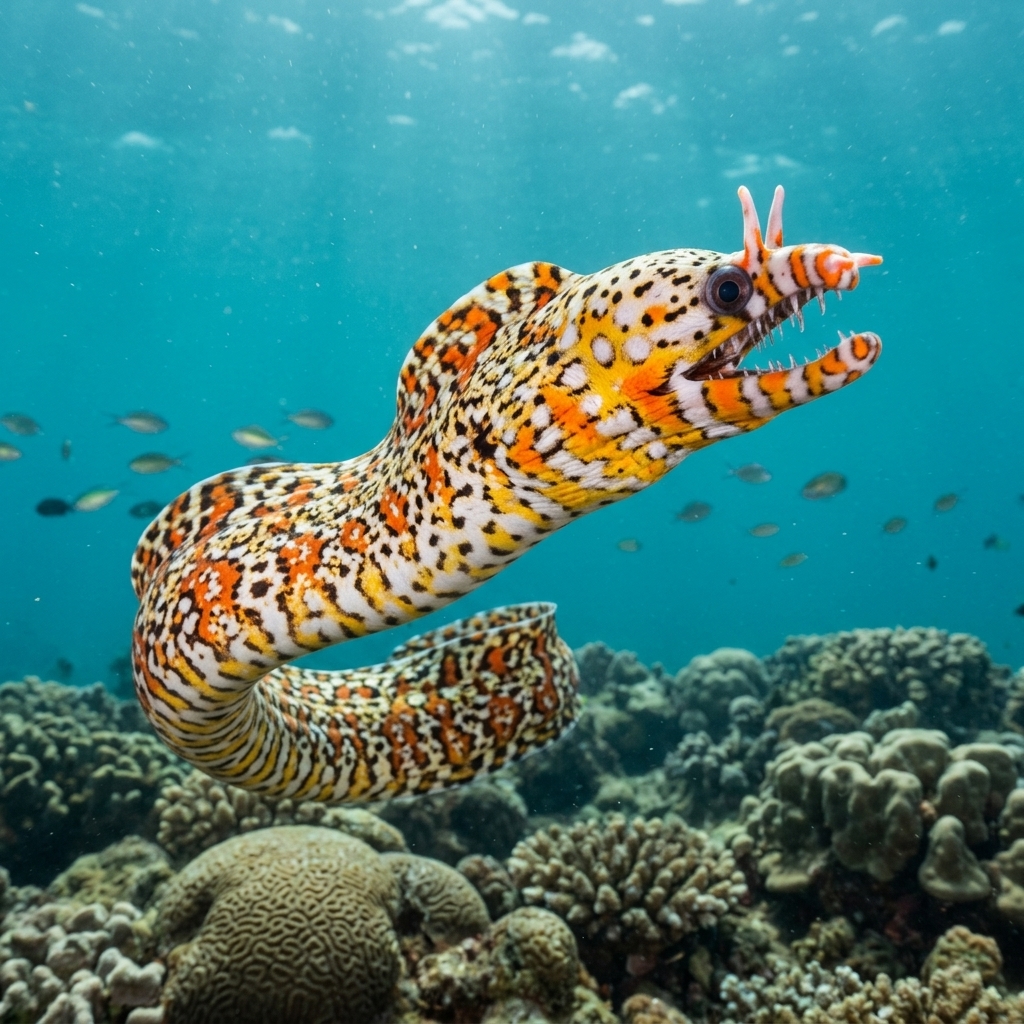
Enchelycore pardalis
One of diving's most striking eels, the Hawaiian Dragon Eel is best seen in Hawaii, with sightings peaking Oct, Dec in 24-27 °C water.
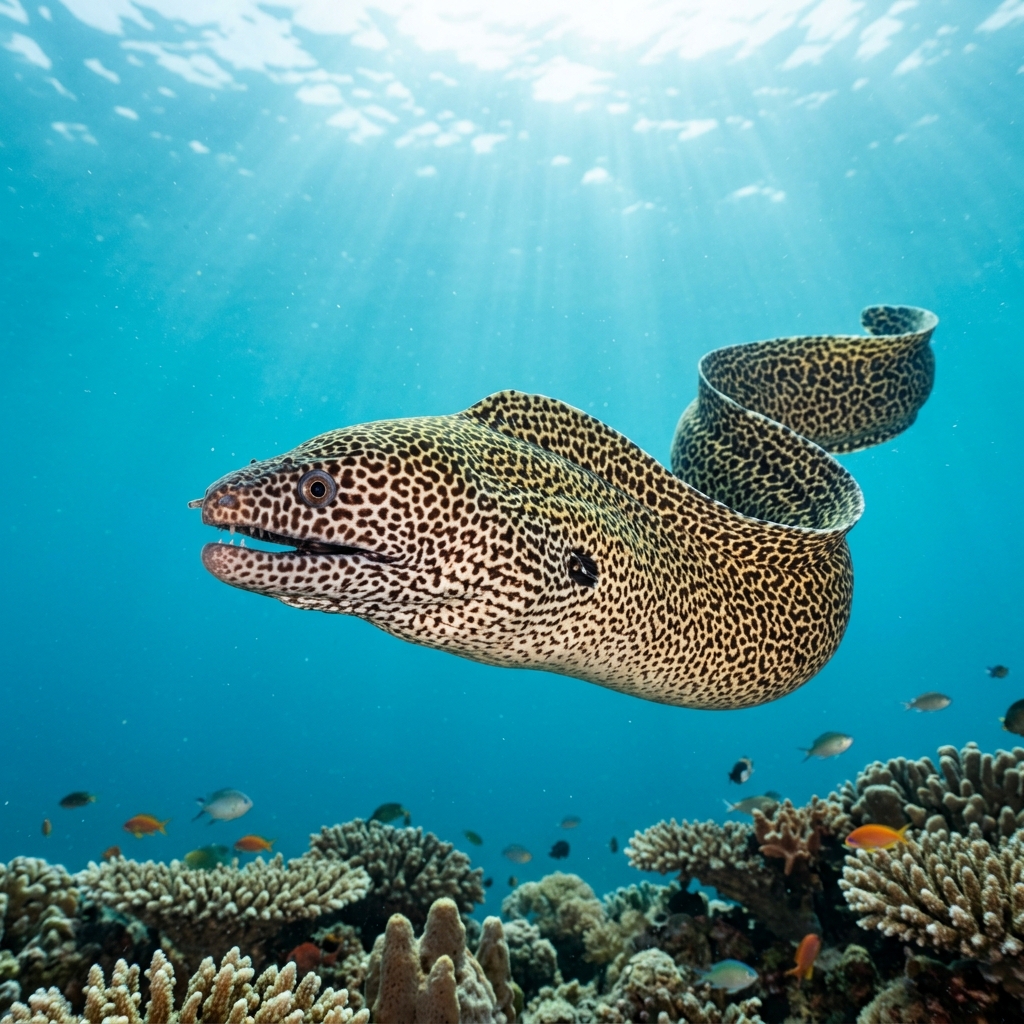
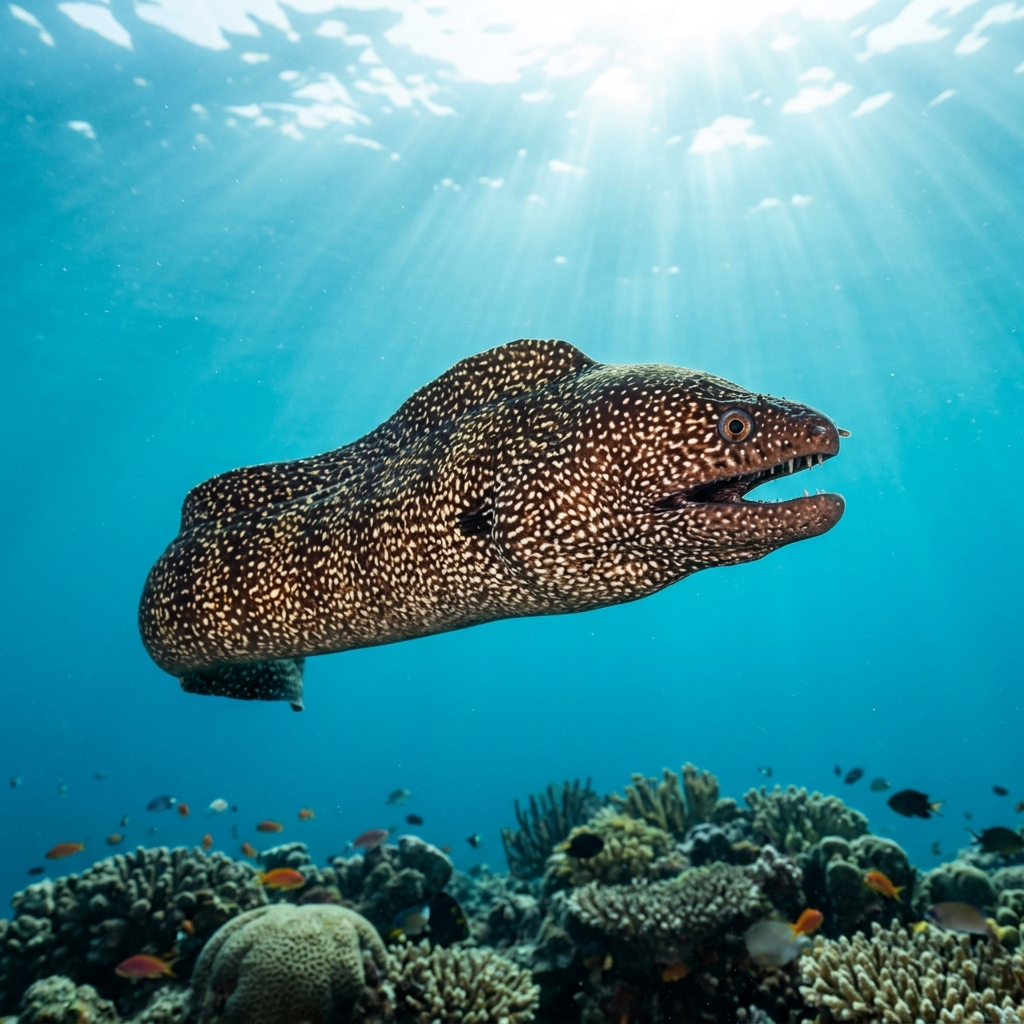
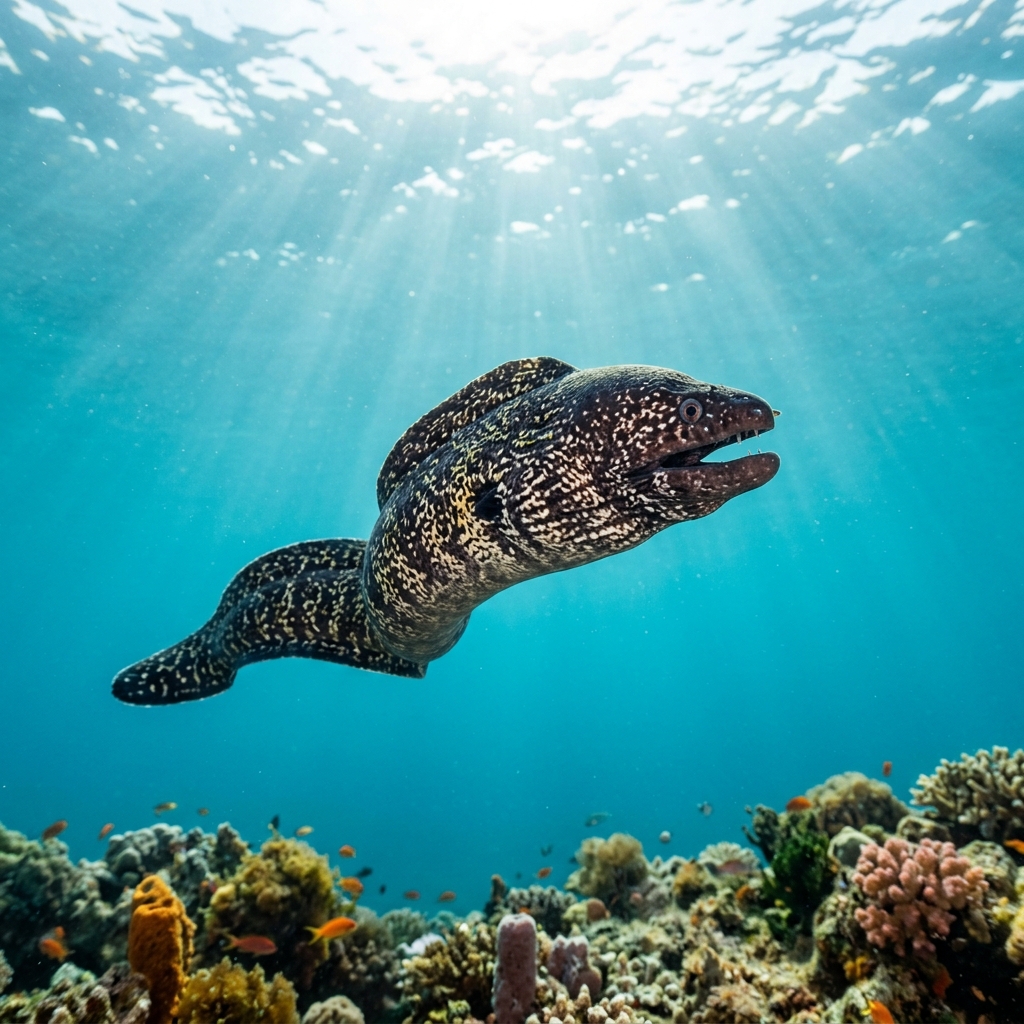
Unmistakably patterned, this moray wears a vivid mosaic of orange, red, and white blotches across its entire body, making it look like no other eel on the reef. The snout is long and tubular with highly curved, fang-like teeth that stay partially exposed even when the mouth is closed. It grows to a substantial length and has a noticeably stout, muscular body compared with slender morays like the ribbon eel. That explosive colouration, especially around the head, is the one detail that settles the ID instantly.
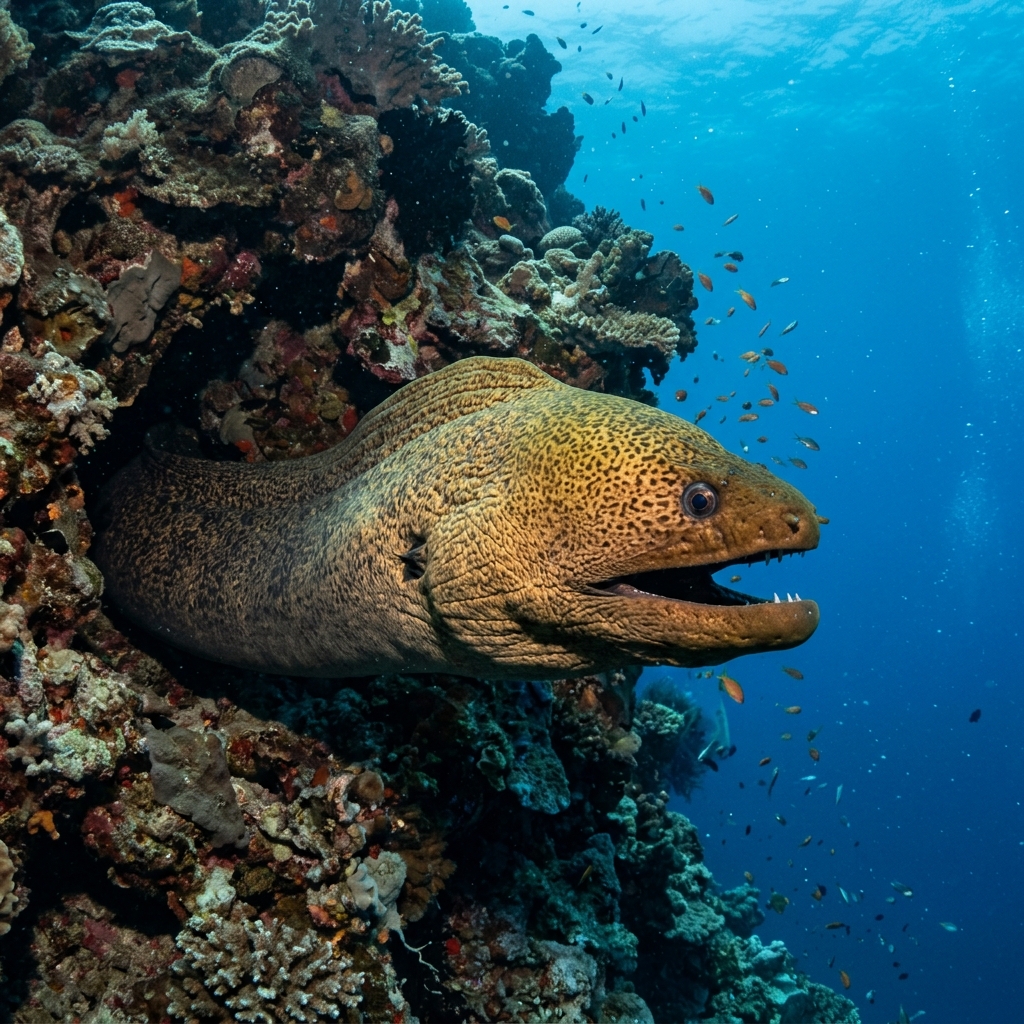
Like most morays, this eel spends most of its time tucked into reef crevices and lava tubes, with just the head and neck exposed as it gulps water over its gills. Divers typically spot it at rest in a hole, often returning to the same shelter day after day, which makes known individuals reliably findable. It generally ignores calm divers, though a slow, non-invasive approach is always the right call with any moray.
The tubular, fang-lined snout is a functional adaptation for gripping fast, slippery prey like fish and octopus rather than the crustaceans that shorter-snouted morays favour, that toothy face is doing real predatory work, not just posing.
Northern Hemisphere sightings concentrate in October through December, so targeting Hawaii in the autumn months gives you the best odds. Outside that window, the species occupies warm tropical water in the 24 to 27 °C range, so it is present year-round, just logged less frequently at other times.
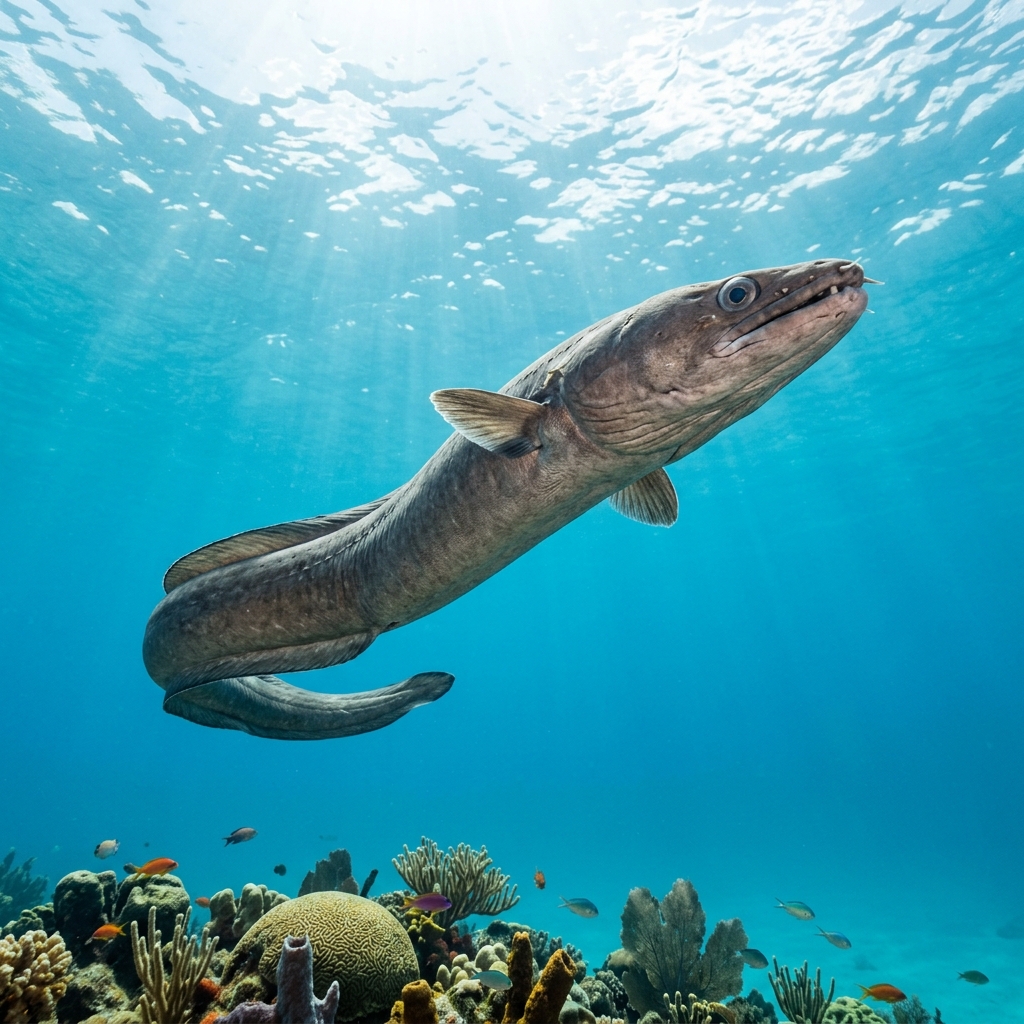
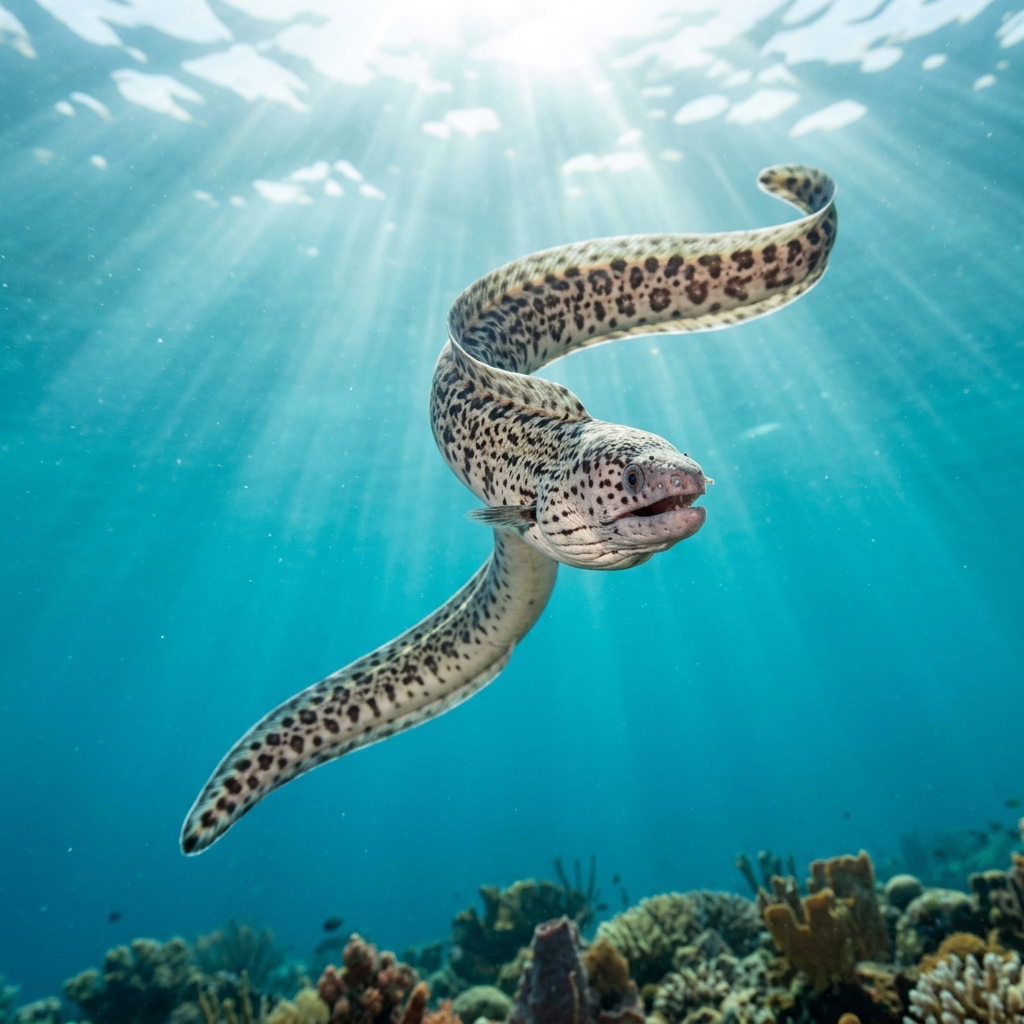
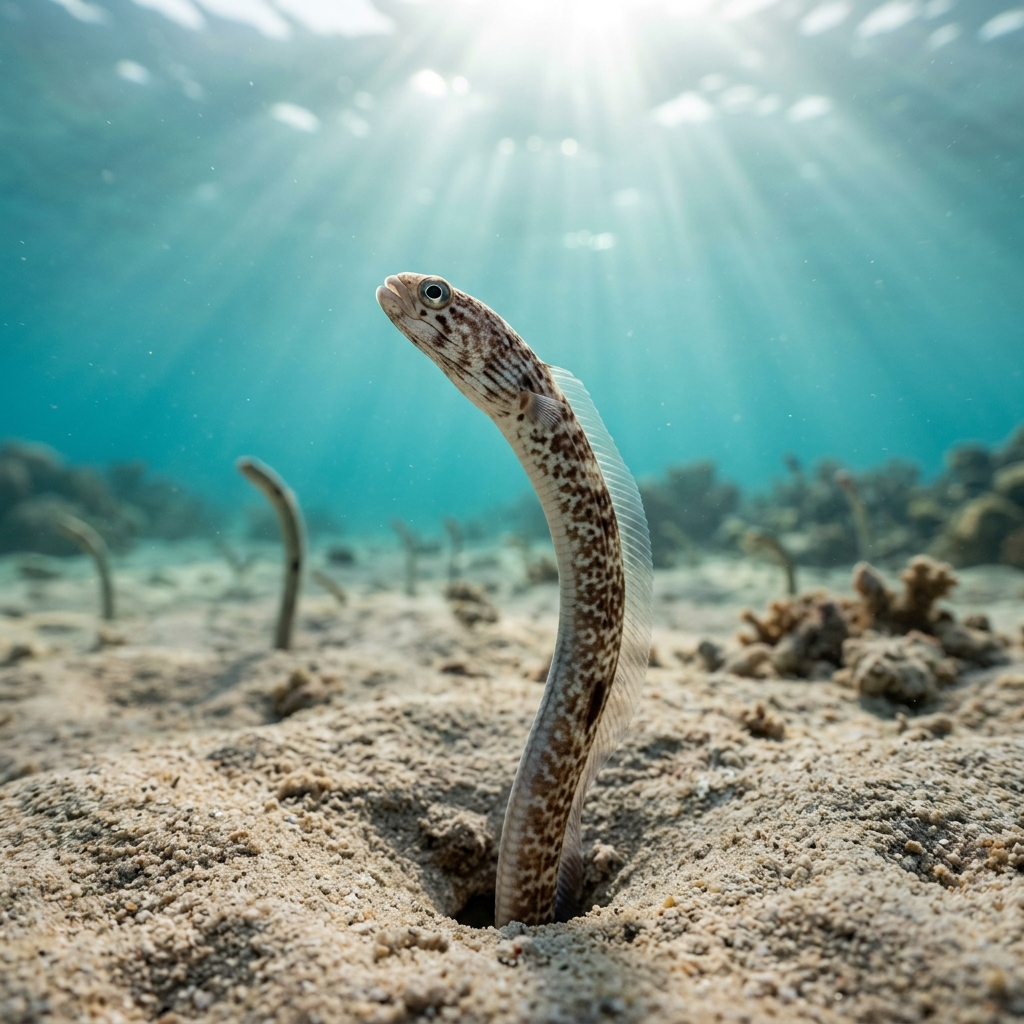
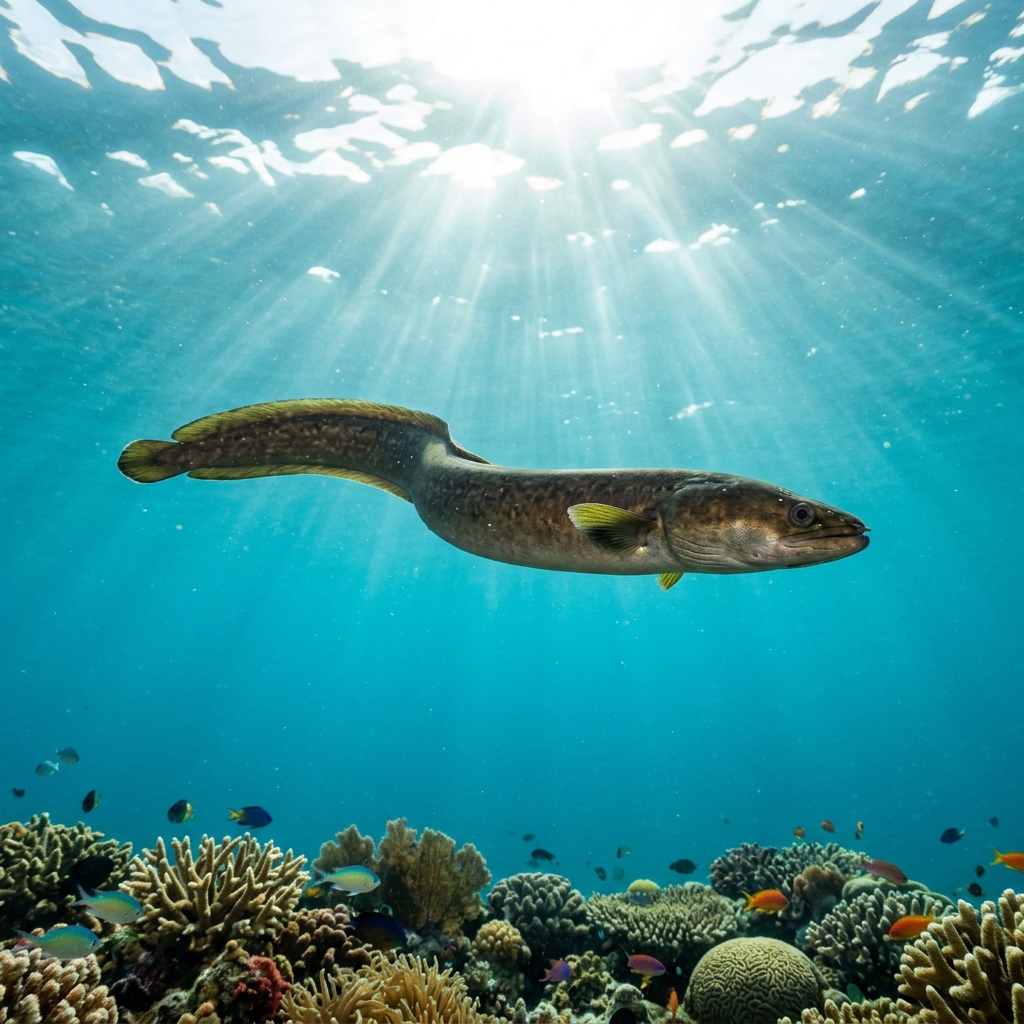
Reef neighbours a diver could mistake it for. Use the identification notes above to tell them apart.
Hawaii accounts for the great majority of logged sightings, making the Hawaiian Islands the clear top destination for this species. A handful of confirmed sightings also come from the Muscat region of Oman, and one logged site sits off Zanzibar, Tanzania, hinting at a wider Indo-Pacific range that divers are still mapping.
Mapping where Hawaiian Dragon Eel is logged…
Hawaii is by far the most reliable place, with sightings spread across sites throughout the islands. There are also confirmed sightings in the Muscat region of Oman and off Zanzibar, Tanzania, so the species turns up across parts of the Indo-Pacific, though Hawaii remains the hotspot.
Northern Hemisphere data points to October through December as the peak window for sightings. The species lives in warm tropical water around 24 to 27 °C, so it is present year-round, but autumn appears to be when divers encounter it most consistently.
Look for the bold orange, red, and white mosaic colouration covering the whole body, combined with a long tubular snout lined with hooked, fang-like teeth. No other moray in its range combines that colour pattern with that distinctively elongated jaw. The colouration alone is usually enough for a confident ID.
They are not considered dangerous to divers. Like any moray, they can bite if harassed or cornered, but unprovoked aggression is not in their nature. Keep a respectful distance, avoid poking into crevices, and they will simply ignore you.
Rare is the honest answer. Across most sites where it has been logged, divers report infrequent sightings. A small number of sites do rate it as common, suggesting that once you find a spot where one has set up residence, repeat encounters are very possible, morays are highly site-faithful.
Site and sighting data is aggregated from diver logs, iNaturalist and GBIF. For taxonomy and conservation status:
Garden Eel
2,448 sites