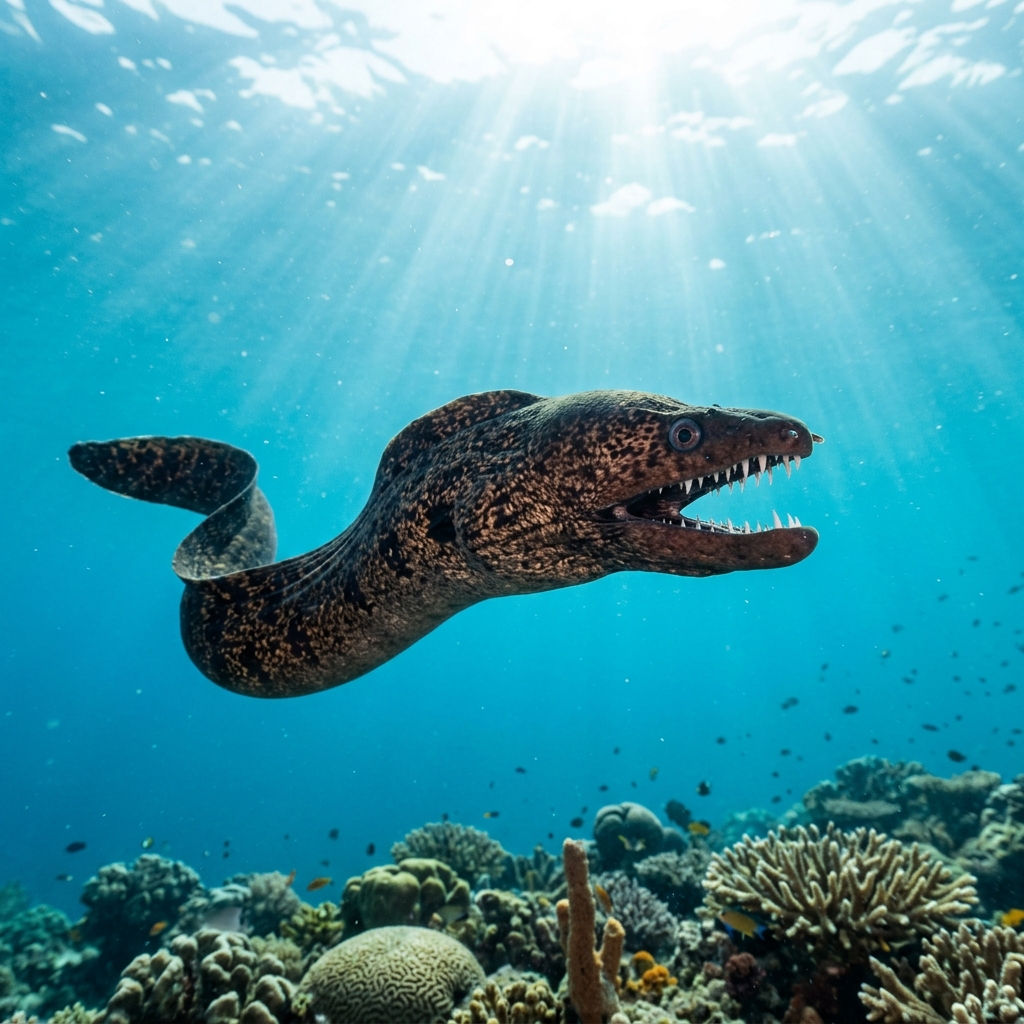
Enchelycore nigricans
Spot the Viper Moray in warm Atlantic waters around Cape Verde and the Dominican Republic. A rare find, but unforgettable when you do.
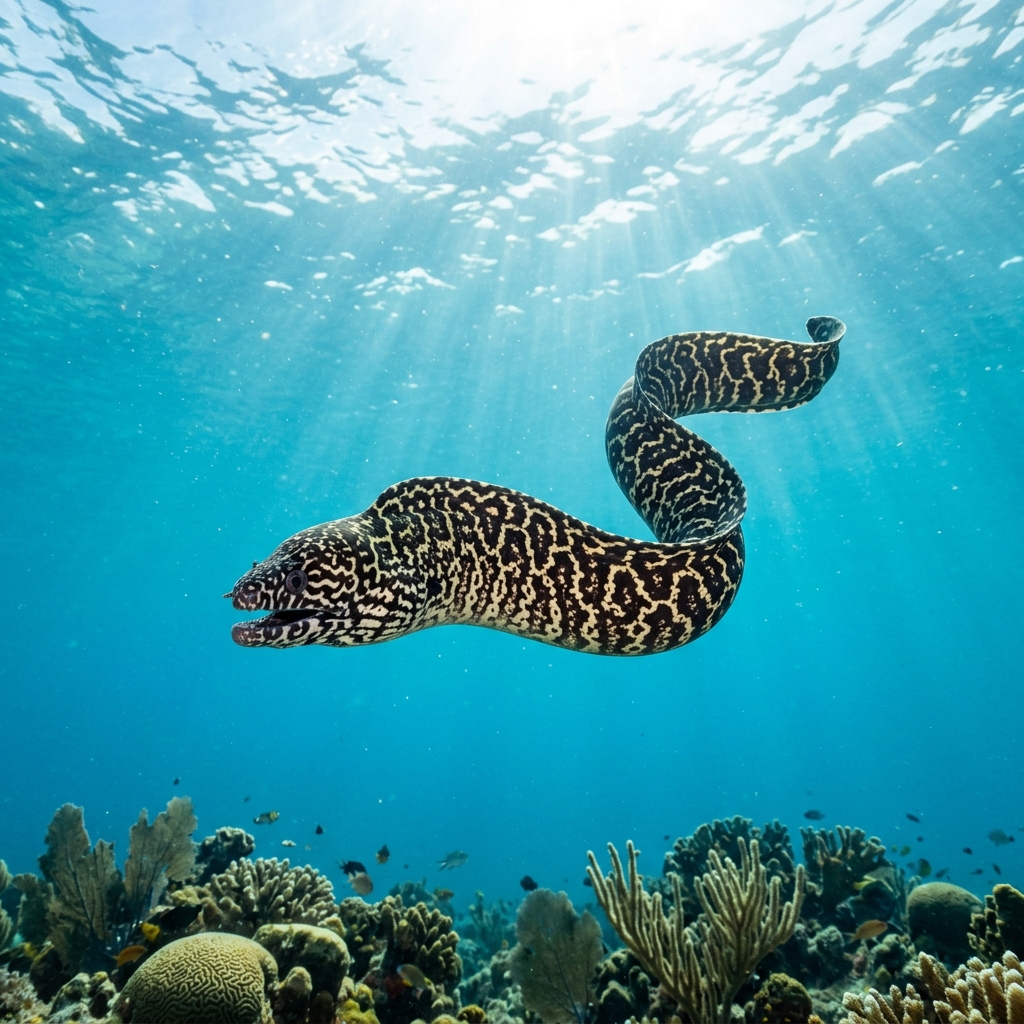
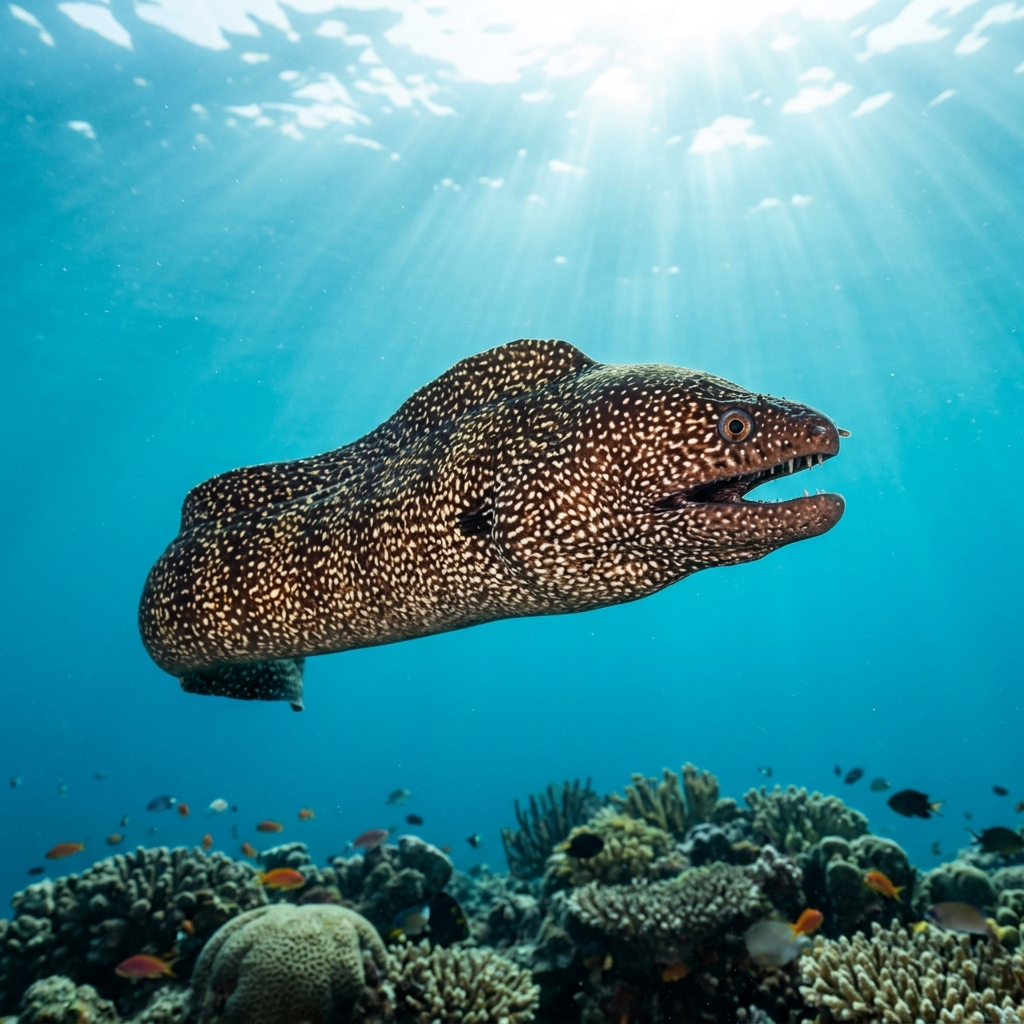
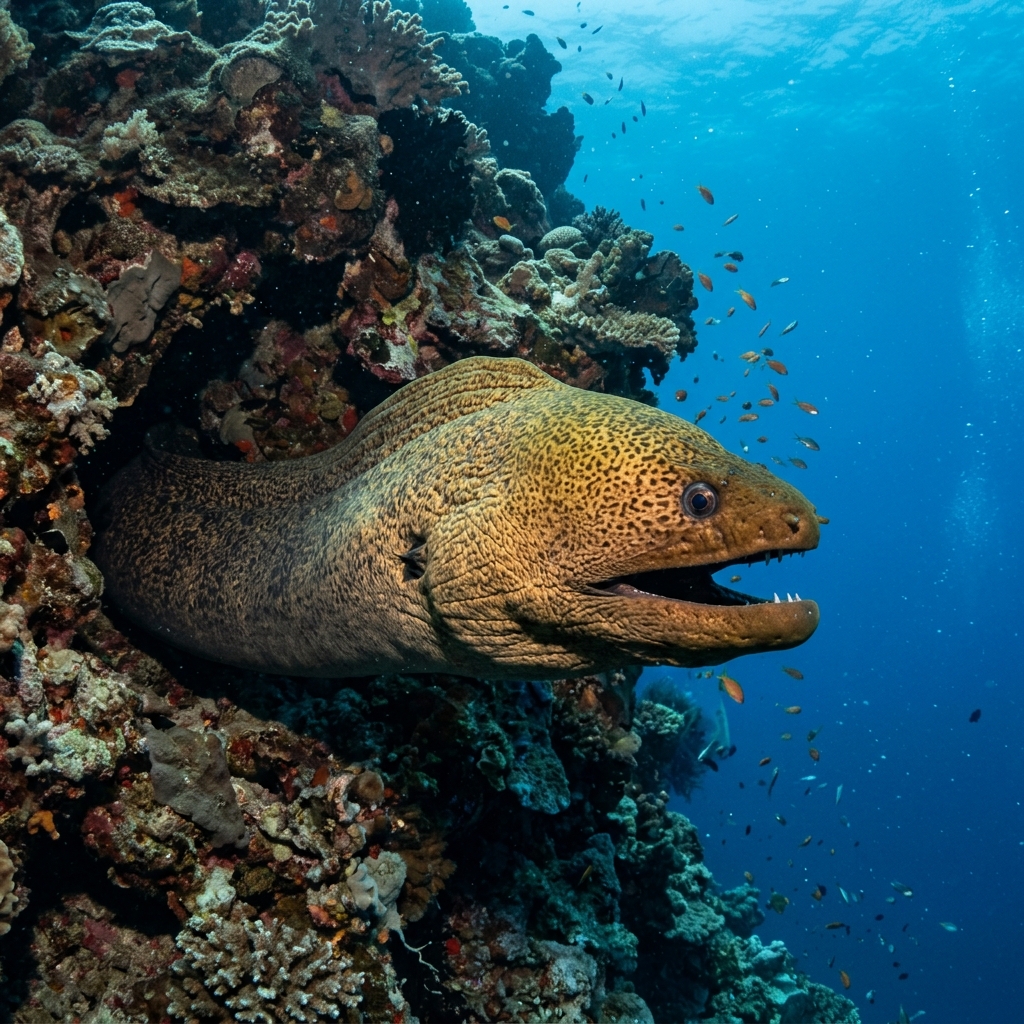
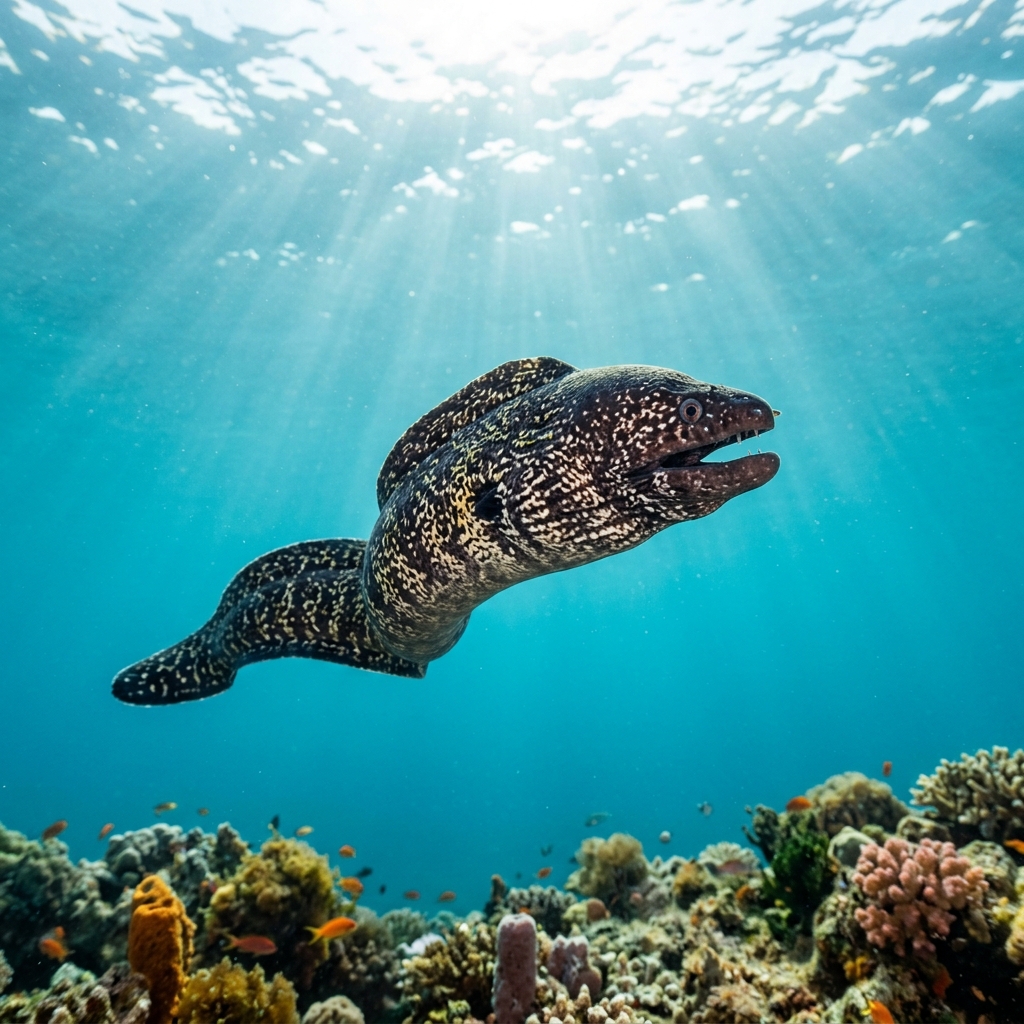
Its most distinctive underwater feature is the jaw: the teeth are so long and curved that they remain visible even when the mouth is closed, giving the face a distinctly fang-heavy, viper-like profile. The body is dark brown to blackish, often mottled or marbled with slightly paler patches, without the bold spots or chains seen on other morays. It is a medium-sized eel, though exact lengths vary, and the combination of the dark colouration and that perpetually exposed dentition makes it unlike most of its Atlantic relatives.
Like most morays, it spends the day tucked into crevices and rocky ledges, with just the head or front portion of the body extended. Divers most often catch sight of it by scanning the base of the reef carefully, as it tends not to venture far into the open. It is not considered dangerous to divers and typically holds its position or retreats slowly when approached.
Those permanently exposed fangs are not just for show: Enchelycore morays have recurved (backward-curving) teeth adapted for gripping slippery, fast-moving prey such as small fish, making escape almost impossible once caught.
There is not enough seasonal data to point to a peak period, so treat it as a year-round species. It is recorded in water temperatures between roughly 25 and 29 °C, consistent with the warm tropical and subtropical Atlantic reefs where it lives.
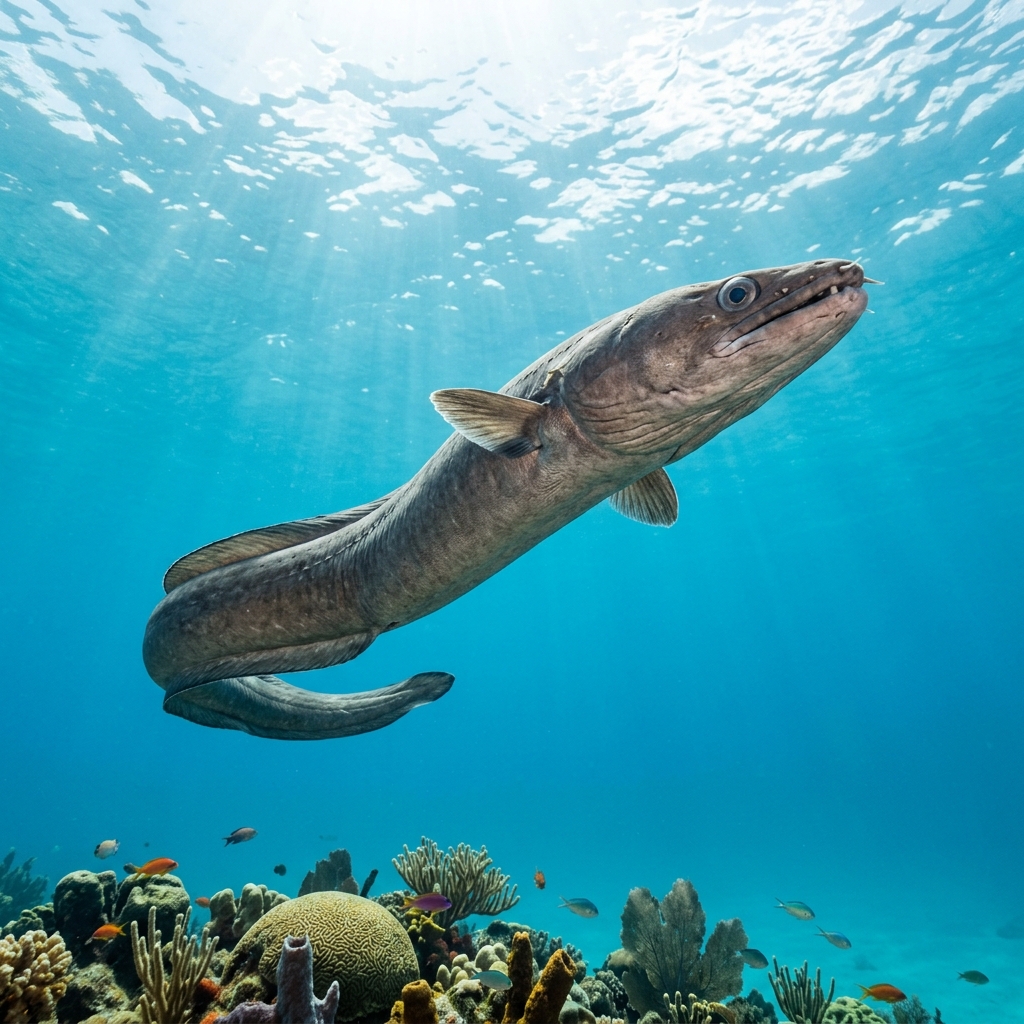
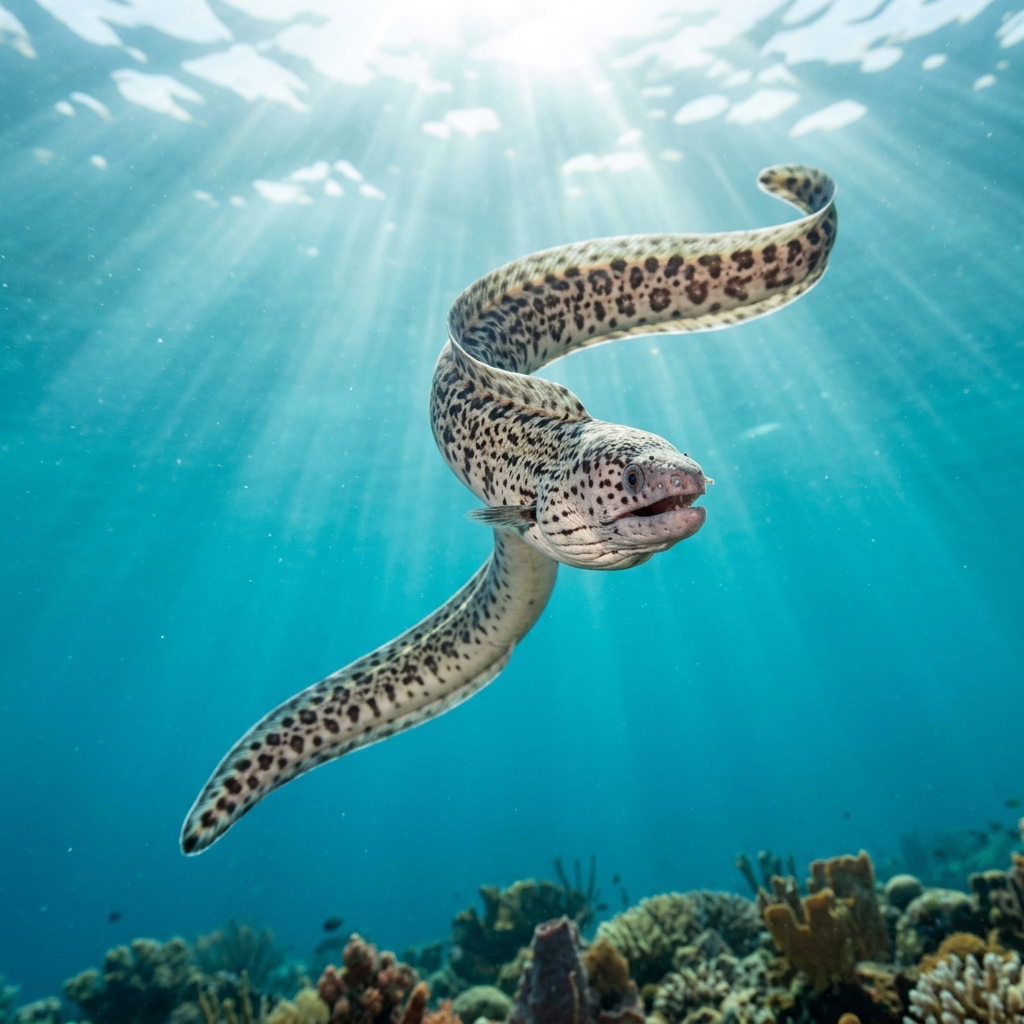
Reef neighbours a diver could mistake it for. Use the identification notes above to tell them apart.
The Viper Moray is most commonly logged in Cape Verde, particularly around Sal and Santiago, making the archipelago by far the best-known destination for encounters. The Dominican Republic, especially the La Romana area, and Senegal's Dakar region also account for a strong share of sightings. Smaller numbers of records come from Martinique, Mexico's Yucatán Peninsula, and Grand Cayman.
Mapping where Viper Moray is logged…
The best places to look are Cape Verde, especially around Sal island, and the La Romana area of the Dominican Republic. Senegal's Dakar region also has a solid number of logged sightings. Occasional records come from Martinique, Mexico's Yucatán Peninsula, and Grand Cayman.
No clear seasonal peak has been identified from diver records, so it can be considered a year-round resident on the warm tropical reefs where it occurs. Water temperatures at sighting sites range from about 25 to 29 °C, typical of the tropical Atlantic throughout the year.
Focus on the jaw: even with its mouth closed, long curved fangs protrude visibly, which is the single most reliable field mark. The body is dark brown to blackish with faint mottling and lacks the bold patterns of species like the Chain Moray. That combination of dark uniform colouration and exposed teeth is diagnostic.
They are not considered dangerous to divers. Like all morays, they may bite if cornered or handled, but in normal diving conditions they retreat or hold still when approached. Those prominent teeth look alarming but are evolved for catching fish, not for defence against large animals.
Rare is the most common frequency category across the sites where it has been recorded, with only a handful of sites rating it as common. This is a species that rewards patient, methodical reef-scanning rather than open-water cruising. Cape Verde's Sal island offers the highest concentration of sighting records.
Site and sighting data is aggregated from diver logs, iNaturalist and GBIF. For taxonomy and conservation status:
Garden Eel
2,448 sites