Smaragdinella calyculata
A translucent green bubble snail logged mostly in Hawaii, in warm reef water between 22.7 and 28.7C. Here's how to spot one.
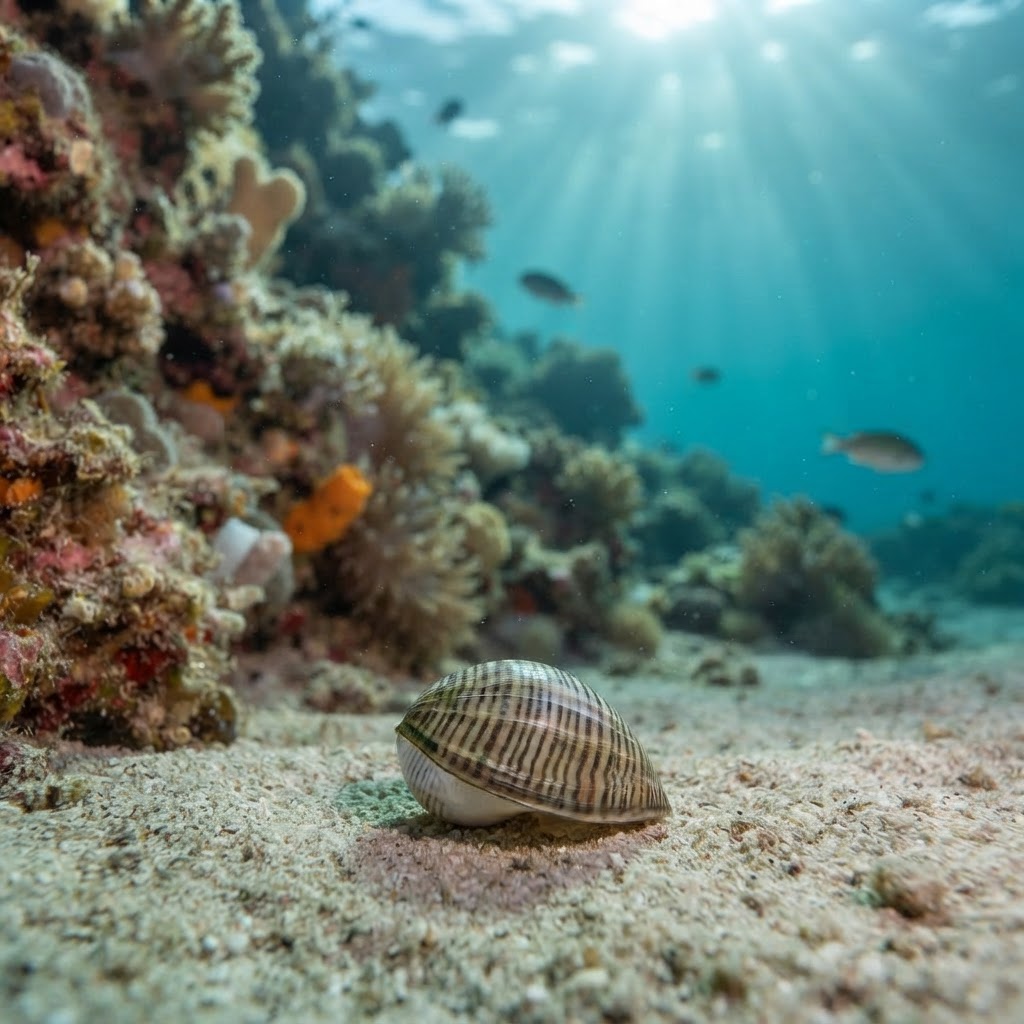
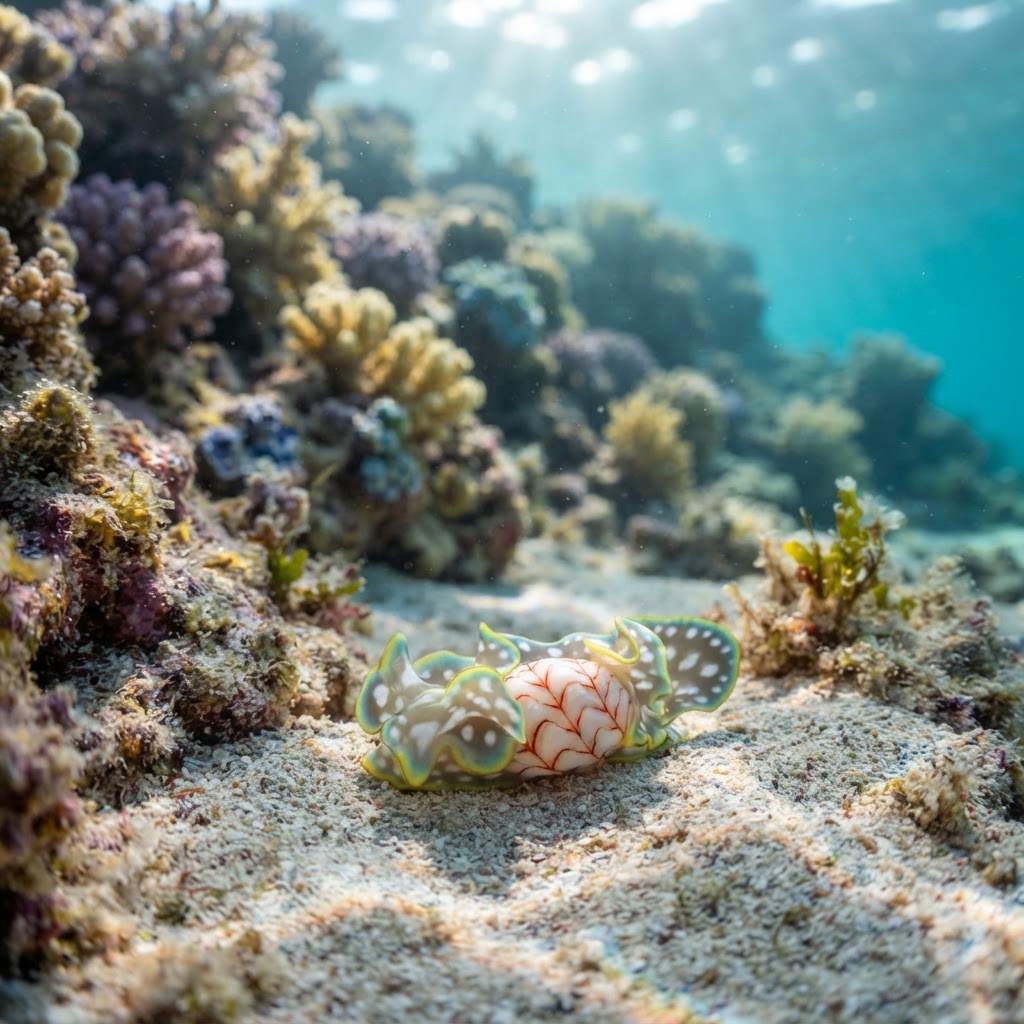
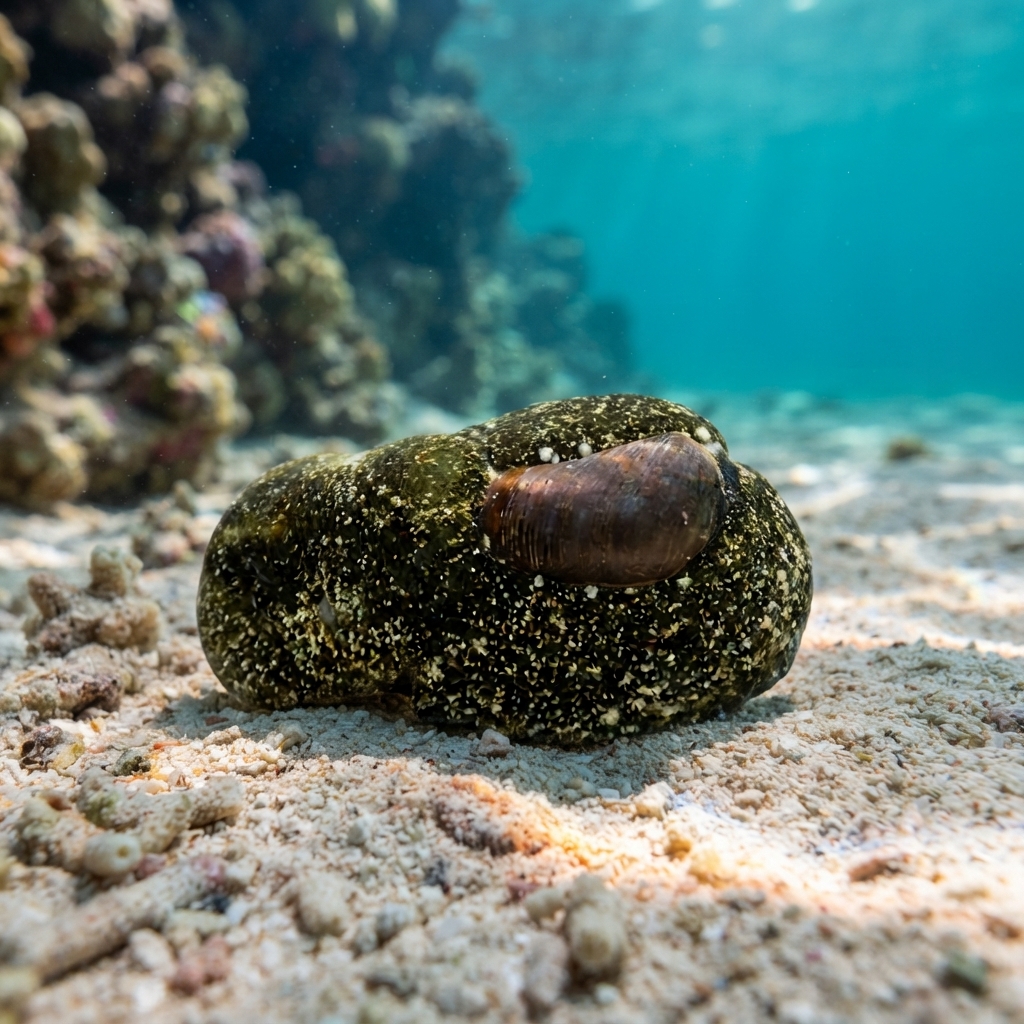
Small, glossy, and rounded, this sea slug carries a thin, translucent shell that its soft body almost completely covers, giving it a bubble-like look. Colour ranges through green tones, often with a slight sheen that catches torchlight, and the body is smooth with no obvious frills or projections. There is no hard head shield or rhinophores (the small sensory horns seen on many sea slugs) standing out, which is one reason it reads as a simple, glossy blob on the sand rather than a typical slug shape.
Divers usually find it sitting still or moving slowly over sand and rubble patches near reef structure, grazing rather than swimming or fleeing. It shows no defensive display and simply carries on foraging when approached, which is part of why it's easy to swim straight past. Most logs describe single individuals rather than groups, so a sighting tends to be a solo, low-key encounter.
Bubble snails like this one are shell-bearing sea slugs, a link between the coiled snails most divers picture and the shell-less nudibranchs, which makes finding one a nice reminder of how varied this group of molluscs really is.
Sightings don't show a clear seasonal pattern, and with a comfortable range of 22.7 to 28.7C, Hawaiian waters stay within its niche year-round, so there's no obvious best month to target.
Reef neighbours a diver could mistake it for. Use the identification notes above to tell them apart.
Every logged sighting in the data comes from the United States, specifically Hawaii, making it the only region currently confirmed for this species. Divers looking for it should focus on Hawaiian reef and sand sites rather than other Pacific or Caribbean destinations.
Mapping where Emerald Bubble Snail is logged…
All confirmed sightings come from Hawaii, in the United States, where it turns up on sand and rubble patches at a handful of reef sites. It hasn't been logged elsewhere, so Hawaii is currently the place to look.
There's no detected season in the sighting data, and Hawaiian reef water sits within its comfortable range of 22.7 to 28.7C all year, so it can turn up on any dive regardless of month.
Look for a small, smooth, glossy body in green tones with a thin translucent shell that covers most of it, giving a rounded bubble shape rather than a typical slug outline. It sits or crawls slowly on sand and rubble, with no obvious head shield or horns standing out.
Exact size figures aren't confirmed in current sighting data, but bubble snails in this family are generally small, easy-to-miss animals best spotted by scanning sand patches closely rather than looking for something conspicuous.
No, it poses no risk to divers. It has no sting or bite of concern and simply grazes on the substrate when you find one.
It belongs to a group of sea slugs that still carry a thin shell, making it a kind of halfway point between fully shelled snails and shell-less nudibranchs. Spotting one is a good chance to see that transitional body plan up close.
Site and sighting data is aggregated from diver logs, iNaturalist and GBIF. For taxonomy and conservation status:
Triton Shell
2,297 sites