Elysia zemi
Rare, little-known sea slug logged almost exclusively around Grande-Terre, Guadeloupe, in warm 25-31C water year-round.
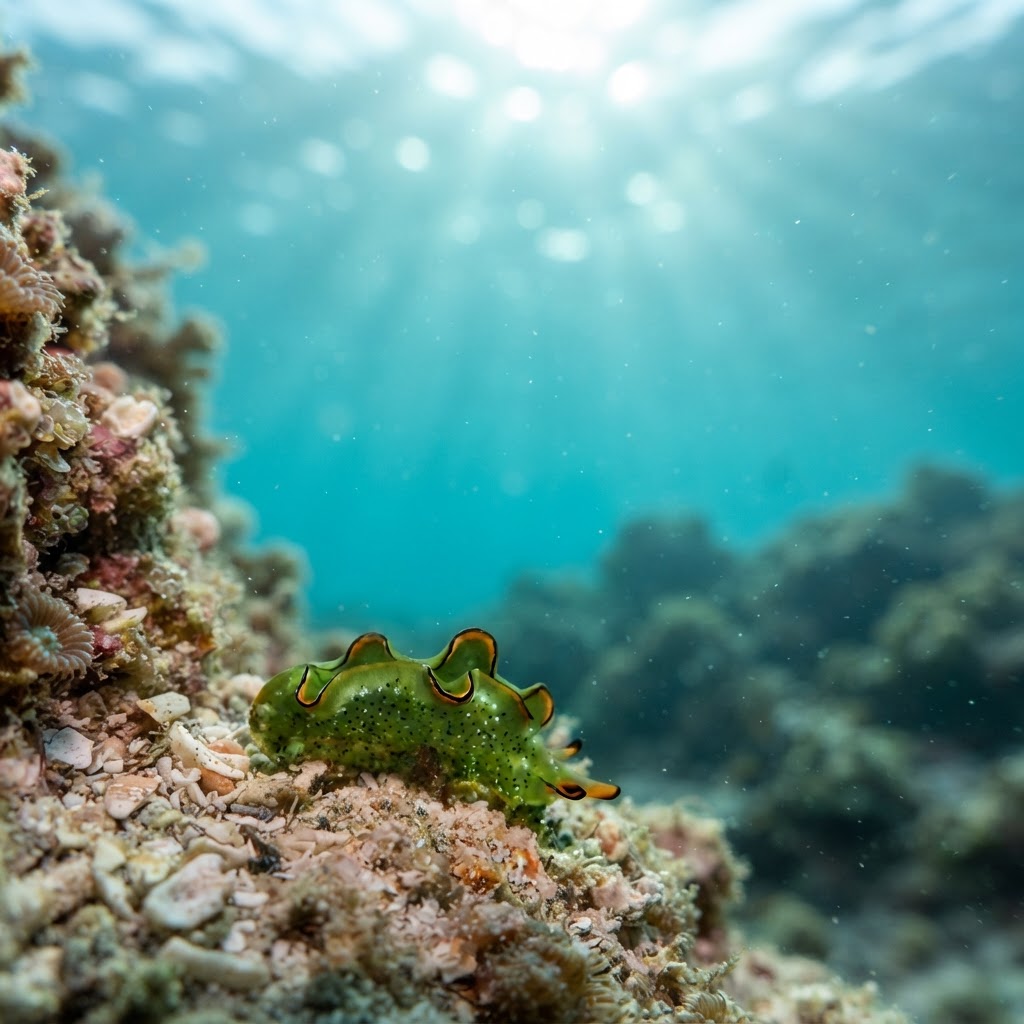
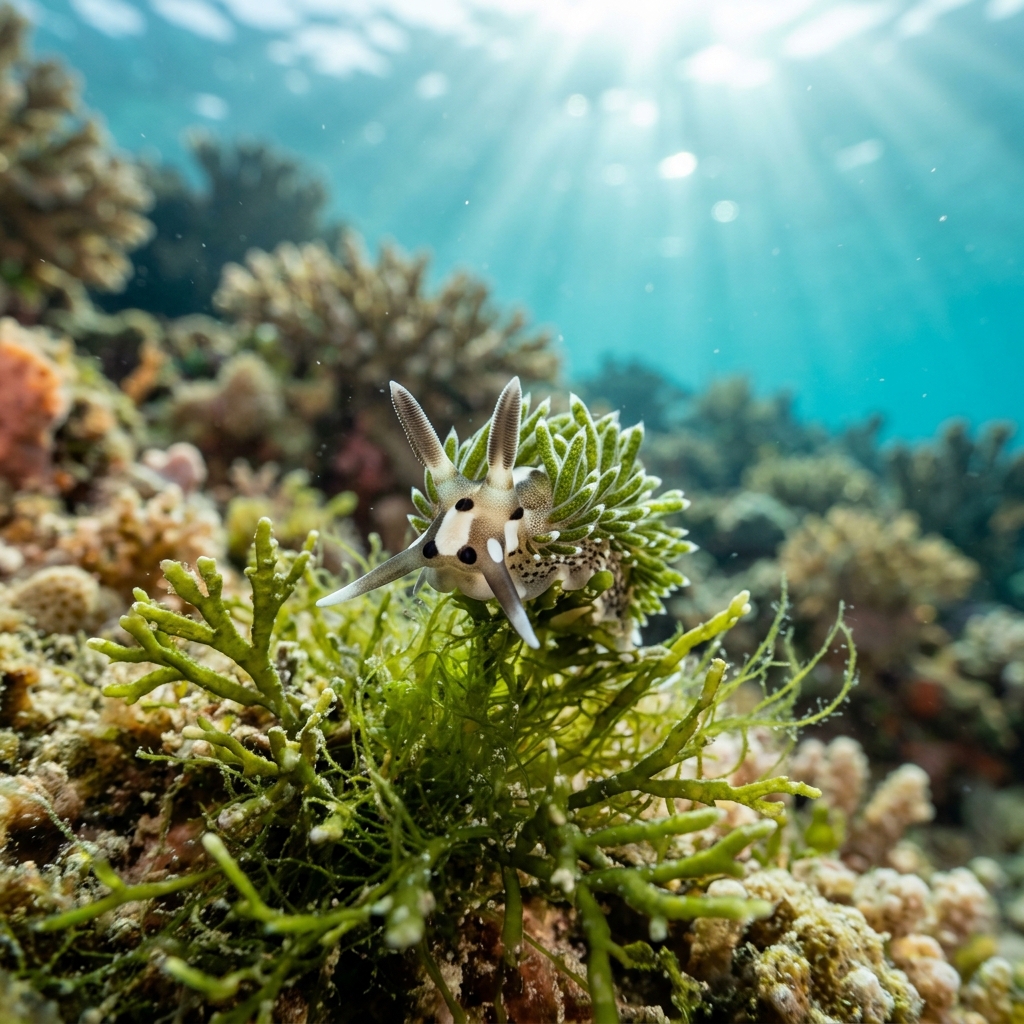
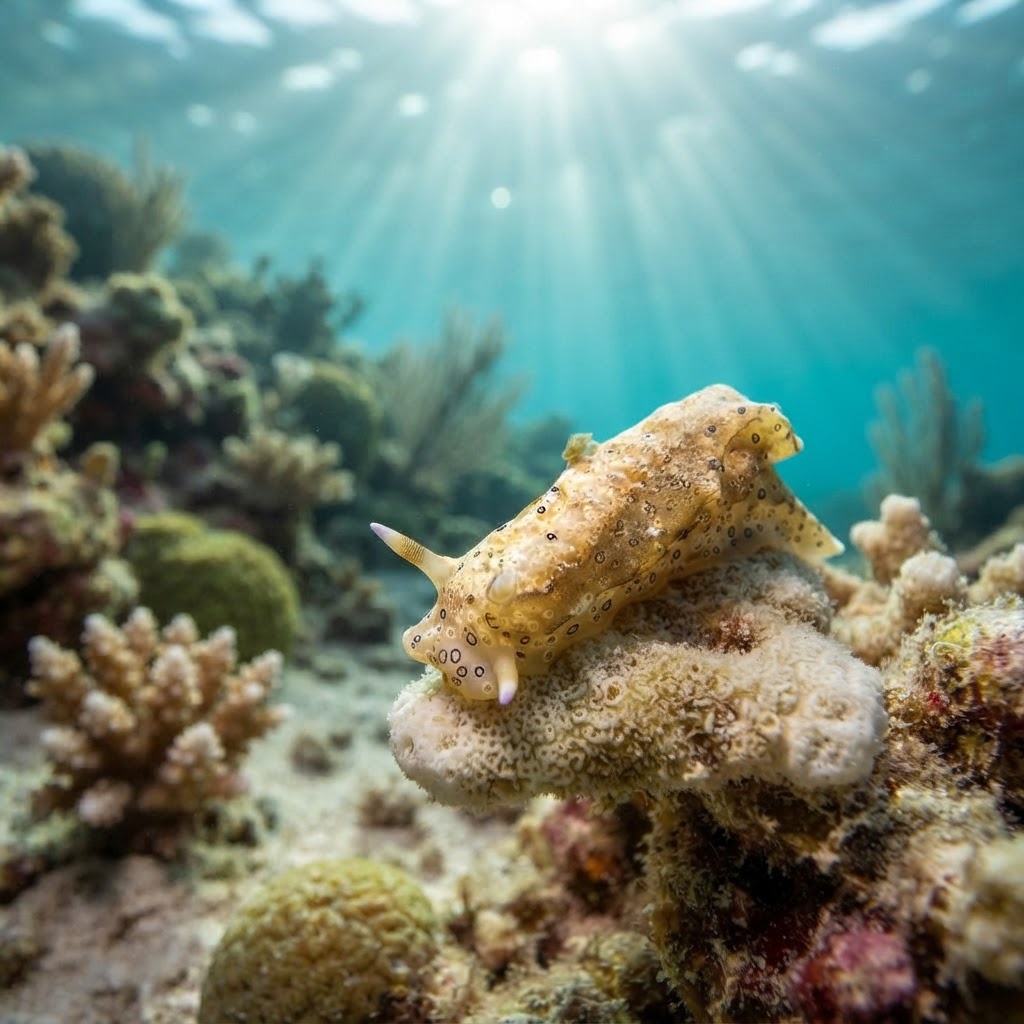
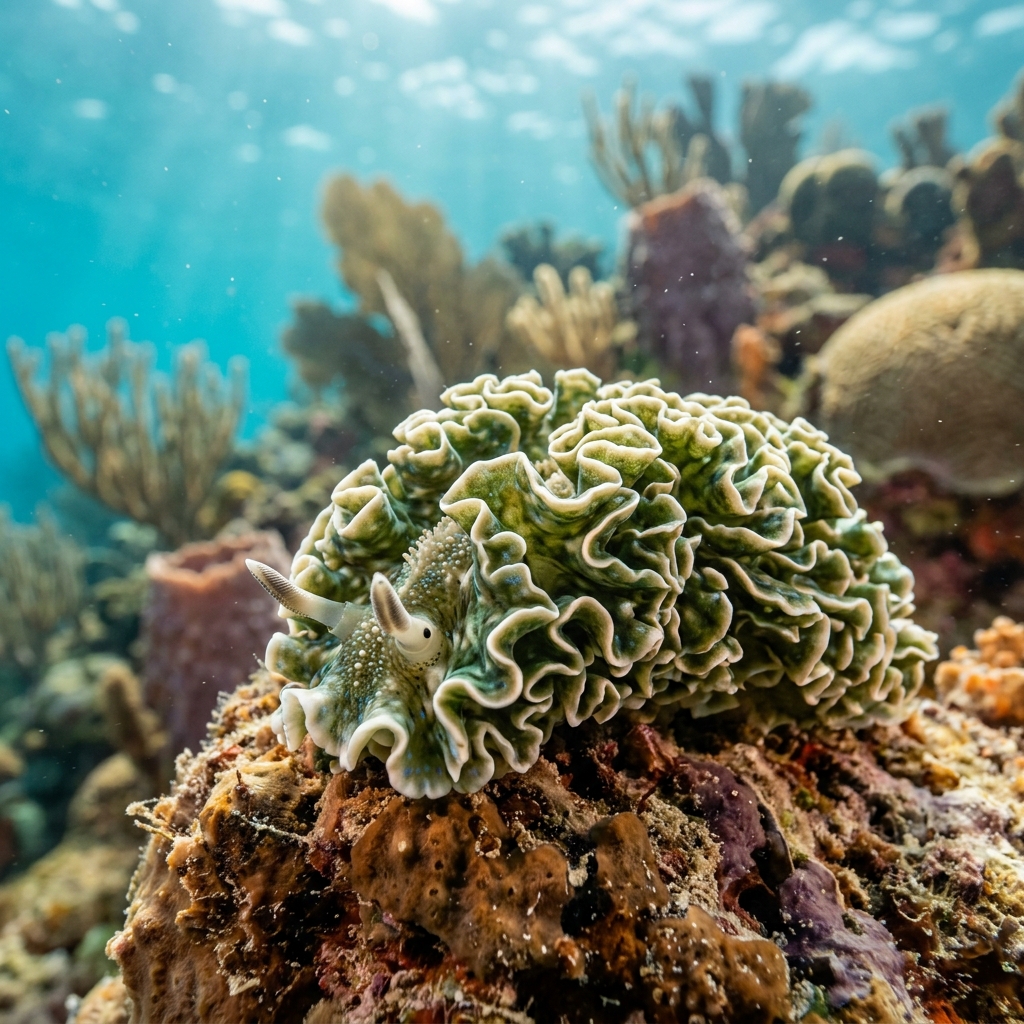
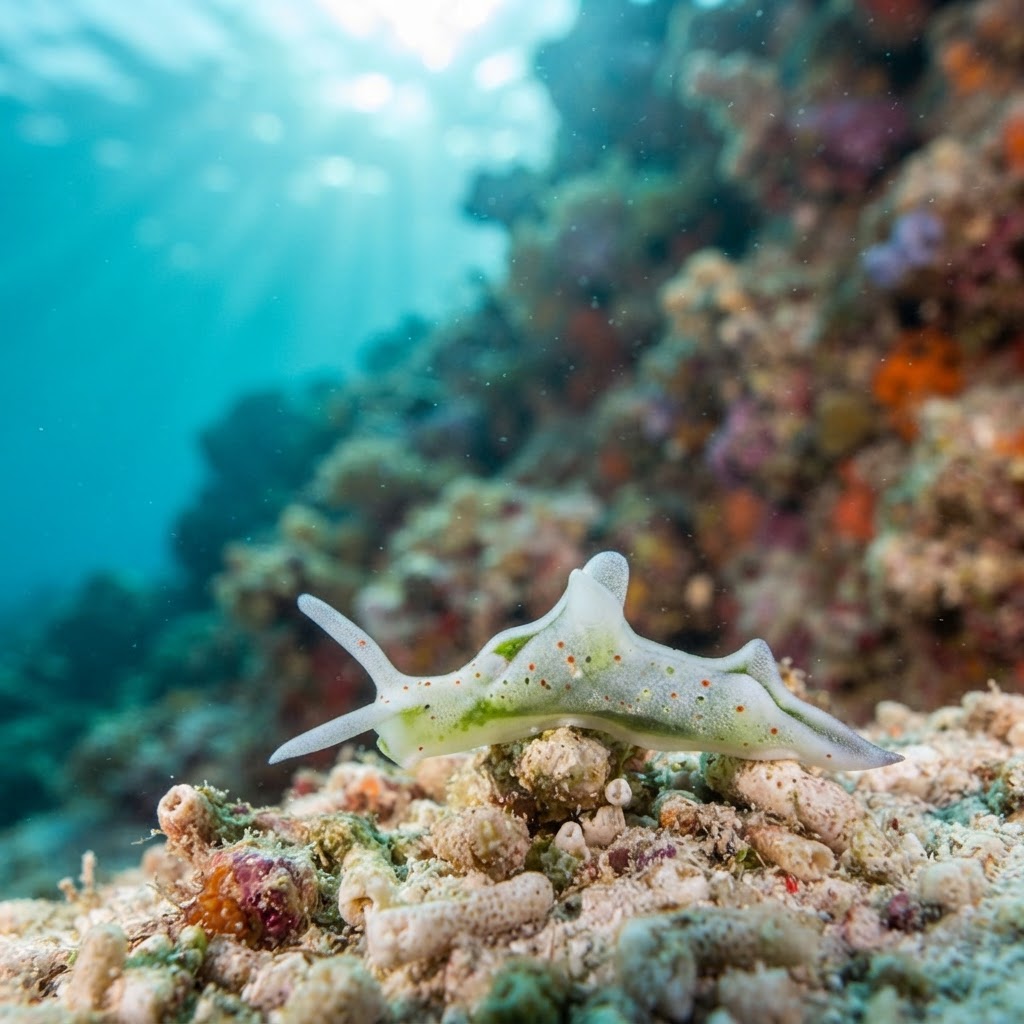
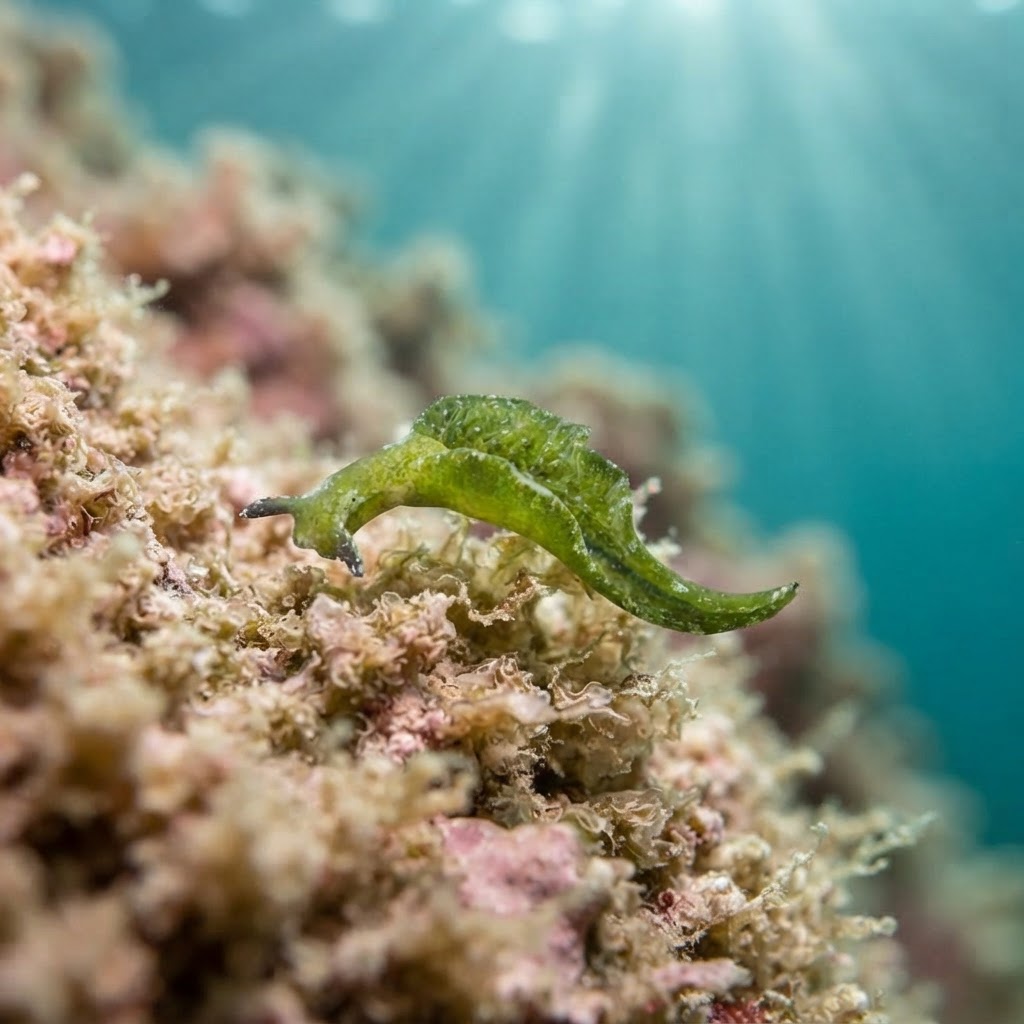
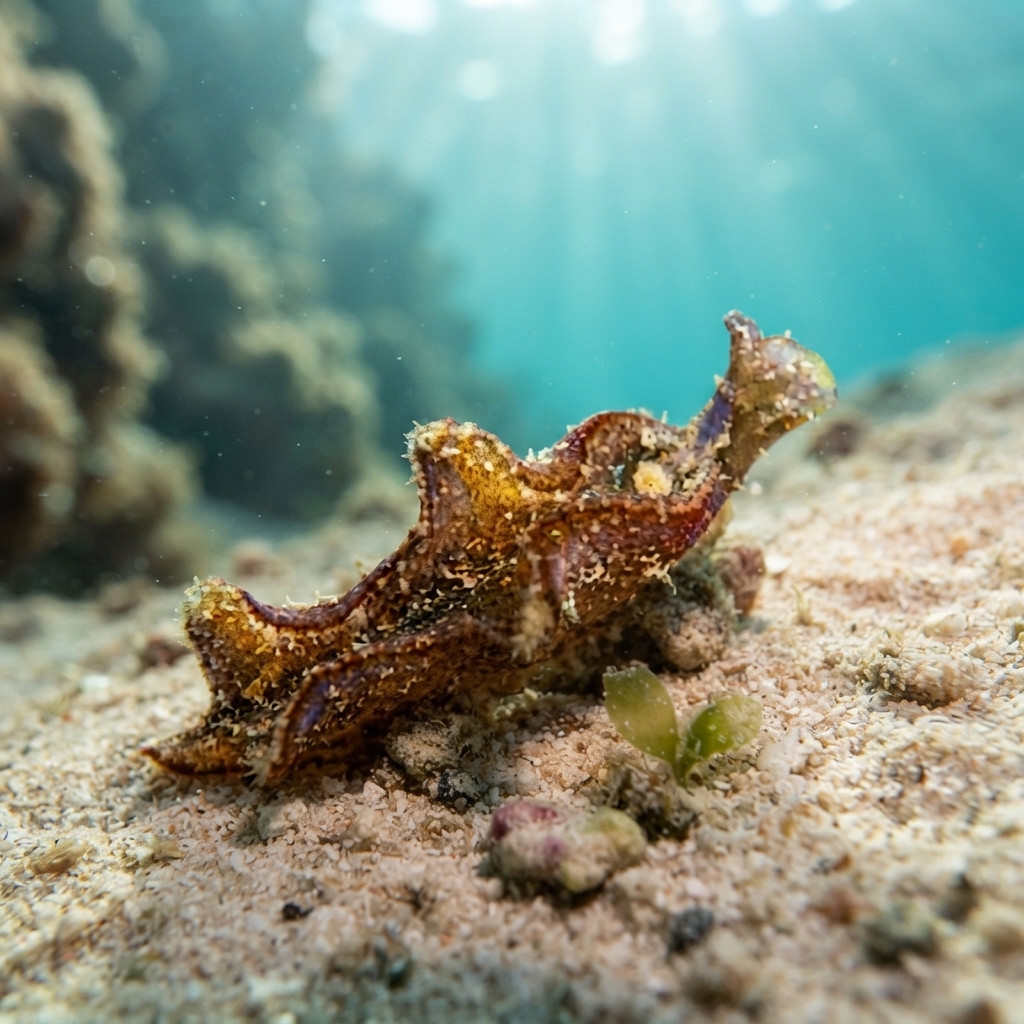
A small, soft-bodied sea slug with a flattened, leaf-shaped body typical of sap-sucking slugs (a group that absorbs algae chloroplasts for camouflage and energy). Look for a low, wing-like fold along each side of the body rather than an obvious shell, blending closely with the algae or seagrass it sits on. Size in the water is small enough that most divers only spot it by scanning slowly over the substrate rather than by catching movement.
Divers find it sitting still on algae-covered rock or seagrass, grazing slowly and relying on its leaf-like shape and green tones to disappear into the background rather than fleeing. It shows no reaction to divers beyond staying put, so a careful, unhurried look with a torch or magnifying lens is the best way to actually pick it out.
Like other members of Plakobranchidae, it likely retains living chloroplasts from the algae it eats inside its own tissue, using them to photosynthesise for extra energy, a trait known as kleptoplasty.
Sightings show no clear seasonal pattern, and water temperatures at the sites where it is logged run a comfortable 24.7 to 30.7C year-round, so there is no strong reason to time a trip around a particular month.
Reef neighbours a diver could mistake it for. Use the identification notes above to tell them apart.
Right now this one is essentially a Guadeloupe speciality, with every logged sighting coming from sites around Grande-Terre. If you are diving or snorkelling that coastline, it is worth a dedicated slow, close-focus search rather than something you will stumble on by chance.
Mapping where Elysia Zemi is logged…
Almost all confirmed sightings come from sites around Grande-Terre in Guadeloupe, making it the one place divers can realistically plan a search for this species.
There is no detected season for this species, and it has been logged in water from about 25 to 31C, so any time of year on the Guadeloupe reefs works.
Look for a small, flattened, leaf-shaped slug with soft side-flaps rather than a shell, usually resting motionless on algae or seagrass where its colouring blends in. A slow scan of the substrate works better than looking for movement.
Exact size data isn't available, but like related Elysia species it is a small slug, likely only a few centimetres long, so it is easy to overlook without a close, deliberate search.
As a member of the sap-sucking slug family, it probably holds onto living chloroplasts from the algae it eats and uses them to photosynthesise, effectively running on borrowed solar power for a while after feeding.
Site and sighting data is aggregated from diver logs, iNaturalist and GBIF. For taxonomy and conservation status:
Elysia Timida
573 sites