Elysia pratensis
A small leaf-shaped sea slug logged across Grande-Terre and Basse-Terre reefs in Guadeloupe, uncommon but findable year-round in warm water.
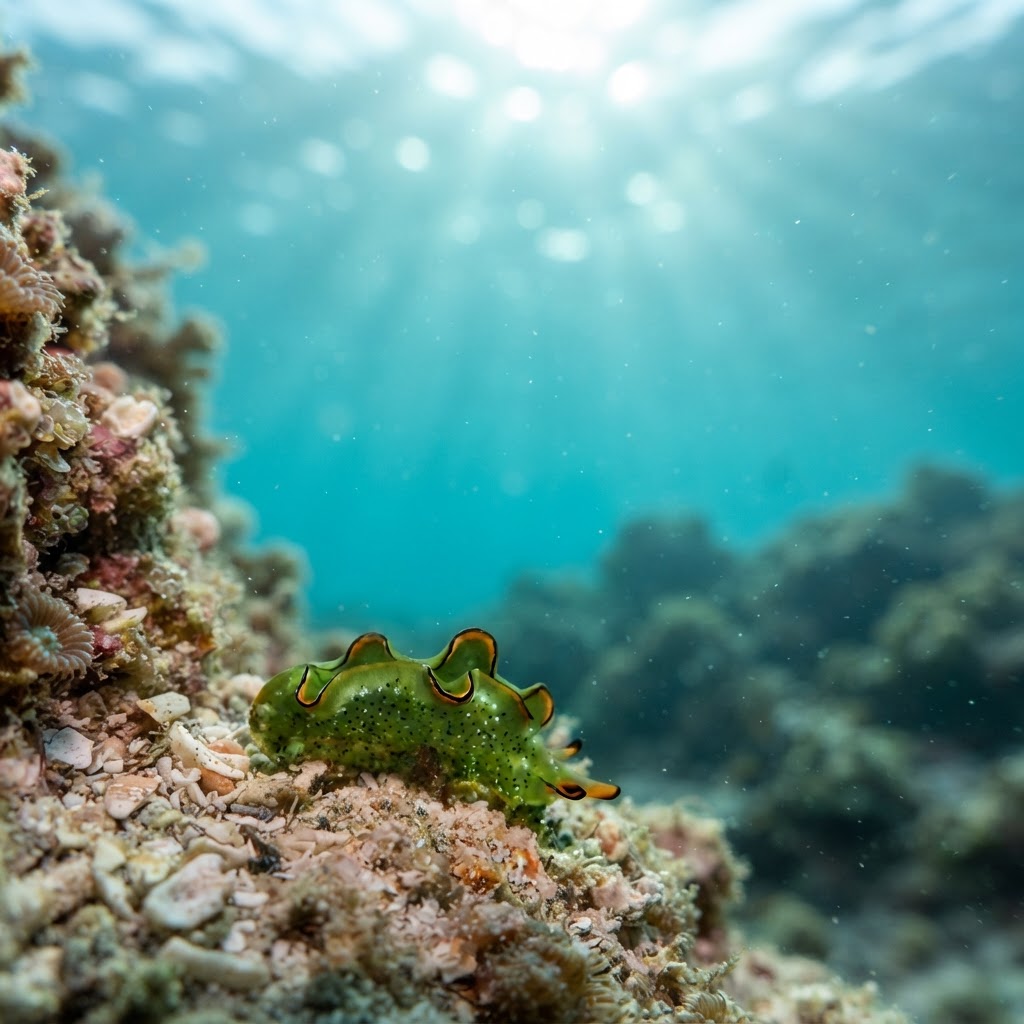
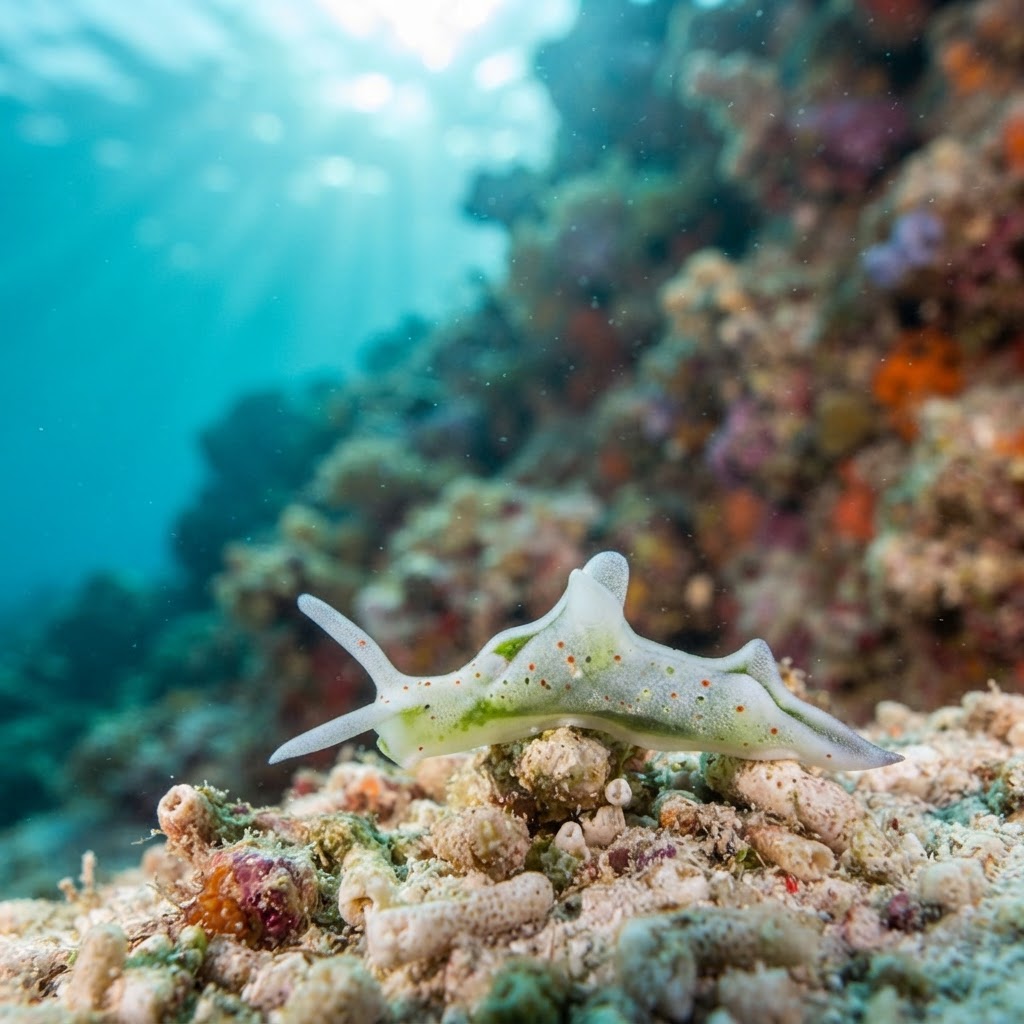
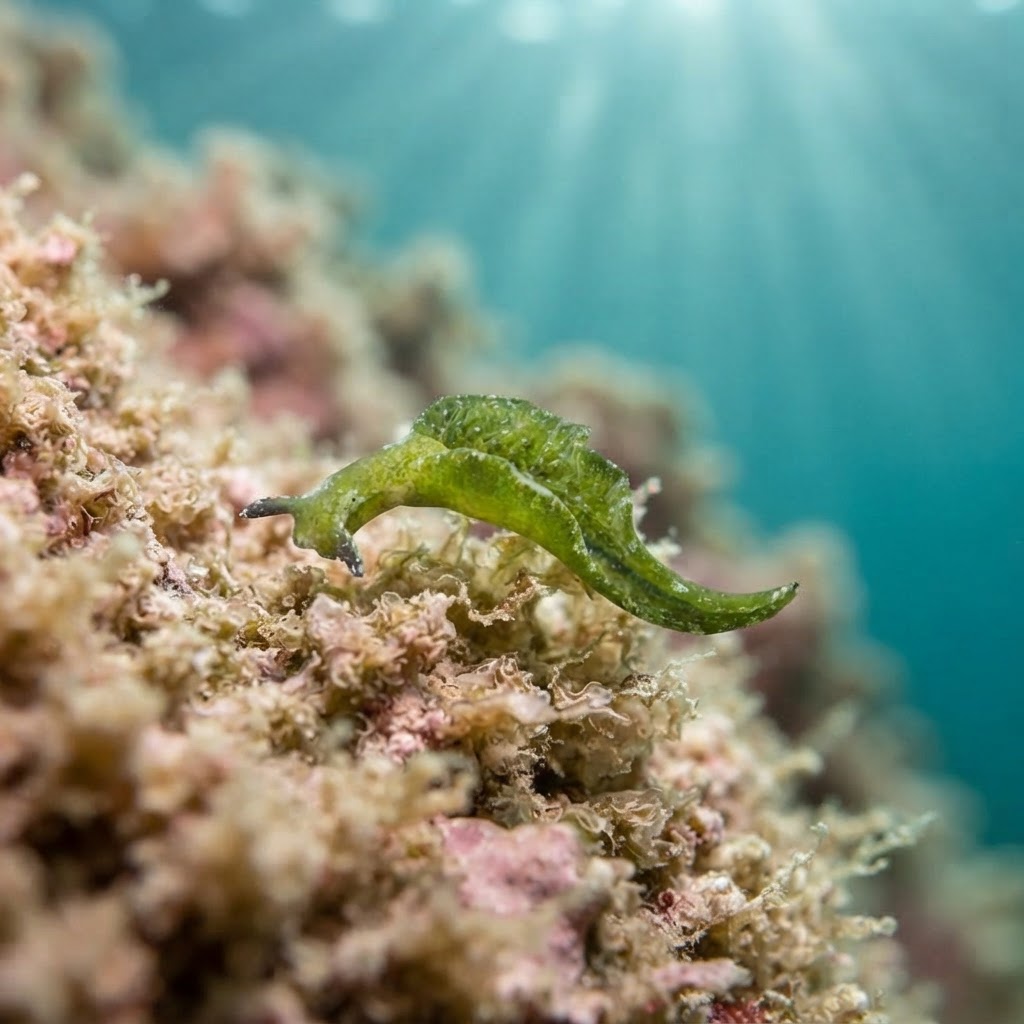
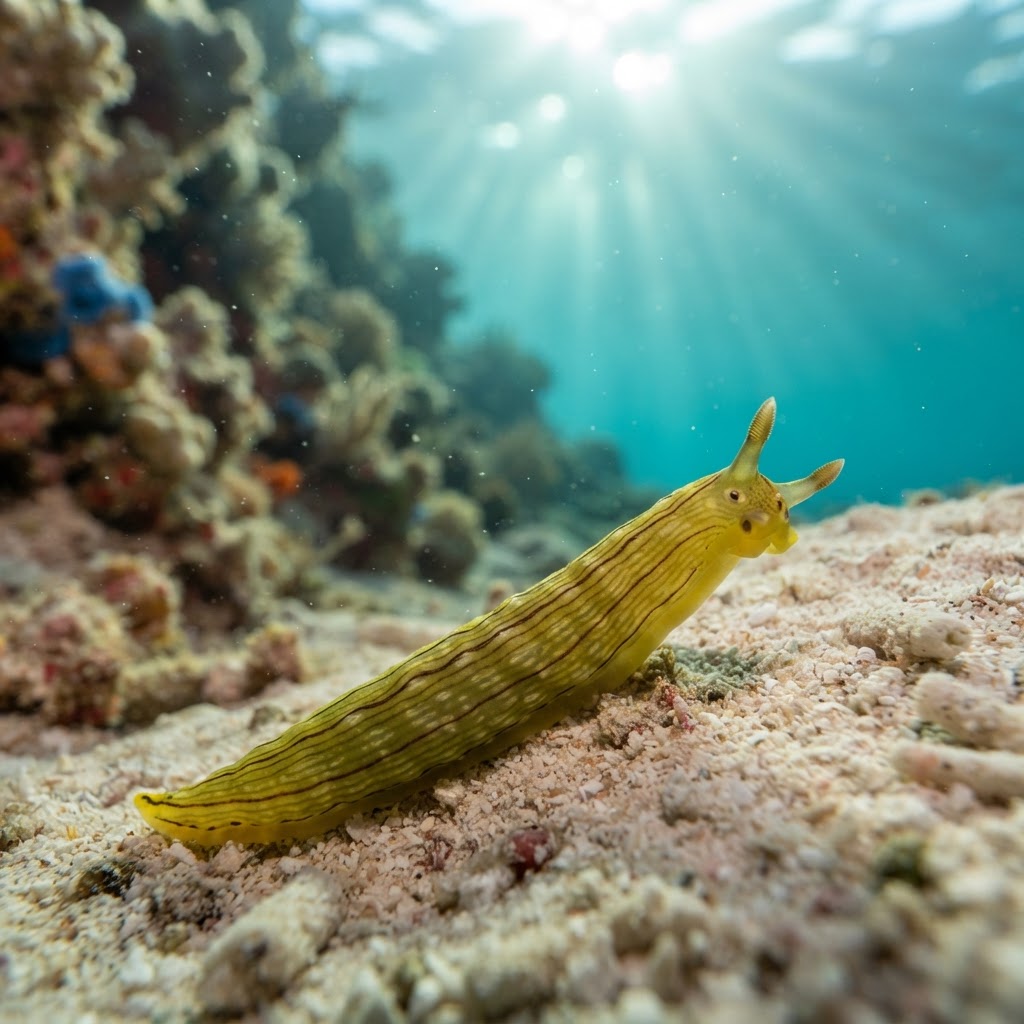
Look for a flattened, leaf-shaped sea slug with a soft green to olive mantle that it folds up along its sides like two overlapping wings (parapodia). It sits low against algae or rubble and is easy to miss at a glance because its outline blends into the weedy background it feeds on. Size in the water is small, so a slow scan of algal patches rather than open reef is what turns up sightings.
Divers find it parked on algae-covered rock or rubble, moving at a slow graze as it feeds, which is really all the action you get from this one. It shows no reaction to divers beyond simply continuing to feed, so a careful, unhurried look with a torch or macro lens is the way to appreciate it without disturbing it.
Like other members of its family, it likely retains chloroplasts from the algae it eats within its own tissue, a trick called kleptoplasty that can let it draw extra energy from sunlight for a time after feeding.
Sightings don't show a clear seasonal pattern, and with water temperatures logged between roughly 25 and 31 C, conditions stay favourable for it year-round. Plan around general Guadeloupe dive season rather than chasing a specific month for this species.
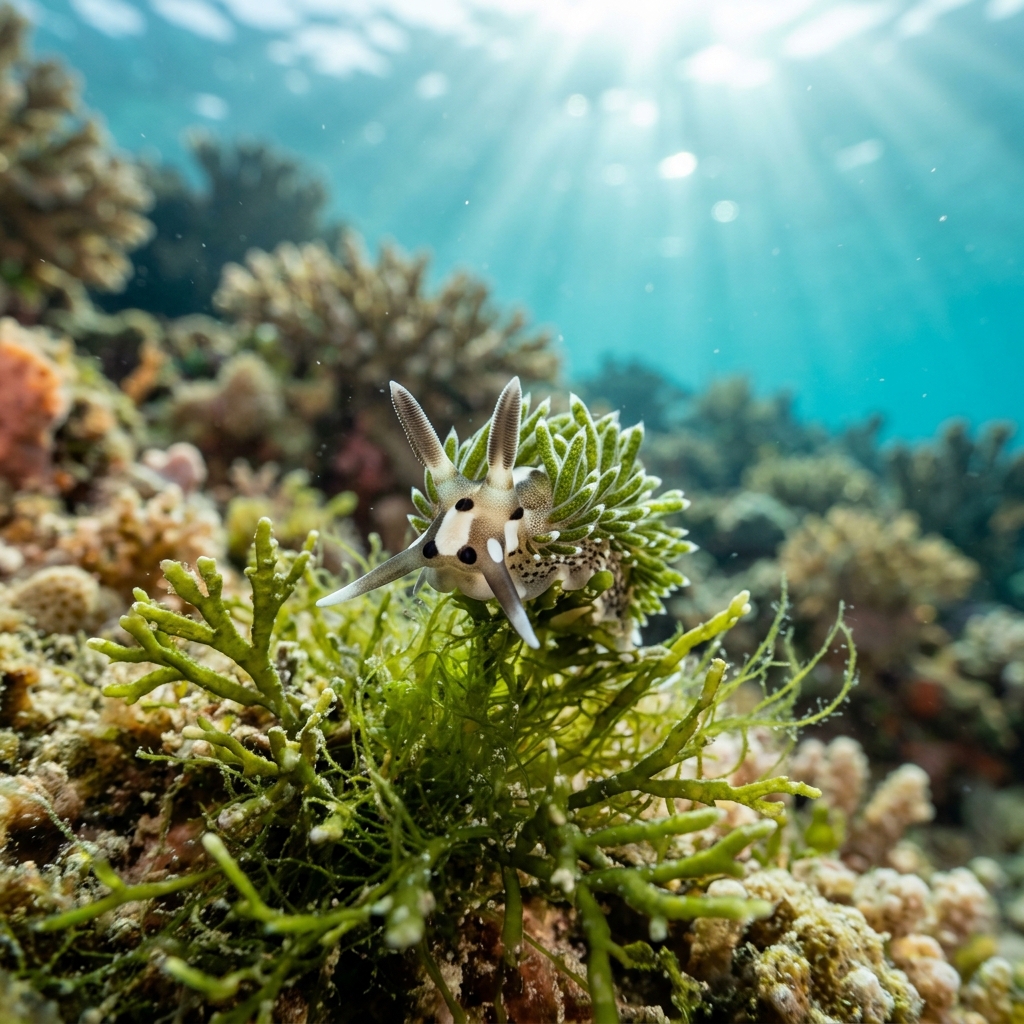
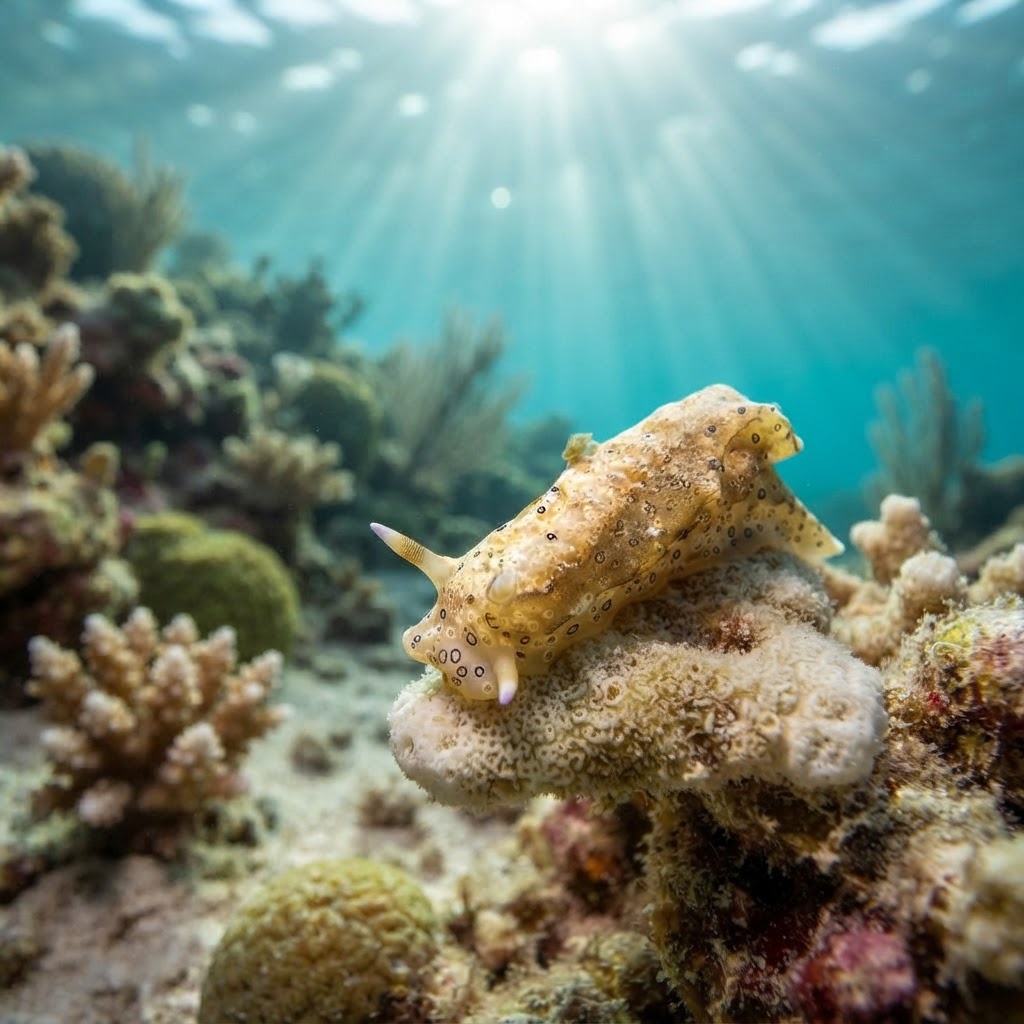
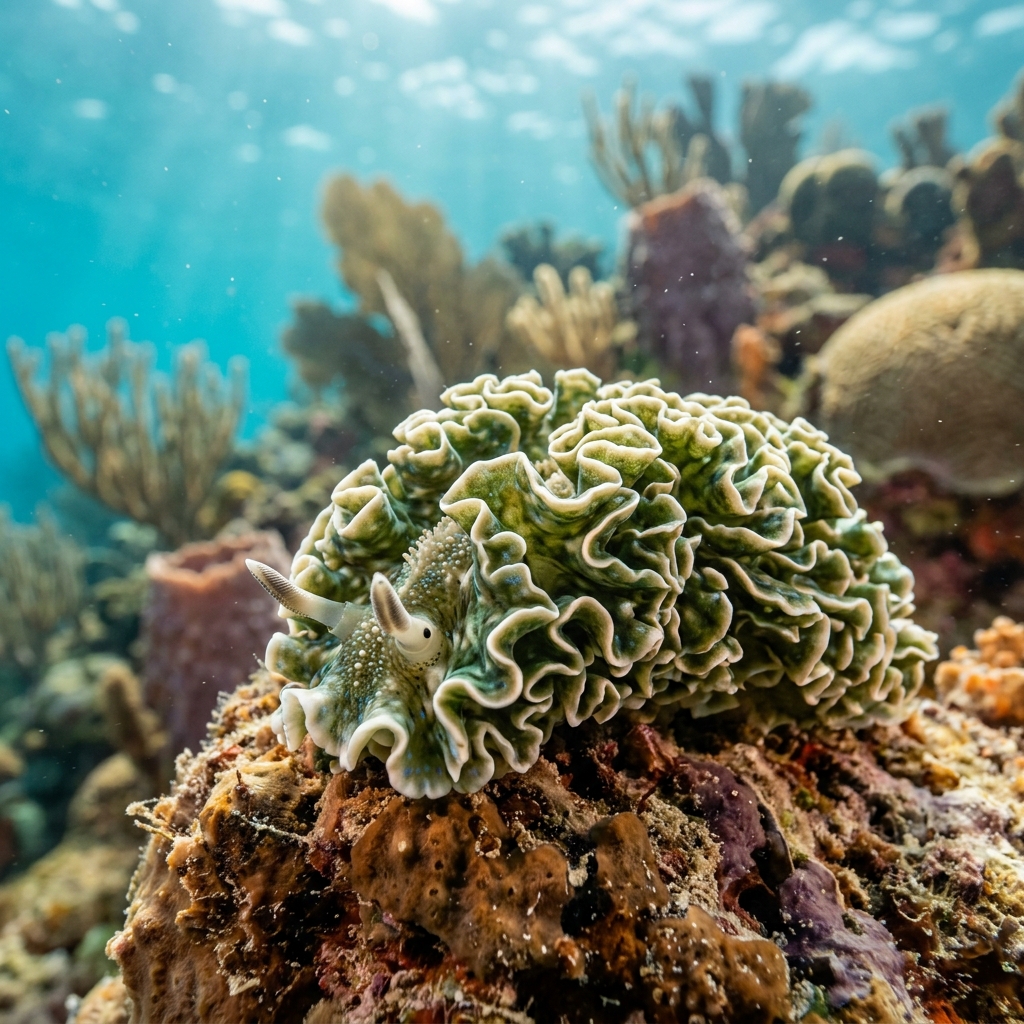
Reef neighbours a diver could mistake it for. Use the identification notes above to tell them apart.
Guadeloupe is currently the place to find it, with sightings concentrated on the reefs of Grande-Terre and, to a lesser extent, Basse-Terre. It shows up as an uncommon to rare find at sites across both regions rather than being reliably abundant at any single spot.
Mapping where Elysia Pratensis is logged…
Guadeloupe is the main place it's been logged, particularly around Grande-Terre and Basse-Terre. Look on algae-covered rock and rubble patches rather than open coral.
There's no strong season in the sighting data, and it tolerates warm water from about 25 to 31 C, so it's a year-round possibility on Guadeloupe reefs.
It's a small, flattened sea slug with a leaf-like green to olive mantle folded along its sides. It sits low on algae and rubble, moving slowly as it grazes, so a close, patient look is needed to spot it.
Exact size figures aren't well documented, but like most Elysia species it stays small, typically only a few centimetres long, making it a macro-only find.
It probably practises kleptoplasty, keeping the chloroplasts from the algae it eats alive inside its own tissue for a while, effectively running on borrowed solar power between meals.
Site and sighting data is aggregated from diver logs, iNaturalist and GBIF. For taxonomy and conservation status:
Elysia Timida
573 sites