Elysia ellenae
An uncommon find in Grande-Terre, Guadeloupe and Grand Cayman, in reefs holding 25 to 31C year-round.
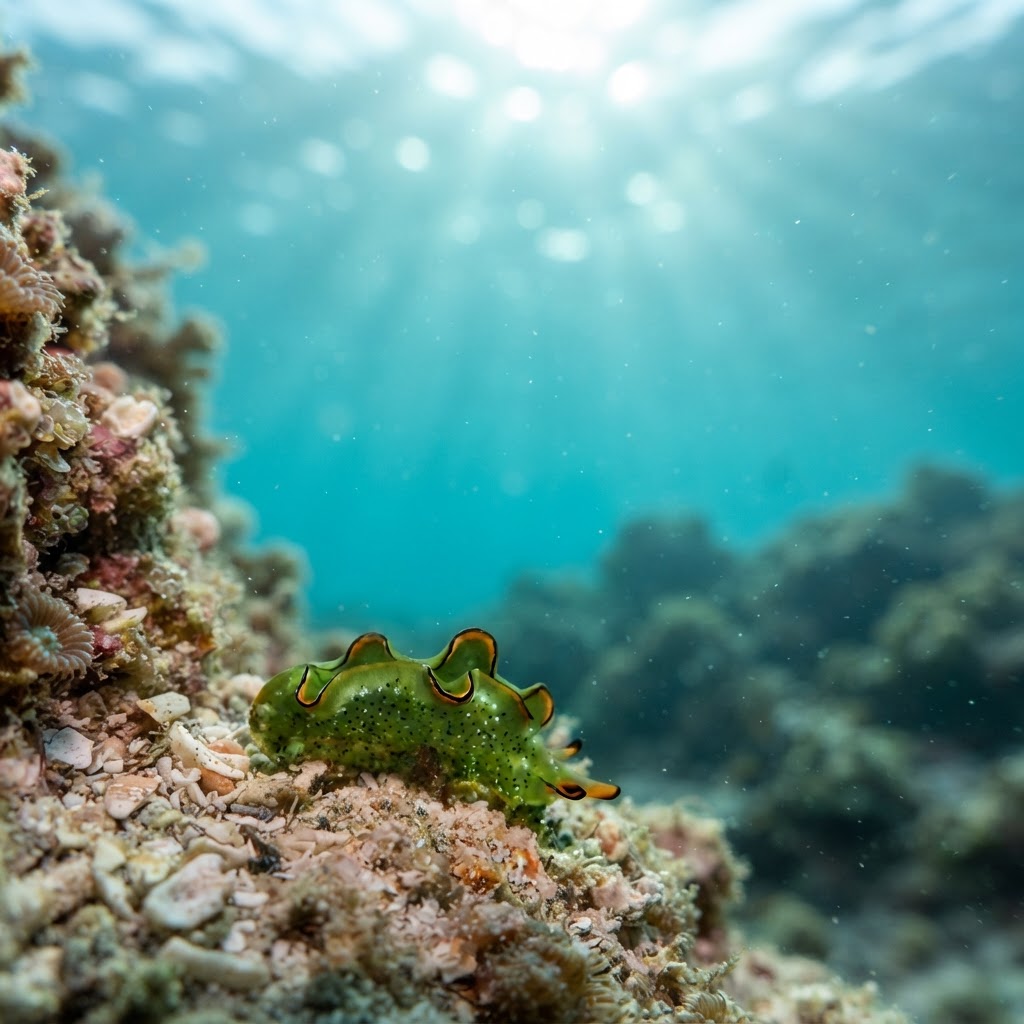
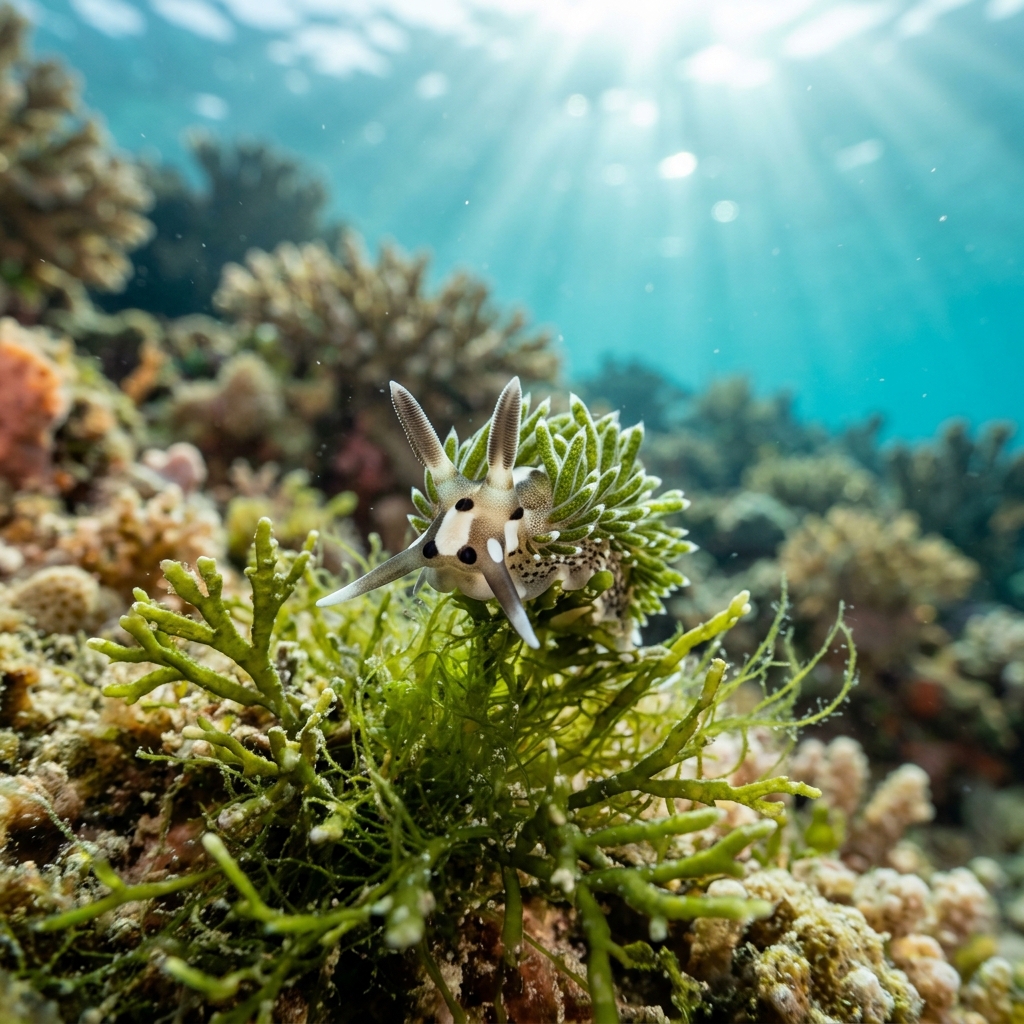
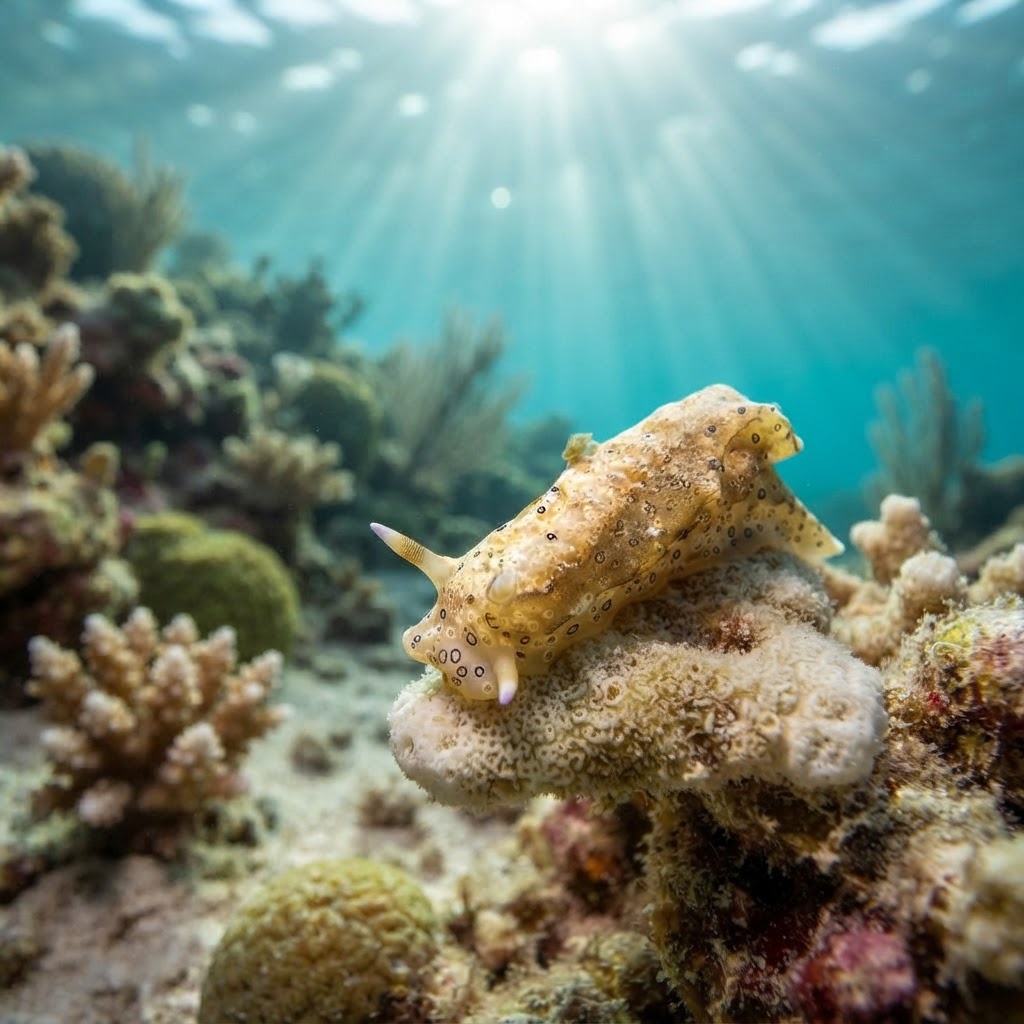
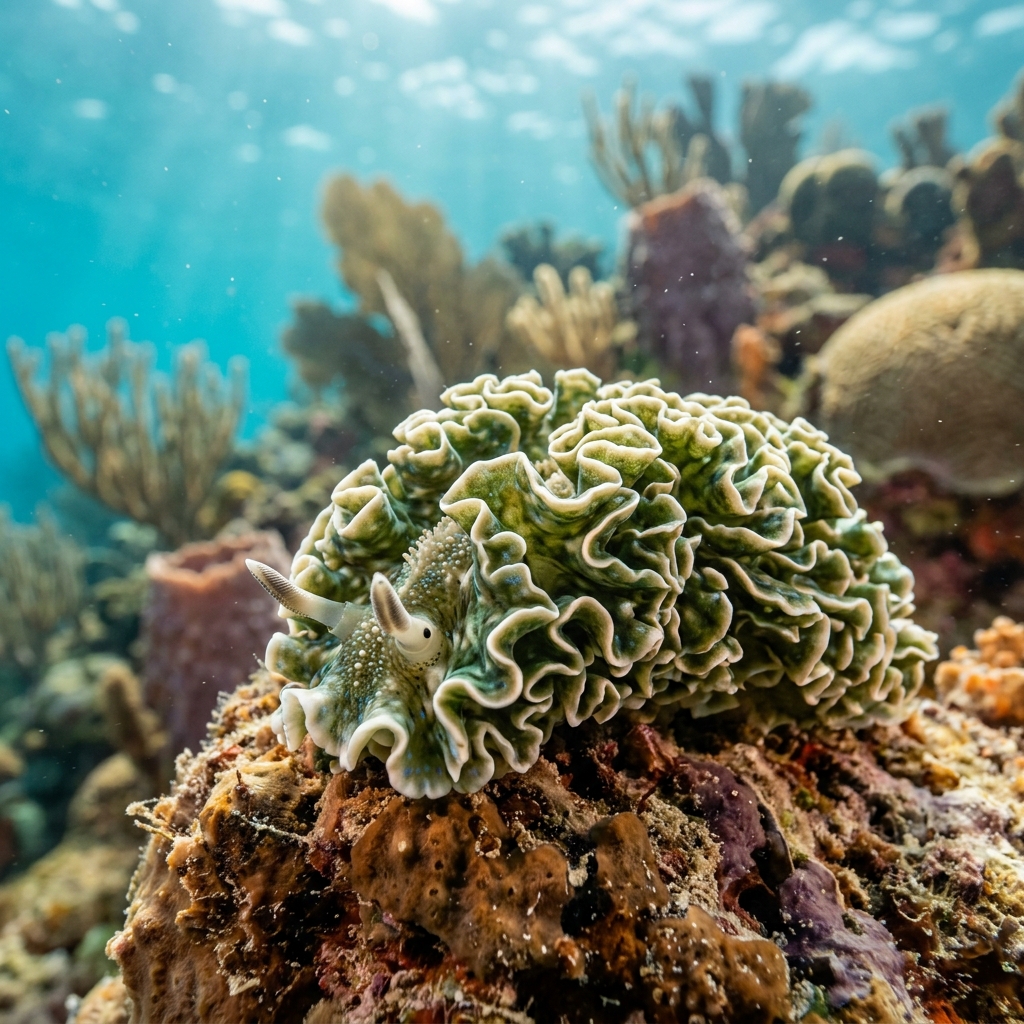
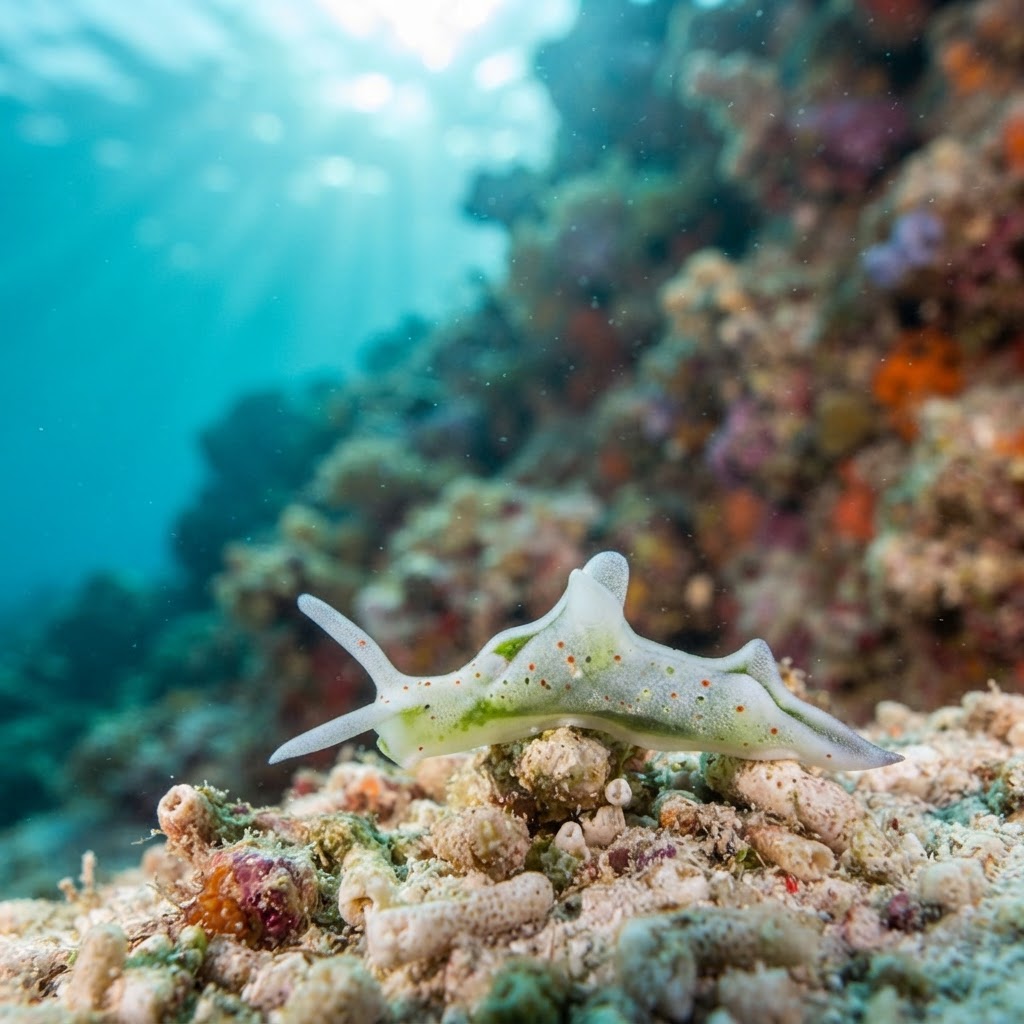
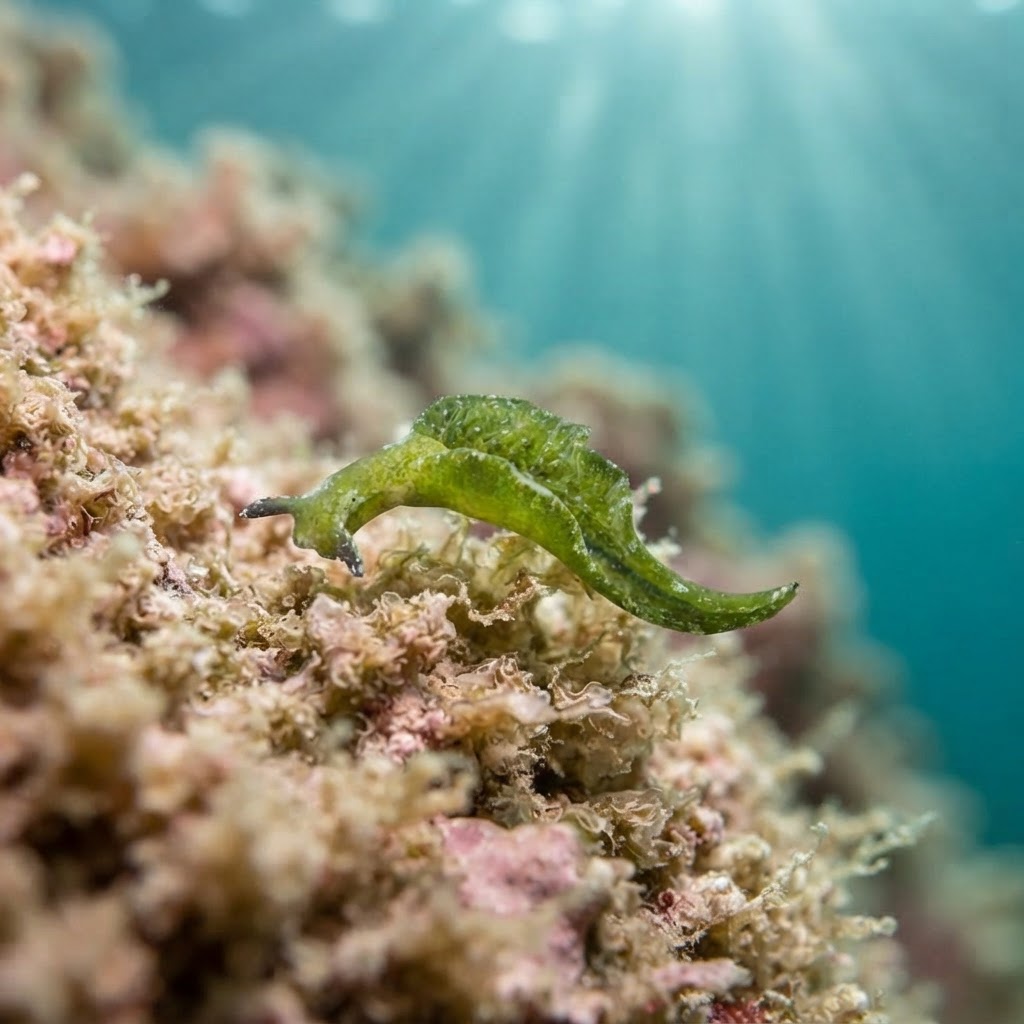
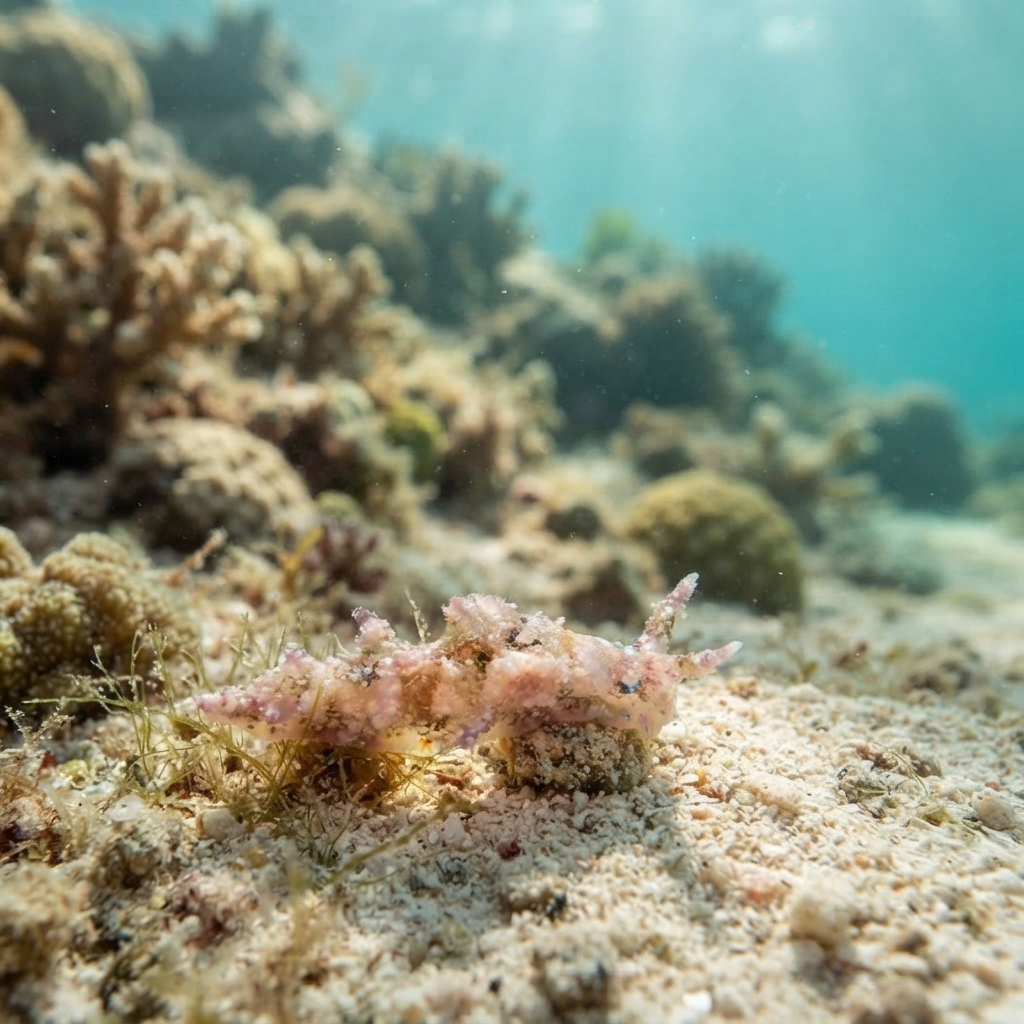
Small, soft-bodied sea slug with wing-like flaps (parapodia) along its back that it can fold up over the body like a leaf. Colouring runs toward green tones that help it blend into algae-covered rock and rubble. Look closely at the flap edges and the head area, since this genus is told apart from similar slugs mostly by fine colour patterning rather than shape or size.
Divers find it grazing slowly over rubble and algae-covered surfaces, usually low on the reef where it is easy to swim straight past. It shows no reaction to divers beyond continuing its slow crawl, and its small size and camouflage mean most sightings come from divers deliberately scanning the substrate rather than spotting it in open water.
Like other members of Plakobranchidae, it likely feeds by piercing algae cells and can retain the algae's chloroplasts in its own tissue for a period of photosynthesis, a trait known as kleptoplasty in this slug family.
No clear seasonal pattern shows up in the sightings, and the water it is found in stays warm year-round at 24.9 to 30.9C, so it is worth searching for on any dive in Guadeloupe or Grand Cayman regardless of month.
Reef neighbours a diver could mistake it for. Use the identification notes above to tell them apart.
Most reliably logged in Guadeloupe, especially around Grande-Terre and in smaller numbers in Basse-Terre, and a strong second population turns up in the Cayman Islands, concentrated on Grand Cayman. Outside these two countries it has not been logged with any regularity, so Guadeloupe and Grand Cayman are the places to look.
Mapping where Elysia Ellenae is logged…
Guadeloupe, particularly Grande-Terre, and Grand Cayman in the Cayman Islands are the two places it is reliably logged by divers. Sightings outside these regions are rare.
There is no detected season, and the warm water it lives in (roughly 25 to 31C) holds steady year-round in Guadeloupe and Grand Cayman, so any month is a fair shot.
Look for a small, soft-bodied slug with leaf-like flaps along its back and greenish camouflage colouring, usually crawling slowly over algae-covered rubble low on the reef. It is easy to mistake for other sap-sucking slugs, so a close look at the flap markings helps confirm it.
Exact size data is not established for this species, but like most Elysia sea slugs it stays small, generally within the centimetre-scale range typical of the genus.
It belongs to a slug family known for kleptoplasty, where the animal keeps algae chloroplasts alive in its own tissue after feeding, letting it draw extra energy from photosynthesis for a time.
No, it poses no danger to divers. It has no means of harming a diver and simply grazes on algae-covered surfaces.
Site and sighting data is aggregated from diver logs, iNaturalist and GBIF. For taxonomy and conservation status:
Elysia Timida
573 sites