Thuridilla hopei
Spot Splendid Elysia across the French Riviera, Balearic Islands and Croatia between Feb, Oct in water as cool as 13°C. ID tips and top dive sites inside.
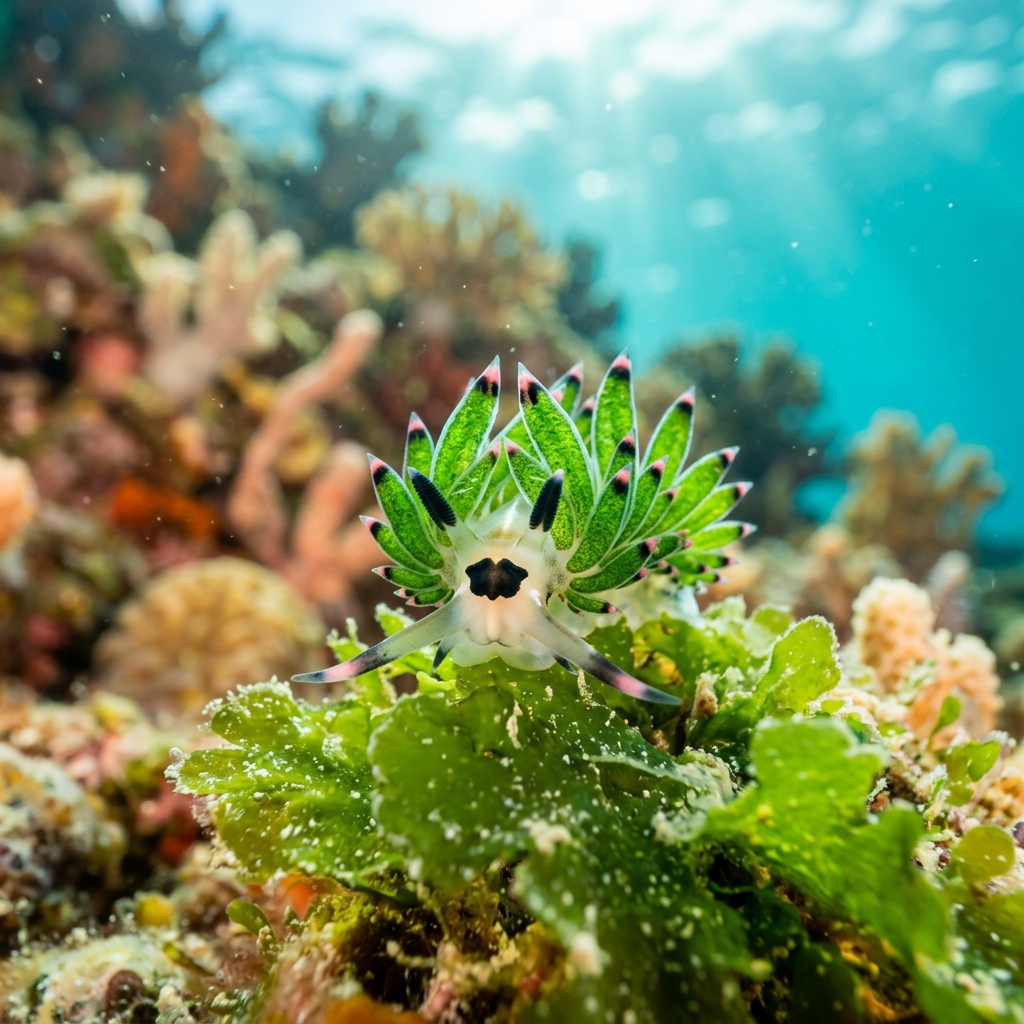
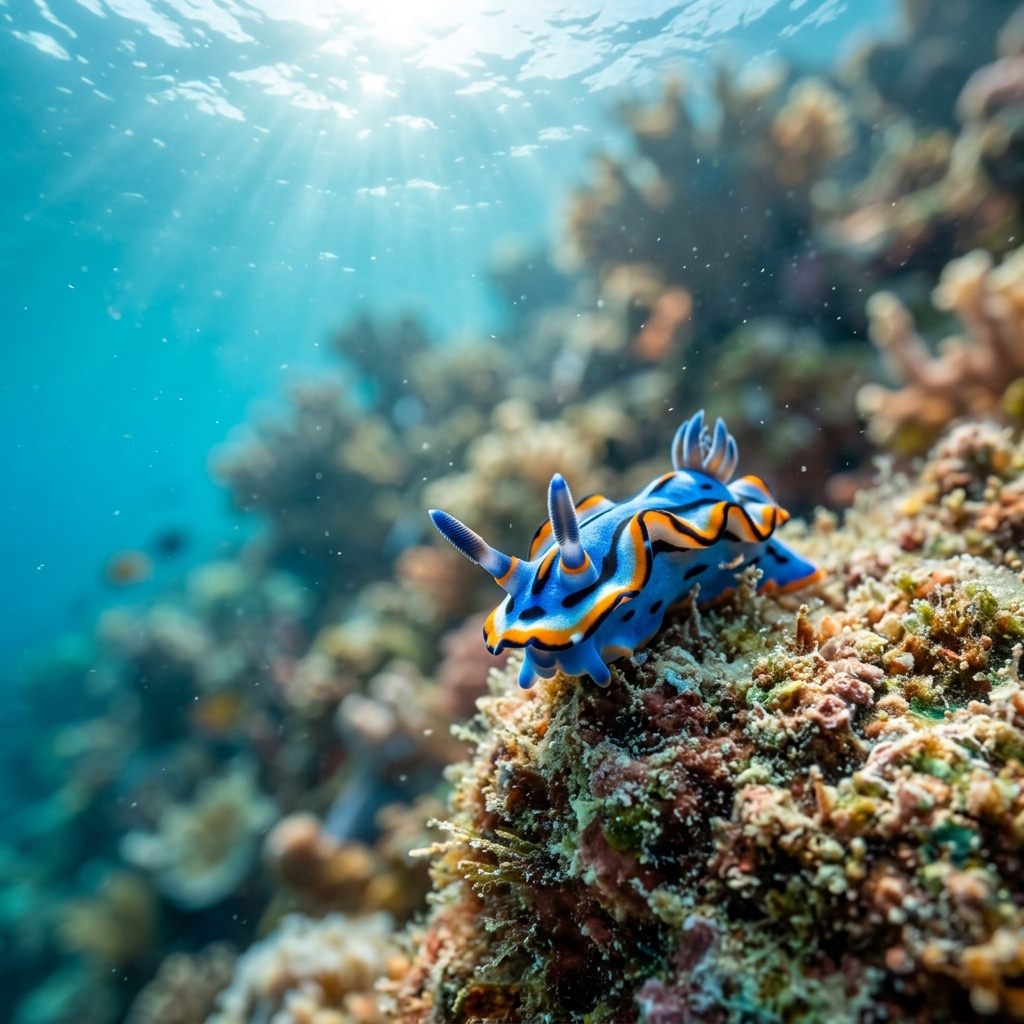
A small sacoglossan (sap-sucking) sea slug with flattened, wing-like parapodia (lateral lobes used for gliding) that fold up along either side of the body. The parapodia are typically rich blue-green with a bright orange or yellow marginal stripe, making this one of the more striking slugs in Mediterranean waters despite its tiny size. Look for it moving slowly across algae-encrusted rock or seagrass, where its colouration can temporarily fool the eye into reading it as a piece of the background.
You will almost always find it on a hard substrate, rocky reef walls, rubble, or seagrass blades, where it grazes on filamentous algae, piercing cells to siphon out chloroplasts. It moves slowly and methodically, often tucked into a crevice or pressed flat against the rock. It shows little reaction to a close approach, so a patient diver with good buoyancy can get eye-level for a long look.
Like other sacoglossans, Splendid Elysia can retain functional chloroplasts from the algae it eats inside its own tissues, potentially using them to supplement energy through photosynthesis, a trick sometimes called kleptoplasty.
Sightings in the northern Mediterranean concentrate between February and October, so spring through early autumn gives the best odds. The species turns up in notably cool water, as low as 13°C, so do not wait for warm summer conditions; March to May can be particularly productive when algal growth is high.
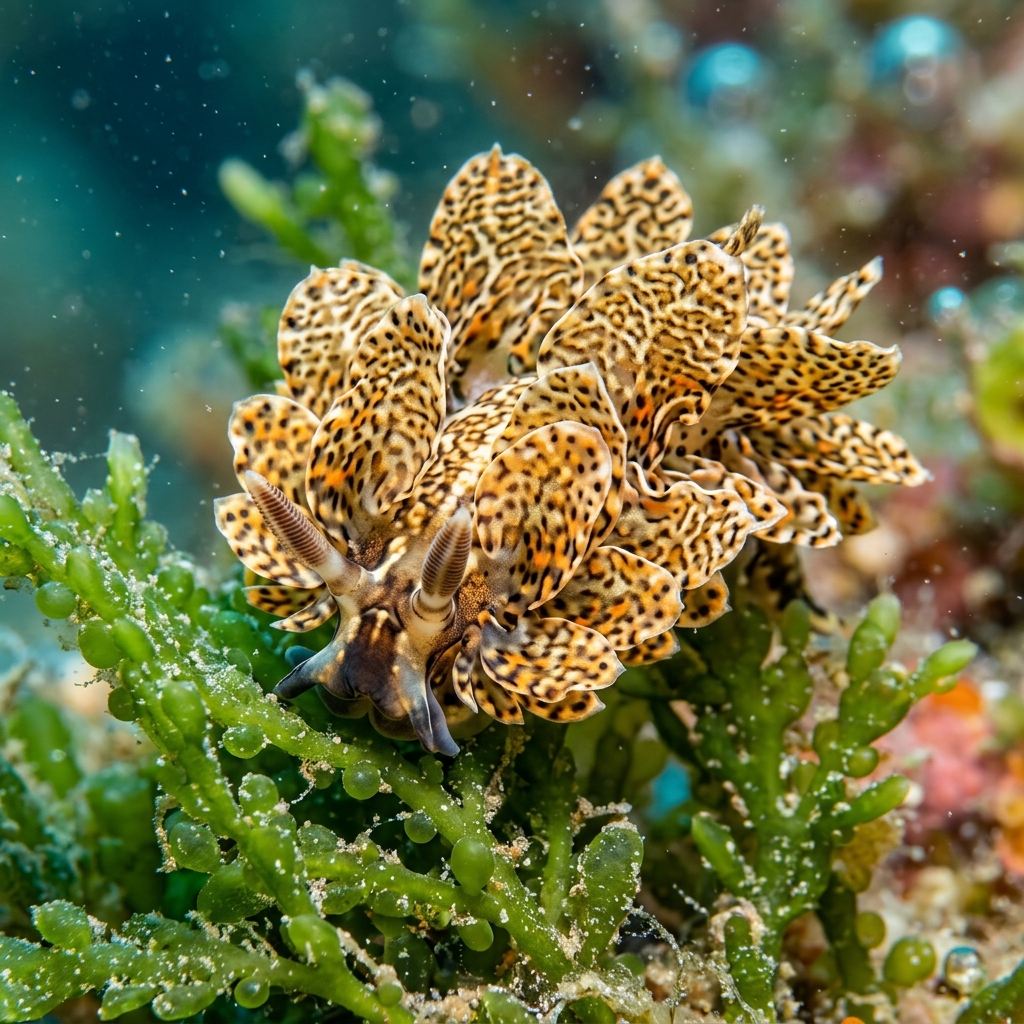
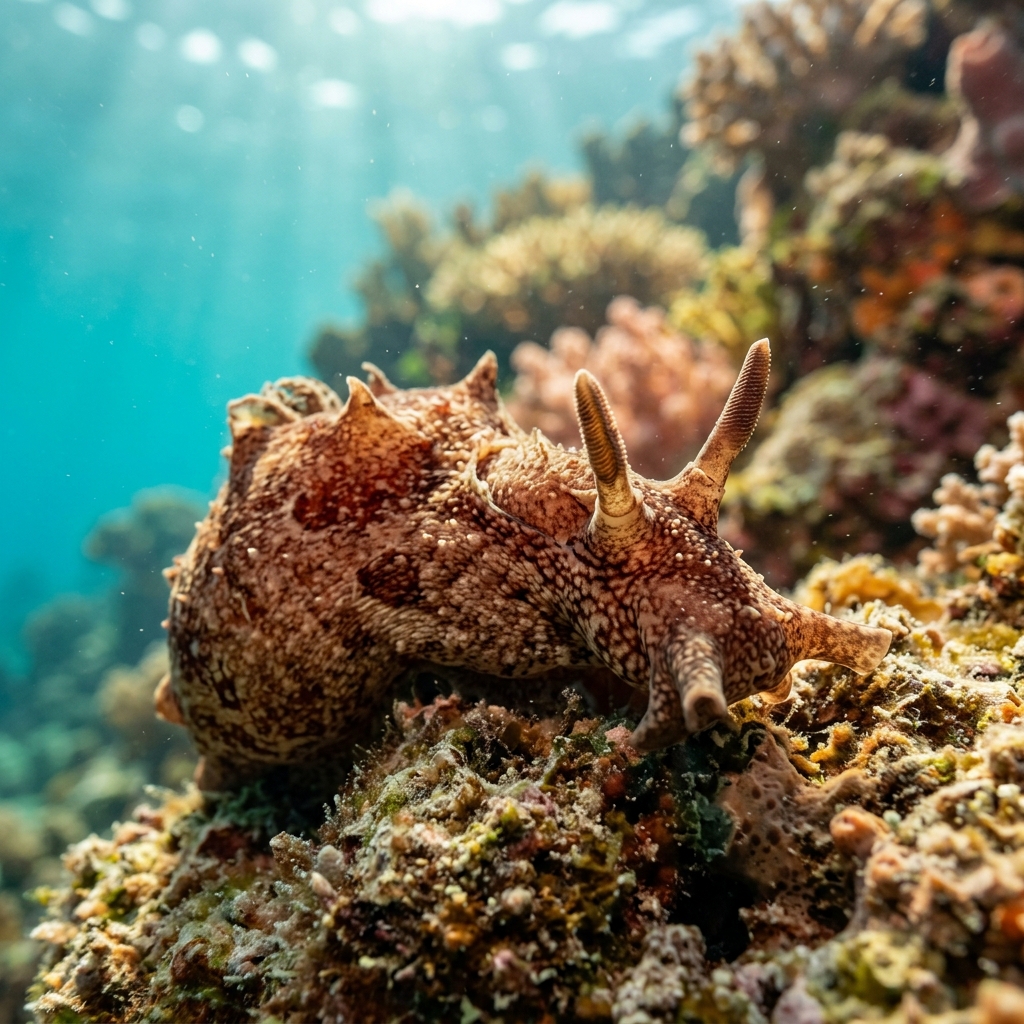
Reef neighbours a diver could mistake it for. Use the identification notes above to tell them apart.
Almost all confirmed sightings come from the western and central Mediterranean. The French Riviera and Provence coast account for the largest share of records, followed closely by the Balearic Islands and Costa Brava in Spain. Croatia's Kvarner Gulf and the island of Gozo in Malta are also reliable spots, rounding out a range that stretches from the Slovenian Adriatic south to Andalusia and east to Greece.
Mapping where Splendid Elysia is logged…
It is most reliably logged across the western and central Mediterranean. The French Riviera, Balearic Islands, Costa Brava, Croatia's Kvarner Gulf, and Gozo in Malta all have strong records. Sightings also come from Andalusia, northwest Italy, and Greece.
Sightings peak between February and October across the northern Mediterranean. Spring dives (March to May) are particularly worth targeting, as the slug tolerates cool water well and algal food sources are abundant at that time of year.
Look for a small sea slug with broad, flattened parapodia coloured blue-green with a bright orange or yellow border. It moves slowly over algae-covered rock or seagrass. The vivid marginal stripe is the key field mark separating it from similar sacoglossans.
Thuridilla hopei is a small slug, typically in the range of 1 to 3 cm in length. At that size it pays to slow right down and scan the algae carefully; a quick swim-by will miss it almost every time.
It is thought to practise kleptoplasty, retaining living chloroplasts from the algae it grazes and keeping them functional within its own cells. This may allow the slug to gain some energy from sunlight, though the extent varies. It is one of the more discussed quirks in sea-slug biology.
Site and sighting data is aggregated from diver logs, iNaturalist and GBIF. For taxonomy and conservation status:
Light-spotted Aegires
3,168 sites