Costasiella kuroshimae
Spot the Diamond-mask Sap-sucker in the Philippines and Bali in warm 27-29 °C waters. Rare but real, here's where divers find it and how to ID it.
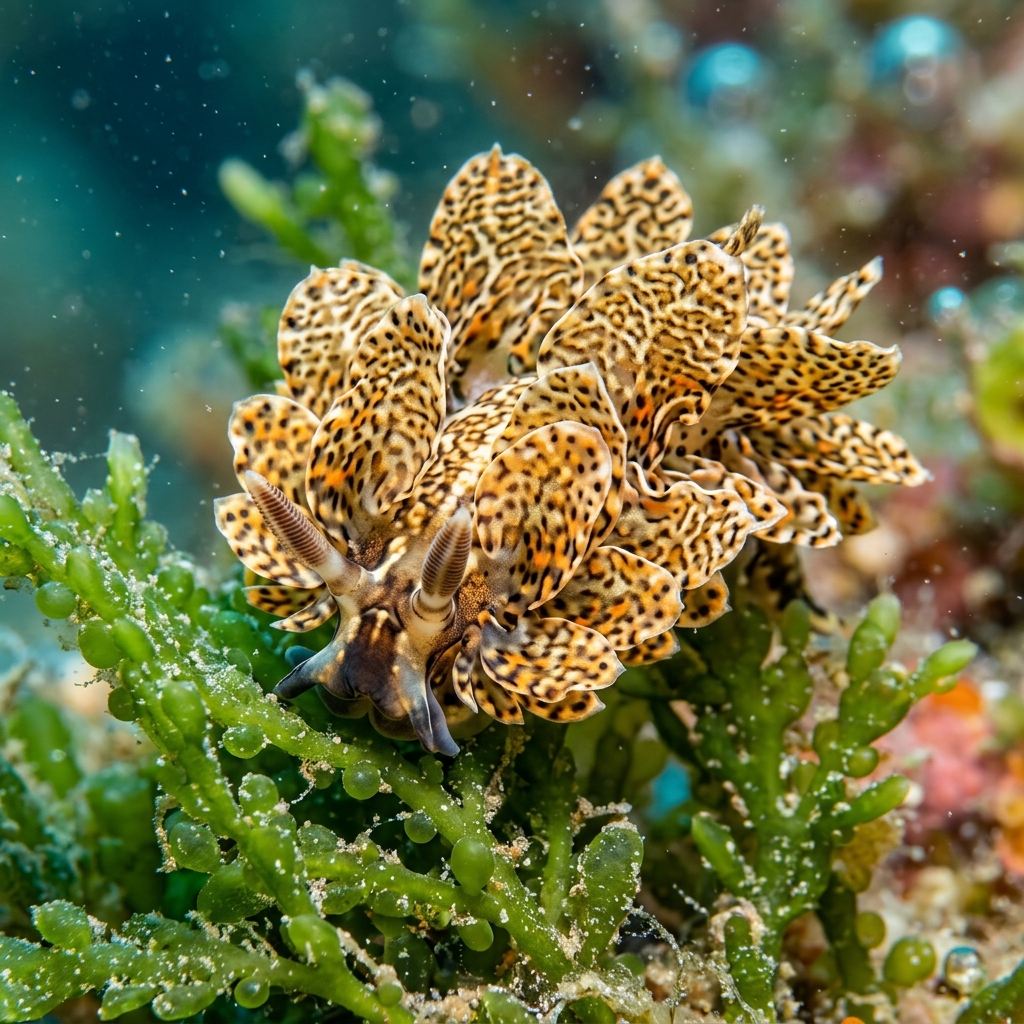
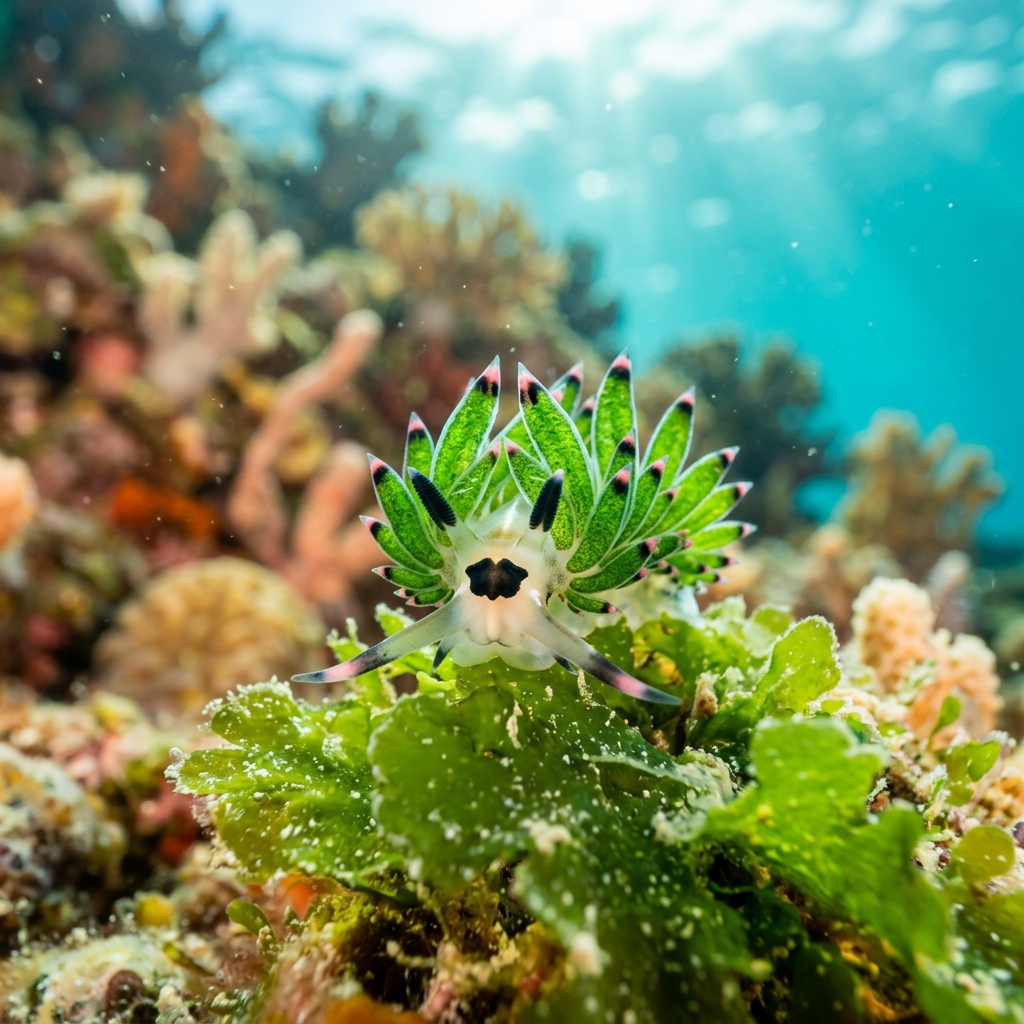
Tiny even by sacoglossan (sap-sucking sea slug) standards, this species carries a cluster of plump, leaf-like cerata (finger-like projections) that take on green hues from the chloroplasts of the algae it feeds on. Look for the distinctive dark eye-mask marking across the head, which gives the animal its common name and separates it from similar sap-suckers at a glance. The body itself is largely translucent white, making the green cerata and dark facial stripe the two field marks to lock onto. You'll almost always find it on or very close to filamentous green algae, where it is easily overlooked without a sharp eye or a macro lens.
Almost every encounter happens on or millimetres from filamentous green algae such as Avrainvillea, where the slug grazes slowly and is effectively motionless from a diver's perspective. It shows little reaction to approach, but its size means a slight current or a clumsy fin kick can dislodge it instantly. Sightings are almost exclusively on shallow, nutrient-rich muck and reef-rubble habitats rather than on hard coral.
Like other sacoglossans, it retains functional chloroplasts from its algal food inside its own body tissue, a phenomenon called kleptoplasty. Those stolen chloroplasts continue photosynthesising inside the slug, potentially supplementing its energy budget with sunlight.
No clear seasonal pattern has emerged from the data, so this species is treated as year-round across its tropical range. It is consistently logged in warm waters between 27 and 29 °C, conditions that persist throughout the year at most of its Philippine and Indonesian strongholds.
Reef neighbours a diver could mistake it for. Use the identification notes above to tell them apart.
The Philippines accounts for the vast majority of logged sightings, with Luzon & North and the Central Visayas being the standout regions. Indonesia, particularly Bali, Lombok & Java, is the next most productive destination, followed by Taiwan's offshore islands of Liuqiu and Green Island. A small number of sightings have also been recorded at Mafia Island in Tanzania, making the Indian Ocean coast a worth-while secondary target for dedicated macro hunters.
Mapping where Diamond-mask Sap-sucker is logged…
The Philippines is by far the best bet, especially sites around Luzon and the Central Visayas. Bali and the broader Lombok and Java region in Indonesia are the next most productive. Taiwan's Liuqiu and Green Island also have a solid track record, and dedicated macro divers have found it at Mafia Island in Tanzania.
There is no single peak season in the data. It has been recorded year-round across its tropical range, where water temperatures typically hold between 27 and 29 °C. Visiting any of its top sites during your preferred travel window is a reasonable approach.
Focus on the dark mask-like stripe across the head and the cluster of green, chloroplast-filled cerata rising from a translucent white body. You'll almost always find it on green filamentous algae, which it closely resembles in colour. Its tiny size means a macro lens or loupe (magnifying lens) is a real help.
Size data for this species is not well documented, but like most sacoglossans it is a micro-nudibranch. Expect to be searching for something only a few millimetres long, the kind of animal that experienced muck divers specifically hunt for rather than stumble upon.
This slug steals chloroplasts from the algae it eats and keeps them alive inside its own body tissue. Those chloroplasts continue to photosynthesise, potentially giving the slug a solar energy boost. It is one of the more remarkable traits shared by its group of sap-sucking slugs.
Site and sighting data is aggregated from diver logs, iNaturalist and GBIF. For taxonomy and conservation status:
Light-spotted Aegires
3,168 sites