Scorpaena jacksoniensis
Find Eastern Red Scorpionfish on New South Wales reefs, where sightings peak Dec, Apr in water from 18-25°C. Tips to spot them hiding in plain sight.
Safety warning
The spines carry venom and snap off easily in the skin. Do not touch it, and never rest a hand or knee on the reef near one; the spines drive in on the lightest contact.
If you're stung
Venomous spinesGeneral first-aid guidance, not a substitute for professional medical care. In an emergency, call your local emergency number.
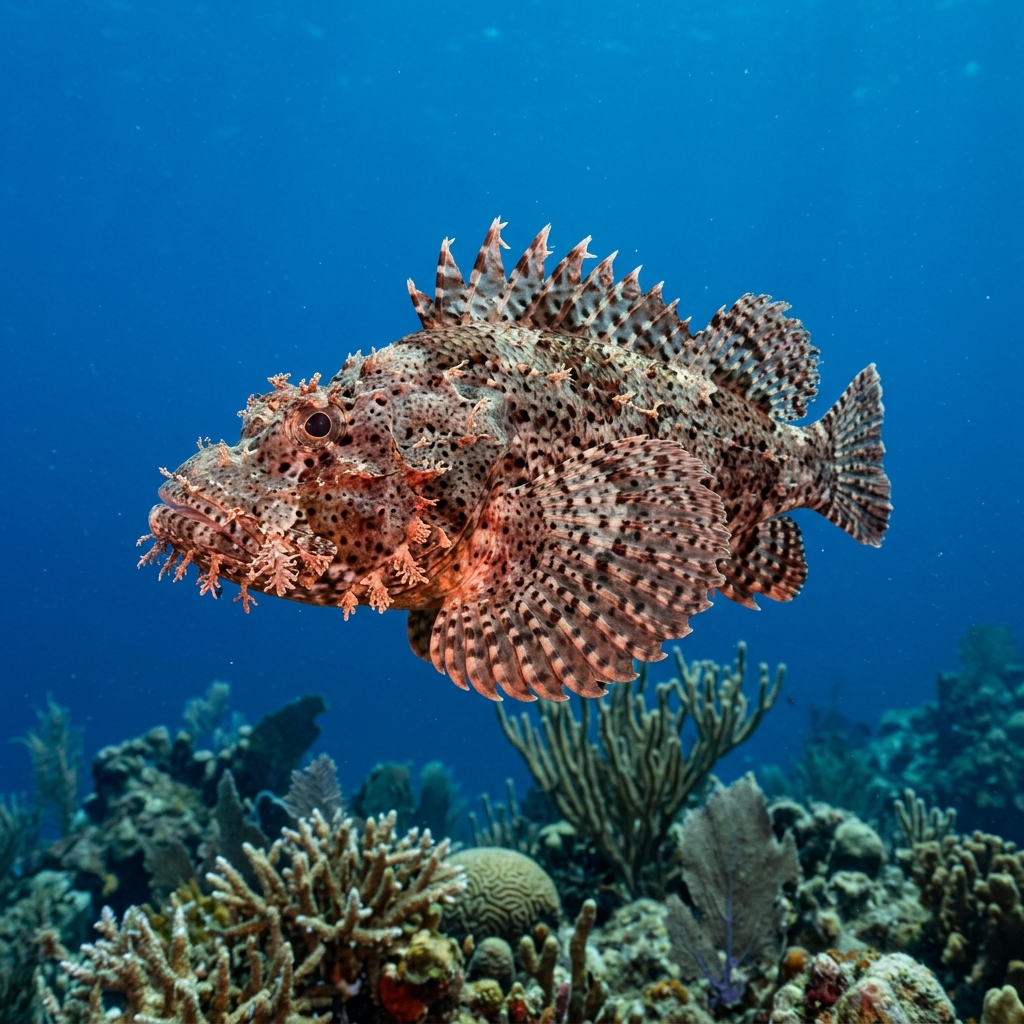
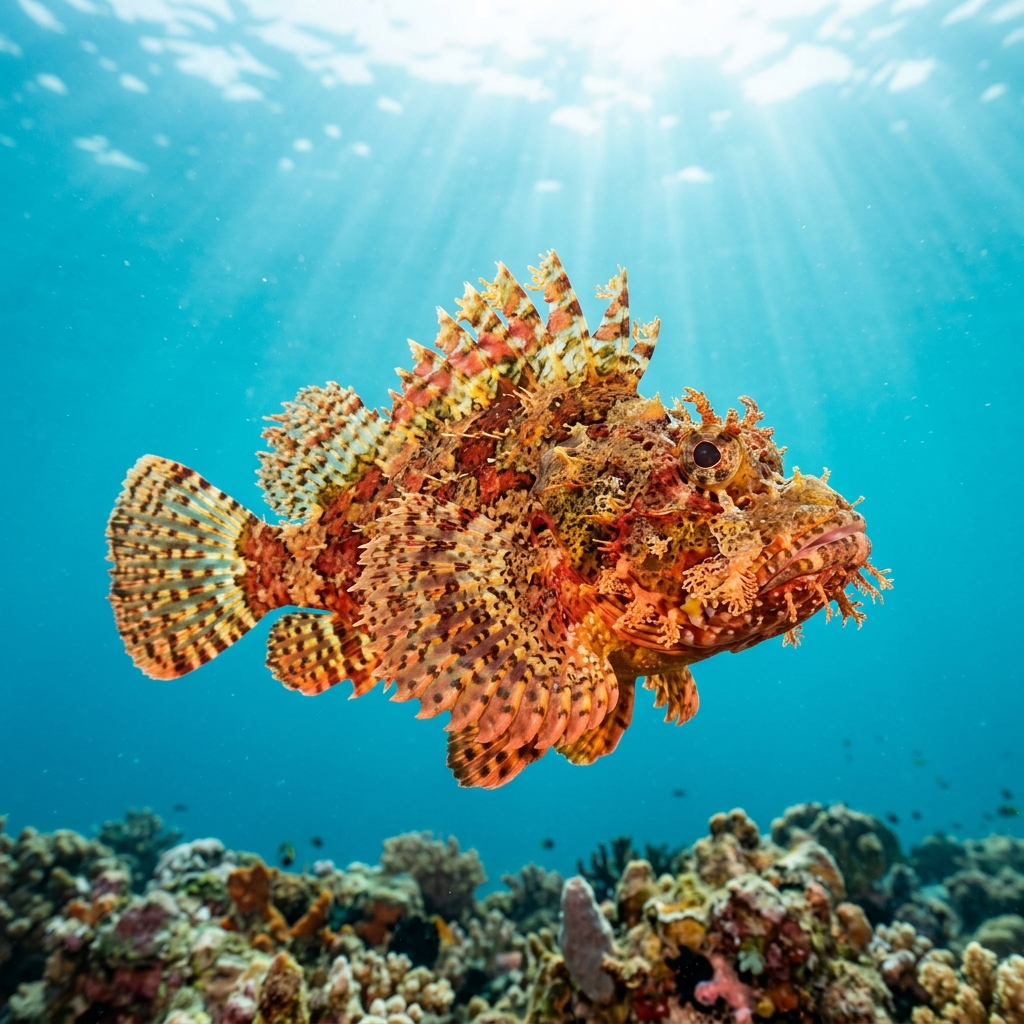
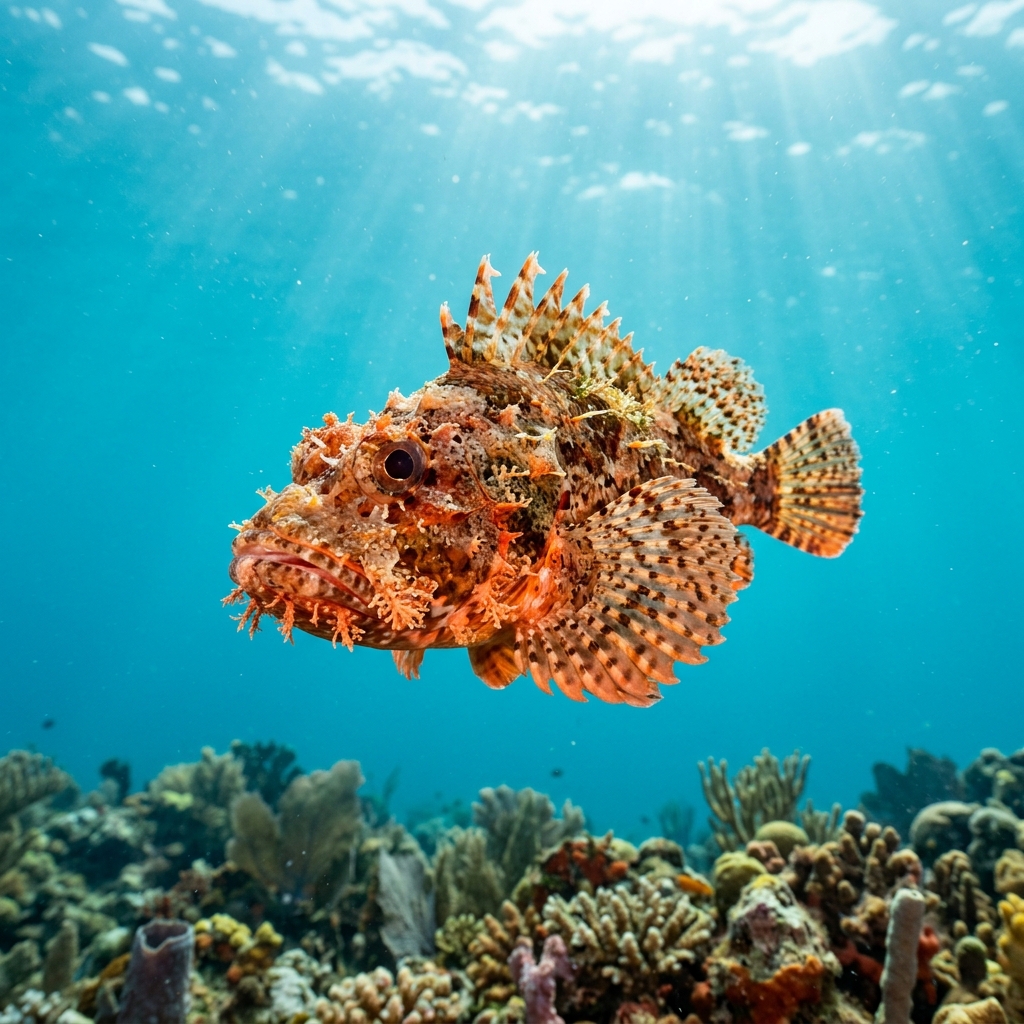
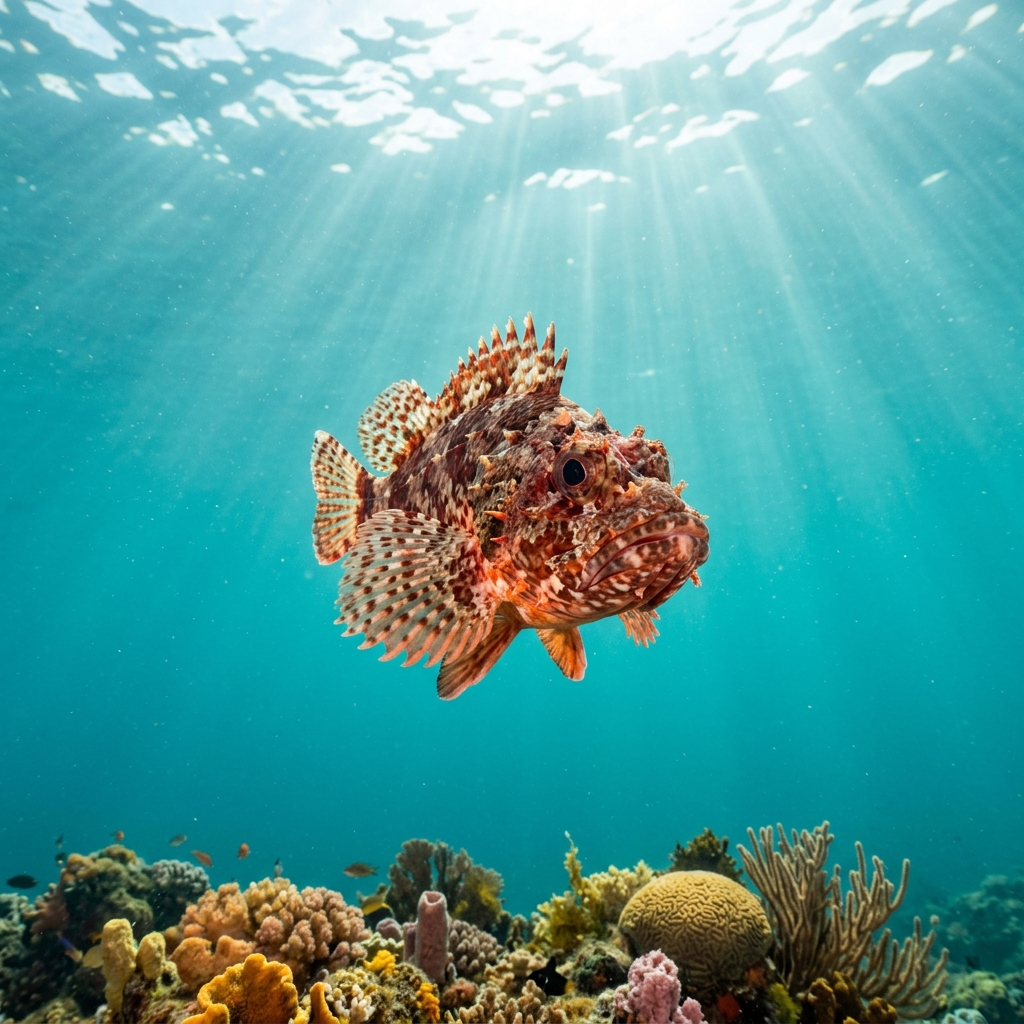
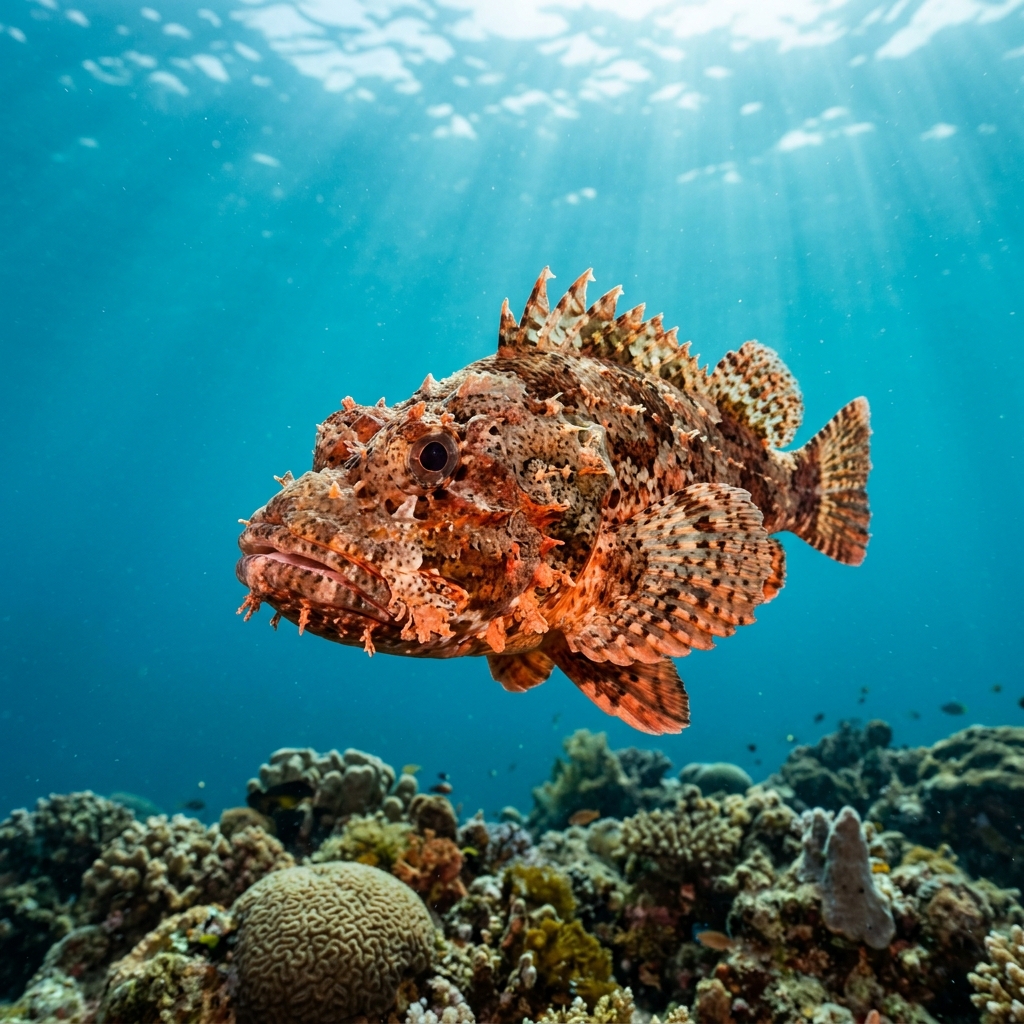
Roughly the length of your hand, this scorpionfish wears a mottled patchwork of reds, oranges, browns and creams that mirrors the encrusted reef almost perfectly. The body is stocky and compressed, with a large spiny head, fleshy skin flaps (cirri) above the eyes and along the snout, and a wide, upturned mouth. Look for the irregular blotches and textured skin surface that break up its outline, making it look more like a lump of algae-covered rock than a fish. That effective camouflage is usually your only clue it is there at all.
Sit-and-wait is the whole game plan here: when you find one, it will almost certainly be completely motionless, relying entirely on camouflage rather than fleeing. Even if you get close, expect no reaction beyond a slow, watchful eye rotating to track you. Most sightings are during the day on the reef structure itself, where the fish parks against a sponge, rock ledge, or weedy substrate and simply waits for prey to wander past.
Like other scorpionfish, the eastern red scorpionfish periodically sheds its outer skin layer to remove fouling algae and parasites, helping maintain the fresh, textured appearance that makes its camouflage so effective.
Sightings concentrate between December and April, which is the Southern Hemisphere summer and early autumn, when NSW water temperatures sit in the warmer part of this species' observed range around 20-25°C.
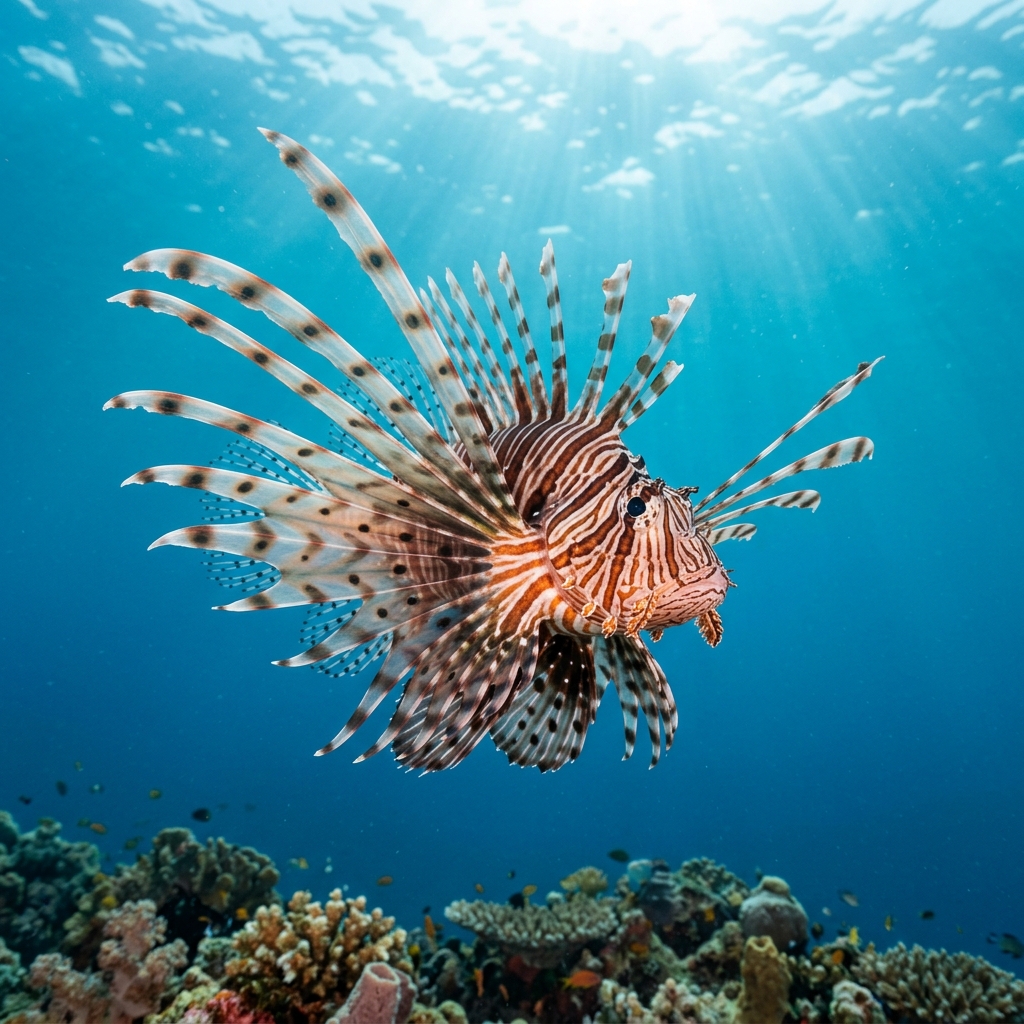
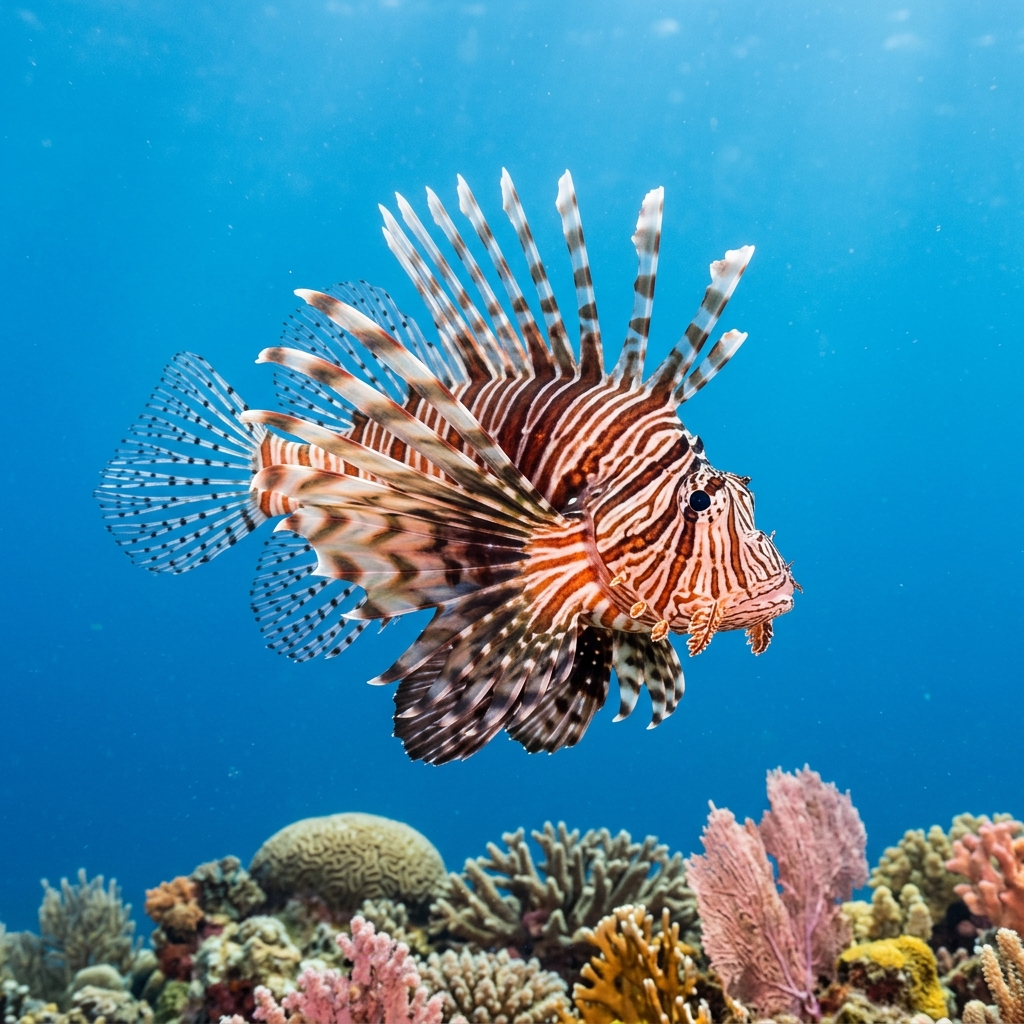
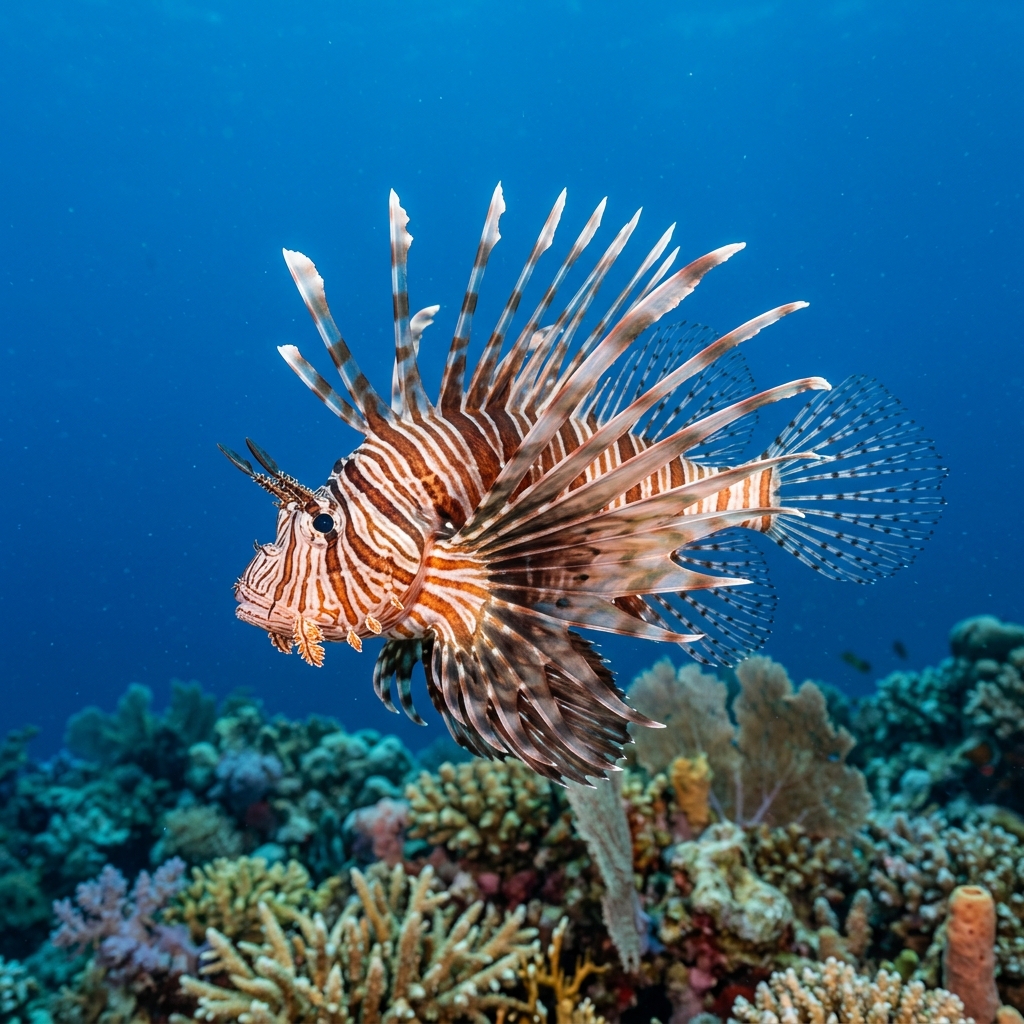
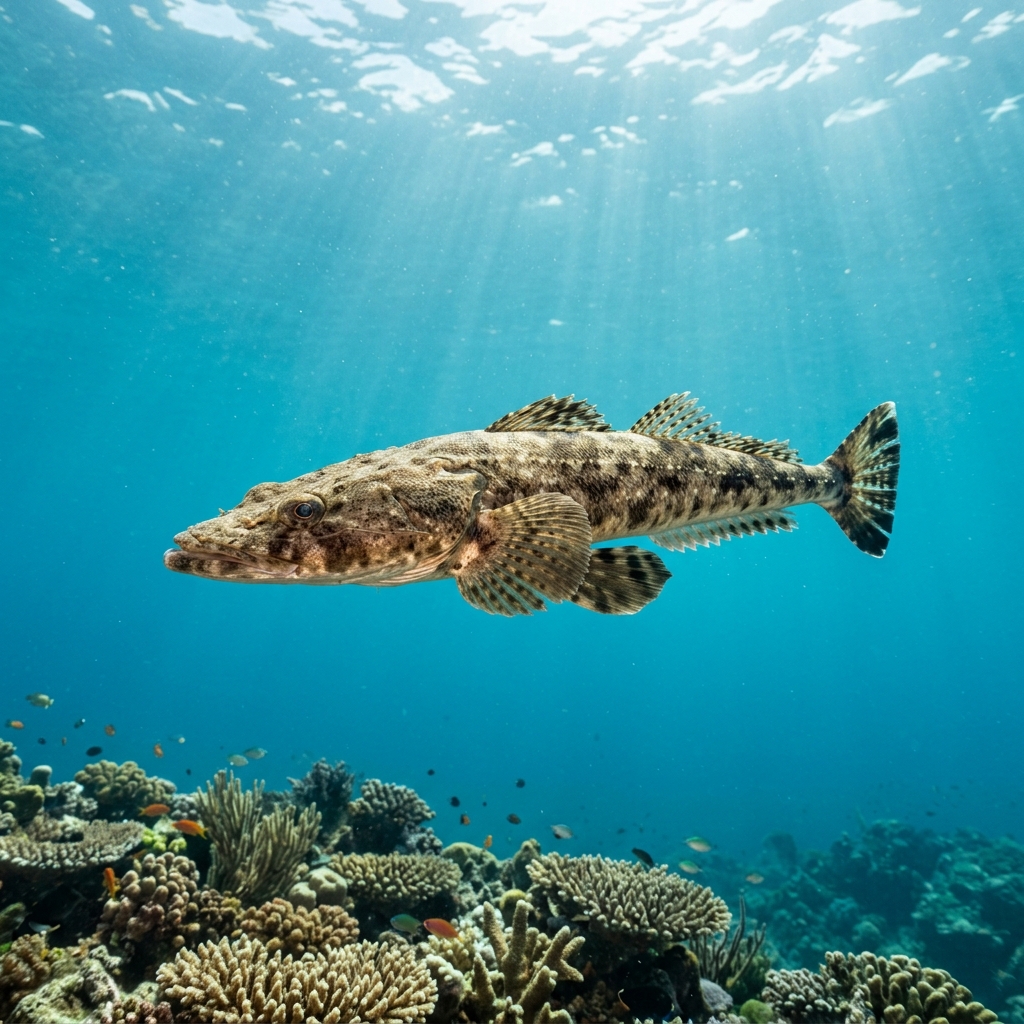
Reef neighbours a diver could mistake it for. Use the identification notes above to tell them apart.
Almost all logged sightings come from Australia, with New South Wales accounting for the overwhelming majority of records. The Sydney region and broader NSW coast are by far the most reliable places to look, with a smaller number of sightings reaching into Queensland. Divers targeting this species will find their best odds exploring rocky and weedy reefs along the NSW coastline.
Mapping where Eastern Red Scorpionfish is logged…
This is an Australian endemic found almost exclusively along the east coast. New South Wales reefs, particularly around Sydney and the surrounding coast, hold the strongest populations. A smaller number of sightings extend into Queensland. Rocky and weedy shallow-to-mid reefs are the habitat to target.
Sightings peak between December and April, the Southern Hemisphere summer and early autumn, when water temperatures along the NSW coast are at their warmest within this species' observed range of roughly 18-25°C.
Look for a hand-sized, stocky fish with a large spiny head, fleshy skin flaps above the eyes, and heavily mottled red, orange, brown, and cream colouring. It sits perfectly still on the reef and resembles encrusted rock. The wide upturned mouth and textured, flap-covered skin are the key features to key on.
They are not considered dangerous in normal diving conditions. However, like all scorpionfish, they have venomous spines along the dorsal fin. The risk is almost entirely from accidental contact, so keep your hands off the reef and never try to handle one. They will not pursue or threaten you.
Typical adults reach around 23 cm in length, roughly the size of a large hand. This is a modest, compact fish and easy to overlook precisely because of its size and camouflage.
Site and sighting data is aggregated from diver logs, iNaturalist and GBIF. For taxonomy and conservation status:
Madeira Rockfish
2,773 sites