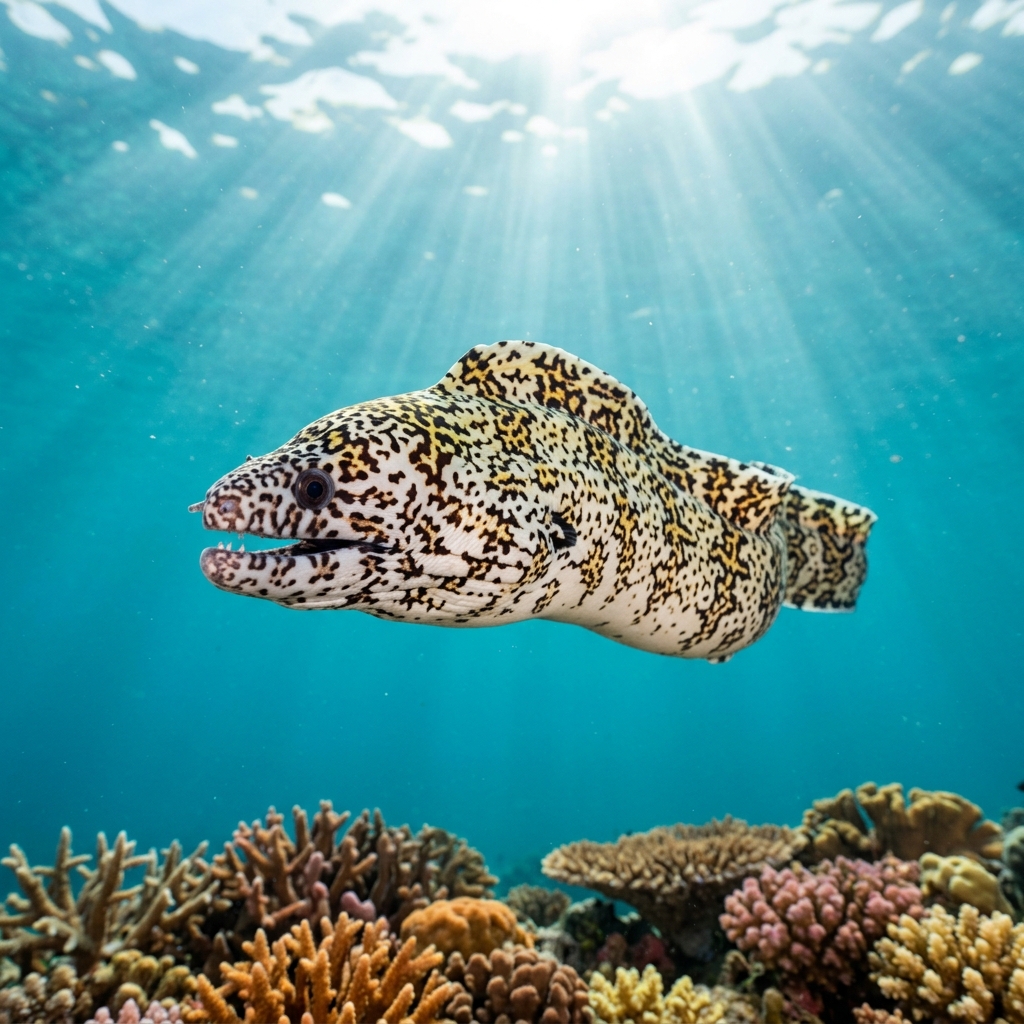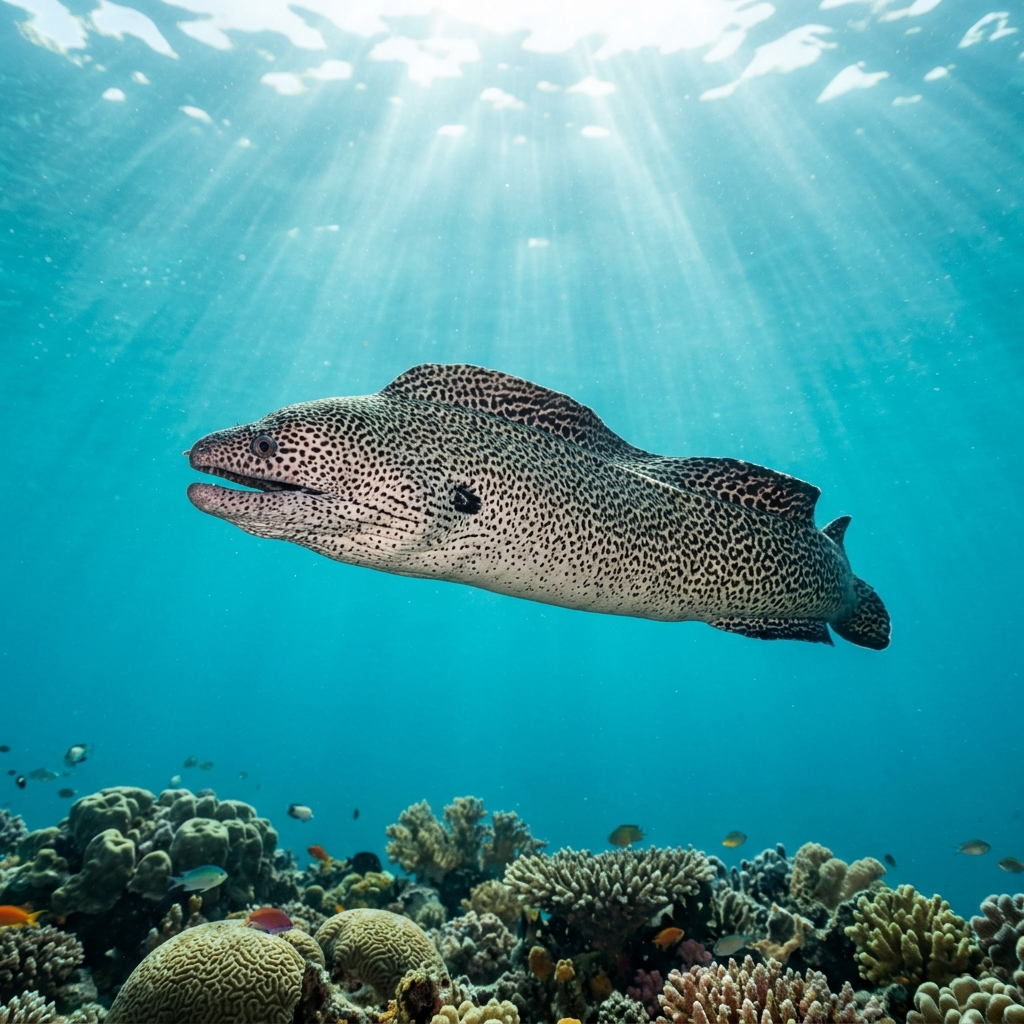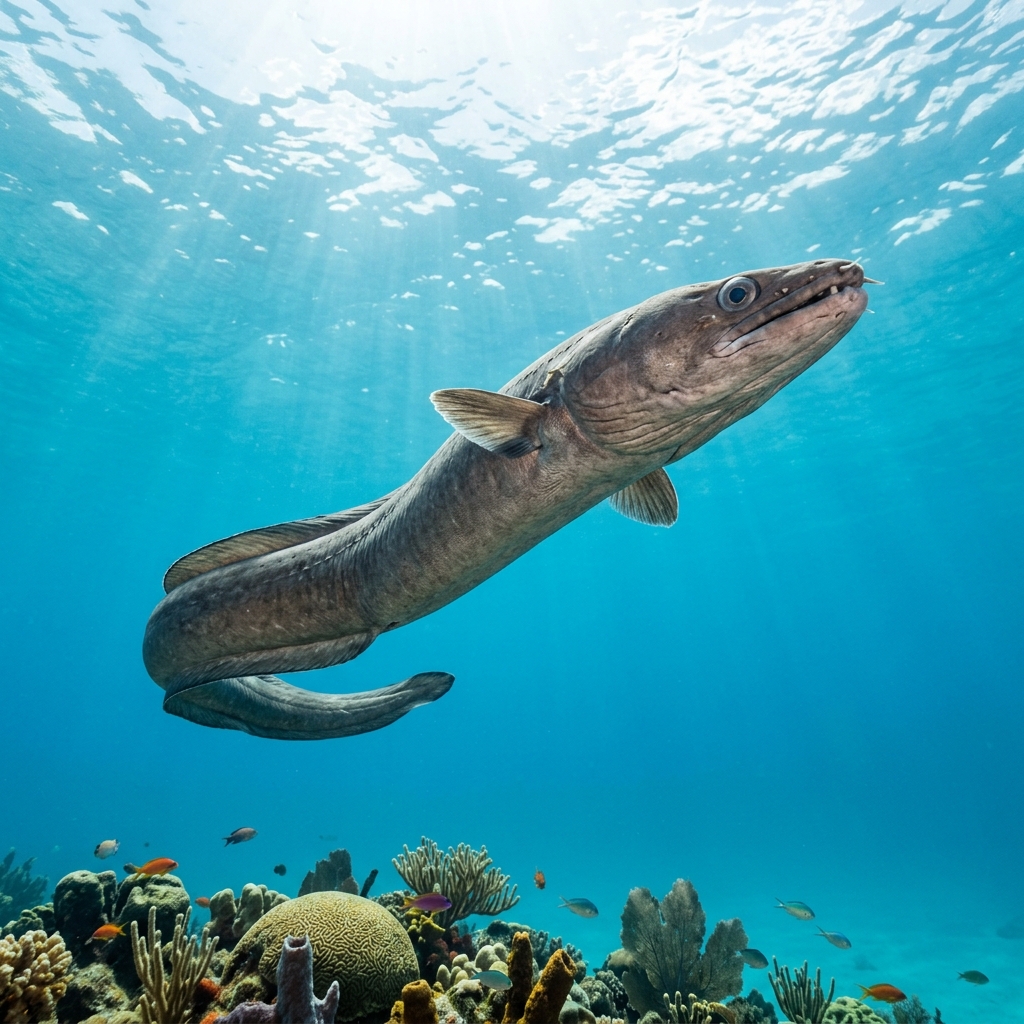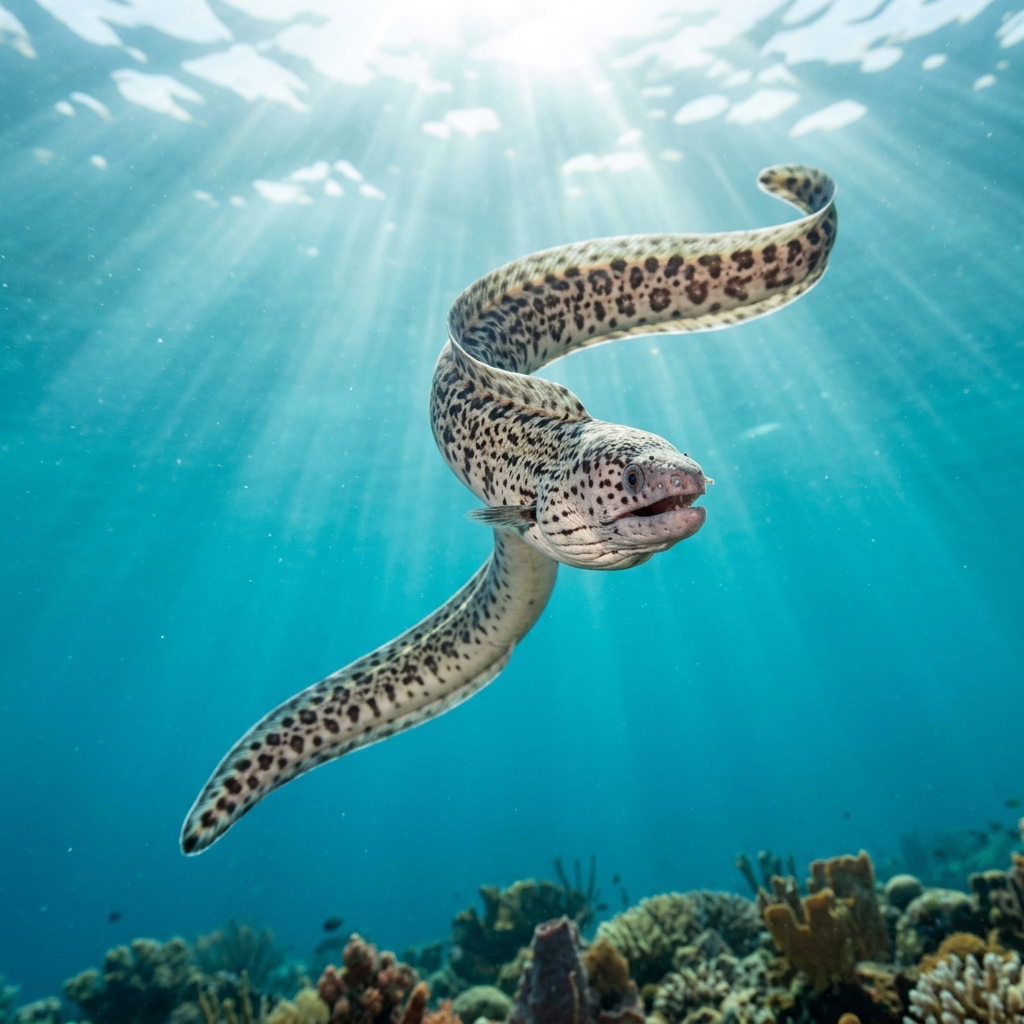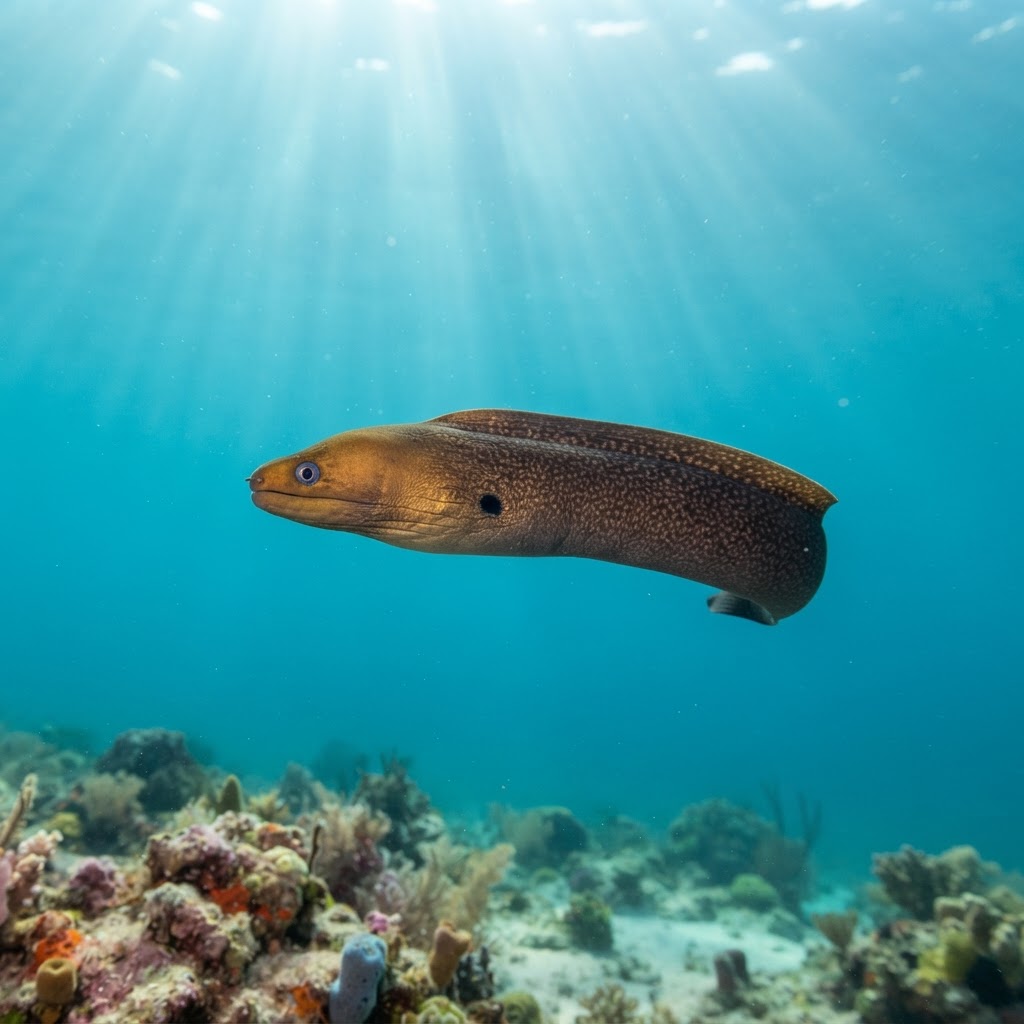
Gymnothorax melatremus
Barely 21cm long and easy to miss: find dwarf morays tucked into Hawaii's reef crevices year-round in warm 25-29C water.
At just 21cm, this is one of the smallest morays you'll come across, more finger-sized than eel-sized. Look for a pale yellow to cream body with a dark ring around the eye, usually just the head poking out of a hole in the reef. There's no bold pattern to key on here, so size and that plain, understated colouring combined with the tight, narrow head shape are the giveaways.
Expect to see just a head and a bit of neck sticking out of a small hole or crevice, usually low on the reef among rubble or coral heads. It stays put rather than roaming in open water, and because it's so small and shy it tends to pull back into its hole if you get too close or move quickly. Most sightings come from divers scanning the reef closely rather than spotting it from a distance.
Its small size lets it wedge into crevices too tight for larger morays, so it can occupy reef real estate that bigger eels can't use, reducing direct competition on the same patch of coral.
Comfortable in water from 25.4 to 28.9C, which covers Hawaii's reefs all year, and there isn't enough seasonal data to suggest a peak window, so any month is worth a look.
Reef neighbours a diver could mistake it for. Use the identification notes above to tell them apart.
Sightings logged for this species cluster heavily in Hawaii, particularly across various reef sites, making it the reliable place to look. Beyond Hawaii, logged data is thin, so it's effectively a Hawaii specialty as far as diver reports go.
Mapping where Dwarf Moray is logged…
Hawaii is by far the most reliable place, with sightings logged across a good number of its reef sites. Outside Hawaii there's little diver data on this species, so plan a Hawaii trip if you want a real shot at finding one.
There's no clear seasonal pattern in the sightings, and it lives comfortably in water from about 25 to 29C year-round in Hawaii, so any month is a reasonable time to look.
Look for a very small moray, around 21cm, with a plain pale yellow to cream body and a dark ring around the eye. Usually only the head shows from a crevice, so size and the subtle eye marking are what separate it from larger, more patterned morays.
They top out at around 21cm, making this one of the smallest moray species divers are likely to encounter, easily overlooked next to reef-dwelling giants like the giant moray.
Its small size lets it live in crevices far too narrow for larger moray species, meaning it can occupy microhabitats on the reef that bigger eels simply can't fit into.
Site and sighting data is aggregated from diver logs, iNaturalist and GBIF. For taxonomy and conservation status:
Garden Eel
2,448 sites