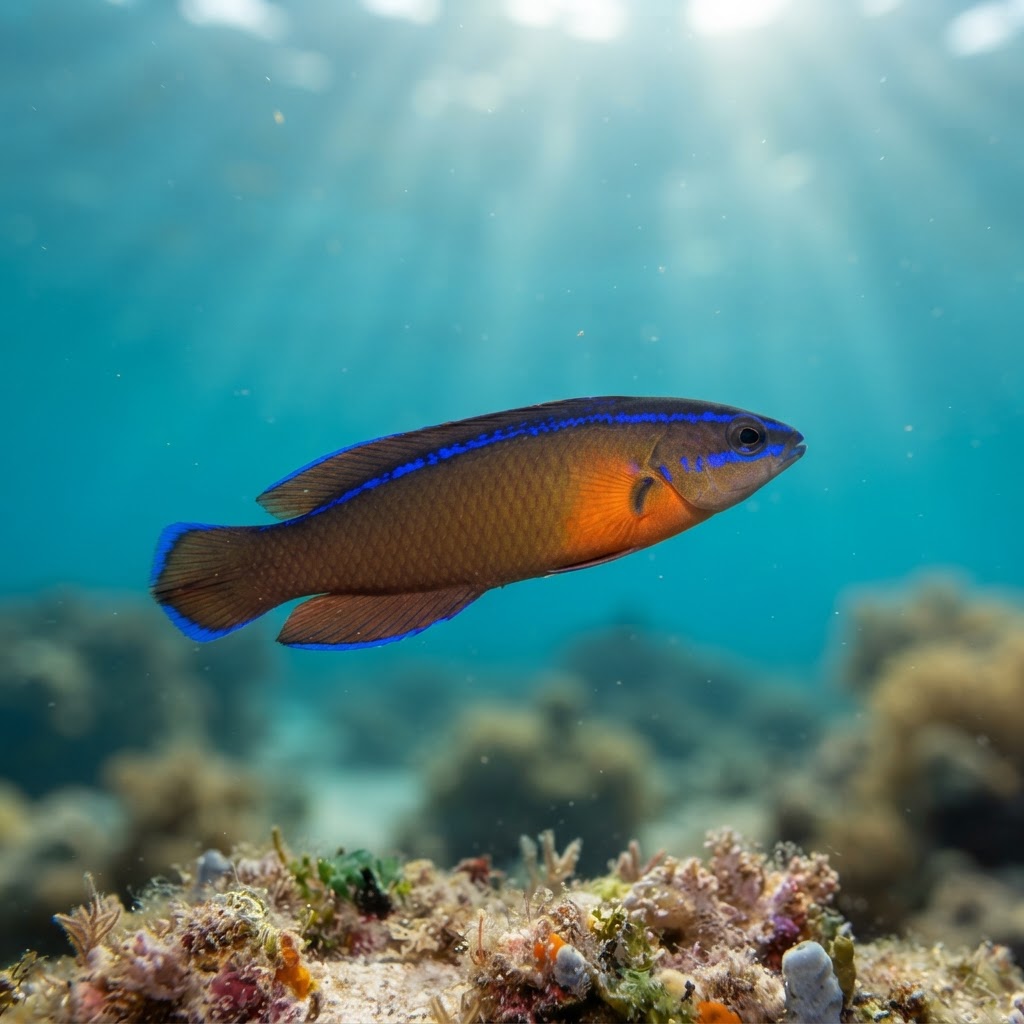
Pseudochromis dutoiti
A small orange-and-purple reef fish logged almost exclusively along South Africa's KwaZulu-Natal coast, present year-round in warm water.
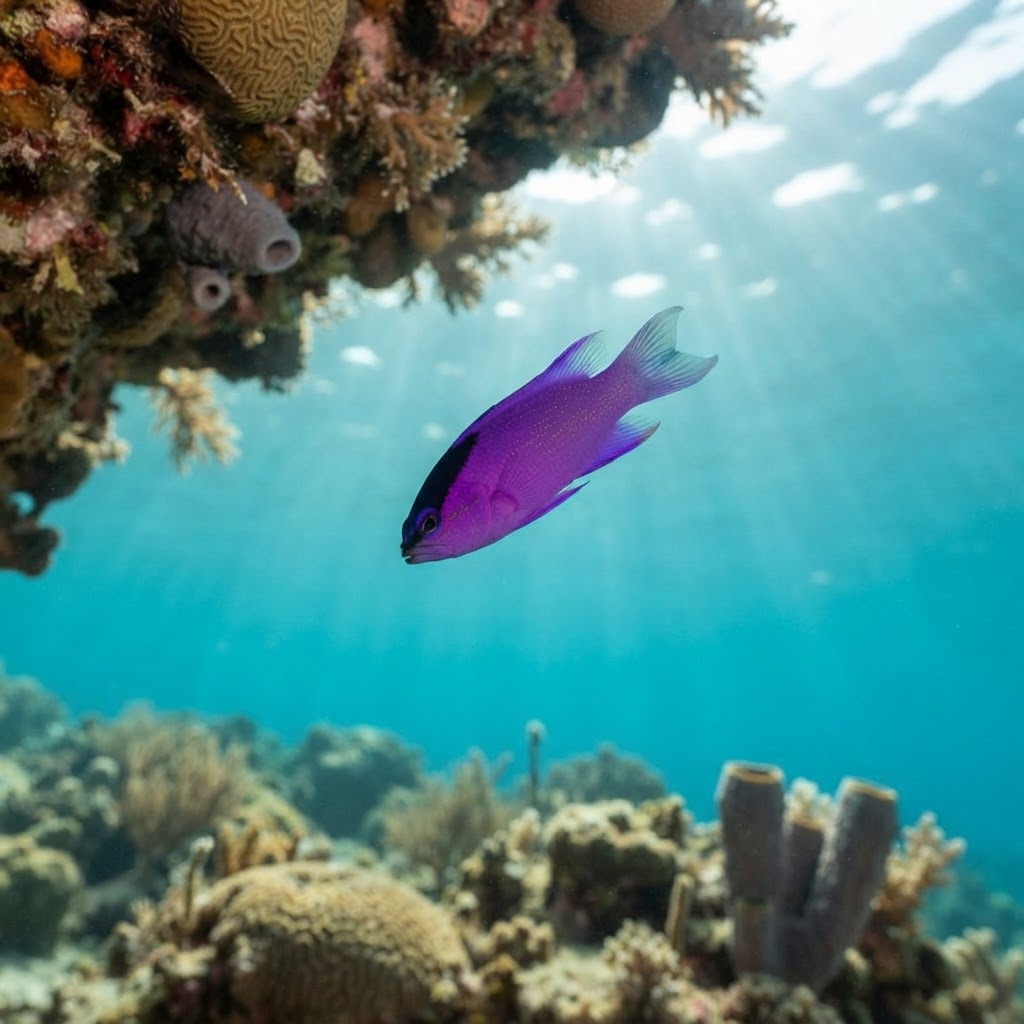
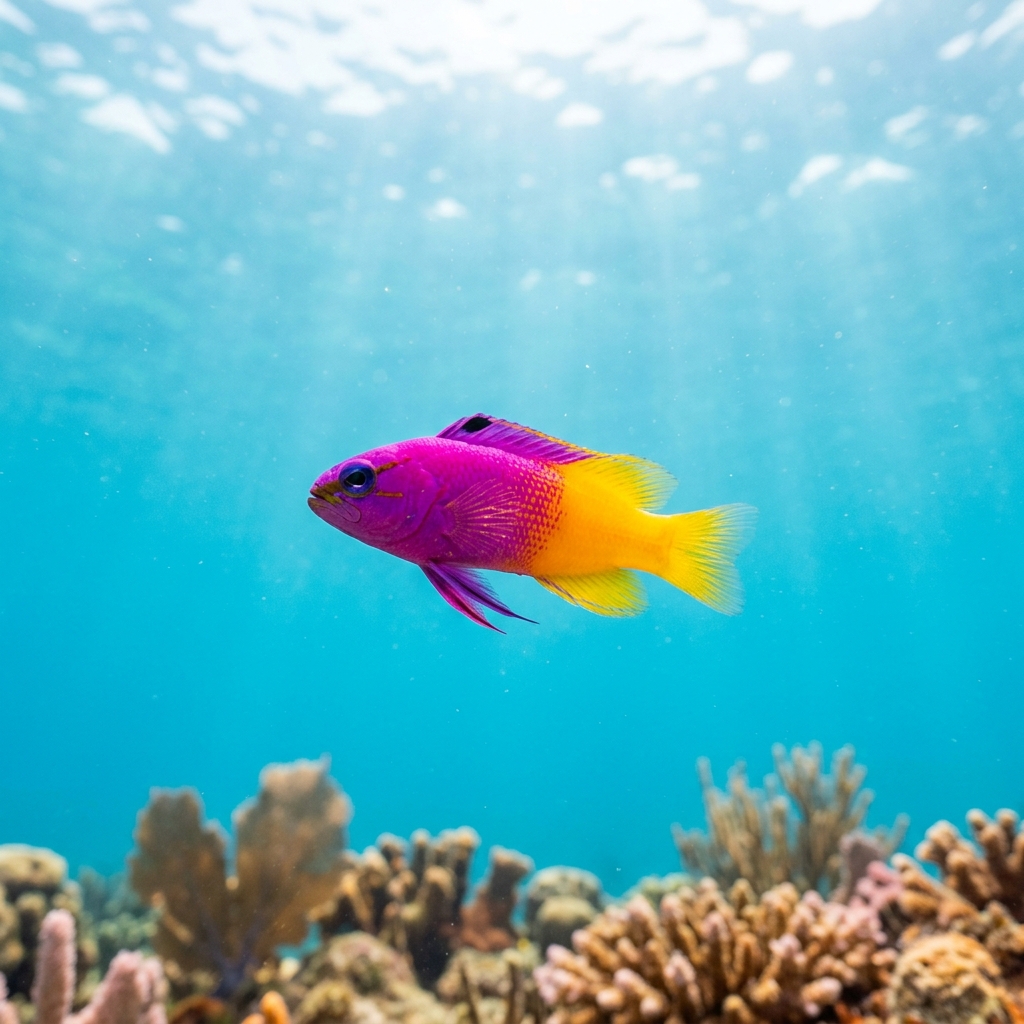
A small, slender fish around 6 cm, easy to overlook against a busy reef wall. Look for a two-tone body: a purple-blue head and forward section fading into a bright orange rear half and tail. It tends to sit close to reef structure rather than out in open water, so divers usually catch it hovering near a crevice or ledge rather than swimming across a sandy patch.
Divers typically find it holding station near reef crevices and ledges rather than roaming open water, staying close to cover it can dart into if disturbed. It's not a fish that schools or draws attention from a distance, so most sightings come from divers scanning the reef structure closely rather than watching the water column. Logged as uncommon at most sites, so patience and a slow pace near the reef face pay off.
Dutoiti belongs to the dottyback family (pseudochromidae), a group of small, territorial reef fish known for staking out and defending a patch of reef structure rather than ranging widely.
Sightings don't show a clear seasonal pattern, and the water temperatures where it's found (roughly 25 to 29 C) stay warm enough year-round that it's worth looking for on any KwaZulu-Natal reef dive, any month.
Reef neighbours a diver could mistake it for. Use the identification notes above to tell them apart.
This one is a KwaZulu-Natal specialty. Every logged sighting comes from South Africa, with KwaZulu-Natal standing out as the region where divers consistently find it on reef dives.
Mapping where Dutoiti is logged…
It's essentially a South African specialty, with KwaZulu-Natal the standout region for sightings. Divers on reef dives along this coast have the best real shot at finding one.
There's no strong season in the sighting data, and it favours warm water in the roughly 25 to 29 C range, so it's a reasonable find on KwaZulu-Natal reef dives at any time of year.
Look for a small fish, about 6 cm, with a purple-blue head shading into an orange rear body and tail, usually tucked close to reef crevices rather than out in the open.
They stay small, reaching around 6 cm in length, which is part of why they're easy to miss unless you're looking closely at the reef structure.
No, they pose no threat to divers. They're small, retreat into reef cover when approached, and have no venom or aggressive behaviour worth noting.
Site and sighting data is aggregated from diver logs, iNaturalist and GBIF. For taxonomy and conservation status:
Soldierfish
3,612 sites