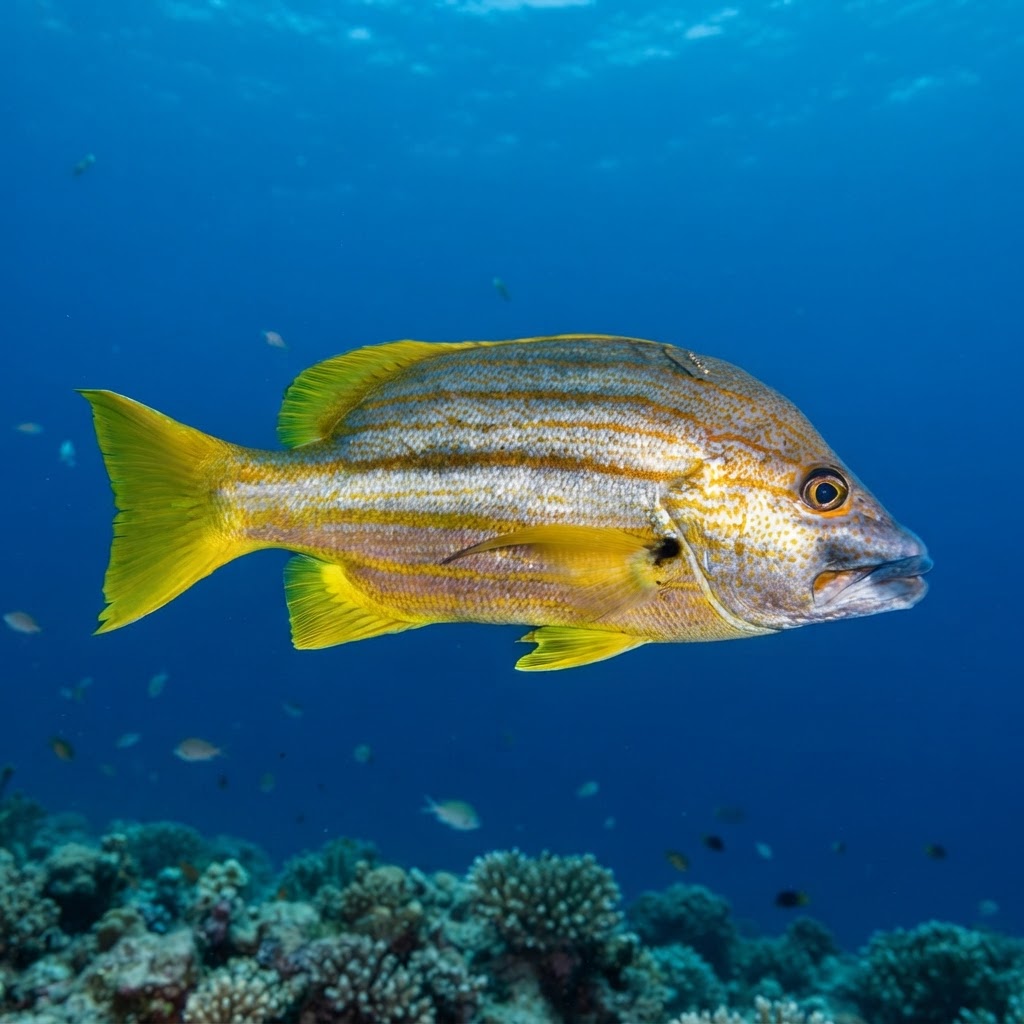
Lutjanus carponotatus
Spot this pale-gold, dark-striped snapper on reefs across Queensland and Palawan, common year-round in 25-29C water.
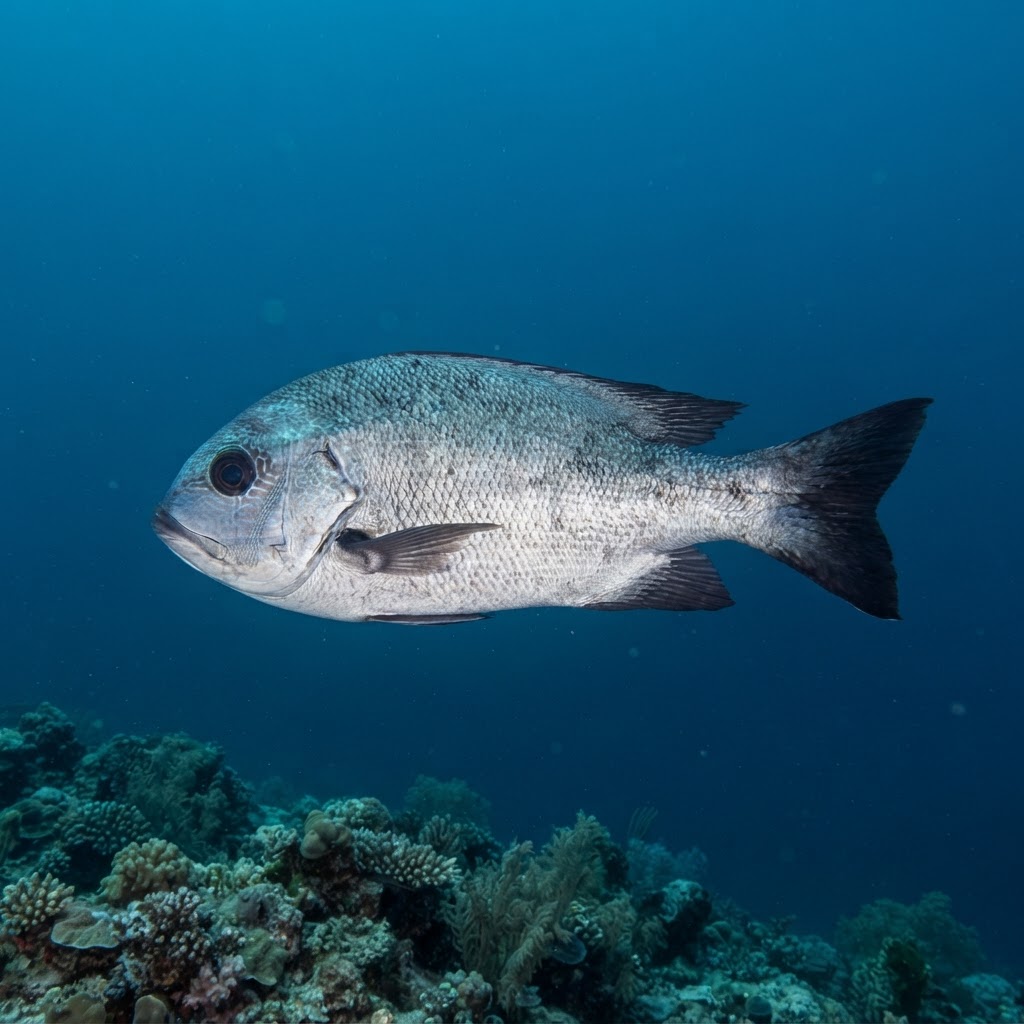
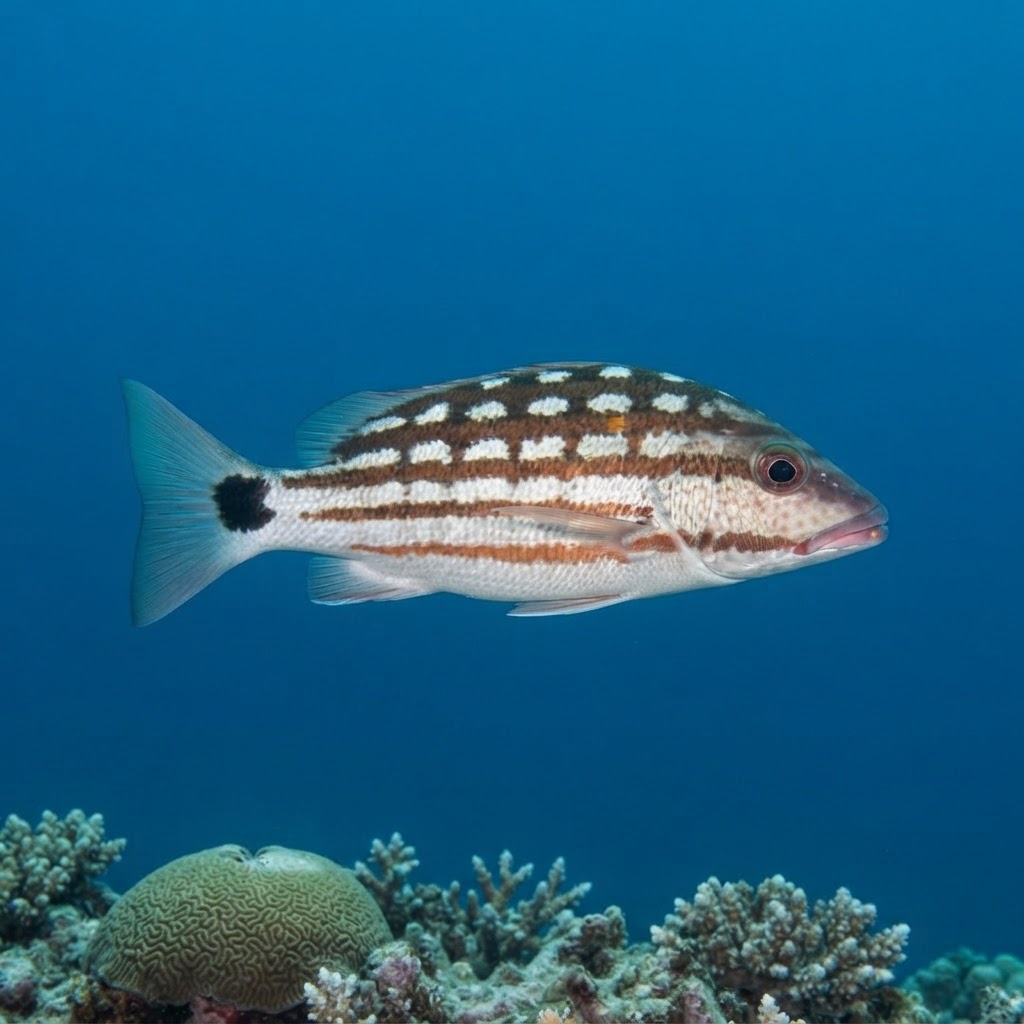
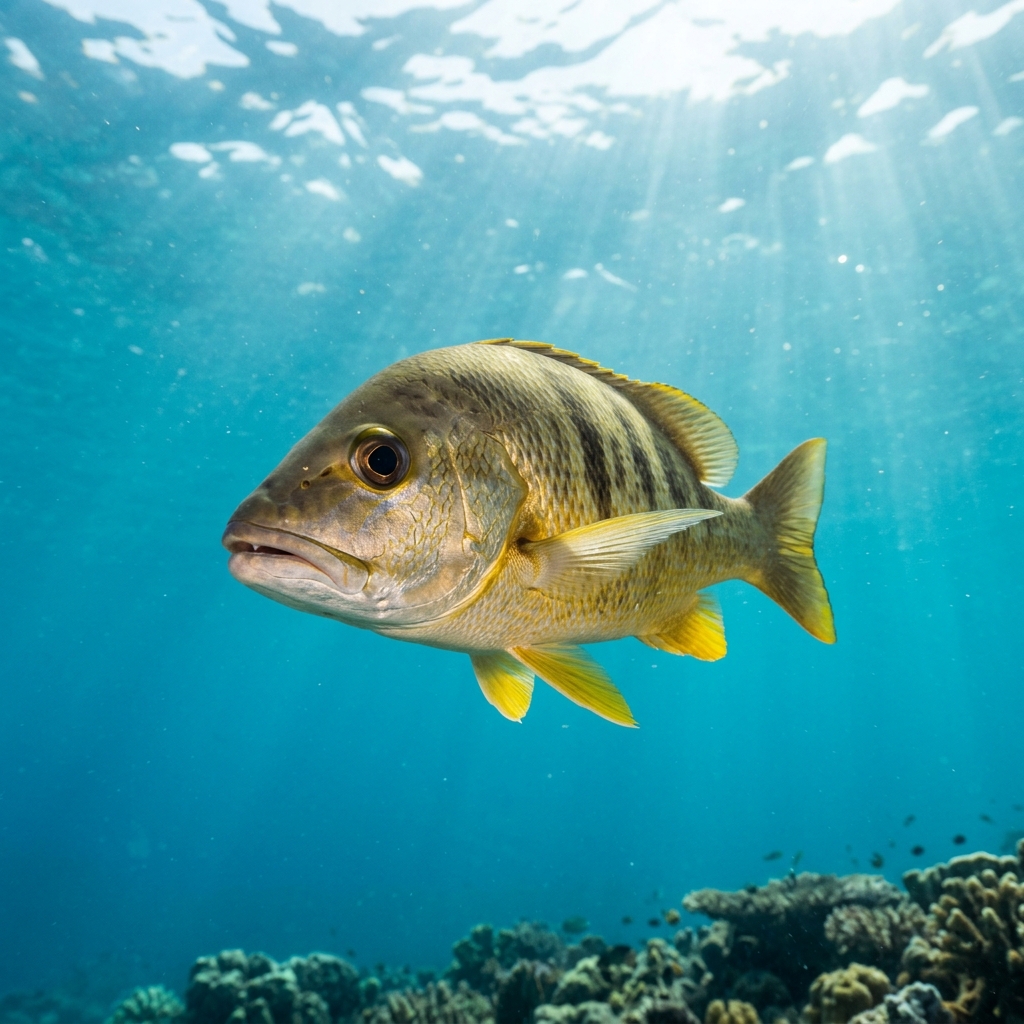
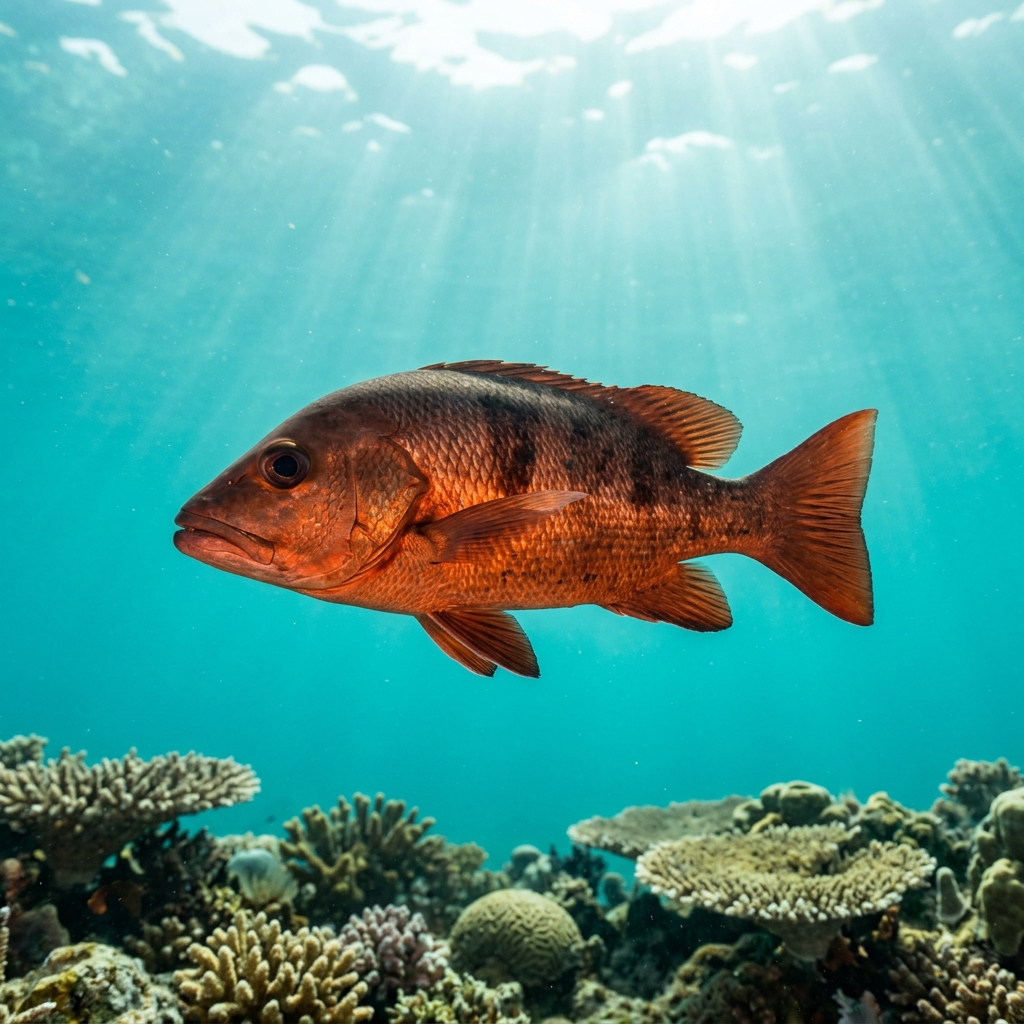
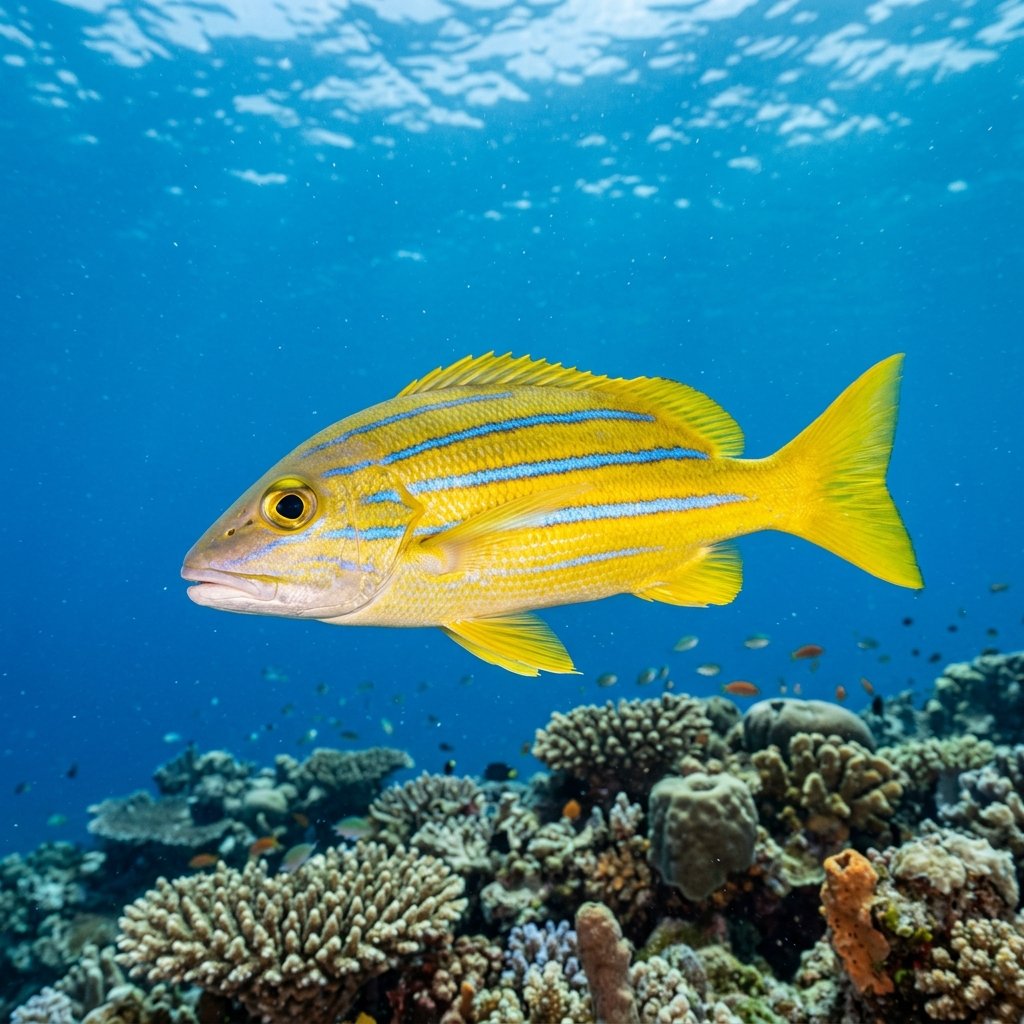
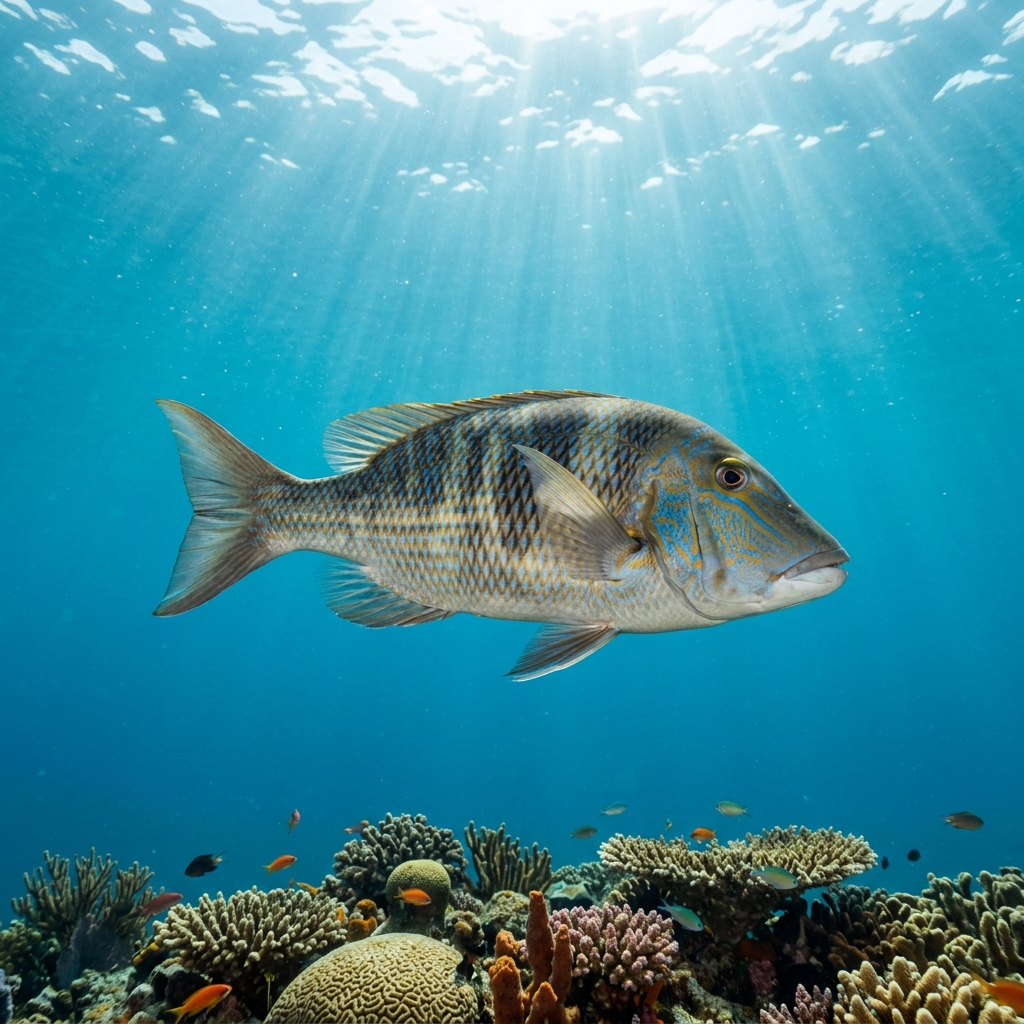
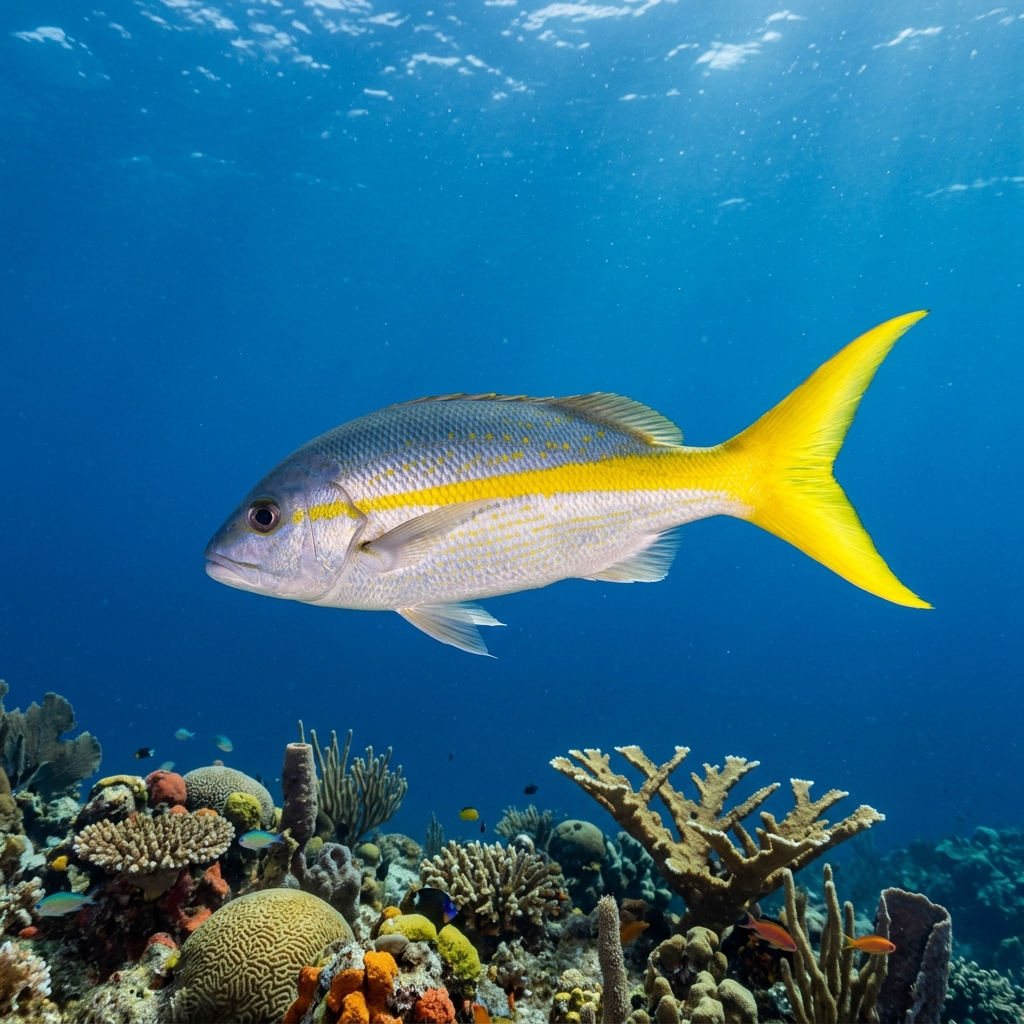
Look for a stocky, pale gold to silvery-brown body carrying several dark horizontal stripes running nose to tail, with a faint dusky blotch near the top of the tail base. It sits around 28 cm in the water, has a fairly deep-bodied snapper profile, and often hovers close to reef structure rather than out in open water. The stripes stay sharp and continuous rather than breaking into spots, which is the main thing to check against similar reef fish.
Usually seen hovering singly or in small loose groups around coral heads, ledges and reef bommies, staying close to cover rather than roaming the open reef flat. It tends to hold its ground rather than bolt when divers approach slowly, making it an easy fish to get a good look at on a typical daytime reef dive. As a carnivore it patrols close to structure hunting small fish and invertebrates, most active around dawn and dusk feeding windows.
Despite the snapper build, this species stays tightly reef-associated through its whole life rather than ranging into open water, which is why divers keep finding it tucked against the same bommies and ledges dive after dive.
No clear seasonal pattern shows up in the sightings, and with a comfort range of roughly 25 to 29C it stays active on tropical reefs all year, so any month on a trip to these regions gives a fair shot at it.
Reef neighbours a diver could mistake it for. Use the identification notes above to tell them apart.
Most reliably logged on reefs in Queensland and the Northern Territory in Australia, with strong showings around Palawan in the Philippines and Sabah in Malaysia. Divers also log it around Raja Ampat in Indonesia and on Thailand's Koh Pha Ngan, Koh Chang and Koh Tao, usually as an uncommon but steady find rather than a headline sighting.
Mapping where Dusky-striped Sea-perch is logged…
Queensland and the Northern Territory in Australia are the strongest regions, with good numbers also around Palawan in the Philippines, Sabah in Malaysia, and Raja Ampat in Indonesia.
There is no strong season in the sightings data. It sits comfortably in 25 to 29C water year-round, so it turns up on tropical reef dives in any month.
Check for a pale gold to silvery body with continuous dark horizontal stripes and a stocky, deep-bodied shape around 28 cm long. It usually sits close to reef structure rather than in open water.
They typically reach around 28 cm, a modest size that makes them easy to mistake for other small striped reef snappers at a glance.
No, they pose no danger to divers. They are a calm, reef-associated fish that tends to hold near cover and shows no aggressive behaviour towards divers.
Site and sighting data is aggregated from diver logs, iNaturalist and GBIF. For taxonomy and conservation status:
Bluestriped Snapper
2,054 sites