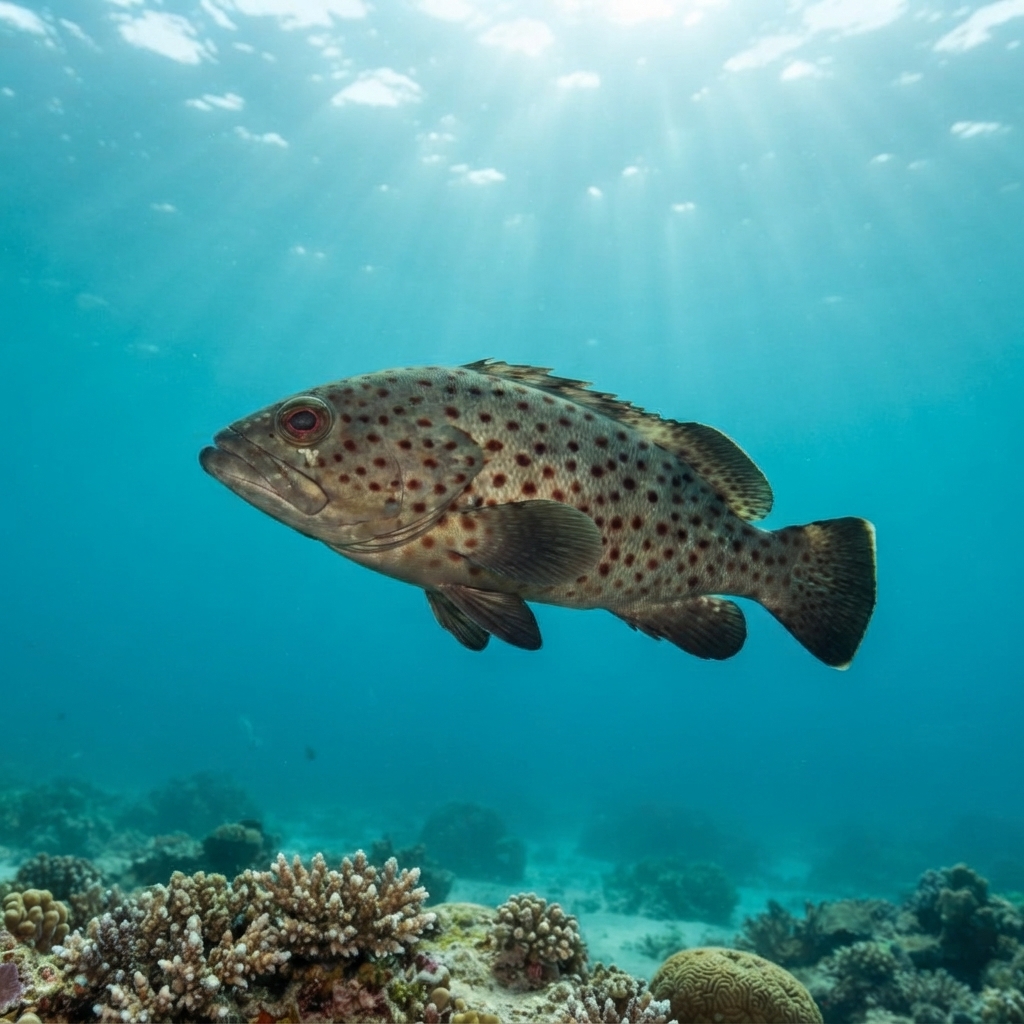
Epinephelus bontoides
An uncommon little grouper logged off Luzon and Bali, sitting still on reef structure in water near 28C year-round.
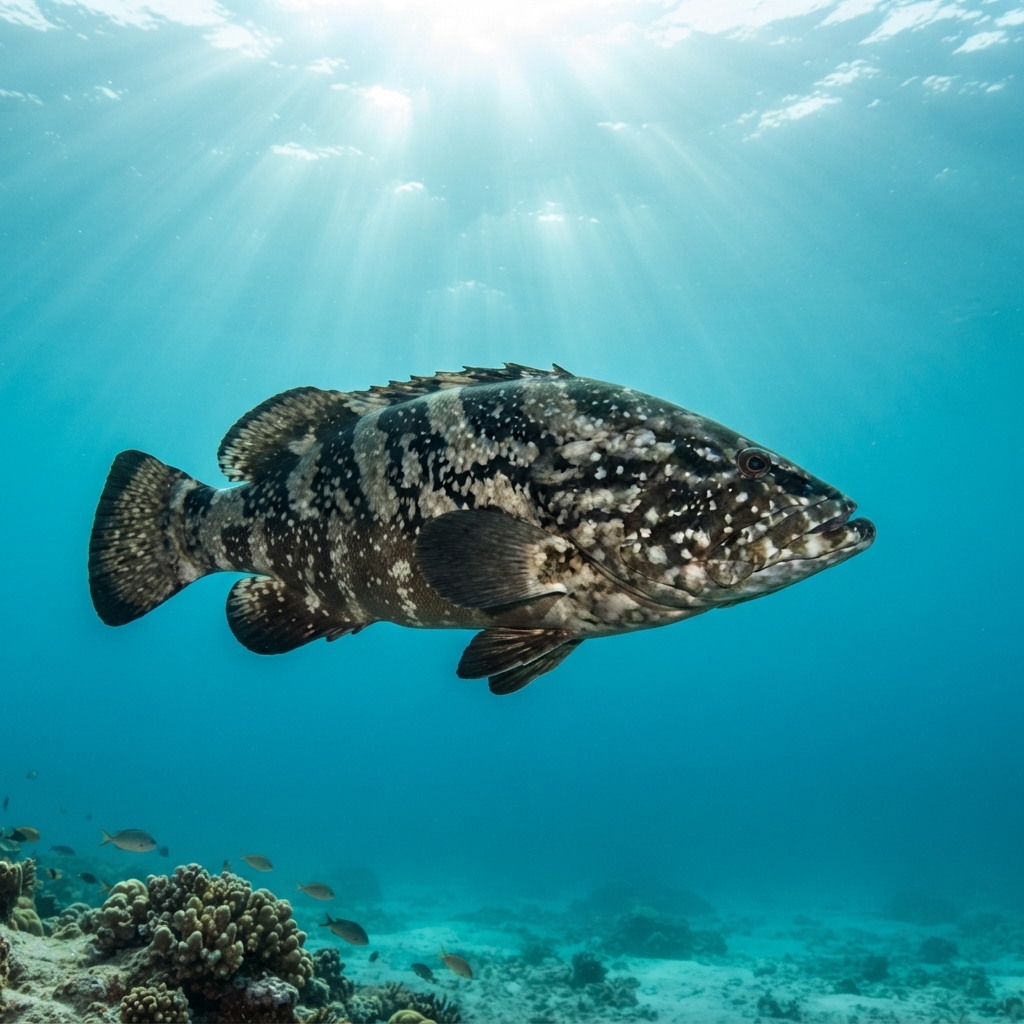
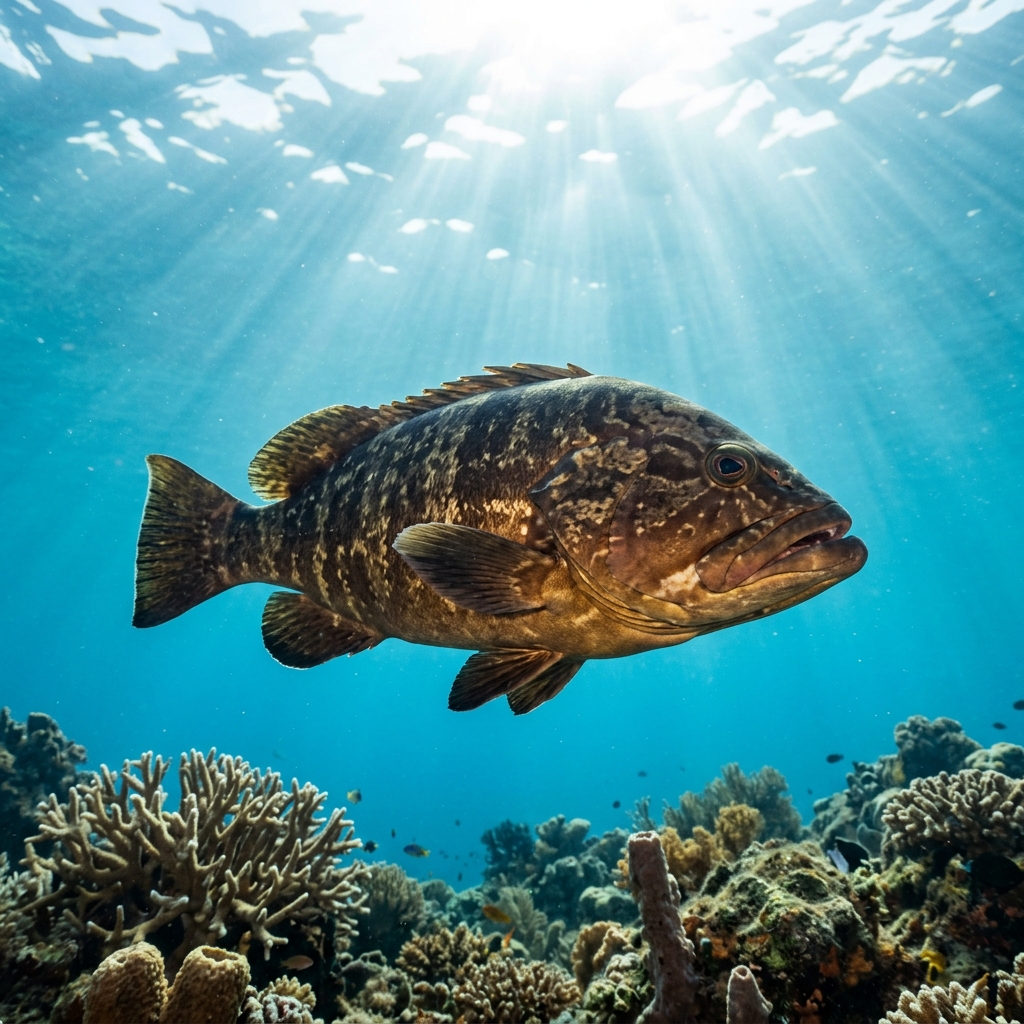
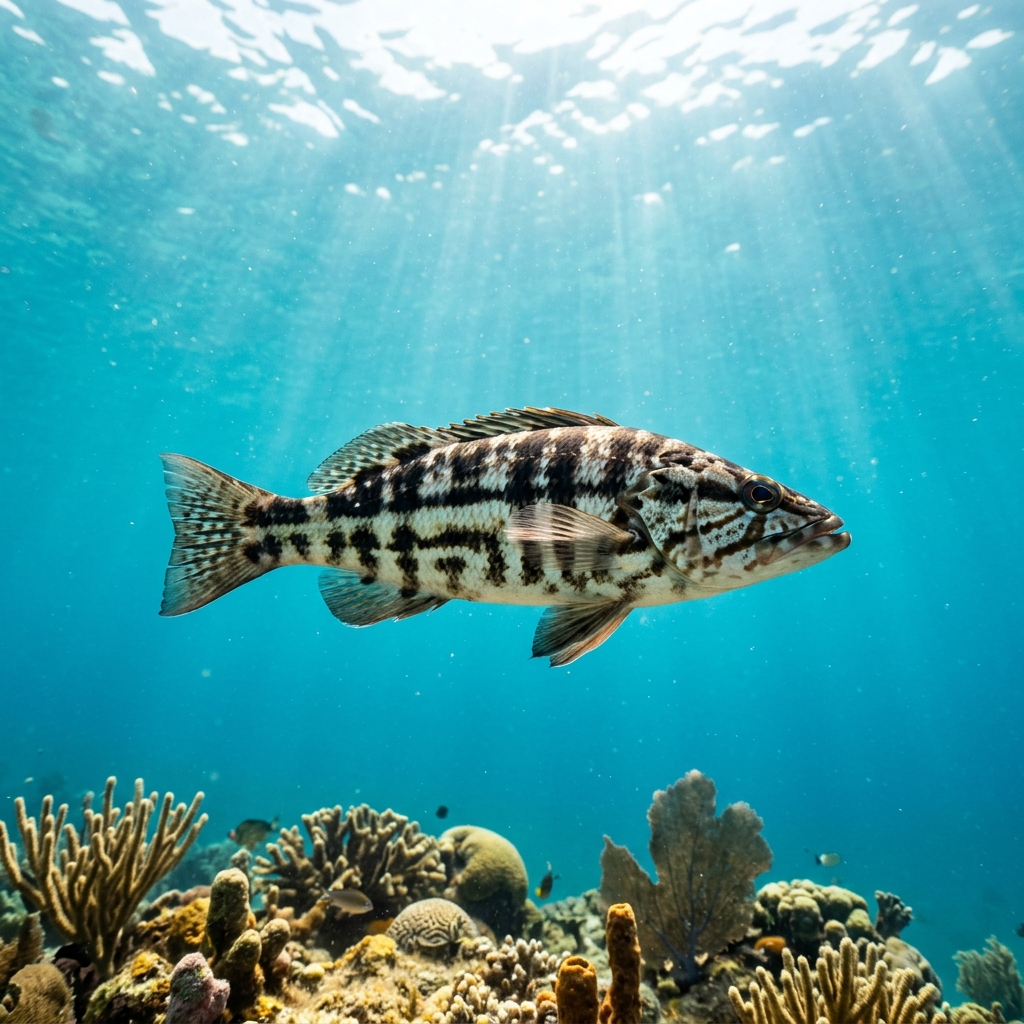
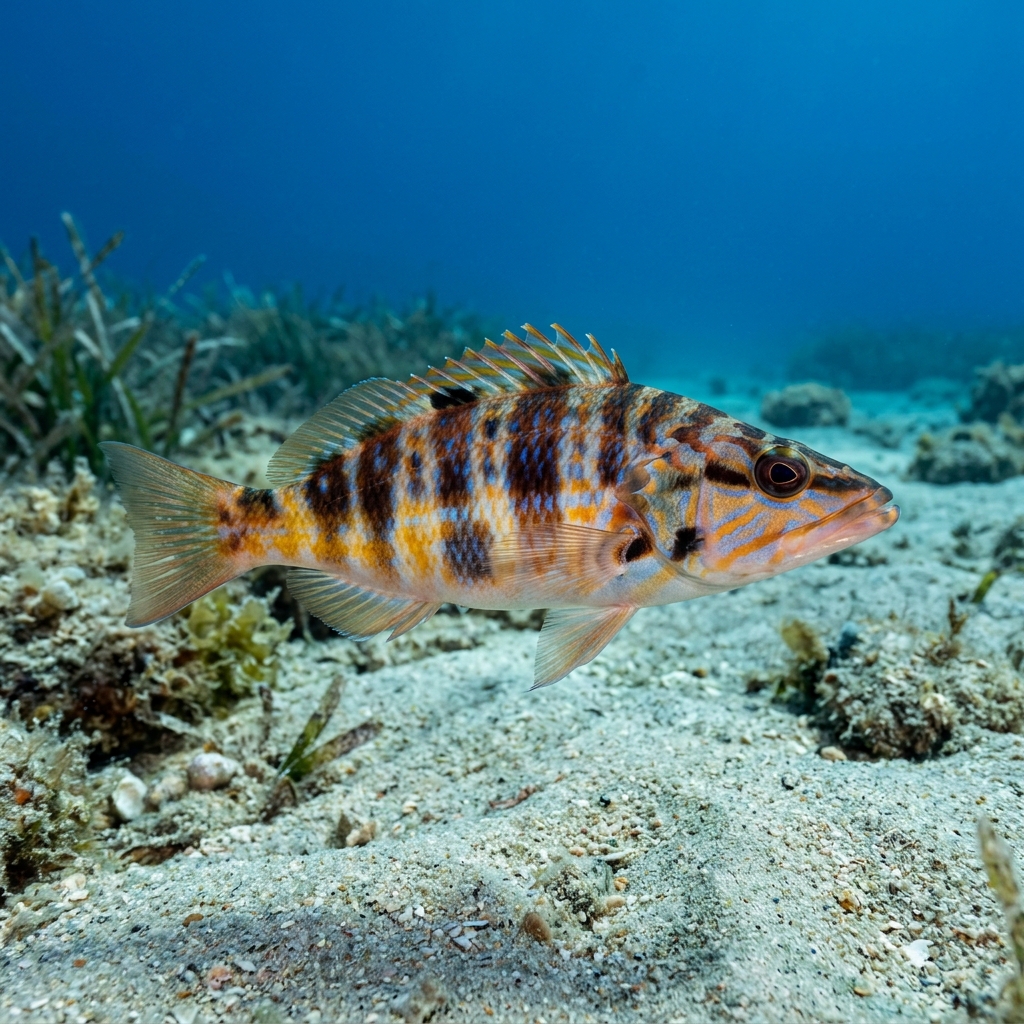
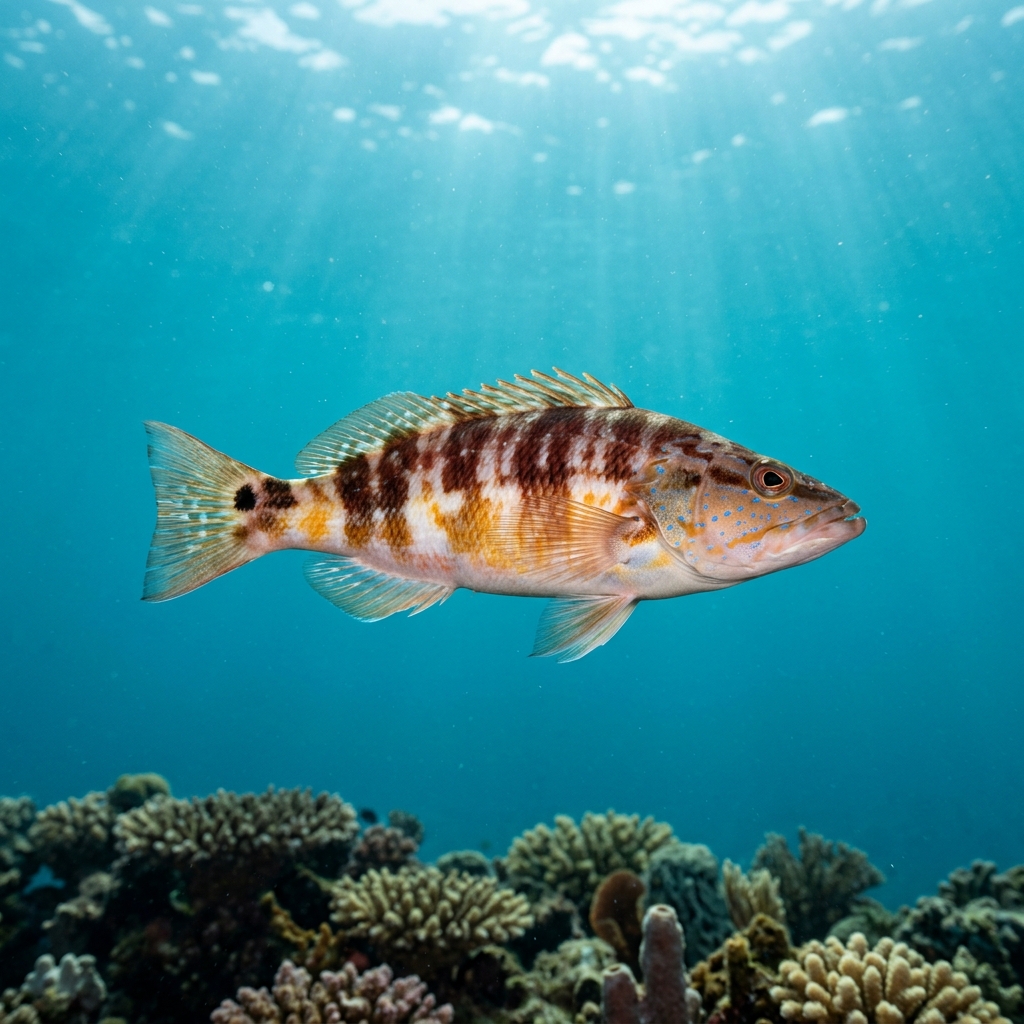
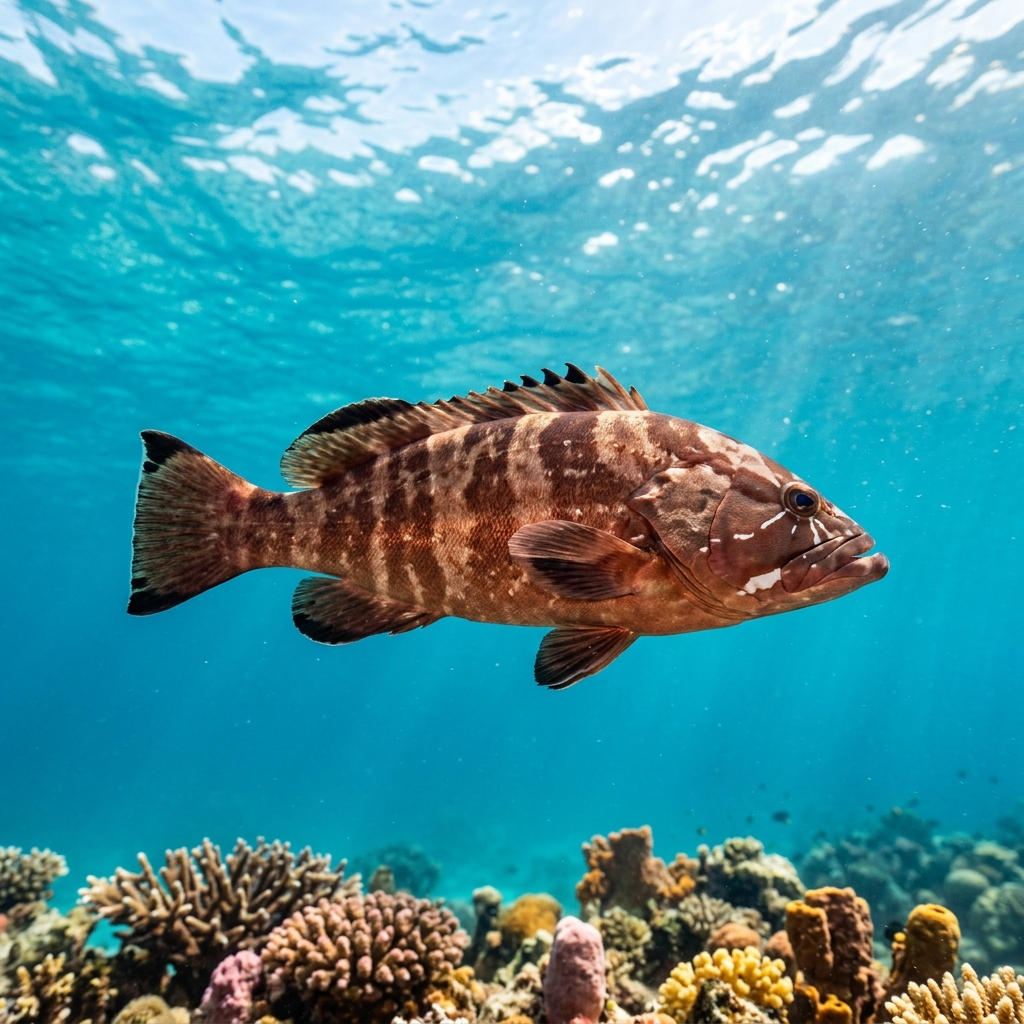
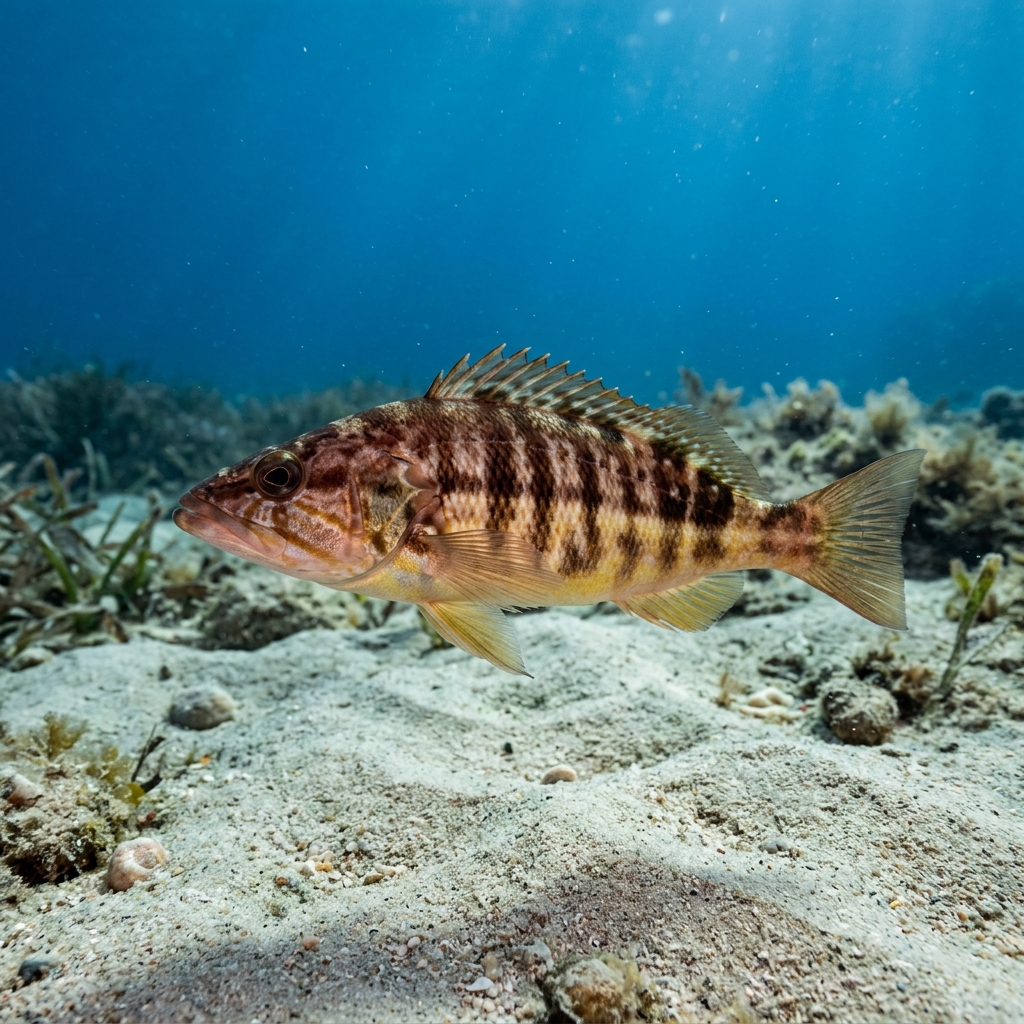
A small grouper that tops out around 21 cm, so it reads as compact and stocky rather than imposing on the reef. Look for a mottled brown to grey body with darker blotching that breaks up its outline against rock and rubble, plus the typical grouper profile: a heavy-lipped mouth and a rounded tail. It tends to sit low and still rather than cruise open water, which is often the first clue you have found one rather than a juvenile of a larger species.
Divers log it sitting tight against rock and rubble rather than swimming in the open, using its mottled colouring to blend into the substrate. It is an uncommon find even at the sites where it turns up, so most sightings come from divers scanning ledges and broken bottom closely rather than spotting it mid-water. Like other small groupers it likely holds its ground when approached slowly, relying on stillness and camouflage rather than fleeing.
Small groupers like this one are ambush predators, holding position against structure and relying on a fast strike rather than a chase to take passing prey.
Recorded sightings sit in warm water between roughly 28 and 29C, consistent with year-round presence on tropical reefs in Luzon and Bali rather than a seasonal push. There is not enough data to pin down a peak month, so any time you are diving these regions is worth keeping an eye out.
Reef neighbours a diver could mistake it for. Use the identification notes above to tell them apart.
Sightings cluster around Luzon in the Philippines, with a further record from Bali in Indonesia, making the Philippines the stronger bet on current data. It is not a species you plan a whole trip around, more one to watch for on reef and rubble sections during a wider muck or reef dive in these regions.
Mapping where Dusky Rock Cod is logged…
Confirmed sightings come from Luzon in the Philippines and Bali in Indonesia, with the Philippines currently the stronger area for records. It is an uncommon species even there, so treat it as a bonus find on a reef or rubble dive rather than a guaranteed sighting.
There is no detected season in the sighting data, and observed water temperatures sit consistently between about 28 and 29C, so it appears to be present year-round on these tropical reefs.
Look for a small grouper, around 21 cm, with a mottled brown and grey body that camouflages against rock and rubble. It sits low and still on the bottom rather than swimming in open water, which helps separate it from larger, more mobile grouper species.
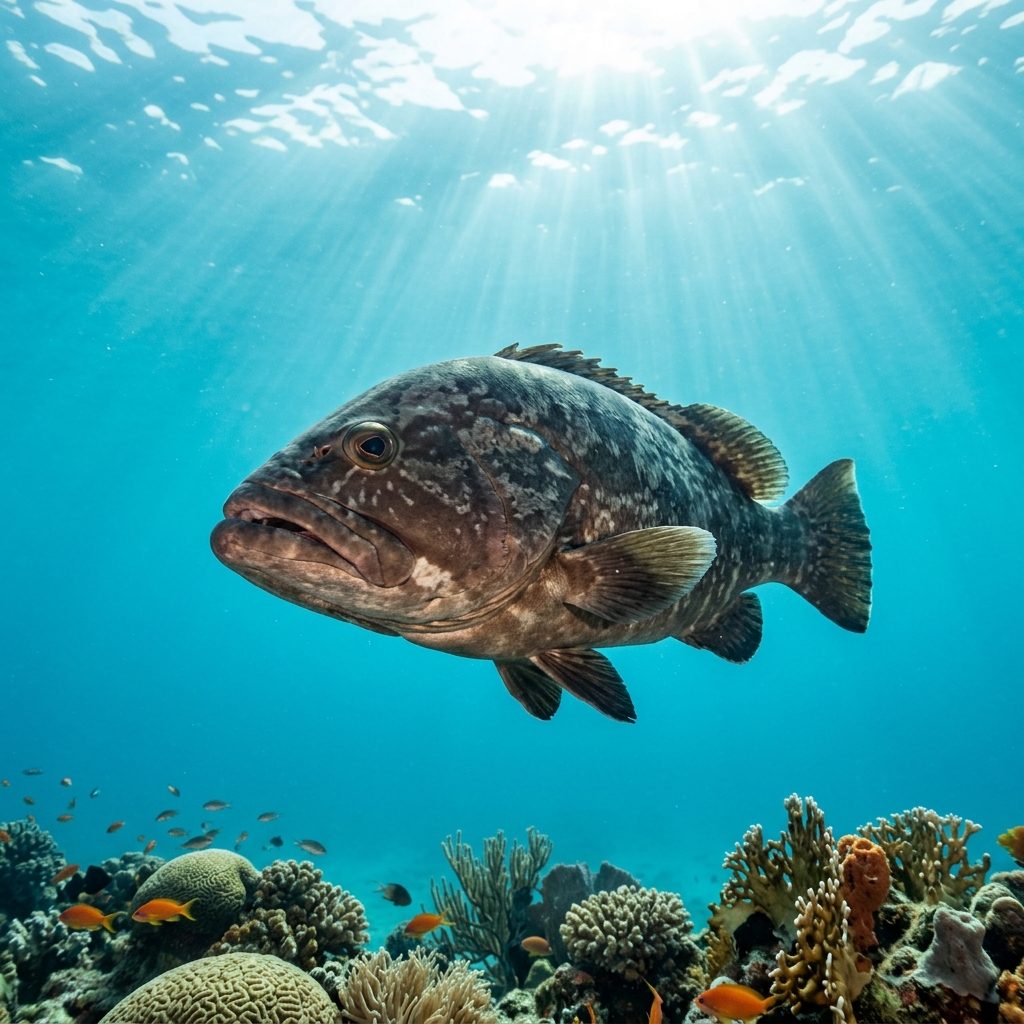
They are a small member of the grouper family, typically reaching around 21 cm, far smaller than well-known giants like the Atlantic Goliath Grouper or Queensland Grouper.
No, it poses no danger to divers. It is a small, reef-dwelling grouper that relies on camouflage and stillness rather than any aggressive behaviour.
Its conservation status has not yet been formally assessed, so there is no listing to report. Divers who spot one can help by logging the sighting, since data on this species is still limited.
Site and sighting data is aggregated from diver logs, iNaturalist and GBIF. For taxonomy and conservation status:
Blacktip Grouper
2,726 sites