Doriprismatica balut
Uncommon but reliable in Luzon and Bali reefs at 25 to 31 C, this patterned nudibranch rewards divers who slow down and check the substrate.
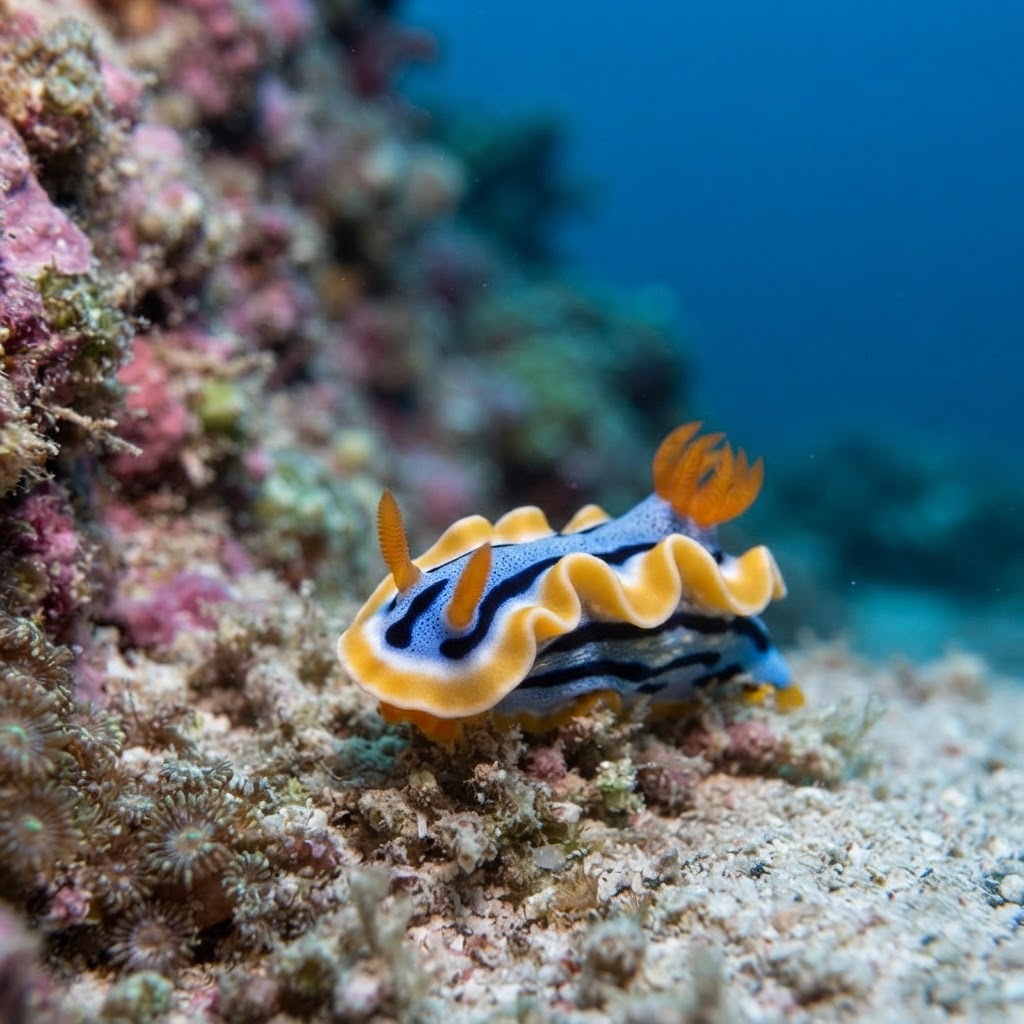
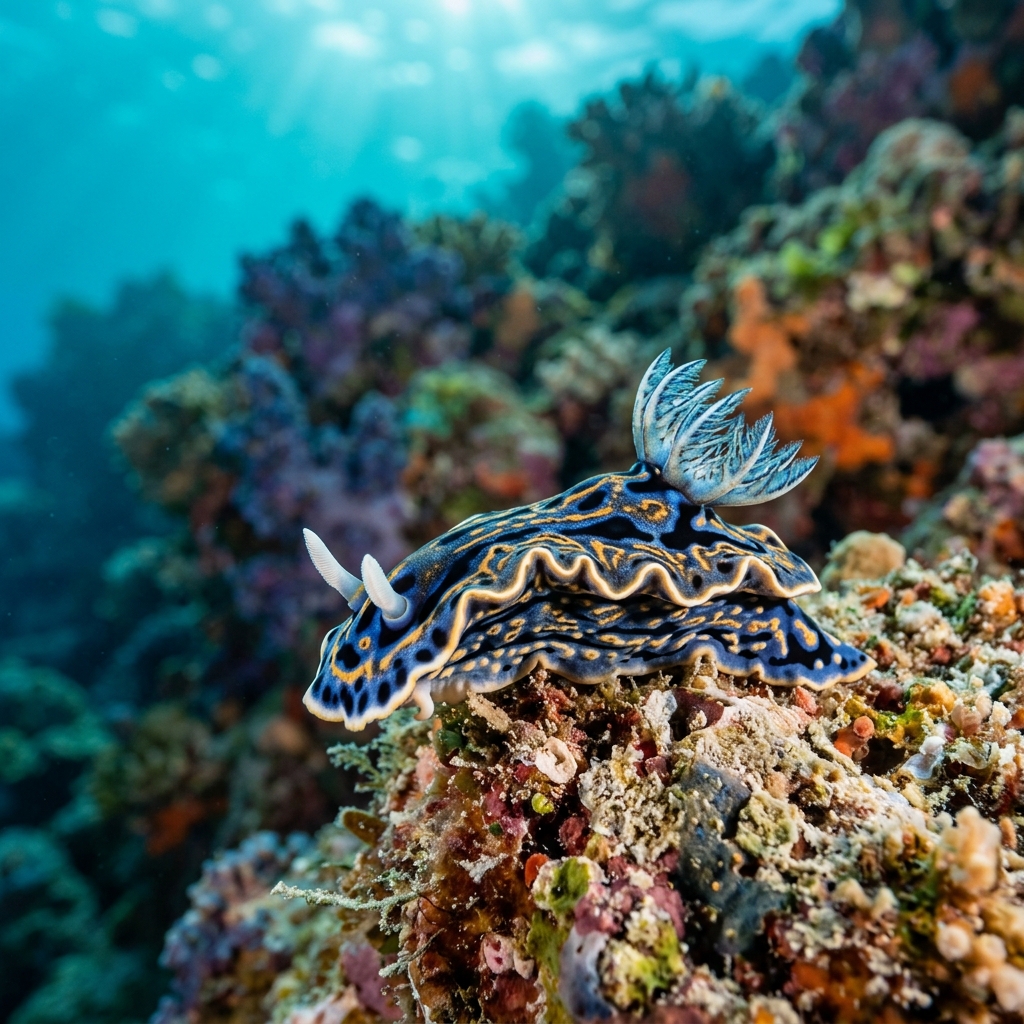
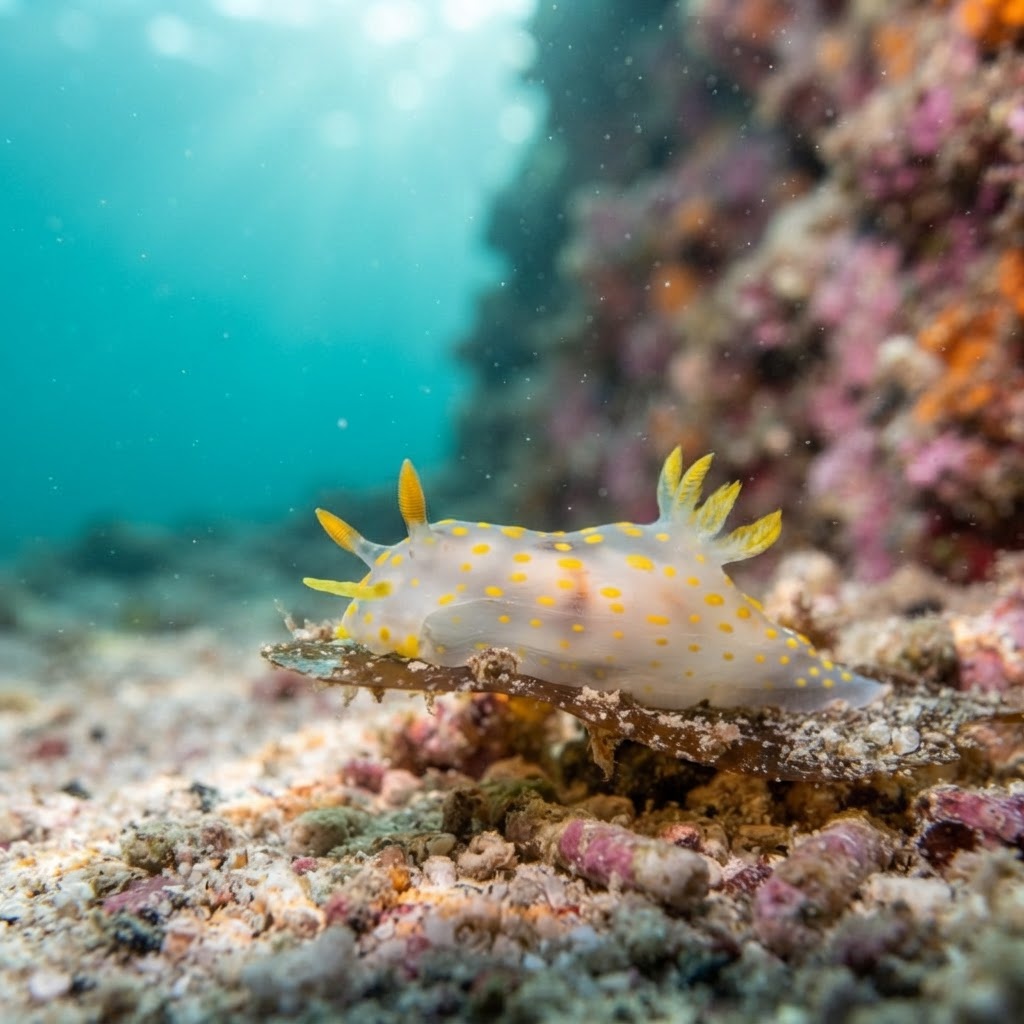
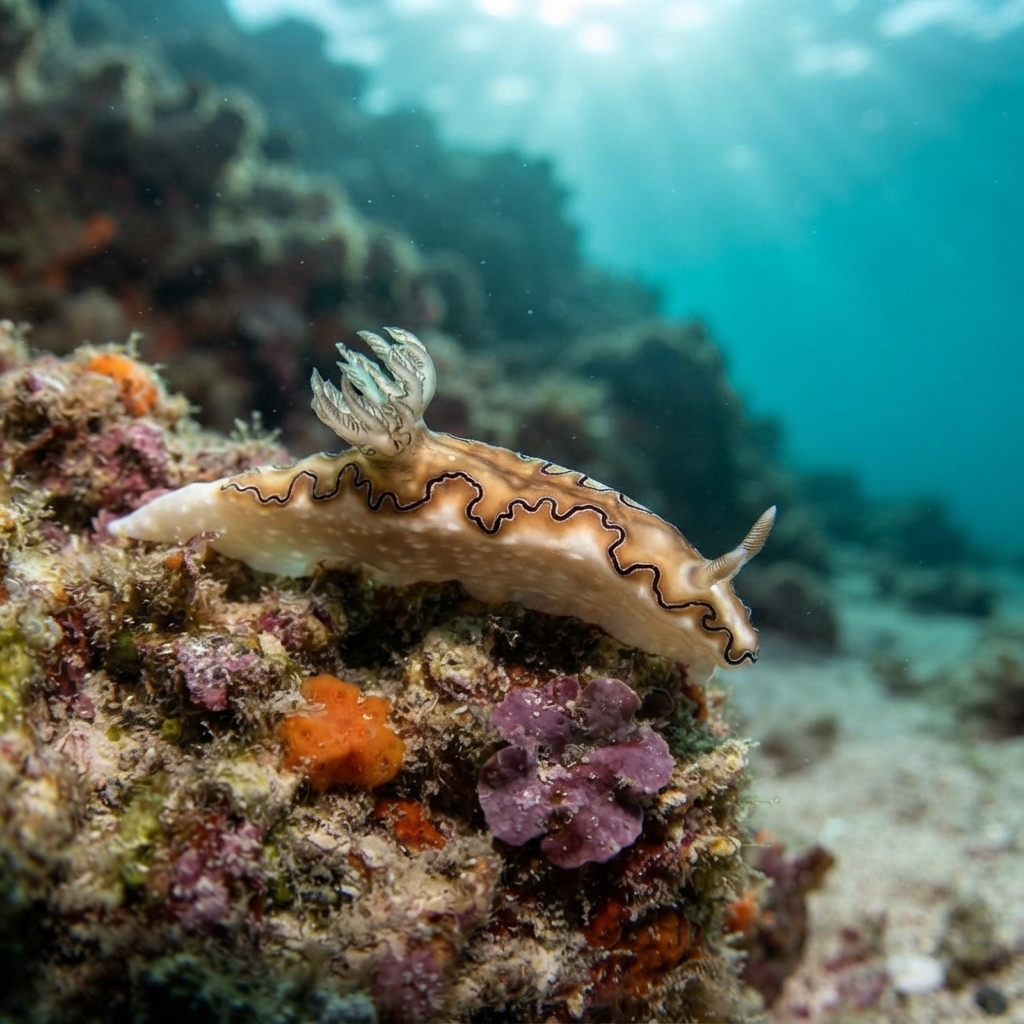
A small, flat-bodied nudibranch with a ruffled, undulating mantle edge typical of the Chromodorididae family. Look for a patterned body low against the reef substrate, moving slowly with two rhinophores (sensory tentacles) held up at the front. Size in the water reads small, so divers usually spot it by scanning coral rubble and sponge-covered surfaces rather than open water.
Divers typically find it grazing slowly across rubble, sponge or algae-covered surfaces, feeding as it goes with little concern for a diver hovering nearby. It shows no avoidance behaviour and no defensive display worth noting, making it an easy subject for a close macro shot once located. Most logs come from daytime reef and muck dives rather than night dives.
Like other chromodorid nudibranchs, it likely gets its colour and any distastefulness from compounds absorbed through its sponge diet, a passive defence rather than an active one.
No clear seasonal pattern shows up in the sighting data, so treat this as a year-round find. Water temperatures logged at sightings run from 25.2 to 31.2 C, comfortably within the warm tropical range these reefs hold all year.
Reef neighbours a diver could mistake it for. Use the identification notes above to tell them apart.
Most consistently logged in the Philippines, especially across Luzon, with a second strong population in Indonesia's Bali region. Divers searching muck and reef sites in these two areas have the best odds of a sighting, though it turns up as an uncommon find rather than a guaranteed one.
Mapping where Doriprismatica Balut is logged…
The strongest logs come from the Philippines, particularly Luzon, with a solid secondary population around Bali, Indonesia. Outside these two countries it has not been reported with any regularity.
There is no detected seasonal spike, so sightings happen year-round. Recorded water temperatures at sighting sites range from 25.2 to 31.2 C, matching typical tropical reef conditions in Luzon and Bali throughout the year.
Look for a small, flat nudibranch with a ruffled mantle margin moving slowly across rubble or sponge. It lacks the bold, high-contrast banding of some Chromodoris species, so a close look at the mantle pattern helps confirm the ID underwater.
No. It poses no threat to divers and can be observed closely without any risk, though as with all nudibranchs it is best not to touch it.
Like its Chromodorididae relatives, it likely borrows chemical defences from the sponges it feeds on, turning its diet into a passive shield against predators.
Site and sighting data is aggregated from diver logs, iNaturalist and GBIF. For taxonomy and conservation status:
Blue Dragon
3,163 sites