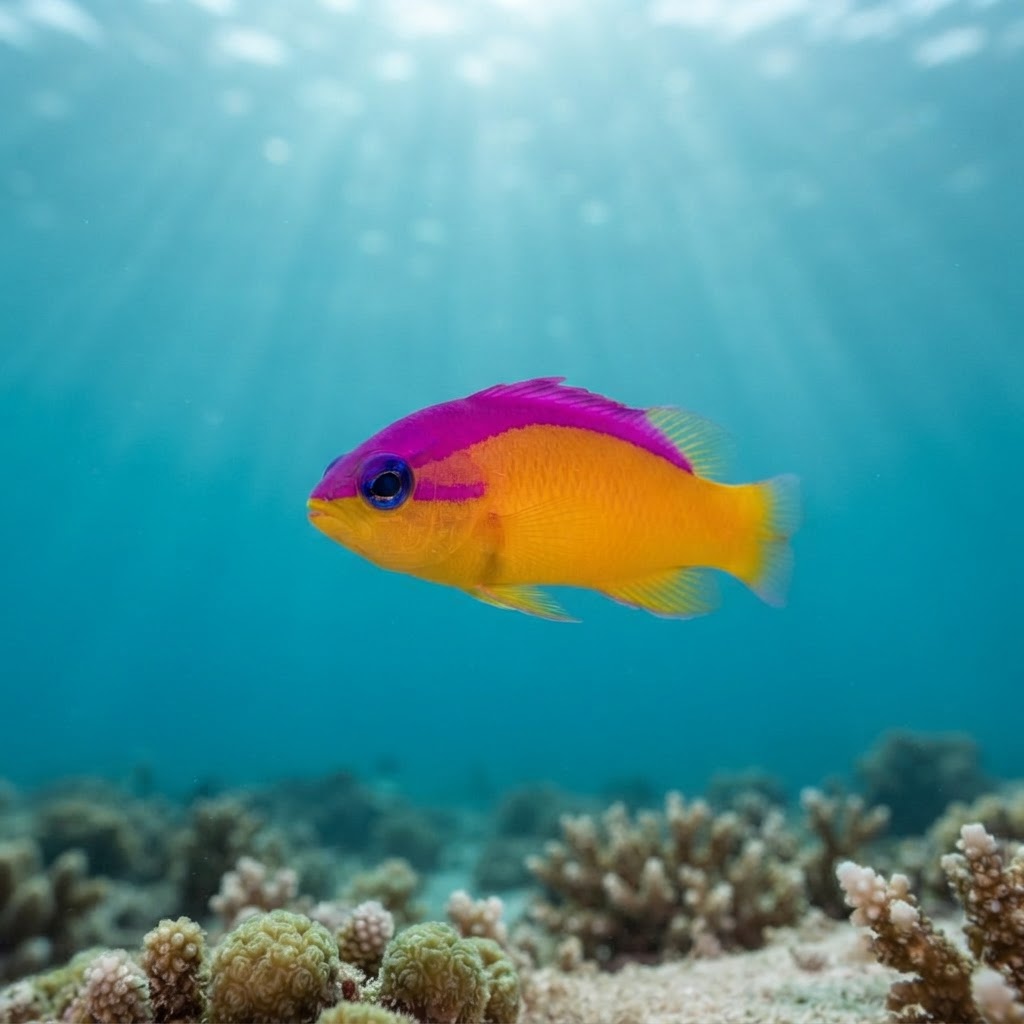
Pictichromis diadema
A pocket-sized purple and yellow fish logged at reef sites across the Visayas, Philippines, in 28-29C water year-round.
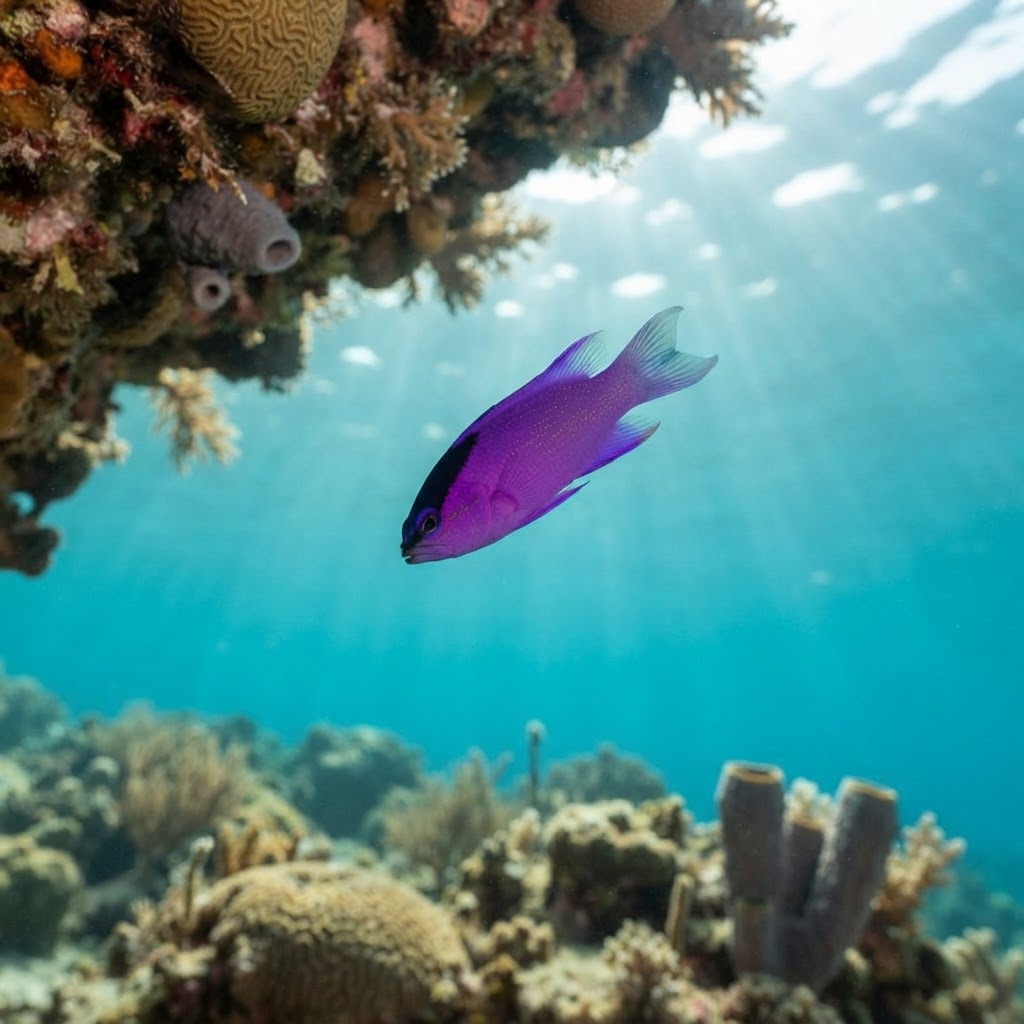
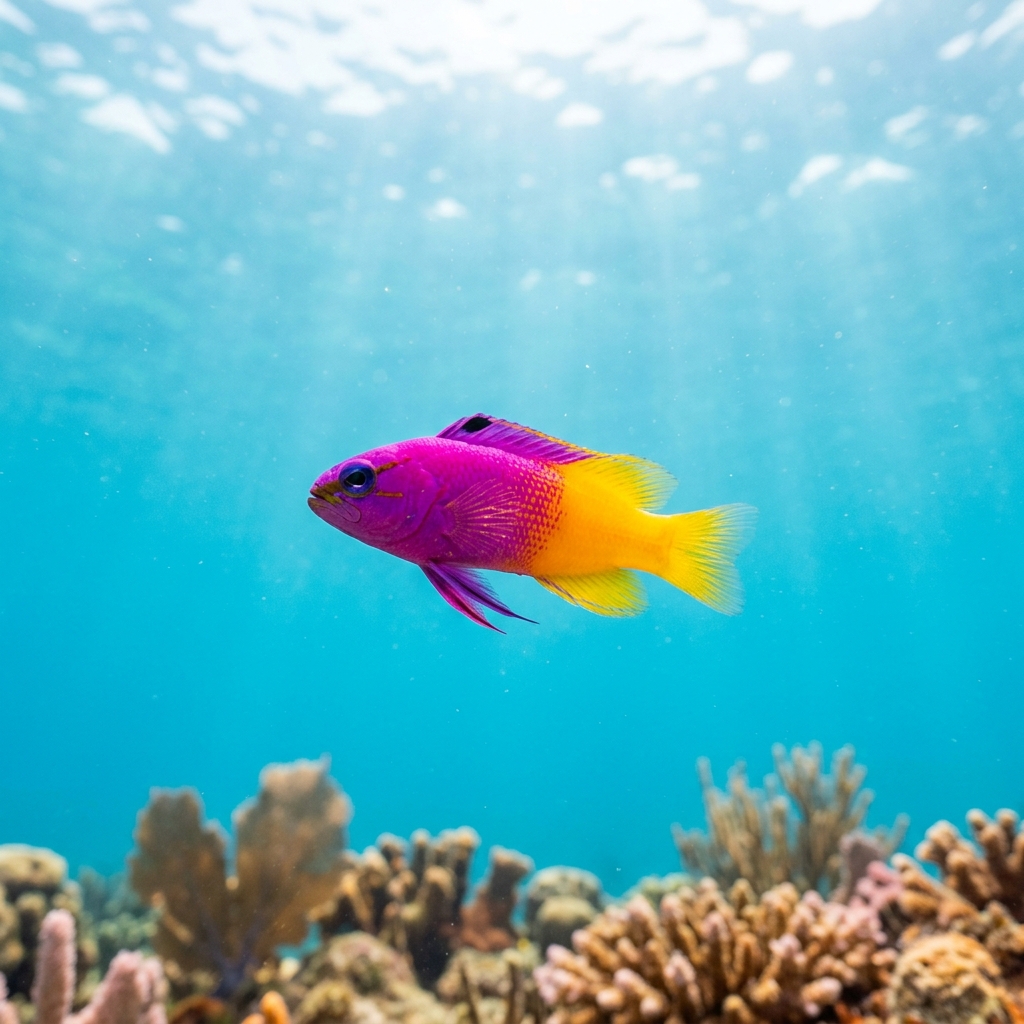
Barely 4cm long, this fish is unmistakable once you clock the two-tone split: a bright yellow head and front half giving way to deep violet-purple towards the tail. It has the slender, torpedo-shaped body typical of dottybacks, built for darting rather than cruising, and it tends to hover close to a hole or crevice rather than swim out in the open. There's no reported difference between juveniles and adults in colour pattern, so any size you see should show the same yellow-to-purple split.
Expect a fish that stays close to home: it hovers near a burrow, crevice, or piece of rubble and ducks in the moment it feels pressured, so slow, low approaches give you the best look. It's logged as uncommon even at the sites where it turns up, so sightings tend to be a matter of scanning rubble patches and overhangs carefully rather than spotting it in open water. Like other dottybacks, it's more of a watch-and-wait subject than one that will hold still for a portrait.
Dottybacts in this genus are known for being feisty for their size, often chasing off much larger fish from their patch of reef, so don't be surprised if this tiny yellow-and-purple fish stands its ground rather than fleeing outright.
Sightings don't show a clear season, and with a narrow, warm comfort range of 28 to 29C, it's likely present on these reefs year-round rather than tied to a particular month.
Reef neighbours a diver could mistake it for. Use the identification notes above to tell them apart.
This is very much a Philippines fish in the logged data, most reliably found across the Visayas, with additional sightings further north in Luzon. Within the Visayas, divers turn it up on reef sites with rubble and crevice structure where it can dart for cover.
Mapping where Diadem Dottyback is logged…
The strongest logged sightings come from the Philippines, especially the Visayas region, with further records from Luzon. It favours rubble and crevice-rich reef structure within these areas.
There's no detected seasonal pattern, and given its narrow warm-water niche of 28 to 29C, it's likely on the reef year-round rather than during a specific season.
Look for a tiny, slender fish around 4cm long with a sharp colour split: yellow head and front body, violet-purple rear half and tail. It usually stays close to rubble or a crevice rather than swimming in open water.
They max out at around 4cm, making them one of the smaller fish you'll try to spot on a reef dive.
No, they pose no danger to divers. They're too small to be anything but a fun, tricky ID challenge.
Despite its tiny size, it can be surprisingly bold for its territory, sometimes standing its ground against much bigger fish rather than fleeing, a trait shared with other dottybacks.
Site and sighting data is aggregated from diver logs, iNaturalist and GBIF. For taxonomy and conservation status:
Soldierfish
3,612 sites