Camposcia retusa
Covered in sponges and algae, decorator crabs hide in plain sight across Okinawa, Visayas and Kenting reefs year-round in warm 24-30C water.
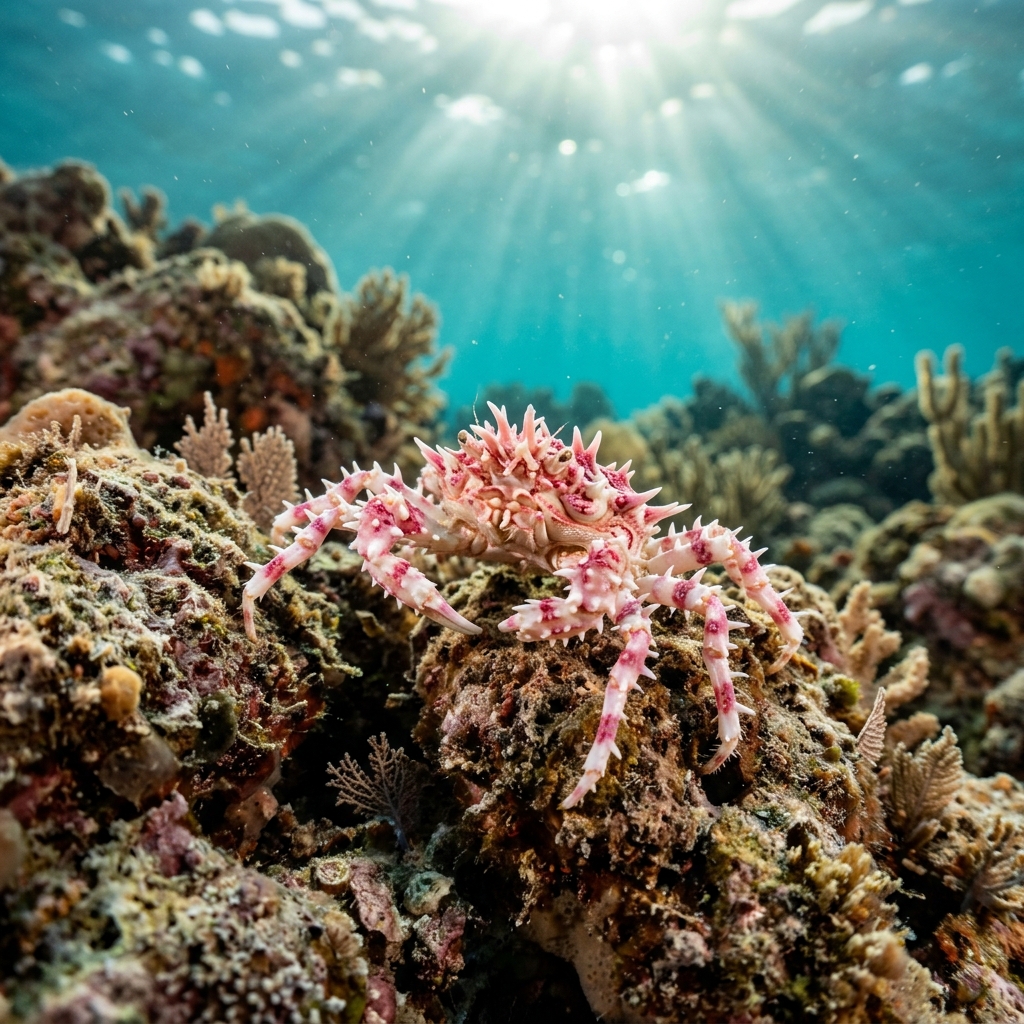
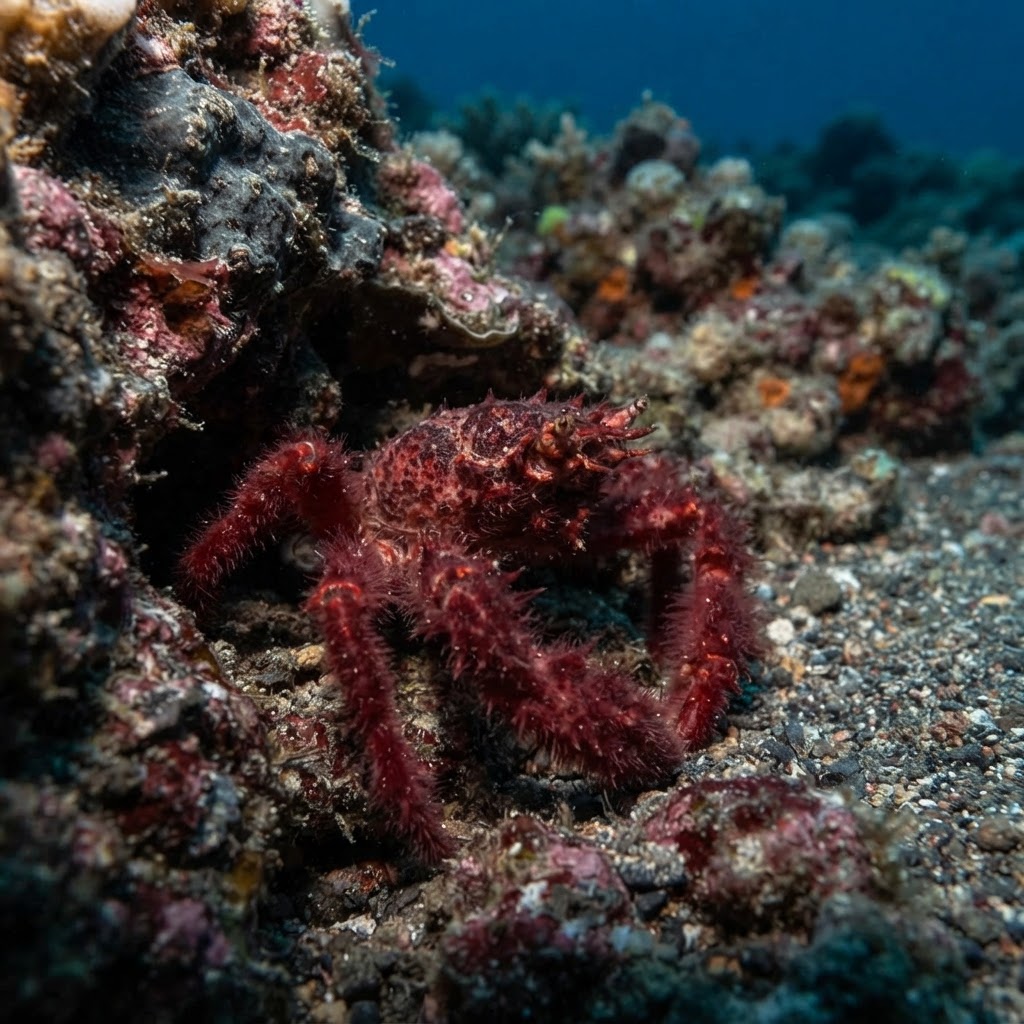
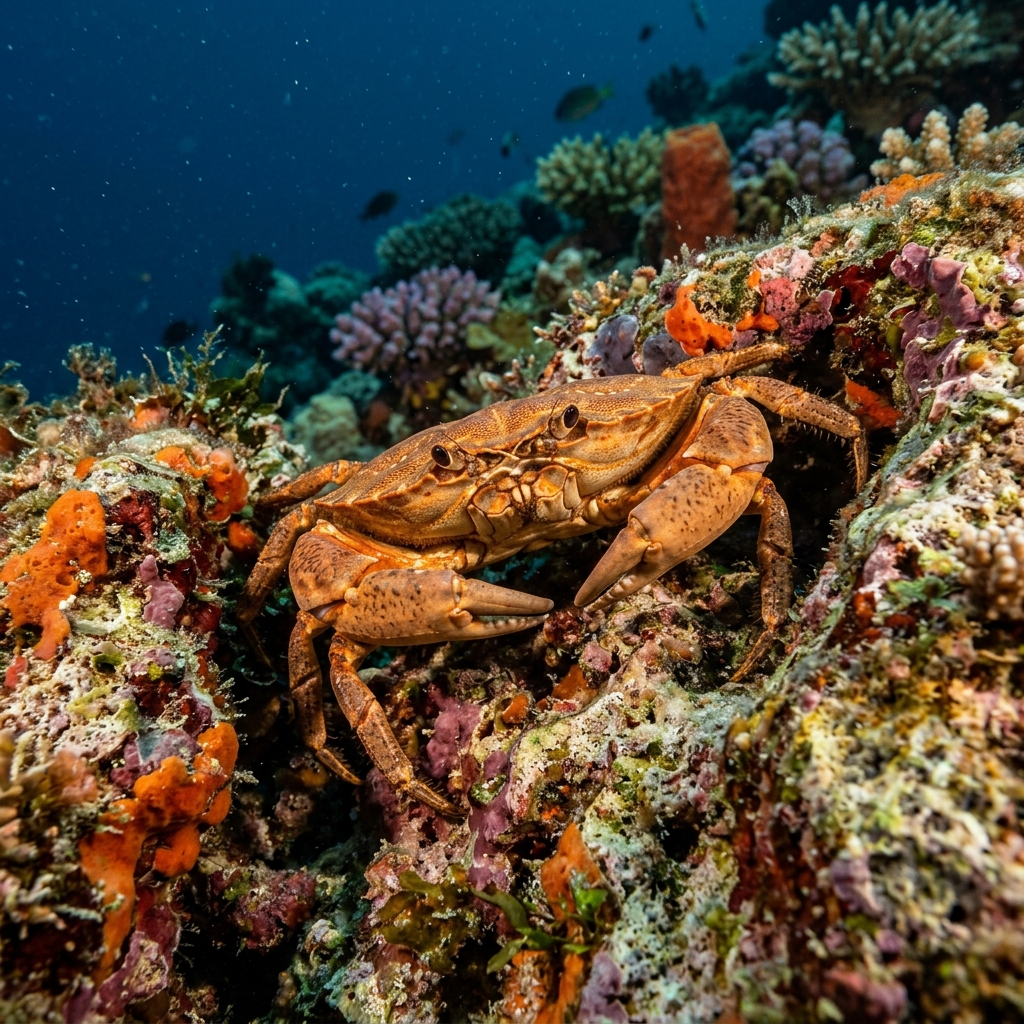
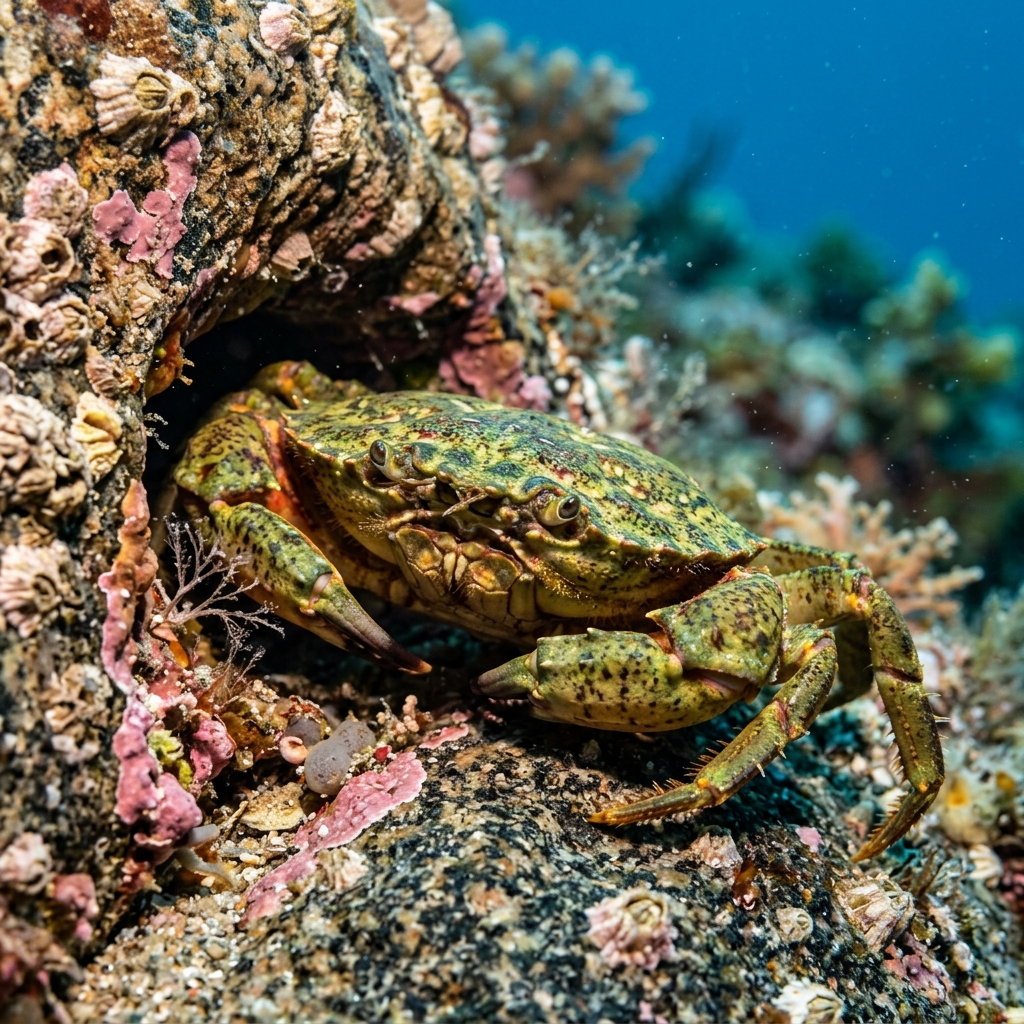
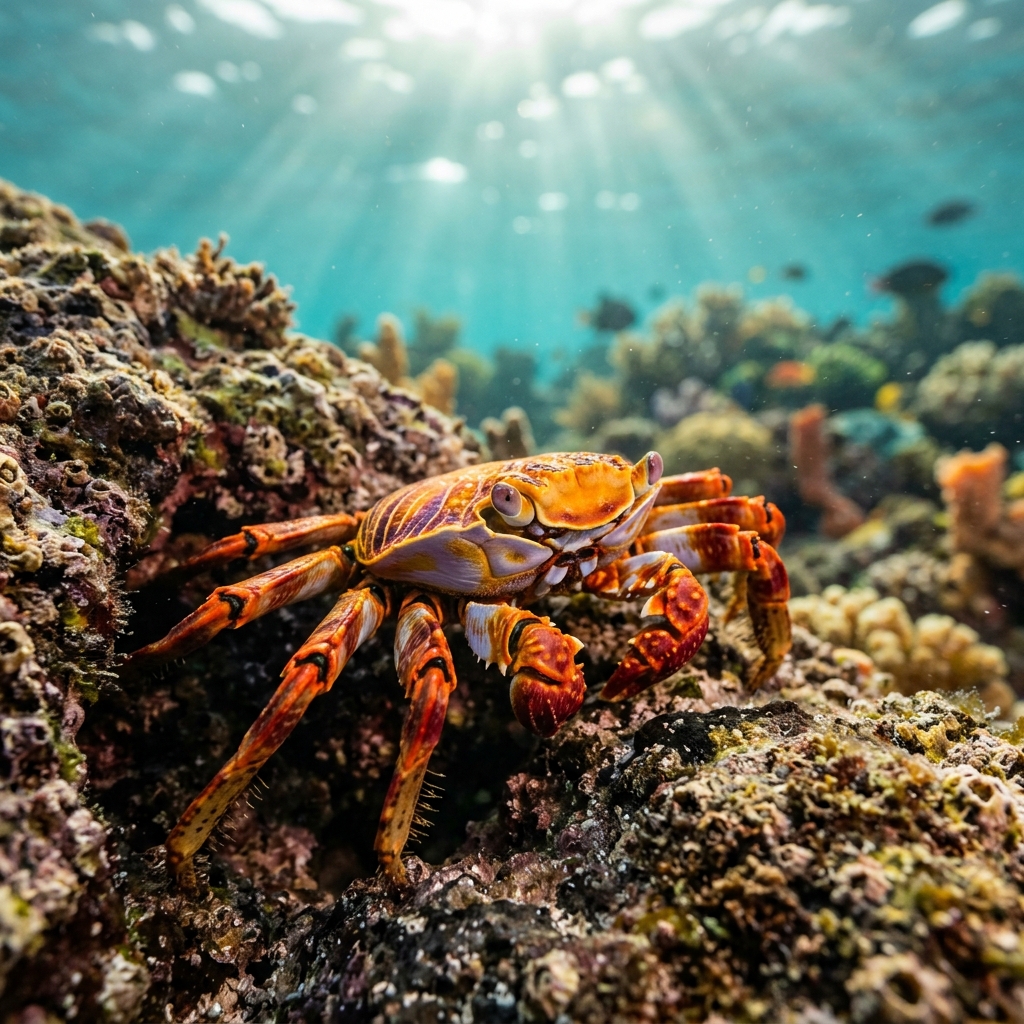
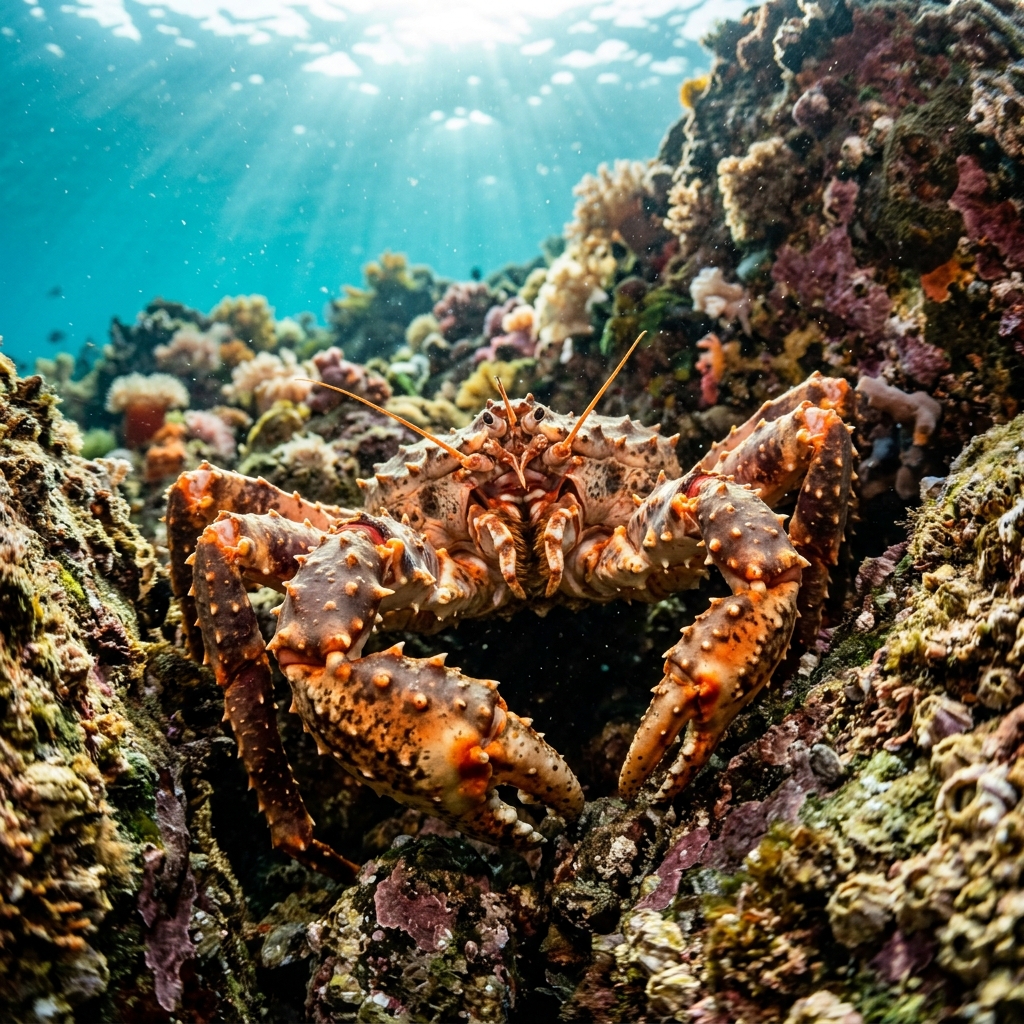
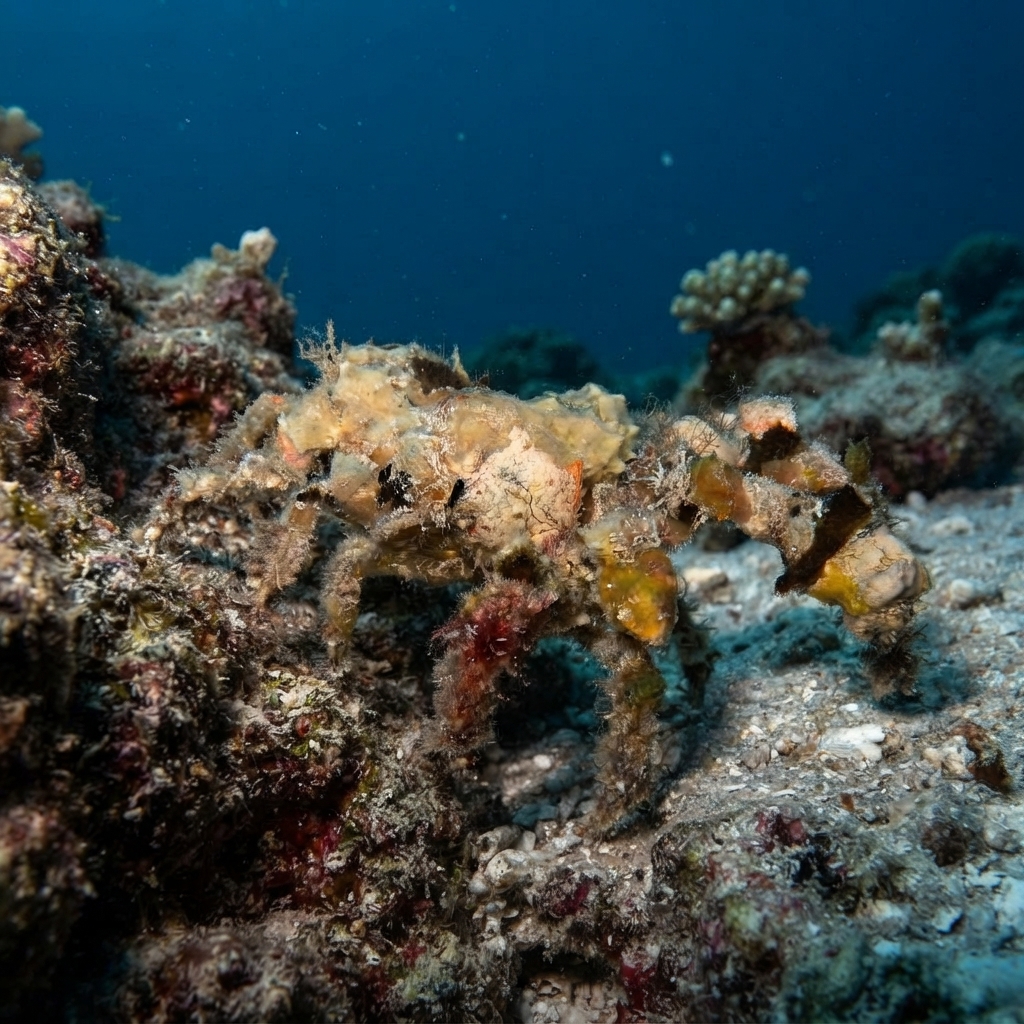
A small, spider-like crab whose body and legs are entirely covered in bits of sponge, algae and other reef debris it has attached itself, so it reads as a moving clump of growth rather than an animal. The shell (carapace) is triangular and spiny underneath the disguise, and legs are long and thin relative to the body. Because the decoration changes with habitat, colour is never consistent; look instead for the slow, deliberate walk and the slightly lumpy, textured outline against a smoother reef surface.
Expect a slow crawl across rubble, sponge patches or coral rock rather than any darting movement, since its main defence is staying camouflaged rather than fleeing. Divers usually find it during a careful macro search rather than spotting it at a glance, often tucked against a sponge-covered wall or ledge where the decoration blends completely. It shows little reaction to a diver's presence and will typically just keep moving at its own pace if left alone.
It actively cuts and attaches living sponge, algae and other organisms to hooked bristles on its shell, effectively growing a personalised camouflage garden that regrows and adapts as it moves between habitats.
No clear seasonal pattern shows up in the sightings, and with a comfortable range of 24 to 30C it stays active year-round on tropical and subtropical reefs. Plan around good visibility and calm conditions at your chosen site rather than a particular month.
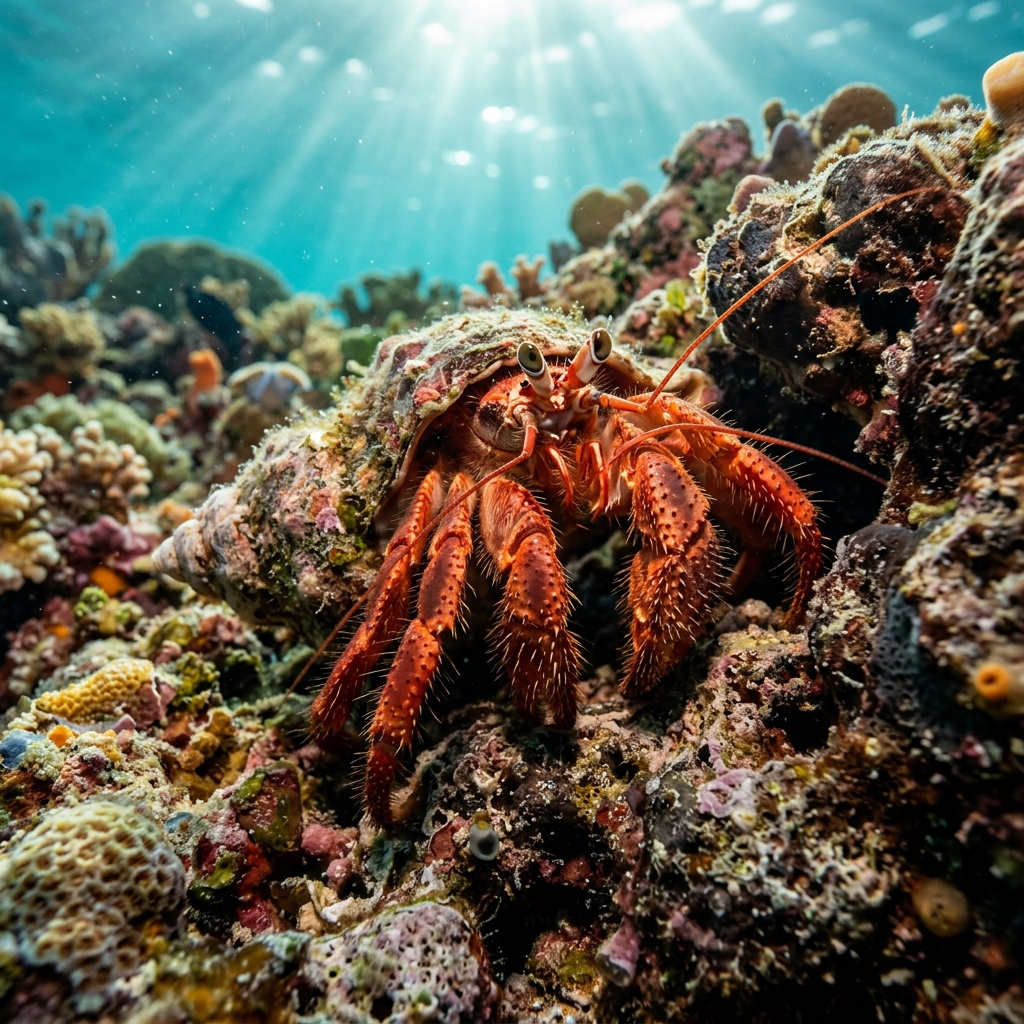
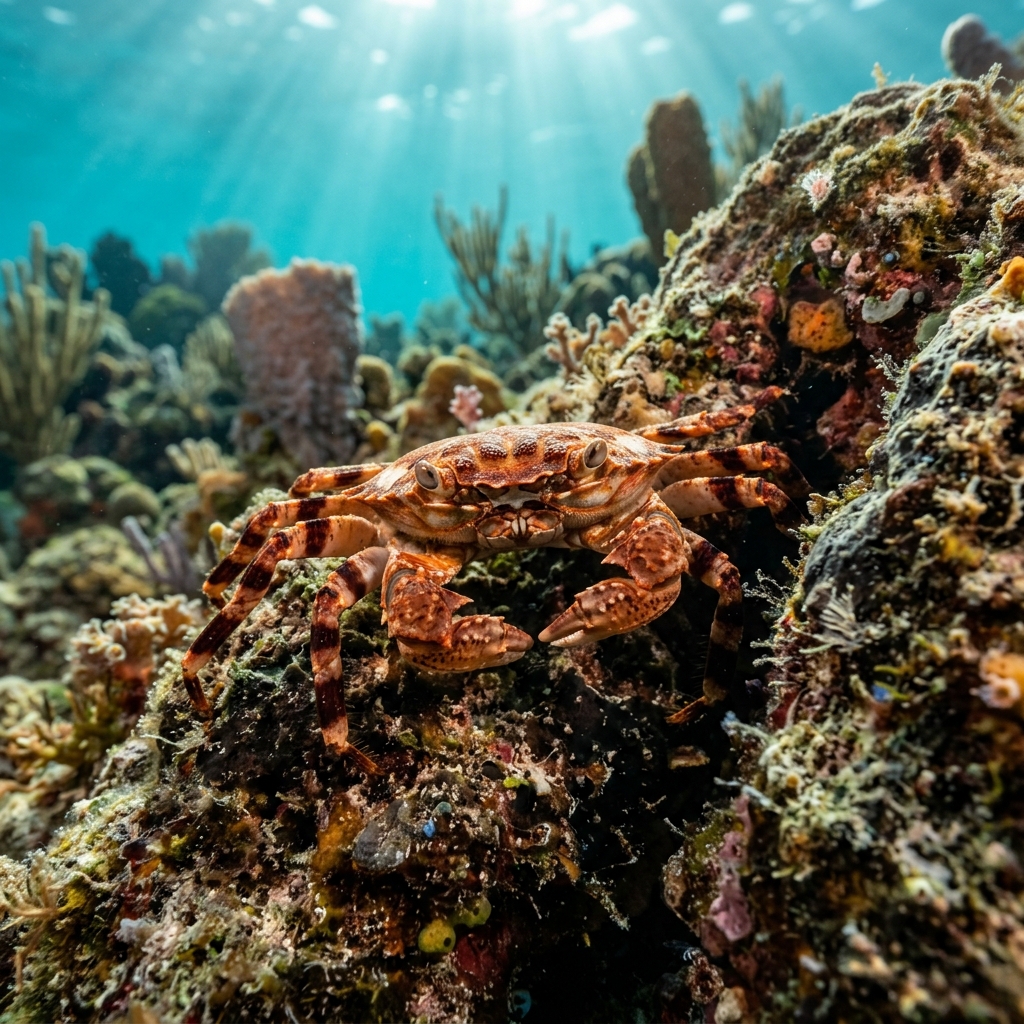
Reef neighbours a diver could mistake it for. Use the identification notes above to tell them apart.
Most reliably logged around Okinawa and the Ryukyu Islands in Japan, with strong numbers across the Visayas and Luzon in the Philippines and Kenting, Longdong and Xiaoliuqiu in Taiwan. Smaller but consistent counts come from Sulawesi in Indonesia and Saipan in the Northern Mariana Islands, making this broadly a warm-water West Pacific find rather than a specialty of any single site.
Mapping where Spider Decorator Crab is logged…
Okinawa and the Ryukyu Islands in Japan turn up the most sightings, with the Visayas and Luzon in the Philippines and Kenting and Longdong in Taiwan also reliable spots. Sulawesi in Indonesia and Saipan in the Northern Mariana Islands are additional options.
There is no strong seasonal pattern in sightings, and its comfortable temperature range of 24 to 30C means it is present year-round on the reefs where it is found. Any time you can get good conditions at the dive site works.
Look for a small, slow-moving lump of sponge and algae on the reef that turns out to have thin legs underneath. The disguise means colour and texture vary by site, so the giveaway is the deliberate crawling motion rather than any fixed pattern.
No, they pose no danger to divers. They are small, slow and entirely focused on staying camouflaged rather than defending themselves against anything as large as a person.
It cuts pieces of sponge, algae and other organisms and hooks them onto bristles on its shell to build a living camouflage suit that it maintains and adapts as it moves. This self-decorating habit is what gives the species its name.
Site and sighting data is aggregated from diver logs, iNaturalist and GBIF. For taxonomy and conservation status:
European Green Crab
2,469 sites